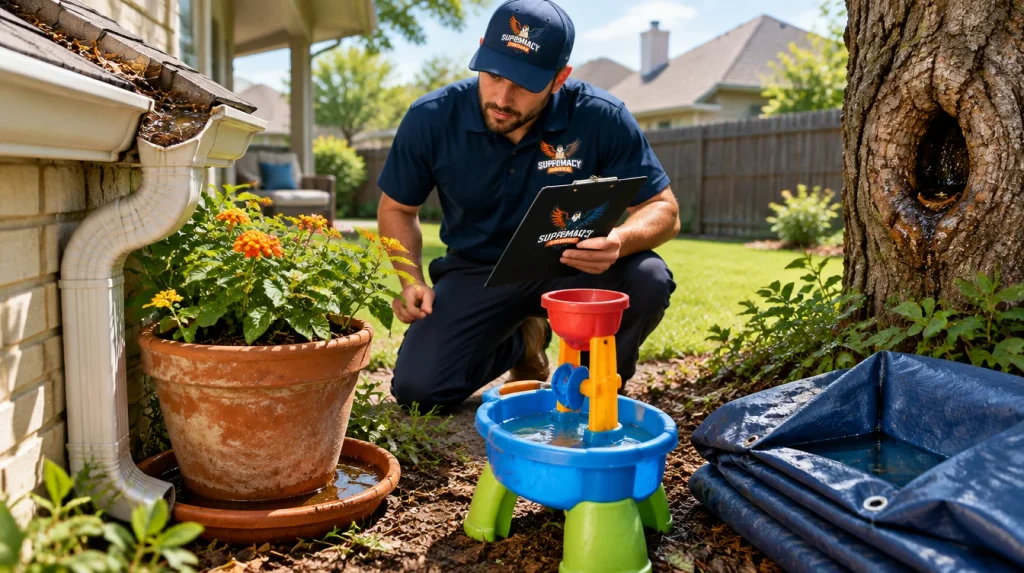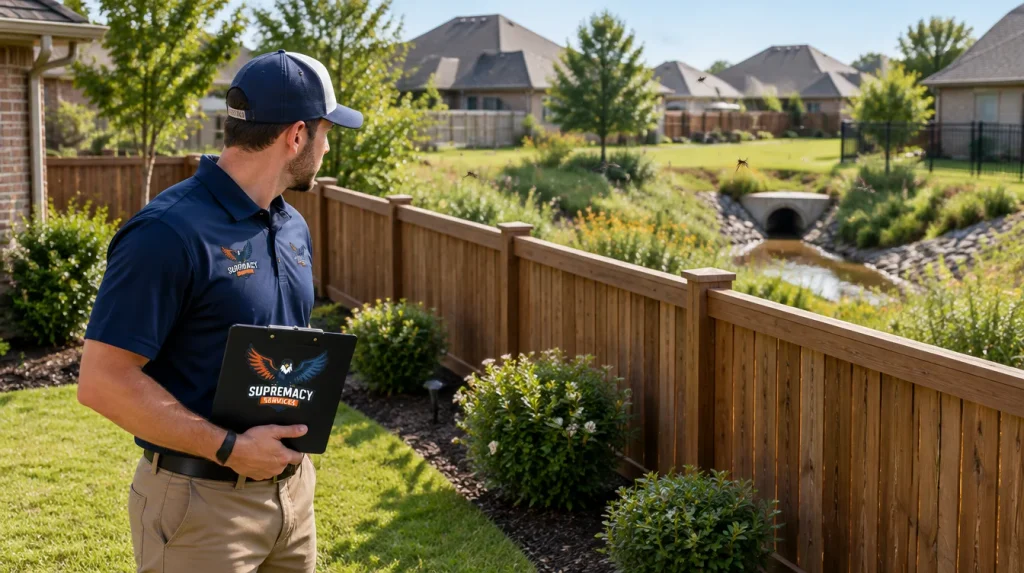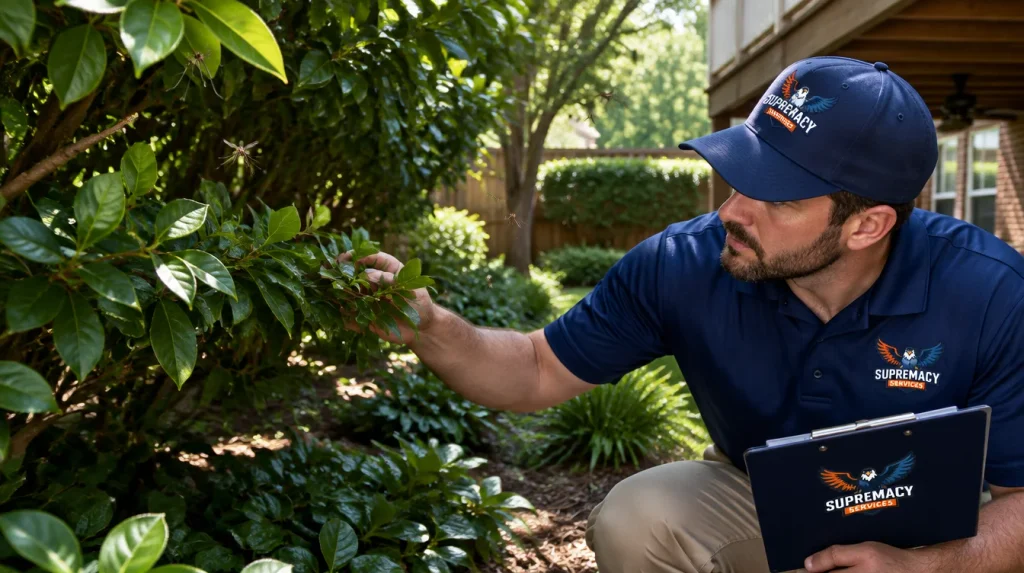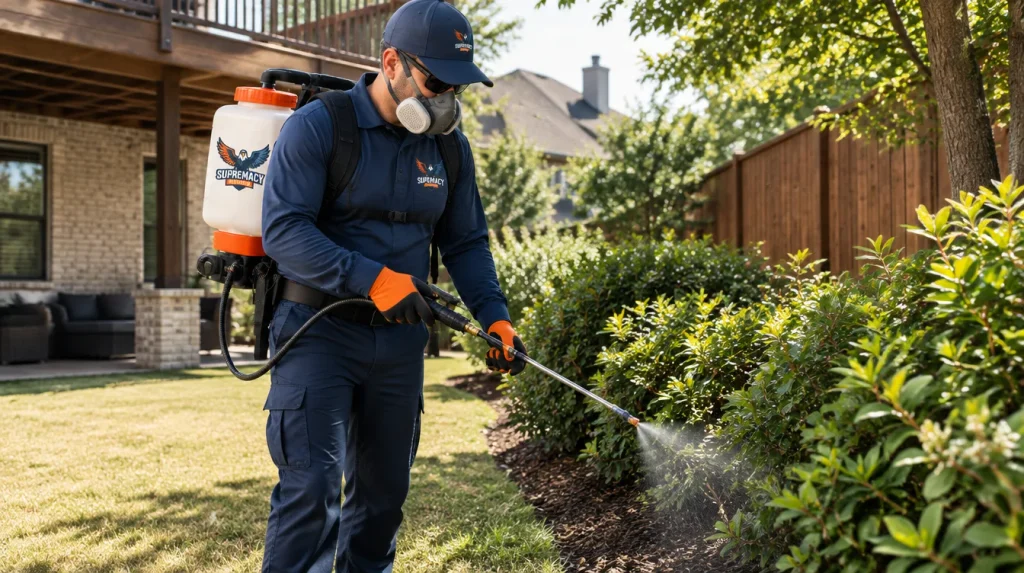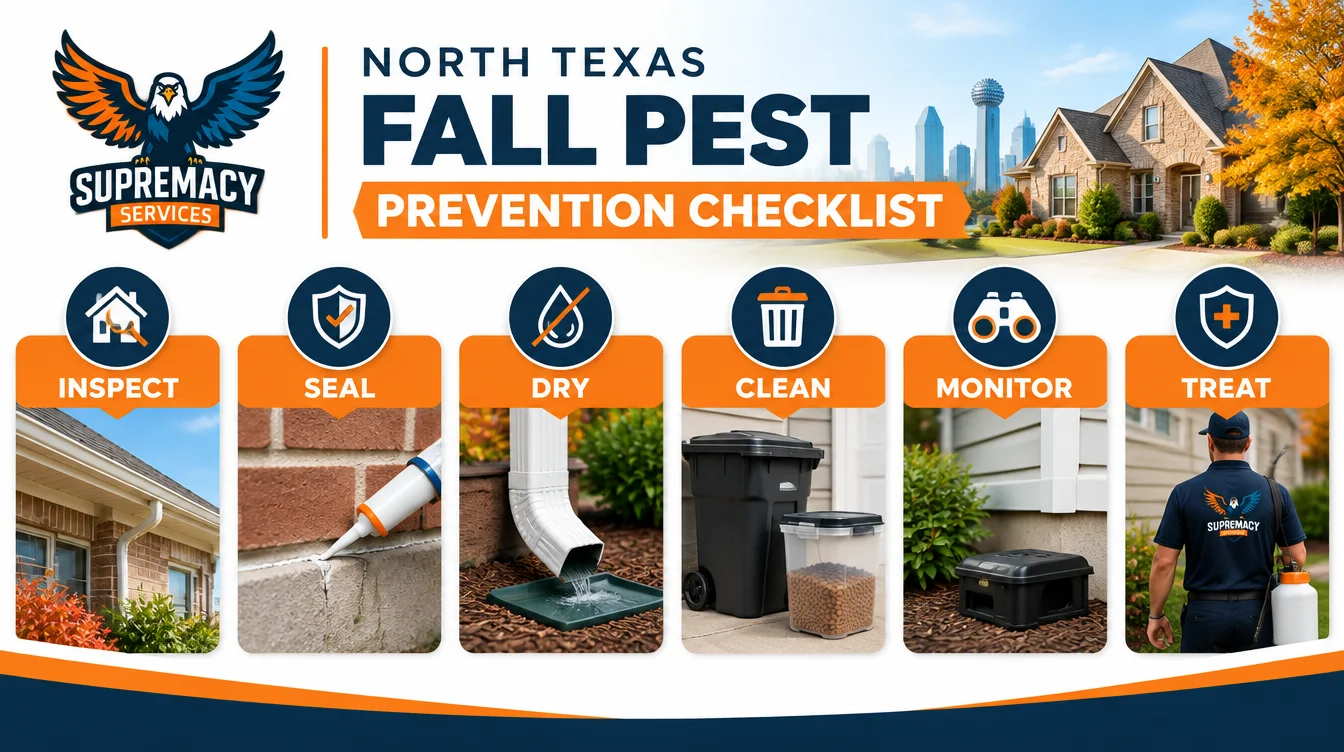

When fall arrives in North Texas, pest prevention should focus on three things: blocking entry points, removing food and moisture, and reducing sheltered areas around the home.
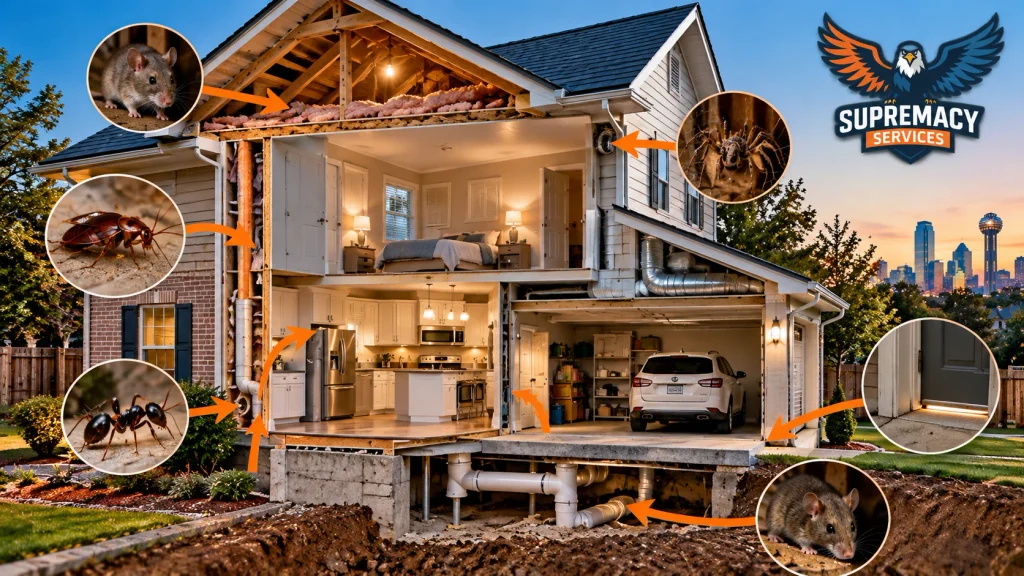
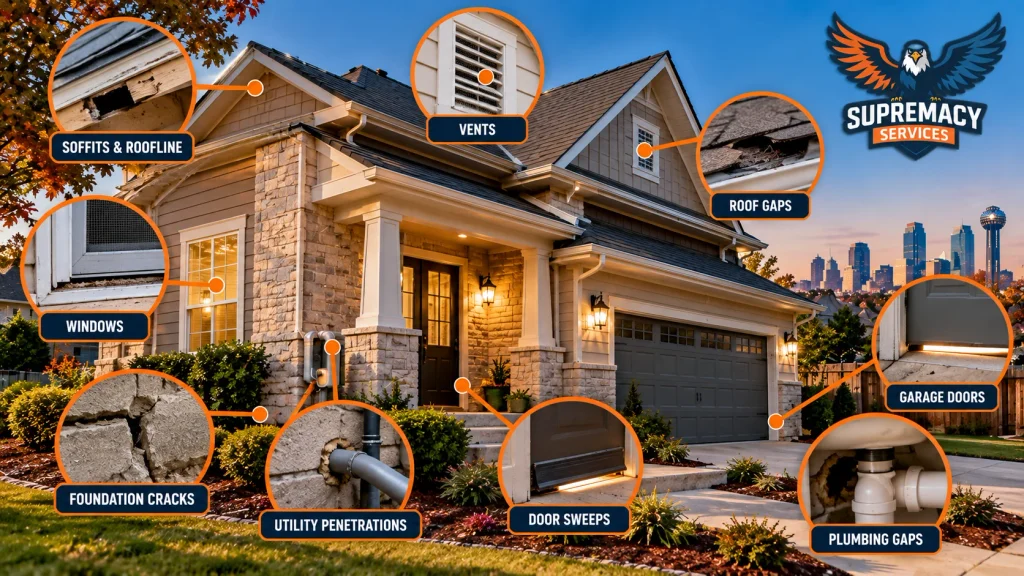
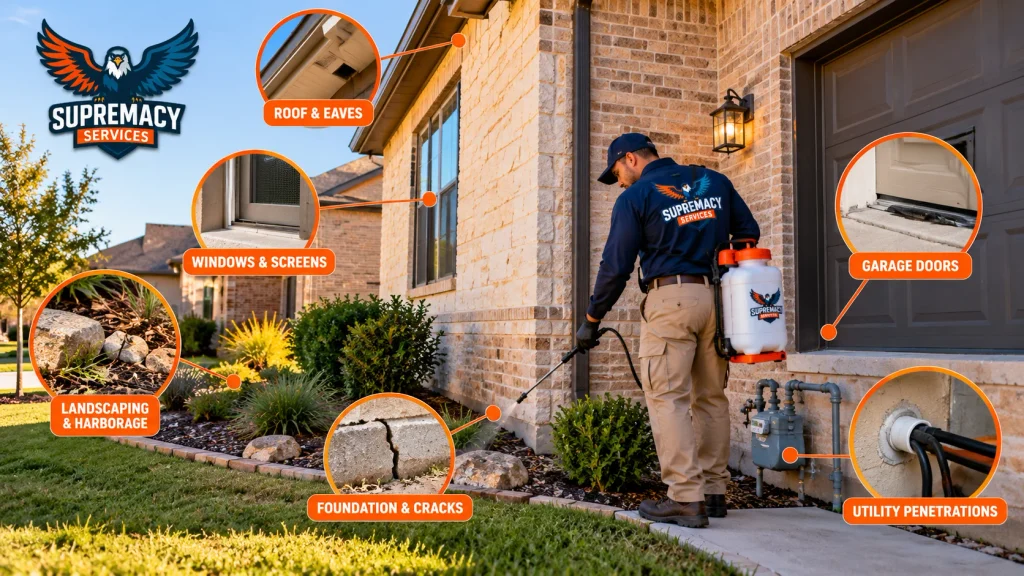
For Dallas-Fort Worth homeowners, a good fall pest prevention routine means checking doors, windows, foundations, plumbing and utility penetrations, garages, attics and rooflines before small problems become established indoors.
That approach is consistent with Integrated Pest Management (IPM). The EPA describes IPM as combining practical prevention and control methods rather than relying automatically on pesticide applications alone. US EPA
Use the checklist below as a room-by-room and exterior inspection guide.
Table of Contents
- Why Fall Pest Prevention Matters
- Which Pests Should North Texas Homeowners Watch For?
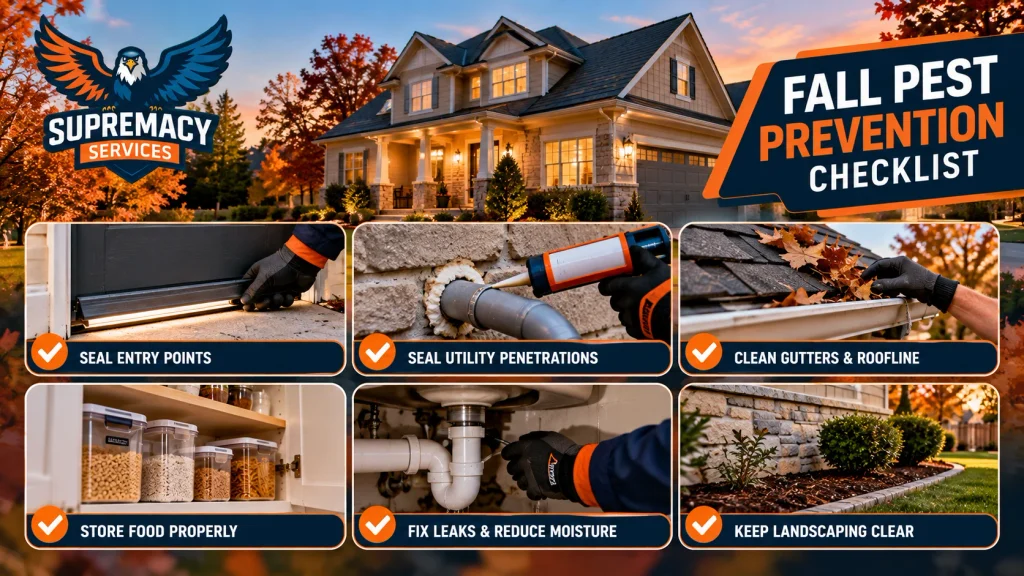
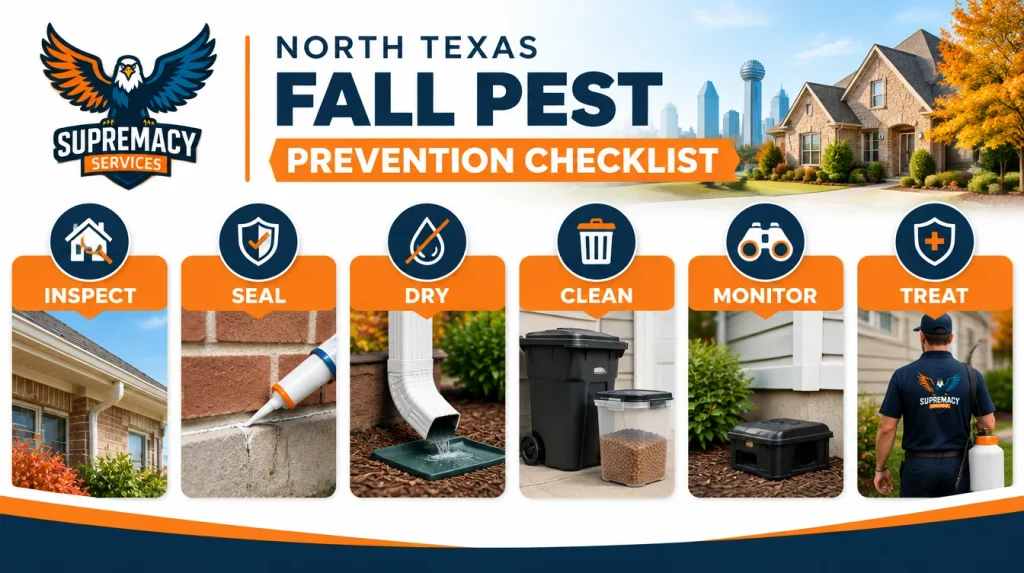
- North Texas Fall Pest Prevention Checklist
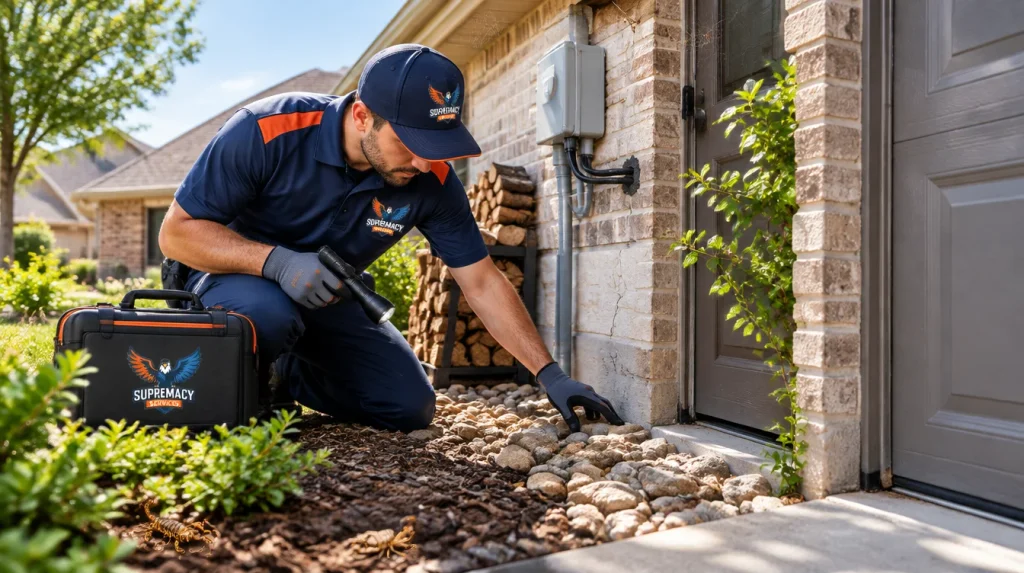
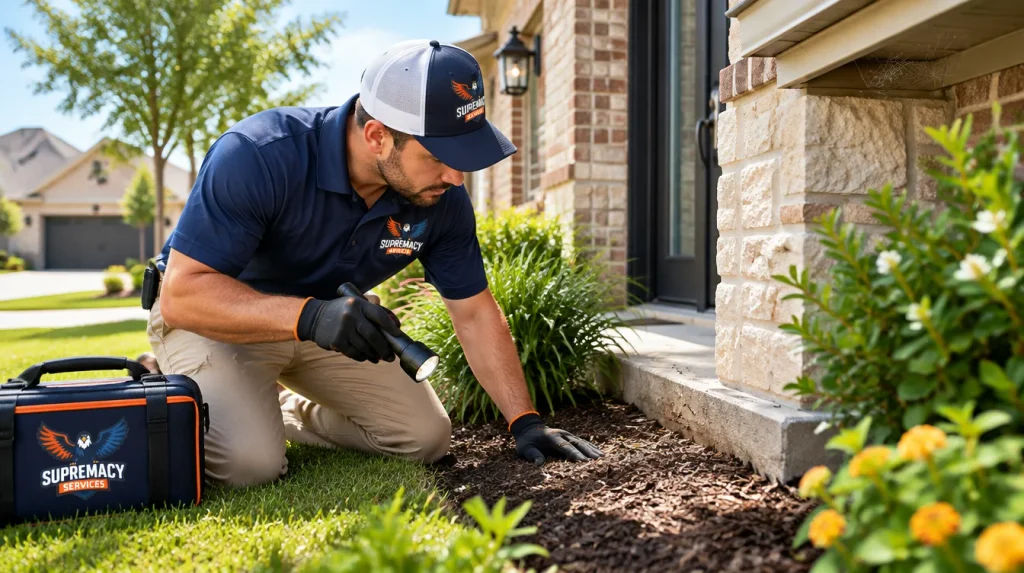
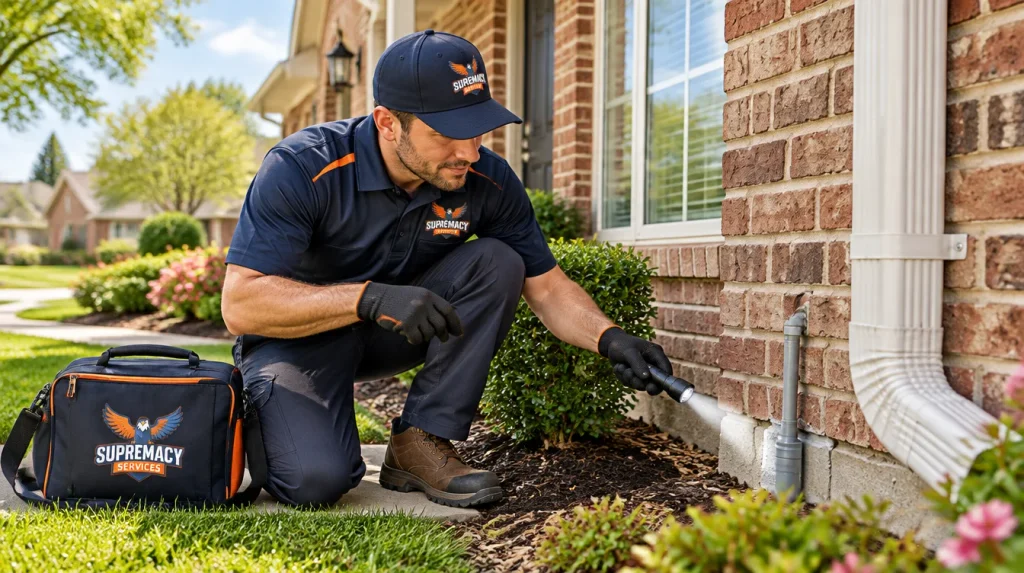
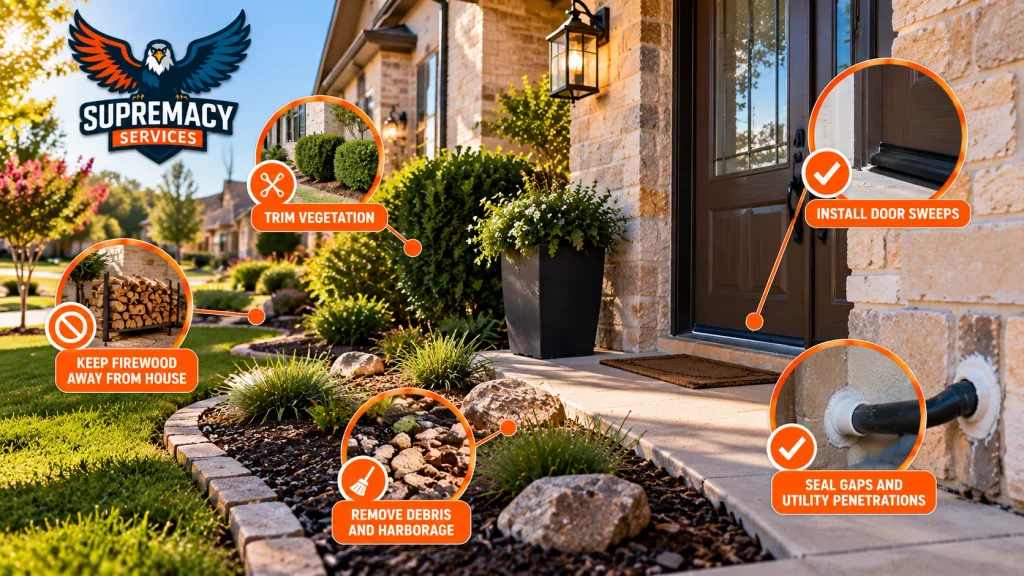
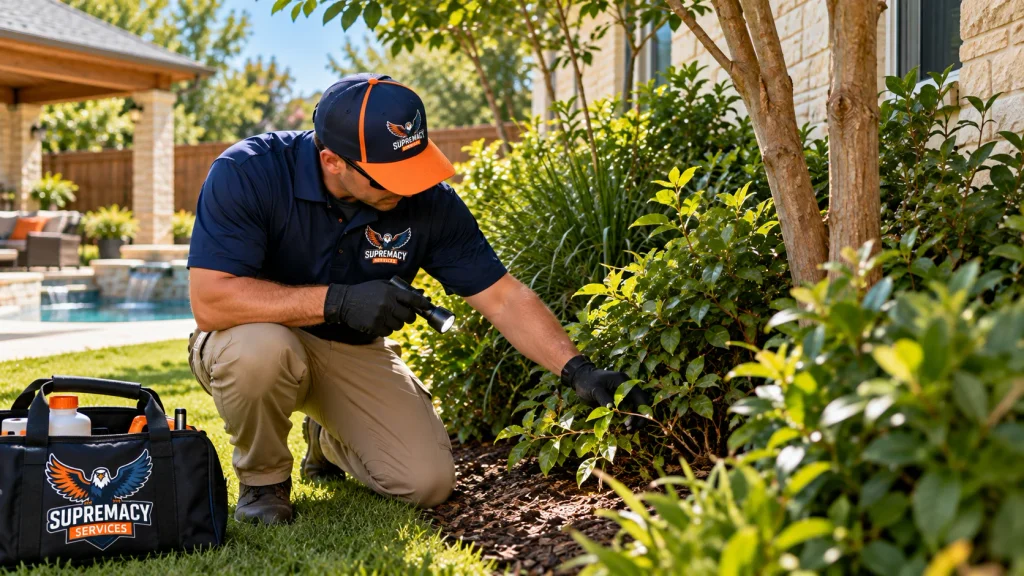
- Inspect and Seal Exterior Entry Points
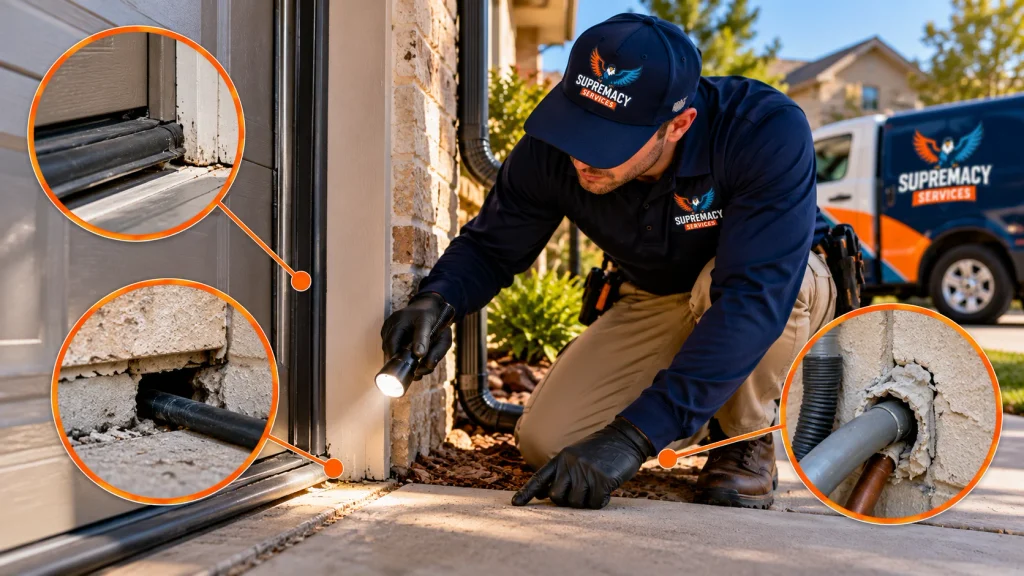
- Check Doors, Windows and the Garage
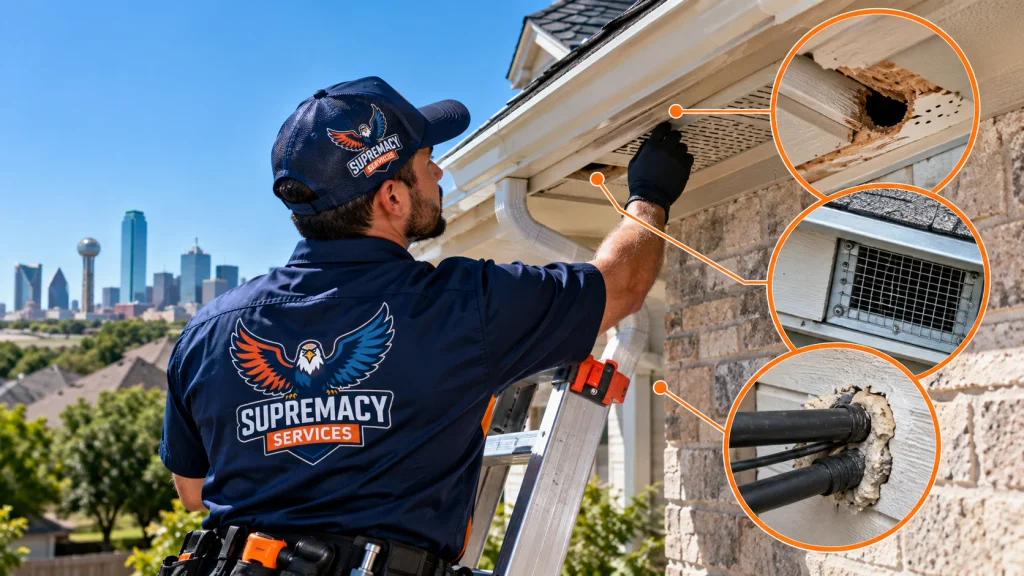
- Inspect the Roofline, Attic and Soffits
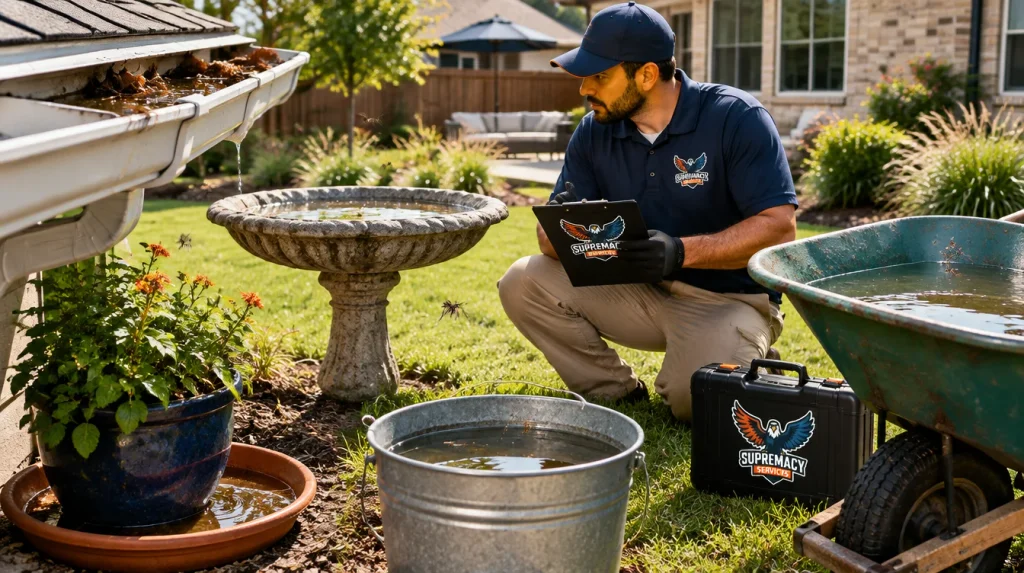
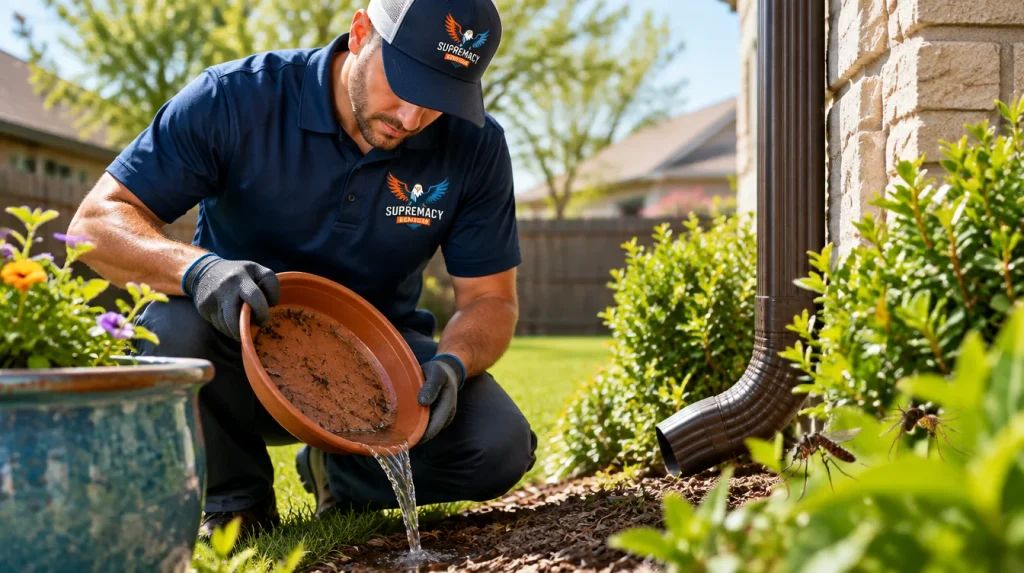
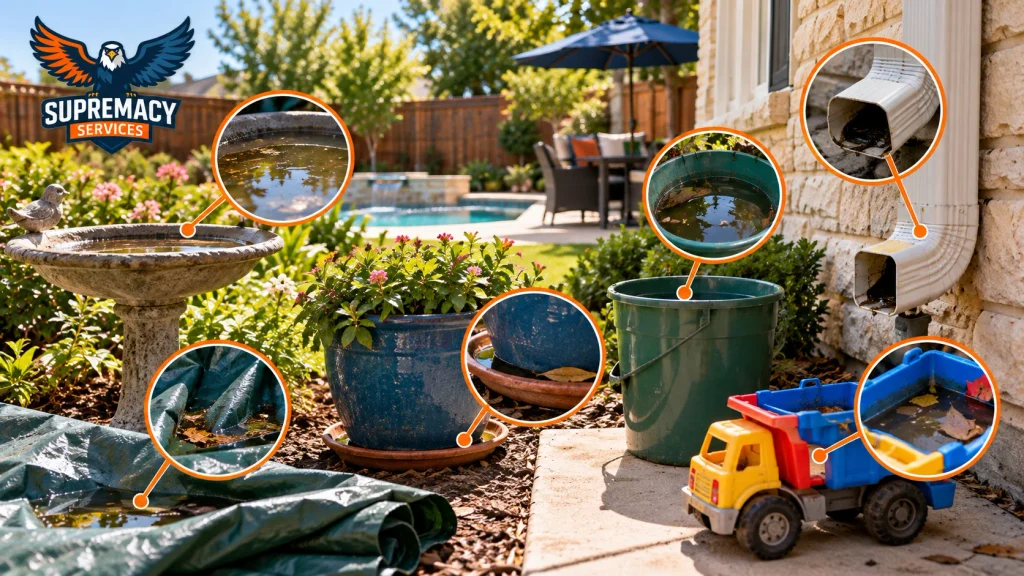
- Remove Food and Water Sources
- Clean Up the Yard and Perimeter
- Inspect Kitchens, Bathrooms and Utility Areas
- Look for Early Rodent Warning Signs
- DIY vs. Professional Fall Pest Prevention
- What Professional Fall Pest Control Should Include
- Frequently Asked Questions
Why Fall Pest Prevention Matters
Fall is a useful time to inspect a North Texas home because pest prevention is much easier when you correct access, food, water and shelter before an indoor population becomes established.
That does not mean every insect suddenly “moves inside for winter.”
Different pests behave differently.
Some pests originate outdoors and enter through structural openings. Others may already be established indoors. Rodents may exploit roof, vent, garage and utility openings. Cockroaches can persist where food, water and protected harborages are available. Spiders may become noticeable where insect prey and sheltered locations are plentiful.
The practical lesson is the same:
Do not simply treat the pest you can see. Investigate what is allowing pest activity to continue.
EPA prevention guidance recommends sealing entry points, reducing clutter, protecting food and eliminating water sources as basic household pest-control measures. US EPA
Quick fall priorities
| Area | What to check | Why it matters |
|---|---|---|
| Exterior walls | Cracks and penetrations | Possible insect or rodent access |
| Doors | Sweeps and weather stripping | Gaps provide direct indoor access |
| Windows | Screens and frame gaps | Common insect entry areas |
| Garage | Door seals and storage | Shelter and access can overlap |
| Roofline | Vents, soffits, eaves | Important rodent inspection areas |
| Kitchen | Food, trash and leaks | Resources can sustain pest activity |
| Bathrooms | Plumbing and moisture | Water can support pest activity |
| Yard | Debris, brush and clutter | Provides potential shelter |
| Trash area | Lids and spills | Food source |
| Attic | Droppings, gnawing, noises | Possible rodent activity |
Which Pests Should North Texas Homeowners Watch For?
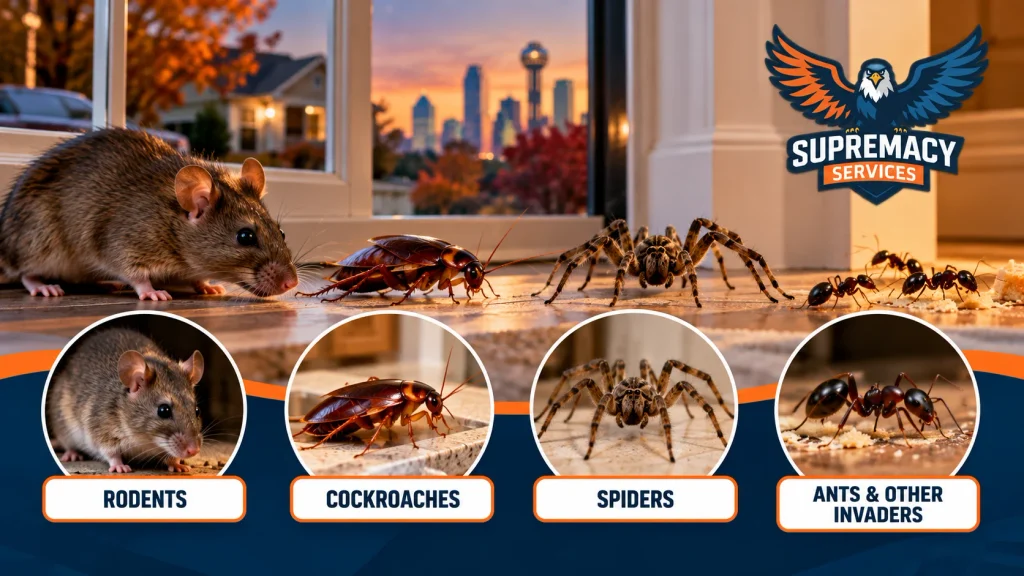
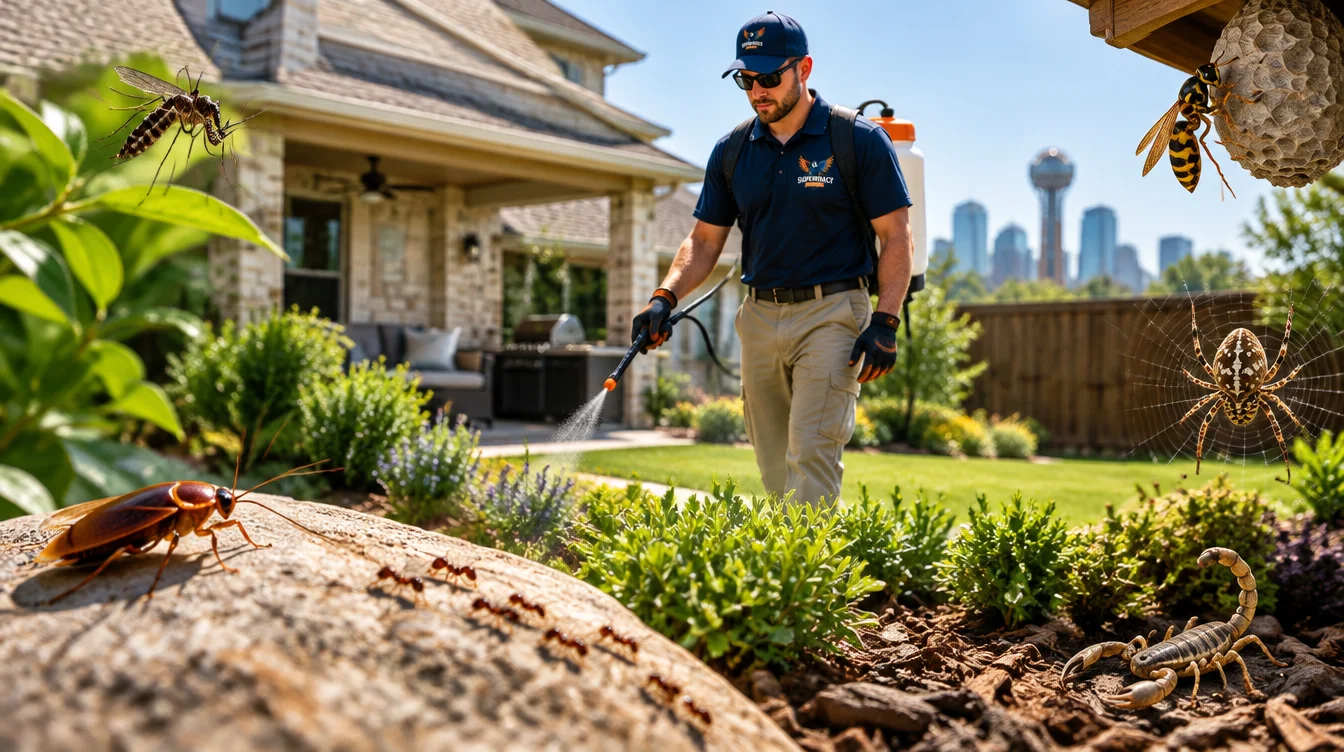
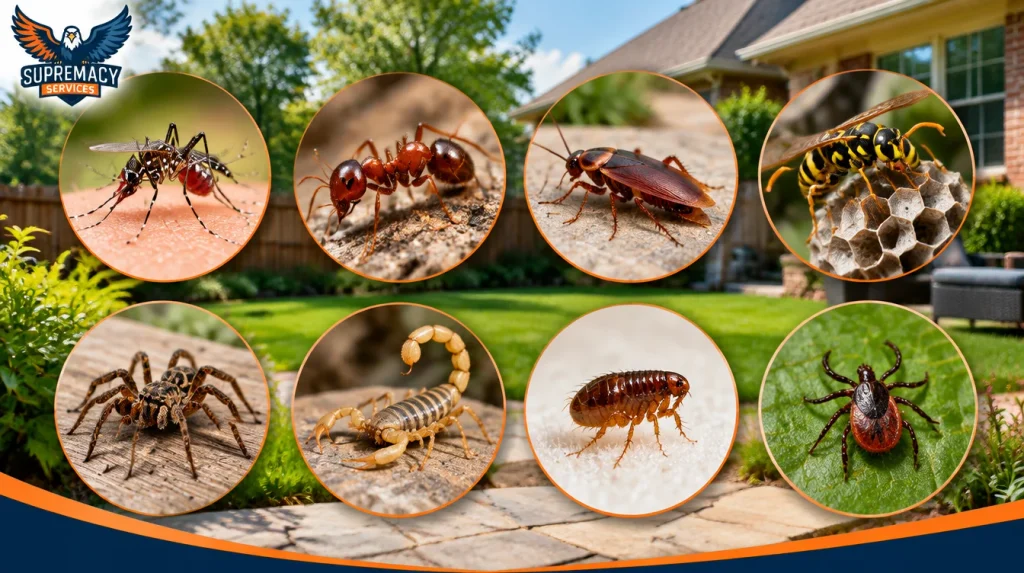
A fall inspection should concentrate on ants, cockroaches, spiders and rodents, while remaining alert for other pest activity specific to the property.
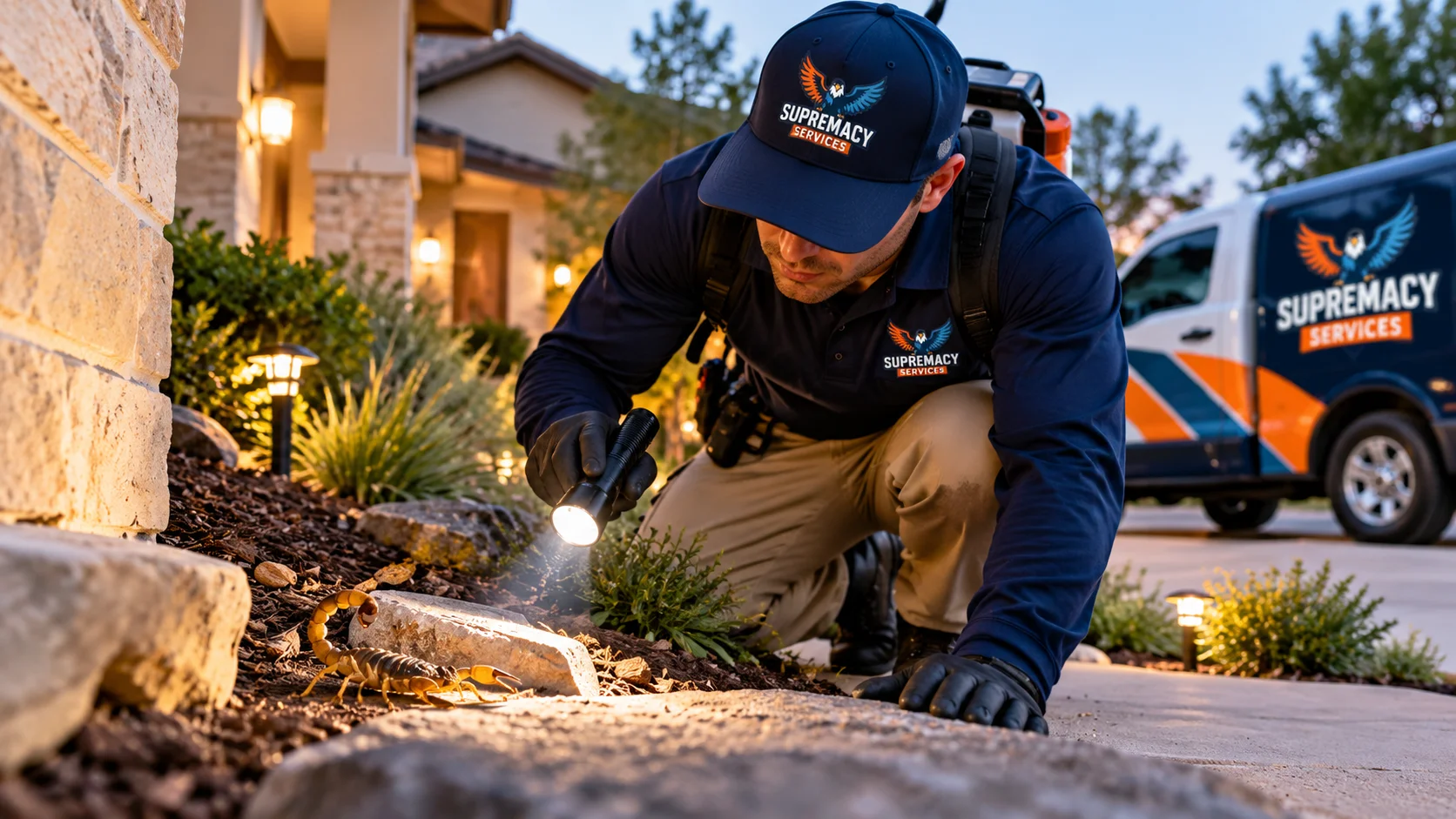
Supremacy’s existing pest-control program already addresses common North Texas household invaders including ants, cockroaches, spiders and scorpions, with dedicated services for rodents and other specialized pests. Supremacy Services
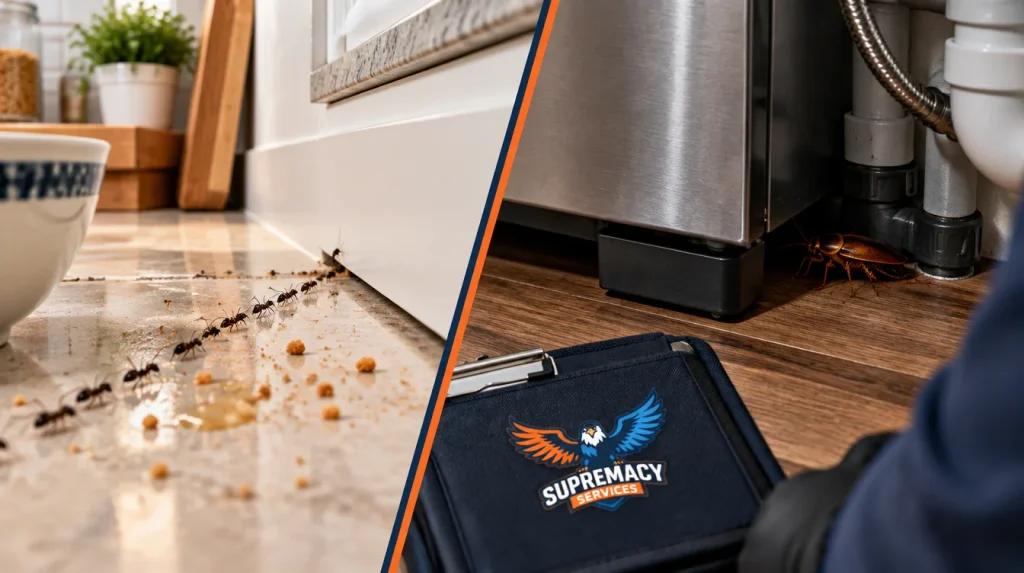
Ants
Ant activity indoors can be connected to food, water, exterior colonies or accessible structural openings.
Do not assume the colony is inside simply because workers are appearing in the kitchen.
Cockroaches
Cockroaches benefit from combinations of food, moisture and protected hiding areas.
Repeated sightings around sinks, cabinets, appliances or plumbing should prompt an inspection for both the insects and the conditions sustaining them.
Spiders
Spiders are predators.
If webs continually return around exterior lights, eaves, garages or windows, investigate the insect activity supporting them rather than concentrating exclusively on removing individual spiders.
Texas A&M provides specific guidance on preventing spiders from entering homes as part of spider management. Texas A&M AgriLife Extension Service
Rats and mice
Rodents deserve particular attention because prevention requires physical exclusion.
The CDC recommends inspecting around doors and windows, utility lines, attic and crawl-space vents, foundations, roof areas, eaves, gables and soffits for possible access points. CDC
North Texas Fall Pest Prevention Checklist
Use this abbreviated list first, then work through the detailed inspection below.
Exterior
- Inspect cracks and gaps around the structure.
- Check plumbing, electrical, cable and HVAC penetrations.
- Inspect window and door frames.
- Replace damaged screens.
- Check exterior door sweeps.
- Inspect the garage-door seal.
- Examine attic and crawl-space vents.
- Look around eaves, soffits and roofline transitions.
- Remove unnecessary debris beside the home.
- Keep garbage securely contained.
Interior
- Inspect beneath kitchen and bathroom sinks.
- Repair plumbing leaks.
- Clean crumbs and grease from beneath appliances.
- Store pantry foods securely.
- Avoid leaving pet food available overnight.
- Reduce cardboard and unnecessary clutter.
- Look for droppings and gnaw marks.
- Check behind appliances.
- Inspect utility rooms and garages.
- Monitor recurring pest hotspots.
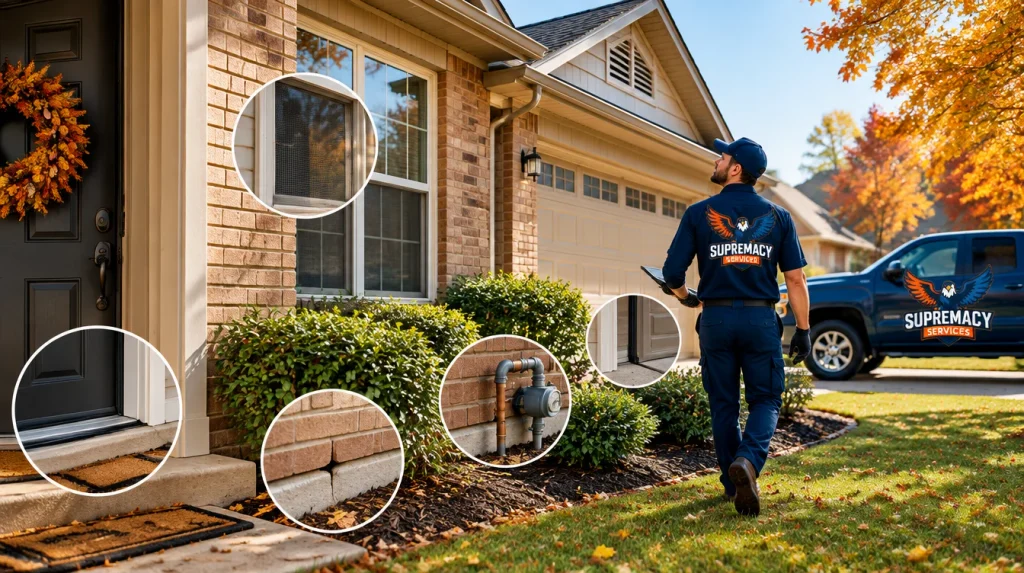
1. Inspect and Seal Exterior Entry Points
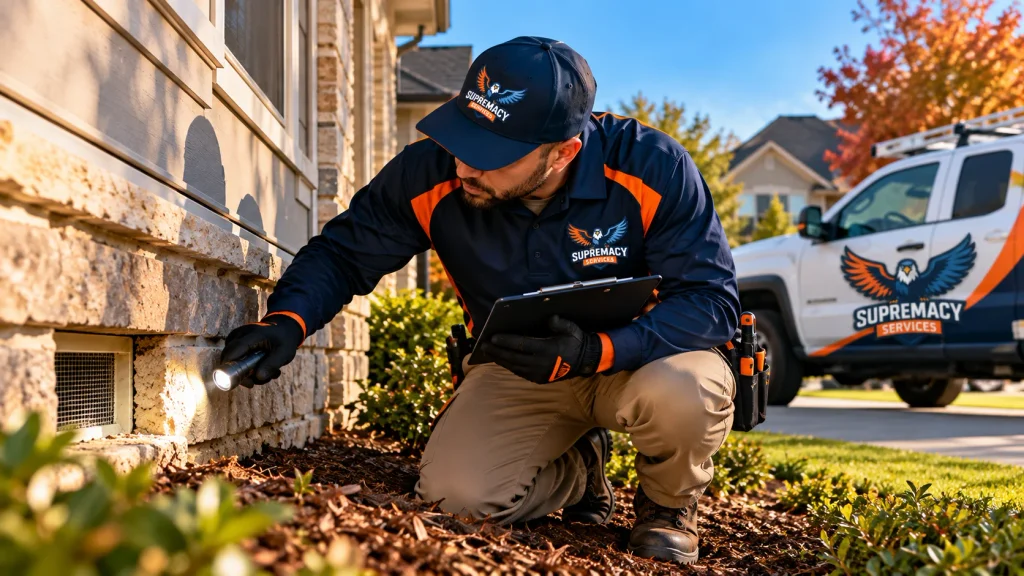
The first step in fall pest prevention is finding how pests can enter the building.
Walk slowly around the house instead of inspecting only the places where you have already seen insects.
Pay particular attention to:
- plumbing penetrations;
- electrical and cable penetrations;
- exterior wall joints;
- foundation transitions;
- damaged screens;
- door frames;
- window frames;
- gaps around utility equipment;
- vents;
- siding transitions;
- garage openings.
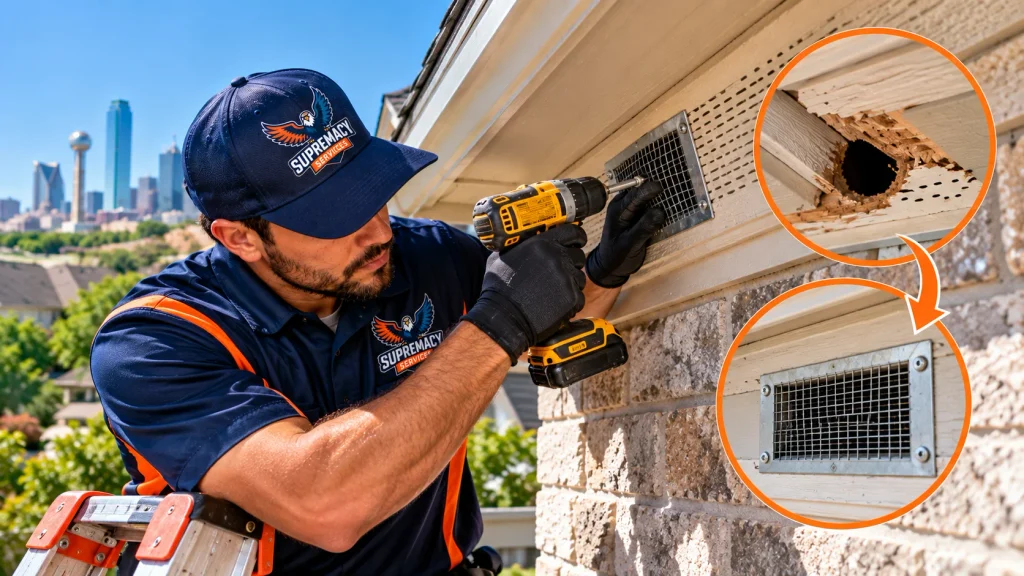
EPA recommends closing places pests can enter and specifically mentions sealing cracks and crevices, filling spaces around pipes and covering holes appropriately.
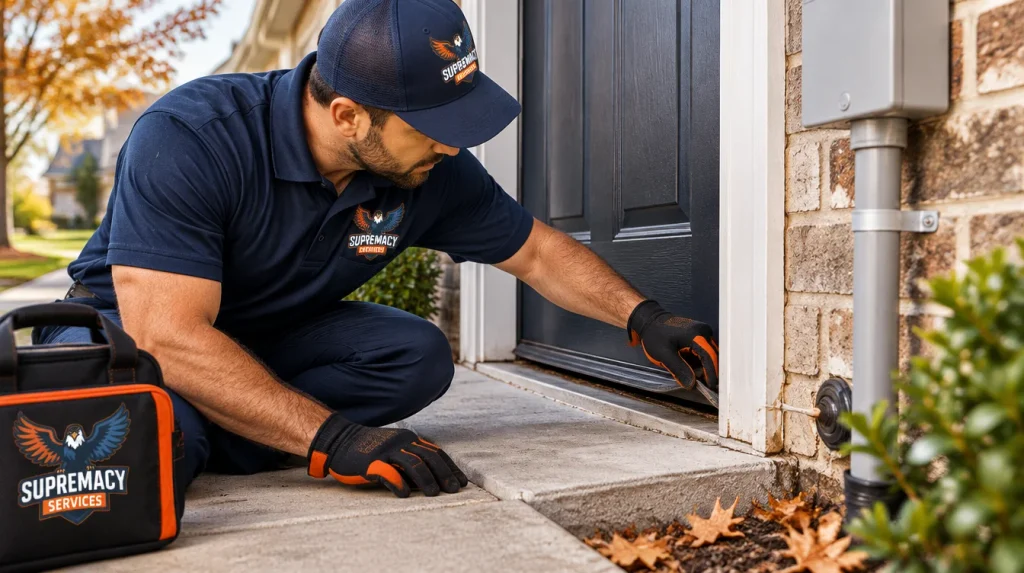
Rodent openings deserve extra attention
Rodent exclusion requires a more thorough inspection than ordinary insect prevention.
CDC guidance notes that mice can fit through an opening about 1/4 inch (6 mm) wide, which is why seemingly insignificant openings around utilities, doors and roof areas deserve attention.
Do not automatically fill every opening you discover without understanding its function. Some gaps and vents are intentional parts of the building.
When you are uncertain whether an opening should be sealed, screened or left unobstructed, have it evaluated rather than compromising drainage, ventilation or another building function.
Seeing insects repeatedly entering around the foundation, doors or windows? Explore Supremacy’s [perimeter pest control in Dallas-Fort Worth] to learn how exterior pest pressure can be addressed before it becomes an indoor problem.
2. Check Doors, Windows and the Garage
Doors and garages create large transitions between conditioned living space and the outdoors.
Check exterior doors
Stand inside with the door closed during daylight.
Look for visible light around:
- the threshold;
- lower corners;
- weather stripping;
- damaged door sweeps;
- frame transitions.
A worn sweep can create an unnecessary opening directly into the home.
Inspect window screens
Repair torn or loose screens and investigate obvious frame gaps.
Do not overlook windows that remain closed most of the year. The screen may still matter when windows are opened during milder fall weather.
Inspect the garage
Check:
- the bottom garage-door seal;
- side seals;
- corners of the door;
- utility penetrations;
- stored pet food;
- bird seed;
- cardboard boxes;
- clutter along walls.
The garage is particularly important because an animal or insect entering it has already moved one step closer to the interior.
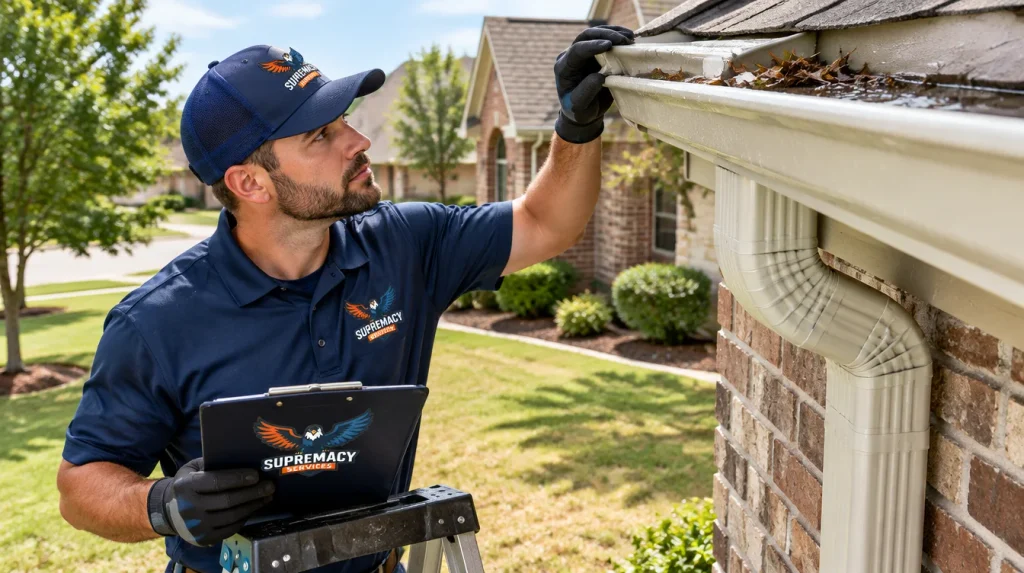
3. Inspect the Roofline, Attic and Soffits
For rodent prevention, your inspection should not stop at ground level.
The CDC specifically recommends checking roof areas including rafters, gables, eaves and soffits, as well as attic vents.
Supremacy’s rat-control guidance likewise identifies roof gaps, vents, soffits, utility penetrations and other exterior openings as potential access routes around North Texas properties. Supremacy Services
From the ground or another safe viewing position, look for:
- damaged vent screens;
- loose soffit material;
- obvious roofline openings;
- gaps around penetrations;
- damaged fascia;
- evidence of gnawing;
- openings where different construction materials meet.
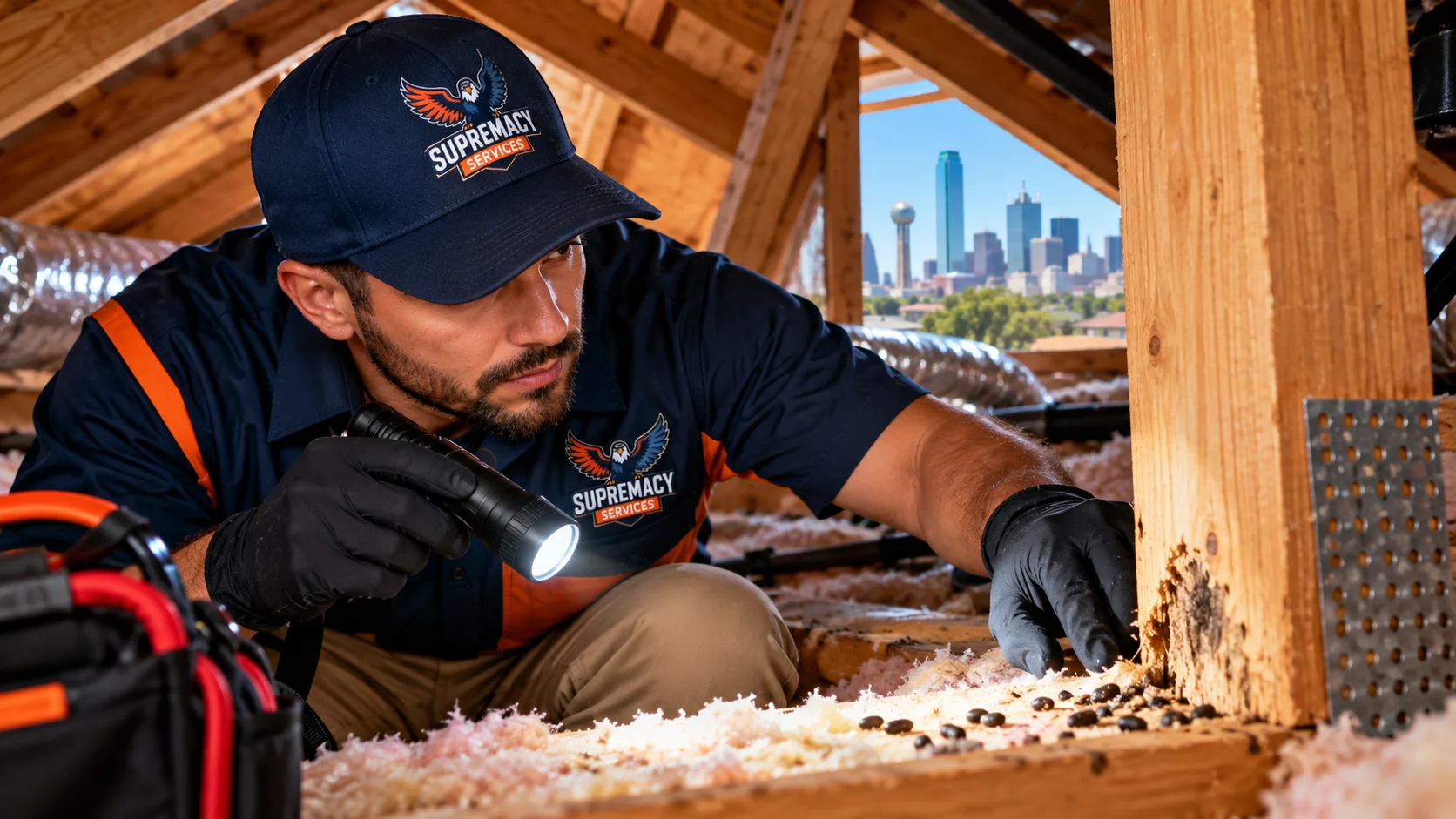
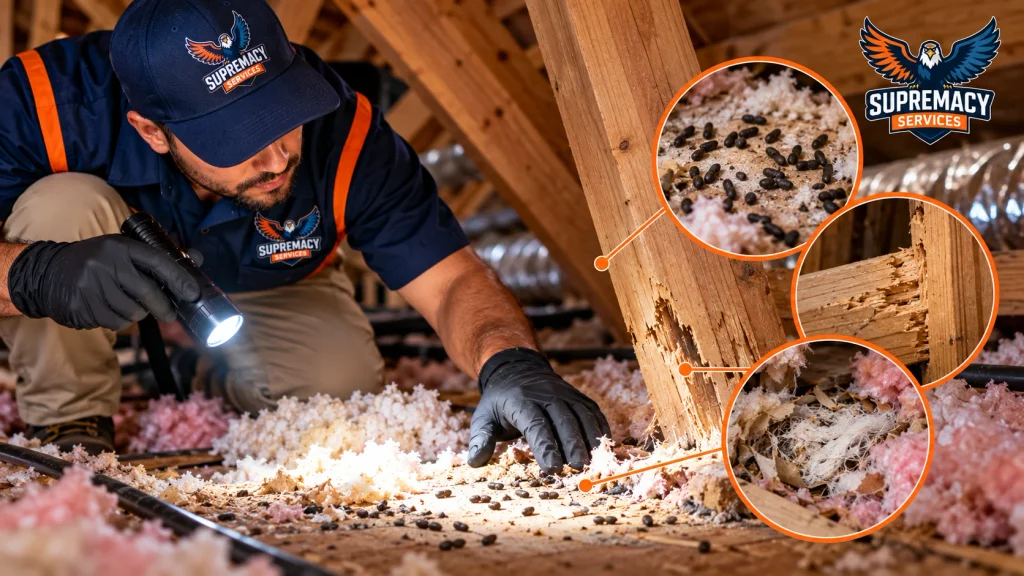
Inside the attic, warning signs can include:
- droppings;
- gnaw marks;
- disturbed insulation;
- nesting material;
- unexplained nighttime movement;
- recurring scratching sounds.
Avoid unsafe roof access. A prevention checklist is not a reason to climb onto a steep or inaccessible roof.
4. Remove Food and Water Sources
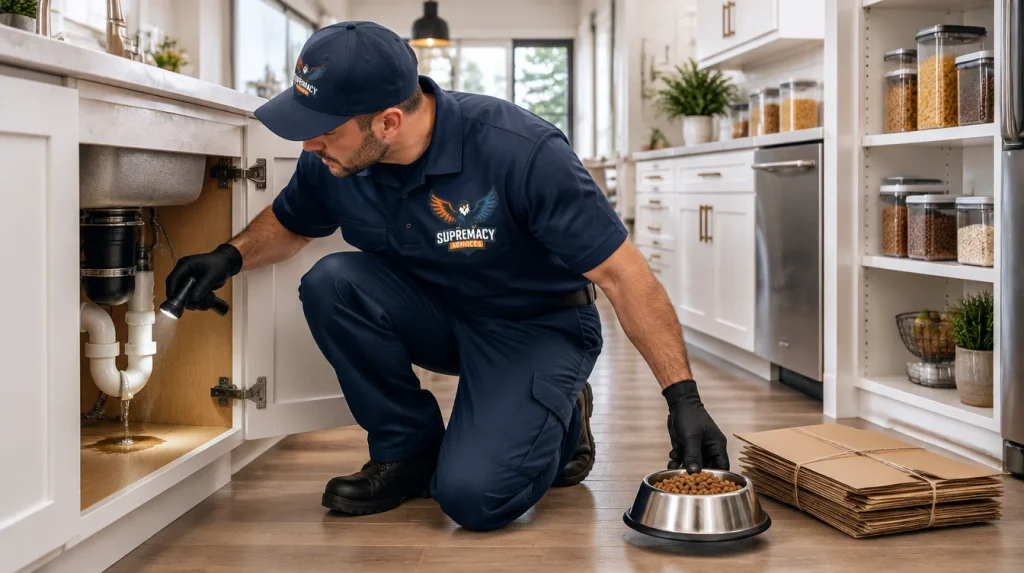
Sealing the building addresses access.
Sanitation and maintenance address why pests stay.
EPA guidance emphasizes reducing the food, water and shelter pests need. Recommended measures include sealing food, removing scraps, managing garbage, not leaving pet food and water out overnight and repairing plumbing leaks. US EPA
Fall kitchen checklist
Check:
- crumbs beneath appliances;
- grease around the stove;
- pantry spills;
- open food packaging;
- pet feeding areas;
- trash and recycling;
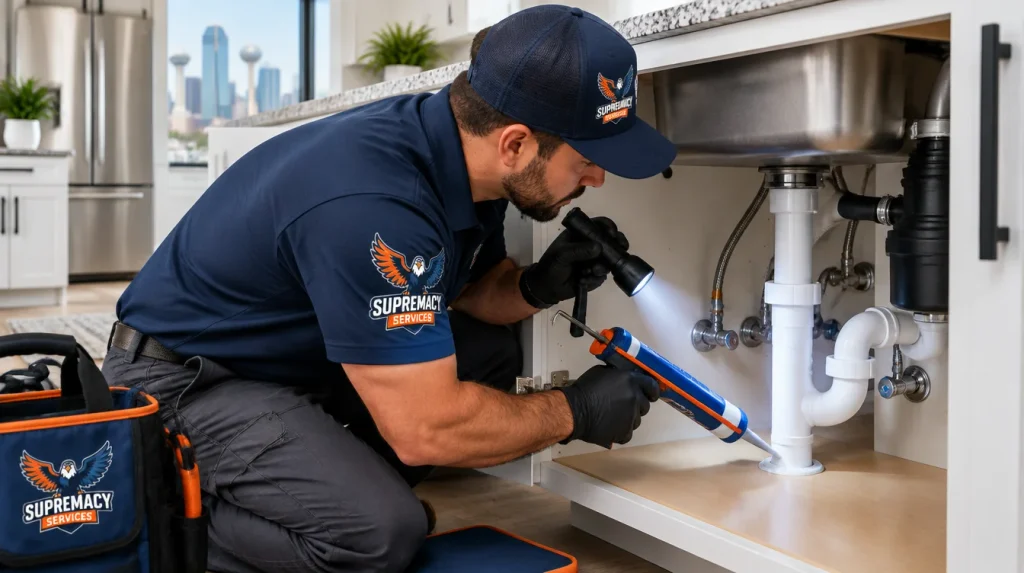
- gaps around plumbing beneath the sink;
- moisture beneath the dishwasher;
- refrigerator water connections.
Fix moisture problems
Investigate:
- dripping faucets;
- leaking supply lines;
- wet sink cabinets;
- condensation;
- appliance leaks;
- persistent damp areas.
The goal is not an impossibly sterile house.
It is to avoid providing dependable food, water and shelter that make pest activity easier to sustain.
5. Clean Up the Yard and Perimeter
Fall yard cleanup can be part of pest prevention, but the objective is not to eliminate every insect outdoors.
Focus on conditions immediately around the structure.
Look for:
- unnecessary piles of debris;
- dense clutter against exterior walls;
- spilled bird seed;
- pet food left outdoors;
- unsecured trash;
- poorly maintained storage;
- vegetation that makes structural inspection difficult.
For rodents, CDC guidance recommends keeping outdoor areas clean, controlling accessible food sources and reducing potential nesting sites.
What about fallen leaves?
Leaves are normal.
The problem is not the existence of leaves anywhere on the property. Concentrate on heavy accumulations and debris where they create protected, damp areas directly around important structural inspection zones.
This keeps the recommendation practical rather than turning pest prevention into unnecessary landscape sterilization.
6. Inspect Kitchens, Bathrooms and Utility Areas
These rooms deserve special attention because they combine structural penetrations with potential moisture.
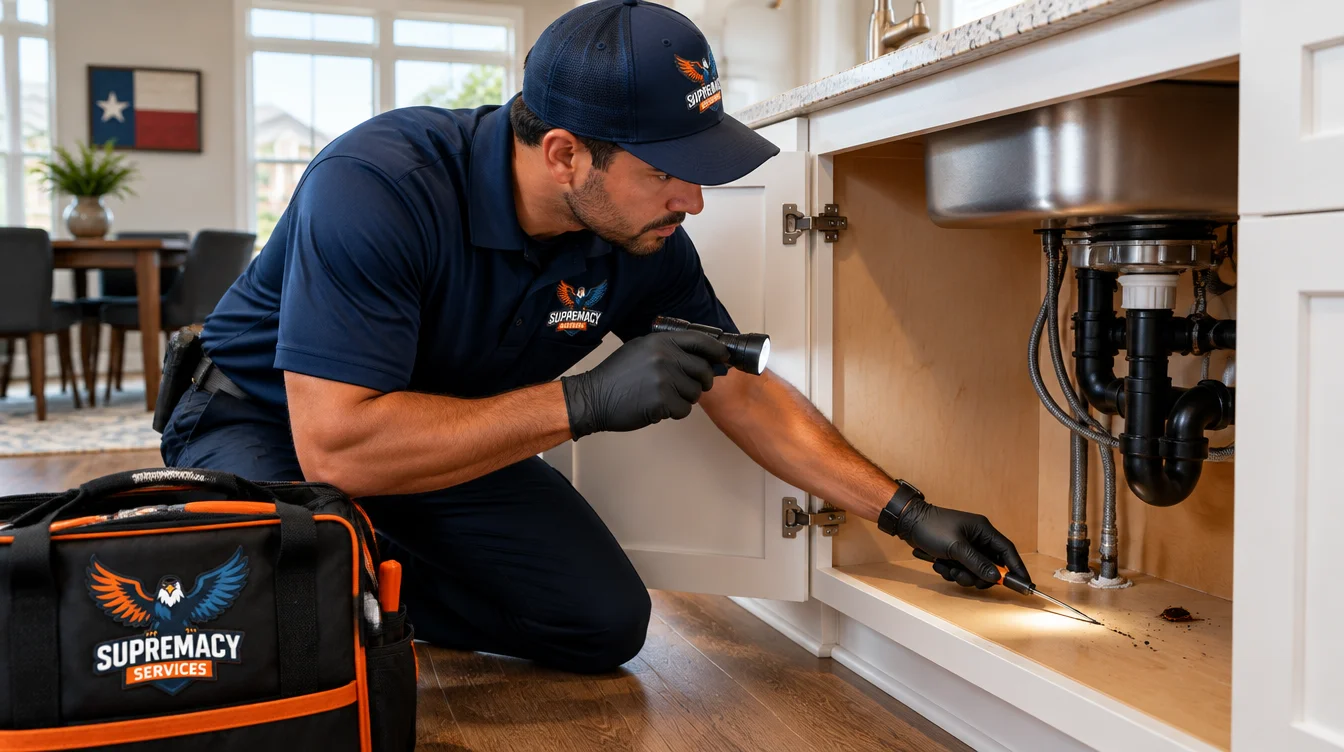
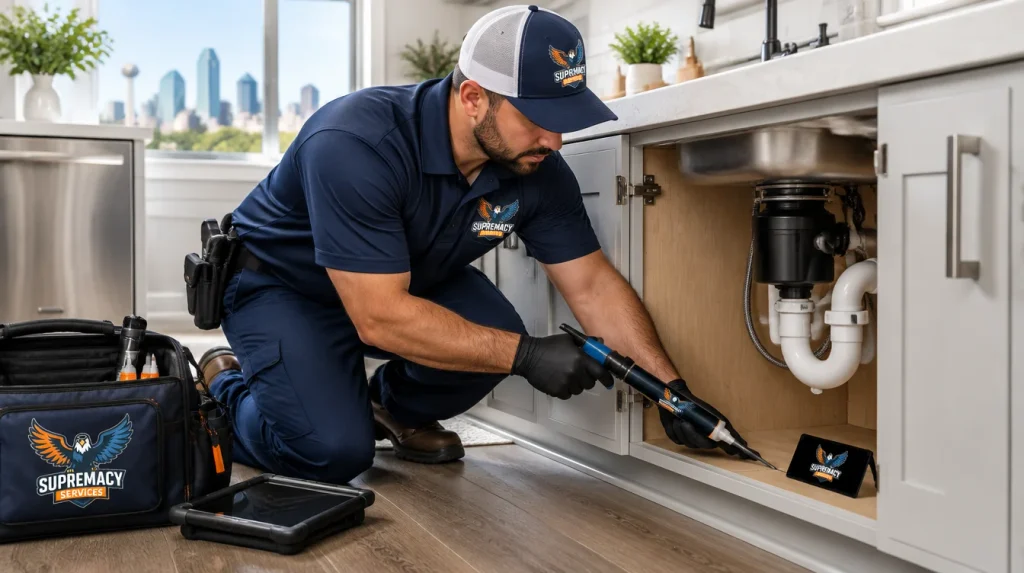
Under sinks
Inspect where pipes pass through walls or cabinets.
Look for:
- openings around pipes;
- water staining;
- leaks;
- cockroach evidence;
- ant trails;
- droppings.
Behind appliances
Where safely accessible, inspect around:
- refrigerators;
- dishwashers;
- washing machines;
- dryers;
- water heaters.
The CDC includes areas behind appliances and around plumbing, water heaters and furnaces among locations homeowners should inspect for rodent openings.
Reduce clutter
Cardboard and stored materials can make inspection harder and provide protected hiding areas.
EPA specifically recommends reducing clutter such as newspapers, magazines and cardboard as part of household pest management.
7. Look for Early Rodent Warning Signs
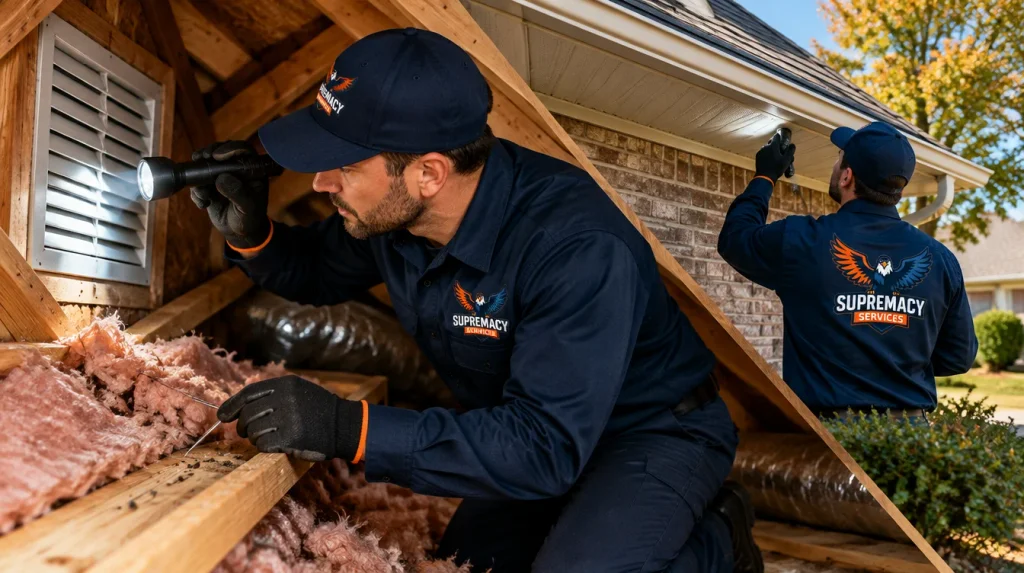
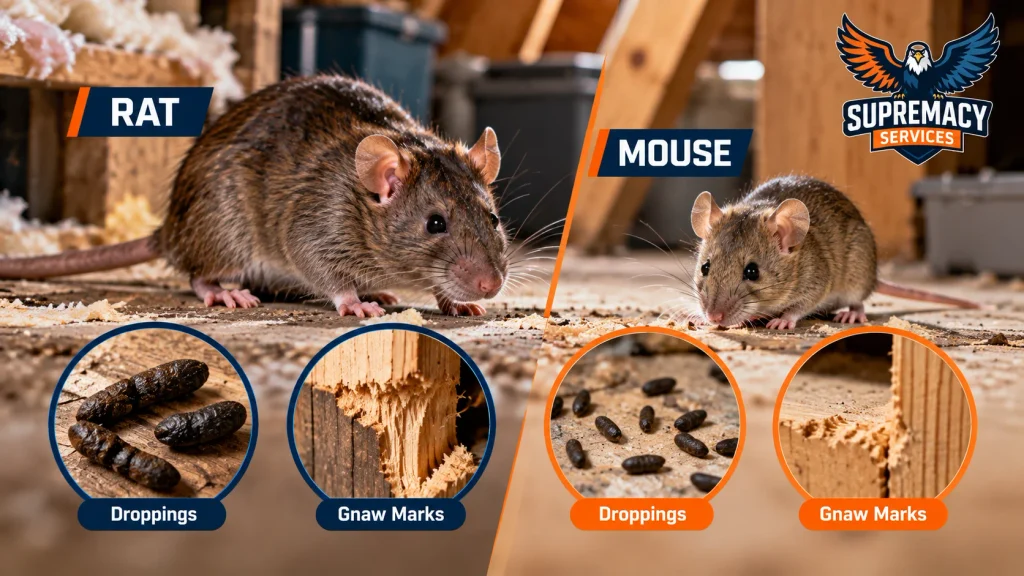
Droppings and gnaw marks are two important warning signs of rodent activity.
The CDC recommends routinely checking for these signs because controlling rodents before they become established is easier than addressing a developed infestation.
Also watch for:
- scratching after dark;
- damaged food packaging;
- nesting material;
- unusual attic activity;
- disturbed insulation;
- rub or travel marks;
- recurring noises inside walls.
Don’t just remove the rodent
Finding one mouse or rat does not tell you how it entered.
An effective response asks two separate questions:
How do we deal with the animal already inside?
and
How did it get inside in the first place?
Without the second answer, another rodent may use the same opening.
Hearing scratching or finding droppings? Supremacy’s [rat control and exclusion service] can help identify active areas and the structural routes rodents may be using to enter your DFW property.
DIY vs. Professional Fall Pest Prevention
Many preventive tasks are reasonable homeowner maintenance.
Others require pest identification, specialized treatment or structural investigation.
| Situation | Reasonable homeowner step | Consider professional help when… |
|---|---|---|
| Worn door sweep | Replace it | Pest activity continues |
| Torn screen | Repair screen | Entry source remains unclear |
| Small appropriate gap | Seal correctly | Opening involves roof/building systems |
| Food residue | Clean and monitor | Cockroaches keep returning |
| Plumbing leak | Repair leak | Pest population is established |
| A few outdoor spiders | Remove webs/monitor | Indoor or recurring activity becomes heavy |
| Possible rodent opening | Inspect exterior | Rodents are already inside |
| Droppings | Identify source and follow safe cleanup guidance | Activity is extensive or inaccessible |
| Repeated insect sightings | Monitor location/pattern | Multiple rooms or hidden voids are involved |
| Unknown pest | Photograph safely | Identification affects treatment |
Be careful with DIY pesticide use
More pesticide does not automatically mean better pest control.
EPA recommends preventive measures first and stresses using pesticides safely and according to directions. It also recommends targeted approaches rather than unnecessarily treating broad areas.
If you use any pesticide yourself:
- identify the pest first;
- read the entire label;
- follow application instructions;
- follow child and pet precautions;
- never assume combining products improves results;
- use only where the label permits.
Professional structural pest control is regulated in Texas. The Texas Department of Agriculture states that businesses and individuals performing structural pest control for hire are subject to licensing requirements.
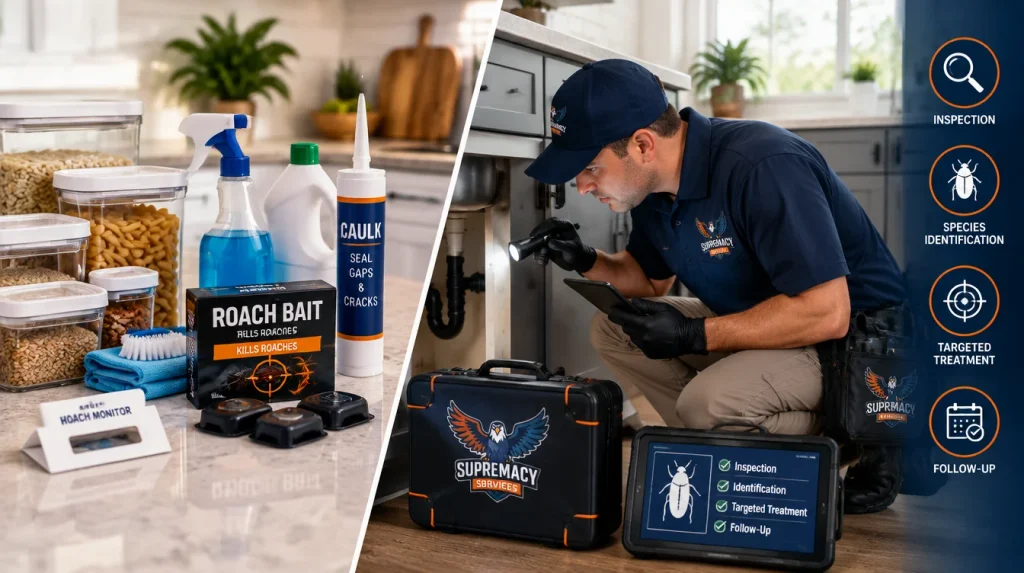
What Professional Fall Pest Control Should Include
A useful professional visit should be based on the property and the pest problem—not simply an automatic spray.
Depending on the situation, an inspection may evaluate:
- Pest identification — What is actually present?
- Activity areas — Where are pests being seen or monitored?
- Entry routes — How could they be getting inside?
- Food and moisture — What conditions may support activity?
- Exterior pressure — What is occurring around the structure?
- Harborage — Where can pests hide or nest?
- Exclusion needs — Which openings can appropriately be corrected?
- Treatment needs — Is targeted control necessary?
- Monitoring — How will improvement be measured?
- Follow-up — What needs to happen after the initial service?
This is the major distinction between prevention and repeatedly reacting to whatever insect appears next.
Supremacy’s main pest-control page describes its approach as inspecting the pest problem and developing a treatment strategy around the property rather than treating every situation identically. Supremacy Services
A Simple 30-Minute Fall Pest Inspection
You do not need to inspect everything at once.
First 10 minutes: exterior
Walk around the house and inspect:
- foundation;
- doors;
- windows;
- utility penetrations;
- vents;
- garage perimeter.
Photograph anything suspicious.
Next 10 minutes: interior
Check:
- beneath sinks;
- pantry;
- behind accessible appliances;
- utility room;
- garage;
- bathrooms.
Look for moisture and pest evidence.
Final 10 minutes: attic and yard
From safe locations, inspect:
- attic access area;
- visible insulation;
- vents;
- soffits;
- roofline;
- trash storage;
- pet-food areas;
- debris beside the structure.
Then prioritize repairs rather than trying to correct everything simultaneously.
What Does Fall Pest Prevention Cost?
There is no meaningful universal price for “fall pest prevention” because the work can range from replacing a door sweep yourself to professional pest treatment and structural rodent exclusion.
Avoid publishing an invented seasonal package price.
Supremacy already has a dedicated Pest Control Cost in North Texas: 2026 Pricing Guide, which is the better page for pricing intent. That article correctly separates general pest-control pricing from specialized infestations and structural exclusion.
This article should link to that guide instead of duplicating its pricing tables.
If you’re deciding whether professional prevention fits your budget, see our North Texas pest control cost guide for current planning ranges and the factors that can affect a property-specific quote.
Why Fall Prevention Is Especially Useful in Dallas-Fort Worth
North Texas homes do not need a completely different pest-management philosophy from the rest of the country.
They do, however, benefit from seasonal inspections tied to local weather and property conditions.
Dallas-Fort Worth homeowners may experience changing pest activity as outdoor temperature, rainfall, food, moisture and shelter conditions change.
The important point is not to claim that every pest follows an identical fall migration pattern.
Instead, use fall as a recurring maintenance checkpoint:
inspect → identify vulnerabilities → remove resources → correct entry points → monitor → treat when necessary.
That is more defensible and useful than simply spraying the perimeter because the calendar changed.
Frequently Asked Questions
What pests should I watch for in North Texas during fall?
Pay attention to ants, cockroaches, spiders, rats and mice, along with any pest already active around your property. Different pests behave differently, so identify the pest before choosing a treatment.
Why do bugs start appearing inside my house in fall?
Indoor sightings can increase when pests find accessible entry points, food, moisture or shelter. Weather changes may affect activity, but an indoor sighting does not prove that cold weather alone caused the invasion.
What is the best way to pest-proof a house for fall?
Start by inspecting doors, windows, utility penetrations, foundations, garages, vents and roofline areas. Then remove accessible food, correct moisture problems and reduce unnecessary shelter around the structure.
Should I spray my house for bugs every fall?
Not automatically. Prevention should begin with inspection, sanitation, moisture correction and exclusion. When pesticide treatment is needed, it should match the pest and be performed according to the product label.
How do I keep mice out of my house during fall?
Inspect for openings around doors, foundations, utility lines, attic vents, eaves and soffits and seal appropriate gaps using rodent-resistant materials. Also secure food, garbage and pet food.
How small of a hole can a mouse enter?
The CDC states that mice can fit through a hole approximately 1/4 inch, or 6 mm, wide. That is why small structural gaps matter during rodent inspections.
Does a clean house still get pests?
Yes. Cleaning reduces food opportunities but does not eliminate exterior colonies, moisture, structural openings or pest activity around the property.
Should I remove all spiders around my house?
Not necessarily. Many spiders prey on insects. Recurring spider activity is a reason to investigate insect prey, web locations, shelter and entry points rather than assuming every spider indicates an infestation.
When should I call pest control?
Consider professional help when pests repeatedly return, activity occurs in several areas, rodents are inside the structure, you cannot identify the pest or source, or DIY prevention has not corrected the problem.
Is professional pest control regulated in Texas?
Yes. The Texas Department of Agriculture’s Structural Pest Control Service licenses and regulates professionals providing structural pest-control services.
Final Fall Pest Prevention Checklist
Before cooler weather settles across DFW, make sure you can check off the following:
- Doors seal properly.
- Screens are intact.
- Garage-door seals are in good condition.
- Appropriate exterior gaps are sealed.
- Utility penetrations have been inspected.
- Attic vents and soffits appear secure.
- Plumbing leaks have been repaired.
- Pantry food is protected.
- Pet food is not left available overnight.
- Garbage containers close securely.
- Kitchen grease and crumbs are cleaned.
- Unnecessary cardboard is reduced.
- Yard debris is not piled against the house.
- Rodent droppings or gnaw marks are investigated.
- Recurring insect activity is monitored by location.
- Persistent pest problems receive proper identification.
The goal of fall pest prevention is not to make your property insect-free.
It is to make your home harder to enter and less attractive to pests once they arrive.
For Dallas-Fort Worth homeowners already seeing recurring ants, cockroaches, spiders, rodents or other pest activity, prevention may need to be combined with targeted professional control.
Already seeing pest activity? Request a pest inspection from Supremacy Services to identify the pest, likely entry points and conditions contributing to the problem, and determine the appropriate prevention or treatment strategy for your DFW property.