
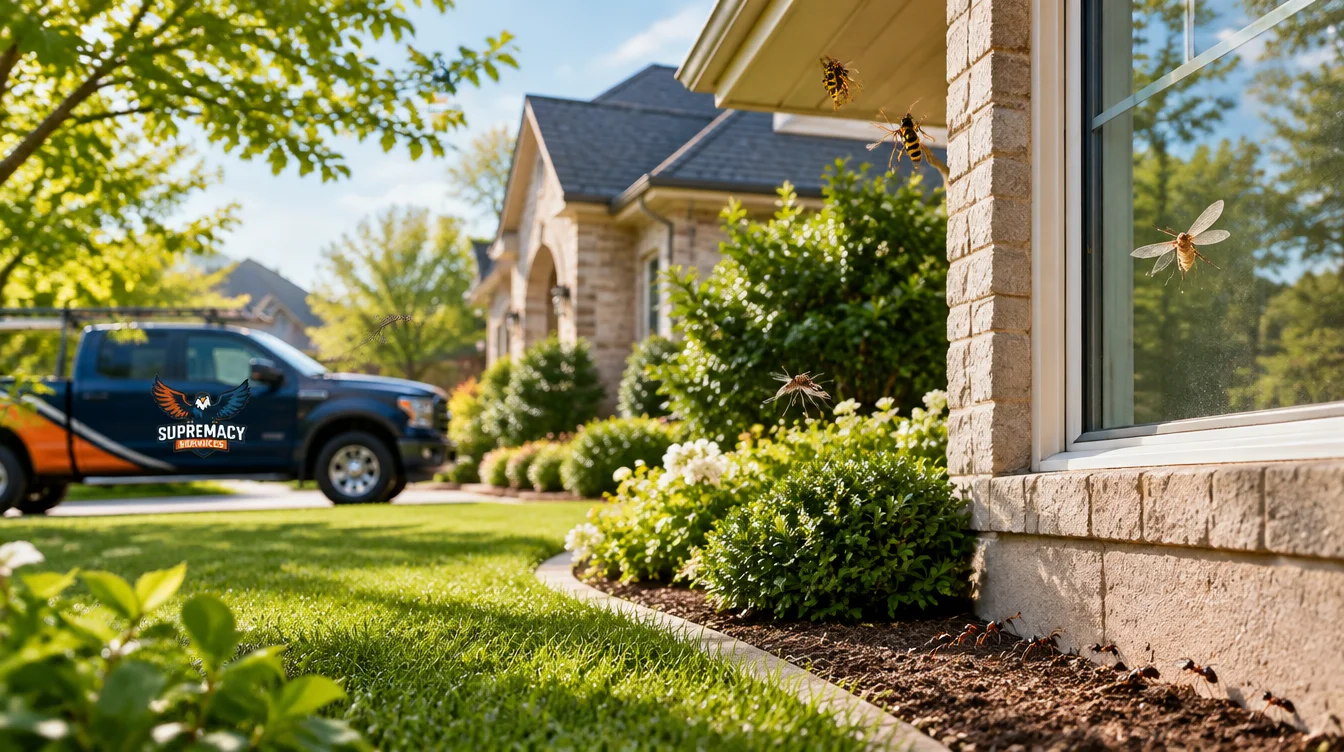
Spring pests in North Texas are noticeably more active from; termites, ants and fire ants, mosquitoes, wasps, cockroaches, spiders and several other insects. Rising temperatures, rainfall, moisture, plant growth and changes in insect reproductive cycles can make pests that were dormant, sheltered or simply less noticeable during winter suddenly much easier to see.
For Dallas–Fort Worth homeowners, termites deserve particular attention during spring because this is when subterranean termite swarmers become conspicuous. Texas A&M guidance identifies early spring as an important period for subterranean termite swarming, while fire ants also become easier to notice and manage as temperatures rise and workers begin actively foraging. Supremacy Services
But seeing more insects does not automatically mean your house has an infestation.
The important questions are:
What insect is it? Where is it coming from? And is it simply seasonal outdoor activity—or evidence of a problem developing around or inside your home?
Table of Contents
- Why Are There More Bugs in Spring?
- What Bugs Come Out in Spring in North Texas?
- Spring Pest Calendar for North Texas
- Termites
- Ants and Fire Ants
- Mosquitoes
- Wasps
- Cockroaches
- Spiders
- Springtails and Other Moisture Pests
- Why Spring Rain Can Increase Pest Activity
- Spring Pest Prevention Checklist
- DIY vs. Professional Pest Control
- FAQs
Why Are There More Bugs in Spring?
Spring brings warmer temperatures and changing moisture conditions that allow many insects to become more active, forage, reproduce or become visible around homes.
Not every pest follows exactly the same seasonal pattern.
Termites may become noticeable because reproductives swarm. Fire ants begin actively foraging as temperatures become suitable. Mosquito activity depends heavily on species, temperature and available breeding water. Moisture-loving organisms such as springtails can increase dramatically when environmental conditions favor them. Texas Fire Ant Project
North Texas spring weather can therefore affect pest pressure in several ways.
Rain can fill containers and other low spots with water. Warmer conditions increase insect activity. Vegetation creates shelter. Meanwhile, pests searching for food, moisture or protected nesting locations can move closer to homes.
This is why spring pest prevention should concentrate on the property conditions supporting pests, not simply on spraying every insect that appears.
The EPA’s Integrated Pest Management guidance similarly emphasizes identification, monitoring, prevention and selecting appropriate controls instead of automatically treating every organism encountered. US EPA
What Bugs Come Out in Spring in North Texas?
For homeowners, these are among the most relevant pests and insects to watch as North Texas moves into spring:
| Pest | What you may notice | Common areas | Main concern |
|---|---|---|---|
| Termites | Winged swarmers, discarded wings, mud tubes | Foundation, windows, structural wood | Structural damage |
| Ants | Trails and increased foraging | Kitchens, patios, foundations | Indoor invasion |
| Fire ants | New or more visible mounds | Lawns and landscaping | Painful stings |
| Mosquitoes | Increasing biting activity | Shaded yards, vegetation, water-holding containers | Bites/disease-vector concern |
| Wasps | Queens or early nest construction | Eaves, patios, sheds | Stings |
| Cockroaches | Indoor or exterior activity | Kitchens, drains, garages | Sanitation/indoor infestation |
| Spiders | Webs and sightings | Eaves, garages, landscaping | Usually nuisance/predator activity |
| Springtails | Tiny jumping insects | Damp soil, pools, bathrooms | Moisture-related nuisance |
| Fleas/ticks | Activity around pets/yards | Shaded yards, pet areas | Bites/vector concern |
The precise timing varies with weather, species and property conditions. Think of this as a spring inspection list, not a prediction that every North Texas property will encounter every pest.
Spring Pest Calendar for North Texas
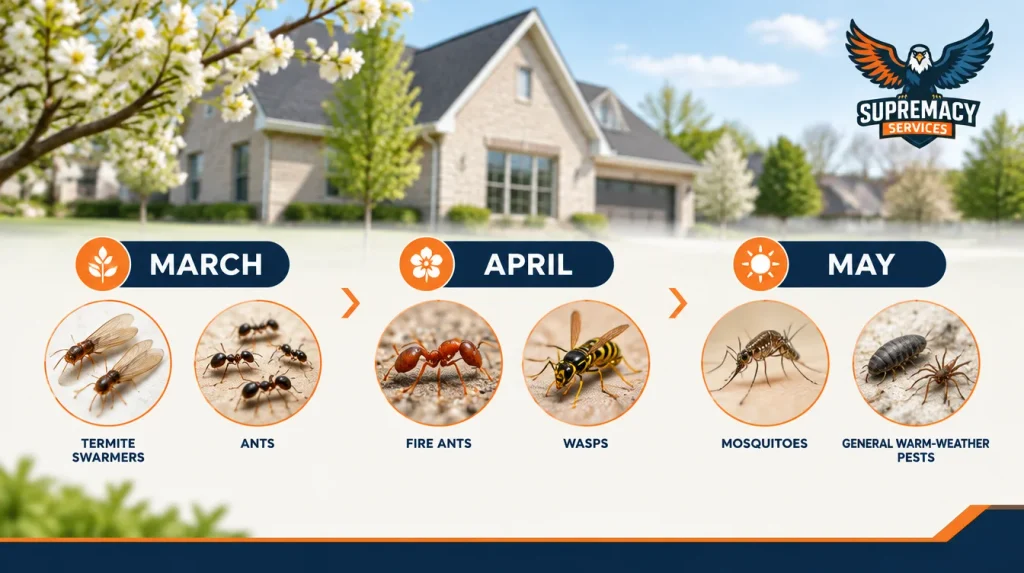
There is no single date when “bug season” starts.
A more useful way to think about spring is as a gradual transition.
| Period | What homeowners should watch |
|---|---|
| Late winter | Seal gaps, correct leaks, inspect screens and clean drainage systems |
| March | Watch closely for termite swarmers and emerging ant activity |
| April | Termite, ant, fire-ant and other outdoor insect activity can become more noticeable |
| May | Mosquito and other warm-weather pest pressure becomes increasingly important |
| Early summer | Continue mosquito, ant, wasp, cockroach and exterior pest prevention |
This calendar is intentionally general. Actual pest activity depends on temperature, rainfall, species and local property conditions.
1. Termites
Why Do Termites Appear in Spring?
Spring is an important termite detection period in North Texas because mature subterranean termite colonies can release winged reproductive termites called swarmers.
Supremacy’s dedicated North Texas termite-season guide already covers this topic in depth and notes that March and April are particularly important months to watch for common subterranean termite swarming in Texas. Termite workers, however, can remain active outside the visible spring swarming period. Supremacy Services
That distinction matters.
Termite swarm season ≠ termite activity season
A swarm is a reproductive event.
It is not the only time termites can be present around a house.
Watch for:
- winged insects emerging around the structure;
- piles of discarded wings near windows or doors;
- mud tubes along foundation surfaces;
- suspicious damaged wood; and
- recurring swarmers indoors.
Texas A&M identifies subterranean termites as an important structural pest and provides specific identification and prevention guidance for homeowners. Texas A&M AgriLife Extension Service
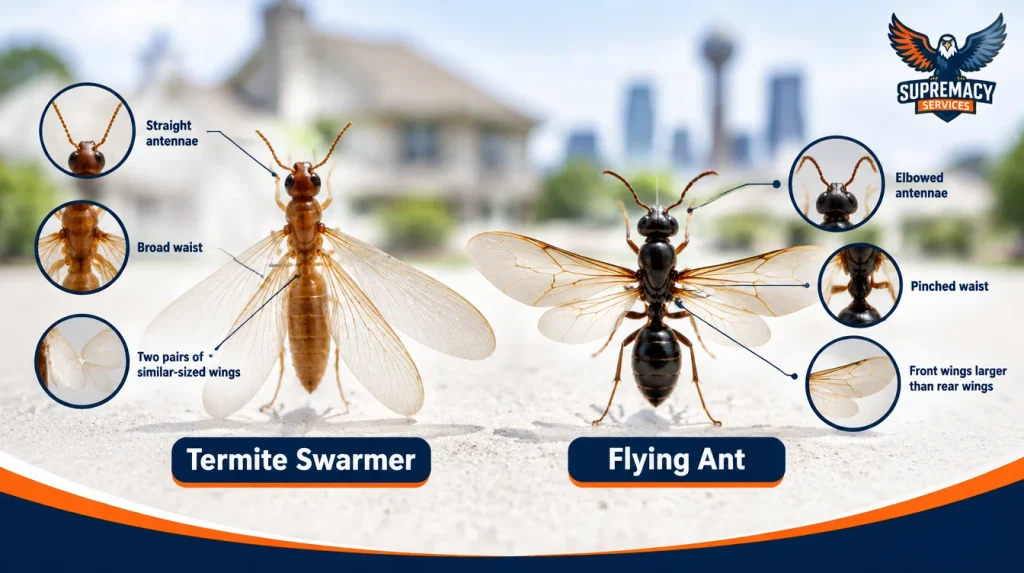
Flying Ant or Termite?
Do not assume every winged insect appearing in spring is a termite.
Flying ants are one of the most common sources of confusion.
Instead of spraying first and identifying later, photograph or preserve a specimen if possible. Correct identification determines what—if anything—needs to be done.
Seeing winged insects, mud tubes or other possible termite signs? Learn about Supremacy Services’ termite inspection and protection options before deciding on treatment.
2. Ants and Fire Ants
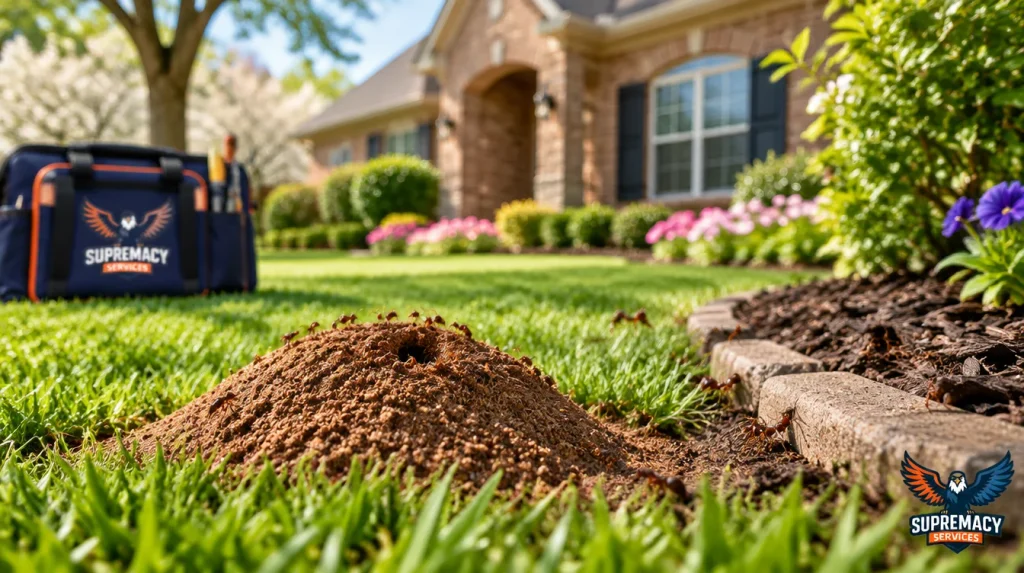
Why Do Ants Become More Noticeable in Spring?
Warmer conditions increase ant foraging activity, while food, moisture and favorable nesting sites can bring ants into yards and homes.
Household ants may establish trails around:
- kitchens;
- sinks;
- pantry areas;
- pet-food locations;
- windows;
- door frames;
- patios; and
- foundation openings.
The ants you see are often workers searching for resources rather than the entire colony.
That is why continually wiping out the visible trail may not resolve the underlying source.Supremacy Services
Fire Ants Are a Different Problem
Fire ants deserve their own consideration because they can create stinging hazards in lawns and landscaped areas.
Texas A&M AgriLife specifically identifies spring as a useful time for fire-ant control because workers are actively searching for food and mounds may be easier to locate. Bait effectiveness depends on active foraging and following the product label correctly. Texas Fire Ant Project
Never pour gasoline or another flammable liquid onto an ant mound. Texas A&M explicitly warns against this practice. Texas A&M AgriLife Extension Service
3. Mosquitoes
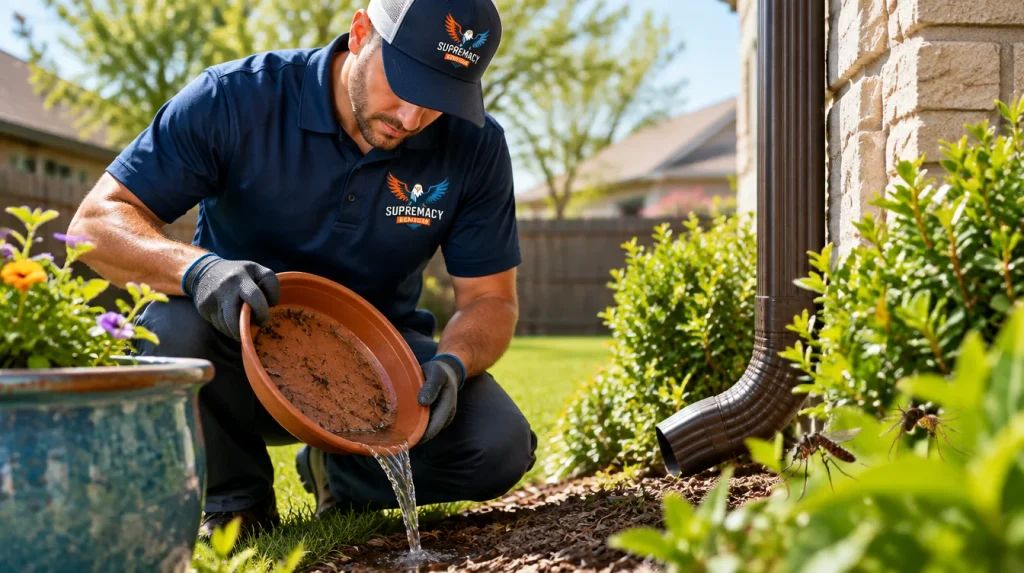
When Do Mosquitoes Start Appearing in North Texas?
Mosquito pressure generally increases as temperatures warm and suitable breeding water becomes available, but exact timing depends on mosquito species and weather.
Spring rain can create breeding habitat in surprisingly small water-holding locations around a property.
Check:
- buckets;
- plant saucers;
- clogged rain gutters;
- children’s outdoor toys;
- bird baths;
- pet dishes;
- tarps;
- wheelbarrows;
- drainage areas; and
- other containers that retain water.
Texas A&M recommends reducing standing water around homes and regularly draining common water-holding containers. Texas A&M AgriLife Extension Service
EPA homeowner guidance likewise recommends eliminating standing water from gutters, buckets, bird baths, fountains, covers and similar containers as part of mosquito prevention.
What if there is no obvious standing water?
Do not assume mosquitoes must be breeding directly on your property.
Some species can travel considerable distances from breeding sites, which means a homeowner can have mosquito pressure even after eliminating obvious water sources in their own yard. Supremacy Services
4. Wasps
Why Do Wasps Start Appearing Around Homes?
As spring progresses, homeowners may notice increasing wasp activity around structures and landscaping.
Pay particular attention to repeated traffic around:
- roof eaves;
- porch ceilings;
- sheds;
- play structures;
- trees;
- fence lines; and
- wall openings.
An isolated wasp flying through the yard and repeated insects entering the same opening are very different situations.
What should you do about a small nest?
Distance matters.
Avoid disturbing a nest if doing so places you within the insects’ defensive area, especially if someone in the household has a known severe sting allergy.
The more useful question is not simply “Can I knock it down?” but:
What species is it, where is the nest located, and can it be approached safely?
5. Cockroaches
Does Spring Cause Cockroach Problems?
Warmth and moisture can influence cockroach activity, but cockroaches should not be treated as a strictly seasonal pest.
Some species can live and reproduce indoors.
That is particularly important with German cockroaches.
Supremacy’s existing German-vs.-American cockroach guide explains the practical difference: German cockroaches are strongly associated with kitchens, bathrooms, appliances and other indoor harborages, whereas American cockroaches are often associated with drains, plumbing systems, utility spaces and other damp environments. Supremacy Services
So a spring cockroach sighting requires context.
One large roach near a garage
It may have entered from outdoors.
Numerous small roaches around kitchen appliances
That pattern deserves considerably more attention because it may indicate indoor breeding.
Watch for:
- repeated nighttime sightings;
- nymphs;
- egg cases;
- droppings;
- activity around appliances; and
- cockroaches appearing in multiple rooms.
6. Spiders
Why Are There More Spiders Around My House in Spring?
Increasing insect activity can also mean increasing opportunities for spiders, which feed on insects and other arthropods.
You may begin noticing webs around:
- porch lights;
- eaves;
- windows;
- garages;
- fences;
- shrubs; and
- storage areas.
A spider problem can therefore sometimes be a secondary pest-pressure clue.
If insects are abundant around exterior lights, landscaping and entryways, removing webs alone may provide only temporary improvement.
Reduce the conditions attracting prey insects and address structural entry points where practical.Supremacy Services
7. Springtails and Other Moisture Pests
Tiny jumping insects appearing around damp areas are sometimes mistaken for fleas.
They may actually be springtails.
Texas A&M explains that springtails thrive where moisture and organic material are abundant. They do not bite people or pets, transmit disease or damage household items, although large populations can become a nuisance. Texas A&M AgriLife Extension Service
They may occur around:
- damp landscaping;
- leaf litter;
- mulch;
- pools;
- moist foundations;
- bathrooms; and
- potted plants.
Springtails vs. fleas
Springtails can jump, which causes confusion.
But fleas are biting parasites. Springtails are primarily moisture-associated decomposers.
If hundreds of tiny jumping insects suddenly appear around a pool or damp foundation, inspect the moisture conditions before assuming you have a flea infestation.
Why Spring Rain Can Increase Pest Activity
Rain does not affect every pest in the same way.
But moisture can alter pest activity by:
- filling mosquito breeding containers;
- increasing damp habitats;
- affecting ant nesting and foraging;
- supporting vegetation and insect habitat;
- creating moisture around foundations; and
- changing where insects seek shelter.
After heavy spring weather, inspect the property rather than automatically applying pesticide.
Look for what changed.
Is water collecting somewhere it normally does not?
Are gutters draining properly?
Has mulch become saturated against the foundation?
Are ants moving through a new crack?
Has vegetation become dense against exterior walls?
The cause often tells you more than the insect sighting itself.
Spring Pest Prevention Checklist for North Texas Homes
A good spring pest inspection can be completed by walking slowly around the property.
Around the foundation
- Check for cracks and accessible gaps.
- Look for termite mud tubes.
- Check plumbing and utility penetrations.
- Keep unnecessary debris away from the structure.
- Investigate persistent moisture.
Around doors and windows
- Repair damaged screens.
- Inspect weather stripping.
- Check door sweeps.
- Seal appropriate structural openings.
Around landscaping
- Trim vegetation where it creates unwanted contact with the structure.
- Remove accumulated leaf litter where practical.
- Monitor fire-ant mounds.
- Check damp mulch and shaded areas.
- Avoid creating persistent moisture immediately against the building.
Around water
- Empty unnecessary containers.
- Check gutters.
- Drain plant saucers.
- inspect outdoor toys.
- refresh or manage bird-bath water appropriately.
- repair leaks.
Inside
- Store food securely.
- Clean crumbs and grease.
- avoid leaving pet food exposed unnecessarily.
- repair plumbing leaks.
- reduce clutter around known pest harborages.
These steps align with the EPA’s IPM approach: reduce pests’ access to food, water and shelter, prevent entry and use treatment strategically when necessary. US EPA

DIY vs. Professional Spring Pest Control
Many spring pest problems can initially be addressed through sanitation, moisture correction, exclusion and monitoring. Professional service becomes more appropriate when the pest cannot be identified, an infestation is established, structural pests are suspected or repeated activity continues despite reasonable prevention.
| DIY is reasonable for | Consider professional inspection/service when |
|---|---|
| Emptying standing water | Termite swarmers appear indoors |
| Cleaning food residues | Mud tubes or wood damage appear |
| Repairing screens | Fire-ant activity presents a significant hazard |
| Correcting minor moisture sources | Cockroach nymphs repeatedly appear |
| Sealing appropriate small gaps | Wasps nest in a difficult or dangerous location |
| Removing clutter | Pest activity spreads through several areas |
| Monitoring occasional sightings | You cannot identify the insect/source |
| Correctly using labeled consumer products | Prevention has not stopped recurring activity |
If you use a pesticide yourself, follow the product label.
Professional structural pest-control services in Texas are regulated by the Texas Department of Agriculture. Businesses and individuals providing structural pest control for compensation are subject to state licensing requirements. Texas Agriculture
Spring pests keep returning around your home? Explore Supremacy Services’ perimeter pest-control options for recurring ants, roaches, spiders and other common household invaders across DFW.
What Does Professional Spring Pest Control Include?
The exact service should depend on the pest and property rather than treating every home identically.
A professional evaluation may involve:
Identification. Determine which pest is actually present.
Inspection. Locate activity, entry routes, harborages and conducive conditions.
Exterior evaluation. Examine foundations, doors, windows, landscaping, utility penetrations and other likely routes.
Moisture assessment. Identify leaks, drainage problems or damp environments contributing to pest pressure.
Targeted treatment. Apply an appropriate control strategy where necessary.
Exclusion recommendations. Identify openings or conditions that can be corrected.
Monitoring and follow-up. Determine whether activity is declining and whether additional action is justified.
This is consistent with the basic logic of Integrated Pest Management: identify and monitor first, then select appropriate preventive and control measures rather than treating blindly. US EPA
Are All Spring Bugs Harmful?
No.
The presence of an insect does not automatically mean it should be eliminated.
Some insects and spiders play useful ecological roles. Even springtails, which can appear in enormous numbers under favorable conditions, primarily consume fungi, algae and decaying organic material and generally do not harm people or homes. Texas A&M AgriLife Extension Service
The decision to act should depend on:
- correct identification;
- where the organism occurs;
- population size;
- risk to occupants;
- structural or sanitation implications; and
- whether activity is persistent.
This distinction makes the article more useful than a generic “every bug is dangerous” pest-control page.
When Should You Call Pest Control in Spring?
Consider professional help when:
- termite swarmers emerge indoors;
- you discover mud tubes or suspected structural damage;
- numerous small cockroaches or nymphs appear indoors;
- fire-ant colonies create a significant stinging hazard;
- a wasp nest is positioned where safe removal is difficult;
- mosquitoes remain severe despite correcting breeding conditions;
- recurring ants cannot be traced to a source;
- pests repeatedly enter despite reasonable exclusion measures; or
- you simply cannot determine what insect you are dealing with.
The goal is identification before treatment.
That prevents homeowners from spending money treating the wrong pest—or treating harmless seasonal activity as an infestation.
Frequently Asked Questions
What bugs come out in spring in North Texas?
North Texas homeowners commonly notice increased activity from termites, ants, fire ants, mosquitoes, wasps and various other insects as spring progresses. Exact timing depends on weather, moisture and species.
What month do bugs start coming out in Texas?
There is no single month for every pest. Activity can begin increasing as conditions warm in late winter and early spring. March and April are particularly important for watching for subterranean termite swarmers in Texas. Supremacy Services
Why are there suddenly so many bugs around my house?
Warmer weather, rainfall, food, moisture, vegetation and seasonal reproduction can all increase insect activity. Inspect the conditions around the property rather than assuming the home itself is infested.
Are termites common during spring in North Texas?
Spring is an important period for visible subterranean termite swarming. Termites can remain active outside swarm season, however, so lack of swarmers does not prove that a property is termite-free.
Why do ants appear in spring?
Warmer temperatures increase ant foraging, while food, moisture and nesting opportunities can draw workers around or into homes. Fire ants also become easier to notice as conditions become favorable for foraging.
When do mosquitoes start appearing in North Texas?
Activity varies by species and weather, but mosquito pressure increases as conditions become warm enough and breeding water is available. Eliminating unnecessary standing water is an important homeowner prevention measure.
Does rain make bugs worse?
Rain can increase suitable conditions for certain pests by creating standing water, increasing moisture and altering nesting or foraging conditions. Its effect depends on the species.
Should I spray my house for bugs every spring?
Not automatically. Identify the pest and assess activity first. EPA Integrated Pest Management guidance recommends monitoring, prevention and appropriate targeted control rather than assuming pesticide treatment is necessary for every insect sighting.
What are the tiny jumping bugs around my house after rain?
They may be springtails, particularly around moist soil, landscaping or other damp areas. Springtails can occur in large numbers but do not bite people or damage homes.
When should I call a pest-control professional?
Professional help makes sense when pests repeatedly return, the species cannot be identified, termites or an established cockroach infestation are suspected, stinging insects create a hazard, or reasonable prevention does not resolve the problem.
Prepare Your North Texas Home Before Spring Pest Pressure Builds
Spring pest activity in Dallas–Fort Worth is not one single event.
Termites may swarm. Ants begin foraging more actively. Fire-ant mounds become noticeable. Mosquito pressure develops as warmth and water create suitable conditions. Wasps establish nests, and other insects become increasingly visible around homes and landscaping.
The best response is not to spray everything you see.
Identify the pest, remove the conditions helping it thrive, prevent entry where practical and use targeted treatment when the situation actually requires it.
If recurring ants, roaches, spiders, mosquitoes or other pests are becoming difficult to control around your Dallas–Fort Worth property, Supremacy Services can inspect the property and determine which pest-management approach fits the actual problem.

