
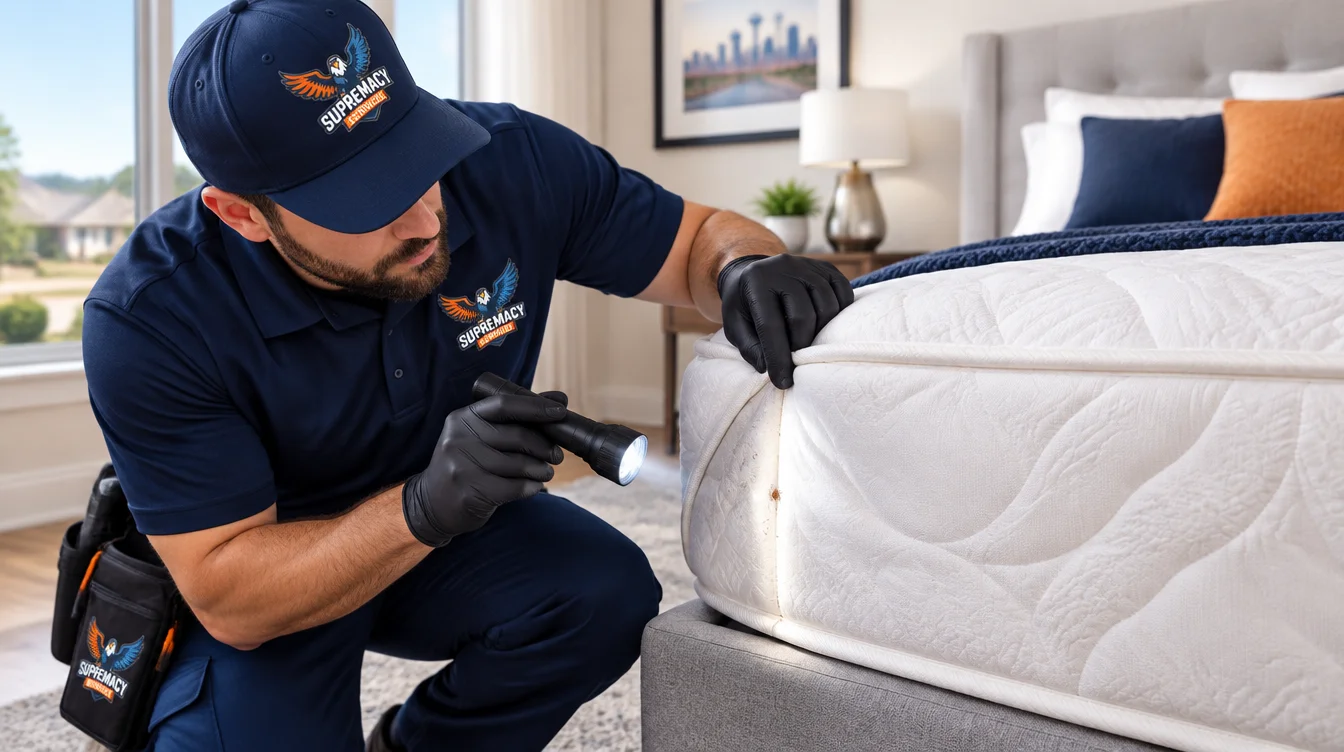
Short answer: usually, no. Finding bed bugs does not automatically mean you need to throw away your mattress.
In many cases, a mattress can remain in the home and be incorporated into a properly planned bed bug treatment. Bed-bug-proof encasements can also help eliminate hiding places and trap bugs already inside. The U.S. Environmental Protection Agency specifically advises homeowners not to discard furniture when bed bugs can be safely eliminated from it.
For Dallas and DFW homeowners, the more important question is not simply “Are there bed bugs on my mattress?” but:
Can the mattress be effectively treated, monitored and safely kept as part of a whole-room or whole-home bed bug control plan?
Throwing the mattress away without addressing the rest of the infestation can cost you money without solving the actual problem.
Table of Contents
- Do You Have to Throw Away a Mattress With Bed Bugs?
- Why Throwing Away the Mattress Usually Doesn’t Solve the Problem
- When Should You Consider Throwing the Mattress Away?
- Can Bed Bugs Live Inside a Mattress?
- Can a Bed Bug Mattress Encasement Save the Mattress?
- How Professionals Treat Mattresses for Bed Bugs
- What Should You Do With Bedding and Clothes?
- What If You Decide to Throw the Mattress Away?
- Should You Buy a New Mattress Immediately?
- DIY vs. Professional Bed Bug Treatment
- Bed Bugs in Dallas and DFW Homes
- What to Do If You Find Bed Bugs on Your Mattress
- FAQs
Do You Have to Throw Away a Mattress With Bed Bugs?
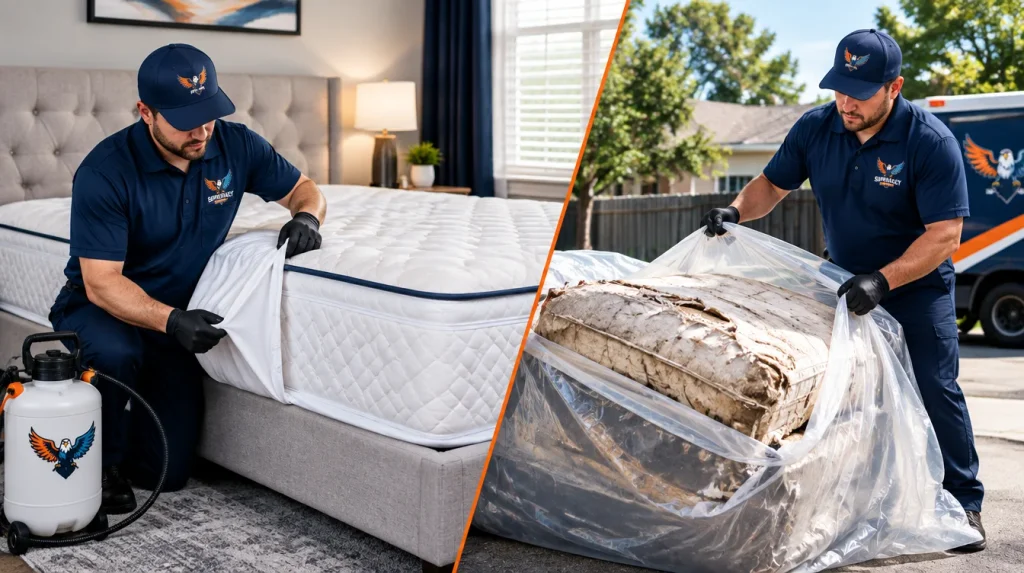
No. A mattress with bed bugs does not automatically need to be thrown away.
The EPA recommends mattress and box-spring encasements as part of bed bug management and advises against discarding furniture when the infestation can be safely eliminated.
Whether your mattress can be kept depends on several factors:
| Factor | Mattress May Be Worth Keeping | Disposal May Be Considered |
|---|---|---|
| Physical condition | Mattress is structurally sound | Badly torn or deteriorated |
| Infestation | Treatment can reach affected areas | Mattress cannot be effectively treated |
| Encasement | Proper encasement can be installed | Damage prevents effective encasement |
| Replacement need | Mattress is relatively new | Mattress already needs replacement |
| Professional assessment | Treatment plan includes mattress | Pest professional recommends disposal |
The presence of bed bugs alone is therefore not a reason to automatically replace the mattress.
Don’t move the mattress through the house unnecessarily
Moving an infested mattress from room to room can potentially move bed bugs or eggs to additional locations.
Before dragging a mattress through hallways, stairways or other bedrooms, determine how the infestation will actually be treated.
Not sure whether your mattress can be saved? Learn how professional [bed bug thermal treatment in DFW] can treat mattresses, furniture and other hiding areas as part of a broader bed bug control plan.
Why Throwing Away the Mattress Usually Doesn’t Solve the Problem
One of the biggest misconceptions about bed bugs is that they live only in mattresses.
They don’t.
Bed bugs can hide around:
- mattress seams and folds;
- box springs;
- bed frames;
- headboards;
- bedside furniture;
- baseboards;
- upholstered furniture;
- cracks and crevices;
- luggage and belongings.
EPA guidance specifically identifies mattresses, box springs, headboards and surrounding furniture as important places to inspect and manage.
That means removing the mattress may remove one hiding location while leaving the infestation behind.
You could then bring a brand-new mattress into the same infested bedroom.
A mattress is often only part of the infestation
Suppose you find bed bugs along a mattress seam.
It is tempting to assume:
Bed bugs on mattress → mattress is the problem → remove mattress → problem solved.
Unfortunately, bed bug control isn’t usually that simple.
The insects may also be hiding in the bed frame, box spring, headboard or nearby furniture. A successful strategy therefore focuses on the infested environment, not simply the most obvious object.
When Should You Consider Throwing the Mattress Away?
Although many mattresses can potentially be treated, there are situations where replacement may make sense.
1. The mattress is already badly damaged
A heavily torn or deteriorated mattress may contain numerous difficult-to-access folds, openings and damaged areas.
If the mattress already needed replacement before the infestation occurred, investing additional effort in preserving it may make little practical sense.
2. It cannot be treated effectively
Some possessions may not be practical to treat.
EPA guidance recommends discarding furniture responsibly when bed bugs cannot safely be eliminated from it, rather than automatically throwing furniture away whenever an infestation occurs.
3. A pest management professional recommends disposal
A professional inspection can determine whether keeping the mattress fits the treatment strategy.
The decision should ideally happen after inspection, rather than before it.
4. The mattress cannot support a secure encasement
A bed-bug-proof encasement must remain intact.
Large tears, broken components or other severe deterioration could make effective encasement impractical.
Can Bed Bugs Live Inside a Mattress?
Bed bugs commonly hide around mattress seams, folds and similar protected areas, but the mattress is only one potential harboring location.
EPA inspection guidance recommends checking:
- mattress seams;
- box springs;
- headboards;
- furniture;
- baseboards;
- cracks and other protected spaces.
Signs to inspect around your mattress
Look for more than bites.
Possible signs include:
- live bed bugs;
- dark spotting or droppings;
- shed skins;
- eggs;
- small blood stains.
EPA materials identify droppings, blood staining and shed skins among the signs homeowners may encounter.
Finding one of these signs warrants further investigation, but identification matters. Not every unexplained skin reaction or bedroom insect proves that you have bed bugs.
Can a Bed Bug Mattress Encasement Save the Mattress?
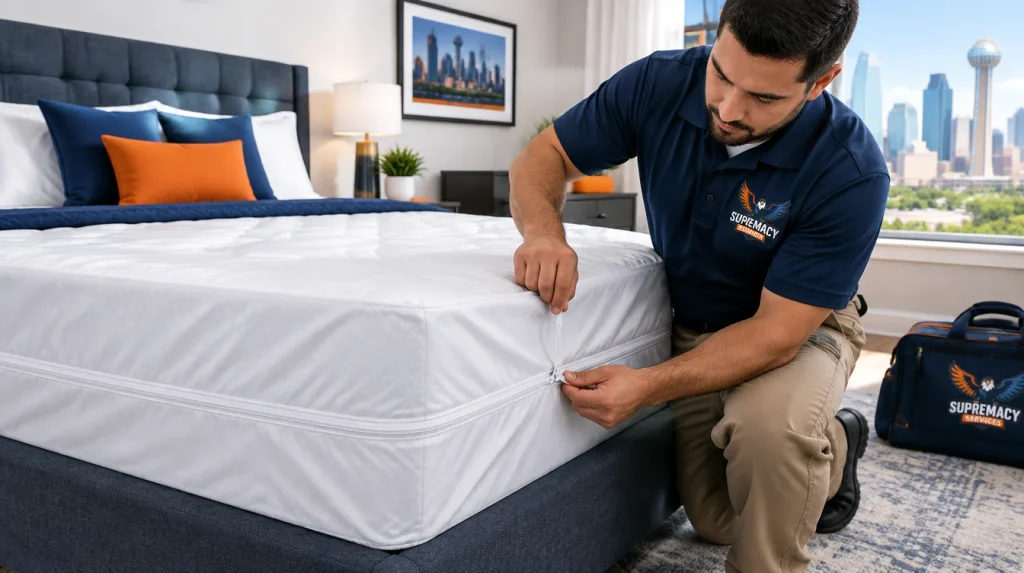
A properly designed bed bug encasement can be an important part of keeping an otherwise usable mattress.
An encasement completely surrounds the mattress or box spring.
According to EPA guidance, encasements can trap bed bugs inside and reduce hiding places, while their light-colored exterior can make future bed bug activity easier to notice.
EPA recommends sturdy encasements designed for bed bugs and advises keeping them in place for an extended period.
An encasement is not the same as complete treatment
This distinction matters.
Putting a cover around the mattress does not address bed bugs hiding elsewhere in the room.
An encasement works best as one component of a broader strategy that may include:
- inspection;
- laundering and heat-drying appropriate fabrics;
- vacuuming;
- reducing clutter;
- treating appropriate items;
- monitoring;
- professional pest control where necessary.
EPA recommends an integrated approach rather than relying on one technique alone.
How Professionals Treat Mattresses for Bed Bugs
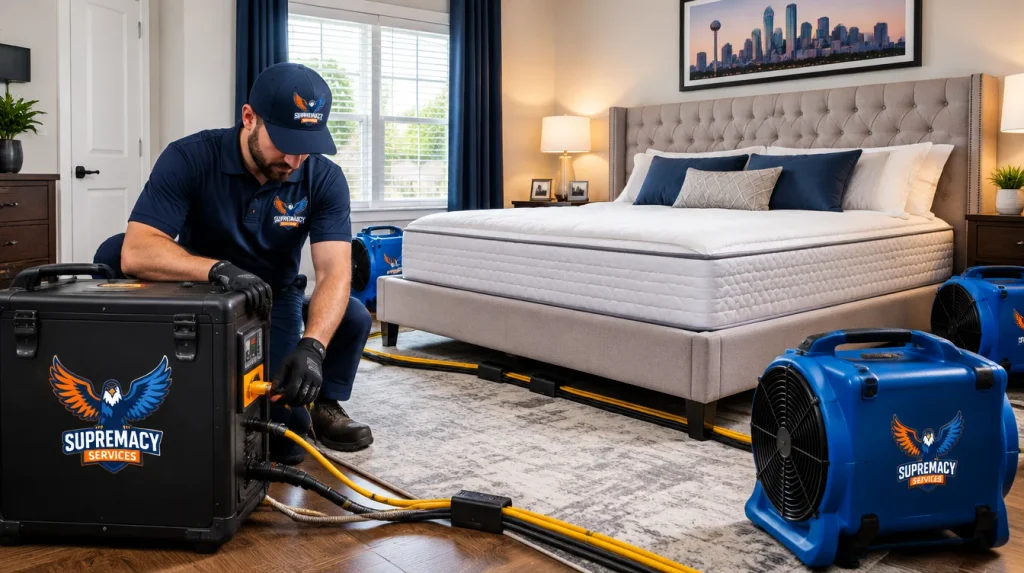
The exact process depends on the treatment method, the extent of the infestation and the conditions inside the property.
One professional option is thermal treatment.
Supremacy Services’ existing DFW bed bug service uses specialized heating equipment and air circulation intended to bring targeted areas to controlled treatment temperatures. The company’s current service page describes treatment of mattresses, furniture, baseboards and other potential hiding areas rather than simply removing the bed.
This is an important distinction:
Professional bed bug treatment targets the infestation—not just the mattress.
What homeowners should expect
Depending on the selected treatment strategy, preparation may include:
- confirming bed bug activity;
- inspecting bedrooms and nearby areas;
- identifying belongings requiring special handling;
- preparing laundry or other appropriate items;
- treating the affected environment;
- protecting or encasing mattresses where appropriate;
- monitoring for continued activity afterward.
The exact preparation instructions should come from the pest professional performing the treatment.
Be careful with pesticides on mattresses
Do not assume that any household insecticide can be sprayed onto a mattress.
EPA guidance states that pesticide labels specify where a product may legally and safely be applied, including whether mattress application is permitted. Products must be used according to their labels.
Never use an outdoor pesticide indoors simply because the label mentions insects.
What Should You Do With Bedding and Clothes?
Finding bed bugs does not mean you need to throw away your sheets, blankets and clothing either.
EPA guidance recommends regularly washing and heat-drying appropriate bedding and clothing that may be involved in an infestation.
When dealing with potentially infested laundry:
- avoid carrying loose items unnecessarily through the home;
- use bags or containers to contain items during transport;
- follow appropriate laundering and drying instructions;
- place cleaned items into clean containers or bags when necessary;
- keep untreated and treated belongings separated.
The EPA also recommends using new bags when bringing treated laundry back into an infested residence so cleaned items are not immediately exposed again.
What If You Decide to Throw the Mattress Away?
If the mattress truly cannot be saved, disposal should be handled carefully.
Simply placing an intact infested mattress at the curb creates another problem: someone may pick it up and bring the infestation into another home.
EPA guidance recommends making discarded infested furniture unusable and clearly identifying it as bed-bug-infested before arranging prompt disposal.
Responsible disposal checklist
If disposal is necessary:
- Confirm that disposal is actually needed.
- Follow local waste collection requirements.
- Avoid dragging the uncovered mattress through unaffected areas.
- Make discarded furniture unusable.
- Clearly mark it as containing bed bugs.
- Arrange removal promptly.
- Continue treating and monitoring the property.
Most importantly:
Do not assume disposing of the mattress ends the infestation.
Treatment of the remaining environment is still necessary.
Should You Buy a New Mattress Immediately?
Usually, buying a replacement mattress should not be your first response.
If active bed bugs remain elsewhere in the bedroom, a new mattress can become another place for them to hide.
A better sequence is:
Confirm → inspect → treat → monitor → replace if necessary.
Replacement makes more sense when the existing mattress is physically damaged, cannot reasonably be treated, or was already approaching the end of its useful life.
Otherwise, treating and protecting the existing mattress may avoid an unnecessary expense.
DIY vs. Professional Bed Bug Treatment
Some bed bug management steps can be performed by homeowners, but established infestations can be difficult to eliminate completely.
| Approach | Appropriate Use | Limitation |
|---|---|---|
| Vacuuming | Reducing visible bugs/debris | Does not reliably reach every hiding location |
| Laundry/heat drying | Treating appropriate washable/dryable items | Does not treat the room |
| Mattress encasement | Trapping bugs and reducing mattress hiding areas | Does not eliminate bugs elsewhere |
| Interceptors | Monitoring activity around beds | Monitoring tool, not whole-home treatment |
| Pesticides | Only where product labeling permits | Incorrect use can create safety risks |
| Professional treatment | Established or difficult infestations | Requires proper preparation and professional assessment |
EPA recommends combining multiple strategies through integrated pest management, rather than expecting one technique to solve the infestation.
When to call a professional
Professional assessment becomes particularly useful when:
- bed bugs are found in multiple rooms;
- you repeatedly find bugs after DIY attempts;
- you cannot determine the extent of the infestation;
- multiple mattresses or upholstered items are involved;
- you live in an apartment or other multi-unit building;
- you are considering disposing of expensive furniture;
- you need help determining which belongings can be treated.
Texas regulates structural pest control businesses and individuals performing pest control services for hire through the Texas Department of Agriculture’s Structural Pest Control Service.
Before replacing an expensive mattress or bedroom set, have the infestation evaluated. Explore Supremacy Services’ [DFW bed bug thermal treatment options] to understand how professional treatment can address mattresses, furniture and other hiding areas.
Bed Bugs in Dallas and DFW Homes
The basic biology of bed bugs does not change because a home is in Dallas.
However, the way infestations move between properties can depend heavily on human activity.
Bed bugs are effective hitchhikers. EPA guidance notes that they can move between locations on furniture, bedding, luggage, boxes and clothing.
That makes prevention especially relevant after:
- traveling;
- moving;
- bringing used furniture into the home;
- hosting overnight guests;
- moving between apartments or shared housing.
Apartments and multi-family properties
Bed bug management becomes particularly important in multi-family housing because treating only one item or one immediate hiding place may not address the full situation.
EPA guidance advises residents of multi-family housing to take additional precautions and recommends contacting the landlord when bed bugs are discovered in an apartment setting.
If you rent in Dallas or elsewhere in DFW, communicate promptly with property management and avoid independently moving potentially infested furniture through common areas.
What to Do If You Find Bed Bugs on Your Mattress
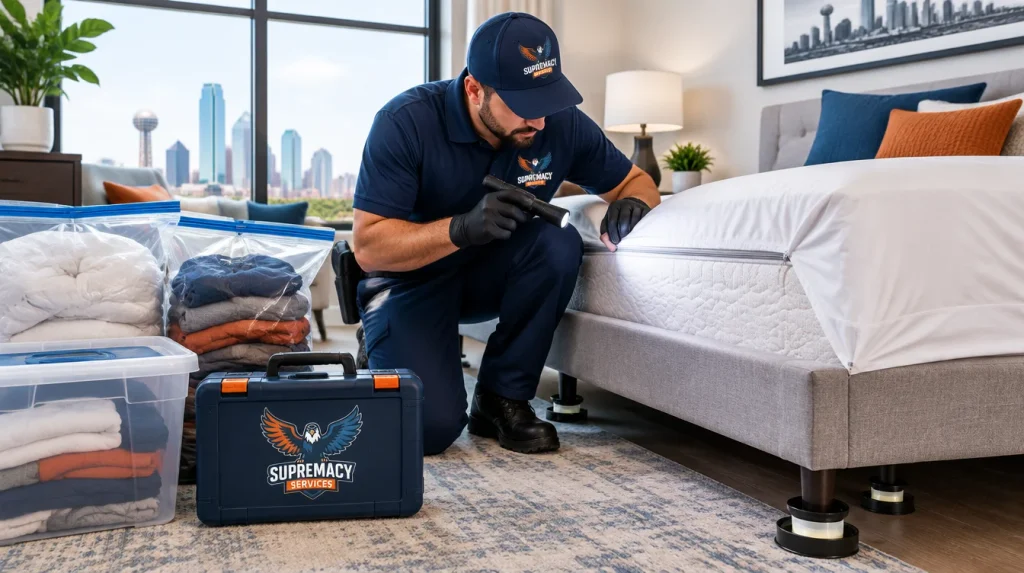
If you discover what appears to be a bed bug, use this sequence.
Step 1: Confirm what you found
Do not rely solely on unexplained bites.
Capture a specimen safely when possible so it can be identified.
Step 2: Don’t immediately throw away the mattress
A treatable mattress may not need replacement.
Step 3: Inspect the surrounding bed area
Check:
- mattress seams;
- box spring;
- headboard;
- bed frame;
- nearby furniture;
- baseboards and nearby cracks.
Step 4: Contain potentially affected belongings
Avoid casually moving bedding, clothing or furniture into other rooms.
Step 5: Heat-dry appropriate fabrics
Follow fabric-care instructions and established bed bug laundering guidance.
Step 6: Consider an appropriate encasement
Use a durable product specifically designed for bed bug management.
Step 7: Determine the extent of the infestation
Finding bugs in multiple locations may indicate a broader problem than the mattress alone.
Step 8: Choose a treatment strategy
EPA recommends integrated bed bug management involving appropriate combinations of physical controls, monitoring and, where needed, correctly selected pest-control measures.
Step 9: Continue monitoring
Do not assume the problem is over simply because you no longer see bugs on the mattress.
How to Reduce the Risk of Bringing Bed Bugs Home
Bed bugs often spread by hitchhiking rather than entering homes in the same way as common outdoor pests.
Useful precautions include:
- inspect secondhand furniture before bringing it inside;
- inspect luggage and travel belongings;
- reduce bedroom clutter;
- vacuum regularly;
- use suitable mattress and box-spring encasements;
- be careful when transporting laundry from an infested home;
- monitor suspicious activity rather than waiting for a severe infestation.
These measures align with EPA bed bug prevention recommendations.
The Bottom Line: Keep the Mattress or Throw It Away?
If your mattress is still in good physical condition and can be effectively incorporated into treatment, you usually should not throw it away solely because you found bed bugs.
A better approach is to determine:
- whether bed bugs are actually present;
- how widespread the infestation is;
- whether the mattress can be treated;
- whether an encasement is appropriate;
- whether other furniture and rooms are affected.
If the mattress is badly damaged or cannot be effectively treated, disposal may be appropriate—but the rest of the infestation still needs to be addressed.
Replacing the mattress without eliminating bed bugs elsewhere can simply give the surviving insects a new place to hide.
Found bed bugs in your mattress or bedroom? Before throwing away furniture, schedule an inspection and determine whether your belongings can be treated. Supremacy Services provides bed bug thermal treatment for homeowners across Dallas and the DFW Metroplex.
Frequently Asked Questions
Should I throw away my mattress if I find one bed bug?
Not automatically. First confirm the insect and inspect the mattress, box spring, bed frame and surrounding area. EPA guidance recommends treating and preserving furniture when bed bugs can safely be eliminated.
Can a mattress be saved after bed bugs?
Often, yes. Whether it can be saved depends on its condition and the treatment strategy. Bed-bug-proof encasements can also trap bugs and reduce mattress hiding places.
Will buying a new mattress get rid of bed bugs?
No. Bed bugs may also be hiding in the box spring, frame, headboard, furniture and surrounding cracks. Replacing only the mattress does not address those locations.
Can bed bugs get through a mattress cover?
A properly constructed bed bug encasement is designed to completely enclose the mattress or box spring. It should have a secure closure and remain intact; EPA recommends using a durable product specifically intended for bed bugs.
How long should a bed bug mattress encasement stay on?
EPA guidance recommends leaving appropriate bed bug encasements in place for at least one year.
Should I throw away my box spring too?
Not automatically. Box springs can provide substantial hiding space, but whether yours can be treated or encased should be determined as part of the overall treatment plan.
Can I sleep on a mattress after finding bed bugs?
Whether and when you should continue using the mattress depends on the treatment strategy being followed. Avoid moving into another bedroom simply to escape the insects without considering how doing so could affect the infestation. Follow the preparation and post-treatment instructions provided for your specific situation.
Can bed bugs survive away from a mattress?
Yes. Bed bugs do not depend on living inside mattresses. They can hide in furniture, cracks and other protected locations, and EPA notes that they can survive for extended periods without feeding.
Can I spray my mattress for bed bugs?
Only use a pesticide on a mattress if the product’s EPA-approved labeling specifically permits that application, and follow all label directions. Never assume a general insect spray is suitable for bedding or mattresses.
Should I call pest control before throwing away my mattress?
That is often sensible when the mattress is valuable or the extent of the infestation is uncertain. An inspection can help determine whether treatment, encasement, disposal or a combination of measures is appropriate.

