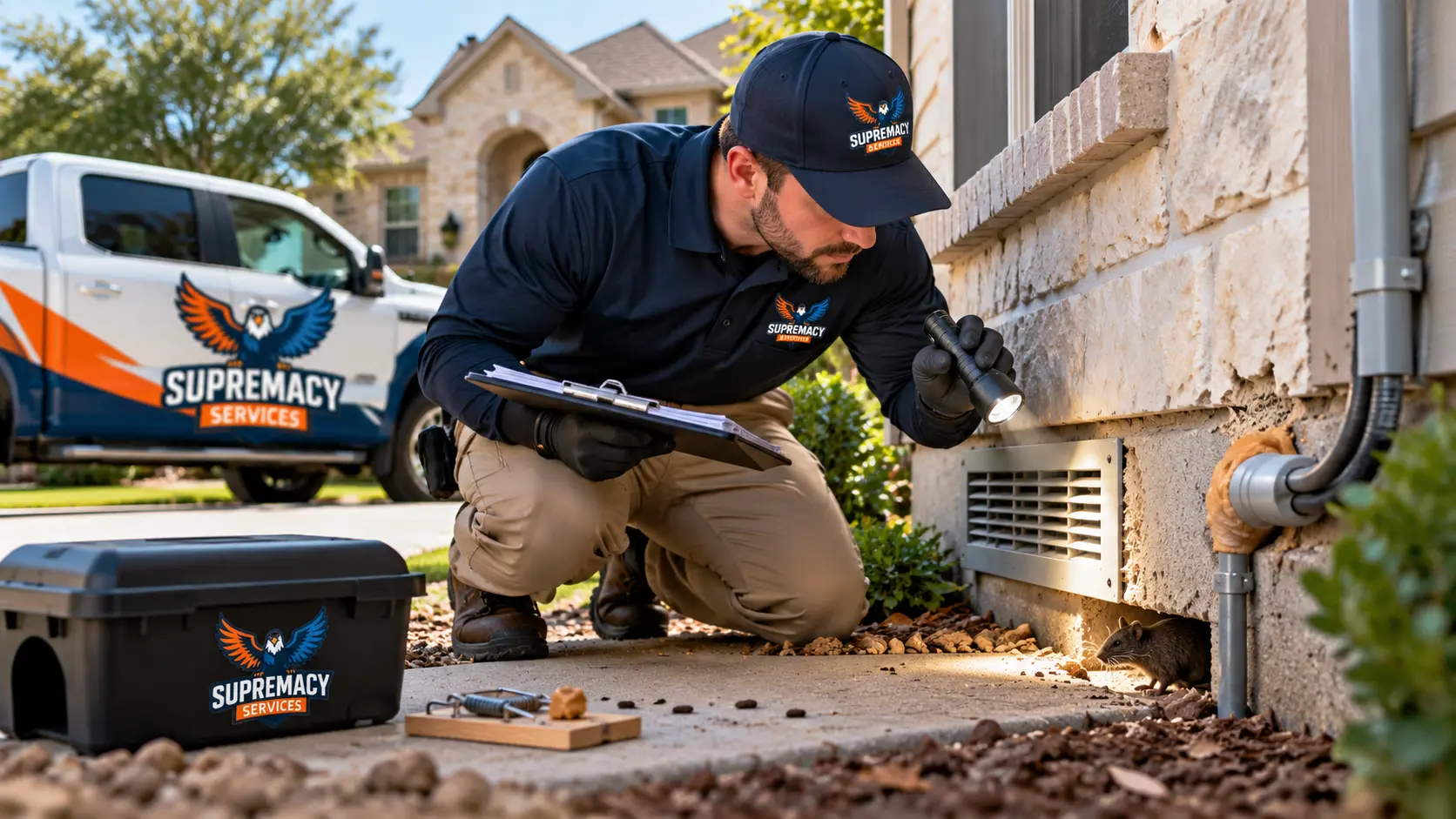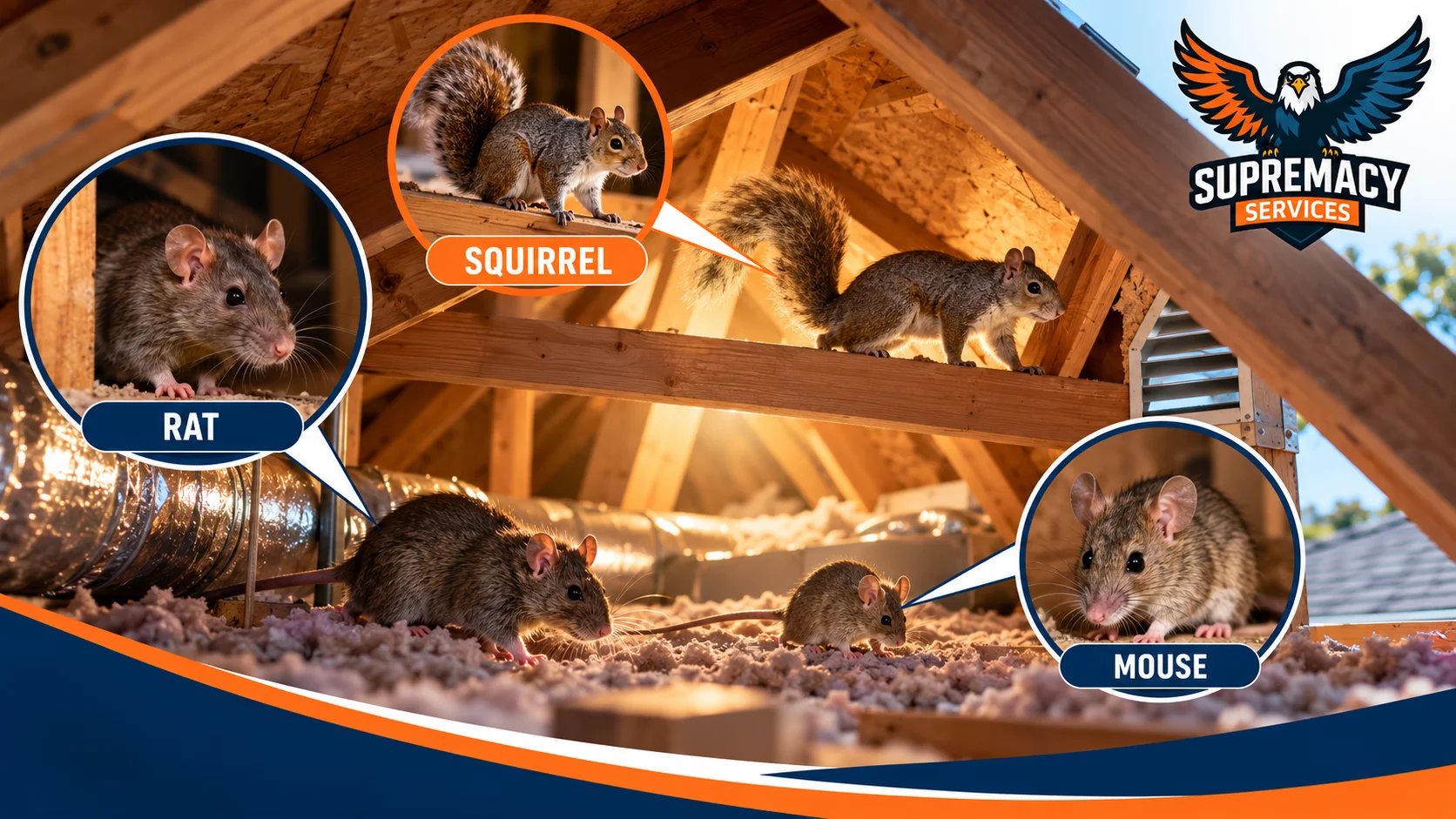
If you hear scratching noises in your attic, the time of day, volume of the sound and physical evidence around the attic can help narrow down the culprit. In Dallas-area homes, rats, mice and squirrels are all possibilities—but they do not usually leave exactly the same clues.
A useful starting point is timing. Scratching, running or gnawing during the day often points toward squirrels, while activity after dark is more consistent with rats or mice. Texas A&M AgriLife specifically notes that daytime running or gnawing in an attic can indicate squirrels, while running, squealing and gnawing at night generally points toward rats.
Sound alone, however, cannot confirm the animal. Droppings, gnaw marks, nesting material, tracks and the location of entry points provide much stronger evidence.
Table of Contents
- Quick Comparison: Rat vs. Mouse vs. Squirrel
- What Does the Time of the Noise Tell You?
- What Do Rats Sound Like in an Attic?
- What Do Mice Sound Like in an Attic?
- What Do Squirrels Sound Like in an Attic?
- How Can You Identify the Animal?
- Where Are Animals Getting Into the Attic?
- Are Attic Rodents Dangerous?
- What Should You Do If You Hear Scratching?
- DIY vs. Professional Removal
- How Professional Attic Inspection and Exclusion Works
- How to Prevent Animals From Returning
- Frequently Asked Questions
Quick Comparison: Rat vs. Mouse vs. Squirrel
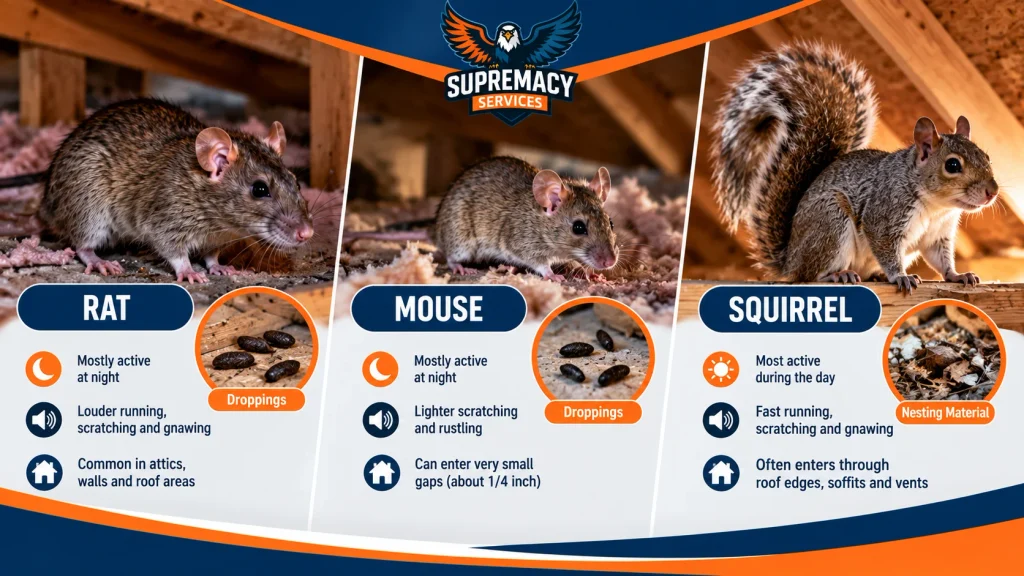
The easiest first clue is when the noise occurs. Rats and mice are primarily active after dark, while tree squirrels are typically active during daylight hours.
| Clue | Rats | Mice | Squirrels |
|---|---|---|---|
| Typical activity | Mostly nighttime | Mostly nighttime | Daytime |
| Common attic sound | Running, scratching, gnawing | Light scratching, rustling, squeaking | Fast running, scratching, gnawing |
| Relative sound | More noticeable/heavier | Usually lighter | Often fast and obvious |
| Common evidence | Droppings, rub marks, gnawing | Small droppings, shredded nesting material | Nuts, leaves, nesting material, gnawing |
| Likely attic access | Roof/soffit gaps, vents, openings | Very small structural gaps | Roof edges, soffits, vents, damaged openings |
| Dallas clue | Roof rats commonly use elevated areas | Can exploit very small gaps | Daytime attic activity is especially useful |
Do not identify an animal solely from the sound. A professional inspection combines the noise pattern with droppings, tracks, nesting material, damage and exterior entry points.
What Does the Time of the Noise Tell You?
Scratching noises at night
If the activity consistently begins after sunset, rats or mice become stronger possibilities.
Texas A&M AgriLife reports that rodent activity increases after dark. Roof rats are particularly relevant to attic investigations because they commonly nest in elevated spaces such as attics and walls.
Nighttime sounds may include:
- scratching;
- light or rapid running;
- gnawing;
- squeaking;
- rustling in insulation;
- movement inside wall or ceiling cavities.
The location also matters. Loud movement directly above a ceiling does not automatically mean a rat is sitting on top of that exact spot. Sound can travel through framing, ductwork and wall cavities.
Scratching noises during the day
Consistent daytime running and gnawing is a stronger squirrel clue.
Texas A&M AgriLife specifically says that sounds of running or gnawing in an attic during the day often indicate squirrels. Tree squirrels may enter roof spaces and can damage insulation or gnaw electrical wiring once inside.
Early morning activity can be particularly noticeable.
What if you hear noises both day and night?
Do not assume you have multiple animals.
Activity patterns are useful clues, not absolute rules. An animal may occasionally move outside its typical schedule, and noises from outside the roof can sound as though they originate inside the attic.
Look for physical evidence before deciding what is living above the ceiling.
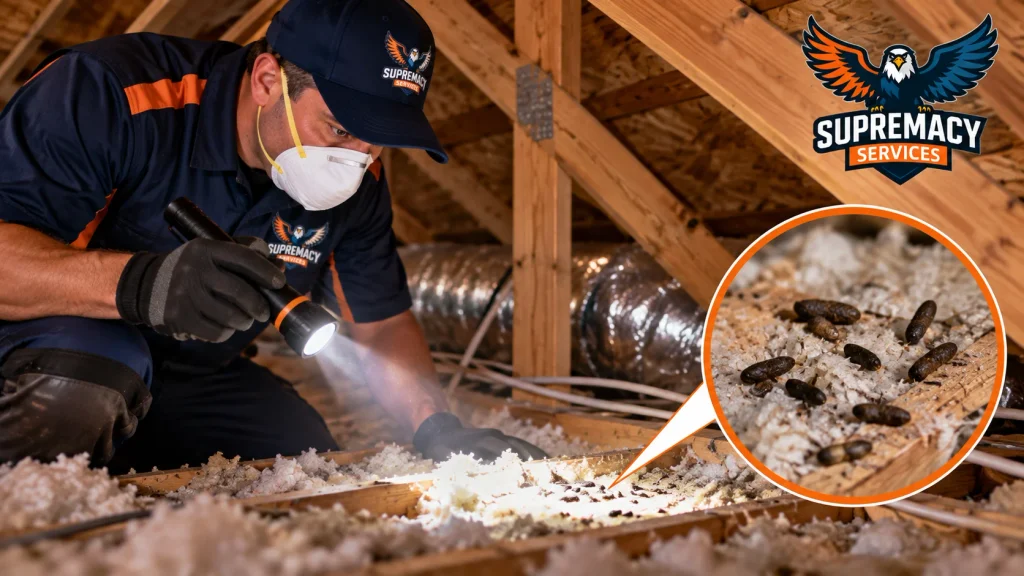
What Do Rats Sound Like in an Attic?
Rats can produce scratching, running, squealing and gnawing sounds, particularly after dark.
For Dallas homeowners, roof rats deserve particular attention. Texas A&M identifies roof rats as strong climbers that prefer elevated nesting areas, including attics, walls and roofs.
Signs supporting a rat diagnosis include:
- nighttime running or scratching;
- droppings;
- gnawed materials;
- greasy rub or smear marks along frequently traveled surfaces;
- tracks in dusty attic areas;
- nesting evidence;
- openings around the roofline, soffits or utility penetrations.
Finding several of these signs together is more useful than trying to identify a rat by sound alone.
Rats vs. mice: listen for scale, then verify
A rat generally creates more noticeable movement than a mouse, but ceiling construction and insulation can dramatically change how loud an animal sounds.
Instead of relying on volume, inspect the evidence.
Texas A&M recommends using clues such as droppings, tracks, gnawing, smears and runways when evaluating rats and mice.
What Do Mice Sound Like in an Attic?
Mice usually create lighter scratching, rustling and small running sounds, particularly at night.
Because they are small and capable climbers, mice may occupy attic insulation, structural voids and other protected spaces without producing the heavier movement a homeowner might associate with a larger animal.
Common mouse evidence includes:
- small droppings;
- gnawed materials;
- finely shredded nesting material;
- tracks;
- a persistent musky odor when activity is established;
- tiny structural openings.
The CDC notes that mice can enter openings about 1/4 inch (6 mm) wide, which means a home does not need an obvious roof hole to have a mouse problem.
That is why finding and sealing small openings is an important part of long-term mouse control.
What Do Squirrels Sound Like in an Attic?
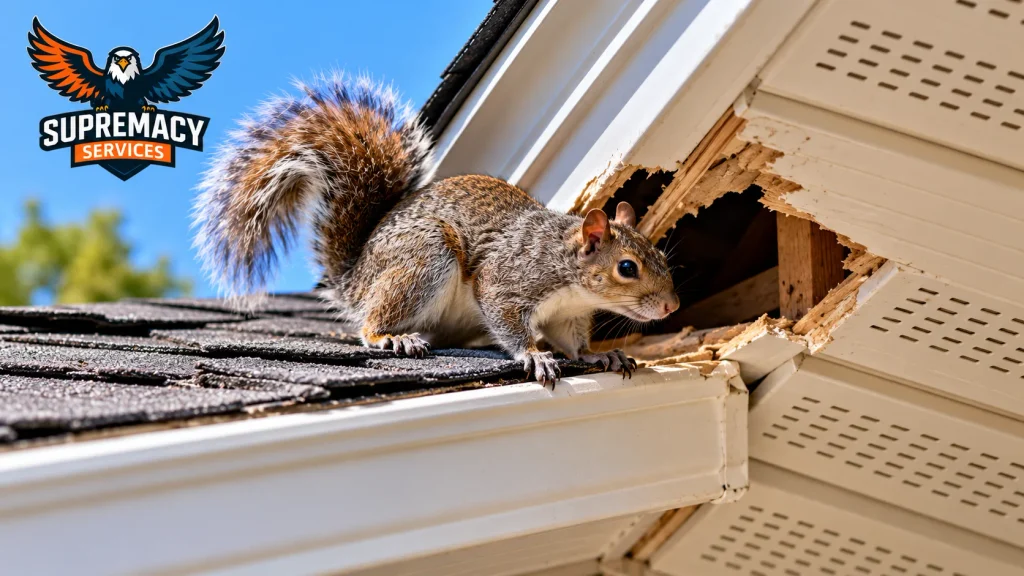
Squirrels typically produce quick running, scratching and gnawing sounds during daylight hours.
You may hear activity across a larger section of the attic because squirrels are substantially larger and more mobile than house mice.
Other clues can include:
- leaves or twigs used as nesting material;
- nuts, shells or food remnants;
- disturbed or shredded insulation;
- gnawed wood;
- damage around soffits, fascia or vents;
- a visible opening high on the structure.
Texas A&M notes that squirrels usually enter attic spaces from the roof and that overhanging tree limbs can help provide access.
One important caution: there may be young squirrels inside
If squirrels have established a nest, simply closing the visible entrance can create a larger problem if animals remain inside.
Before permanently sealing a wildlife entry point, determine whether the attic is still occupied and whether dependent young are present.
That is one reason wildlife exclusion can require a different approach from ordinary mouse or rat control.
How Can You Identify the Animal?
Use several clues together.
1. Record when you hear the noise
Write down whether activity occurs:
- before sunrise;
- during the morning;
- during the afternoon;
- shortly after sunset;
- late at night.
Repeated daytime activity favors squirrels. Repeated nighttime activity favors rats or mice.
2. Look for droppings—but don’t handle them casually
Droppings can help confirm rodent activity, but avoid sweeping or vacuuming dry rodent waste.
The CDC advises wetting rodent urine and droppings thoroughly with disinfectant before cleanup rather than sweeping or vacuuming them, because disturbing contaminated material can put particles into the air.
3. Check for gnaw marks
Fresh gnawing is another strong sign of rodent activity.
Look around:
- wood framing;
- stored boxes;
- pipe penetrations;
- wiring areas;
- vents;
- roof-access points.
Gnawing alone may not tell you which species is responsible, but it helps distinguish animal activity from ordinary building noises.
4. Look for nesting material
Mice commonly use finely shredded fibrous materials.
Squirrel nests may contain leaves, twigs and other larger materials in addition to disturbed insulation.
5. Inspect the outside of the house
The most important evidence may be outside rather than inside the attic.
Check from a safe location for:
- damaged soffits;
- fascia gaps;
- loose or damaged vents;
- openings around roof intersections;
- utility penetrations;
- gaps around pipes;
- openings near eaves;
- damaged screens.
Avoid climbing onto a steep or high roof simply to investigate an attic noise.
Where Are Animals Getting Into the Attic?
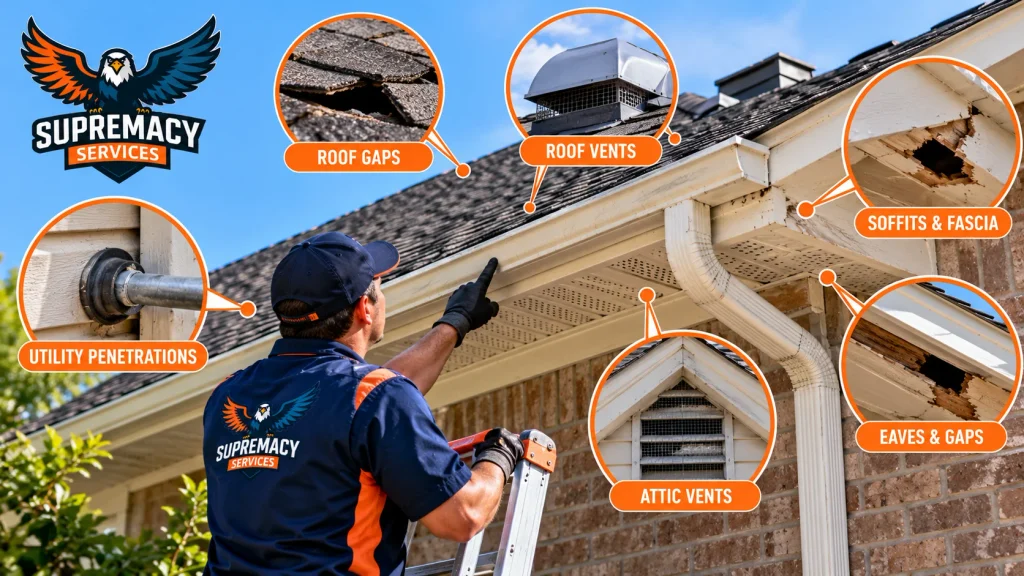
Animals enter when they find an opening connecting the exterior of the house to a protected interior space.
Potential entry areas include:
- soffits and fascia;
- roof vents;
- gaps around eaves;
- utility penetrations;
- plumbing or mechanical penetrations;
- damaged screens;
- gaps around doors or attached garages;
- construction gaps;
- deteriorated exterior materials.
Mice are especially challenging because the necessary opening can be surprisingly small. CDC guidance states that mice can fit through a hole about the width of a pencil.
Roof rats present a different challenge because they are skilled climbers and frequently use elevated nesting areas.
Squirrels can exploit roof-level openings and may enlarge vulnerable areas through gnawing.
This is why effective control involves more than removing the animal you hear.
If you are repeatedly hearing nighttime scratching and finding droppings or gnawing, a full attic and exterior inspection can determine whether rats or mice are entering the structure. Learn more about Supremacy Services’ rodent control and exclusion in DFW.
Are Attic Rodents Dangerous?
An animal in the attic should be treated as more than a noise problem.
Contaminated areas
The CDC states that rodents can spread disease through contact with urine, droppings and saliva. Safe cleanup procedures are therefore important when rodent waste is found.
Never dry-sweep or vacuum rodent droppings.
Gnawing damage
Rats, mice and squirrels all gnaw.
Depending on where they travel, that can affect stored belongings, wood and other building materials. Squirrels are also documented to gnaw electrical wiring.
If you see visibly damaged electrical wiring, avoid touching it and have the condition evaluated appropriately.
Insulation and nesting
Animals may compress, move or contaminate insulation while creating travel routes and nests.
Removing an animal without addressing contaminated nesting material or access points can leave part of the problem unresolved.
What Should You Do If You Hear Scratching?
Follow a diagnostic process rather than immediately placing poison or sealing the first hole you find.
Step 1: Identify the timing
Day or night is your fastest initial clue.
Step 2: Look for evidence
Check accessible areas for droppings, gnaw marks, nesting material, tracks and disturbed insulation.
Step 3: Inspect the exterior
Look for potential access points from ground level.
Step 4: Avoid disturbing rodent waste
Do not sweep or vacuum dry droppings or nesting debris.
Step 5: Determine whether you are dealing with rodents or wildlife
Rats and mice fall into a different control situation from squirrels and other wildlife.
Step 6: Remove the occupants before permanently closing active openings
An entry hole should ultimately be excluded, but closing an occupied structure can trap animals inside.
Step 7: Seal the structure
Once occupancy has been properly addressed, close access points with materials appropriate for the location and animal.
The objective is not merely to stop tonight’s scratching. It is to prevent another animal from using the same vulnerability.
DIY vs. Professional Removal
A small, clearly identified mouse problem may sometimes be manageable with appropriate trapping, sanitation and exclusion.
The CDC recommends traditional snap traps for household rat and mouse control and emphasizes placing traps where rodent activity is present while keeping traps and baits away from children and pets.
Professional help becomes more appropriate when:
- you cannot identify the animal;
- noises continue despite trapping;
- activity is inside inaccessible ceiling or wall cavities;
- multiple entry points are present;
- the roofline needs inspection;
- you suspect squirrels or other wildlife;
- young animals may be present;
- there is substantial contamination;
- you cannot safely reach the affected area;
- damage needs to be evaluated;
- repeated infestations indicate an unresolved exclusion problem.
Texas also regulates structural pest-control work performed for compensation. The Texas Department of Agriculture’s Structural Pest Control Service licenses businesses and individuals performing covered structural pest-control activities.
For recurring attic activity, consider an inspection that looks at both the animal and how it entered the home. Supremacy Services’ rodent exclusion service is designed around inspection, removal and closing structural access points rather than treating the sound alone.
How Professional Attic Inspection and Exclusion Works
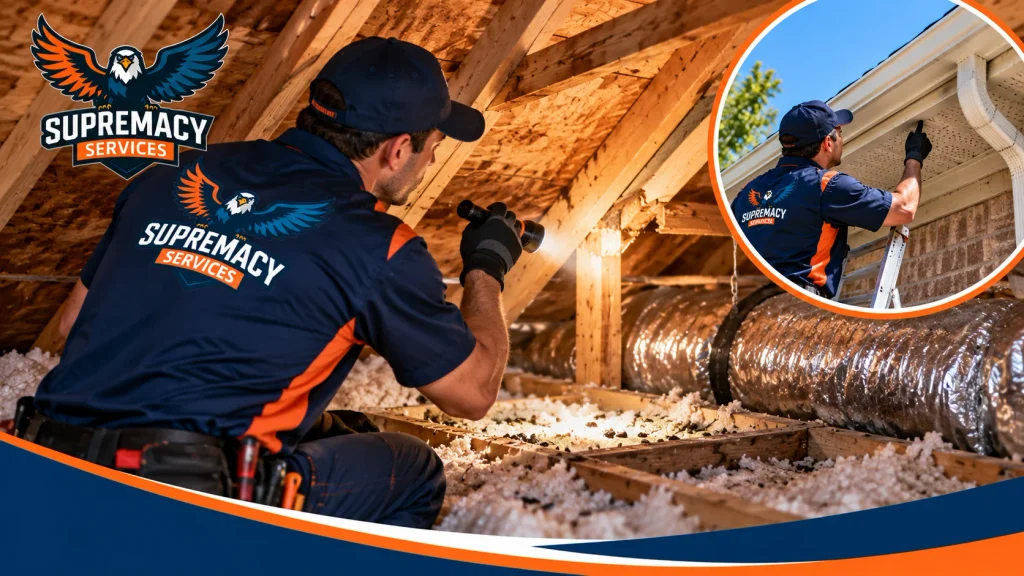
The exact process depends on whether the animal is a mouse, rat, squirrel or another wildlife species, but a thorough service generally begins with identification.
1. Attic inspection
The technician looks for:
- droppings;
- nesting areas;
- travel paths;
- gnawing;
- disturbed insulation;
- contamination;
- possible entry locations.
2. Exterior inspection
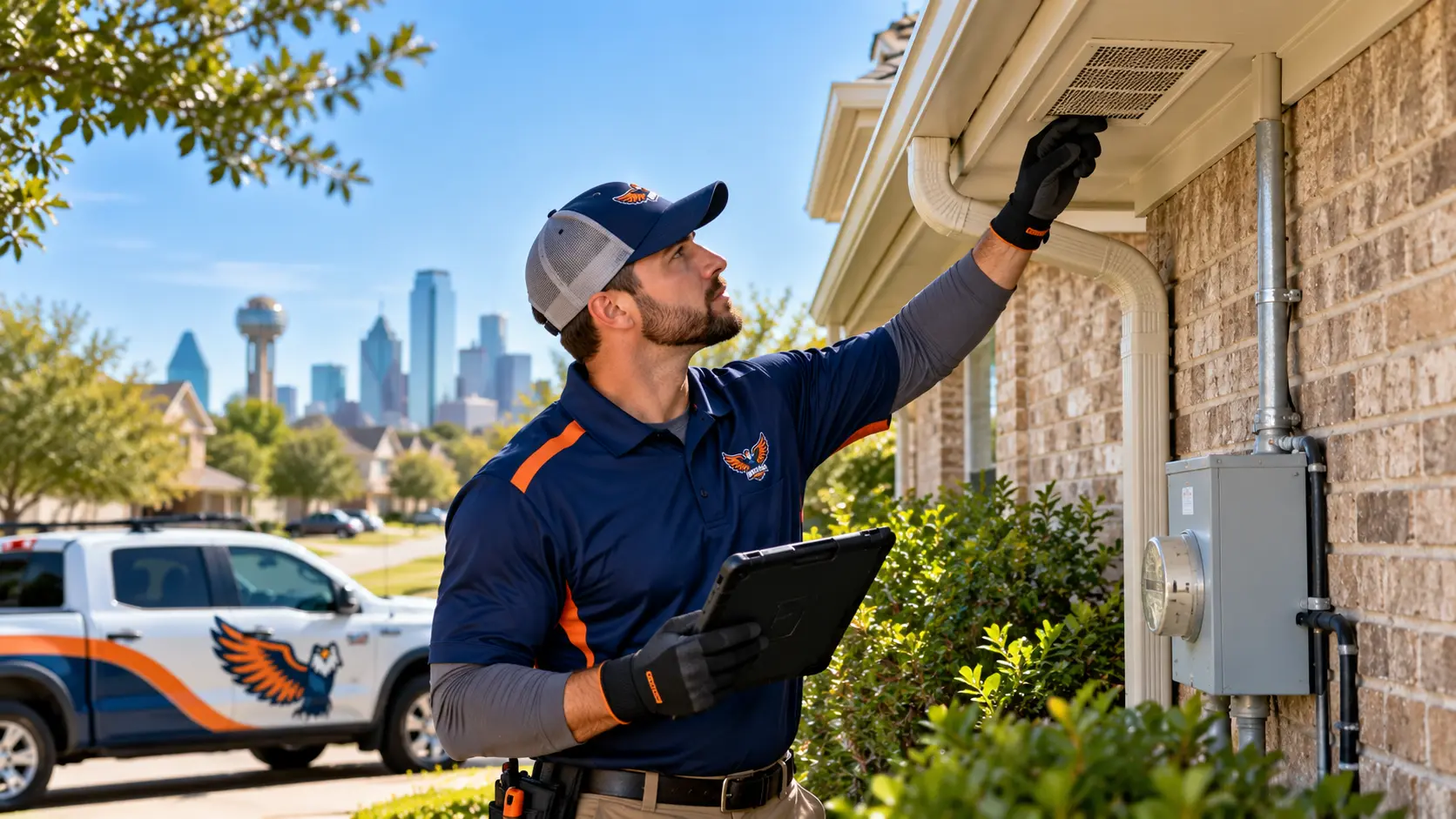
Rooflines, soffits, vents, penetrations and other vulnerable areas are checked for openings.
3. Species identification
The evidence determines whether the appropriate solution is rodent control, wildlife removal or another service.
4. Removal or control
The approach should match the animal.
Rodent trapping and wildlife removal should not automatically be treated as interchangeable services.
5. Exclusion
Once animals have been addressed, accessible entry points are closed with materials suitable for resisting future entry.
6. Follow-up
The attic should be monitored for fresh droppings, noises or other evidence that activity continues.
How to Prevent Animals From Returning
Removing an animal solves only half of an attic problem. Prevention requires reducing both access and attractants.
Seal structural openings
Inspect:
- roof edges;
- soffits;
- vents;
- pipe penetrations;
- utility openings;
- doors;
- foundation penetrations;
- damaged exterior screens.
CDC guidance recommends checking the interior and exterior of a home for gaps and holes and sealing them to prevent rodents from entering.
Manage tree access
Tree squirrels frequently reach structures from above.
Texas A&M recommends trimming limbs approximately 8–10 feet back from a roof when squirrels are using them for access.
Reduce food sources
Keep food and garbage securely contained.
Also consider whether outdoor pet food, accessible garbage or bird feeding is attracting rodents close to the structure.
Monitor previously repaired areas
A repaired entry point should periodically be inspected for deterioration or fresh gnawing.
Dallas and DFW Attic Considerations
The animal’s behavior matters more than forcing a Dallas-specific explanation onto every attic problem.
However, North Texas homeowners should know that roof rats are an established structural pest in Texas and commonly use elevated nesting areas, making roofline inspection particularly relevant when nighttime activity is heard overhead.
Tree squirrels also occur in urban environments and may nest in attics when roof-level access is available.
The practical Dallas takeaway is simple:
Nighttime activity + rodent evidence → investigate rats or mice.
Daytime attic running/gnawing + roof-level wildlife evidence → investigate squirrels.
If those clues do not match, do not force the diagnosis. Other animals—or even non-animal building sounds—may need to be considered.
Could the Noise Be Something Other Than Rats, Mice or Squirrels?
Yes.
Not every attic sound is caused by these three animals.
Possible alternatives include:
- birds;
- raccoons or other wildlife;
- branches contacting the roof;
- loose exterior materials;
- duct or HVAC expansion and contraction;
- plumbing movement;
- building materials responding to temperature changes.
Larger, heavier footsteps or thumping may warrant investigation for a larger animal rather than a mouse, rat or squirrel.
A good inspection identifies evidence instead of diagnosing solely from the homeowner’s description of the sound.
Frequently Asked Questions
What animal makes scratching noises in the attic at night?
Rats and mice are strong possibilities because both are primarily active at night. Look for droppings, gnawing, tracks and nesting material to confirm rodent activity.
What animal scratches in the attic during the day?
Daytime running, scratching or gnawing often points toward squirrels. Texas A&M specifically identifies daytime attic running or gnawing as a common squirrel clue.
How can I tell if I have rats or squirrels in my attic?
Start with timing. Rat activity is usually strongest after dark, while tree squirrels are active during the day. Then compare droppings, nesting material, gnawing and exterior entry points.
Why do I hear scratching in my ceiling only at night?
Nighttime scratching can indicate rats or mice moving through an attic, wall void or ceiling cavity. The sound alone cannot confirm the species, so inspect for physical evidence.
Can mice really live in an attic?
Yes. House mice can climb and nest in protected structural spaces. Because they can enter through very small openings, their access point may be difficult to spot.
Should I seal a hole as soon as I find it?
Not necessarily. First determine whether the opening is active and whether animals remain inside. Permanently closing an occupied opening can trap an animal in the structure.
Can I vacuum mouse or rat droppings in my attic?
No. CDC guidance says not to sweep or vacuum rodent urine, droppings or nesting material. The material should first be thoroughly wetted with an appropriate disinfectant and cleaned according to CDC procedures.
Will attic noises go away if I use traps?
Traps may remove individual rats or mice, but recurring problems can continue if exterior entry points remain open. Long-term control usually requires identifying and correcting how rodents are entering.
When should I call a professional for scratching noises?
Consider professional inspection when the species is unclear, noises continue, contamination is significant, the activity is in inaccessible areas, roof inspection is needed, wildlife or dependent young may be present, or previous DIY control has not solved the problem.
Final Takeaway
The time of day is one of the best first clues when identifying scratching noises in an attic.
Daytime running and gnawing suggests squirrels. Nighttime scratching, running or squeaking makes rats and mice stronger suspects. But sound should only begin the investigation—not end it.
Droppings, gnawing, nesting material, tracks and exterior entry points provide the evidence needed to identify the animal and choose the correct response.
For Dallas and DFW homeowners dealing with recurring attic noises, the long-term goal should be identification, appropriate removal or control, and exclusion of the entry points that allowed the problem to develop.
Hearing scratching overhead and unsure what’s inside? Schedule an attic and exterior inspection with Supremacy Services to identify the source, locate potential entry points and determine whether rodent control or wildlife removal is appropriate.