TANKLESS WATER HEATER SERVICES
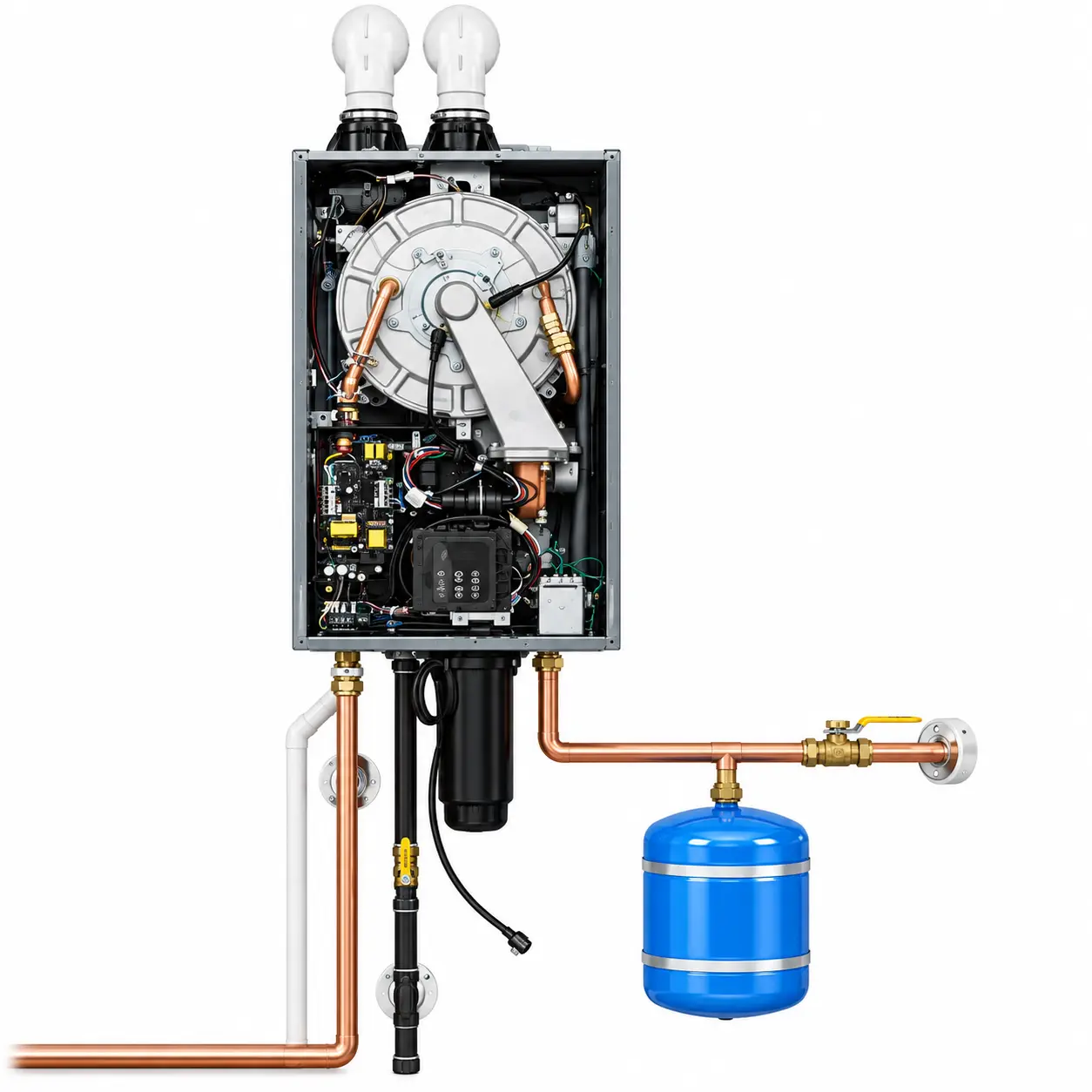
A properly selected tankless water heater heats water as you need it instead of keeping dozens of gallons hot around the clock.
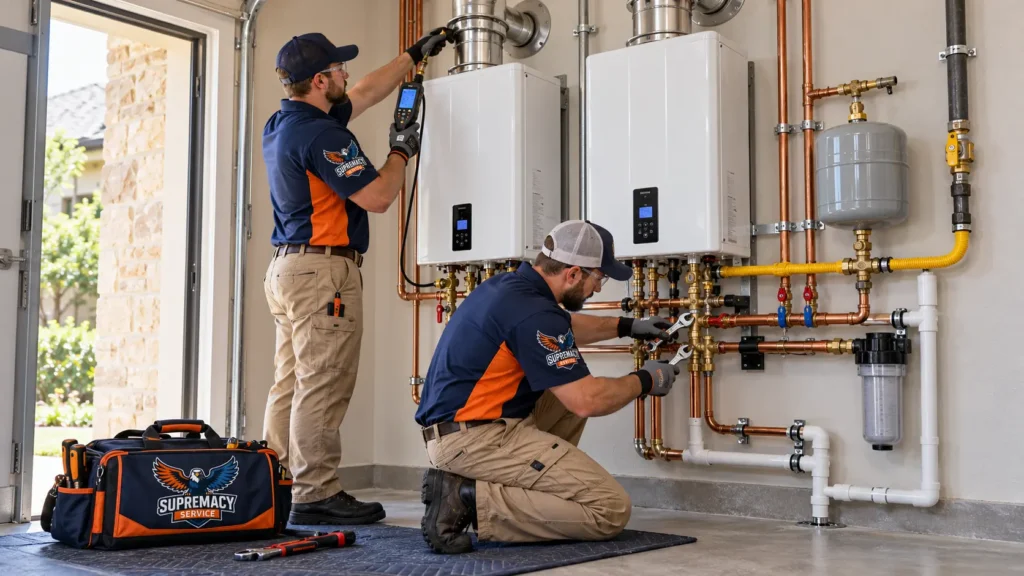
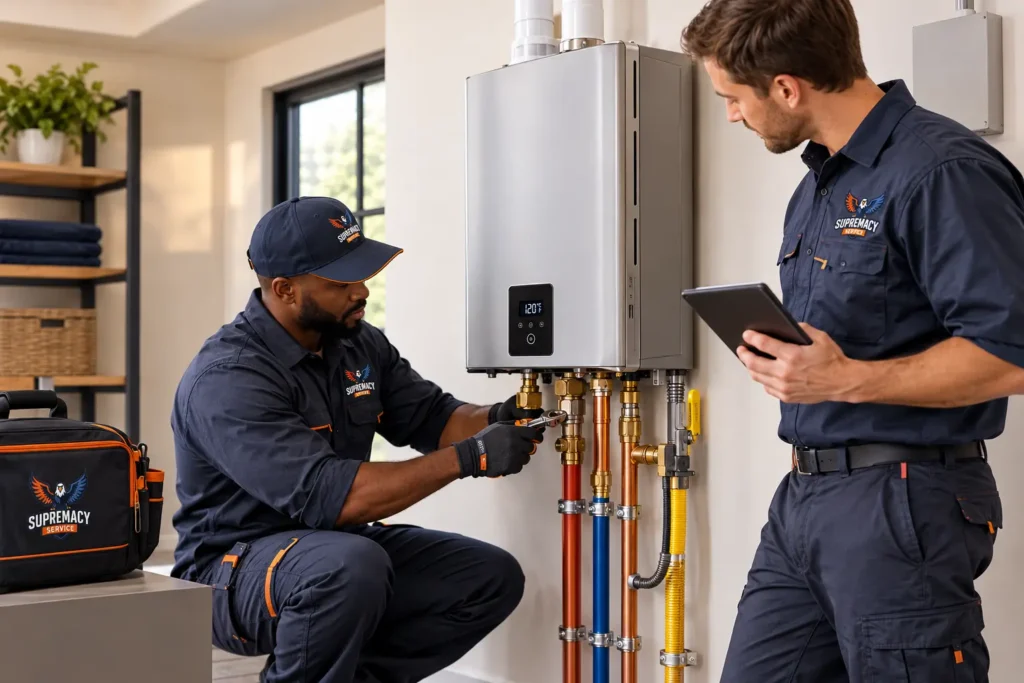
Supremacy Service provides professional tankless water heater installation, replacement, repair and maintenance throughout Dallas-Fort Worth for residential and qualifying commercial properties.
Whether you’re replacing a traditional tank, troubleshooting an existing tankless unit or planning a higher-capacity hot-water system, we evaluate the water demand, fuel source, plumbing, venting and property requirements together before recommending equipment.
Our Services
Discover efficient and reliable tankless water heater services designed to enhance your comfort and utility.
HOT WATER ON DEMAND
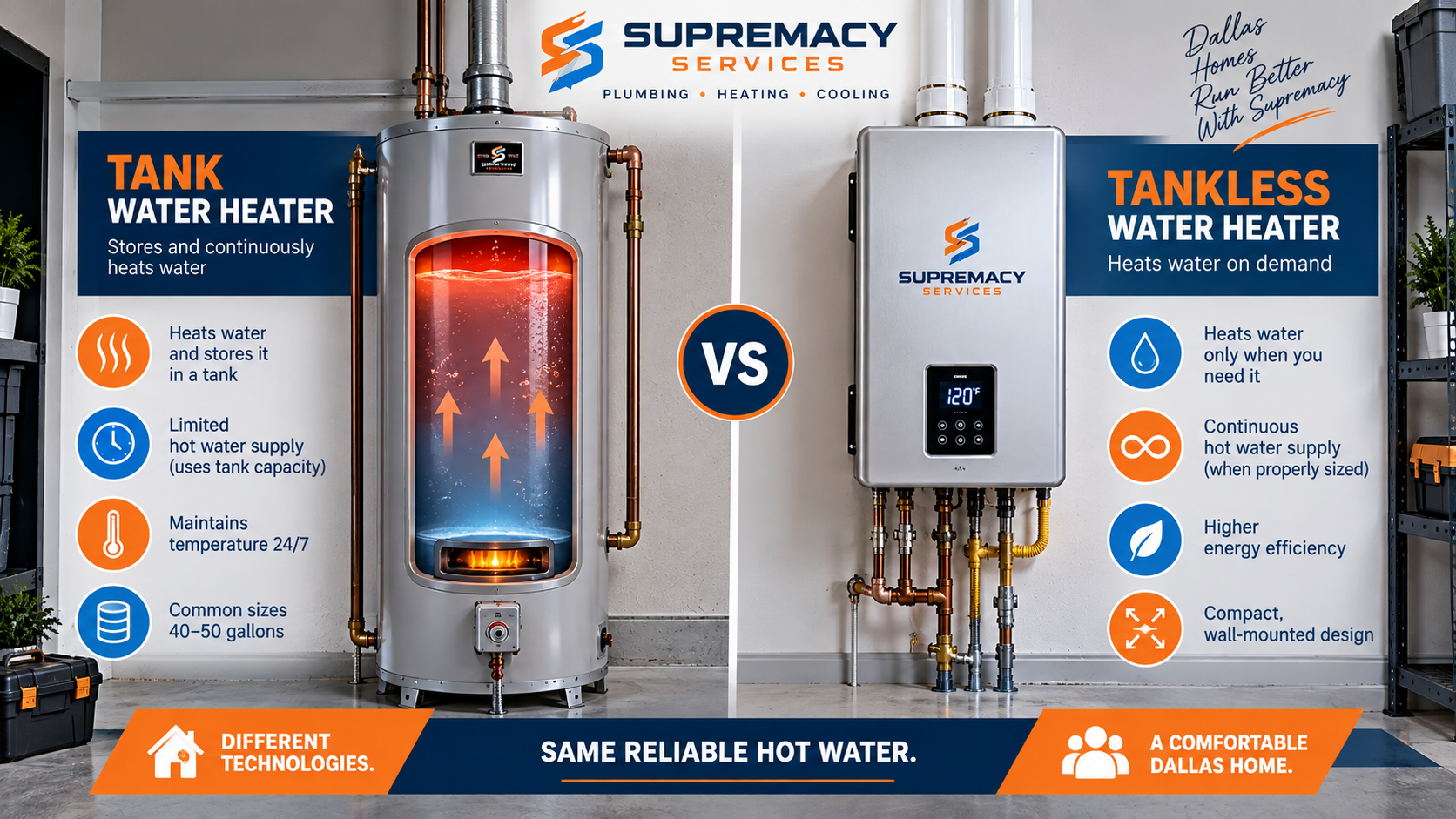
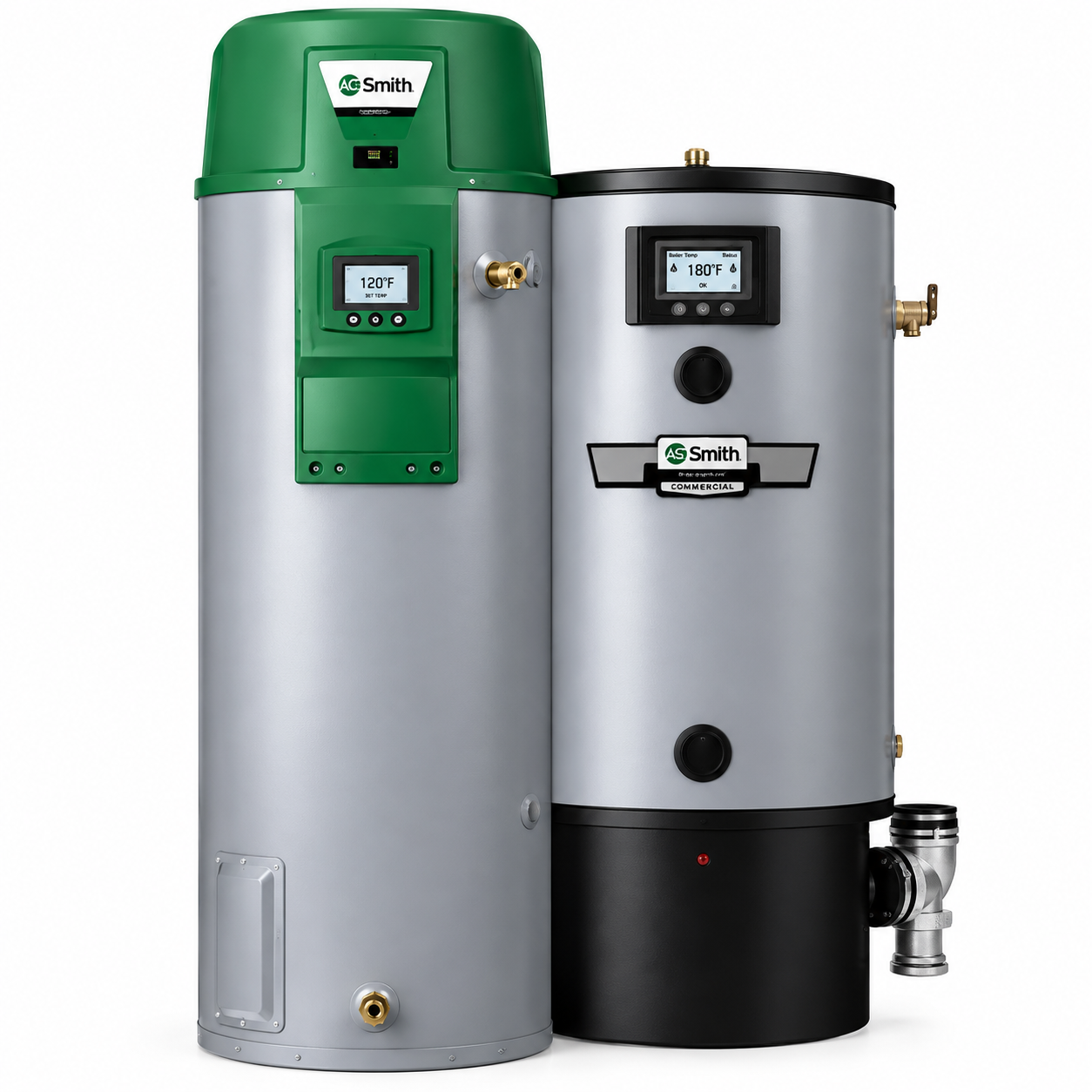
Traditional water heaters store a large volume of heated water.
A tankless system works differently.
When a fixture calls for hot water:
Water Flow Detected → Burner/Heating Elements Activate → Water Passes Through Heat Exchanger → Heated Water Travels to Fixture
Once the demand stops, the heating cycle ends.
That means there isn’t a large storage tank continuously holding hot water.
On-Demand Heating
Heat water when fixtures need it.
Compact Equipment
Wall-mounted systems can free up valuable floor space.
System Control
Modern equipment can provide precise temperature control and diagnostic information.
Why Switch to a Tankless Water Heater?
Properly sized systems can continue supplying hot water as long as demand remains within equipment capacity.
Wall-mounted equipment eliminates the traditional storage tank.
High-efficiency and condensing equipment options are available.
Tankless equipment can be a strong fit when homeowners are already replacing aging water-heating infrastructure.
Digital controls provide more precise operating settings.
Hot-water demand during bathing.
Simultaneous fixtures dramatically change required capacity.
Sink and dishwasher usage.
Washer demand where hot water is used.
Higher flow can require considerably more output.
A system that works perfectly for one household may be undersized for another. Sizing should consider simultaneous demand such as: Shower, Second Shower, Kitchen, Laundry, Large Tubs, and Commercial Fixtures.
The question isn't simply “How many people live here?” It's “How much hot water could the property need at the same time?”

Replacing a tank does not always mean mounting a tankless unit in exactly the same location and connecting the same utilities. The conversion may require evaluation of: Gas capacity, piping, electrical requirements, venting, and more.
Process: Evaluate Existing System → Determine Hot-Water Demand → Confirm Utilities & Venting → Select Equipment → Install & Configure → Test Performance

Gas-fired tankless systems can provide significant hot-water capacity, but installation needs to be designed around the actual property. We evaluate Gas Supply, Venting, Combustion, Condensate, and Water Flow.

Electric tankless equipment can be useful in appropriate applications, but large whole-home electric systems may require substantial electrical capacity.
Fuel source should be selected around the property—not simply around the equipment price.
Condensing tankless water heaters capture additional heat from the combustion process before exhaust leaves the unit. They offer high operating efficiency, modern venting options, and compact designs.

A tankless unit produces hot water on demand—but the hot water still has to travel through the pipes from the heater to the fixture. In larger homes, that distance can mean waiting.
Recirculation Can Help: Built-In Recirculation, Dedicated Return Line, Retrofit Solutions.
Deposits can affect heat-exchanger performance and water flow.
Fuel or ignition-system issues can prevent heating.
The unit needs sufficient water flow to activate correctly.
Improper airflow or exhaust conditions can trigger faults.
Modern systems rely on several operating sensors.
A unit can appear to “fail” when actual simultaneous demand exceeds its capacity.
| Feature | Tankless | Traditional Tank |
|---|---|---|
| Water storage | No large storage tank | Stores heated water |
| Hot-water duration | Continuous within rated capacity | Limited by stored volume |
| Space | Compact wall-mounted options | Requires tank footprint |
| Installation | May require utility/vent changes | Often simpler like-for-like replacement |
| Maintenance | Descaling/service important | Tank flushing/service important |
| Upfront cost | Typically higher | Typically lower |
| Best fit | Long-term performance & continuous demand | Simpler conventional replacement |
When the fault is isolated and the system remains otherwise serviceable.
When major components fail, reliability continues declining or the equipment no longer meets the property’s hot-water needs.
Diagnosis comes first.
Match the system to real peak hot-water demand.
Water, gas, electrical, venting and plumbing all matter.
Support beyond simply selling new equipment.
Solutions for homes and qualifying business properties.
A tankless water heater heats water as it flows through the equipment rather than storing a large volume of hot water in a tank.
It can provide continuous hot water as long as demand remains within the unit’s rated capacity. If simultaneous demand exceeds that capacity, performance can be affected.
Often yes, but the property needs to be evaluated for fuel supply, electrical requirements, venting, water demand, condensate and installation location.
Yes. Tankless systems require inspection and, depending on equipment and water conditions, periodic flushing/descaling and other manufacturer-recommended maintenance.
Scale can accumulate inside heat exchangers and affect system performance, which is why water conditions and maintenance are important.
Yes. We can diagnose qualifying issues involving ignition, flow, temperature control, mineral scale, error codes and other system faults.
Yes. Gas installations require evaluation of fuel capacity, venting and other equipment requirements.
Yes, where appropriate. Electrical capacity needs to be evaluated before recommending a whole-home electric tankless system.
Many modern systems can support recirculation, either through built-in functionality or appropriately designed external systems.
Yes. We can evaluate qualifying restaurant, multifamily, hospitality, office and other commercial applications.
Our expert heating professionals manage a comprehensive range of critical climate infrastructure needs, whether you are retrofitting legacy boiler systems, integrating smart building controls, or engineering a brand-new heating layout.
Whether you're replacing a traditional water heater, repairing an existing tankless system, adding recirculation or planning hot-water equipment for a new property, Supremacy Service can evaluate the demand, utilities and plumbing and recommend the appropriate solution.
Residential, multifamily and commercial pest-control services throughout Dallas and surrounding North Texas communities.