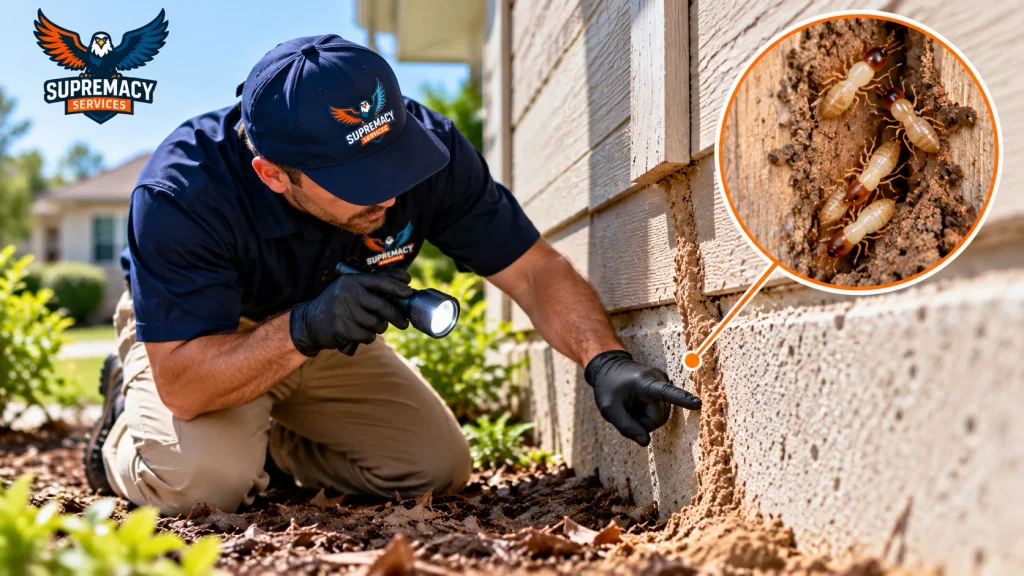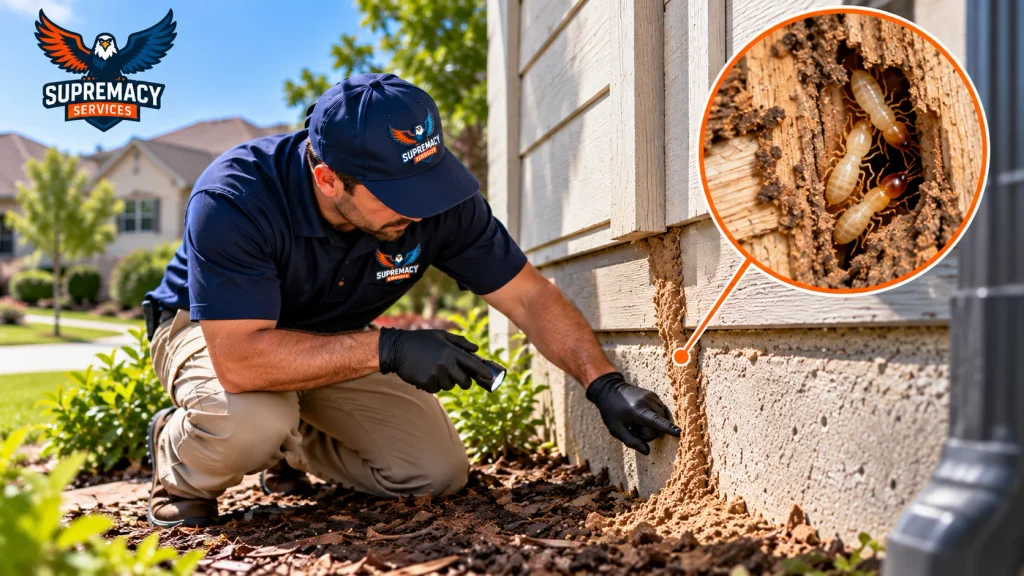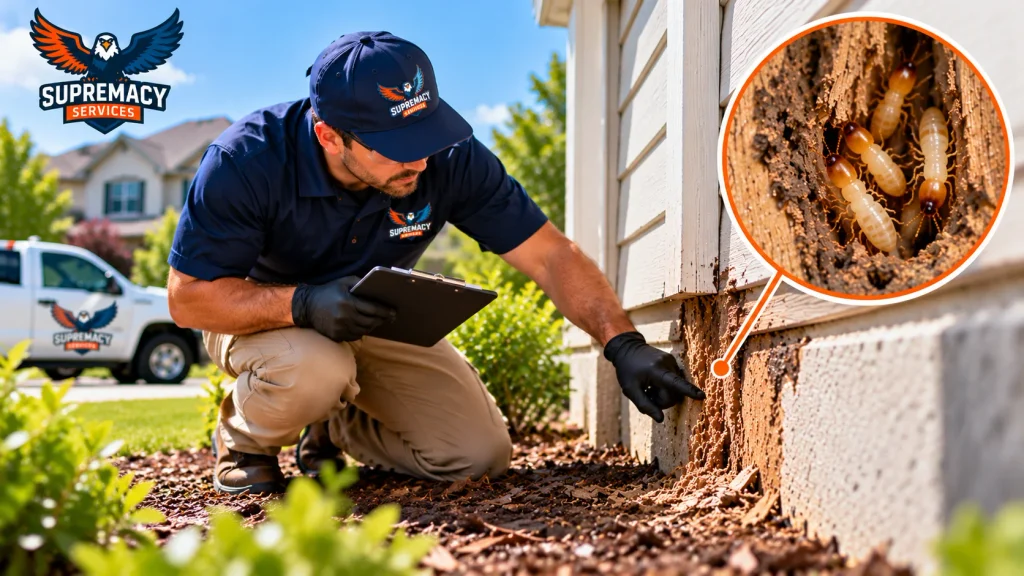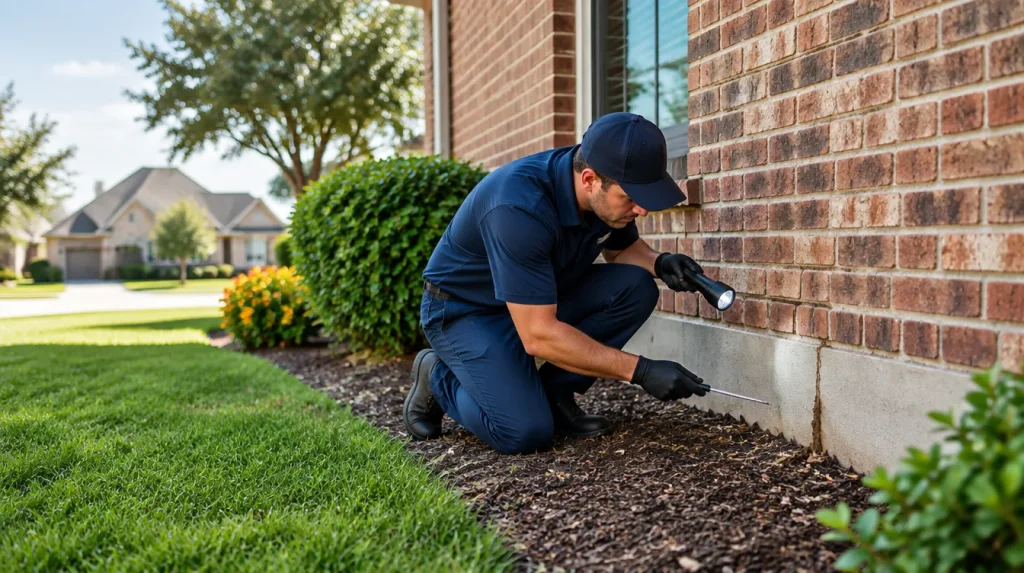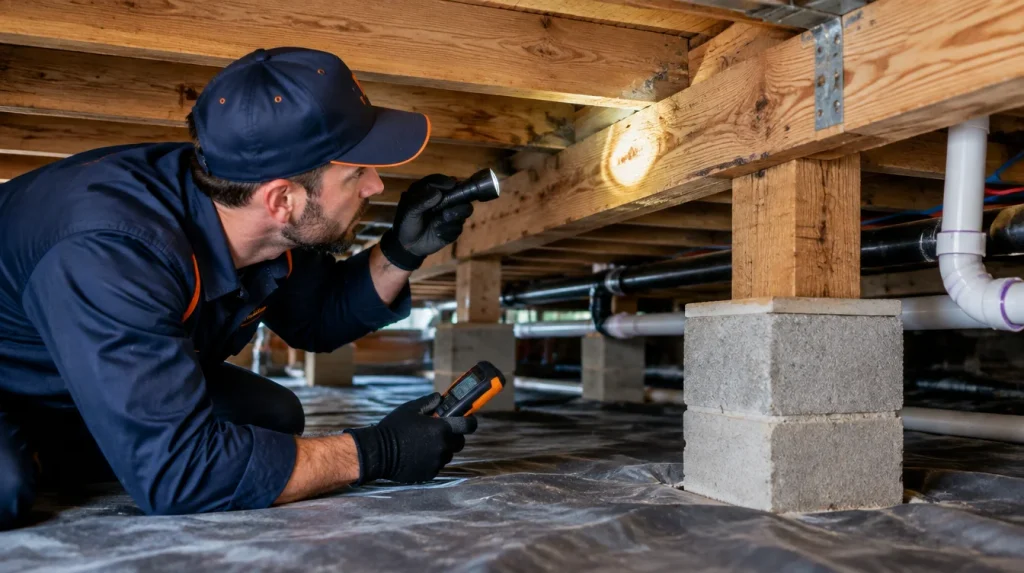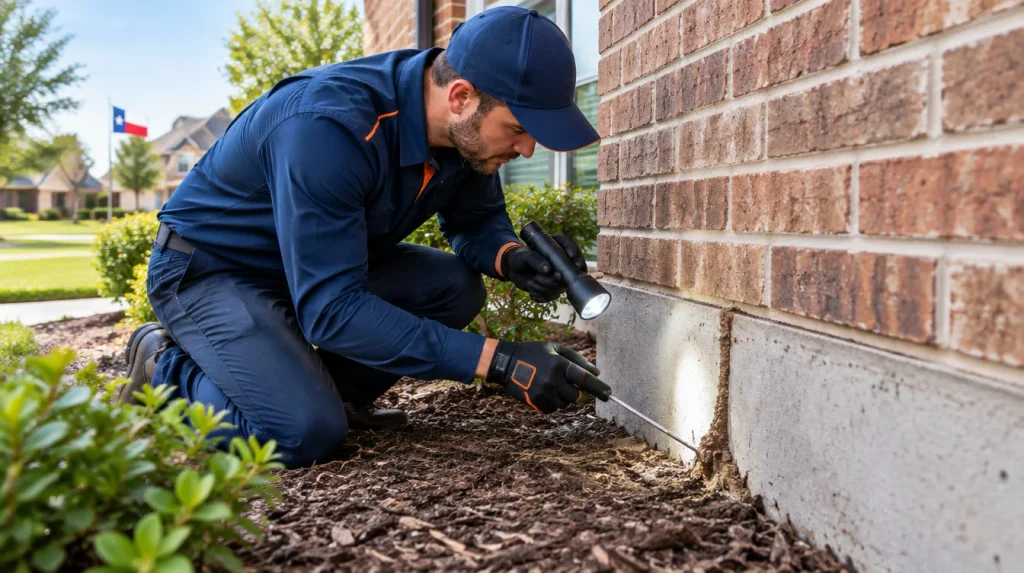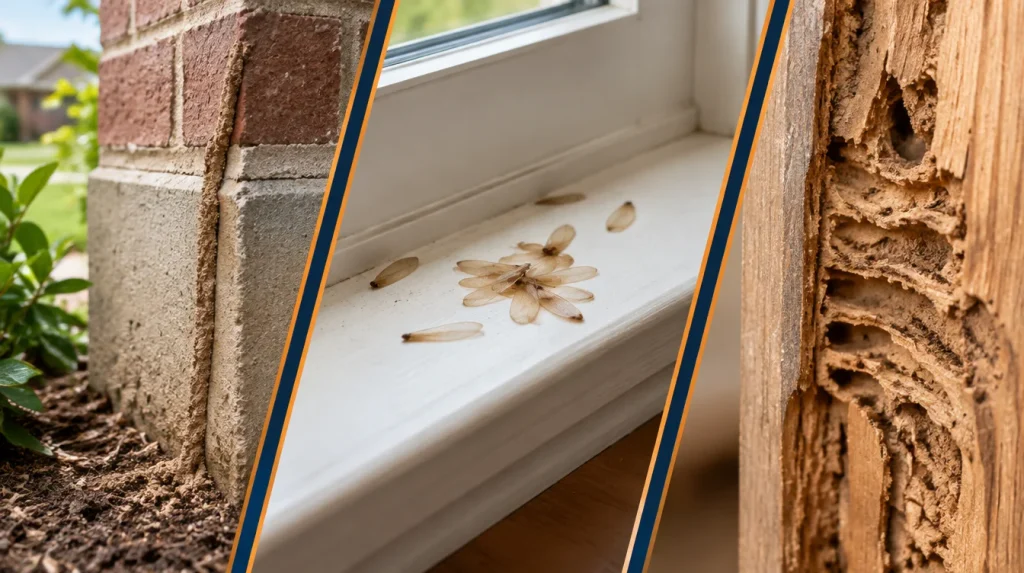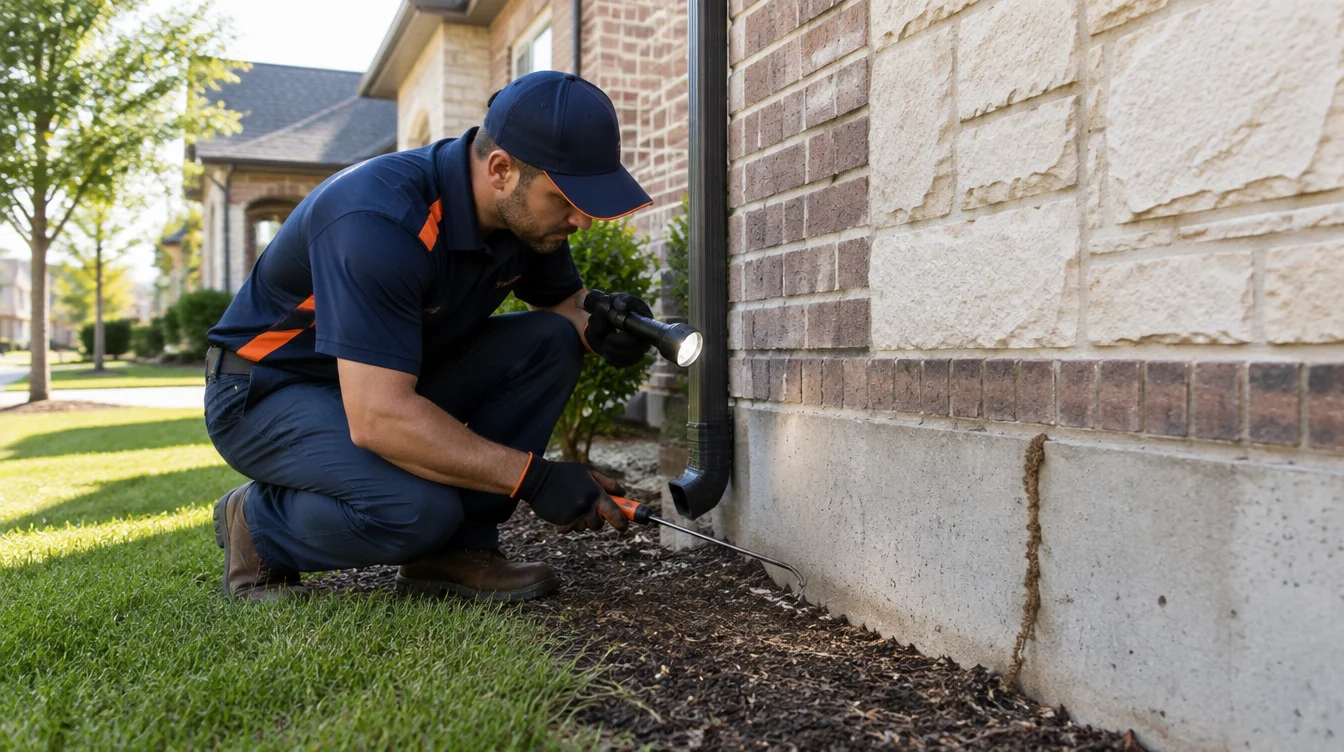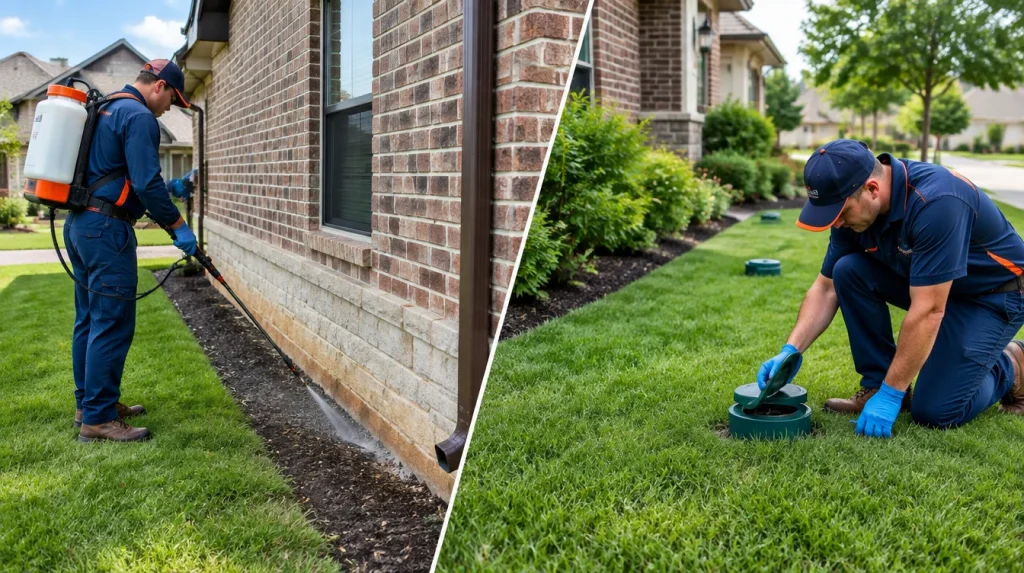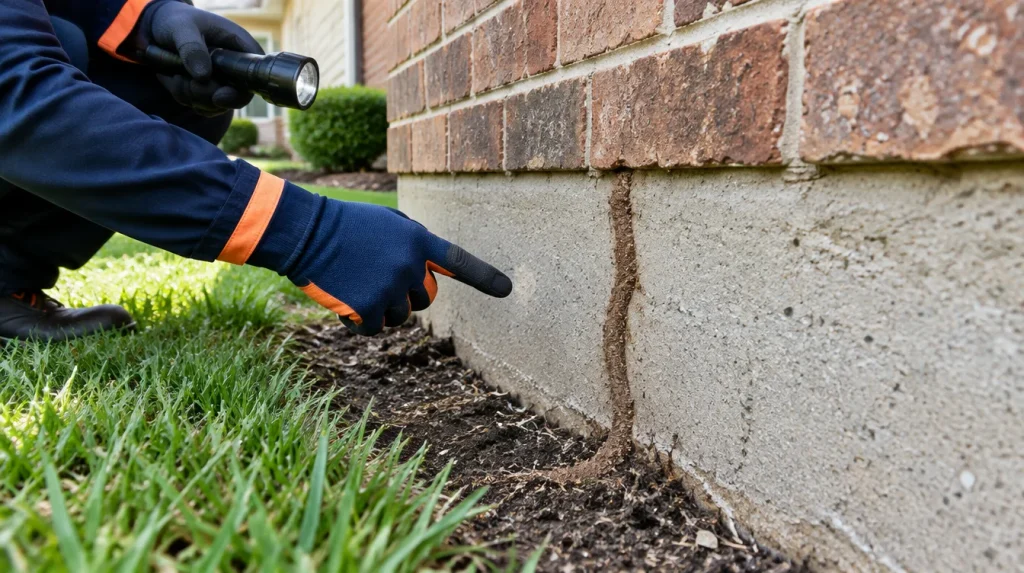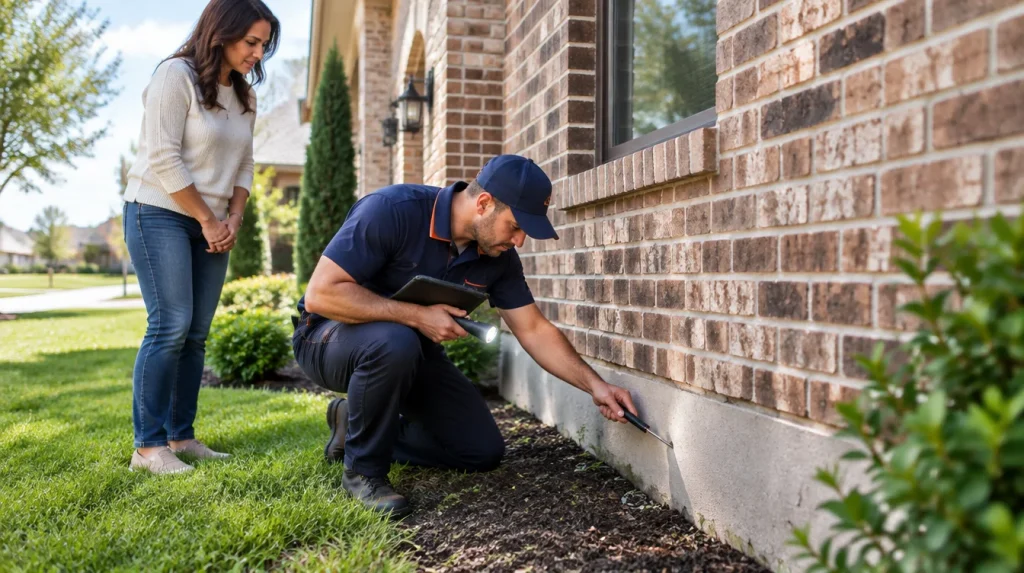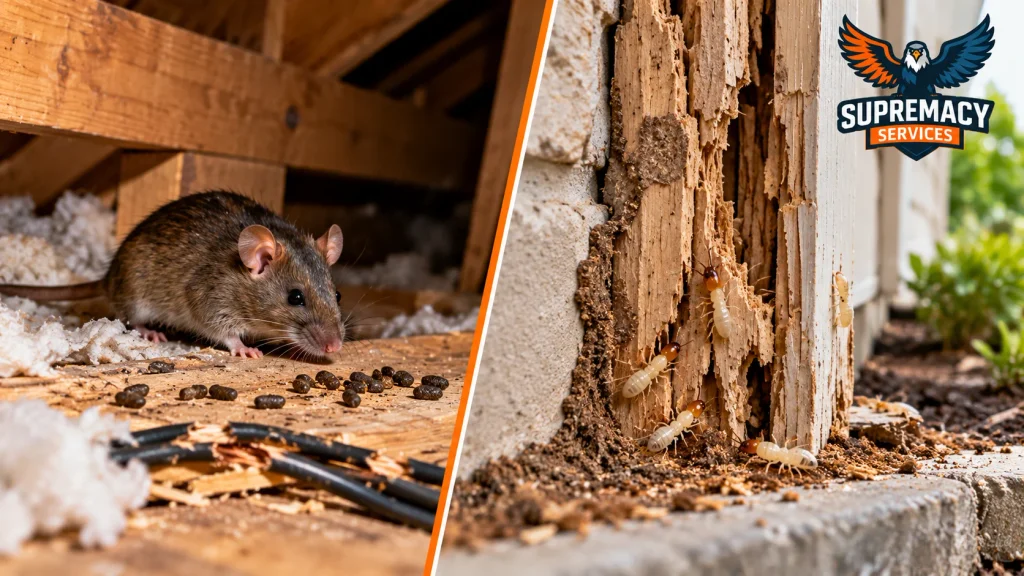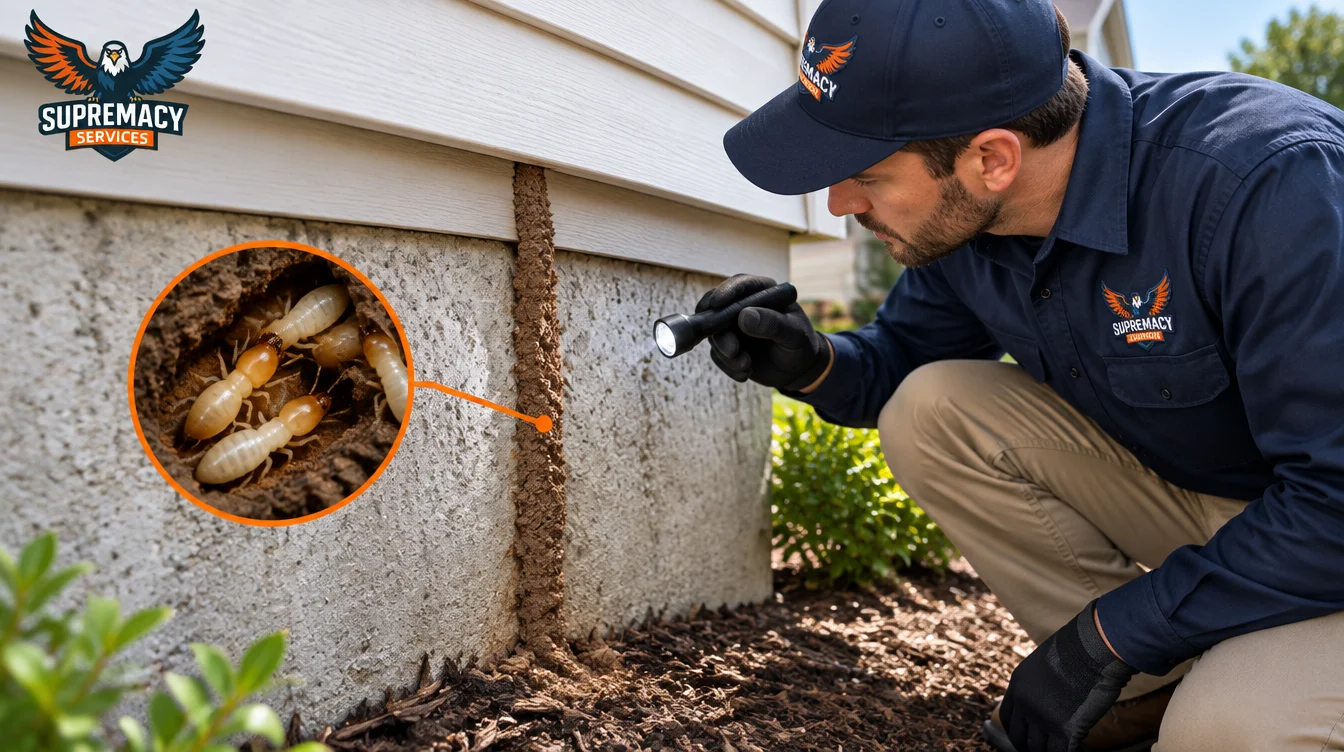

Termite mud tubes are narrow, soil-like tunnels that subterranean termites build to travel between the ground and a food source while maintaining the protected conditions they need. Around Dallas–Fort Worth homes, they may appear on concrete foundations, slab edges, piers, walls, plumbing penetrations or other routes leading toward structural wood.
If you find what appears to be a termite mud tube, don’t assume the problem disappeared simply because you cannot see termites. The Texas Department of Agriculture identifies shelter tubes made primarily of mud as one of the signs that can indicate subterranean termite activity.
Finding a tube does not tell you by itself how extensive an infestation is, whether the colony is currently using that particular tube, or how much damage exists. It does mean the property deserves a closer inspection.
Table of Contents
- What Are Termite Mud Tubes?
- What Do Termite Mud Tubes Look Like?
- Where Should You Look for Termite Tubes?
- Does a Mud Tube Mean You Have Termites?
- Active vs. Old Termite Mud Tubes
- What Should You Do If You Find One?
- Mud Tubes vs. Other Home Problems
- Other Signs of Termites
- Why Termites Build Tubes
- DIY vs. Professional Inspection
- How Professional Termite Service Works
- How to Reduce Termite Risk
- Frequently Asked Questions
What Are Termite Mud Tubes?
Termite mud tubes—also called shelter tubes—are protected passageways constructed by subterranean termites as they travel between soil and above-ground food sources.
Subterranean termites depend heavily on moisture. Their shelter tubes allow them to move through a protected environment rather than crossing an exposed surface.
The EPA explains that subterranean termites commonly remain concealed within soil, mud tubes or their food source, which is one reason an infestation may remain unnoticed until homeowners encounter damage or swarmers.
A termite tube therefore functions somewhat like a covered roadway between the colony’s underground environment and accessible cellulose-containing material.
Termites may construct these passages across surfaces they cannot eat, including concrete and masonry. A tube running over concrete does not mean termites are eating the concrete; it may simply be providing a route across it toward wood or another cellulose source.
What Do Termite Mud Tubes Look Like?
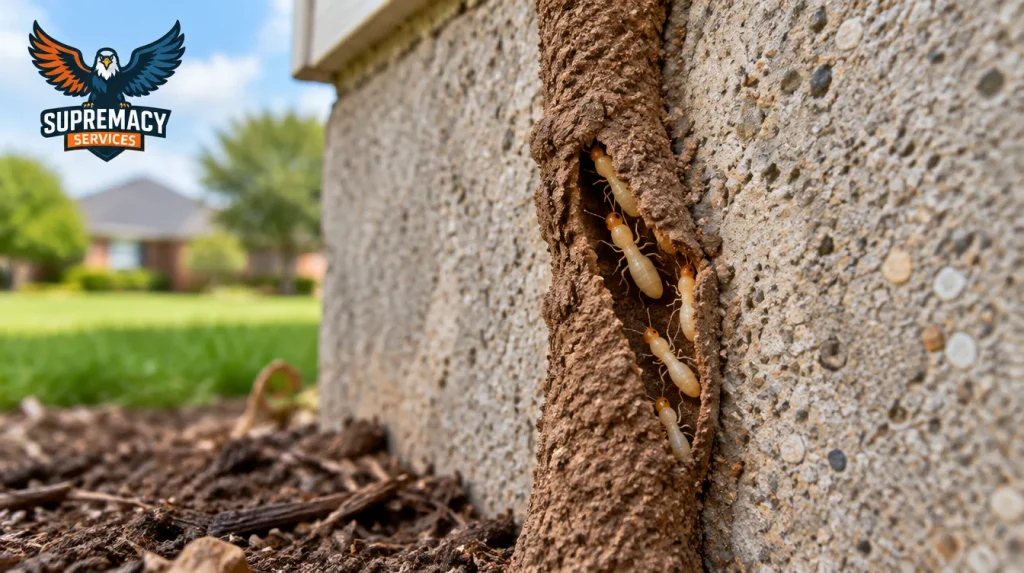
A typical subterranean termite mud tube looks like a narrow, irregular line of dried soil or mud attached to a foundation, wall, pier or another structural surface.
Unlike a simple dirt stain, a developed shelter tube has three-dimensional structure.
Homeowners may notice tubes that are:
- brown, tan or soil-colored;
- rough or gritty rather than smooth;
- narrow and irregular;
- raised from the surface;
- branching in places;
- running vertically from soil toward siding or framing;
- following cracks, joints or sheltered edges.
Their exact appearance can vary according to the soil and material available to the termites.
Termite tube vs. dirt stain
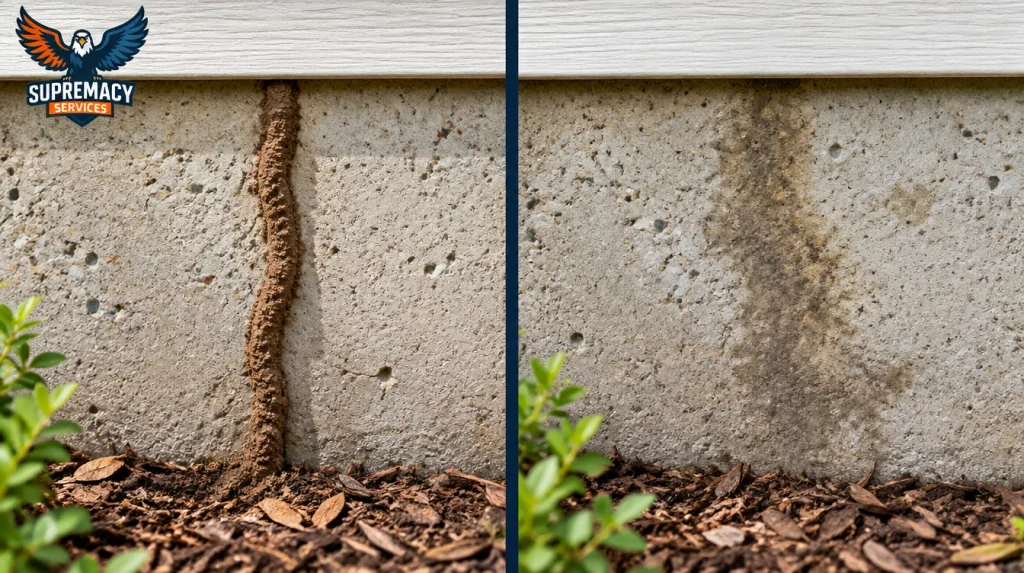
| Feature | Possible termite mud tube | Ordinary dirt/mud stain |
|---|---|---|
| Shape | Narrow, tunnel-like trail | Usually irregular smear or splash |
| Texture | Raised and constructed | Usually relatively flat |
| Direction | May connect soil with structure | No consistent travel route |
| Location | Foundation, pier, wall, penetration or protected seam | Anywhere exposed to dirt/water |
| Interior | May contain a hollow passage or termites | No constructed tunnel |
| Significance | Possible evidence of subterranean termites | Usually environmental |
Appearance alone should not be used to determine the extent or current status of an infestation.
Where Should You Look for Termite Tubes?
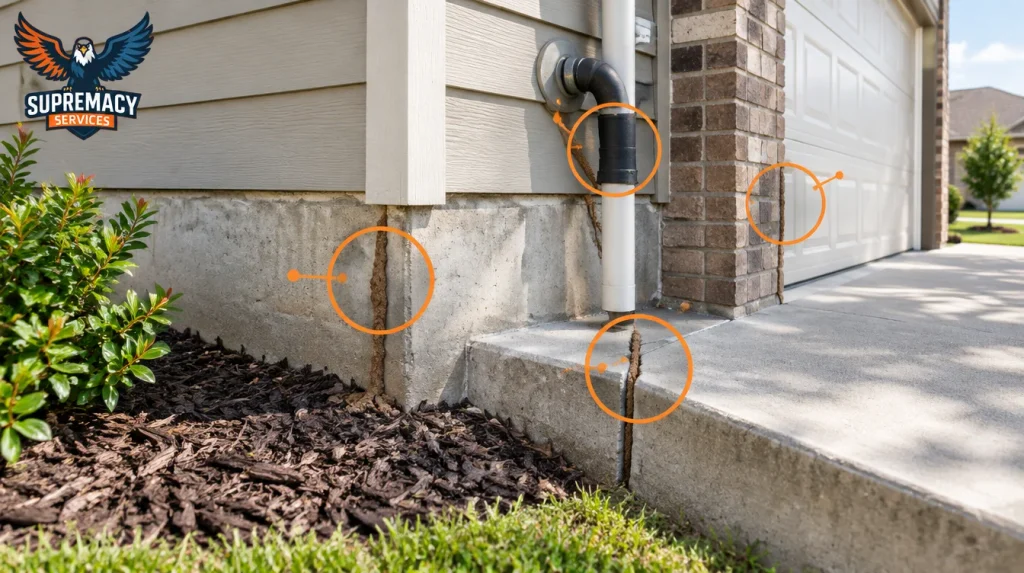
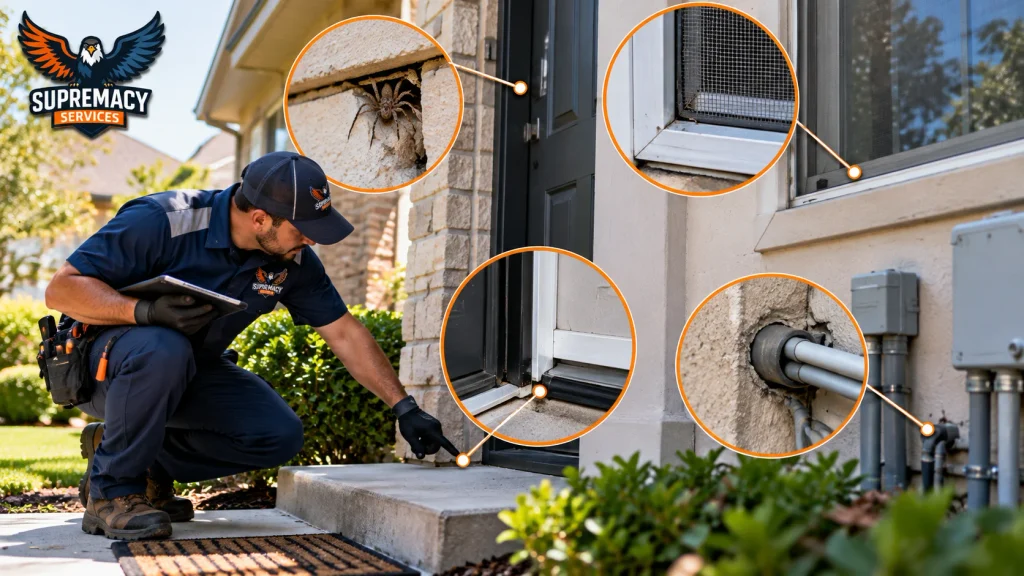
Termite tubes are often found where subterranean termites can move from soil toward structural components while remaining relatively concealed.
The Texas Department of Agriculture specifically lists shelter tubes on surfaces such as walls, joists, piers, chimneys and plumbing fixtures among the signs associated with subterranean termites.
Around a slab or foundation
Start where the structure meets the ground.
Inspect accessible areas around:
- exposed concrete foundation walls;
- slab edges;
- garage walls;
- porch connections;
- foundation cracks;
- expansion joints;
- siding transitions;
- utility penetrations;
- areas hidden behind landscaping.
A narrow soil-colored tube traveling upward from the ground deserves attention.
Plumbing and utility penetrations
Pipes, conduits and other penetrations create transitions through building materials.
These locations should be included in a termite inspection, particularly where moisture is also present.
Crawlspaces and piers
Homes with accessible crawlspaces may provide additional locations where shelter tubes can appear on piers, foundation walls or structural members.
Do not enter a crawlspace that is unsafe or difficult to access merely to investigate a suspected termite problem.
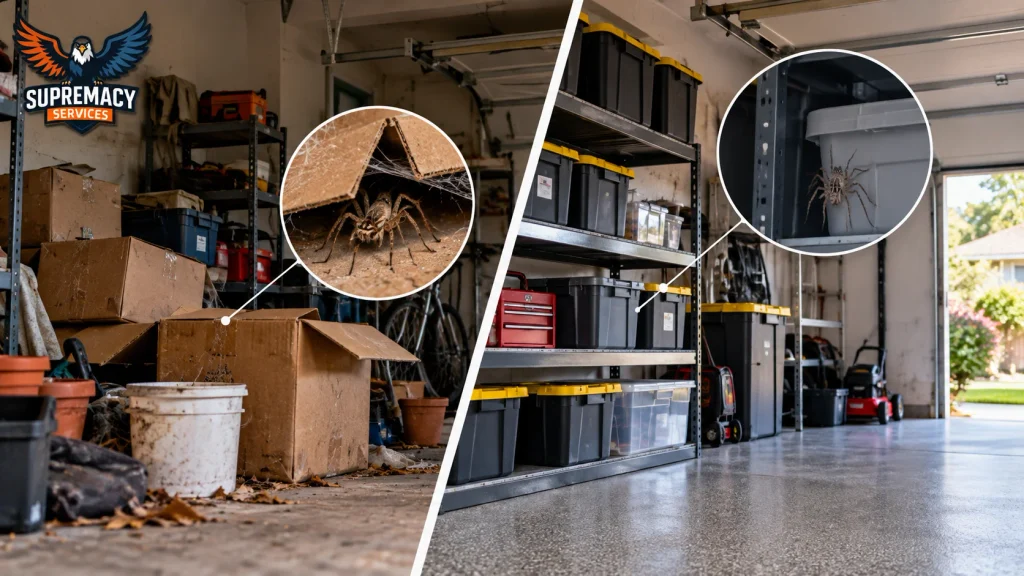
Garages
Garage slab joints, wall penetrations and finished wall edges can conceal termite entry.
Pay particular attention to areas where stored belongings make the perimeter difficult to see.
Interior walls
Termite activity is not necessarily limited to visible exterior foundations.
Suspicious soil-like material emerging from a crack, baseboard, wall penetration or other interior location warrants investigation, especially when accompanied by damaged wood, swarmers or discarded wings.
Found a suspicious tube? See how Supremacy Services approaches termite protection through its Termite Vault Security program and arrange an inspection before disturbing extensive evidence.
Does a Mud Tube Mean You Have Termites?
A genuine subterranean termite shelter tube is evidence of termite activity, but the tube alone cannot establish whether termites are currently using it or how extensive the infestation may be.
That distinction matters.
A homeowner may find:
- an actively used tube;
- an abandoned tube;
- evidence remaining from a previous infestation;
- a tube associated with activity elsewhere in the structure.
You therefore should not interpret “I don’t see termites right now” as “the house is termite-free.”
Texas regulators specifically caution that termites can be difficult to detect because much of their activity remains concealed.
The appropriate next question is not simply:
“Is this tube active?”
It is:
“Is there evidence of termite activity anywhere in the structure, and where are termites gaining access?”
Active vs. Old Termite Mud Tubes
Homeowners sometimes break open a small section of a suspected tube to see whether termites appear.
If live termites are visible inside, that provides strong evidence that the passage is being used.
If nothing is visible, however, the result is inconclusive.
Why an empty tube doesn’t prove termites are gone
A termite colony can have numerous underground and concealed pathways.
One visible tube represents only one potential travel route.
Termites may:
- temporarily stop using it;
- use another route;
- remain concealed inside wood or soil;
- rebuild or bypass a disturbed section.
That is why determining the condition of the entire property is more useful than repeatedly destroying visible tubes.
Should you remove termite tubes?
Do not immediately scrub away every suspected tube before documenting what you found.
Instead:
- Photograph the tube.
- Photograph the surrounding foundation or wall.
- Note its exact location.
- Check nearby accessible areas for additional evidence.
- Arrange further inspection if termite activity is suspected.
Removing the evidence before an inspection can make the original entry location harder to evaluate.
What Should You Do If You Find One?
Document it, inspect the surrounding accessible area and arrange a professional termite evaluation if the material appears consistent with a termite shelter tube.
Step 1: Photograph it
Take both close-up and wider photographs.
The wider photograph provides useful context showing where the tube is located relative to the foundation, siding, plumbing or surrounding grade.
Step 2: Look nearby
Without dismantling walls or creating damage, look for:
- additional tubes;
- damaged or hollow-sounding wood;
- discarded wings;
- termite swarmers;
- soil appearing in cracks;
- blistered or damaged wood;
- moisture problems;
- wood touching soil.
Step 3: Check for moisture sources
Look for conditions such as:
- leaking outdoor faucets;
- plumbing leaks;
- poorly directed downspouts;
- drainage toward the foundation;
- persistently damp soil;
- irrigation repeatedly wetting the foundation area.
Moisture correction is useful property maintenance, but fixing moisture does not prove that an existing termite infestation has been eliminated.
Step 4: Don’t rely on surface spray
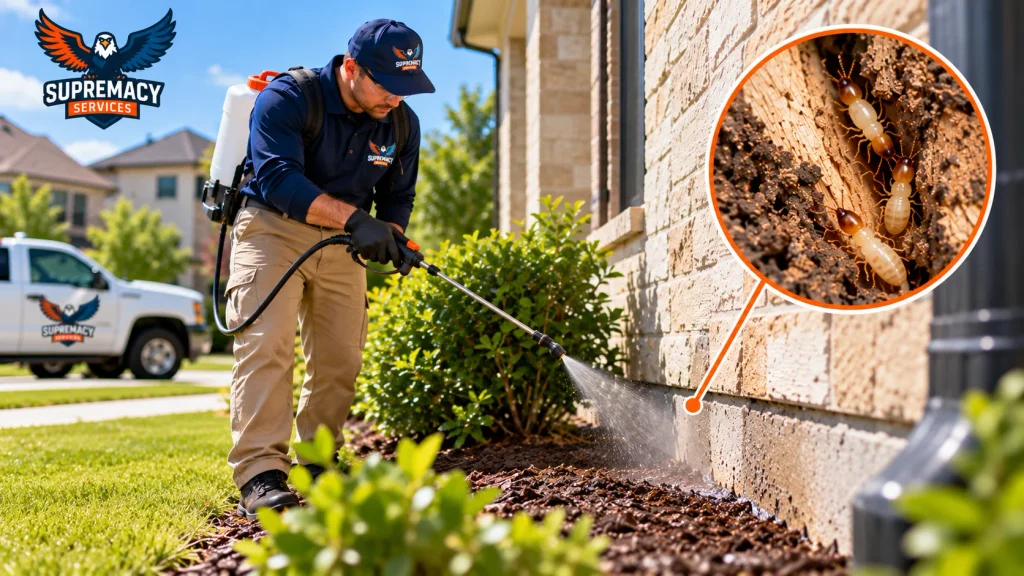
Spraying the visible tube does not establish what is happening underground or inside the structure.
Effective termite management depends on correctly identifying the termite problem and selecting a treatment appropriate to the property.
EPA notes that termite treatments can include soil-applied termiticides, termite baits and certain wood treatments, depending on the situation.
Step 5: Get the property inspected
An inspection can evaluate whether the visible tube is part of a broader termite problem and identify additional evidence or conditions that may otherwise be overlooked.
For Dallas/DFW homeowners who discover shelter tubes, swarmers or suspicious structural damage, this is the point at which a termite inspection becomes more useful than continued DIY investigation.
Need the source identified? Request a termite assessment from Supremacy Services if you have found mud tubes or other possible termite evidence around your Dallas–Fort Worth property.
Mud Tubes vs. Other Home Problems
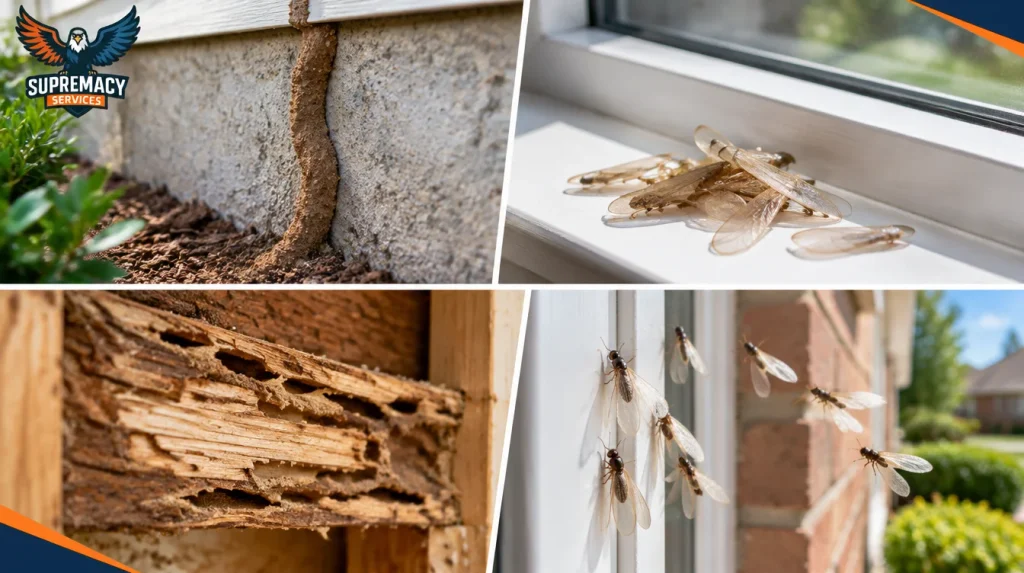
Not every line of dirt on a foundation is a termite tube.
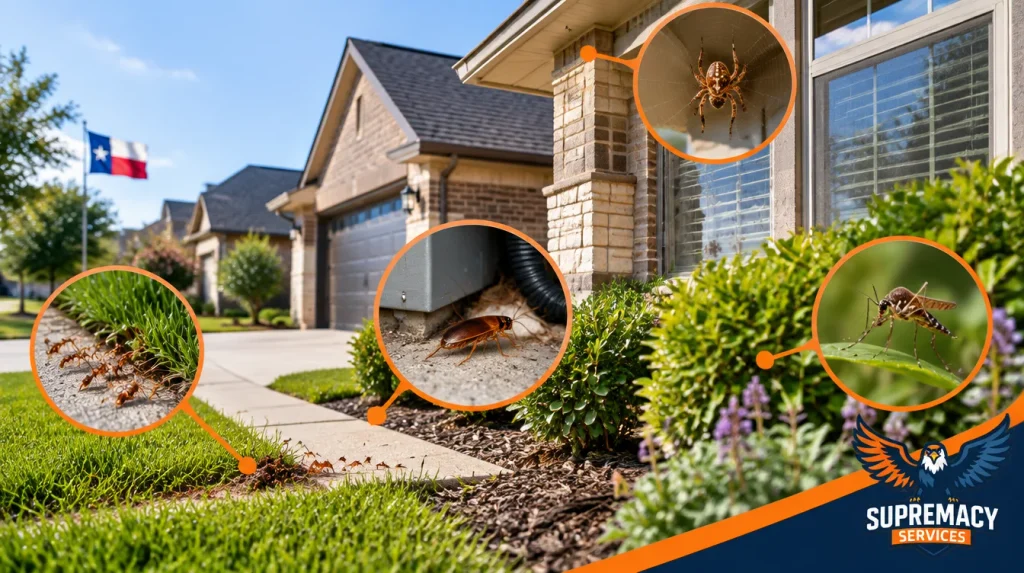
Termite mud tube vs. ant trail
An ant trail consists of individual ants moving across a surface. It does not normally create the continuous soil-covered passage associated with subterranean termites.
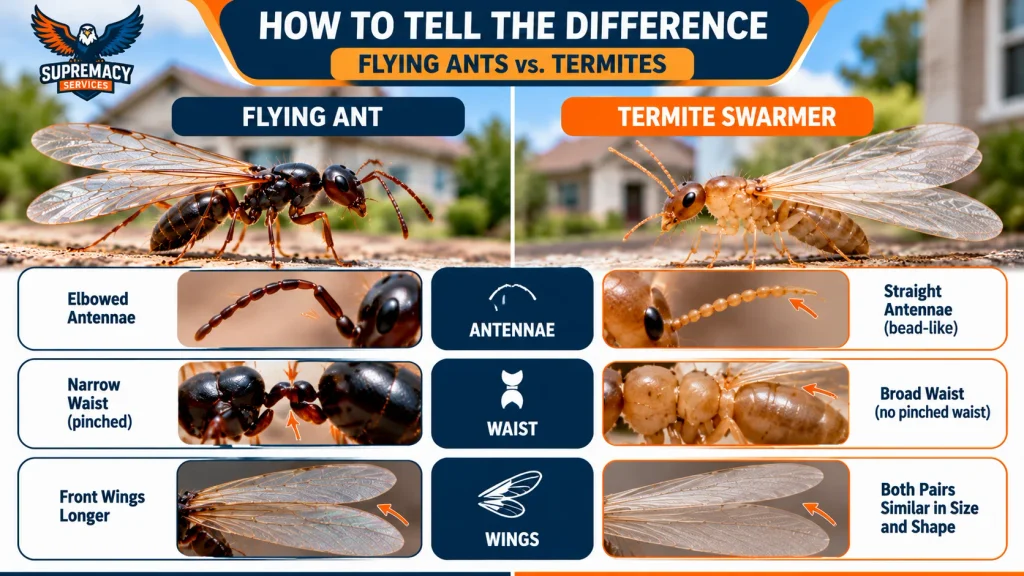
Winged ants can also be mistaken for termite swarmers, making insect identification important when both signs appear.
Termite tube vs. water stain
Water runoff can leave mineral or soil staining on concrete.
A stain generally lacks the raised, constructed tunnel characteristic of a shelter tube.
Investigate the water source anyway because poor drainage and leaks deserve correction.
Termite damage vs. wood rot
Both can weaken wood, but they are different problems.
Wood decay is caused by fungi under suitable moisture conditions. Termites physically consume cellulose-containing material.
Moisture problems can occur alongside termite activity, so finding deteriorated wood does not establish the cause without further inspection.
Termite activity vs. carpenter ants
Carpenter ants excavate wood to create nesting galleries but do not consume wood in the same manner as termites.
Correct pest identification matters because the appropriate management strategy differs.
Other Signs of Termites to Look For
Mud tubes are only one possible clue.
1. Termite swarmers
A termite swarm can be one of the most conspicuous signs of a nearby colony.
The EPA notes that homeowners often become aware of termites after seeing a swarm or discovering damage during construction.
2. Discarded wings
After swarming, reproductive termites shed their wings.
Small piles of similar-sized wings near windows, doors or other light sources can justify further investigation.
3. Hollow or damaged wood
Termite damage may be hidden beneath the wood surface.
EPA recommends checking exposed wood for hollow areas as part of termite detection.
Do not aggressively probe structural members if doing so could damage them.
4. Soil in cracks
TDA lists soil appearing in cracks among possible evidence associated with subterranean termites.
5. Blistered or weakened wood
Blistering or visibly weakened structural material can have multiple causes, but it should be investigated when other termite evidence is present.
Why Do Subterranean Termites Build Mud Tubes?
Subterranean termites have a strong relationship with soil and moisture.
Shelter tubes help them travel between their underground environment and above-ground food while reducing exposure.
EPA guidance describes subterranean termites as constructing earthen tubes between soil and wood, with those passageways helping protect the insects while reducing moisture loss during travel.
This biology explains why termite prevention is about much more than killing an insect you happen to see.
A property should also be evaluated for conditions that facilitate termite access.
Dallas/DFW considerations
Texas A&M AgriLife identifies subterranean termites as an important Texas structural pest and provides Texas-specific guidance for identification, prevention and management.
For Dallas-area homeowners, practical inspection points include slab edges, foundation transitions, plumbing penetrations, landscape beds and other locations where soil, moisture and structural materials meet.
Local optimization should not mean assuming every Dallas house has termites. It means understanding how subterranean termite biology interacts with the construction and site conditions of the individual property.
DIY vs. Professional Termite Inspection
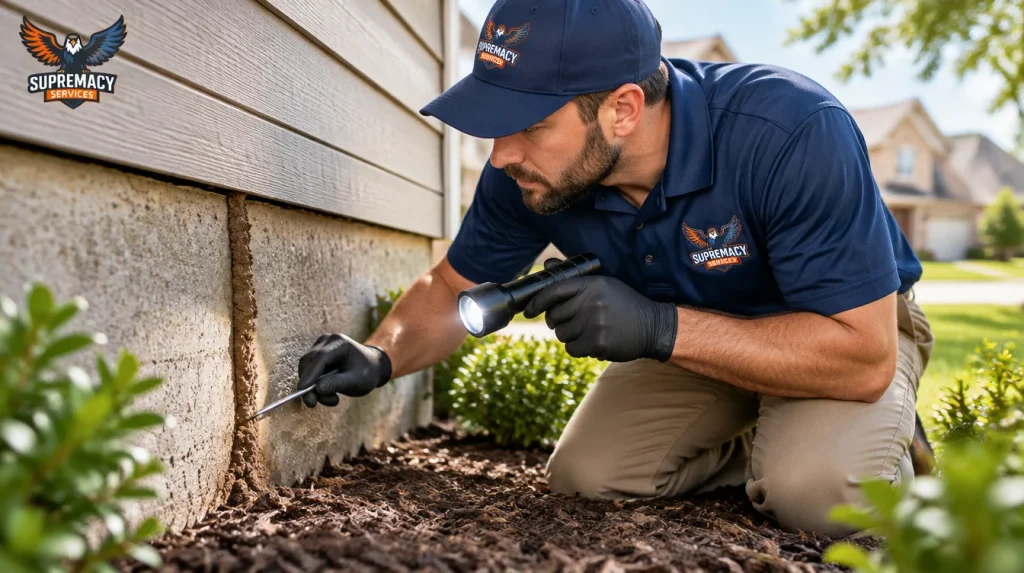
Homeowners can perform useful visual monitoring.
What homeowners can reasonably do
You can:
- inspect accessible foundation edges;
- photograph suspicious tubes;
- watch for swarmers;
- note discarded wings;
- correct plumbing leaks;
- improve obvious drainage problems;
- move stored wood away from the structure;
- keep accessible foundation areas visible;
- record where suspected activity occurs.
Where DIY inspection becomes limited
Termites frequently operate where homeowners cannot see them.
Visible evidence may represent only part of the activity, and absence of visible tubes does not establish that a structure is termite-free.
Professional inspection becomes especially appropriate when:
- live termites are present;
- multiple mud tubes appear;
- swarmers emerge indoors;
- structural wood appears damaged;
- activity returns after previous treatment;
- you’re unsure whether the evidence is termites;
- the suspected route disappears behind finished construction;
- a property transaction requires a wood-destroying-insect evaluation.
Texas regulates termite inspection and control as a structural pest-control category.
What Does Professional Termite Service Include?
The exact process should depend on the property and findings rather than a one-size-fits-all treatment.
An evaluation may include examination of:
- visible foundation perimeter;
- suspected mud tubes;
- accessible structural wood;
- slab and wall penetrations;
- plumbing areas;
- crawlspaces where applicable and safely accessible;
- moisture-related conditions;
- previous termite evidence;
- previous treatment indicators;
- other accessible termite entry points.
If treatment is recommended, homeowners should understand exactly what is being proposed.
Texas requires specific written disclosure information when a termite-treatment estimate or proposal is submitted to a consumer. TDA states that this includes a diagram identifying treatment areas and active or previous termite activity, warranty or guarantee terms, the chemical label, and applicable information about liquid termiticide concentration or baiting systems.
That gives homeowners a useful framework for comparing proposals.
Ask:
- Where was activity found?
- Is it active or previous evidence?
- What areas will be treated?
- What treatment method is recommended?
- Why is that method appropriate?
- What monitoring or follow-up is involved?
- What does the warranty actually cover?
- What conditions around the property should be corrected?
How Are Subterranean Termites Treated?
There isn’t one treatment that is automatically appropriate for every property.
EPA identifies several termite-management approaches, including:
- liquid soil-applied termiticides;
- termite bait systems;
- certain treated building materials;
- wood treatments.
Two commonly used approaches for subterranean termites are soil barrier treatments and termite bait systems.
The appropriate approach depends on the termite species, building construction, location of activity, site conditions, previous treatments and product labeling.
This is also why finding one tube should not lead directly to buying a random pesticide and treating the visible spot.
The objective is to understand the infestation and manage termite access to the structure—not merely make the visible evidence disappear.
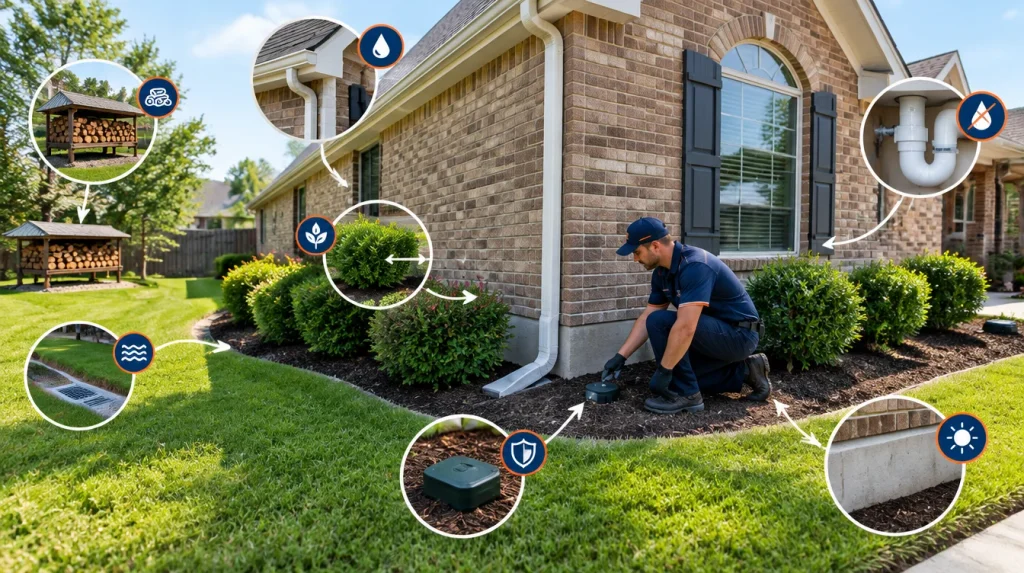
How to Reduce the Risk of Future Termite Problems
No maintenance checklist can guarantee that termites will never appear, but homeowners can eliminate several conditions that make inspection difficult or provide favorable access.
Keep moisture under control
EPA recommends keeping soil around foundations appropriately drained, maintaining gutters and downspouts and repairing leaks promptly.
Check:
- plumbing leaks;
- outdoor faucets;
- downspout discharge;
- irrigation;
- condensate drainage;
- low areas that remain wet.
Reduce wood-to-soil contact
Avoid creating easy concealed pathways between soil and wooden structural materials.
Pay attention to:
- wood siding close to grade;
- wooden steps;
- landscape timbers;
- fencing attached directly to the structure;
- scrap lumber;
- buried wood debris.
Store firewood away from the house
Do not create a large cellulose source directly against the foundation.
EPA specifically recommends keeping firewood and wood debris away from the house.
Keep foundations inspectable
Dense landscaping, stored belongings and excessive material against exterior walls can make early termite evidence harder to see.
An accessible foundation perimeter makes periodic visual inspection easier.
Seal appropriate openings
Cracks and penetrations should be maintained appropriately as part of normal building maintenance.
EPA recommends reducing openings around foundations and utility penetrations that can provide termite access.
Remember that sealing a visible opening is preventive maintenance—it is not a substitute for treating an established infestation.
Frequently Asked Questions
What does a termite mud tube look like?
A termite mud tube usually appears as a narrow, raised, brown or soil-colored tunnel attached to a foundation, wall, pier or another surface. It often looks like a small irregular vein of dried mud running from the soil toward the structure.
Does finding one termite mud tube mean I have termites?
A genuine subterranean termite shelter tube is evidence of termite activity. However, one tube cannot tell you whether that route is currently active, how large the colony is or how much of the structure is affected.
Are termite mud tubes always active?
No. A tube can remain after termites stop using that particular passage. Conversely, an empty tube does not establish that termites have disappeared from the property.
What happens if I break a termite mud tube?
You may expose live termites if the passage is active, but finding none does not rule out an infestation. Document the location before disturbing suspected termite evidence.
Should I remove termite mud tubes?
Photograph and document suspected tubes before removing them. Preserving evidence can help during an inspection, particularly when determining where termites may have entered the structure.
Can termites make mud tubes on concrete?
Yes. Subterranean termites can build shelter tubes across surfaces such as concrete to reach accessible cellulose-containing material. They are not eating the concrete.
Can termite mud tubes be inside a house?
Yes. Shelter tubes or soil-like material can sometimes appear in interior locations when subterranean termites find concealed access through cracks, penetrations or structural openings.
Are mud tubes the only sign of termites?
No. Other possible signs include swarmers, discarded wings, hollow or damaged wood, soil in cracks and other concealed structural damage. The absence of visible tubes does not prove a home is termite-free.
Can I treat termite mud tubes myself?
Removing or spraying a visible tube does not address the underground colony or other concealed pathways. EPA notes that effective termite treatments often require professional application methods and specifically recommends trained pest-management professionals for many termiticide applications.
Who regulates termite companies in Texas?
The Texas Department of Agriculture’s Structural Pest Control Service regulates structural pest-control businesses and professionals. Termite control is a specific licensing category covering inspection and control of termites and other wood-destroying organisms.
Found Termite Mud Tubes Around Your Dallas Home?
A mud tube is a warning sign worth investigating—not something to simply scrape away and forget.
Document what you found, check accessible surrounding areas for additional termite evidence and address obvious moisture or wood-to-soil conditions. If the material appears consistent with a termite shelter tube, a professional inspection can determine whether additional evidence exists and what response is appropriate.
For homeowners throughout Dallas and the DFW Metroplex, Supremacy Services’ Termite Vault Security provides a dedicated path from termite inspection and identification to an appropriate termite-management plan.