
Furnace Blowing Cold Air? Quick Dallas Homeowner Guide
Is your furnace blowing cold air when you expect warm air? Don’t immediately assume that your entire heating system has failed. A furnace can blow cool or cold air for several reasons, ranging from a thermostat or airflow issue to a malfunctioning ignition, blower, heat exchanger, or other component.
For Dallas homeowners, a furnace that suddenly stops producing heat can be especially frustrating during a cold spell. The good news is that some causes are simple to check. Others require professional diagnosis and furnace repair in Dallas, TX.
In this guide, we’ll explain why your furnace may be blowing cold air, what you can safely check yourself, when the problem requires professional attention, and how to know whether you need furnace repair or replacement.
Is It Normal for a Furnace to Blow Cold Air?
A furnace may briefly circulate cool or room-temperature air when beginning a heating cycle while the system completes its startup sequence and the heat exchanger warms.
However, continuous cold air, repeated cold-air cycles, or a furnace that never produces warm air can indicate a problem with the thermostat, airflow, ignition system, flame sensor, blower, gas supply or another component.
Quick Answer: Why Is My Furnace Blowing Cold Air?
If your furnace is blowing cold air, possible causes include:
- A thermostat set incorrectly
- A dirty or clogged air filter
- An ignition or pilot-light problem
- A furnace that is overheating
- Blocked or damaged ductwork
- A malfunctioning blower motor
- A faulty flame sensor
- A mechanical or electrical component failure
Some of these problems can be resolved with simple maintenance. Others require a qualified HVAC technician to diagnose and repair the system.
If your furnace continues blowing cold air after basic checks, professional furnace repair may be necessary.
Quick 5-Minute Check
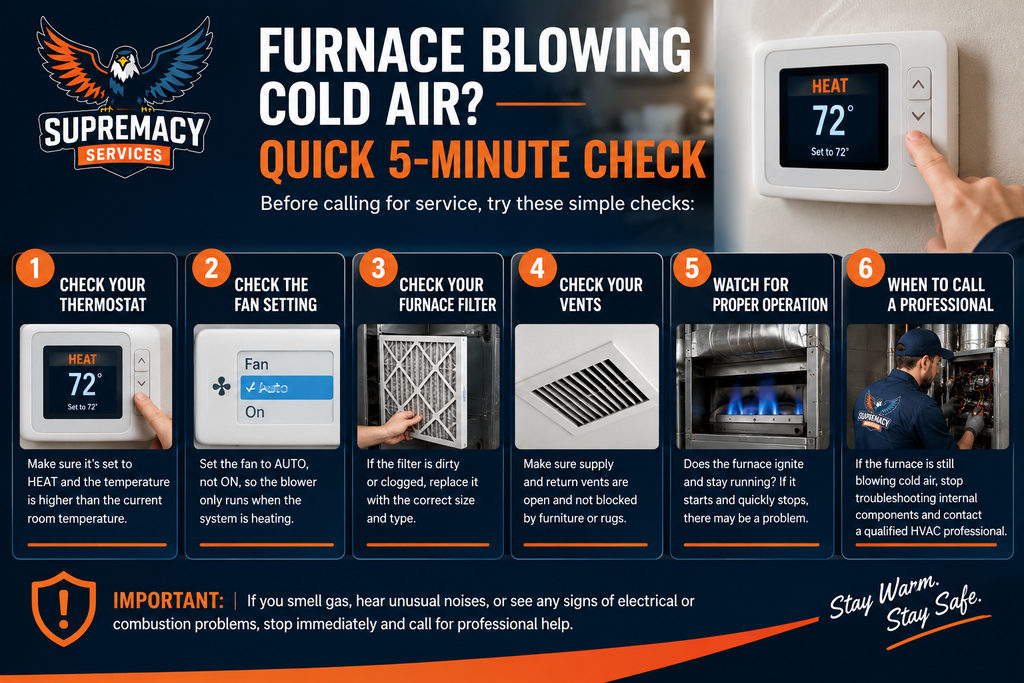
| Check | What to look for |
|---|---|
| Thermostat | Set to HEAT |
| Fan | Set to AUTO, not ON |
| Temperature | Set above current room temperature |
| Filter | Replace if dirty/clogged |
| Vents | Make sure supply/return vents aren’t blocked |
| Furnace operation | Does it ignite and stay running? |
Then:
If these checks don’t restore heat, stop troubleshooting internal components and contact a qualified HVAC professional.
1.Check Your Thermostat First
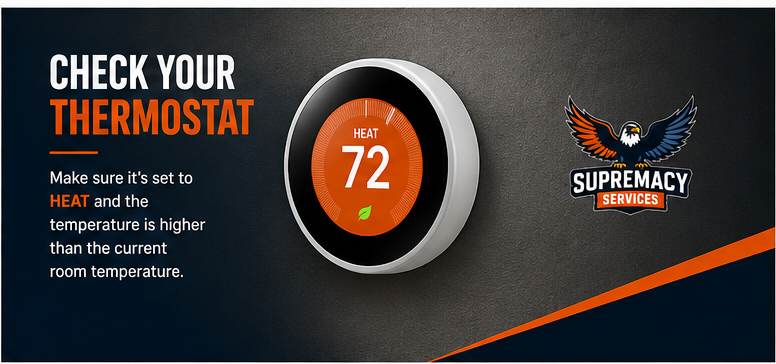
One of the simplest reasons a furnace may appear to be blowing cold air is an incorrect thermostat setting.
Check that:
- The thermostat is set to HEAT
- The desired temperature is higher than the current room temperature
- The fan setting is on AUTO, rather than ON
- The thermostat has power
- The batteries are working if your thermostat uses them
Why does the fan setting matter?
When the thermostat fan is set to ON, the blower may continue circulating air even when the furnace is not actively heating.
That can make the air coming from your vents feel cool.
Switching the fan to AUTO allows the blower to operate when the heating system calls for heat.
If the furnace still blows cold air, continue troubleshooting.
2.A Dirty Furnace Filter Can Restrict Airflow
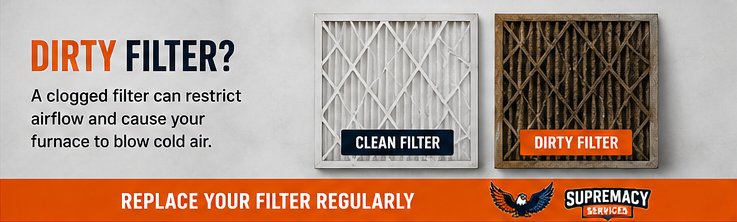
A clogged furnace filter is another common reason a heating system may not operate correctly.
The filter collects dust, dirt and airborne particles. Over time, excessive buildup can restrict airflow through the system.
Restricted airflow can cause the furnace to overheat.
When this happens, a safety mechanism may shut the burner off while the blower continues circulating air.
The result?
You may feel cool air coming from the vents even though the furnace is running.
What should you do?
Check your furnace filter.
If it is visibly dirty or clogged, replace it with the correct type and size recommended for your system.
However, if replacing the filter does not solve the problem, there may be another underlying issue.
3.Your Furnace May Be Overheating
A furnace is designed to protect itself when internal temperatures become too high.
Several conditions can contribute to overheating, including:
- Restricted airflow
- Dirty filters
- Blocked vents
- Dirty components
- Blower problems
- Ductwork restrictions
- Mechanical problems
An overheating furnace may shut the burners down while allowing the blower fan to continue operating.
This can create the impression that the furnace is blowing cold air.
If this happens repeatedly, don’t simply keep resetting the system.
Repeated overheating can indicate a problem that should be professionally diagnosed.
4.The Pilot Light or Ignition System May Have a Problem
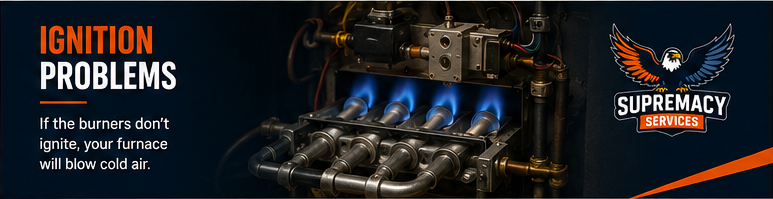
Gas furnaces need a reliable ignition process to produce heat.
Depending on the furnace, ignition may involve a pilot light, electronic ignition or another ignition system.
If the burners fail to ignite, the blower may still operate without producing heated air.
Possible causes include:
- Ignition failure
- Flame sensor problems
- Pilot-light problems
- Electrical issues
- Gas supply problems
- Control-board problems
Important safety note
If you suspect a gas-related problem, don’t attempt to repair the gas system yourself.
Turn off the system if appropriate and contact a qualified professional.
For professional gas furnace repair in Dallas, the safest approach is proper diagnosis rather than repeatedly attempting to restart the furnace.
5.The Flame Sensor Could Be Dirty or Malfunctioning
The flame sensor is an important safety component in many gas furnaces.
Its job is to detect whether the burner flame has been established.
If the system cannot properly detect the flame, it may shut the gas burner off as a safety precaution.
The blower can continue operating, resulting in air that feels cold.
A malfunctioning flame sensor can therefore create a situation where:
The furnace turns on → the burner starts → the burner shuts off → the blower continues → cold air comes from the vents.
This is one reason professional diagnosis is important when a furnace repeatedly starts and stops without producing consistent heat.
6.Your Furnace Filter May Not Be the Only Airflow Problem
Even with a clean filter, airflow can be restricted elsewhere in the heating system.
Potential problems include:
- Blocked supply vents
- Closed registers
- Damaged ductwork
- Dirty return vents
- Restricted return airflow
- Poorly designed ductwork
- Collapsed or disconnected ducts
If the furnace is producing heat but warm air isn’t reaching the rooms effectively, the problem may involve the duct system rather than the furnace itself.
Supremacy Service also provides duct inspection services in Dallas, which can help identify problems affecting airflow.
7.Your Blower Motor Could Be Having Problems
The blower motor is responsible for moving conditioned air through the duct system and into your home.
If the blower is malfunctioning, you might experience:
- Weak airflow
- No airflow
- Unusual sounds
- Intermittent heating
- Air that doesn’t feel properly heated
Blower problems can have several causes, including electrical problems, worn components, dirt buildup or motor failure.
Because accessing and diagnosing these components can involve electrical equipment, professional HVAC service is recommended.
8.The Gas or Fuel Supply May Be Interrupted
Gas furnaces require an adequate fuel supply to generate heat.
If the furnace isn’t receiving the fuel it needs, the system may run without successfully producing warm air.
Possible causes can include problems with the gas supply, shutoff equipment or furnace components.
Never attempt to modify or repair gas connections yourself.
If you suspect a gas problem, contact a qualified HVAC professional.
If you smell gas, leave the area and follow appropriate emergency procedures rather than attempting to troubleshoot the furnace.
9.Your Furnace Could Have an Electrical Problem
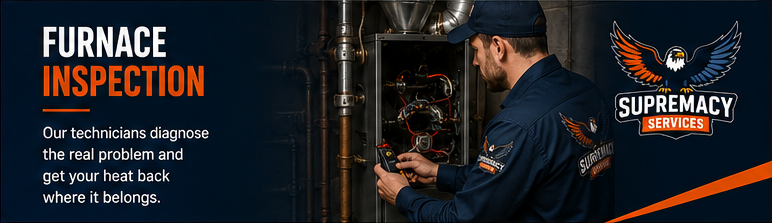
Modern furnaces contain electrical controls and safety components that coordinate ignition, airflow and heating operation.
An electrical fault can cause the furnace to:
- Start and stop unexpectedly
- Fail to ignite
- Run the blower without heating
- Produce inconsistent heat
- Shut down completely
Electrical problems should be professionally diagnosed.
Your Furnace May Simply Need Professional Repair
If you’ve checked the thermostat and filter and the furnace is still blowing cold air, don’t keep guessing at the cause.
A technician can inspect the system and determine whether the problem involves:
- Ignition
- Flame sensing
- Gas supply
- Airflow
- Blower operation
- Electrical controls
- Ductwork
- Safety switches
- Other furnace components
For homeowners looking for furnace repair in Dallas, TX, Supremacy Service has a dedicated furnace repair service.
Furnace Blowing Cold Air? Try These Safe Checks First
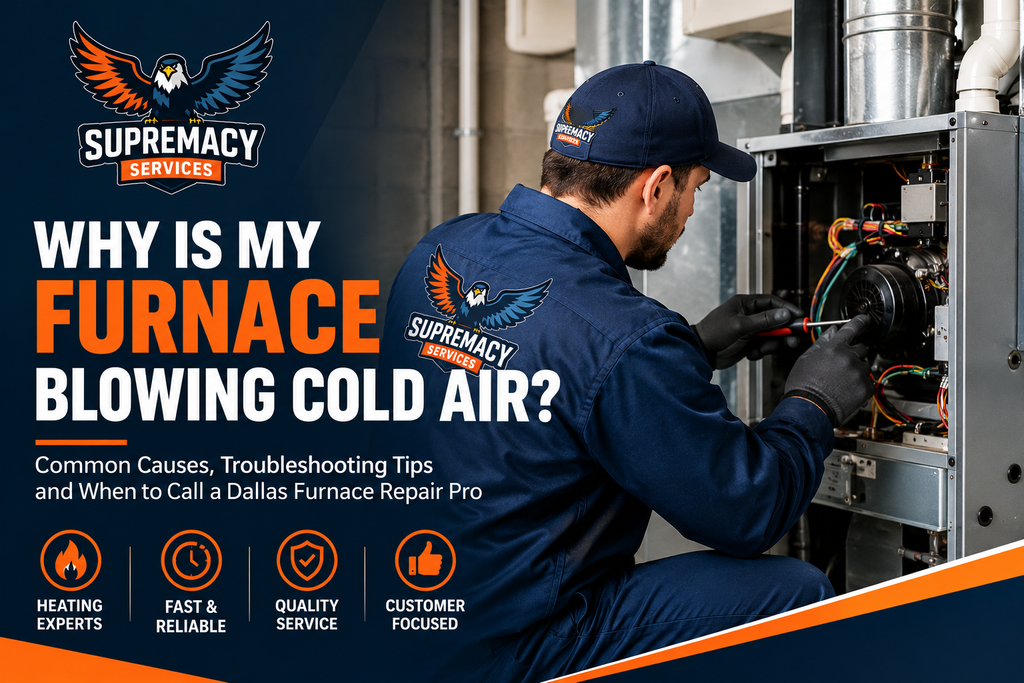
Before calling for service, you can perform a few basic checks.
Step 1: Check the thermostat
Make sure it is set to HEAT and the temperature is set above the current room temperature.
Step 2: Check the fan setting
Set the fan to AUTO rather than ON.
Step 3: Check the furnace filter
Replace a dirty or clogged filter with the correct replacement.
Step 4: Check your vents
Make sure supply registers are open and aren’t blocked by furniture, rugs or other objects.
Step 5: Check whether the furnace is cycling
Does it start heating and then quickly stop?
Repeated short cycling can indicate a problem that needs professional diagnosis.
Step 6: Stop if you suspect a dangerous problem
Do not attempt to repair gas lines, electrical components or internal furnace components yourself.
If the furnace continues blowing cold air, contact a qualified HVAC professional.
10. A Blocked Condensate Drain Can Stop a High-Efficiency Furnace
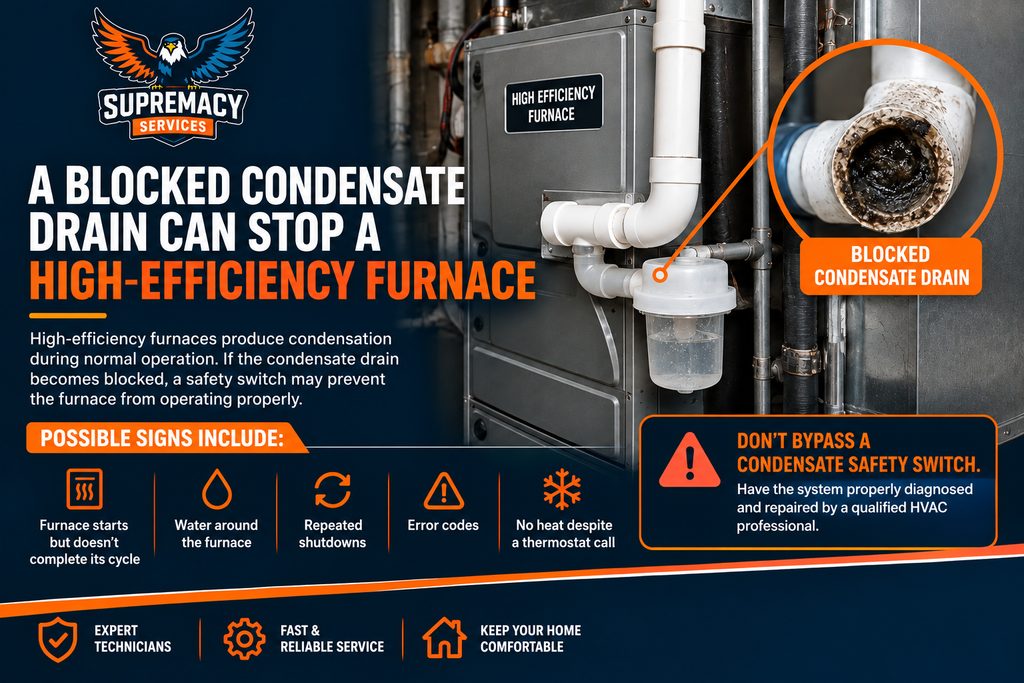
Some high-efficiency furnaces produce condensation during normal operation. That water is normally removed through a condensate drain system.
If the drain becomes blocked, a safety switch may prevent the furnace from operating normally.
Possible signs include:
- Furnace starts but doesn’t complete its cycle
- Water around the furnace
- Repeated shutdowns
- Error codes
- No heat despite a thermostat call
Don’t bypass a condensate safety switch. Have the system properly diagnosed.
This gives you another legitimate semantic entity around the main keyword.
When Should You Call a Furnace Repair Professional?
You should consider professional Dallas furnace repair when:
- The furnace repeatedly blows cold air
- The furnace won’t ignite
- The system repeatedly turns on and off
- You hear unusual mechanical noises
- There is little or no airflow
- The furnace produces inconsistent heat
- The thermostat appears to work but the furnace doesn’t
- The furnace has an ignition problem
- You suspect an electrical issue
- You suspect a gas-related problem
- The furnace stops working completely
If the problem occurs during very cold weather, you may also need to consider emergency furnace repair in Dallas.
Furnace Repair vs. Furnace Replacement
Not every furnace problem means you need a new system.
A repair may make sense when the furnace:
- Is relatively young
- Has a repairable component failure
- Has otherwise performed reliably
- Can be restored safely and economically
Replacement may make more sense when the furnace:
- Is near the end of its expected service life
- Requires frequent repairs
- Has major component failures
- Has persistent performance problems
- Is inefficient compared with modern systems
If your furnace cannot be economically repaired, Supremacy Service also provides furnace installation in Dallas, TX.
Don’t Confuse a Furnace Problem With a Larger HVAC Problem
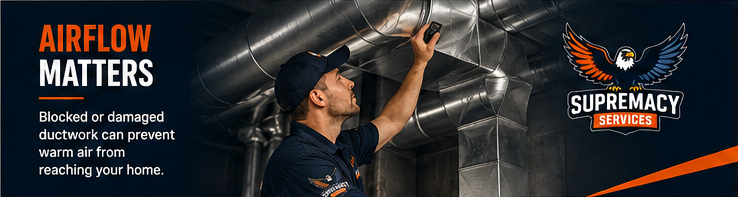
Sometimes the furnace itself isn’t the only issue.
Your home’s heating performance can be affected by:
- Ductwork
- Airflow
- Thermostat operation
- Electrical components
- HVAC controls
- Insufficient system capacity
- Poor maintenance
That’s why a proper diagnosis is more valuable than replacing individual components based only on symptoms.
If the problem extends beyond the furnace, Supremacy Service also offers HVAC repair in Dallas, Texas.
Do You Have a Heat Pump Instead of a Furnace?
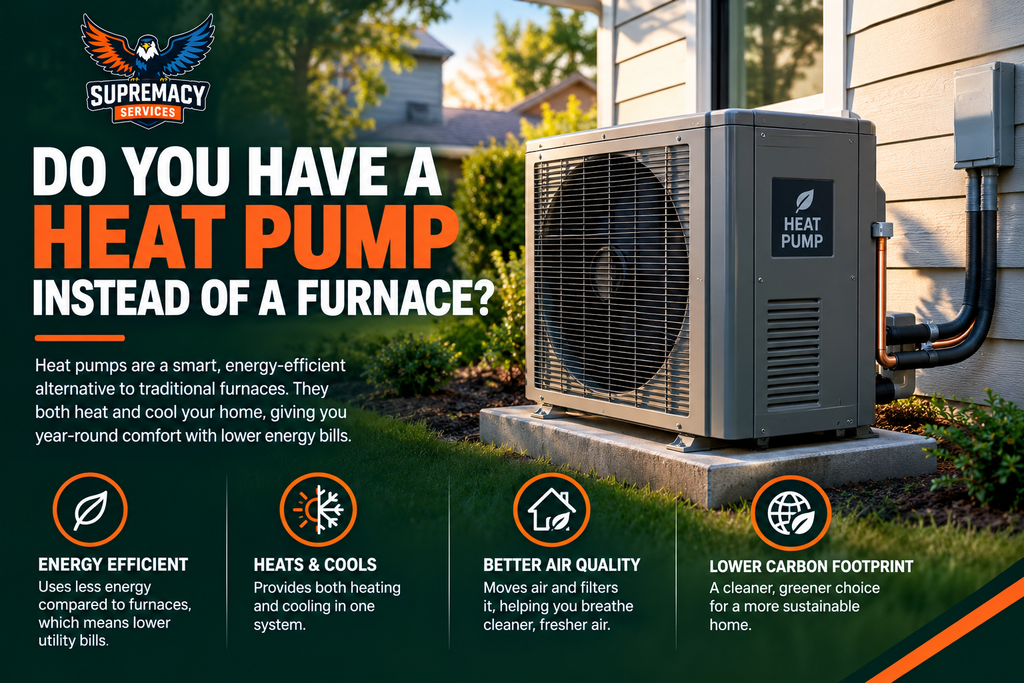
Heat pumps provide efficient heating and cooling in one system, helping keep your home comfortable year-round while potentially reducing energy use.
If your home uses a heat pump, the troubleshooting process can be different.
A heat pump may produce air that feels less hot than the air from a gas furnace, particularly during certain operating conditions.
However, consistently cold air, inadequate heating, ice buildup, unusual sounds or a system that runs continuously without reaching the thermostat setting should be investigated by an HVAC professional.
How to Prevent Your Furnace From Blowing Cold Air
Regular maintenance can help identify problems before they become major heating failures.
Replace dirty filters
A clean filter helps maintain proper airflow.
Keep vents unobstructed
Don’t block supply or return vents with furniture or other objects.
Schedule professional inspections
Regular inspections can help identify developing problems with heating components, airflow and controls.
Pay attention to unusual sounds
Grinding, rattling, buzzing or repeated clicking shouldn’t simply be ignored.
Don’t ignore repeated short cycling
A furnace that constantly starts and stops may be signaling an underlying problem.
Have problems diagnosed early
Small problems can sometimes become larger failures when ignored.
When to Stop Troubleshooting Your Furnace
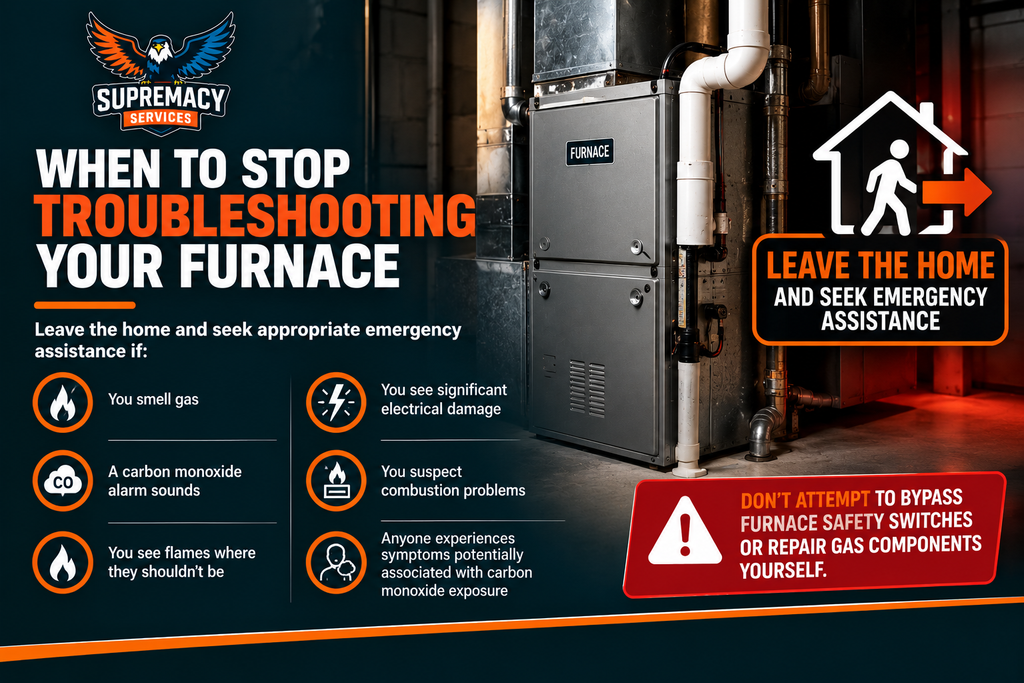
Some furnace problems are too dangerous to DIY. If you smell gas, hear a carbon monoxide alarm, see unexpected flames, or suspect an electrical or combustion issue, leave the home and seek appropriate emergency assistance.
Leave the home and seek appropriate emergency assistance if:
- You smell gas
- A carbon monoxide alarm sounds
- You see flames where they shouldn’t be
- You see significant electrical damage
- You suspect combustion problems
- Anyone experiences symptoms potentially associated with carbon monoxide exposure
Don’t attempt to bypass furnace safety switches or repair gas components yourself.
Frequently Asked Questions
Why is my furnace blowing cold air instead of heat?
A furnace blowing cold air can point to several different problems. Start by checking whether the thermostat is set to HEAT, the temperature is set above the room temperature, and the furnace is actually completing a heating cycle. If the blower runs but the air never warms up, the issue may involve ignition, the flame sensor, gas supply, or another safety control. If the furnace starts warm and then turns cold, that points to a different problem than a furnace that never produces heat.
Why is my furnace blowing cold air when the thermostat is on heat?
If the thermostat is calling for heat but the vents are delivering cold air, first determine whether the furnace is igniting at all. Listen for the startup sequence and check whether you can see a normal burner flame through the viewing window, if your model has one. If the thermostat appears to be working but the burners never stay lit, the problem is likely inside the furnace rather than with the thermostat setting itself.
Why is my furnace blowing cold air but the fan is running?
When the fan is running without producing warm air, the key question is whether the burners are operating. A continuously running blower can occur when the furnace fails to ignite, loses the flame after ignition, or enters a safety shutdown. Check the furnace’s diagnostic light or error code if accessible from outside the cabinet. Avoid bypassing safety switches or opening components you are not qualified to service.
Can a dirty furnace filter cause cold air?
Yes. A severely clogged filter can restrict airflow and cause the furnace to overheat, triggering its limit safety control. The burners may shut off while the blower continues running, making the air from the vents feel cold. Check the filter and replace it if it is visibly dirty or overdue. If the furnace continues blowing cold air with a clean filter, restricted airflow may not be the only problem.
Should I keep running my furnace if it is blowing cold air?
It depends on what the furnace is doing. If it repeatedly starts, shuts down, or runs continuously without producing heat, continuing to operate it can worsen certain problems or repeatedly trigger safety controls. Check the thermostat and filter first. If you smell gas, hear unusual sounds, see flames where they should not be, or suspect a combustion or electrical problem, turn the system off and seek professional assistance.
When should I call a furnace repair company?
Call a furnace repair professional when basic checks—such as confirming the thermostat setting and replacing a dirty filter—do not resolve the problem. Professional diagnosis is especially appropriate if the furnace repeatedly short-cycles, fails to ignite, displays an error code, makes unusual noises, or produces cold air despite a normal heat call. Gas, electrical, ignition, and combustion-related faults should not be repaired through trial and error.
Does a furnace blowing cold air mean I need a new furnace?
Not necessarily. Cold air is a symptom, not a diagnosis. The cause could be something relatively straightforward, such as a clogged filter or ignition issue, rather than a failed furnace. A replacement becomes more reasonable when the unit is older, requires frequent repairs, has major heat-exchanger or other costly failures, or repair costs no longer make economic sense. Have the actual fault diagnosed before deciding on replacement.
Why does my furnace blow cold air for a few minutes?
If cold air occurs only briefly at startup, the furnace may be going through its normal preheating and startup sequence before the blower delivers warm air. However, if several minutes pass and the air remains cold, check whether the burners are lighting and staying on. A delayed ignition, ignition failure, airflow restriction, or control problem can cause a longer-than-normal cold-air period.
Why does my furnace turn on and then blow cold air?
If the furnace starts but quickly switches to cold air, determine whether the burner flame is staying lit. A furnace can ignite successfully and then shut the burners down when a safety control detects a problem. A dirty flame sensor, restricted airflow, overheating, or another fault may be responsible. If the furnace repeatedly cycles this way, have the system professionally diagnosed rather than repeatedly resetting it.
Why is my furnace blowing cold air after changing the filter?
If replacing the filter did not restore heat, the filter may not have been the underlying cause. Check that the new filter is installed in the correct airflow direction and is the appropriate size and type for the furnace. If airflow is normal but the furnace still produces cold air, investigate whether the burners are igniting, whether the flame remains established, and whether the furnace is showing a diagnostic code.
Can a dirty flame sensor cause a furnace to blow cold air?
Yes. A dirty flame sensor can prevent the furnace from confirming that a burner flame is established. The furnace may ignite briefly, shut the burners off as a safety response, and leave the blower running—resulting in cold air from the vents. Because the flame sensor is part of the furnace’s safety system, do not bypass it or defeat its safety function. If the furnace repeatedly ignites and then shuts down, professional diagnosis is recommended.
Get Furnace Repair in Dallas, TX
A furnace that blows cold air isn’t something you have to diagnose by guesswork.
Start with the simple checks: thermostat, fan setting, filter and airflow. If the problem continues, professional diagnosis can determine what’s actually preventing your furnace from producing heat.
For homeowners who need furnace repair in Dallas, TX, Supremacy Service can help diagnose heating problems and determine the appropriate repair solution.
If the furnace is beyond economical repair, the company also provides furnace installation in Dallas.