
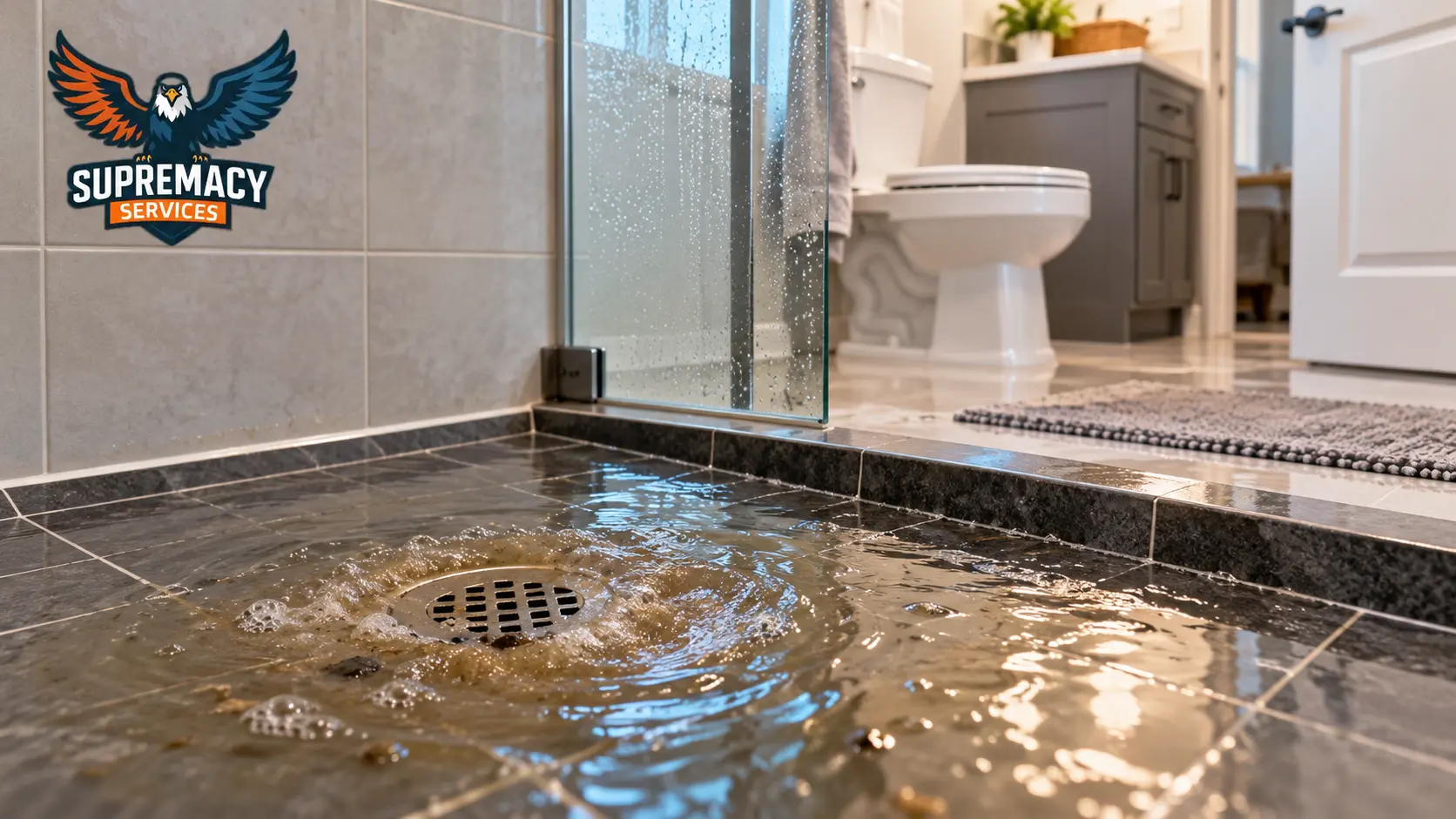
Common question why does my sewer line keep backing up?, the problem may be more than an ordinary drain clog. Recurring sewer backups often happen because grease, debris, tree roots, or damaged underground pipes repeatedly restrict wastewater flow.
For Dallas homeowners, the frustrating part is that a drain may work normally immediately after cleaning, only to back up again days or weeks later.
The key is identifying why the blockage keeps returning—not simply clearing it again.
A professional sewer camera inspection can help distinguish a recurring buildup problem from root intrusion, a sagging pipe, or structural damage.
This guide explains the most common causes, how to recognize a main sewer line problem, what you can safely do, and when repair or replacement may be necessary.
Table of Contents
- What causes a sewer line to keep backing up?
- Why does my sewer back up after cleaning?
- How do I know if the main sewer line is blocked?
- What should I do when sewage backs up?
- Why are recurring backups a concern in Dallas?
- How do plumbers find the cause?
- How are recurring sewer backups fixed?
- How much does it cost to fix a recurring sewer backup?
- Can I fix a recurring sewer backup myself?
- How can I prevent future sewer backups?
- Frequently asked questions
- Get help with recurring sewer backups in Dallas
What Causes a Sewer Line to Keep Backing Up?
A sewer line repeatedly backs up when wastewater cannot move freely through the drainage system. The restriction may come from accumulated waste, an obstruction inside the pipe, structural damage, or a problem farther downstream.
The seven causes below are worth investigating.
1. Tree Roots Growing Into Sewer Pipes
Tree root intrusion is a common reason sewer lines experience repeated blockages.
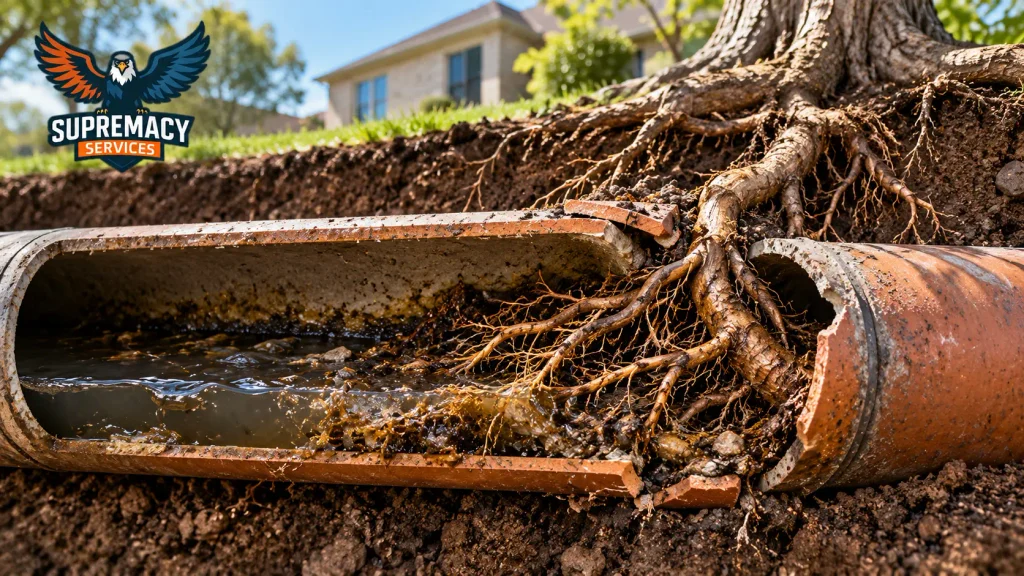
Roots can enter through cracks, separated joints, and other openings in underground pipes. Once inside, they can grow and trap toilet paper, grease, and debris.
Over time, the obstruction becomes larger.
Signs that tree roots may be involved include:
- Drain problems that gradually return after cleaning.
- Repeated blockages in the same underground sewer line.
- Older sewer pipes with joints or structural defects.
- Roots visible during a sewer camera inspection.
Why cleaning may not solve it: Removing the roots restores flow temporarily, but roots can regrow if the entry point remains open.
A plumber may recommend root removal followed by targeted pipe repair, lining, or replacement, depending on the pipe’s condition.
2. Grease, Soap Residue, and Waste Buildup
Kitchen grease can cool and accumulate along the inside of drain and sewer pipes.
Over time, it combines with other waste and restricts the available space for wastewater to pass through.
Common contributors include cooking oil, food grease, wipes, paper products, and other materials that do not break down readily.
The U.S. Environmental Protection Agency identifies fats, oils, grease, and inappropriate flushed materials as contributors to sewer blockages and overflows.
Even products marketed as flushable can create problems in plumbing systems.
3. A Sagging Sewer Pipe or Pipe Belly
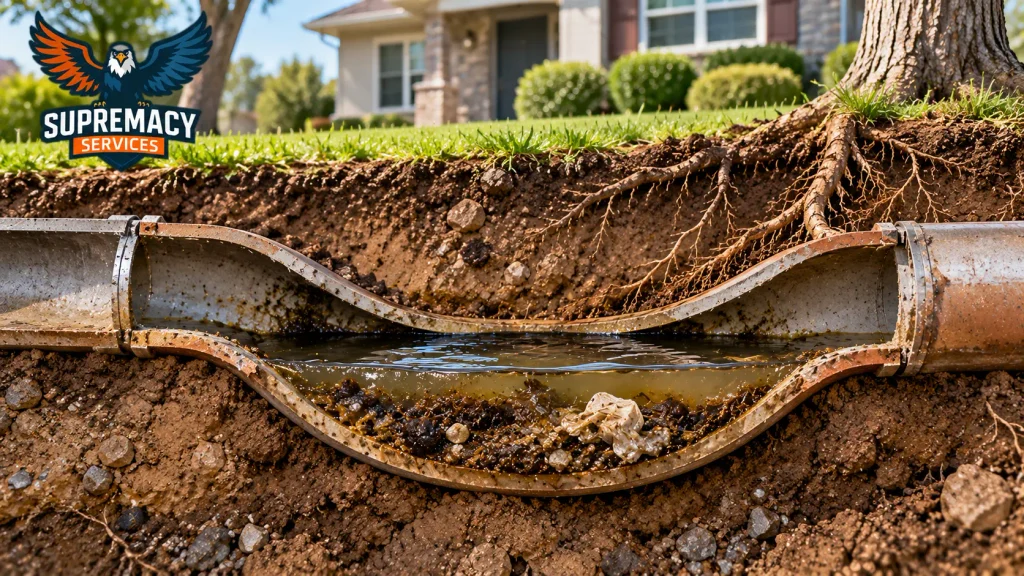
A sewer pipe belly is a section of underground piping that has settled below its intended slope.
Instead of flowing continuously toward the municipal sewer, wastewater may collect in the low section.
Solids can accumulate in that area, gradually creating another obstruction.
How a sewer pipe belly traps wastewaterConceptual illustration, not to scale. A sagging section can collect wastewater and solids even after the line has been cleaned.
This problem cannot be permanently corrected by snaking the line.
A camera inspection may identify standing water, but additional evaluation can be necessary to confirm the pipe’s alignment and the extent of settlement.
4. Cracked, Offset, or Collapsed Sewer Pipes
Underground sewer pipes can deteriorate, crack, separate at joints, or collapse.
When the pipe loses its intended shape, wastewater may encounter a permanent restriction.
Possible defects include:
- Cracked or fractured pipe walls.
- Offset joints that catch debris.
- Corroded or deteriorated cast-iron pipes.
- Sections that have partially collapsed.
- Pipes displaced by ground movement or other external forces.
If your sewer line keeps clogging in the same location, a structural defect may explain why cleaning provides only temporary relief.
For additional symptoms, see our guide to warning signs of sewer line damage in Dallas.
5. Flushing Wipes and Other Non-Flushable Products
Toilets are designed to handle human waste and toilet paper—not household trash.
Disposable wipes, paper towels, hygiene products, and similar materials can become trapped in bends, joints, or existing restrictions.
Even if these materials pass through the toilet, they may collect farther down the sewer line.
The safest practice is to dispose of wipes and hygiene products in the trash, regardless of marketing claims about flushability.
6. An Obstruction in the Municipal Sewer System
Not every sewer backup originates inside a homeowner’s private sewer line.
A blockage or capacity problem in the public sewer system may sometimes cause wastewater to back up toward connected properties.
Potential clues include multiple nearby properties experiencing problems or a backup associated with an identified public sewer incident.
However, these signs do not prove where the blockage is located.
If a public sewer problem is suspected, contact the appropriate municipal wastewater utility while arranging an assessment of the property’s drainage system. City of Dallas Water Utilities
7. An Incomplete or Incorrect Previous Cleaning
Sometimes the sewer pipe is structurally sound, but the original obstruction was not fully removed.
For example, a cable machine may create a passage through a blockage without removing all the material along the pipe walls.
Wastewater begins flowing again, but the remaining debris can quickly accumulate.
A professional should evaluate whether more thorough cleaning is appropriate and whether the pipe can safely tolerate the proposed method.
If recurring clogs are affecting multiple fixtures, Supremacy Services can help determine whether you need professional drain cleaning or a more detailed sewer inspection.
Why Does My Sewer Keep Backing Up After Cleaning?
If a sewer backs up shortly after snaking or drain cleaning, the original blockage may not have been completely removed, or an underlying pipe defect may still be present.
Cleaning can restore wastewater flow without correcting the condition that caused the obstruction.
For example:
| Underlying problem | Why the backup returns |
|---|---|
| Tree roots | Roots remain or grow back through damaged pipe openings |
| Pipe belly | Wastewater and solids collect in the low section |
| Grease accumulation | Residual buildup traps additional waste |
| Offset pipe joint | Toilet paper and debris catch on the uneven connection |
| Partial pipe collapse | The restricted opening continues trapping solids |
| Incomplete cleaning | Remaining material builds into another blockage |
Does a Recurring Backup Mean I Need a New Sewer Line?
Not necessarily.
Some recurring blockages can be resolved through thorough cleaning or localized repairs.
Others require replacement of a damaged section or, in more extensive cases, the entire sewer lateral.
The decision should be based on the condition of the pipe, not simply the number of times it has clogged.
A sewer camera inspection helps identify the problem before an expensive repair decision is made.
How Do I Know If My Main Sewer Line Is Blocked?
A main sewer line blockage often affects more than one plumbing fixture, particularly fixtures at lower elevations in the home.
The strongest warning sign is wastewater backing up through one fixture when another fixture or appliance drains.
Common Warning Signs
- Water backing up into a bathtub or shower when a toilet is flushed.
- A toilet bubbling or gurgling when the washing machine drains.
- Multiple sinks, toilets, or showers draining slowly.
- Sewage appearing in a downstairs shower or floor drain.
- Recurring unpleasant odors from several drains.
- Wastewater backing up during heavy household water use.
- The same main line blockage returning after previous cleaning.
Is It a Local Drain Clog or a Main Sewer Problem?
| Symptom | More likely explanation | Recommended response |
|---|---|---|
| Only one bathroom sink drains slowly | Local fixture or branch drain clog | Check the affected fixture |
| Toilet backs up but nearby fixtures work normally | Toilet trap or branch drain obstruction | Arrange targeted diagnosis |
| Shower fills when toilet flushes | Shared drain or main line restriction | Stop using affected fixtures and seek inspection |
| Multiple fixtures back up together | Main sewer or shared branch blockage | Professional assessment |
| Sewage enters the lowest floor drain | Downstream restriction or sewer surcharge | Stop water use and seek urgent help |
| Backups return repeatedly after cleaning | Persistent buildup or structural pipe problem | Camera inspection and cause-specific repair |
These are diagnostic clues, not definitive proof. Plumbing layout and fixture connections affect where symptoms appear.
What Should I Do When Sewage Backs Up Into My House?
Stop using water immediately, keep people and pets away from contaminated areas, and arrange professional help. Continued water use can push more wastewater into the home.
Step 1: Stop Using Plumbing Fixtures
Avoid flushing toilets, running sinks, showering, using the dishwasher, or operating the washing machine.
These activities add water to a drainage system that may already be blocked.
Step 2: Keep Away From Sewage
Untreated wastewater may contain harmful microorganisms.
Keep children and pets away from contaminated areas. Avoid touching sewage or contaminated materials without appropriate protective equipment.
If wastewater has reached electrical outlets, appliances, or energized equipment, do not enter the affected area until it has been made safe.
Step 3: Avoid Chemical Drain Cleaners
Chemical cleaners may fail to remove the underlying obstruction and can create additional hazards for anyone working on the line.
Do not combine drain cleaning products or add chemicals to standing sewage.
Step 4: Document the Damage
Take photographs of visible wastewater damage from a safe location.
Record when the backup started, which fixtures were affected, and whether the problem has occurred before.
This information can help with diagnosis and any insurance claim.
Step 5: Contact a Plumbing Professional
A plumber can investigate whether the problem originates in a branch drain, the private sewer lateral, or farther downstream.
If the public sewer main may be involved, the appropriate municipal utility should also be contacted.
Step 6: Arrange Safe Cleanup
Significant sewage contamination may require professional water damage restoration and disinfection.
Do not assume that removing visible wastewater makes contaminated materials safe.
Why Are Recurring Sewer Backups a Concern in Dallas Homes?
Dallas and North Texas properties can have several conditions that influence sewer pipe performance, including older plumbing materials, expansive clay soils, tree roots, and changes in ground moisture.
These factors do not mean every Dallas sewer backup is caused by the local environment. They help explain why underground pipe condition matters when diagnosing repeated blockages.
Older Sewer Pipe Materials
Some older Dallas-area homes have cast-iron or clay sewer piping.
Depending on age, installation quality, and exposure conditions, these pipes may develop corrosion, cracks, rough interior surfaces, or deteriorated joints.
A camera inspection can help determine whether the existing pipe remains serviceable.
Expansive North Texas Clay Soil
Expansive clay soils can shrink during dry conditions and swell when moisture increases.
Ground movement can place stress on buried infrastructure, particularly where pipes already have weak joints or inadequate support.
However, a recurring sewer backup alone does not establish that soil movement damaged the line.
Trees and Underground Root Systems
Mature trees are common in established Dallas neighborhoods.
Roots can exploit openings in underground sewer piping, especially where joints have deteriorated.
A nearby tree does not automatically mean roots are inside the sewer. Camera evidence is needed to confirm intrusion.
Heavy Rainfall and Sewer Backups
Some wastewater backups occur during periods of heavy rainfall, especially when public sewer systems experience excess inflow or infiltration.
If backups happen only during storms, it is worth investigating whether the issue involves the municipal sewer system, a private sewer defect, or an improper stormwater connection.
Do not assume that rainfall proves the city’s sewer main is responsible.
How Do Plumbers Find the Cause of Recurring Sewer Backups?
Professional diagnosis typically involves identifying which fixtures are affected, locating the restriction, and inspecting the condition of the sewer line.
A thorough assessment may include the following steps.
Step 1: Review the Backup History
The plumber asks when the problem started, which fixtures are affected, and whether the line has been cleaned previously.
Repeated blockages in the same location can help narrow the investigation.
Step 2: Locate and Assess the Sewer Cleanout
A sewer cleanout provides access to the drainage system for inspection and cleaning.
Its location varies by property.
Homeowners should not open a cleanout suspected of being under pressure or filled with backed-up wastewater.
Step 3: Clear the Obstruction When Necessary
If the pipe is blocked, the plumber may use an appropriate cable machine or another cleaning method to restore access.
The equipment should be selected according to the pipe’s condition.
Step 4: Perform a Sewer Camera Inspection
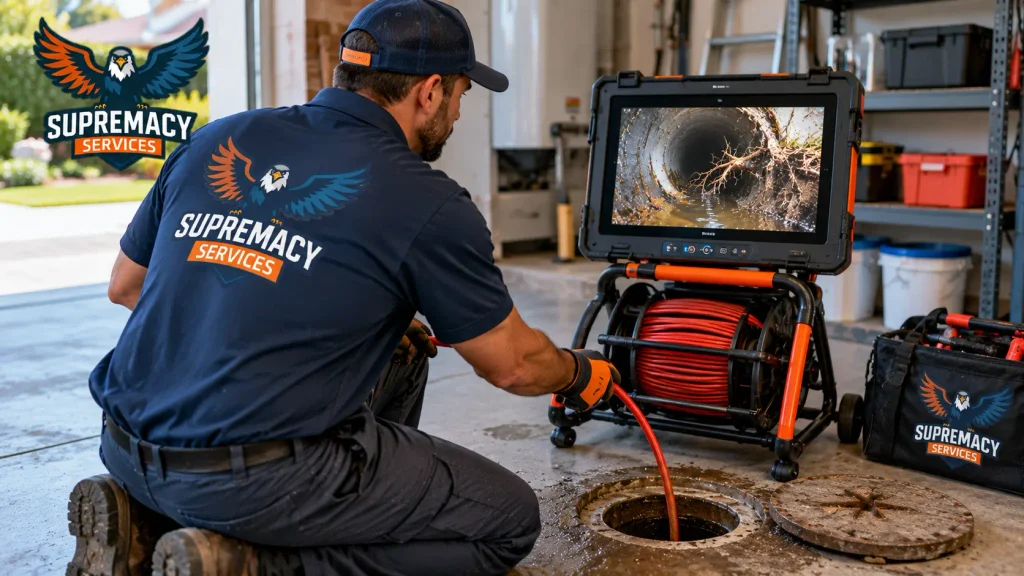
A sewer camera can reveal visible defects such as roots, cracked pipe walls, offset joints, accumulated debris, and standing wastewater.
It can also help locate the affected section.
Camera inspection has limitations: it does not automatically establish the cause of every defect or the full structural condition of the surrounding soil.
Step 5: Recommend a Cause-Specific Solution
The plumber explains whether the issue is best addressed through cleaning, targeted repair, pipe rehabilitation, or replacement.
If your sewer has backed up more than once, ask Supremacy Services about a professional sewer line inspection and repair assessment before paying for another temporary clearing.
How Are Recurring Sewer Backups Fixed Permanently?
The most effective long-term solution depends on what is causing the sewer to back up.
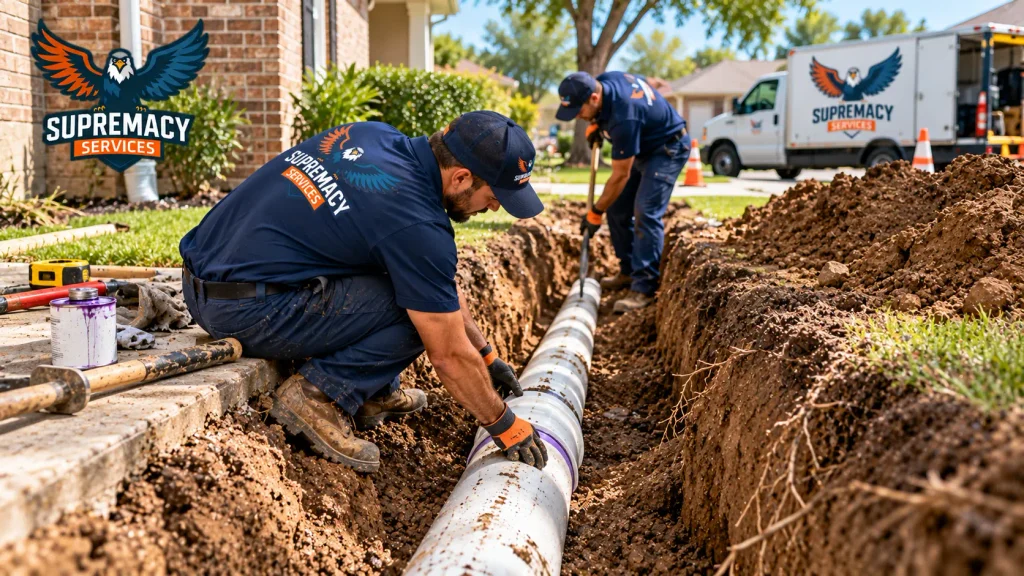
There is no single repair method suitable for every recurring blockage.
| Treatment | Best suited for | Important limitation |
|---|---|---|
| Mechanical drain cleaning | Localized debris and removable obstructions | Does not repair damaged pipe |
| Hydro-jetting | Suitable pipes with substantial buildup | May be inappropriate for fragile or badly damaged pipes |
| Root removal | Roots obstructing wastewater flow | Roots may return if pipe openings remain |
| Spot repair | Isolated cracks, offsets, or damaged joints | Does not address defects elsewhere |
| Trenchless pipe lining | Eligible pipes requiring rehabilitation | Requires suitable existing pipe geometry and condition |
| Pipe bursting | Eligible sewer lines requiring replacement | Requires access and site-specific feasibility |
| Excavation and replacement | Collapsed, badly misaligned, or extensively damaged sections | Can involve significant excavation and restoration |
When Is Sewer Cleaning Enough?
Cleaning may be sufficient when the pipe is structurally sound and the blockage results from removable waste or accumulated buildup.
Homeowners should still correct the habits or conditions contributing to the clog.
When Is Sewer Repair Necessary?
Repair becomes more likely when inspection reveals a localized crack, root-entry point, offset joint, or another structural defect.
A targeted repair may preserve the remainder of a serviceable pipe.
When Should a Sewer Line Be Replaced?
Replacement may be appropriate when the line has extensive deterioration, repeated structural failures, severe misalignment, or collapsed sections that cannot be effectively rehabilitated.
For Dallas homeowners comparing their options, Supremacy Services provides sewer line repair and replacement services with traditional and trenchless approaches.
The appropriate method should be selected after inspecting the line.
How Much Does It Cost to Fix a Recurring Sewer Backup?
The cost of fixing a recurring sewer backup depends on whether the problem requires cleaning, diagnostic inspection, localized repair, or substantial pipe replacement.
A straightforward obstruction generally involves less work than a collapsed underground pipe requiring excavation.
What Affects the Final Cost?
| Cost factor | Why it matters |
|---|---|
| Type of blockage | Grease, roots, and structural defects require different solutions |
| Sewer line accessibility | Difficult access can increase labor and equipment requirements |
| Pipe depth | Deeper repairs may require more extensive excavation and safety measures |
| Pipe material | Material and condition affect repair feasibility |
| Length of damaged pipe | Larger repairs typically require more materials and labor |
| Driveways and landscaping | Restoration can increase the overall project cost |
| Cleaning versus replacement | Structural work is more involved than routine clearing |
| Inspection requirements | Camera diagnostics and additional testing may affect the scope |
Should I Pay for Another Cleaning or Request an Inspection?
If the same sewer line has already been cleaned and the blockage returns, a camera inspection is often a more useful next step than repeatedly paying for the same temporary service.
Ask the plumber to explain:
- Where the obstruction is located.
- Whether the pipe shows visible structural defects.
- Whether the cleaning removed the obstruction completely.
- Which repair options are appropriate.
- What is included in the written estimate.
- Whether additional excavation or restoration may be required.
Pricing note: Supremacy’s drain cleaning page currently advertises a $299 drain cleaning service, but that should not be interpreted as the cost of every sewer backup diagnosis or repair. Confirm current pricing and inclusions directly before publishing a price claim.
Supremacy Services
Can I Fix a Recurring Sewer Backup Myself?
A homeowner may be able to resolve a minor clog affecting a single fixture, but repeated main sewer line backups generally require professional diagnosis.
Reasonable Homeowner Actions
- Stop using water when sewage backs up.
- Check whether the issue affects one fixture or several.
- Record which activities trigger the backup.
- Locate the sewer cleanout without opening it.
- Stop flushing wipes and other inappropriate materials.
- Contact the municipal utility if a public sewer problem is suspected.
What Should Be Left to a Professional?
Avoid attempting to clear a suspected main sewer blockage with improvised equipment, opening a pressurized cleanout, or using chemicals to dissolve a persistent obstruction.
Underground pipe repair, sewer camera diagnosis, and high-pressure cleaning require appropriate equipment and training.
If wastewater is actively entering your home, prioritize safety and professional assistance over DIY troubleshooting.
How Can I Prevent My Sewer Line From Backing Up Again?

Preventing recurring sewer backups starts with reducing avoidable blockages and correcting existing pipe defects.
Use this practical homeowner checklist:
- Flush only human waste and toilet paper.
- Dispose of cooking grease in the trash rather than the sink.
- Keep wipes, hygiene products, and paper towels out of toilets.
- Use drain strainers to reduce debris entering plumbing fixtures.
- Address repeated slow drains before they become complete blockages.
- Keep accessible sewer cleanouts clear of landscaping and debris.
- Have confirmed root intrusion or damaged joints properly addressed.
- Consider an inspection when backups recur after cleaning.
- Ask a qualified plumber whether a backwater valve is appropriate for your property.
- Follow any maintenance recommendations based on your actual pipe condition.
Should Dallas Homeowners Schedule Regular Sewer Cleaning?
Not every home needs routine sewer cleaning on a fixed schedule.
Maintenance frequency should depend on the pipe’s condition, previous blockage history, household use, and any known root intrusion or buildup problems.
A homeowner with repeated blockages may benefit from a condition-based maintenance plan, while another property with a sound, properly functioning sewer line may not need scheduled cleaning.
Frequently Asked Questions About Recurring Sewer Backups
1. Why does my sewer line keep backing up every few months?
Repeated backups can occur when grease, roots, debris, or a structural pipe defect continues restricting wastewater flow. If cleaning only provides temporary relief, a sewer camera inspection can help identify the underlying cause.
2. Can tree roots cause my sewer line to back up repeatedly?
Yes. Roots can enter through cracks or defective joints and trap wastewater debris. Removing the roots may restore flow, but repairing the opening may be necessary to prevent another intrusion.
3. Why does my sewer back up when I run the washing machine?
A washing machine discharges water relatively quickly. If a downstream drain or sewer line is restricted, the discharge may back up through a nearby lower fixture, such as a shower or floor drain.
4. Can a clogged sewer line cause toilets and showers to back up together?
Yes. Toilets, showers, and sinks may share drainage piping. When a common downstream section becomes blocked, wastewater from one fixture can emerge through another.
5. How do I know if my sewer line is collapsed?
Recurring backups, multiple slow drains, and repeated blockages may indicate structural damage, but they cannot confirm a collapse. A professional camera inspection and, when necessary, additional assessment can identify the affected section.
6. Will hydro-jetting stop recurring sewer backups?
Hydro-jetting can remove certain types of buildup and debris from suitable pipes. It cannot correct a collapsed pipe, severe misalignment, or other structural defects. A plumber should assess pipe condition before recommending high-pressure cleaning.
7. Does homeowners insurance cover sewer backups in Texas?
Coverage depends on the policy, the cause of the backup, and any applicable endorsements or exclusions. Some policies offer optional water or sewer backup coverage. Contact your insurer to review your specific protection.
8. Is the city responsible if my sewer line backs up?
Responsibility depends on where the problem occurs and the local utility’s rules. Private sewer laterals are commonly the property owner’s responsibility, while public sewer mains are generally maintained by the utility. The precise boundary should be confirmed with the municipality.
9. Can recurring sewer backups damage my foundation?
A leaking underground sewer pipe may contribute to soil moisture changes or erosion near a foundation. However, a backup does not automatically mean foundation damage is occurring. The pipe and any suspected structural effects should be evaluated separately.
10. Should I replace my sewer line if it keeps clogging?
Not automatically. A sewer line that repeatedly clogs may only need thorough cleaning or localized repair. Replacement is more appropriate when inspection confirms extensive deterioration, collapse, or defects that cannot be effectively repaired.
Get Help With Recurring Sewer Backups in Dallas and DFW
A sewer line that repeatedly backs up deserves more than another temporary fix.
Whether the underlying problem involves grease buildup, tree roots, a damaged joint, or a deteriorating underground pipe, the right solution begins with identifying the actual cause.
Supremacy Services provides plumbing, drain cleaning, sewer inspection, and sewer line repair services throughout Dallas and surrounding DFW communities, including Plano, Frisco, Richardson, McKinney, and Fort Worth.
If your drains keep backing up after previous cleaning, ask about a professional assessment to determine whether cleaning, targeted repair, or replacement is appropriate.
Schedule a Sewer Line Inspection or Repair Assessment With Supremacy Services
Call: 945-777-3345
Find the cause of the recurring backup and choose a solution based on the condition of your sewer line.

