
Trenchless sewer repair cost in Dallas typically approximates $80–$250 per linear foot as a broad 2026 planning estimate. Many residential pipe-lining and pipe-replacement projects cost several thousand dollars, with more extensive jobs reaching $15,000 or more.
The actual price depends on the length of damaged sewer pipe, the repair method, pipe condition, depth, and accessibility. A short section of deteriorated cast iron beneath a driveway may require a very different approach from a long sewer line with multiple collapsed sections.
For Dallas and DFW homeowners, the most important question isn’t simply how much trenchless sewer repair costs. It’s whether your existing sewer line is suitable for a trenchless method—and whether avoiding extensive excavation will reduce your total project expense.
This guide explains 2026 pricing, compares trenchless repair methods, identifies potential additional costs, and shows how to evaluate a professional estimate.
Table of Contents
- What Is Trenchless Sewer Repair?
- How Much Does Trenchless Sewer Repair Cost in Dallas in 2026?
- What Factors Affect Trenchless Sewer Repair Costs?
- Pipe Lining vs. Pipe Bursting: Which Costs Less?
- Trenchless vs. Traditional Sewer Repair Costs
- When Is Trenchless Sewer Repair Worth the Money?
- Signs Your Sewer Line May Need Repair
- What Happens During Trenchless Sewer Repair?
- Dallas-Specific Considerations
- How to Avoid Unnecessary Sewer Repair Costs
- Frequently Asked Questions
- Get a Trenchless Sewer Repair Estimate in Dallas
What Is Trenchless Sewer Repair?
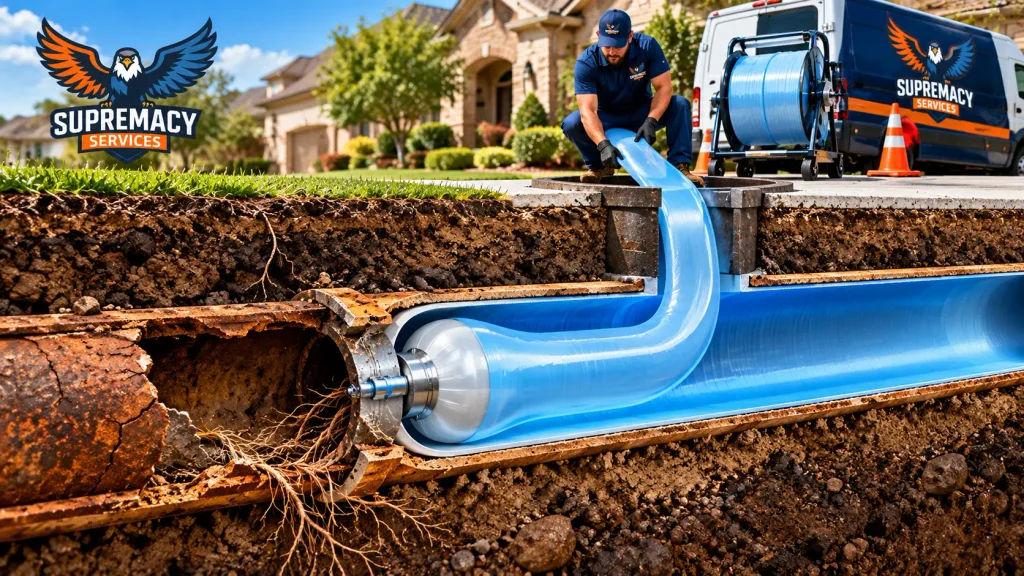
Trenchless sewer repair is a method of repairing or replacing underground sewer pipes without digging a continuous trench along the entire damaged line.
Instead, plumbers typically use existing access points or excavate smaller access pits to repair or install piping underground.
Two common methods are:
- Cured-in-place pipe lining (CIPP): A resin-impregnated liner is inserted into a suitable existing pipe and cured to create a new pipe structure inside it.
- Pipe bursting: Specialized equipment fractures the existing pipe while pulling a replacement pipe through the same general alignment.
Both methods can reduce excavation, but neither is completely excavation-free in every situation.
Why Dallas Homeowners Consider Trenchless Repair
Traditional sewer replacement may involve digging through lawns, flower beds, sidewalks, driveways, or other improvements.
Trenchless methods can be especially attractive when a sewer line runs beneath:
- Concrete driveways or patios
- Established landscaping
- Mature trees and their root zones
- Walkways and other hardscaping
- Areas with limited excavation access
However, trenchless repair is not automatically the best choice for every damaged sewer line.
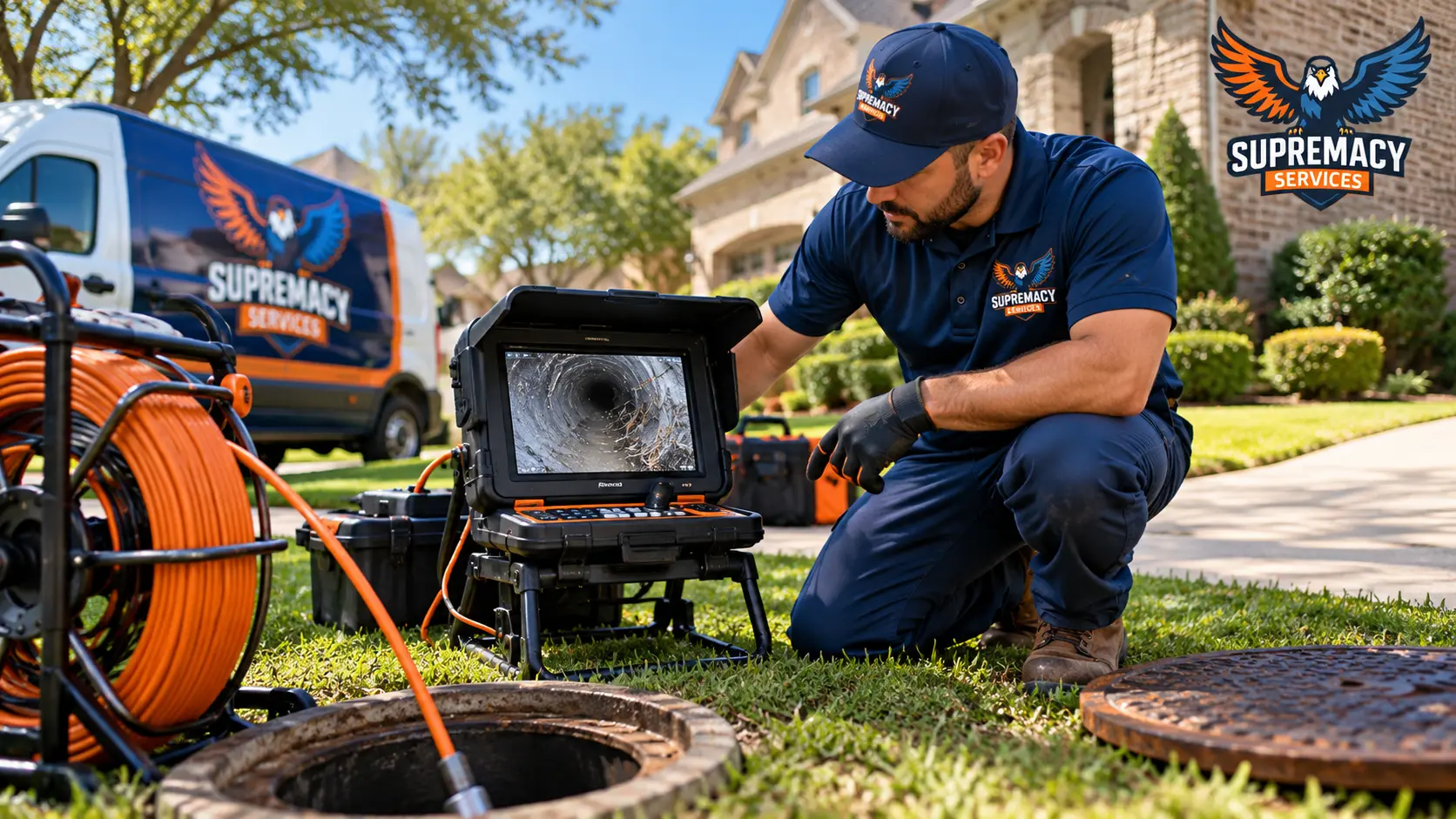
A professional camera inspection is essential for identifying the actual problem and determining which repair methods are technically suitable. Supremacy services
How Much Does Trenchless Sewer Repair Cost in Dallas in 2026?
For budgeting purposes, published 2026 Texas and DFW pricing guides commonly place trenchless sewer work in the approximate range of $80–$250 per linear foot, although some Dallas estimates extend above this range.
A typical residential project may cost approximately $3,500–$15,000, while complicated or unusually long replacements can cost substantially more.
These figures are market-based planning estimates, not fixed prices or a quotation from Supremacy Services.
Estimated Cost by Repair Method
| Sewer repair method | Estimated 2026 pricing | Typical application |
|---|---|---|
| CIPP pipe lining | $80–$250 per linear foot | Deteriorated but structurally suitable existing pipe |
| Pipe bursting | $100–$250 per linear foot | Replacement of an existing pipe along a suitable route |
| Localized sewer repair | $1,500–$4,000 per project | Isolated damage that can be accessed and repaired |
| Traditional excavation | Highly project-dependent | Collapsed, severely misaligned, or otherwise unsuitable lines |
Sources: Texas Plumbing Directory’s 2026 repair-cost guide and Dallas-area contractor estimates. These ranges overlap and are not directly comparable for every job.
What Could Different Sewer Line Lengths Cost?
The following examples use a simple $80–$250-per-foot calculation.
| Repair length | Illustrative calculated range |
|---|---|
| 20 feet | $1,600–$5,000 |
| 30 feet | $2,400–$7,500 |
| 40 feet | $3,200–$10,000 |
| 50 feet | $4,000–$12,500 |
| 75 feet | $6,000–$18,750 |
| 100 feet | $8,000–$25,000 |
Important: These are arithmetic examples, not actual project quotations. Short jobs may have minimum mobilization charges, and real estimates may include cleaning, access excavation, inspection, permits, restoration, and other work not captured by a per-foot calculation.
Is a $10,000 Trenchless Sewer Repair Quote Reasonable?
A $10,000 estimate may be reasonable for some Dallas sewer projects, particularly when the repair involves a long section, difficult access, or substantial preparation.
However, the total price alone does not establish whether a quote is fair.
A homeowner should ask:
- How many feet of pipe are being repaired?
- Which method is recommended?
- What did the camera inspection reveal?
- Does the price include pipe cleaning and preparation?
- Are excavation and restoration included?
- What testing and documentation will be provided?
- What warranty applies to the specific work?
A written, itemized scope is more useful than comparing prices without knowing what each contractor intends to repair.
What Factors Affect Trenchless Sewer Repair Costs?
The biggest cost drivers are the amount of pipe being repaired, the condition of the existing sewer line, and the amount of access and preparation required.
1. Length of the Damaged Sewer Line
Longer sewer sections generally require more liner or replacement pipe, additional preparation, and potentially more labor.
However, repairing twice as much pipe does not necessarily double the project price because equipment setup and other fixed costs may be similar.
2. Existing Pipe Material and Condition
Older Dallas-area homes may have cast-iron or clay sewer pipes, while other properties use plastic piping.
Common problems include:
- Corrosion and deterioration
- Cracked pipe walls
- Separated or offset joints
- Root intrusion
- Missing pipe sections
- Partial or complete collapse
CIPP lining requires an existing pipe that can be properly prepared and can accommodate the liner. Extensive collapse, serious deformation, or major alignment problems may prevent successful lining.
3. Sewer Line Depth
Deep sewer lines can require more complicated access excavation.
Depth also affects how safely crews can expose the pipe and how much equipment or labor may be needed.
4. Access Beneath Driveways or Concrete
A sewer line beneath a driveway may make trenchless repair attractive because avoiding a long excavation can reduce demolition and reconstruction.
Even trenchless work, however, may require access pits or openings in paved areas.
5. Tree Roots and Existing Blockages
Roots can enter sewer pipes through damaged joints or cracks.
Before installing a liner, the contractor may need to remove roots, scale, grease, or other material.
Removing roots alone does not repair the opening that allowed them into the pipe.
6. Pipe Bellies and Poor Drainage Slope
A pipe belly is a low section where wastewater can collect because the line has settled or lost its intended slope.
Lining generally follows the existing pipe alignment. It does not automatically correct a significant belly or restore proper drainage slope.
This is one reason a camera inspection and appropriate slope assessment matter before selecting a repair method.
7. Permits, Inspections, and Site Restoration
Project requirements depend on the jurisdiction, location, and scope of work.
Ask whether the estimate includes applicable permits, inspections, access-pit restoration, and any work affecting sidewalks or public rights-of-way.
Considering sewer repair in Dallas? Explore Supremacy Services’ sewer line repair and replacement options to understand the available methods before requesting a project-specific estimate.
Pipe Lining vs. Pipe Bursting: Which Costs Less?
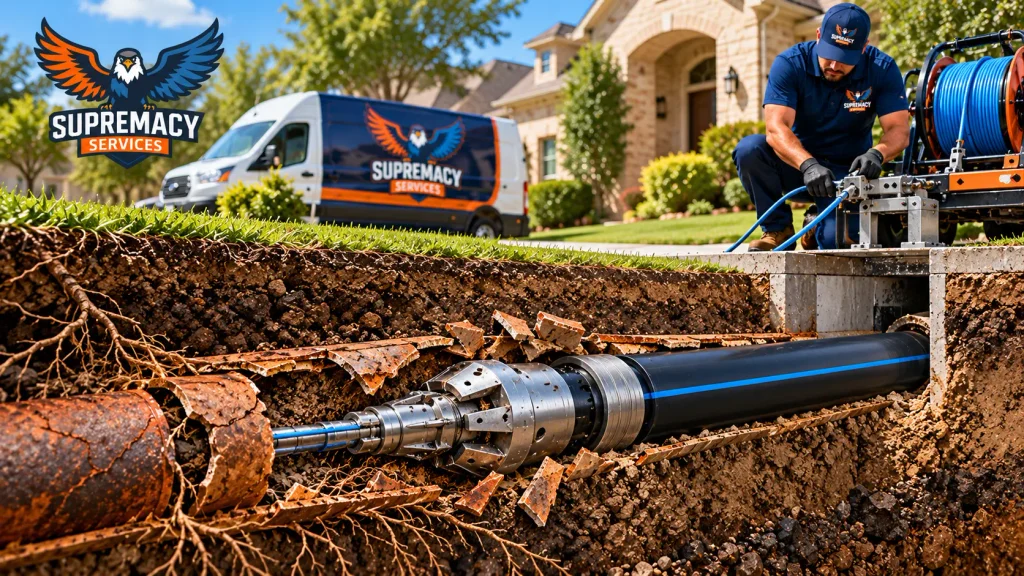
CIPP pipe lining can be less expensive than pipe bursting on some projects, but the cheapest suitable method depends on the existing pipe and site conditions.
| Feature | CIPP pipe lining | Pipe bursting |
|---|---|---|
| Main purpose | Renew the inside of an existing pipe | Replace the existing pipe |
| Existing pipe | Must be suitable for lining | Existing pipe is fractured during replacement |
| Excavation | Often limited | Typically requires entry and exit access pits |
| Pipe alignment | Generally follows existing alignment | Generally follows existing alignment |
| Major pipe collapse | Often unsuitable | May be possible in selected conditions |
| Severe pipe belly | Generally not corrected | May still require excavation and grade correction |
| Typical pricing | $80–$250/ft | $100–$250/ft |
| Best advantage | Rehabilitates suitable existing pipe | Installs a new replacement pipe |
When Is Pipe Lining the Better Option?
Pipe lining may be appropriate when the existing sewer line has cracks, joint deterioration, or other defects but still provides a suitable pathway for the liner.
It can reduce the need to remove the entire existing pipe.
When Is Pipe Bursting the Better Option?
Pipe bursting may be appropriate when replacement is necessary and the existing alignment, surrounding utilities, access conditions, and pipe material allow the method.
The technique still requires careful planning because it displaces the existing pipe outward.
Can Every Cast-Iron Sewer Pipe Be Lined?
No. Some cast-iron pipes can be rehabilitated, but severely deteriorated or collapsed pipes may not be suitable.
A contractor should evaluate the remaining pipe structure, alignment, internal dimensions, and cleaning requirements before recommending CIPP.
Trenchless vs. Traditional Sewer Repair: Which Is More Affordable?
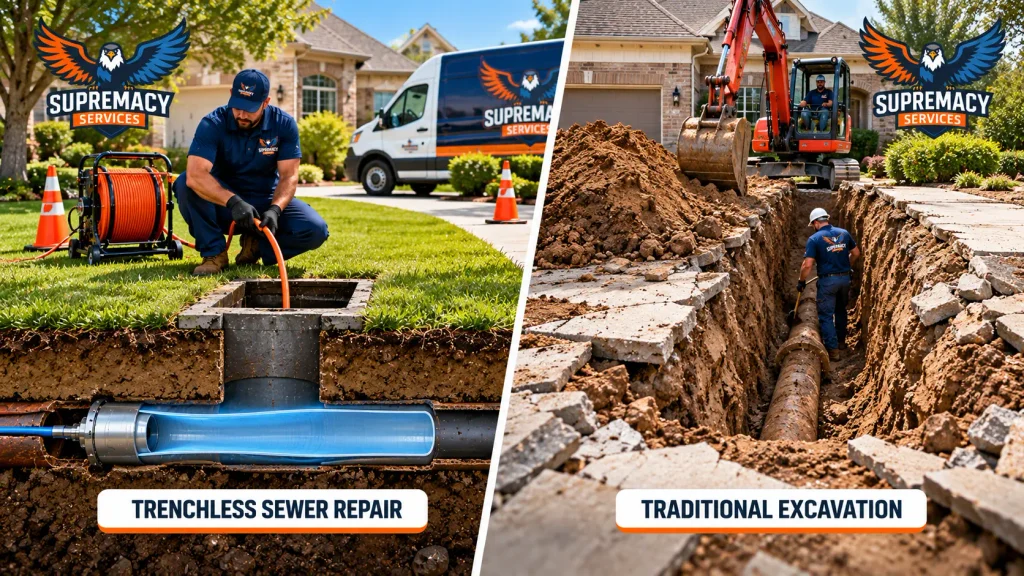
Trenchless repair may have a higher direct installation cost than conventional excavation on some projects. However, the total cost can be lower when it avoids expensive demolition and restoration.
| Cost consideration | Trenchless repair | Traditional excavation |
|---|---|---|
| Pipe installation | Specialized equipment and materials | Conventional excavation and pipe installation |
| Yard disturbance | Usually reduced | Potentially extensive |
| Driveway demolition | May be avoidable | May be necessary |
| Landscaping restoration | Often less | Potentially more |
| Access excavation | Still may be required | Usually substantial |
| Correcting pipe slope | Limited by method | Allows direct regrading |
| Total project cost | Depends on scope and avoided restoration | Depends on excavation and restoration |
Example: Sewer Line Beneath a Driveway
Imagine a Dallas homeowner with a damaged sewer line running beneath a concrete driveway.
A traditional replacement estimate might include excavation, pipe replacement, concrete removal, and driveway reconstruction.
A trenchless estimate might involve a higher pipe-installation price but substantially less concrete restoration.
In this situation, comparing only the plumbing portion of each quote would be misleading.
When Traditional Excavation Makes More Sense
Excavation may be necessary when:
- The pipe has a severe belly requiring regrading.
- Sections have collapsed or become disconnected.
- The existing alignment cannot be reused safely.
- A new sewer route is required.
- Nearby utilities or site conditions make trenchless methods unsuitable.
The best method is the one that provides a technically sound repair at a reasonable total project cost—not necessarily the one requiring the least digging.
When Is Trenchless Sewer Repair Worth the Money?
Trenchless sewer repair is often worth considering when the damaged pipe runs beneath expensive or difficult-to-replace surfaces and the existing pipe conditions support the method.
It may offer particular value when homeowners want to preserve established landscaping or avoid extensive driveway demolition.
However, a shorter, easily accessible damaged section may be less expensive to repair conventionally.
Three Questions to Ask Before Approving Trenchless Repair
- Is the damage localized or widespread? A small defect may not justify full-line rehabilitation.
- Is the pipe structurally and hydraulically suitable? A liner cannot solve every collapse or slope problem.
- What is the total installed and restored cost? Compare all necessary work, not just the quoted price per foot.
If you’re comparing methods, Supremacy Services can evaluate the problem and discuss professional sewer repair and replacement options appropriate to the inspection findings.
Signs Your Sewer Line May Need Repair
Common warning signs include recurring backups, multiple slow drains, sewage odors, and wastewater appearing where it should not.
Multiple Fixtures Backing Up
If wastewater rises in a bathtub or shower when another fixture drains, the problem may involve a shared branch drain or the main sewer line.
Frequent Sewer Clogs
Repeated blockages after professional cleaning can indicate roots, damaged joints, pipe deterioration, or another persistent obstruction.
Sewage Odors Around the Property
Persistent sewer odors can result from damaged drainage piping, but they can also originate from dry traps, venting problems, or other plumbing defects.
Unusually Wet Areas in the Yard
An unexplained wet or foul-smelling patch near the sewer route may indicate a leak.
However, irrigation leaks, drainage problems, and water-supply pipe failures can produce similar symptoms.
Gurgling Toilets or Drains
Gurgling can indicate restricted drainage or venting problems. It does not prove that the underground sewer line needs replacement.
When to Stop Using the Plumbing
If sewage is actively backing up into the home, minimize water use and arrange professional assistance.
Avoid contact with contaminated water, keep children and pets away, and do not continue running appliances that discharge into the affected drain.
What Happens During Trenchless Sewer Repair?
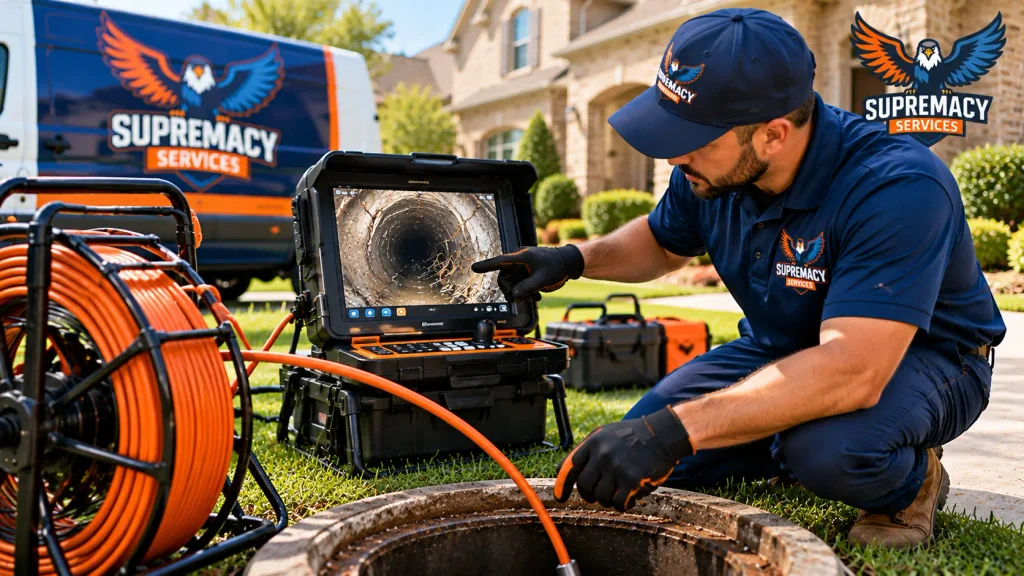
A professional trenchless sewer repair typically involves diagnosing the damage, preparing the pipe, completing the selected repair, and verifying the results.
Step 1: Sewer Camera Inspection
A plumber uses a sewer inspection camera to identify visible cracks, roots, blockages, joint separation, or collapse.
The camera findings help determine whether the line needs cleaning, localized repair, lining, or replacement.
Step 2: Locate the Damaged Section
The contractor identifies the relevant pipe route and access locations.
Additional locating or measurement work may be required to establish the repair boundaries and assess site constraints.
Step 3: Prepare the Existing Pipe
Depending on the method, preparation may involve cleaning, root removal, access excavation, or other work.
CIPP installation requires a properly prepared pipe interior and compliance with the selected liner system’s installation requirements.
Step 4: Complete the Repair
For pipe lining, the contractor installs and cures the liner according to the approved system and process.
For pipe bursting, equipment fractures the existing pipe while drawing a new pipe through the planned route.
Step 5: Inspect and Verify the Work
The contractor checks the completed work using appropriate inspection or testing methods.
Homeowners should ask for relevant post-repair documentation and clarification of any warranty terms.
Step 6: Restore Access Areas
Any necessary access pits, surface openings, or disturbed areas are restored according to the agreed project scope.
How Long Does Trenchless Sewer Repair Take?
Some straightforward residential trenchless projects can be completed in approximately one day, but larger or more complicated projects may take longer.
Cleaning requirements, access excavation, curing time, inspections, and restoration all influence the schedule.a>
Dallas-Specific Considerations That Can Affect Sewer Repair Costs
Dallas-area properties vary considerably in age, sewer-pipe material, landscaping, and accessibility.
These differences matter more to the final estimate than the city’s name alone.
Expansive Clay Soils in North Texas
Expansive clay soils occur across parts of North Texas and can shrink or swell as moisture conditions change.
Soil movement may contribute to changes in underground pipe support or alignment, although a camera inspection cannot by itself establish that soil movement caused a particular failure.
Older Homes With Cast-Iron Sewer Pipes
Some older Dallas neighborhoods contain homes with aging cast-iron sewer systems.
Corrosion, scale, and joint deterioration can complicate cleaning and rehabilitation.
A pipe’s age is useful background information, but replacement should be based on its actual condition.
Mature Trees and Root Intrusion
Established neighborhoods with mature landscaping may experience root intrusion where sewer pipes have openings or deteriorated joints.
Tree roots should be treated as a potential contributing factor rather than proof that the entire sewer line needs replacement.
Dallas Permits and Plumbing Requirements
The City of Dallas requires compliance with applicable building and plumbing codes. Whether a particular sewer repair needs a permit or inspection depends on the scope and circumstances.
Dallas also recognizes certain homeowner exemptions for work on qualifying homesteaded properties, but applicable permit, inspection, and code requirements still apply.
Before work begins, verify the relevant requirements with Dallas Building Inspection.
Who Is Responsible for the Sewer Line?
Responsibility depends on which portion of the sewer system is damaged, the utility’s rules, and the location of the connection.
Homeowners should not assume that the city will pay for every pipe located near the street—or that they personally own every section.
Contact the relevant wastewater utility to confirm responsibility when the damaged section approaches the public connection.
How to Avoid Unnecessary Sewer Repair Costs
The most effective way to avoid unnecessary spending is to obtain a clear diagnosis before approving extensive work.
Request Camera Evidence
Ask the contractor to show the location and condition of the damaged pipe.
A recurring blockage does not automatically mean the entire sewer line must be replaced.
Compare Repair Scopes, Not Just Prices
A useful written estimate should explain:
- Which section will be repaired
- Why the chosen method is appropriate
- How access will be obtained
- What preparation is included
- Whether permits and inspections are included
- What restoration is included
- How the completed work will be verified
- What warranty applies
Ask Whether a Localized Repair Is Possible
If most of the pipe is in good condition, repairing an isolated defect may be more economical than rehabilitating the entire line.
Avoid Treating Repeated Clogs as a Permanent Fix
Drain cleaning may restore flow temporarily without correcting broken joints, cracks, or deteriorated piping.
Prevent Future Sewer Problems
Homeowners can reduce avoidable drainage problems by keeping wipes, grease, and unsuitable materials out of the sewer system.
Where root intrusion has occurred, follow the plumber’s recommendations for repairing the entry point and managing the surrounding landscaping.
Can You Repair a Sewer Line Yourself?
Basic drain maintenance is different from repairing an underground sewer lateral.
Trenchless installation requires specialized equipment, technical assessment, and appropriate safety procedures.
For major underground repairs, professional evaluation is the practical choice. Any homeowner-performed work must still comply with applicable Texas and local requirements.
Frequently Asked Questions About Trenchless Sewer Repair in Dallas
1. What is the average cost of trenchless sewer repair in Dallas?
Published 2026 estimates commonly range from approximately $80 to $250 per linear foot, with many residential projects costing several thousand dollars. There is no single reliable average that applies to every Dallas home because project length, method, and access conditions vary.
2. Is trenchless sewer repair cheaper than digging?
Sometimes. Trenchless installation may cost more per foot, but it can reduce demolition and restoration expenses. The total price depends on the property and the condition of the sewer line.
3. How much does sewer pipe lining cost per foot?
Published Texas estimates commonly place CIPP pipe lining around $80–$250 per linear foot. Short projects, complicated preparation, and access work may produce a higher effective cost per foot.
4. Does trenchless sewer repair work on cast-iron pipes?
It can. Some deteriorated cast-iron sewer pipes are suitable for lining, while others need replacement. A professional inspection and pipe assessment determine whether rehabilitation is appropriate.
5. How long does trenchless sewer repair last?
Service life depends on the installed system, pipe conditions, installation quality, and operating environment. Some systems are designed for multi-decade performance, but homeowners should request manufacturer documentation and the contractor’s actual warranty rather than assume a universal lifespan.
6. Does homeowners insurance cover trenchless sewer repair?
Coverage depends on the policy, cause of damage, and any applicable endorsements. Ordinary wear, corrosion, and gradual deterioration may be excluded. Ask your insurer to review the specific loss and policy language.
7. Can trenchless sewer repair fix a collapsed pipe?
Not every collapsed pipe can be repaired trenchlessly. CIPP generally needs a suitable existing pathway, while pipe bursting may work in some replacement situations. Severe collapse or alignment problems can require excavation.
8. Do I need a sewer camera inspection before trenchless repair?
A camera inspection is an important part of assessing whether trenchless work is appropriate. It helps identify defects, locate damage, and determine whether cleaning, lining, bursting, or excavation should be considered.
9. Will trenchless sewer repair damage my driveway?
Trenchless methods can reduce driveway demolition, but they do not guarantee that no concrete will be disturbed. Access pits or other openings may still be required.
10. Is trenchless sewer repair worth it for an older Dallas home?
It may be worthwhile when the sewer line is suitable for trenchless work and avoiding excavation protects expensive landscaping or hardscaping. Pipe condition and total project cost should determine the decision.
Get a Trenchless Sewer Repair Estimate in Dallas

Trenchless sewer repair can provide a practical alternative to extensive excavation, but the right solution begins with identifying the actual condition of your underground sewer line.
A reliable estimate should explain the damage, recommend a suitable repair method, and identify the work included in the final price.
Supremacy Services provides sewer line repair and replacement services for homeowners across Dallas and the DFW Metroplex, including evaluation of trenchless and traditional repair options.
Concerned about recurring sewer backups or a damaged underground pipe?
Request a professional sewer line repair assessment from Supremacy Services to discuss your options and obtain pricing based on your property’s actual conditions.

