Ever wonder who is responsible for gas line repairs in Texas. Well in Texas, the natural gas utility generally handles its distribution system and service piping up to the gas meter, while the property owner is usually responsible for gas piping after the meter. For Dallas homeowners, that can include underground pipes running through the yard, gas lines inside the house, and connections supplying outdoor gas appliances.
The exact responsibility depends on the utility’s service arrangement, the location of the damage, and whether the property is owned or rented.
If you’re dealing with a suspected gas leak, safety comes before determining who pays. Leave the area immediately, avoid operating electrical switches or anything that could create a spark, and contact your gas utility’s emergency number or 911 from a safe location.
Here’s how to determine which gas lines belong to the utility, which repairs fall to the homeowner, and what Dallas residents should know before arranging professional service.
Table of Contents
- Who owns the gas lines on your property?
- Where does utility responsibility end?
- Who pays for underground gas line repairs?
- Who is responsible for gas leaks in rental properties?
- What should you do if you suspect a gas leak?
- Does Dallas require permits for gas line repairs?
- How much do gas line repairs cost?
- What happens during a professional gas line repair?
- How can homeowners prevent gas line damage?
- Frequently asked questions
Who Owns the Gas Lines on Your Property?
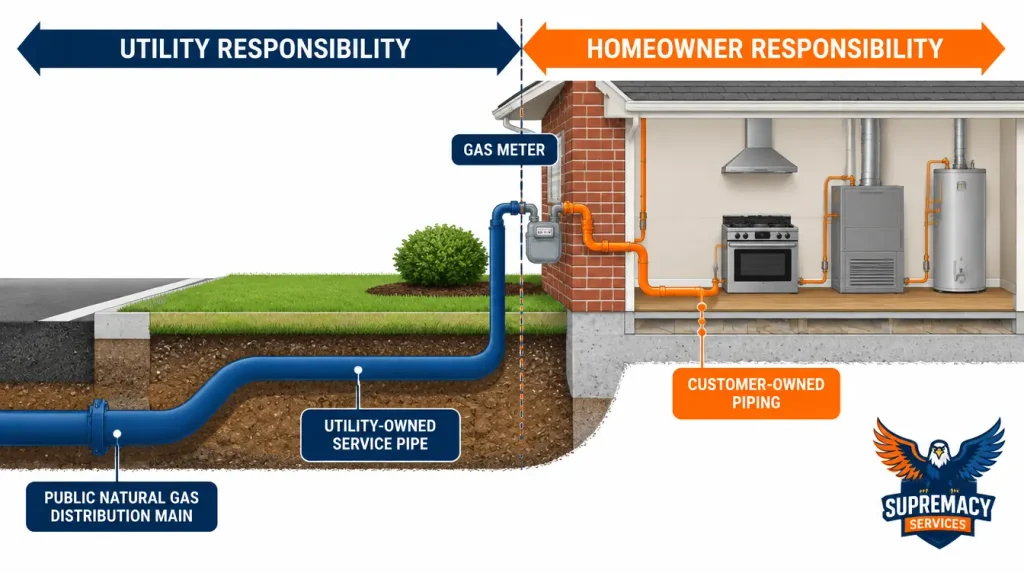
The gas utility generally owns and maintains the infrastructure that delivers natural gas to the meter. The homeowner normally maintains the piping that distributes gas from the meter to the home’s appliances.
This distinction is important because a gas line can be buried beneath your yard without belonging to you. Conversely, a pipe running underground on private property may be entirely the homeowner’s responsibility.
Gas Line Ownership and Repair Responsibility
| Gas system component | Typical responsibility | Who to contact |
|---|---|---|
| Gas distribution main beneath the street | Gas utility | Gas utility |
| Utility-owned service line leading to the meter | Gas utility | Gas utility |
| Gas meter and utility-owned equipment | Gas utility | Gas utility |
| Gas piping after the meter | Property owner | Licensed plumbing contractor |
| Underground gas pipe supplying a detached garage | Property owner | Licensed plumbing contractor |
| Gas line supplying an outdoor kitchen or pool heater | Property owner | Licensed plumbing contractor |
| Interior piping supplying a furnace, stove, or water heater | Property owner | Licensed plumbing contractor |
| Gas appliance maintenance | Property owner, subject to lease arrangements | Qualified appliance professional |
These are typical arrangements, not a universal determination of ownership. Confirm unusual meter locations, shared services, or disputed connections with the gas utility.
Atmos Energy’s customer-owned piping guidance confirms that gas piping extending from its meter to the building and appliances is generally the customer’s responsibility.
What Does Customer-Owned Gas Piping Mean?
Customer-owned gas piping is the network of pipes and fittings that carries natural gas from the utility’s delivery point to the appliances using it.
In a Dallas home, this may include connections serving:
- Gas furnaces and water heaters
- Kitchen ranges and ovens
- Gas fireplaces
- Outdoor grills and kitchens
- Pool and spa heaters
- Detached buildings with gas appliances
A homeowner may be responsible for these lines even if they were installed before the property was purchased.
Need help with a gas pipe located after your meter? Supremacy Services provides professional gas line repair in Dallas to help identify and address problems with customer-owned piping.
Where Does Utility Responsibility End?
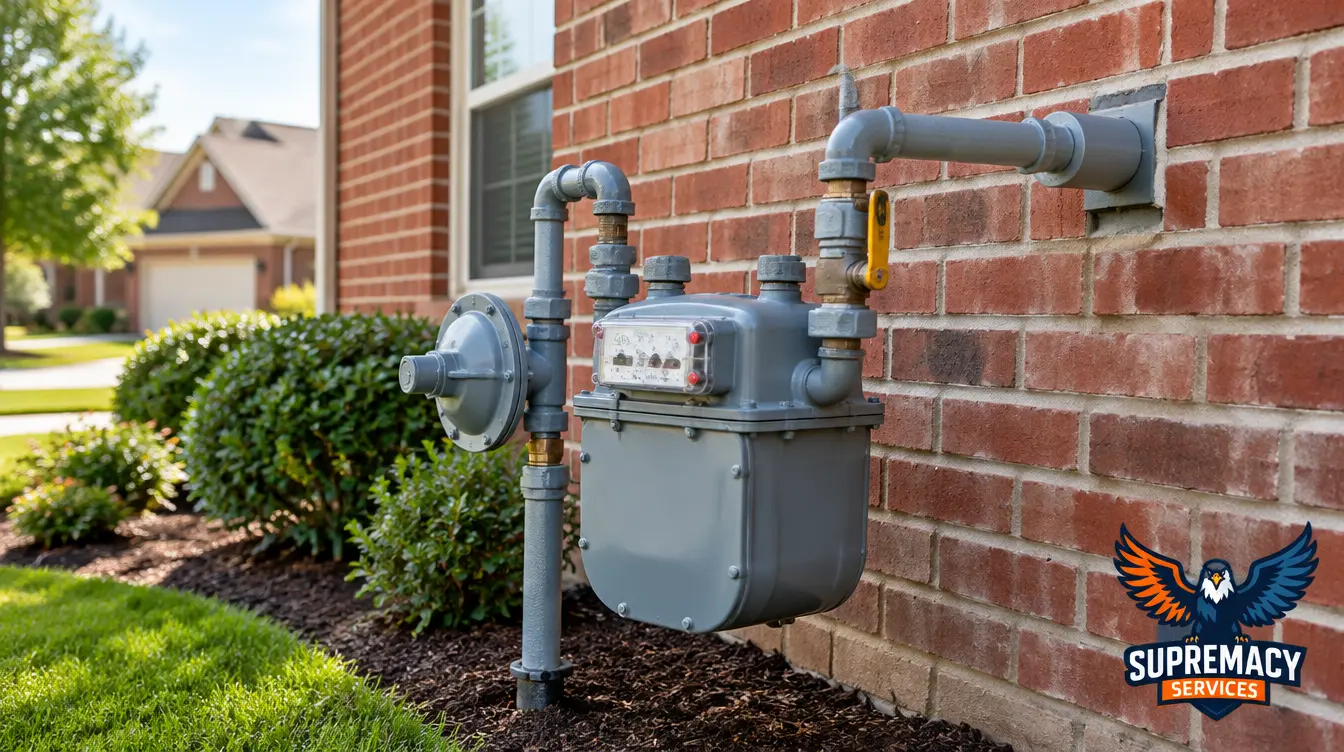
For a typical Atmos Energy residential installation, utility responsibility generally ends at the gas meter, and customer responsibility begins with the piping downstream of that meter.
However, homeowners should not assume that every visible fitting or pipe belongs to the same party.
What Is the Gas Company’s Responsibility?
The utility generally maintains its own distribution network, service lines, meters, and related utility equipment.
Its responsibilities may include investigating suspected leaks, isolating hazardous conditions, and repairing utility-owned infrastructure.
A gas company can also interrupt service when it identifies a dangerous condition in customer-owned piping. That does not necessarily mean it must repair the customer’s pipes.
What Is the Homeowner’s Responsibility?
The homeowner is typically responsible for maintaining customer-owned piping in safe condition and arranging qualified repairs when defects are discovered.
Examples include:
- A leaking gas pipe inside a wall
- Corrosion in an underground line serving an outdoor appliance
- Damaged fittings downstream of the meter
- Deteriorated piping supplying a gas furnace
- An improperly installed gas appliance branch line
The homeowner may also need to arrange required inspections and obtain approval before gas service can be restored.
Supremacy services
What If the Gas Meter Is Far From the House?
A meter located near the street or property boundary can create a longer customer-owned underground gas line.
For example, a homeowner in Frisco may have a meter near the front property boundary and a buried pipe extending toward the house. If the damaged pipe is downstream of the meter, the repair will generally be the homeowner’s responsibility.
The distance between the meter and the building does not automatically transfer responsibility to the utility.
Who Pays for Underground Gas Line Repairs?
The owner of the damaged gas piping generally arranges and pays for repairs, unless another party is legally or contractually responsible.
Three situations are particularly common.
1. The Underground Pipe Belongs to the Utility
If the damaged section is part of the utility’s distribution or service system, contact the utility.
Do not hire a private contractor to alter utility-owned gas equipment without the utility’s authorization.
2. The Underground Pipe Belongs to the Homeowner
If the pipe runs from the meter to the house, outdoor kitchen, pool heater, or another appliance, the property owner generally arranges professional inspection and repair.
The work may involve locating the buried pipe, exposing the damaged section, repairing or replacing the affected piping, and completing required tests and inspections.
3. A Contractor Damages the Gas Line
If a contractor damages a gas pipe while excavating, financial responsibility may depend on ownership, required utility-locate procedures, contractual terms, and the circumstances of the damage.
Do not assume the utility will cover the cost simply because the pipe was underground.
Why Texas 811 Matters
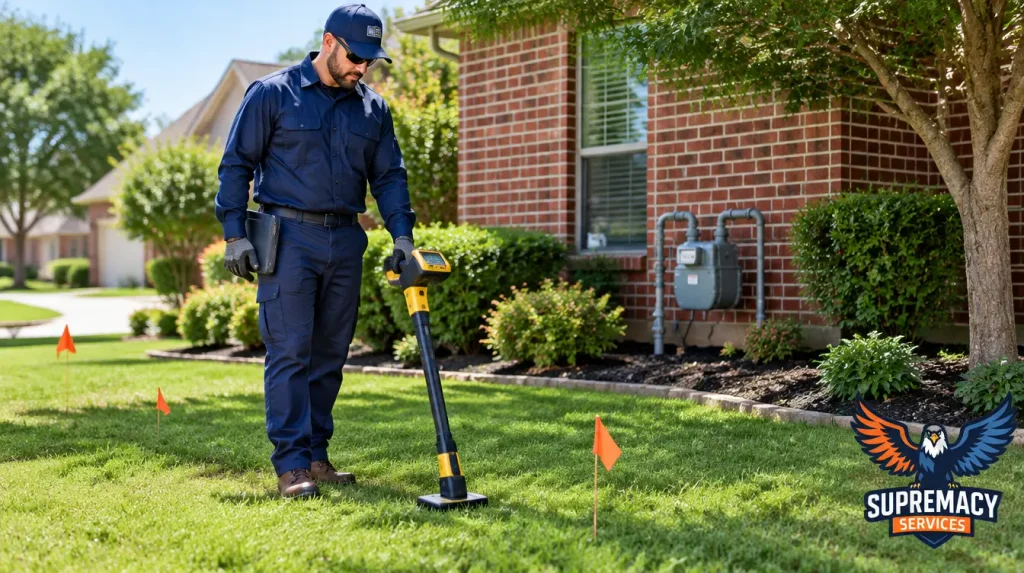
Before planned excavation, contact Texas 811 to request utility locating.
Texas 811 notifies participating utility operators, but privately owned gas lines may not be marked by those utilities. A separate private locating service may be necessary.
This matters when installing fences, digging trenches, landscaping, or building outdoor kitchens in Dallas-area properties.
Who Is Responsible for Gas Leaks in Rental Properties?
In many Texas rental situations, the landlord is responsible for arranging repairs to unsafe gas piping that is part of the rental property, subject to the Texas Property Code and the circumstances of the damage.
A gas leak can materially affect a tenant’s physical health or safety.
Under Texas Property Code Section 92.052, landlords generally have repair obligations when statutory conditions are satisfied. Exceptions and procedures apply, including circumstances involving tenant-caused damage.
What Should Tenants Do?
If there is a suspected gas leak, evacuate immediately and contact emergency services or the gas utility from a safe location.
After the immediate danger has been addressed:
- Notify the landlord or property manager.
- Document the issue and any utility instructions.
- Request qualified inspection and repair.
- Keep copies of notices and communications.
- Do not attempt to reconnect or repair the gas system.
Tenants should not withhold rent or arrange deductions without understanding the applicable legal requirements.
What About Condominiums and HOAs?
Responsibility may depend on the location of the damaged pipe, the condominium declaration, governing documents, and whether the system is shared.
A pipe serving several units may have different ownership arrangements from a branch line serving one residence.
The property manager, utility, and qualified contractor can help establish the physical boundaries before the governing documents are reviewed.
What Should You Do If You Suspect a Gas Leak?
Leave the property immediately, avoid ignition sources, and report the suspected leak from a safe location. Do not wait to determine who owns the pipe.
Common Warning Signs
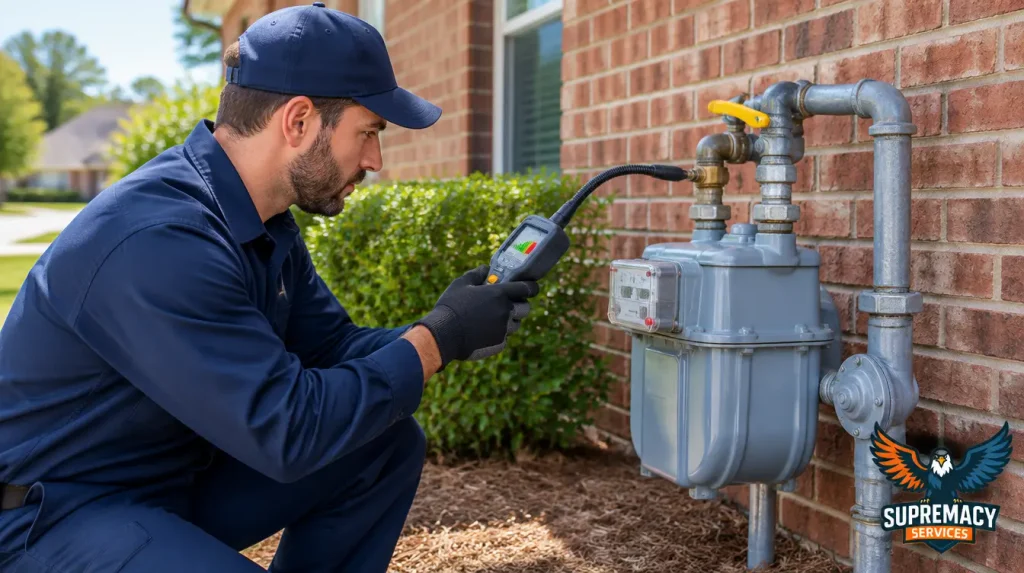
Possible signs of a natural gas leak include:
- A rotten-egg or sulfur-like odor
- Hissing or unusual escaping-gas sounds
- Bubbling water or disturbed soil near buried gas piping
- Unexplained dead vegetation near a gas line
- A gas utility warning or failed pressure test
These signs do not prove that a leak exists, and some leaks may have no obvious warning.
What Not to Do
Do not:
- Turn lights or electrical switches on or off
- Operate appliances or use a phone near the suspected leak
- Light matches, smoke, or create sparks
- Attempt to locate a leak using a flame
- Dig around a suspected underground leak
- Open, adjust, or repair the gas meter
- Re-enter the property until authorized to do so
Once safely outside, contact the gas utility’s emergency number or 911.
What Happens After the Utility Responds?
The utility may inspect its facilities, investigate the reported hazard, and isolate or interrupt service.
If the problem is in customer-owned piping, the homeowner may be instructed to arrange repairs through a qualified contractor.
Depending on the circumstances, service may remain disconnected until the piping has been repaired, tested, inspected, and released for reconnection.
If your utility has identified a leak in customer-owned piping, Supremacy Services can assist with gas line diagnostics and repair options in Dallas and surrounding DFW communities.
Does Dallas Require Permits for Gas Line Repairs?
Yes. The City of Dallas identifies gas leak repairs, gas piping replacement, new gas installations, and certain modifications as work requiring permits, inspections, or gas-service release procedures.
The requirements depend on the work and circumstances of the service interruption.
When Is a Gas Inspection Required?
According to the City of Dallas Gas Test Guidelines, a gas release and inspection may be required for:
- New fuel gas installations
- Repairs to leaking gas piping
- Replacement of gas piping
- Changes or additions to existing fuel gas systems
- Certain gas meter removals and service interruptions
- Conditions where the utility requires a city release before restoring service
The city provides procedures for qualified homeowner permits in certain residential circumstances and for registered plumbing contractors.
How Is Gas Service Restored?
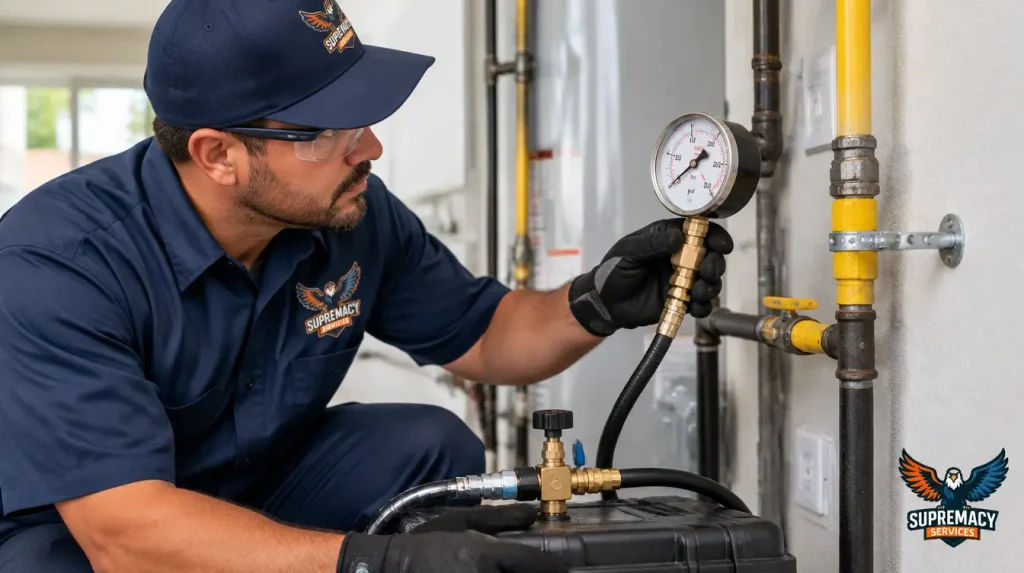
A typical process may involve:
- The utility identifies an unsafe condition and isolates service.
- A qualified contractor determines the necessary repair.
- The required permit is obtained.
- The gas piping is repaired or replaced.
- Required testing and inspection are completed.
- The city issues the necessary gas release.
- The utility authorizes and performs reconnection.
Not every interruption requires the same procedure. For example, certain routine service restorations may be handled differently when no piping deficiency exists.
Dallas, Plano, Frisco, and Fort Worth have separate municipal processes. Homeowners should confirm the applicable requirements for their property rather than assuming Dallas rules apply throughout DFW.
How Much Do Gas Line Repairs Cost in Texas?
Gas line repair costs depend on the damaged component, pipe accessibility, materials, labor, testing, and required restoration.
There is no single reliable price for every Texas property, and responsibility for the repair does not establish the repair price.
What Affects the Cost?
| Cost factor | Why it matters |
|---|---|
| Leak location | Buried and concealed piping may require additional access work |
| Pipe condition | Extensive corrosion may justify replacement rather than a localized repair |
| Pipe length | Longer replacement sections generally require more materials and labor |
| Excavation | Landscaping, concrete, and buried obstacles can complicate access |
| Permits and inspections | Required approvals affect project scope and scheduling |
| System configuration | Multiple appliance branches can increase testing and repair complexity |
| Restoration | Replacing disturbed paving or landscaping may add expense |
Will Homeowners Insurance Pay?
Coverage depends on the policy, the cause of damage, applicable exclusions, and any relevant endorsements.
Some sudden accidental damage may be covered, while gradual deterioration or routine maintenance may not be.
Ask your insurer whether the policy covers the damaged gas piping, resulting property damage, excavation, and restoration.
Should You Repair or Replace the Gas Line?
A localized repair may be appropriate when the defect is isolated and the remaining piping is serviceable.
Replacement may be preferable when the pipe has widespread deterioration, repeated leaks, or other conditions that make individual repairs impractical.
A professional assessment should establish the cause and extent of the problem before the homeowner commits to either option.
What Happens During a Professional Gas Line Repair?
Professional gas line work involves identifying the affected piping, establishing a safe repair plan, completing authorized work, and verifying that the system meets applicable requirements before returning it to service.
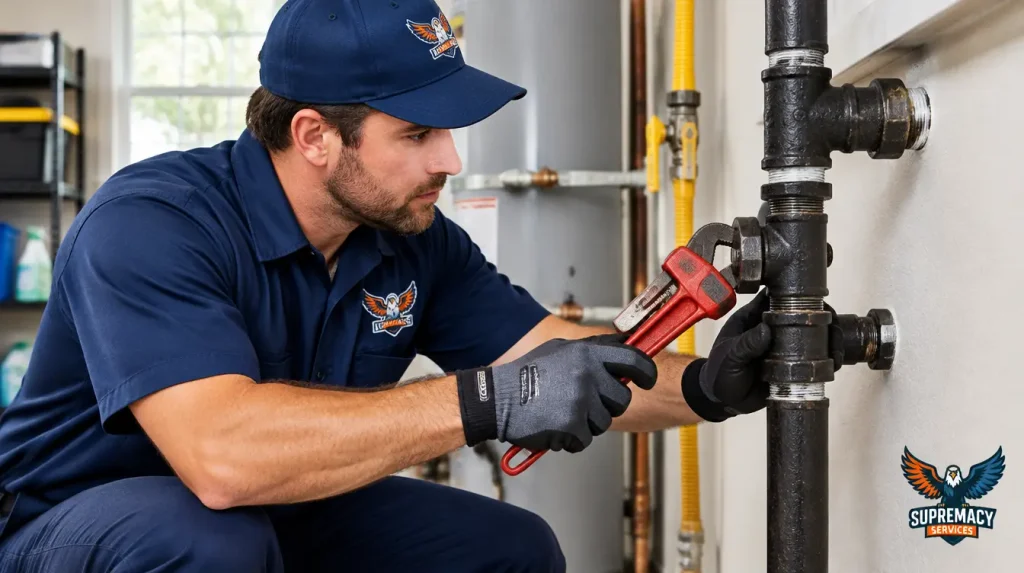
Step 1: Determine Ownership and Scope
The utility and contractor establish whether the affected piping is utility-owned or customer-owned.
Step 2: Diagnose the Problem
Qualified personnel use appropriate testing and detection equipment to investigate the reported issue.
The exact methods depend on the pipe location, system condition, and whether service has been isolated.
Step 3: Explain Repair Options
The contractor evaluates whether the problem can be corrected through localized repair or requires replacement.
Homeowners should receive a written explanation of the proposed scope and price.
Step 4: Complete the Authorized Work
The contractor repairs or replaces the affected piping in accordance with applicable requirements.
If excavation is necessary, underground utility locating and safe digging procedures are essential.
Step 5: Test, Inspect, and Restore Service
Required pressure testing, inspections, and approvals are completed before service is restored.
Only the gas utility or another authorized party should operate utility-controlled equipment.
Why DIY Gas Line Repair Is Risky
Gas piping is not a suitable project for trial-and-error repairs.
Incorrect fittings, unapproved materials, inadequate testing, and unauthorized meter operation can create serious fire or explosion hazards.
Even where a qualifying homeowner may obtain certain permits, that does not eliminate the technical risks or applicable inspection requirements.
For most homeowners, hiring an appropriately licensed and qualified plumbing contractor is the safer choice.
How Can Homeowners Prevent Gas Line Damage?
Preventive maintenance cannot eliminate every gas piping failure, but it can reduce avoidable risks.
Homeowner Gas Line Safety Checklist
- Arrange qualified inspections of buried customer-owned gas piping as appropriate.
- Contact Texas 811 before planned excavation.
- Arrange private utility locating where customer-owned lines may be present.
- Protect exposed piping from accidental impact.
- Have deteriorated or damaged components assessed promptly.
- Use qualified professionals when adding gas appliances.
- Follow appliance manufacturer maintenance instructions.
- Keep records of repairs, inspections, and gas piping modifications.
Dallas and North Texas Considerations
Dallas-area properties vary considerably in age, layout, and gas system configuration.
Some homes have short gas piping runs from an exterior meter to indoor appliances. Others have extensive underground branches supplying detached garages, outdoor kitchens, or pool equipment.
North Texas soil movement can also be relevant when evaluating buried infrastructure, but a particular gas line failure should not be attributed to soil conditions without evidence.
For homeowners planning outdoor improvements, knowing where customer-owned gas lines run is especially important.
Frequently Asked Questions
1. Does Atmos Energy repair gas lines after the meter?
Generally, no. Atmos Energy states that customers are responsible for maintaining natural gas piping downstream of its meter. A licensed plumber or qualified contractor can inspect and repair customer-owned piping.
2. Who pays for a gas line leak in a Dallas yard?
The owner of the damaged pipe generally pays. If the leak is on customer-owned piping after the meter, the homeowner typically arranges the repair. Utility-owned lines are generally handled by the gas utility.
3. Is the gas meter the homeowner’s property?
The meter itself is generally utility-owned equipment. Homeowners should not remove, modify, or operate utility-controlled components without authorization.
4. Can the gas company shut off my gas because of a leak?
Yes. A utility may interrupt service when it identifies an unsafe condition. Repairs and required approvals may be necessary before service is restored.
5. Does a landlord have to repair a gas leak in Texas?
A landlord generally has obligations to address qualifying conditions that materially affect tenant health or safety, subject to statutory requirements and exceptions. Tenants should report the problem promptly after reaching safety.
6. Do I need a permit to repair a gas line in Dallas?
The City of Dallas identifies gas leak repairs and gas piping replacement among work requiring permits and inspection or release procedures. Confirm the requirements for the specific project with the city.
7. Does Texas 811 mark gas lines in my backyard?
Texas 811 coordinates marking by participating utility operators. Customer-owned private gas lines may not be included and may require a separate private locating service.
8. Can I repair my own gas line in Texas?
Certain qualifying homeowners may be eligible for specific permit arrangements, but gas piping work must comply with applicable requirements. Because of the safety risks, professional service is strongly recommended.
9. Will homeowners insurance cover underground gas line replacement?
Possibly, depending on the cause of the damage, the policy terms, and any applicable exclusions or endorsements. Check with your insurance provider before assuming the repair is covered.
10. Who reconnects gas service after a repair?
The gas utility generally controls reconnection of its service. Required repairs, testing, municipal inspections, and release procedures may need to be completed first.
Need Help With a Customer-Owned Gas Line in Dallas?
Understanding where gas utility responsibility ends is the first step toward arranging the right repair.
If the damaged piping belongs to your home, Supremacy Services provides gas line diagnostics, repairs, and replacement services for Dallas and surrounding DFW communities, including Frisco, Plano, Allen, and McKinney.
Our team can help assess the condition of your gas piping, explain available repair options, and coordinate applicable inspection requirements.
Schedule Gas Line Repair With Supremacy Services
Call 945-777-3345 to discuss your service needs.
Important: If you suspect an active gas leak, evacuate first and contact the gas utility’s emergency line or 911 from a safe location. Do not remain inside to schedule a plumbing appointment.