The most recognizable signs of a gas leak in your home include a rotten-egg smell, hissing near gas piping, unexplained dead vegetation near an underground line, and unusual gas usage. Some leaks, however, may produce no noticeable odor or sound.
For homeowners in Dallas and across the DFW Metroplex, recognizing these warning signs is important because escaping natural gas can create a serious fire or explosion hazard.
If you suspect a gas leak right now, leave the building immediately. Do not operate electrical switches, use your phone inside, start a vehicle nearby, or attempt to locate the leak. Once you are a safe distance away, call 911 and your gas utility’s emergency number. Do not return until emergency responders or the utility confirm it is safe.
This emergency guidance is consistent with the U.S. Pipeline and Hazardous Materials Safety Administration (PHMSA).
This guide explains nine potential warning signs, how natural gas leaks differ from other household problems, what to do if you suspect a leak, and when professional gas line repair may be necessary.
Table of Contents
- What are the nine warning signs of a gas leak?
- Can you have a gas leak without smelling gas?
- What should you do if you suspect a gas leak?
- What causes gas lines to leak?
- Gas leak vs. carbon monoxide: What’s the difference?
- How do professionals detect gas line leaks?
- How much does gas line repair cost in Dallas?
- How can homeowners prevent gas line problems?
- Gas line safety considerations for Dallas homes
- Frequently asked questions
What Are the 9 Warning Signs of a Gas Leak in Your Home?
A natural gas leak may produce a noticeable odor, unusual noise, changes around underground piping, or unexplained gas consumption. No single sign is present in every leak, and some symptoms can have unrelated causes.
The following warning signs deserve attention.
1. A rotten-egg or sulfur-like smell
One of the most recognizable warning signs of a natural gas leak is an odor resembling rotten eggs or sulfur.
Natural gas is naturally odorless. Gas suppliers add odorants, commonly sulfur-containing compounds, to help people recognize escaping gas.
You may notice an unusual smell around a gas stove, furnace, water heater, fireplace, gas meter, or other gas-powered equipment.
However, a gas odor does not establish which component is leaking.
What to do: Leave immediately and report the suspected leak from a safe location. Do not follow the odor around your home to locate its source.
2. Hissing or whistling sounds near gas pipes
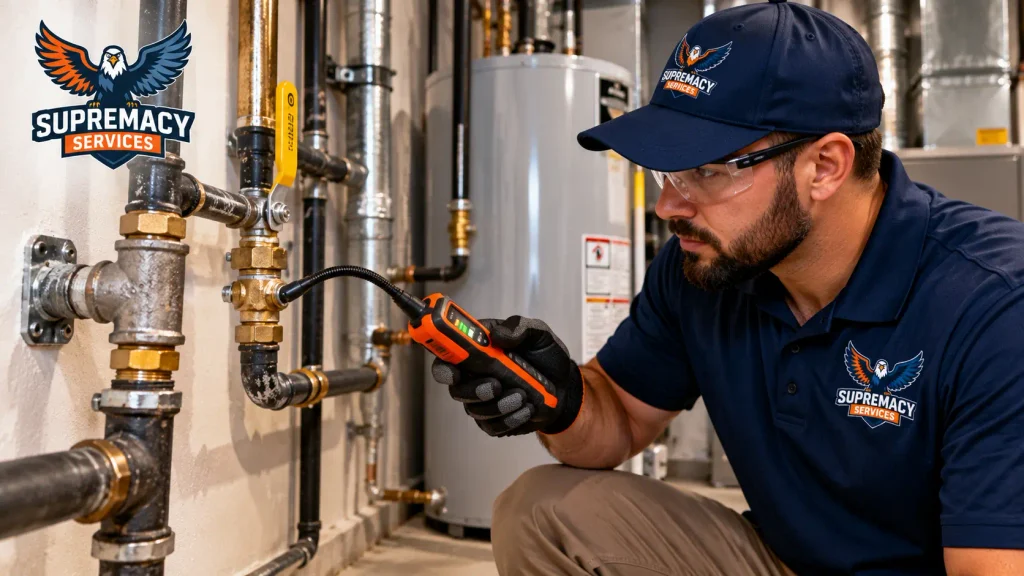
A hissing, whistling, or rushing sound can indicate pressurized gas escaping through a damaged pipe, fitting, valve, or connection.
These sounds may be noticeable around gas appliances or outdoor utility equipment.
Not every hissing sound indicates a gas leak. Water pipes, HVAC components, and operating appliances can make similar noises.
Nevertheless, if you suspect the noise involves gas equipment, treat it as a possible leak rather than trying to investigate.
3. Unexplained dead grass or vegetation
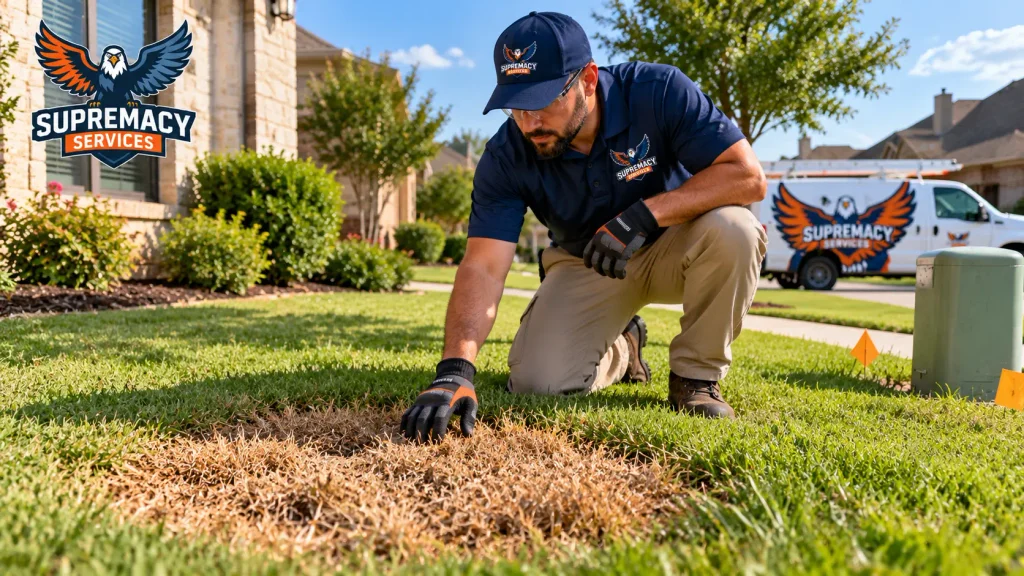
An underground gas leak can sometimes affect nearby vegetation.
Potential warning signs include:
- An unusual patch of dying grass near a gas service line.
- Plants deteriorating while nearby vegetation remains healthy.
- Changes in soil or landscaping around underground utility infrastructure.
These conditions are not proof of a gas leak. Drought, irrigation problems, pests, and soil conditions can produce similar patterns.
If you suspect an underground gas leak, stay away from the affected area and report it. Do not dig into the ground to investigate.
4. An unusual increase in your gas bill
A gas bill that increases unexpectedly may indicate higher gas consumption, a billing change, or a possible leak.
Before attributing the increase to a damaged gas line, consider whether household usage has changed.
For example, colder weather may increase furnace consumption, while additional hot-water usage can increase demand on a gas water heater.
A persistent increase that cannot be explained by usage, weather, or billing changes deserves professional attention.
Important: A high gas bill alone does not confirm a leak, and a normal bill does not rule one out. If there are any other signs of escaping gas, follow emergency procedures rather than waiting for the next bill.
5. Unusual bubbling in wet ground
Gas escaping from underground infrastructure can sometimes produce bubbling in standing water or saturated soil.
This is particularly concerning if bubbling occurs near a known underground gas line.
However, underground water leaks, drainage issues, and naturally occurring soil gases can create similar appearances.
Do not approach a suspected gas release to examine bubbling, and never use an open flame to test whether gas is present.
6. Unexplained physical symptoms
Some people report dizziness, headaches, nausea, or lightheadedness during suspected gas-related incidents.
These symptoms are nonspecific and may have many causes.
At high concentrations, natural gas can displace oxygen in an enclosed space. Separately, malfunctioning gas appliances can produce carbon monoxide through incomplete combustion.
Natural gas exposure and carbon monoxide poisoning are not the same thing.
If someone experiences unexplained symptoms around gas equipment, move to fresh air, seek emergency assistance, and tell responders about the possible gas-related exposure.
7. Damaged or deteriorating gas piping
Visible deterioration around gas equipment may indicate a condition requiring professional inspection.
Examples include corrosion on exposed piping, damaged appliance connectors, loose supports, or evidence of physical impact.
Not every rusted surface is actively leaking, and many dangerous leaks have no visible damage.
Do not touch, tighten, disconnect, or attempt to repair suspicious gas connections.
8. Unusual appliance flame behavior
Gas appliances that are not burning properly may display irregular flames, repeated ignition failures, soot accumulation, or other signs of malfunction.
These symptoms can result from burner contamination, ventilation problems, incorrect gas pressure, or appliance defects.
A yellow flame is not automatically evidence of a gas line leak. Some appliances are designed to produce yellow flames, while others normally burn blue.
Persistent changes in appliance operation require qualified assessment.
If you smell gas or otherwise suspect a leak, evacuate instead of inspecting the appliance.
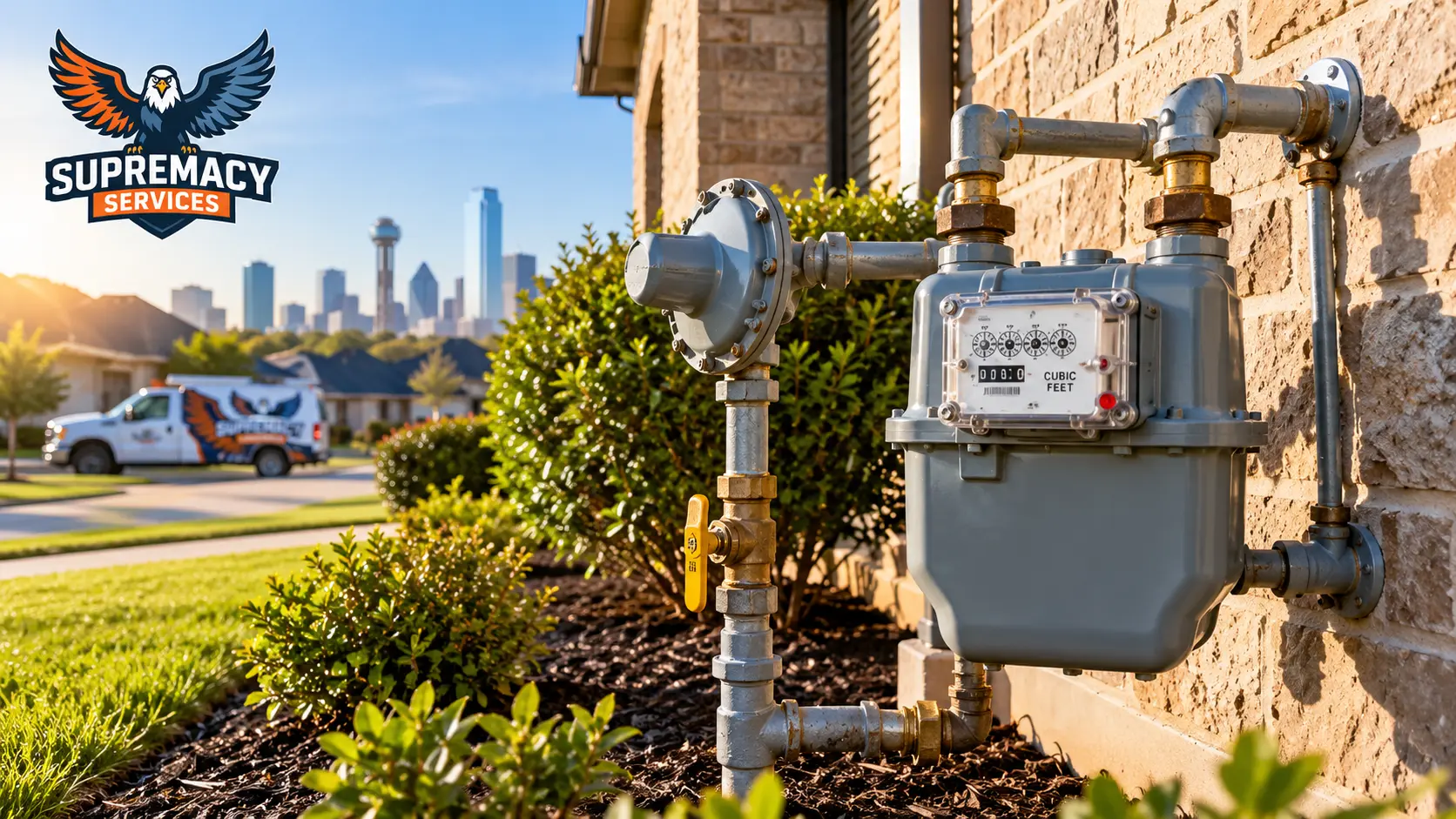
9. A damaged gas meter or exposed outdoor gas line
Gas meters and exposed service piping can be damaged by vehicle impacts, construction activity, severe weather, or accidental excavation.
Potential concerns include visibly displaced piping, damaged fittings, or an unusual sound near utility equipment.
Do not attempt to straighten, reposition, or operate damaged equipment.
Keep people away and contact emergency responders and the gas utility from a safe location.
Quick comparison: Gas leak warning signs
| Warning sign | Possible explanation | Recommended response |
|---|---|---|
| Rotten-egg odor | Odorized natural gas release | Evacuate and report immediately |
| Hissing near gas equipment | Pressurized gas escaping | Evacuate and report immediately |
| Dead vegetation | Possible underground leak or landscaping issue | Keep away; report suspected gas leak |
| Rising gas bill | Usage change, billing issue, or leak | Arrange assessment if unexplained |
| Bubbling in wet ground | Possible underground gas release | Stay away and report |
| Dizziness or nausea | Multiple possible causes, including hazardous exposure | Fresh air and emergency medical help when indicated |
| Corroded piping | Deterioration or maintenance issue | Professional inspection; evacuate if leak suspected |
| Abnormal burner behavior | Combustion or appliance malfunction | Qualified appliance assessment |
| Damaged gas meter | Impact or mechanical damage | Stay away and contact utility/emergency responders |
Can You Have a Gas Leak Without Smelling Gas?
Yes. A natural gas leak can occur without a noticeable rotten-egg odor. The absence of a smell should never be used as proof that a gas system is safe.
Odor may be difficult to recognize because of reduced sense of smell, competing household odors, airflow, or a phenomenon known as odor fade, in which the odorant becomes less detectable.
A leak may also occur outdoors or in a location where the gas does not readily reach someone who could smell it.
This is why professional leak detection relies on suitable instruments and testing procedures rather than smell alone.
Homeowners should not deliberately approach gas piping or appliances to smell for leaks.
What Should You Do If You Suspect a Gas Leak?
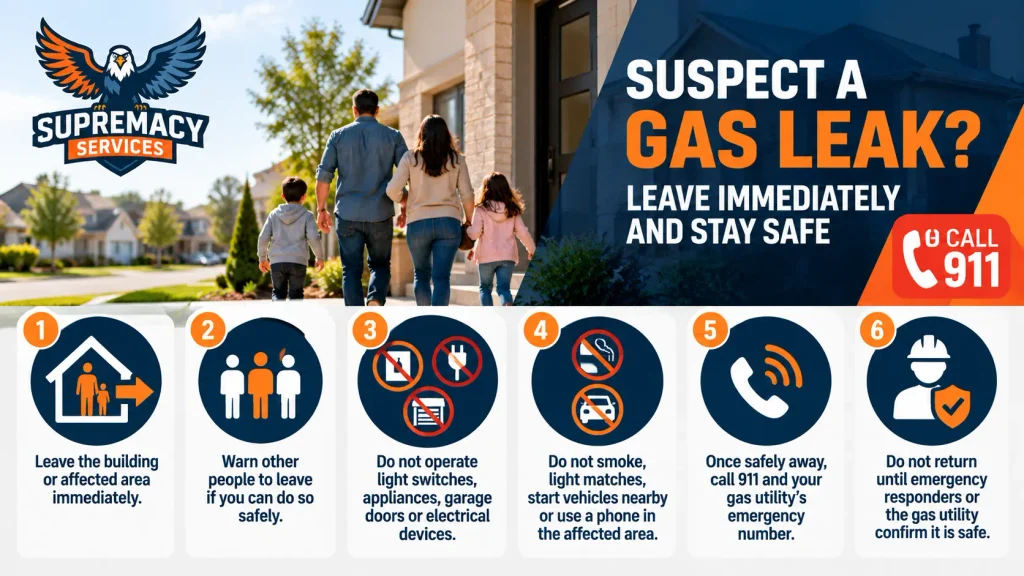
If you suspect a natural gas leak, the safest response is to leave immediately, avoid ignition sources, and contact emergency services from a safe distance.
Emergency gas leak safety checklist
These are instructions for responding to a suspected leak, not steps for locating or repairing one.Leave the building or affected outdoor area immediately.Warn other people to leave if you can do so safely.Do not operate light switches, appliances, garage doors, or electrical devices.Do not smoke, light matches, start vehicles nearby, or use a phone in the affected area.Once safely away, call 911 and your gas utility’s emergency number.Do not return or restore gas service until authorized by emergency responders or the utility.
Do not attempt to find the source of the leak, open windows as a substitute for evacuation, operate gas valves, or perform repairs.
PHMSA’s pipeline leak recognition and emergency guidance supports leaving the area and contacting emergency services rather than investigating the release.
Who should Dallas homeowners call first?
For a suspected active gas leak:
- Call 911 from a safe location.
- Contact the emergency number for your natural gas utility.
- Once the situation is controlled and the appropriate authority has confirmed that it is safe to proceed, arrange any necessary private-side gas piping or appliance repairs.
For non-emergency repairs after the area has been declared safe, Supremacy Services provides professional gas line repair services in Dallas and DFW.
What Causes Gas Lines to Leak in Residential Homes?
Gas leaks can result from damaged piping, deteriorating connections, accidental excavation, equipment failure, or improper installation.
Aging and corrosion
Metal piping and fittings can deteriorate over time, particularly where moisture, soil conditions, or other environmental factors contribute to corrosion.
Age alone does not establish that a gas line is unsafe, but damaged or deteriorating piping may require replacement.
Accidental excavation
Digging for landscaping, fences, drainage improvements, or construction can damage buried gas lines.
Even relatively small excavation projects may involve underground utilities.
Damaged appliance connections
Gas appliances connect to a fuel supply through approved piping, valves, and sometimes flexible connectors.
Improperly installed, damaged, or disturbed connections can create leakage risks.
Ground movement and physical stress
Changes in soil conditions, settlement, or external forces can place stress on buried infrastructure.
In North Texas, expansive clay soils and seasonal moisture changes are relevant considerations for underground utilities, although these conditions do not automatically mean a particular gas line has been damaged.
Installation or repair defects
Incorrect fittings, unsuitable materials, or improper installation practices can create unsafe conditions.
Gas piping work should be performed by appropriately qualified professionals and inspected where required.
Gas Leak vs. Carbon Monoxide: What’s the Difference?
A natural gas leak and carbon monoxide exposure are different hazards, although both can involve gas-powered household equipment.
| Feature | Natural gas leak | Carbon monoxide problem |
|---|---|---|
| Primary concern | Escaping fuel gas | Toxic gas produced by incomplete combustion |
| Smell | Often odorized to smell like rotten eggs | Odorless |
| Main danger | Fire, explosion, oxygen displacement | Poisoning |
| Typical source | Leaking gas piping or connections | Faulty or improperly vented fuel-burning equipment |
| Detection | Professional combustible-gas detection | Approved carbon monoxide alarms and professional testing |
| Immediate response | Evacuate and call emergency services | Move to fresh air and seek emergency assistance |
Carbon monoxide alarms do not necessarily detect natural gas, and natural gas detectors do not necessarily detect carbon monoxide.
Homeowners should select devices specifically listed for the gas they are intended to detect and follow the manufacturer’s installation instructions.
Do not use a carbon monoxide alarm as proof that a suspected natural gas leak is harmless.
How Do Professionals Detect and Repair Gas Line Leaks?
Qualified professionals may use combustible-gas detection instruments, pressure-testing equipment, visual inspection, and approved diagnostic procedures to identify gas system problems.
The precise process depends on whether the problem involves utility-owned infrastructure, customer-owned piping, or a gas appliance.
Step 1: Emergency response and making the area safe
Emergency responders and the gas utility assess the reported hazard and determine what immediate protective measures are needed.
The gas supply may need to be isolated by authorized personnel.
Step 2: Gas piping inspection
Once the situation is safe, an appropriately qualified professional may inspect accessible piping, fittings, valves, and appliance connections.
Step 3: Instrument-based testing
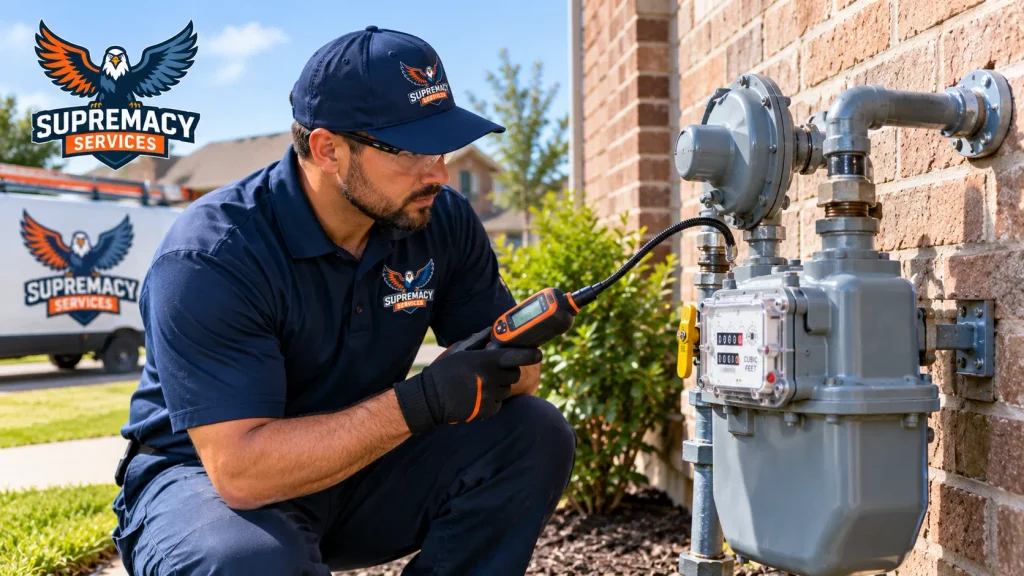
Depending on the circumstances, testing may involve electronic combustible-gas detectors or approved pressure-testing procedures.
A gas system should not be returned to service until required testing and safety checks have been completed.
Step 4: Repair or replacement
The appropriate repair depends on the damaged component, piping material, location, and overall condition of the installation.
A localized defect may be repairable, while extensive deterioration or multiple failures may justify replacement.
Step 5: Verification and return to service
After repairs, required inspections, leak testing, and utility coordination may be necessary before the system can safely operate again.
Supremacy Services describes pressure testing, electronic detection, and coordination with gas utilities as part of its gas line repair offering.
Need a gas line repair after an emergency has been made safe? Contact Supremacy Services’ gas line repair team to discuss professional inspection and repair options in the Dallas–Fort Worth area.
How Much Does Gas Line Repair Cost in Dallas?
Gas line repair costs vary according to the location of the damage, the length and material of piping involved, access requirements, and whether excavation or replacement is necessary.
An accurate estimate generally requires identifying the affected portion of the system and determining the required work.
| Cost factor | Why it matters |
|---|---|
| Location of the leak | Accessible indoor piping may require different work than buried piping |
| Pipe condition | Widespread deterioration can make replacement more appropriate |
| Repair scope | A single damaged connection differs from a full line replacement |
| Excavation | Underground access and restoration can increase project complexity |
| Permits and inspections | Requirements depend on the jurisdiction and work performed |
| Utility coordination | Some repairs require coordination before service restoration |
No universal Dallas repair price applies to every situation. Rather than publishing an unsupported price range, the article should encourage homeowners to request an itemized estimate after the emergency has been resolved.
How Can Homeowners Prevent Gas Line Problems?
Not every gas leak is preventable, but homeowners can reduce avoidable risks through safe installation practices, appropriate maintenance, and care around underground utilities.
- Arrange qualified inspections when piping is damaged, disturbed, or showing signs of deterioration.
- Have gas appliances installed and serviced by appropriately qualified professionals.
- Avoid using or storing equipment in ways that could damage exposed gas piping.
- Never move or disconnect gas appliances without following the applicable installation and safety requirements.
- Contact Texas 811 before excavation and follow utility-marking instructions.
- Keep access to gas meters and utility equipment unobstructed.
- Install and maintain appropriate carbon monoxide alarms and, where desired, listed combustible-gas alarms.
Do not perform homemade leak tests or attempt to tighten a suspected leaking fitting.
Gas Line Safety Considerations for Dallas and DFW Homes
Gas piping conditions and repair responsibilities can vary between properties throughout Dallas, Plano, Frisco, Allen, McKinney, Richardson, and Fort Worth.
Older and renovated properties
Homes that have undergone appliance upgrades, kitchen remodeling, or heating-system changes may contain a combination of older and newer gas piping.
These modifications make proper installation records and qualified inspection particularly useful.
Underground piping and North Texas soil
Seasonal soil movement, landscaping projects, and construction can affect underground infrastructure.
However, visible foundation movement or dry soil does not by itself establish that a gas line is leaking.
Utility responsibility vs. homeowner responsibility
The boundary between utility-owned and customer-owned gas infrastructure depends on the utility’s service rules and the installation.
Homeowners should confirm responsibility with their gas provider rather than assuming that every line near the meter belongs to the utility.
Texas safety oversight
The Railroad Commission of Texas pipeline safety program oversees important aspects of pipeline safety in Texas.
Local permit and inspection requirements can also apply to residential gas piping work. Confirm requirements with the relevant city and qualified contractor rather than assuming one set of rules applies across the entire DFW Metroplex.
Frequently Asked Questions About Gas Leaks
1. What is the first sign of a gas leak in a house?
A rotten-egg or sulfur-like smell is one of the most recognizable signs. However, some leaks produce no noticeable odor. Hissing sounds or signs of damage may also indicate a problem.
2. Can a gas leak happen without a smell?
Yes. Odor fade, airflow, location, or a person’s reduced sense of smell can make a leak difficult to detect. Professional instruments are needed to investigate suspected leaks safely.
3. Is a small gas leak dangerous?
Yes. A leak should never be considered safe simply because the odor seems faint or the suspected release appears small. Evacuate and report any suspected active leak.
4. Can a gas leak cause headaches or dizziness?
Potentially. High concentrations of natural gas can displace oxygen, while malfunctioning gas appliances may create carbon monoxide hazards. These symptoms have many possible causes and require appropriate medical evaluation.
5. Should I open windows if I smell gas?
Do not delay evacuation to open windows or ventilate the building. Leave immediately, avoid electrical switches and other ignition sources, and contact emergency services from a safe location.
6. Can I use a gas detector to check for a leak myself?
Residential gas alarms may provide an additional warning, but they are not a substitute for professional leak investigation. Never remain in a suspected leak area to use a handheld detector.
7. Does a high gas bill always mean there is a leak?
No. Weather, appliance use, rates, and billing periods can affect charges. However, unexplained consumption may justify professional assessment once any immediate safety concern has been addressed.
8. Who is responsible for fixing a gas leak in Dallas?
Responsibility depends on whether the leak involves utility-owned infrastructure, customer-owned piping, or an appliance. Contact the gas utility for emergency response and responsibility guidance.
9. Can I stay in my house if I only smell a little gas?
No. Do not use odor strength to judge the severity of a suspected gas leak. Leave the affected area immediately and wait for clearance from emergency responders or the gas utility.
Protect Your Dallas Home With Professional Gas Line Service
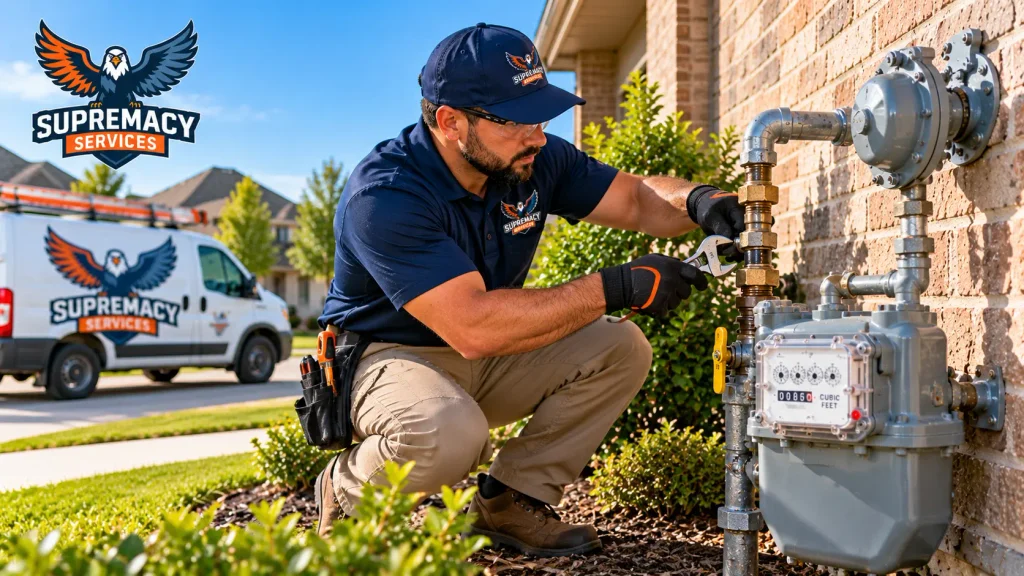
Knowing the warning signs of a gas leak can help you recognize a dangerous situation before it becomes worse.
A rotten-egg smell, unexplained hissing, damaged gas piping, or suspicious outdoor conditions should never be ignored. The first priority is always personal safety: evacuate, contact emergency services and your gas utility, and do not return until the area has been declared safe.
After the immediate hazard has been addressed, qualified inspection and repair can help determine what work is needed before gas service is restored.
Supremacy Services provides gas line inspection and repair services for Dallas and DFW homeowners.
For non-emergency repair arrangements after the property has been cleared, call or visit Supremacy’s gas line repair page to request service.