If you are wondering how much an electrical panel upgrade costs in Dallas, a reasonable 2026 planning range is roughly $1,500 to $5,000 for many residential projects, although a straightforward panel replacement can cost less and complicated service upgrades can cost considerably more.
The biggest reason for the wide range is that an electrical panel replacement and a complete electrical service upgrade are not necessarily the same project.
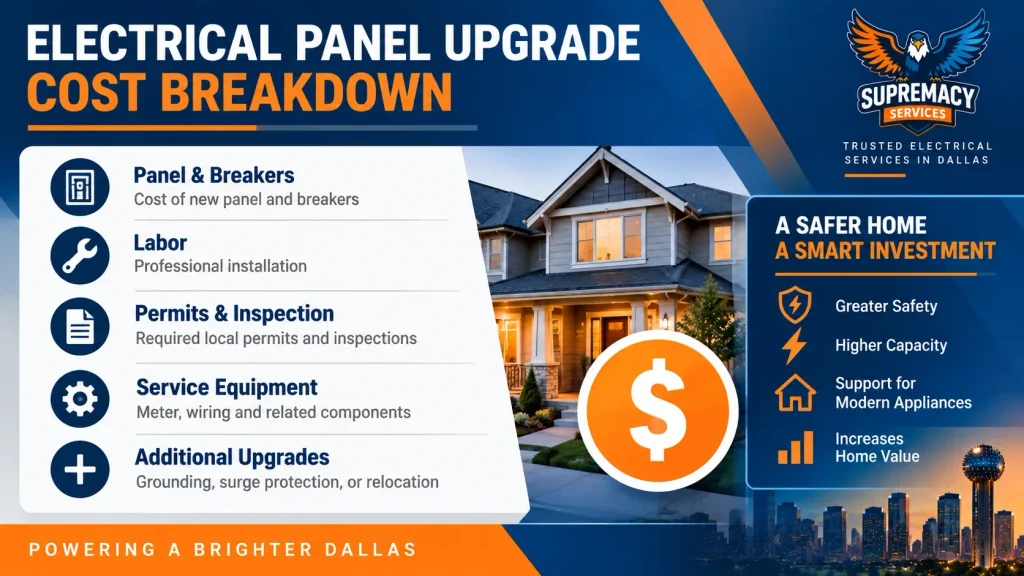
Replacing an existing breaker box with a similar-capacity panel can be relatively straightforward. Upgrading an older 100-amp electrical service to 200 amps may require a new panel, breakers, service conductors, grounding and bonding improvements, meter equipment, utility coordination, permits, inspections, and potentially other work needed to bring the installation into compliance.
For Dallas homeowners, understanding these differences is the key to comparing electrical estimates accurately and avoiding unexpected costs.
Electrical Panel Upgrade Cost in Dallas: 2026 Quick Answer
Published 2026 Dallas estimates show just how much project scope affects pricing. Angi reports an average of approximately $1,650 for Dallas panel upgrades, with many projects falling around $1,237–$2,062. Other DFW estimates place 200-amp upgrades closer to $2,500–$5,000 when the project involves a more substantial service upgrade.
For budgeting purposes, homeowners can use the following broad ranges:
| Electrical Project | Typical Planning Range |
|---|---|
| Minor breaker/panel-related work | $500–$1,500+ |
| Basic 100–150A panel replacement | $1,500–$3,000+ |
| Typical 200A panel/service upgrade | $2,500–$5,000+ |
| Panel plus substantial service modifications | $4,000–$8,000+ |
| Large 320A/400A or highly complex project | $8,000+ |
These figures are planning estimates rather than Supremacy Services quotes. Your actual electrical panel upgrade cost depends on your home’s existing electrical system, desired capacity, panel location, utility requirements, code-related improvements, and the amount of labor required.
What Is an Electrical Panel Upgrade?
Your electrical panel—also commonly called a breaker box, breaker panel, service panel, or load center—is the distribution point for electricity entering your home.
Electricity is divided from the panel into individual circuits serving equipment and areas such as:
- Air-conditioning and heating systems
- Kitchens and major appliances
- Bedrooms and living spaces
- Lighting
- Laundry equipment
- Water heaters
- Garages and workshops
- Pools and outdoor equipment
- EV chargers
Circuit breakers are designed to interrupt a circuit when electrical conditions exceed safe limits.
An electrical panel upgrade replaces or expands this distribution equipment and, when necessary, increases the electrical service capacity available to the home.
For homeowners who need professional evaluation, Supremacy Services provides dedicated electrical panel upgrade services in Dallas as part of its residential electrical services.
Panel Replacement vs. Service Upgrade: Why the Difference Matters
This is one of the most important distinctions when comparing electrical quotes.
Panel Replacement
A panel replacement generally means removing an existing panel and installing a new one while maintaining roughly the same electrical service capacity.
For example:
125-amp panel → new 125-amp panel
If the existing service equipment, meter, conductors, grounding and panel location are suitable, this can be comparatively straightforward.
Electrical Service Upgrade
A service upgrade increases the amount of electricity the home’s electrical system is designed to accommodate.
For example:
100 amps → 200 amps
That project can involve considerably more than replacing the breaker box. Depending on the existing installation, electricians may need to address service conductors, grounding and bonding, the meter assembly, exterior disconnect equipment, utility requirements and other components.
That is why one homeowner might receive a $2,000 estimate while another receives a $5,000+ estimate for what both initially describe as a “panel upgrade.”
How Much Does a 200-Amp Panel Upgrade Cost in Dallas?
For many Dallas homes, 200 amps is a common modern residential service capacity, particularly when homeowners are adding major electrical loads.
A 200-amp upgrade may commonly fall around:
$2,500–$5,000+
However, the final price depends heavily on whether you are replacing only the panel or upgrading the entire electrical service.
A relatively accessible panel with compatible existing infrastructure can remain toward the lower end.
Costs can rise when the electrician must also modify:
- Meter equipment
- Service entrance conductors
- Grounding electrodes
- Bonding
- Service mast
- Main disconnect
- Exterior equipment
- Branch circuits
- Panel location
A professional load calculation should determine the appropriate service capacity rather than choosing amperage based solely on the size of the house.
What Determines Electrical Panel Upgrade Cost in Dallas?
1. Existing and Required Amperage
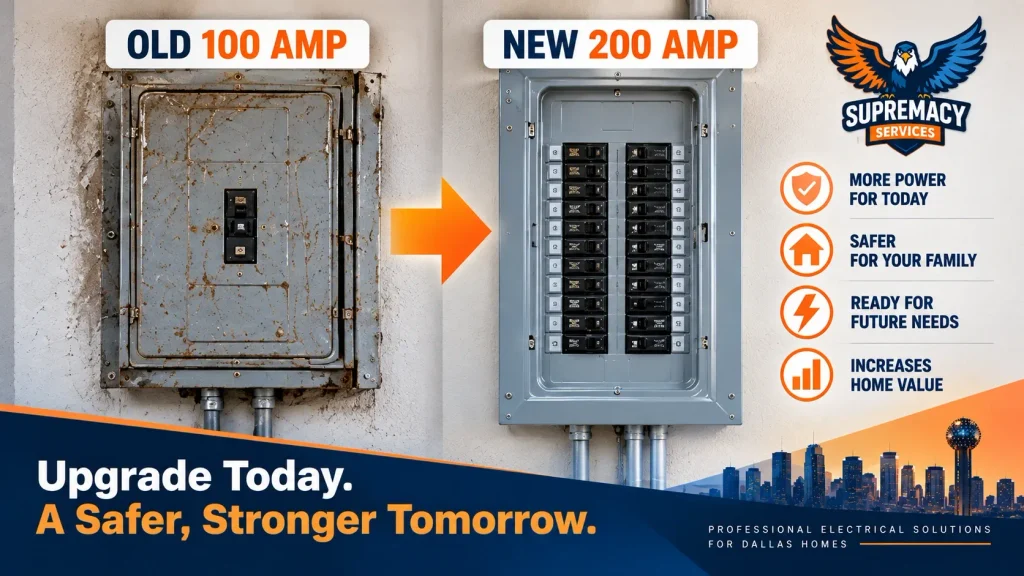
The size of the electrical service is one of the largest pricing factors.
A homeowner replacing a functional 150-amp panel with another 150-amp panel may require considerably less work than someone converting an older 100-amp service to a modern 200-amp configuration.
Higher-capacity equipment also generally costs more.
2. Panel Size and Number of Circuits
Two 200-amp panels do not necessarily provide identical circuit capacity.
Panels contain a specific number of spaces for circuit breakers. Homes with numerous dedicated circuits—for HVAC systems, kitchen appliances, workshops, pools, EV charging or other equipment—may need a larger load center.
Choosing adequate space also leaves room for reasonable future expansion.
3. Condition of Existing Wiring
Installing a new panel does not automatically correct defects elsewhere in the electrical system.
During evaluation, an electrician may discover damaged conductors, deteriorated insulation, improper connections, outdated wiring methods or other conditions requiring attention.
These repairs can increase the project cost but may be important for electrical safety and code compliance.
4. Grounding and Bonding Improvements
Modern electrical systems depend on properly designed grounding and bonding.
An older Dallas home may require modifications to its grounding electrode system or bonding arrangements when major service equipment is replaced.
Because every existing installation is different, these improvements should be identified during the electrical inspection rather than assumed from a generic online price.
5. Meter and Service Equipment
A 100-to-200-amp conversion may extend beyond the breaker panel.
Depending on the property and utility requirements, the project may involve modifications to the meter enclosure, service entrance equipment, overhead service mast or other service components.
This is one reason a full 200-amp service upgrade generally costs more than a simple breaker-box replacement.
6. Panel Location and Accessibility
An easily accessible panel usually requires less labor.
Projects become more complicated when equipment is located in an unsuitable location, access is restricted, wiring must be extended, or the panel must be relocated.
Relocation can turn a relatively routine replacement into a much larger electrical project.
7. Breaker Requirements
Breakers themselves contribute to project cost.
Depending on the circuits and applicable code requirements, a new installation may require conventional breakers as well as specialized AFCI or GFCI protection.
A panel containing numerous specialized breakers will generally cost more than a basic panel populated primarily with standard breakers.
8. Permits and Inspection
Major electrical work can involve local permitting and inspection requirements.
Texas currently uses the 2023 National Electrical Code as the state-adopted electrical standard, while local authorities may administer permitting and inspection requirements.
Permit handling, inspection coordination and related administrative work therefore need to be considered when evaluating a complete panel-upgrade estimate.
9. Utility Coordination
Some electrical service upgrades require coordination with the electric utility or transmission/distribution provider for disconnection, meter-related work or reconnection.
The electrician should determine whether utility coordination is required and incorporate it into project scheduling.
Signs Your Dallas Home May Need an Electrical Panel Upgrade
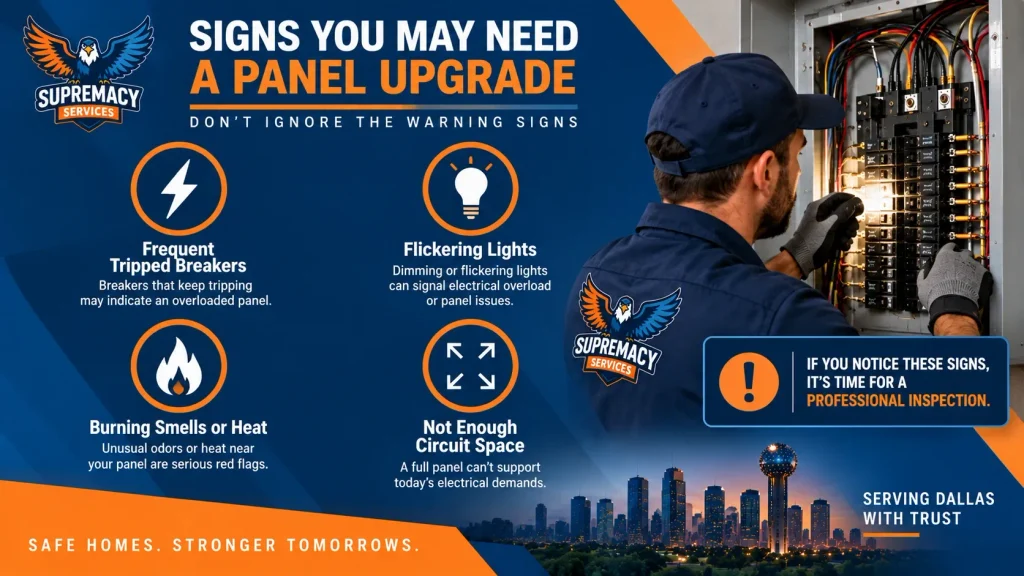
Age alone does not prove that an electrical panel must be replaced. Its condition, design, capacity and ability to safely serve the home’s electrical demand matter more.
However, homeowners should consider professional evaluation when they notice the following conditions.
Breakers Frequently Trip
A circuit breaker that repeatedly trips may indicate an overloaded circuit, short circuit, ground fault, defective breaker or another electrical problem.
Do not simply install a larger breaker. Breaker sizing must correspond to the circuit and conductors it protects.
Supremacy Services also provides breaker installation and replacement in Dallas when the problem is isolated to breaker equipment rather than requiring a complete panel replacement.
Flickering or Dimming Lights
Lights that repeatedly flicker or dim when major equipment starts can indicate voltage fluctuations, overloaded circuits or electrical connection problems.
Because several different faults can cause these symptoms, professional diagnosis is more useful than assuming the panel itself is defective.
Burning Odor or Scorching
A burning smell, discoloration, soot, melted components or unusual heat around an electrical panel warrants prompt professional attention.
If you observe smoke, active arcing or fire, keep away from the equipment and contact emergency services when appropriate.
Rust or Corrosion
Moisture and electrical equipment are a dangerous combination.
Visible rust or corrosion inside or around a breaker panel can compromise connections and components and should be inspected by a qualified electrician.
Your Panel Has No Space for New Circuits
A completely full panel can become an obstacle when adding equipment such as:
- EV chargers
- New HVAC equipment
- Electric ranges
- Hot tubs
- Workshops
- Pool equipment
- Home additions
A load calculation and panel evaluation can determine whether additional circuits, a subpanel or a larger service is appropriate.
You Still Have a Fuse Box
Some older Dallas homes still use fuse-based electrical distribution.
A fuse box is not automatically unsafe simply because it uses fuses, but older systems may lack the capacity, circuit configuration or protective features expected for modern household electrical loads.
Professional evaluation can determine whether replacement is appropriate.
Do You Need a 200-Amp Electrical Panel?
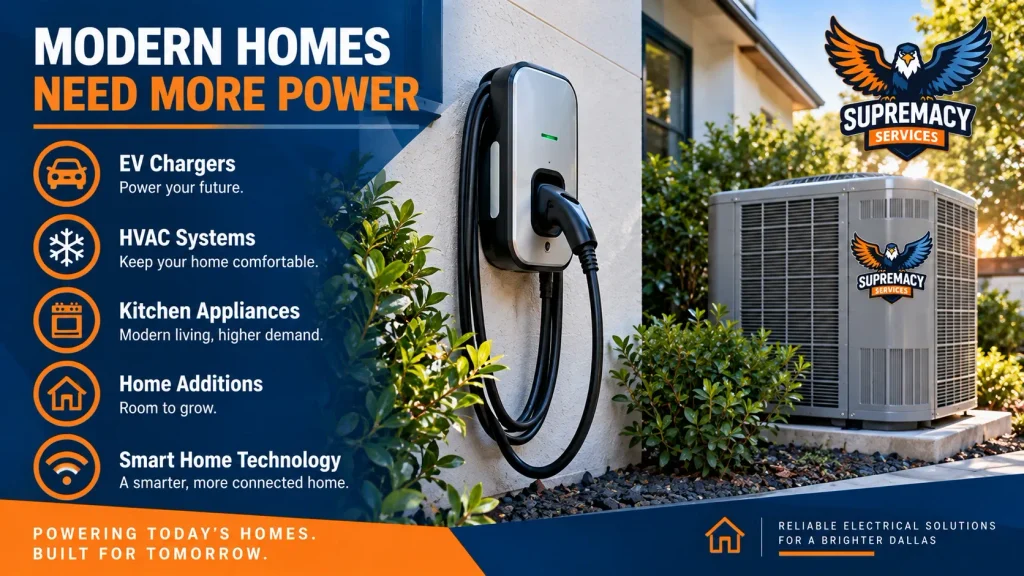
Not every house needs 200-amp service.
The correct electrical service size depends on the home’s calculated electrical load—not merely how many appliances the homeowner owns.
A licensed electrician should consider major loads such as:
- Air conditioning
- Electric heating
- Water heating
- Cooking equipment
- Clothes dryers
- EV charging
- Pool and spa equipment
- Workshops
- Additional dwelling areas
A smaller home with natural-gas appliances may have very different electrical requirements from an all-electric property with multiple HVAC systems and EV chargers.
Electrical Panel Upgrades for EV Chargers
Electric vehicles are one of the reasons many homeowners begin investigating their electrical capacity.
A Level 2 charger can represent a significant continuous electrical load. Before installation, an electrician should determine whether the existing service and panel can accommodate the charger safely.
However, buying an EV does not automatically mean you need a new electrical panel.
Depending on the home’s existing load and equipment, alternatives may include appropriate circuit design or load-management technology. A proper electrical load assessment should come before deciding on a service upgrade.
Electrical Panel Upgrades and New HVAC Systems

Dallas air-conditioning systems can represent one of the largest electrical loads in a home.
When replacing HVAC equipment, particularly when electrifying heating or installing equipment with different electrical requirements, homeowners should verify that the electrical system can support the new load.
Supremacy’s combined HVAC and electrical capabilities make internal linking between your Dallas electrical services and relevant HVAC services particularly useful here.
Can a Subpanel Save Money?
Sometimes—but a subpanel does not increase the total electrical service capacity supplied to the home.
A subpanel primarily provides additional circuit spaces and distributes power to another location.
It may be appropriate when the existing service has sufficient capacity but additional breaker spaces are required.
If the home already demands more electricity than its service can safely provide, installing a subpanel alone does not solve that underlying capacity issue.
How Long Does an Electrical Panel Upgrade Take?
Many straightforward residential panel replacements can be physically completed within approximately one working day.
Complex service upgrades may take longer because the project can involve:
- Utility coordination
- Permitting
- Inspection
- Meter/service modifications
- Grounding improvements
- Panel relocation
- Additional wiring repairs
The home will normally experience a period without electricity while service equipment is being replaced.
Your electrician should explain the anticipated outage and project sequence before work begins.
Should You Upgrade Before Remodeling?
Planning the electrical system before a major renovation can prevent expensive changes later.
Consider having the panel evaluated before projects involving:
- Kitchen remodels
- Home additions
- Garage conversions
- New HVAC equipment
- Electric water heaters
- EV chargers
- Hot tubs or pools
- Workshops
- Major appliance electrification
If additional capacity is needed, coordinating the electrical upgrade with the renovation can make the overall project more efficient.
Can You Upgrade an Electrical Panel Yourself in Texas?
Electrical service equipment presents serious shock, arc-flash and fire hazards.
Texas generally requires people performing non-exempt electrical work to be appropriately licensed and for that work to be performed through a licensed electrical contractor, although state law contains specific exemptions, including certain work by homeowners on dwellings they own and occupy.
A homeowner exemption should not be confused with the work being simple or risk-free. Local permit and inspection requirements may still apply.
Electrical panel and service work involves equipment connected directly to the home’s incoming power supply, making professional installation the prudent approach for most homeowners.
What Should a Dallas Electrical Panel Upgrade Quote Include?
Do not compare electrical estimates based on the final price alone.
Ask whether the written estimate includes:
- New panel/load center
- Main breaker
- Required branch breakers
- Removal of old equipment
- Service entrance modifications
- Meter-related work, when necessary
- Grounding and bonding
- Surge protection, when included
- Permit handling
- Inspection coordination
- Utility coordination
- Cleanup and disposal
- Equipment warranty
- Labor/workmanship warranty
Two contractors can quote very different amounts because they are actually proposing different scopes of work.
The Texas Department of Licensing and Regulation also recommends obtaining multiple bids and verifying the contractor’s licensing information before hiring an electrical contractor.
Why Professional Panel Installation Matters
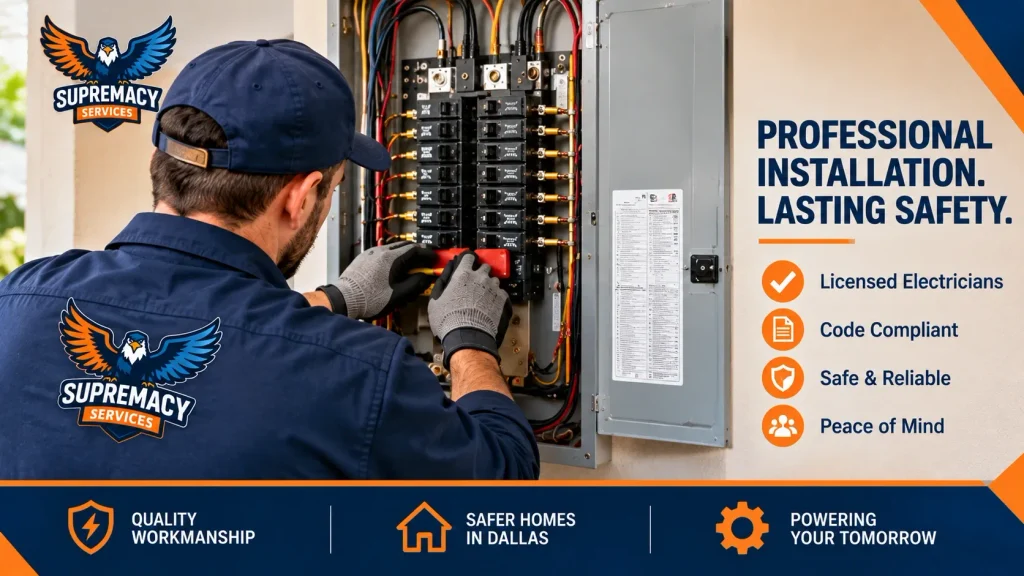
An electrical panel is the central distribution point of the home’s electrical system. Errors at this location can affect virtually every downstream circuit.
Professional panel work should address more than simply making the lights turn back on.
A properly planned project considers electrical load, conductor sizing, overcurrent protection, grounding and bonding, manufacturer specifications, service requirements and applicable electrical codes.
Texas electrical contractors must operate under state licensing requirements, and Texas has adopted the 2023 National Electrical Code.
How to Keep Your Electrical Panel Upgrade From Becoming More Expensive Than Expected
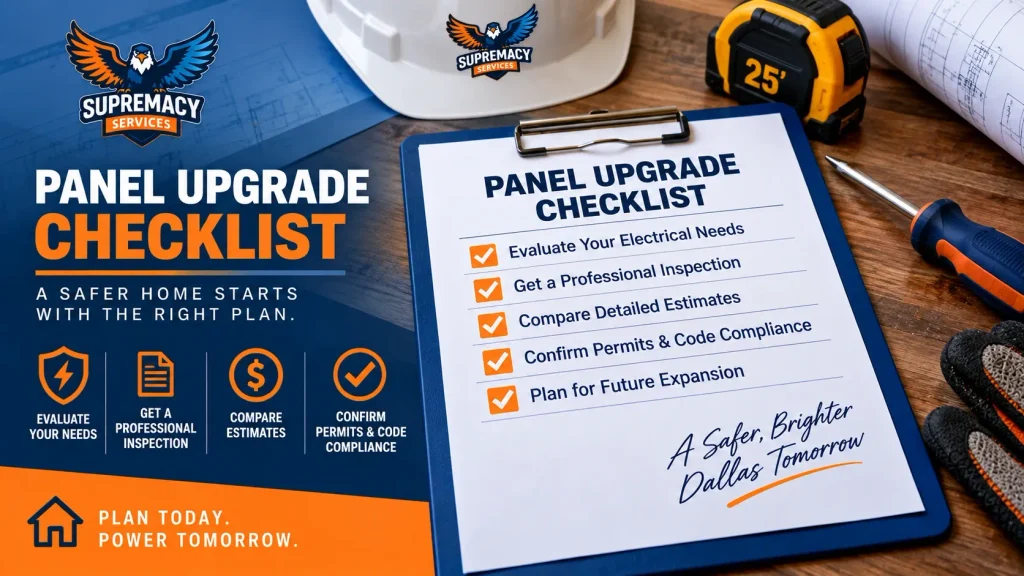
The best approach is to define the scope before installation begins.
Ask your electrician to determine:
- Your existing service amperage.
- The calculated electrical load.
- Whether you actually need increased service capacity.
- Whether the meter/service equipment must change.
- Whether grounding or bonding requires improvement.
- Whether the existing panel location is acceptable.
- What permits and inspections are required.
- Whether utility coordination is necessary.
- Which breakers and safety devices are included.
- Whether future circuits should be planned now.
A detailed assessment makes it much easier to compare estimates on an apples-to-apples basis.
Is an Electrical Panel Upgrade Worth It?
An electrical panel upgrade is primarily an infrastructure and safety investment, not a cosmetic renovation.
It may make sense when the existing equipment is damaged, deteriorated, undersized for the home’s calculated electrical demand, unable to accommodate necessary circuits, or requires replacement as part of a larger electrical project.
It can also prepare a home for additional electrical demand from EV charging, HVAC upgrades, renovations and other major equipment.
The important point is that homeowners should upgrade based on the condition and electrical requirements of their property—not simply because someone says every older panel needs to be replaced.
Get an Electrical Panel Evaluation in Dallas, TX
If your breakers frequently trip, your electrical panel is damaged, you are running out of circuit space, or you are planning major new electrical loads, Supremacy Services can evaluate your existing electrical system and determine whether repair, breaker replacement, a subpanel or a complete panel upgrade is appropriate.
Explore Supremacy’s Electrical Panel Upgrade services in Dallas or its broader Dallas Electrical Services to schedule a professional assessment.
A proper evaluation gives you something much more useful than an online average: a scope and price based on your actual home.
Frequently Asked Questions
How much does it cost to upgrade an electrical panel in Dallas in 2026?
For planning purposes, many residential Dallas projects can fall roughly between $1,500 and $5,000, while complex service upgrades can exceed that range. Published estimates vary because some prices describe a panel-only replacement while others include a complete service-capacity upgrade.
How much does it cost to upgrade from 100 amps to 200 amps in Dallas?
A 100-to-200-amp upgrade can commonly fall around $2,500–$5,000 or more, depending on the meter equipment, service conductors, grounding, utility work, panel location, permits and other required modifications.
Is 200 amps enough for a house?
200-amp service is common in modern homes, but the correct service size should be determined through an electrical load calculation. Large homes or properties with substantial electric heating, EV charging, pools or other heavy loads can require different solutions.
Does an EV charger require a 200-amp panel?
Not necessarily. The electrician should calculate the home’s existing electrical demand and the proposed charger load. Some homes have adequate capacity without upgrading the service, while others may require an upgrade or an approved load-management solution.
Can I replace only the electrical panel without upgrading the service?
Sometimes. If the existing service capacity remains adequate and the surrounding service equipment is suitable, a panel may be replaced without increasing amperage. An electrician should inspect the system before determining the scope.
Does an electrical panel upgrade require a permit in Dallas?
Major panel and service work is generally subject to local permitting and inspection requirements. The exact requirements depend on the project’s scope and jurisdiction, so they should be confirmed for the property before work begins.
How long does a 200-amp panel upgrade take?
Straightforward installations are often physically completed in approximately a day, but complicated projects can take longer. Permitting, inspections and utility scheduling can also affect the overall project timeline.
Should I replace my electrical panel just because it is old?
Not necessarily. Age is one consideration, but condition, capacity, equipment type, available circuit space, damage and the home’s electrical demand provide better reasons for determining whether replacement is necessary.
Final Takeaway
So, how much does an electrical panel upgrade cost in Dallas in 2026?
A useful planning budget is approximately $1,500–$5,000 for many residential projects, with simple panel replacements potentially costing less and extensive 200-amp service upgrades, relocations or high-capacity installations costing substantially more.
Rather than focusing only on the headline price, determine exactly what the quote includes.
The most accurate estimate comes from evaluating your home’s existing service capacity, electrical load, panel condition, meter and service equipment, grounding system, required permits and plans for future electrical demand.
That gives Dallas homeowners a safer—and much more accurate—basis for deciding what their electrical system actually needs.