AC Not Cooling in Dallas? Start Here
AC not cooling in Dallas? When your air conditioner is running but your home still feels hot, the problem can range from something as simple as an incorrect thermostat setting or dirty air filter to a frozen evaporator coil, refrigerant leak, electrical failure, or compressor problem.
During periods of heavy cooling demand, an AC problem can quickly turn from an inconvenience into an uncomfortable home. The important thing is knowing what you can safely check yourself and which problems require professional HVAC diagnosis.
The U.S. Department of Energy identifies dirty filters, thermostat problems, refrigerant issues, drainage problems, electrical control failures, and ductwork problems among common reasons an air conditioner may fail to cool properly.
Supremacy Services provides professional AC repair and HVAC diagnostics throughout Dallas and surrounding DFW communities, including troubleshooting warm-air complaints, frozen coils, airflow problems, electrical faults, refrigerant pressures, and duct integrity.
This guide explains nine common reasons your AC isn’t cooling, what you can check before requesting service, and the warning signs that mean it is time to bring in an HVAC professional.
9 Common Reasons Your AC Is Not Cooling in Dallas
1. Your Thermostat Is Set Incorrectly or Malfunctioning
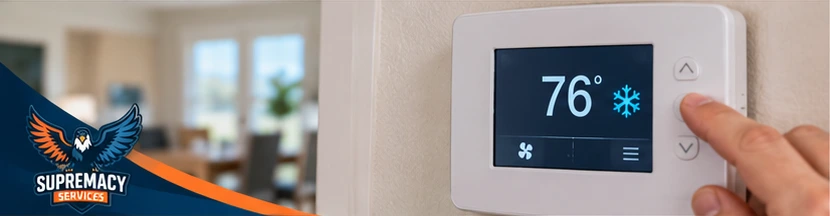
Before assuming something major has failed, check the thermostat.
It sounds simple, but an incorrect thermostat setting can make a perfectly functional AC appear broken.
What to check
Make sure:
- The thermostat is set to COOL, not HEAT or OFF.
- The desired temperature is below the current indoor temperature.
- The fan setting is on AUTO rather than continuously ON.
- The display is functioning normally.
- Battery-powered thermostats have good batteries.
- A schedule or smart-home setting hasn’t changed the desired temperature.
When the thermostat fan is set to ON, the blower can continue circulating room-temperature air even when the compressor is not actively cooling. That may make air coming from the vents occasionally feel warmer.
The Department of Energy specifically recommends checking that the thermostat is correctly set when an AC isn’t cooling properly.
When to call a professional
If the thermostat is calling for cooling but the outdoor equipment never starts—or the system repeatedly starts and stops—you could have a control, wiring, electrical, or equipment problem.
2. A Dirty Air Filter Is Restricting Airflow
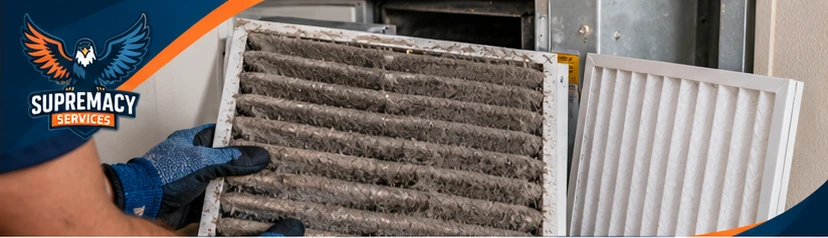
A clogged HVAC filter is one of the first things Dallas homeowners should inspect when their AC isn’t cooling properly.
Your air conditioner needs a steady volume of air passing across its evaporator coil. As a filter becomes loaded with dust and debris, resistance increases and airflow can fall.
That can cause:
- Weak airflow from supply vents
- Longer cooling cycles
- Poor indoor comfort
- Higher energy consumption
- Excessive system strain
- Evaporator-coil icing in some circumstances
The Department of Energy reports that replacing or cleaning dirty filters can reduce an air conditioner’s energy consumption by roughly 5% to 15%.
ENERGY STAR recommends checking the filter monthly during periods of heavy heating or cooling use and replacing it when dirty; at minimum, its general guidance calls for replacement about every three months, although the appropriate interval depends on the home and equipment.
What to do
Locate your return-air filter and inspect it.
If it is visibly packed with dirt, replace it with the correct size and filter type recommended for your HVAC system.
Don’t automatically install the highest-MERV filter available. Filters that create excessive pressure drop can reduce airflow in systems that weren’t designed for them. DOE technical guidance notes that excessive filter resistance can contribute to reduced AC efficiency and, in some systems, frozen coils.
3. The Outdoor Condenser Is Dirty or Blocked
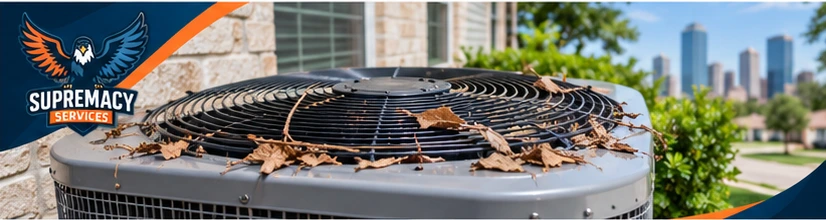
Your indoor AC equipment absorbs heat from the house. The outdoor condenser then has to release that heat outside.
Leaves, grass clippings, dirt and other debris around the condenser can interfere with airflow and heat rejection.
ENERGY STAR specifically recommends cleaning evaporator and condenser coils because dirty coils reduce cooling capability, increase operating time and energy costs, and can shorten equipment life.
What homeowners can safely do
Turn the system off and visually inspect the outdoor unit.
Remove loose vegetation, leaves and obvious debris from around the condenser, and make sure landscaping isn’t crowding it.
Avoid opening electrical panels, bending coil fins, using aggressive pressure washing, or attempting internal repairs yourself.
If the coil itself is heavily contaminated, professional cleaning is safer.
4. The Evaporator Coil Is Frozen
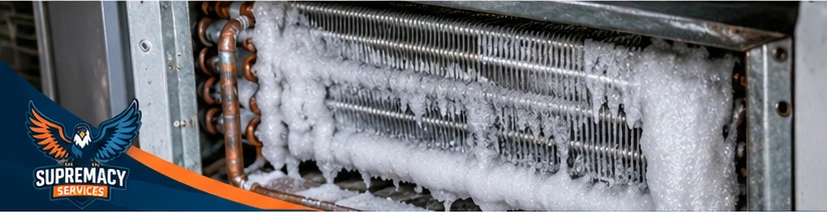
Ice on an air conditioner during a Dallas summer may seem strange, but a frozen evaporator coil can prevent an AC from cooling the house effectively.
The evaporator coil needs adequate warm indoor airflow passing across it. If airflow becomes severely restricted—or another system condition causes coil temperatures to drop too far—moisture can freeze on the coil.
Common contributing problems include:
- Dirty air filters
- Restricted airflow
- Dirty evaporator coils
- Blower problems
- Duct restrictions
- Improper refrigerant charge
DOE technical guidance identifies filters, cooling-coil restrictions, duct restrictions and blower conditions as factors affecting airflow.
Warning signs
You may notice:
- Weak airflow
- AC running for long periods without cooling
- Ice on refrigerant tubing
- Water around the indoor unit after the ice melts
- Supply air becoming progressively warmer
What to do
Do not continue forcing the AC to cool while the coil is frozen.
Turn cooling off and check the filter. Allow the system to thaw naturally.
If it freezes again after restoring normal airflow, schedule an HVAC diagnostic. Repeated icing is a symptom of an underlying problem, not something that should simply be thawed repeatedly.
5. The System Is Low on Refrigerant or Has a Refrigerant Leak

Your AC does not consume refrigerant like a vehicle consumes fuel.
Refrigerant circulates through a closed system, carrying heat from inside your home to the outdoor equipment. A low charge therefore needs proper diagnosis rather than automatically adding refrigerant.
Potential symptoms can include:
- AC running but not cooling adequately
- Longer cooling cycles
- Ice around the evaporator or refrigerant line
- Reduced cooling capacity
- Unusual hissing near refrigerant components
The Department of Energy lists low or leaking refrigerant as a potential reason an AC isn’t cooling and recommends having a trained technician address the leak and charge.
Refrigerant servicing is also not a good DIY project. EPA rules govern the handling and recovery of refrigerants from stationary air-conditioning equipment.
What to do
If refrigerant loss is suspected, have an HVAC professional diagnose why the charge is incorrect rather than assuming the system simply needs a refill.
6. The Capacitor, Contactor or Another Electrical Component Has Failed

Air conditioners depend on multiple electrical components to start and operate their compressor and motors.
A failed capacitor, damaged contactor, loose electrical connection, tripped protective device, control-board fault, or motor problem can leave you with a system that appears partially operational but produces little or no cooling.
For example, you might hear the indoor blower running while the outdoor condenser remains off.
Supremacy’s Dallas AC repair page specifically lists failed capacitors among possible causes of an AC blowing warm air and describes electrical diagnostics as part of its repair process.
Check this first
Homeowners can check whether a normal household breaker has tripped.
However, if it trips again after being reset, do not repeatedly reset it. A recurring trip can indicate an electrical or equipment fault that needs diagnosis.
Never open the condenser’s electrical compartment or handle capacitors yourself. Capacitors can retain an electrical charge even after equipment has been switched off.
7. Your Ductwork Is Leaking, Crushed or Poorly Balanced
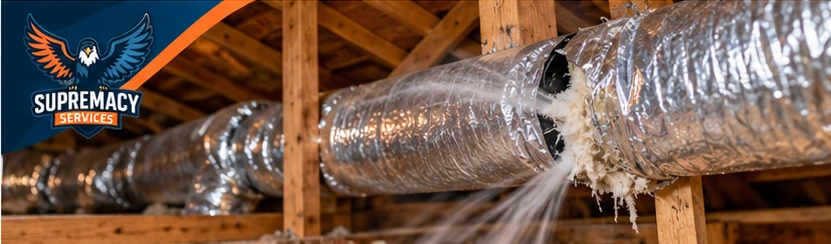
Sometimes the air conditioner itself is producing cold air—the problem is getting that conditioned air to the rooms where you need it.
Damaged ductwork can cause cooling to be lost in attics or other unconditioned spaces before it reaches the supply registers.
Possible warning signs include:
- One room staying significantly hotter than another
- Weak airflow at particular registers
- A sudden change in airflow
- Visible disconnected or damaged accessible ducts
- Excessively long AC cycles
DOE guidance notes that duct leakage and inadequate return-air arrangements can increase heating and cooling loads and impair comfort, humidity control and indoor air quality.
This is especially important when an AC appears to be operating normally but certain parts of the house never get comfortable.
Supremacy offers dedicated Dallas ductwork services for issues involving leaky, poorly sized and improperly routed ducts.
8. The Condensate Drain Is Clogged
Your AC does more than lower temperature. As warm indoor air moves over the cold evaporator coil, moisture condenses and must drain away.
If that drainage system becomes clogged, water can back up.
Some HVAC installations include a float switch or safety device designed to shut cooling equipment down when condensate reaches an unsafe level. Consequently, a drainage problem can sometimes look like an AC failure.
ENERGY STAR notes that a plugged drain can cause water damage and affect indoor humidity.
Look for
- Water around the indoor HVAC equipment
- An overflowing drain pan
- Unexpected AC shutdown
- Excess indoor humidity
- Repeated drainage problems
A small amount of accessible drain maintenance may be straightforward, but recurring backups or water around electrical/HVAC equipment warrant professional inspection.
9. The Compressor, Fan Motor or Another Major Component Is Failing
If you’ve checked the thermostat, filter and obvious external conditions and the AC still isn’t cooling, the problem may be deeper inside the system.
The compressor is central to the refrigeration cycle, while condenser and blower motors maintain the airflow needed to transfer heat.
Potential signs of a major mechanical or electrical problem include:
- Outdoor unit won’t start
- Indoor blower works but outdoor unit doesn’t
- Loud buzzing, grinding or clicking
- Breaker repeatedly trips
- System starts and stops frequently
- Warm air continues despite a cooling call
- AC runs almost continuously without reaching the thermostat setting
These problems require proper testing rather than parts swapping.
Supremacy’s Dallas HVAC repair service lists refrigerant leaks, failed capacitors, frozen coils, airflow restrictions, thermostat faults and ductwork problems among the issues its technicians diagnose and repair.
AC Running but Not Cooling? Use This Quick Checklist
Before calling for AC repair in Dallas, homeowners can safely check several basics:
| Check | What You’re Looking For | DIY or Professional? |
|---|---|---|
| Thermostat | COOL mode and sensible temperature setting | DIY |
| Air filter | Excessive dust or blockage | DIY |
| Supply vents | Open and unobstructed | DIY |
| Outdoor condenser | Leaves or obvious exterior obstruction | Basic DIY |
| Breaker | One-time tripped breaker | Basic DIY |
| Evaporator/refrigerant line | Visible ice | Stop cooling; diagnose cause |
| Drain area | Standing or leaking water | Professional if recurring |
| Refrigerant | Low charge/leak | Professional |
| Capacitor/electrical components | Electrical failure | Professional |
| Compressor | Mechanical/electrical failure | Professional |
Why Is My AC Running but Not Cooling?
There is an important difference between “my AC won’t turn on” and “my AC is running but not cooling.”
When the system runs without producing adequate cooling, the problem often involves either airflow or heat transfer.
An air conditioner works by absorbing heat from indoor air at the evaporator and rejecting that heat outdoors through the condenser.
Anything that significantly interferes with that process—restricted airflow, dirty coils, incorrect refrigerant charge, compressor trouble or poor duct delivery—can reduce cooling performance.
That’s why replacing random components without diagnosing the entire refrigeration and airflow system can waste money.
Why Dallas AC Systems Need Special Attention During Heavy Cooling Season
Dallas-area cooling systems can face prolonged periods of high cooling demand. During extended operation, existing weaknesses such as dirty coils, airflow restrictions, weak electrical components or refrigerant problems can become much more noticeable.
Supremacy specifically identifies extended summer run times, restricted airflow, and electrical stress among common contributors to Dallas AC problems.
Preventive maintenance becomes particularly valuable before peak cooling demand.
ENERGY STAR recommends annual HVAC tune-ups and monthly filter inspections during heavy-use periods.
When Should You Call an HVAC Professional?
Some troubleshooting should stop at the thermostat and filter.
Schedule professional Dallas AC repair when you notice:
- Refrigerant-line or evaporator-coil ice that returns
- Suspected refrigerant leakage
- Burning or electrical odors
- Repeated breaker trips
- Buzzing or grinding equipment
- Outdoor unit not operating
- Water repeatedly accumulating around HVAC equipment
- Very weak airflow despite a clean filter
- AC running continuously without cooling
- Major temperature differences between rooms
- System repeatedly turning on and off
- Thermostat calling for cooling but equipment not responding
If there is smoke, sparking, an obvious electrical hazard, or another immediate safety concern, shut the equipment down when it is safe to do so and seek appropriate emergency assistance.
Professional AC Repair in Dallas, TX
When basic troubleshooting doesn’t solve the problem, professional diagnosis can determine whether you’re dealing with airflow restriction, refrigerant trouble, electrical failure, duct leakage, thermostat problems or a mechanical component failure.
Supremacy Services advertises professional air-conditioning diagnostics and repair in Dallas, including refrigerant-pressure checks, electrical diagnostics, airflow issues, frozen coils and duct-integrity evaluation.
Recommended CTA
Still dealing with an AC that’s running but not cooling?
Have the system properly diagnosed instead of guessing which part has failed.
How to Help Prevent Your AC From Stopping Cooling
Not every breakdown is preventable, but routine maintenance can reduce avoidable performance problems.
Homeowners should:
- Check filters regularly.
- Replace dirty filters with the correct type.
- Keep outdoor equipment clear of leaves and vegetation.
- Keep supply and return registers unobstructed.
- Watch for water around indoor HVAC equipment.
- Pay attention to unusual noises or cycling behavior.
- Address declining cooling performance before complete failure.
- Schedule periodic professional HVAC maintenance.
ENERGY STAR identifies dirt and neglect as major contributors to HVAC failure and inefficiency and recommends annual pre-season checkups along with regular filter inspection.
Repair or Replace an AC That Isn’t Cooling?
An AC that stops cooling doesn’t automatically need replacement.
Many no-cooling problems can result from repairable conditions such as a dirty coil, failed capacitor, thermostat issue, airflow restriction or other component failure.
Replacement becomes a broader consideration when an older system experiences repeated breakdowns, declining efficiency, expensive major-component failures or ongoing comfort problems.
The decision should be based on the actual diagnosis, equipment condition, repair cost, efficiency, system sizing and expected remaining service life, rather than age alone.
For homeowners considering replacement, Supremacy also provides air-conditioner installation services in Dallas.
Frequently Asked Questions About an AC Not Cooling in Dallas
Why is my AC running but not cooling my house?
Possible causes include a dirty air filter, dirty coils, restricted airflow, frozen evaporator coil, refrigerant problem, electrical component failure, duct leakage or compressor trouble. Start with the thermostat and filter before moving to professional diagnostics.
Why is my AC blowing warm air?
First verify that your thermostat is set to COOL and that the outdoor condenser is operating. A dirty filter, electrical failure, refrigerant problem, frozen coil or compressor-related problem can also result in inadequate cooling.
Can a dirty filter cause my AC not to cool?
Yes. A heavily clogged filter restricts airflow, which reduces cooling performance and can contribute to coil icing under certain conditions.
Should I turn my AC off if the coil is frozen?
Yes. Continuing to demand cooling while the evaporator is covered in ice won’t solve the underlying airflow or refrigeration problem. Allow the system to thaw and have the cause investigated if the icing returns.
Does low refrigerant mean my AC just needs to be recharged?
Not necessarily. Low refrigerant can indicate leakage. Refrigerant problems should be diagnosed by a qualified HVAC professional, and refrigerant handling is subject to EPA requirements.
Why is my AC cooling some rooms but not others?
Uneven cooling can result from duct leakage, crushed or restricted ductwork, airflow balancing problems, closed registers, insulation/heat-gain differences or HVAC design issues. DOE technical guidance confirms that duct restrictions and leakage can interfere with HVAC airflow and comfort.
How often should I change my AC filter in Dallas?
There isn’t one interval that fits every home. ENERGY STAR recommends inspecting the filter monthly during heavy-use seasons, replacing it when dirty, and at minimum following its general three-month replacement guidance. Homes with pets, substantial dust or heavy system use may need more frequent changes.
Who should I call when my AC isn’t cooling in Dallas?
For problems beyond basic thermostat, filter and exterior-obstruction checks, use a qualified HVAC technician capable of checking airflow, electrical operation, coils, refrigerant conditions and ductwork. Supremacy provides AC and HVAC repair services in Dallas and surrounding DFW communities.