
Sewer line repair vs. replacement comes down to the condition of your existing pipe. If damage is limited to a short section and the surrounding pipe remains structurally sound, a targeted repair may be enough. If the sewer line has extensive deterioration, repeated failures, major misalignment, or collapsed sections, partial or complete replacement may be the better long-term solution.
For Dallas and DFW homeowners, the important first step is determining what is actually wrong underground. A sewer camera inspection can help distinguish an ordinary blockage from a damaged pipe—and prevent you from paying for replacement when a smaller repair would work.
This guide explains when each option makes sense, how repair methods compare, what affects cost, and what to ask a plumber before approving major sewer work.
Table of Contents
- Sewer Line Repair vs. Replacement: Key Differences
- When Can a Sewer Line Be Repaired?
- When Does a Sewer Line Need Replacement?
- Warning Signs to Watch For
- Sewer Repair and Replacement Methods
- Cost Factors in Dallas
- How Plumbers Determine the Right Solution
- North Texas Considerations
- DIY vs. Professional Repair
- How to Prevent Future Sewer Problems
- Frequently Asked Questions
Sewer Line Repair vs. Replacement: What’s the Difference?
Sewer line repair fixes a specific problem while preserving some or most of the existing pipe. Sewer line replacement installs new piping in place of a damaged section or an entire sewer run.
Both approaches can be appropriate. The correct choice depends on the extent of the damage, pipe condition, alignment, accessibility, and expected long-term performance.
| Factor | Sewer line repair | Sewer line replacement |
|---|---|---|
| Main purpose | Correct a localized defect | Renew a failed section or line |
| Best suited for | Isolated cracks, joints, or damaged sections | Widespread deterioration, collapse, or repeated failures |
| Existing pipe | Mostly retained | Partially or completely replaced |
| Excavation | Sometimes limited | May involve trenching or access pits |
| Initial cost | Often lower for a small repair | Often higher for extensive work |
| Long-term value | Good when remaining pipe is sound | Better when much of the pipe is unreliable |
| Future problems | Unrepaired sections may still deteriorate | Replaced sections eliminate existing defects in that portion |
An important distinction: replacement does not necessarily mean excavating your entire yard. Certain trenchless techniques can install new piping with less surface disturbance than conventional trenching.
The U.S. Environmental Protection Agency documents both localized repairs and several sewer rehabilitation and replacement methods, each with different technical limitations.
When Can a Sewer Line Be Repaired Instead of Replaced?
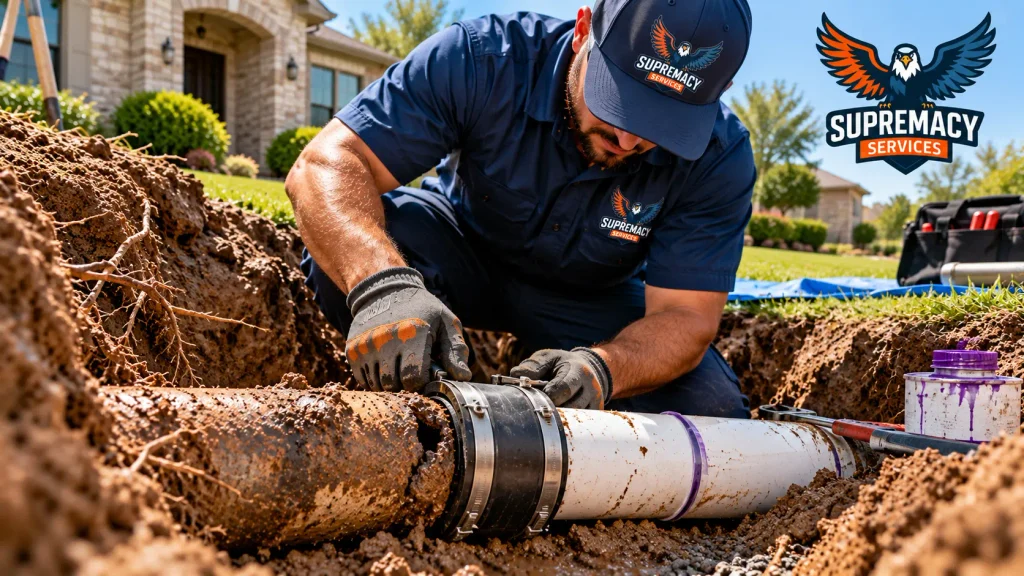
A sewer line can often be repaired when the damage is localized, the pipe retains sufficient structural integrity, and the remaining line can continue functioning reliably.
1. A Small Section of Pipe Is Cracked
A crack confined to one accessible section may be repaired by removing the damaged portion and installing new piping with appropriate connections.
The plumber should also investigate why the crack developed. A repair that ignores continuing movement or inadequate pipe support may not resolve the underlying problem.
2. One Pipe Joint Has Separated
Sewer pipes connect through joints that can deteriorate or shift.
If a single joint has become misaligned or separated, a targeted repair may restore the connection.
However, multiple displaced joints can suggest a larger alignment or ground-support problem requiring a more comprehensive solution.
3. Tree Roots Have Entered Through a Localized Opening
Tree roots can enter sewer lines through cracks or defective joints.
Professional root removal may restore wastewater flow, but clearing the roots does not necessarily seal the opening that allowed them inside.
If the pipe remains sound, a localized structural repair may address the defect. If roots have entered through multiple failing joints, broader rehabilitation or replacement may be warranted.
4. A Short Pipe Section Has Deteriorated
Sometimes most of a sewer line is in reasonable condition, but one section has become badly corroded or otherwise damaged.
Replacing only that section can be more practical than replacing the entire line.
The key is confirming that the remaining pipe has enough serviceable life to justify retaining it.
5. The Pipe Is Structurally Sound but Has a Repairable Defect
Some sewer pipes can be rehabilitated internally with approved lining systems.
However, lining is not suitable for every defect. The pipe must be evaluated for geometry, access, structural condition, cleaning requirements, and compatibility with the proposed lining method.
When to call a professional: If recurring clogs, root intrusion, or a suspected broken joint continue after drain cleaning, arrange a sewer camera inspection rather than repeatedly treating the symptoms.
For homeowners in Dallas and the surrounding Metroplex, Supremacy Services offers professional sewer line repair and replacement assessments to help determine which approach is appropriate.
When Does a Sewer Line Need to Be Replaced?
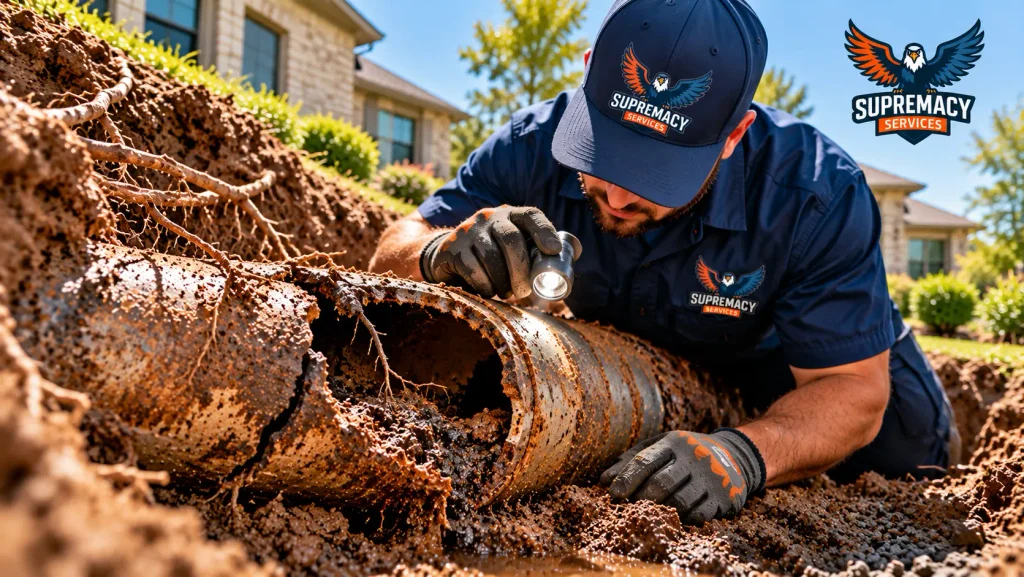
Replacement becomes more appropriate when the pipe has extensive structural damage, cannot maintain proper wastewater flow, or is likely to continue failing despite localized repairs.
1. The Sewer Pipe Has Collapsed
A collapsed sewer pipe may no longer provide an open passage for wastewater.
When a section has lost its shape or structural support, cleaning alone cannot restore the pipe.
The damaged section generally needs replacement or another engineered solution suitable for the actual condition.
A collapsed portion does not automatically require replacing every foot of sewer line. The plumber should determine whether the failure is isolated or part of a larger pattern.
2. Multiple Sections Are Damaged
One cracked joint is different from a line containing numerous cracks, separations, and deteriorated sections.
When several areas require repair, the combined cost and disruption of multiple spot repairs may approach or exceed the value of replacing a longer section.
3. The Pipe Has Extensive Corrosion or Deterioration
Older metal sewer pipes may deteriorate internally over time.
If a camera inspection reveals extensive corrosion, weakened walls, or loss of structural integrity, patching one defect may leave other weak sections in place.
The decision should depend on actual pipe condition rather than age alone.
4. The Sewer Line Has a Serious Belly or Slope Problem
A sewer belly is a low section of pipe where wastewater and solids can accumulate because the line no longer maintains its intended slope.
Minor irregularities do not always require replacement. But a pronounced belly that repeatedly traps waste may need excavation, regrading, and replacement of the affected section.
A lining system generally follows the existing pipe alignment, so it cannot be assumed to correct an improper slope.
5. Repairs Keep Failing
If the same sewer line repeatedly develops problems after properly completed repairs, the remaining pipe may no longer be a reliable candidate for isolated fixes.
Before approving full replacement, request a current inspection showing where failures are occurring and why another spot repair would be insufficient.
6. The Existing Pipe Cannot Be Reliably Rehabilitated
Some pipes have severe deformation, large missing sections, extensive offsets, or other conditions that make certain trenchless lining methods unsuitable.
In those situations, a partial or full replacement may be necessary.
The EPA identifies conventional excavation and pipe bursting among the available lateral replacement techniques, while emphasizing that method suitability depends on the pipe and site conditions.
What Are the Warning Signs That Your Sewer Line May Need Replacement?
Recurring sewage backups, multiple slow drains, persistent sewer odors, and repeated blockages can indicate a serious sewer problem. However, symptoms alone cannot tell you whether repair or replacement is necessary.
Pay attention to the following:
- Multiple sinks, showers, or toilets draining slowly at the same time.
- Sewage backing up through a shower, tub, or floor drain.
- Gurgling sounds when other fixtures are used.
- Recurring clogs shortly after professional cleaning.
- Persistent sewage odors inside or outside the home.
- Wet, sunken, or foul-smelling areas in the yard.
- Visible roots, displaced joints, deterioration, or collapse during a camera inspection.
These symptoms can have different causes. For example, one slow bathroom sink may simply have a localized blockage, while several fixtures backing up together can indicate a restriction farther downstream.
For a more detailed explanation, read our guide to the 10 warning signs of a damaged sewer line.
Does a Sewer Backup Always Mean the Pipe Is Broken?
No. A sewer backup can result from grease accumulation, foreign objects, root intrusion, or other blockages without complete structural failure.
A plumber may be able to clear the obstruction and confirm that the pipe remains serviceable.
If backups recur, further investigation is important because cleaning may only provide temporary relief when structural defects remain.
What Are the Different Sewer Repair and Replacement Methods?
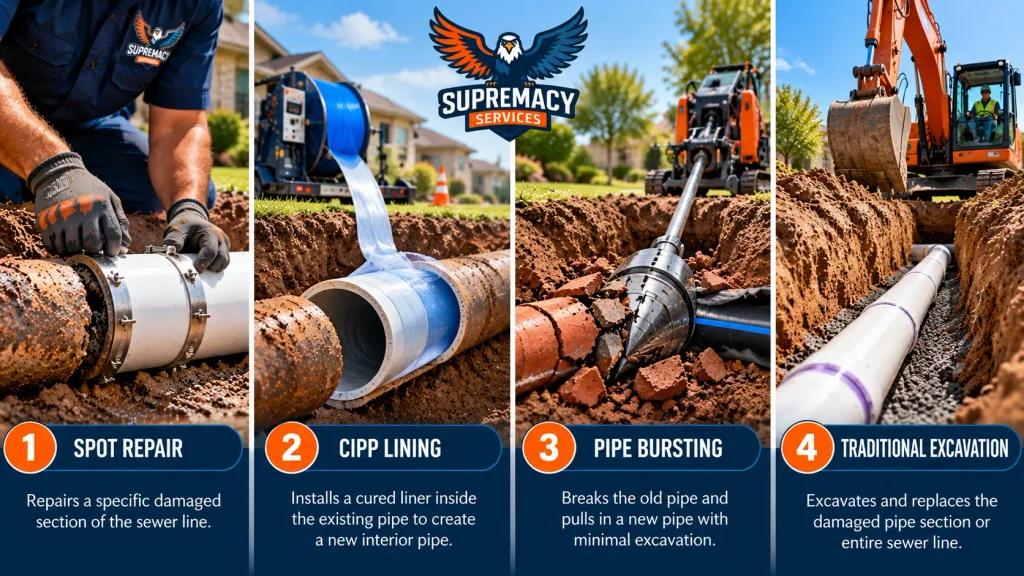
Several methods are available, ranging from targeted excavation to trenchless rehabilitation. The best method depends on the damage rather than which technology sounds most convenient.
1. Spot Repair
A plumber excavates a limited area, removes the damaged pipe section, and installs replacement piping with suitable connections. Best for localized defects when the surrounding pipe remains sound.
2. Cured-in-Place Pipe (CIPP) Lining
A liner is installed inside a suitable existing pipe and cured to create a new interior pipe structure. This can reduce excavation, but the host pipe must meet the method’s requirements.
3. Pipe Bursting
Specialized equipment breaks or splits the old pipe while pulling new piping through its alignment. Access pits are still generally required, and nearby utilities and pipe geometry affect suitability.
4. Traditional Excavation and Replacement
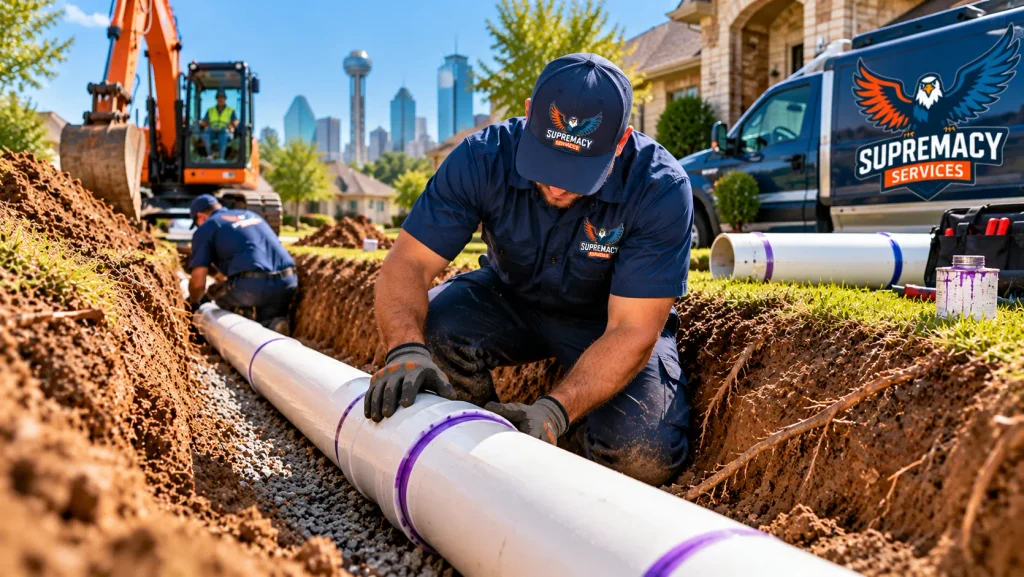
The damaged sewer is exposed, removed, and replaced. Excavation may be necessary for severe offsets, slope correction, complex connections, or other conditions that trenchless methods cannot adequately address.
Is Trenchless Sewer Repair Always Better?
No. Trenchless methods can reduce disruption, particularly when a sewer runs beneath a driveway, patio, or established landscaping.
However, they are not universally appropriate. A pipe with significant alignment problems, severe deformation, or inadequate access may require conventional excavation.
A proper recommendation should compare the feasibility, total cost, expected performance, and site restoration requirements of each suitable method.
Sewer Line Repair vs. Replacement Cost in Dallas: What Affects the Price?
A localized sewer repair will often cost less than replacing a long section of underground pipe, but the actual price depends on the work required.
There is no reliable universal price for every Dallas sewer line because two properties with similar symptoms can have very different underground conditions.
Instead of presenting unsupported price ranges, the following table shows what influences an estimate.
| Cost factor | Why it matters |
|---|---|
| Length of damaged pipe | Longer replacement sections require more material and labor |
| Pipe depth | Deeper excavation can increase complexity |
| Damage severity | Collapse and major misalignment may limit repair options |
| Existing pipe material | Material condition affects removal and connection methods |
| Access | Pipes beneath slabs, driveways, or structures can be harder to reach |
| Repair method | Spot repair, lining, pipe bursting, and excavation have different costs |
| Landscaping and hardscape | Restoration can add significant work |
| Permits and inspections | Requirements depend on the municipality and scope |
| Nearby utilities | Utility conflicts may require additional precautions |
| Multiple defects | Several repairs may make replacement more economical |
Is Repair Always the Cheaper Option?
Not necessarily.
Consider two hypothetical situations.
Scenario A: One damaged joint
A sewer line is otherwise in good condition, but one accessible joint has separated. A targeted repair may resolve the issue without disturbing the rest of the line.
Scenario B: Multiple failing sections
An older sewer has numerous deteriorated joints, recurring blockages, and structural defects across much of its length. Repairing each problem separately could become expensive without providing dependable long-term performance.
The second situation may justify replacement even when individual spot repairs appear cheaper initially.
What Should Be Included in a Sewer Repair Quote?
Before accepting an estimate, ask for a written scope covering the damaged section, proposed repair method, materials, excavation, permits, inspections, backfilling, surface restoration, and warranty terms.
Clarify which items are included and which could create additional charges.
Considering a major sewer repair? Ask Supremacy Services about Dallas sewer repair and replacement options so you can compare an appropriate repair with a longer-term replacement solution.
How Do Plumbers Determine Whether to Repair or Replace a Sewer Line?
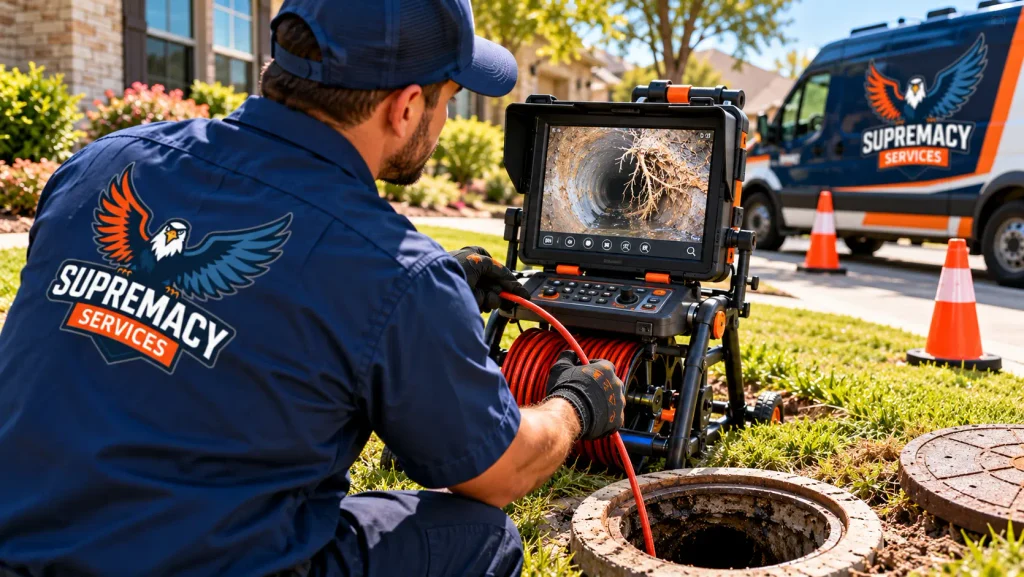
A professional should determine the location, cause, and extent of damage before recommending major sewer work.
A typical evaluation includes the following steps.
Step 1: Review the symptoms
The plumber asks about backups, recurring clogs, affected fixtures, and previous repair history.
Step 2: Inspect the sewer with a camera
The technician checks for cracks, roots, offsets, deformation, deterioration, and blockages. Cleaning may be needed first to obtain a usable view.
Step 3: Locate and assess the defects
The technician identifies damaged sections and evaluates whether the problem is isolated or widespread.
Step 4: Compare suitable solutions
The plumber considers spot repair, partial replacement, lining, pipe bursting, or excavation based on the findings.
Step 5: Explain the recommendation and quote
The homeowner receives a proposed scope of work and can ask why the selected method is preferable to the alternatives.
Questions to Ask Before Approving Sewer Replacement
A homeowner should understand the reason for replacement before committing to the work.
Ask the plumber:
- Can I see the camera footage showing the damage?
- Is the problem limited to one section or spread throughout the line?
- Can the damaged section be repaired without replacing the entire sewer?
- Is trenchless rehabilitation or replacement technically suitable?
- Will the proposed method correct the underlying cause?
- What restoration, permits, and inspections are included?
- What warranty applies, and what are its exclusions?
If the explanation is unclear, requesting a second professional opinion can be reasonable for a major project.
What Should Dallas and DFW Homeowners Consider?
North Texas properties can present different sewer repair challenges depending on construction age, soil conditions, landscaping, and where the pipe is located.
Expansive Soil and Ground Movement
Some North Texas soils contain expansive clay that changes volume as moisture conditions change.
Ground movement can place stress on buried pipes and connections. However, soil conditions alone do not prove the cause of a sewer failure.
A plumber should evaluate the pipe’s actual condition and alignment rather than attributing every damaged sewer to shifting soil.
Older Sewer Materials
Some older Dallas-area homes have cast-iron or clay sewer piping, while other properties use different materials.
Older material does not automatically mean replacement is necessary. A well-supported pipe with limited defects may remain serviceable.
The inspection should establish whether deterioration is localized or extensive.
Trees and Landscaping
Established trees can complicate underground sewer work.
Roots may enter existing pipe defects, while excavation around large roots may affect landscaping and require additional planning.
Trenchless methods can sometimes reduce surface disturbance, but feasibility must be assessed.
Who Is Responsible for the Sewer Line?
In Dallas, the boundary between a private building lateral and the public wastewater service connection matters.
City documentation distinguishes homeowner and Dallas Water Utilities responsibilities around the property line. It is important to verify the actual location and ownership of a defect before authorizing work, particularly near the street or utility easement.
Other DFW municipalities can have different policies. For example, Carrollton publishes a specific sewer-stoppage policy addressing private lateral ownership and certain repairs in the public right-of-way.
Permits and Licensed Plumbing Work
Sewer replacement may require permits and inspections, depending on the scope and municipality.
Dallas Water Utilities’ published procedures include sewer-lateral permit and connection-inspection requirements.
Texas plumbing licensing is administered by the Texas State Board of Plumbing Examiners. Homeowners can use its licensed plumber lookup when verifying a plumbing professional.
Can You Repair a Sewer Line Yourself?
Homeowners can investigate simple fixture-level clogs and adopt preventive habits, but underground sewer repair is generally not a suitable DIY project.
The work may involve wastewater exposure, buried utilities, excavation hazards, structural pipe connections, and local permitting requirements.
You can safely take some preliminary steps:
- Stop using fixtures if sewage is actively backing up.
- Avoid flushing additional waste into a blocked system.
- Keep children and pets away from contaminated areas.
- Record when the symptoms occur and which fixtures are affected.
- Arrange a professional evaluation when problems are widespread or recurring.
Avoid digging toward a suspected sewer line or attempting structural repairs without the necessary expertise and authorization.
Also avoid repeatedly using chemical drain cleaners when the underlying problem is unknown. They will not restore a collapsed pipe or fix a separated joint.
How Can You Prevent Future Sewer Line Problems?
Not every sewer failure is preventable, but sensible maintenance can reduce avoidable blockages and help identify developing problems.
Keep Grease and Food Waste Out of Drains
Do not pour cooking oil, grease, or fats into the sink. These materials can accumulate inside drainage systems.
Flush Only Toilet Paper and Human Waste
Wipes, hygiene products, paper towels, and similar materials can contribute to sewer blockages—even when marketed as flushable.
Address Recurring Clogs Promptly
A blockage that repeatedly returns may indicate roots, pipe deterioration, a low section, or another unresolved condition.
Be Careful With Tree Planting
Consider the location of underground sewer lines before planting trees with extensive root systems near buried plumbing.
Keep Inspection Records
If your sewer line has been inspected or repaired, retain camera footage, invoices, repair locations, and material information.
These records can help future plumbers identify recurring problems and avoid unnecessary repeat work.
Schedule Inspections When Symptoms Justify Them
Not every homeowner needs frequent sewer camera inspections. They are particularly useful when buying a property with uncertain plumbing history, investigating recurring backups, or evaluating known sewer damage.
Frequently Asked Questions
1. Is it better to repair or replace a sewer line?
Repair is often preferable for isolated damage when the remaining pipe is sound. Replacement may be more appropriate for extensive deterioration, repeated failures, collapse, or significant alignment problems. A camera inspection helps establish which option is justified.
2. Can you replace only part of a sewer line?
Yes. Partial sewer line replacement is possible when damage is limited to a defined section. The remaining pipe must be in suitable condition, and the new section must connect correctly to the existing system.
3. How do I know if my sewer pipe is beyond repair?
Extensive corrosion, multiple collapsed sections, severe deformation, widespread joint failure, or recurring structural problems may indicate that replacement is more practical. A professional inspection is needed to confirm the extent of damage.
4. Can trenchless sewer repair fix a collapsed pipe?
Not every trenchless method can. Lining may be unsuitable when a pipe has collapsed or lost its required shape. Pipe bursting may be an option for certain replacement projects, but site conditions, access, and existing pipe geometry must be evaluated.
5. How long does sewer line replacement take?
The timeline depends on the length and depth of the pipe, access, excavation requirements, permits, inspections, weather, and restoration. A short accessible section may take much less time than a complex replacement beneath hardscaping or structures.
6. Does homeowners insurance cover sewer line replacement in Texas?
Coverage depends on the policy and the cause of damage. Ordinary deterioration and maintenance-related failures are often excluded, while certain sudden damage or resulting losses may be treated differently. Review your policy and ask your insurer about service-line coverage or endorsements.
7. Will sewer line replacement damage my yard?
Traditional excavation can disturb lawns, landscaping, and hardscaping. Some trenchless techniques reduce surface disruption, although access pits and restoration may still be necessary.
8. Should I replace an old cast-iron sewer line?
Not solely because it is old. Replacement becomes more compelling when inspection reveals extensive corrosion, structural deterioration, repeated failures, or other conditions that make continued repairs unreliable.
9. Can tree roots be removed without replacing the sewer line?
Sometimes. Professional root removal may restore flow, but the opening that allowed roots to enter may remain. A camera inspection can determine whether cleaning, structural repair, or replacement is appropriate.
Get the Right Sewer Solution for Your Dallas Home
A damaged sewer line does not always require complete replacement. In some cases, a targeted repair can restore reliable wastewater flow. In others, replacing a deteriorated section or an entire sewer run may offer better long-term value.
The important decision is not simply which option costs less today. It is which solution properly addresses the damage without leaving avoidable problems behind.
Supremacy Services provides sewer line repair and replacement assessments throughout Dallas and the DFW Metroplex, including evaluation of traditional and trenchless options.
Explore Supremacy Services’ sewer repair and replacement solutions to request an assessment and understand the options for your property.

