

Yes, a slab leak can cause a sudden increase in your water bill, sometimes before you notice any visible water damage. When a pressurized water pipe beneath your home’s concrete foundation begins leaking, water can escape continuously—even when your faucets, showers, and appliances are turned off.
For Dallas and North Texas homeowners, an unexpectedly high water bill may be one of the earliest clues that something is wrong beneath the foundation.
However, not every water bill increase means you have a slab leak. Running toilets, irrigation problems, underground service-line leaks, seasonal water use, and billing adjustments can produce similar symptoms.
Understanding the differences can help you identify a potential problem before unnecessary water loss turns into expensive property damage.
Table of Contents
- How Does a Slab Leak Increase Your Water Bill?
- How Much Water Can a Slab Leak Waste?
- What Are the Warning Signs?
- How to Check for a Hidden Water Leak
- Could Something Else Be Causing Your High Bill?
- Why Slab Leaks Can Occur in North Texas
- How Professionals Detect Slab Leaks
- Repair Options and Costs
- Can Dallas Homeowners Get a Water Bill Adjustment?
- How to Prevent Future Water Loss
- Frequently Asked Questions
How Does a Slab Leak Increase Your Water Bill?
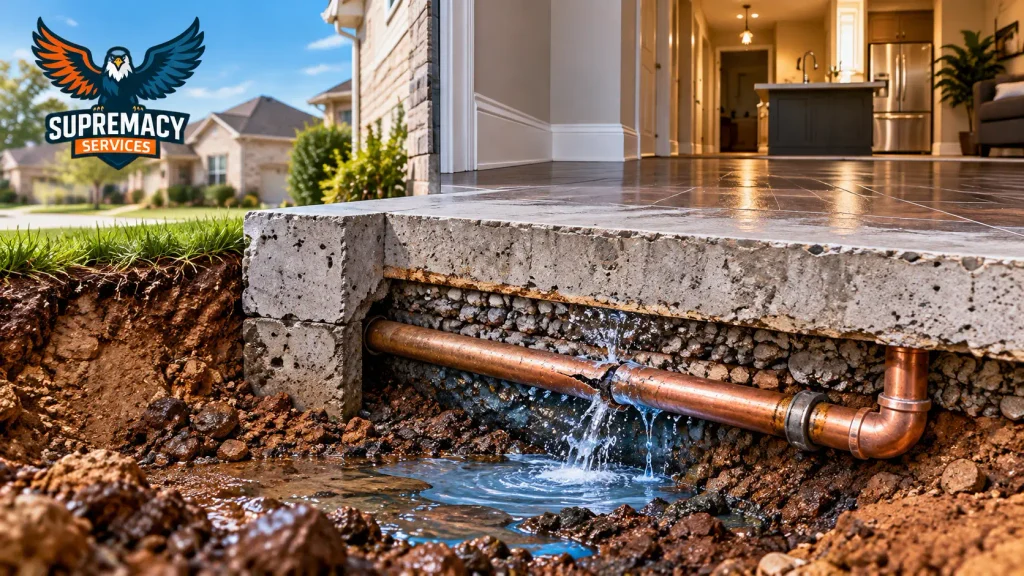
A slab leak increases your water bill when water escapes from a pressurized supply pipe located beneath or within your home’s concrete foundation.
Because the water passes through your utility meter before escaping, it generally counts toward your billed consumption—even though nobody in the house is using it.
Why the leak may continue around the clock
Unlike a dripping faucet that you can see or hear, a slab leak may remain hidden beneath flooring, soil, or concrete.
If the damaged pipe remains pressurized, water may escape continuously.
The result can be:
- Higher-than-normal monthly water consumption.
- A water meter that registers usage when fixtures are off.
- Unexpected increases in utility charges.
- Moisture beneath flooring or near the foundation.
- Gradual damage to surrounding building materials.
A small leak may produce a gradual increase in usage. A larger pipe failure can cause a much more noticeable spike.
Why your water bill may increase before other symptoms appear
Water from a leaking pipe does not necessarily rise through the floor immediately.
Depending on the location of the leak, soil conditions, foundation construction, and drainage pathways, escaping water may travel beneath the slab or into surrounding soil.
This means your water bill could provide the first warning, even when your flooring appears completely dry.
When to consider professional help: If your water meter shows unexplained usage after ordinary plumbing fixtures and irrigation have been checked, professional leak detection may help identify whether the problem is beneath your foundation.
How Much Water Can a Slab Leak Waste?
The amount of water lost depends on the size of the damaged opening, water pressure, and how long the leak remains active.
Even a relatively modest continuous leak can waste thousands of gallons in one billing cycle.
Example: Water loss from a continuous leak
The following calculations are illustrative, not measurements of a particular slab leak.
| Continuous leak rate | Water lost per day | Water lost in 30 days |
|---|---|---|
| 0.1 gallon/minute | 144 gallons | 4,320 gallons |
| 0.25 gallon/minute | 360 gallons | 10,800 gallons |
| 0.5 gallon/minute | 720 gallons | 21,600 gallons |
| 1 gallon/minute | 1,440 gallons | 43,200 gallons |
These examples show why a hidden plumbing leak can significantly affect household water consumption.
The actual increase in your bill depends on your utility’s rate structure, billing period, and other applicable charges.
The U.S. Environmental Protection Agency confirms that undetected household leaks can waste substantial amounts of water and increase utility bills.
Why a high bill doesn’t tell you the size of the leak
A large water bill does not automatically mean you have a large pipe rupture.
For example, a relatively small leak operating continuously for several weeks can waste more water than a larger leak discovered and repaired quickly.
The most useful information is often the change in water consumption compared with your household’s normal usage.
What Are the Warning Signs of a Slab Leak Besides a High Water Bill?
A sudden increase in water consumption becomes more concerning when it occurs alongside other signs of a hidden plumbing leak.
1. Your water meter moves when no water is being used
If the meter continues registering consumption after all water-using fixtures and appliances are off, water may be escaping somewhere in your plumbing system.
This indicates possible water loss, but it does not prove the leak is beneath the slab.
2. Warm or unusually damp areas appear on your floor
A leaking hot-water supply pipe can sometimes produce a warm spot on tile or other flooring.
Other leaks may cause damp carpet, moisture beneath flooring, or unexplained discoloration.
Not every slab leak produces these symptoms.
3. You hear running water when everything is turned off
Hissing, rushing, or running-water sounds may indicate a pressurized plumbing leak.
These sounds can be difficult to locate because water and sound travel through pipes, concrete, and building materials.
4. Water pressure suddenly decreases
A significant supply-line leak can affect water pressure at fixtures.
However, pressure problems may also result from faulty valves, municipal supply issues, or other plumbing defects.
5. Cracks or flooring changes appear
Persistent moisture beneath or around a foundation may contribute to changes in surrounding materials.
Warning signs can include loose flooring, damaged baseboards, or new moisture-related deterioration.
Foundation cracks alone are not reliable evidence of a slab leak. Expansive soil movement, structural settling, and other causes must also be considered.
6. You notice an unexplained musty smell
Moisture trapped beneath flooring or within nearby building materials may create conditions for microbial growth.
A persistent musty odor deserves investigation, especially when combined with rising water consumption.
Quick homeowner checklist
Signs you’ve noticed
0 of 6Unexpected increase in billed water consumptionMeter registers usage when all fixtures are offWarm or damp flooringUnexplained running-water soundsLower water pressureMusty odors or moisture damage
This checklist helps organize observations. It cannot diagnose a slab leak or determine severity. Copy my observations
If you notice several of these symptoms, particularly ongoing water consumption when fixtures are off, arrange a plumbing inspection rather than waiting for the next utility bill.
How Can You Check for a Hidden Water Leak Before Calling a Plumber?
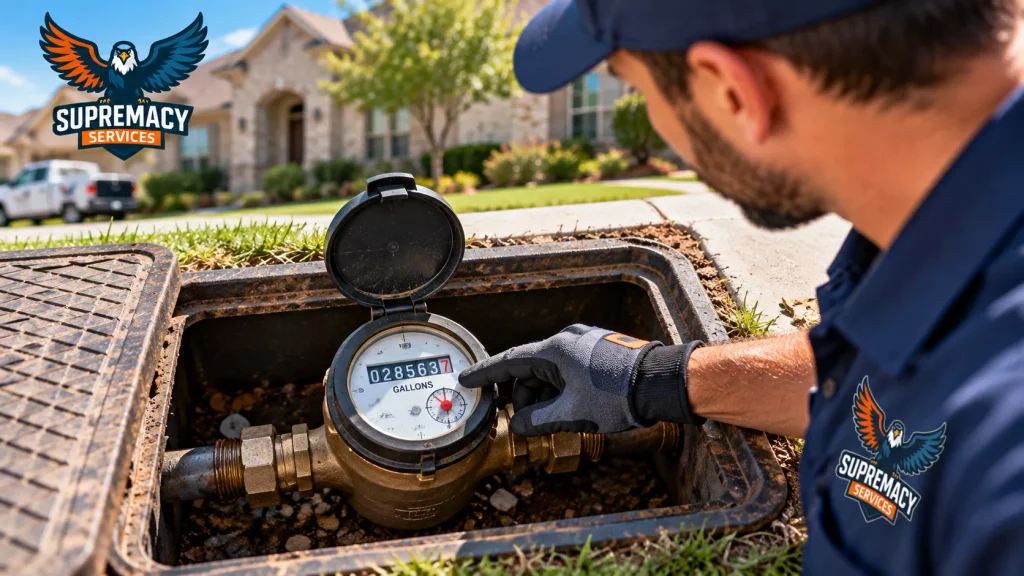
You can perform several basic checks without breaking concrete, removing flooring, or opening plumbing lines.
These steps help establish whether water is being consumed unexpectedly. They cannot, by themselves, confirm the location of a leak.
Step 1: Compare your recent water bills
Look at your water consumption over the last several billing cycles.
Pay particular attention to:
- Total water usage, not just the amount due.
- Changes compared with the same month last year.
- The length of each billing period.
- Recent increases in lawn watering or household occupancy.
- Whether the meter reading was actual or estimated.
Dallas Water Utilities explains that meter readings are sometimes estimated when meters cannot be accessed, with corrections made on subsequent bills.
Therefore, a sudden billing increase is a reason to investigate—not proof of a hidden pipe leak.
Step 2: Turn off water-using fixtures and appliances
Make sure nobody is using water inside or outside the house.
Check faucets, showers, washing machines, dishwashers, toilets, outdoor hose connections, and automatic irrigation systems.
Remember that appliances and irrigation controllers may activate without anyone manually turning them on.
Step 3: Check your water meter
Locate the water meter, which is commonly installed in a meter box near the street or property boundary.
Observe the reading or leak indicator if your meter has one.
For a more reliable comparison, record the reading and check it again after a period with no water use.
The EPA recommends comparing meter readings before and after two hours without water consumption. A changed reading suggests a possible leak.
Do not tamper with utility-owned equipment or force open a damaged meter box.
Step 4: Check your toilets for silent leaks
A leaking toilet can waste water without making an obvious sound.
Add a few drops of food coloring to the toilet tank and wait approximately 10 minutes without flushing.
If color appears in the bowl, water is escaping from the tank into the bowl.
This EPA-recommended test can help identify a faulty flapper or flush-valve seal.

Step 5: Inspect irrigation and outdoor plumbing
Look for unusually wet soil, leaking sprinkler heads, damaged irrigation valves, and water accumulating around outdoor plumbing connections.
Outdoor leaks can produce high water bills without creating any symptoms inside the house.
Step 6: Arrange professional testing if consumption remains unexplained
If the meter continues registering usage and ordinary causes have been ruled out, a plumber can test different parts of the water supply system.
Professional testing may distinguish a leak beneath the foundation from a damaged underground service line or another concealed plumbing problem.
If your Dallas home’s water meter continues moving with every fixture turned off, contact Supremacy Services to arrange professional leak detection before additional water is wasted.
Could Something Other Than a Slab Leak Be Causing Your High Water Bill?
Yes. Several common plumbing and household conditions can increase water consumption without involving the foundation.
| Possible cause | Typical clue | What to check |
|---|---|---|
| Slab leak | Persistent unexplained water usage, possibly with warm or damp flooring | Professional supply-line testing |
| Running toilet | Silent tank-to-bowl water loss | Food-coloring test |
| Irrigation leak | Wet landscaping or unexpected sprinkler activity | Irrigation valves and schedule |
| Underground service-line leak | Wet yard or meter movement without indoor symptoms | Service-line isolation testing |
| Increased household usage | More occupants, guests, or appliance use | Billing history |
| Seasonal watering | Higher outdoor use during hot weather | Irrigation records |
| Estimated meter reading | Sudden correction after an estimated bill | Utility billing details |
Slab leak vs. underground water line leak
A slab leak generally involves a pipe located beneath or within the building’s concrete foundation.
An underground service-line leak usually involves the pipe supplying the house from the meter or other supply connection, outside the building footprint.
Both can increase water consumption, and both may remain hidden.
The repair methods can differ significantly, so identifying the correct pipe location matters before excavation or concrete removal.
What if your bill is high but the meter is not moving?
An inactive meter during a brief observation does not completely rule out intermittent leaks.
Check for irrigation schedules, appliances that cycle periodically, and changes in billing periods.
If current consumption appears normal, contact your water provider to review meter readings and billing history.
Why Can Slab Leaks Occur in North Texas Homes?
Many homes throughout Dallas, Plano, Frisco, Richardson, Garland, and surrounding communities are constructed on concrete slab foundations.
Several conditions can contribute to plumbing failures beneath these structures.
Expansive soil and foundation movement
Parts of North Texas contain clay-rich soils that change volume as moisture conditions change.
Soil movement can affect foundations and the plumbing connected to them.
However, soil movement is only one potential contributor. A plumber or foundation professional must assess the specific property before attributing a leak to foundation movement.
Aging or deteriorating pipes
Older plumbing materials may develop leaks due to corrosion, wear, or deterioration at joints and connections.
The condition of the pipe, rather than the age of the house alone, helps determine the appropriate repair.
Pipe movement and installation conditions
Poor pipe support, mechanical stress, abrasion, and installation defects can contribute to premature pipe damage.
A concealed pipe may develop a leak long before visible symptoms reach the surface.
Seasonal changes in water consumption
North Texas summers can increase outdoor water use, particularly for lawns and landscaping.
This can make it harder to distinguish ordinary seasonal consumption from water wasted by a hidden leak.
Comparing usage with similar months in previous years can provide a more meaningful baseline than comparing summer bills with winter bills.
How Do Plumbers Detect a Slab Leak Without Breaking Concrete?

Professional plumbers can often investigate a suspected slab leak using non-destructive testing methods before recommending access to the damaged pipe.
The goal is to establish whether a leak exists, identify the affected plumbing line, and narrow down its location.
Common detection methods
Pressure testing: A plumber isolates appropriate portions of the supply system and checks for pressure loss under controlled conditions.
Acoustic leak detection: Specialized listening equipment may help identify sounds associated with escaping pressurized water.
Thermal imaging: Temperature differences may help locate certain hot-water leaks, although thermal imaging alone does not establish the exact pipe location.
Pipe tracing and isolation: Identifying pipe routes and isolating plumbing branches can help determine which part of the system is leaking.
No single technique is appropriate for every house.
The combination of methods depends on the plumbing layout, pipe material, leak characteristics, and accessibility.
What should homeowners expect during an inspection?
A professional evaluation may include reviewing your symptoms and utility history, inspecting visible plumbing, testing water pressure, and investigating suspected concealed lines.
After identifying the likely problem, the plumber should explain the findings, available repair approaches, and what additional access may be necessary.
Where practical, ask for documentation of the diagnosis and an itemized repair estimate.
What Happens If a Slab Leak Is Confirmed?
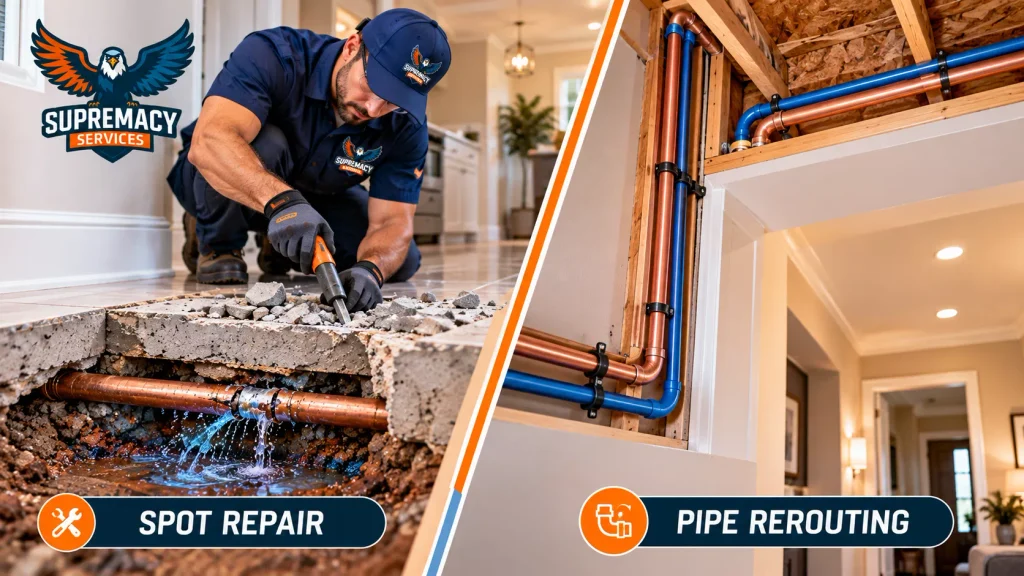
The appropriate repair depends on the pipe’s condition, the leak location, accessibility, and whether the failure is isolated or part of a larger plumbing problem.
Common slab leak repair options
| Repair approach | When it may be considered | Main consideration |
|---|---|---|
| Spot repair | A localized leak in otherwise serviceable piping | May require opening concrete or flooring |
| Pipe rerouting | An accessible alternative route can bypass the damaged section | May avoid extensive slab excavation |
| Partial repiping | Several damaged sections or recurring problems | Addresses more than one weak section |
| Broader repiping | Widespread pipe deterioration | Greater project scope and disruption |
How much does slab leak repair cost in Dallas?
There is no reliable single price for every slab leak repair.
The final cost depends on the detection work required, pipe location and material, repair method, access difficulty, extent of water damage, and restoration of affected surfaces.
A localized repair may involve less new piping but require concrete access. Rerouting may reduce slab disruption while requiring additional plumbing installation through walls or ceilings.
Rather than relying on an unverified local price range, homeowners should request an itemized estimate explaining detection, plumbing work, access, and restoration responsibilities.
If testing confirms a concealed supply-line leak, ask Supremacy Services about available slab leak repair options and whether spot repair or pipe rerouting makes sense for your property.
Can Dallas Homeowners Get a Water Bill Adjustment After a Slab Leak?
Possibly. Dallas Water Utilities has a leak adjustment process for qualifying customers who experience substantial water consumption increases because of a leak.
Under the city’s published leak adjustment request form, customers must complete repairs before an adjustment can be considered.
The form states that:
- Requests should be submitted within 90 days of the repair date.
- A repair receipt or paid-in-full invoice is required.
- An approved adjustment can cover a maximum of three months.
- Only one adjustment is available per 12-month period.
- Approval is not guaranteed.
The city also states that customers remain responsible for repair costs and water loss, and that submitting a request does not suspend normal bill payment obligations.
What to do after repairing a slab leak
- Keep the plumber’s invoice and repair documentation.
- Record the date the repair was completed.
- Save copies of the unusually high water bills.
- Review Dallas Water Utilities’ current adjustment requirements.
- Submit the appropriate documentation within the stated deadline.
Homeowners in Plano, Frisco, Irving, McKinney, and other DFW communities should check with their own water utility, because adjustment policies vary.
How Can You Prevent Unexpected Water Bills From Hidden Leaks?
Not every slab leak can be prevented, but homeowners can reduce the risk of prolonged water loss by monitoring consumption and responding quickly to unusual changes.
Practical prevention measures
- Review water consumption every month.
- Compare usage with the same season in previous years.
- Investigate unexpected meter activity.
- Repair leaking fixtures promptly.
- Check irrigation systems for hidden water loss.
- Learn where your home’s main water shutoff valve is located.
- Consider a water monitoring or leak detection device.
- Arrange professional evaluation when unexplained water use persists.
The EPA notes that leak detection and flow-monitoring devices can identify irregular water use patterns, alert homeowners to leaks, and sometimes support automatic water shutoff.
These devices can provide earlier warnings, but they do not guarantee that every underground leak will be detected.
What should you do if you suspect an active slab leak?
If water is escaping rapidly or causing visible damage, shut off the private water supply valve if it is safe and accessible.
Avoid disturbing electrical equipment near standing water.
For suspected leaks involving utility-owned infrastructure, contact the appropriate water utility.
Dallas Water Utilities provides emergency assistance through 311 within Dallas or 214-670-3111 from outside the city limits.
Frequently Asked Questions About Slab Leaks and High Water Bills
1. Can a small slab leak cause a high water bill?
Yes. Even a relatively small leak can waste thousands of gallons if water escapes continuously for several weeks. The total loss depends on the leak rate and how long the problem remains undetected.
2. Will my water meter move if I have a slab leak?
Usually, an active leak in a metered supply line will register water consumption. However, meter movement alone cannot determine whether the leak is beneath the slab, outdoors, or elsewhere in the plumbing system.
3. Can you have a slab leak without seeing water?
Yes. Water can escape beneath the foundation without immediately reaching the floor surface. Unexplained meter activity or rising consumption may appear before visible moisture.
4. How quickly can a slab leak increase my water bill?
A substantial leak can increase consumption immediately, but the higher charge may not appear until the next billing statement. Smaller leaks may produce a gradual increase over several billing periods.
5. Can a running toilet cause the same symptoms as a slab leak?
Yes. A running toilet can waste substantial water without creating visible floor damage. A toilet dye test is a useful first step before assuming the leak is beneath your foundation.
6. Can a slab leak affect water pressure?
Yes, a sufficiently large supply-line leak can reduce pressure at fixtures. However, low water pressure has several other possible causes and is not a definitive slab leak symptom.
7. Does homeowners insurance cover a slab leak and the high water bill?
Coverage depends on the policy, cause of damage, and applicable exclusions. Some policies may cover certain resulting water damage while excluding pipe repairs or increased utility charges. Ask your insurer to review the specific circumstances and policy language.
8. Should I turn off my water if I suspect a slab leak?
If an active leak is causing significant water loss or damage, turning off your private water supply valve may help limit further damage. Do so only when the valve is safely accessible, and arrange professional evaluation.
9. Can Dallas Water Utilities reduce my bill after a slab leak?
Qualifying customers may request a leak adjustment after repairs are completed. Approval is not automatic, and supporting documentation and deadlines apply. Check the utility’s current requirements before submitting a request.
Don’t Ignore an Unexplained Increase in Your Water Bill
A sudden water bill increase does not automatically mean your home has a slab leak. But if your consumption remains unusually high, your meter registers water use when everything is off, or you notice moisture-related warning signs, the problem deserves attention.
Identifying a hidden leak early can help reduce unnecessary water loss and limit potential damage to flooring, building materials, and the surrounding foundation area.
For homeowners throughout Dallas and the DFW Metroplex, Supremacy Services can be contacted about professional plumbing evaluation, slab leak detection, and appropriate repair options.
Visit Supremacy Services to learn more about available plumbing services and request assistance.

