Cast iron sewer pipes in older Dallas homes can develop corrosion, heavy internal scaling, cracks, leaking joints, and recurring blockages as they age. These problems may cause slow drains, sewer odors, wastewater backups, or hidden leaks beneath a home’s foundation.
However, having cast iron pipes does not automatically mean they need to be replaced. Their condition depends on age, installation quality, corrosion exposure, past repairs, and whether the pipe still has enough structural integrity to function safely.
For homeowners in Dallas and the surrounding DFW Metroplex, understanding the warning signs and arranging an appropriate sewer inspection can help distinguish an ordinary clog from a deteriorating pipe.
Table of Contents
- What are cast iron sewer pipes?
- Why do cast iron sewer pipes deteriorate?
- Common problems in older Dallas homes
- Warning signs of failing cast iron pipes
- How long do cast iron sewer pipes last?
- How plumbers inspect old cast iron pipes
- Repair vs. replacement options
- What affects repair and replacement costs?
- Dallas and North Texas considerations
- What homeowners can do
- Frequently asked questions
- When to contact Supremacy Services
What Are Cast Iron Sewer Pipes?
Cast iron sewer pipes are rigid metal pipes used to carry wastewater from toilets, sinks, showers, and other plumbing fixtures toward a municipal sewer connection or private wastewater system.
They were commonly installed in residential plumbing before plastic drain materials became widely adopted.
In older homes, cast iron may be present in several locations:
- Vertical drain stacks inside walls.
- Horizontal drain lines beneath floors.
- Underground building drains beneath concrete slabs.
- Sections of the sewer lateral connecting the home to the public sewer.
Cast iron was valued for its strength, durability, and sound-dampening characteristics. Its primary long-term weakness is susceptibility to corrosion.
Unlike a plastic pipe, cast iron can gradually lose material from its walls as chemical and environmental conditions affect the metal.
How cast iron differs from modern plastic sewer pipes
| Feature | Cast iron | PVC sewer pipe |
|---|---|---|
| Material | Iron-based metal | Polyvinyl chloride |
| Corrosion | Susceptible to corrosion | Does not rust |
| Weight | Heavy | Lightweight |
| Internal surface | Can become rough from corrosion | Generally remains smoother |
| Noise transmission | Good sound-dampening properties | Typically transmits more drainage noise |
| Common concern | Scaling, corrosion, wall deterioration | Joint defects, deformation, damage, or improper installation |
Both materials can fail when improperly installed or exposed to unsuitable conditions.
Why Do Cast Iron Sewer Pipes Deteriorate?
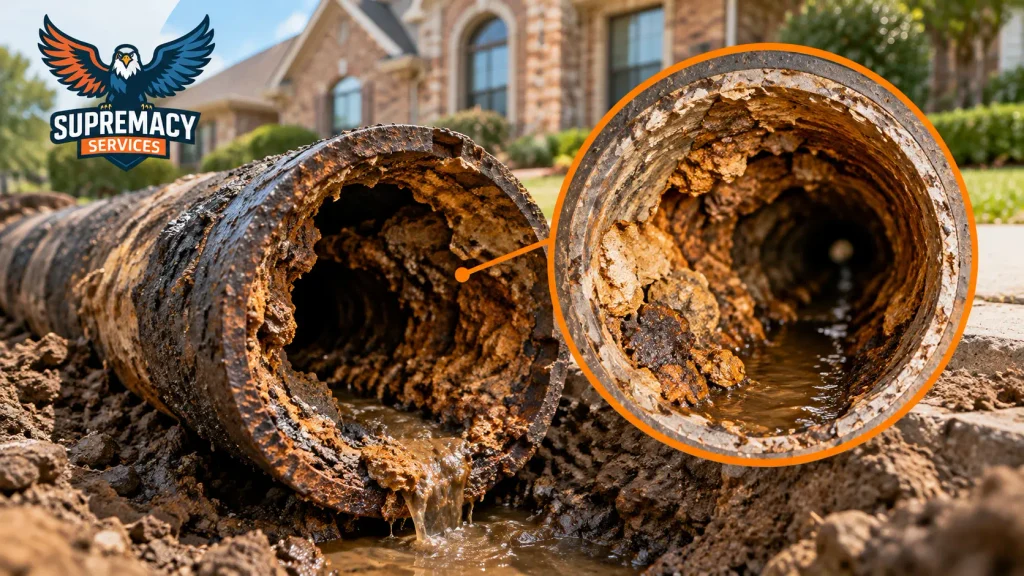
Cast iron sewer pipes deteriorate primarily because corrosion gradually changes the condition of the metal. The process may affect the inside of the pipe, its exterior, or both.
The U.S. Environmental Protection Agency identifies internal corrosion, external pitting, joint failure, and fractures among the recognized defects affecting iron-based wastewater infrastructure.
Internal corrosion from wastewater
Wastewater contains organic material, dissolved substances, and microorganisms. Under certain conditions, biological activity can produce corrosive compounds.
Hydrogen sulfide produced in wastewater environments can contribute to sulfuric acid formation where oxygen and suitable microorganisms are present. This can accelerate corrosion in susceptible sewer environments.
The severity varies with wastewater chemistry, ventilation, flow patterns, and other conditions. Not every residential sewer experiences the same exposure.
Rust buildup and internal scaling
As cast iron corrodes, deposits can form on its interior surface.
These rough deposits, sometimes called tuberculation or scaling, can reduce the usable opening and make it easier for grease, paper, and other debris to collect.
A pipe may therefore experience repeated drainage problems even without a complete collapse.
Exterior corrosion
Soil moisture, chemical conditions, and prolonged contact with corrosive environments may contribute to exterior pipe deterioration.
Underground corrosion is not necessarily visible during an internal camera inspection. This is one reason a camera image alone cannot always establish the remaining wall thickness or full structural condition.
Aging joints and connections
Older cast iron drainage systems may contain traditional bell-and-spigot joints or other connection types.
Over time, joint movement, deterioration, or changes in surrounding support can contribute to leakage and misalignment.
7 Common Problems With Cast Iron Sewer Pipes in Older Dallas Homes
The following problems may occur individually or together. A professional inspection is needed to determine which defects are actually present.
1. Internal rust and corrosion
Corrosion can gradually roughen the interior surface of a cast iron pipe.
As deposits accumulate, wastewater may flow less efficiently and solid waste may become trapped.
Common clues: recurring clogs, slow drainage, and heavy deposits observed during camera inspection.
2. Pipe wall thinning and deterioration
Corrosion does more than create surface rust. In advanced cases, it can reduce the amount of sound metal remaining in the pipe wall.
Severe deterioration may eventually produce holes, fractures, or loss of structural strength.
An important distinction is that a pipe may look obstructed because of deposits, while another pipe may be physically weakened beneath those deposits.
The appropriate treatment can differ significantly.
3. Cracks and longitudinal splits
Cast iron is strong but relatively brittle compared with many modern plastic piping materials.
Changes in support, external loading, corrosion, and other stresses can contribute to fractures.
A crack may allow wastewater to escape or soil and roots to enter.
4. Recurring sewer blockages
Aging cast iron may develop a rough, restricted interior that repeatedly catches waste.
A plumber may clear the immediate obstruction, but the underlying problem can remain if corrosion deposits or damaged pipe walls continue to interfere with flow.
This is why repeated drain cleaning without identifying the cause may provide only temporary relief.
5. Leaking pipe joints
Damaged or misaligned joints can allow wastewater to escape into surrounding soil or building materials.
Depending on the location, this may contribute to odors, moisture damage, or ground movement around the line.
6. Tree root intrusion
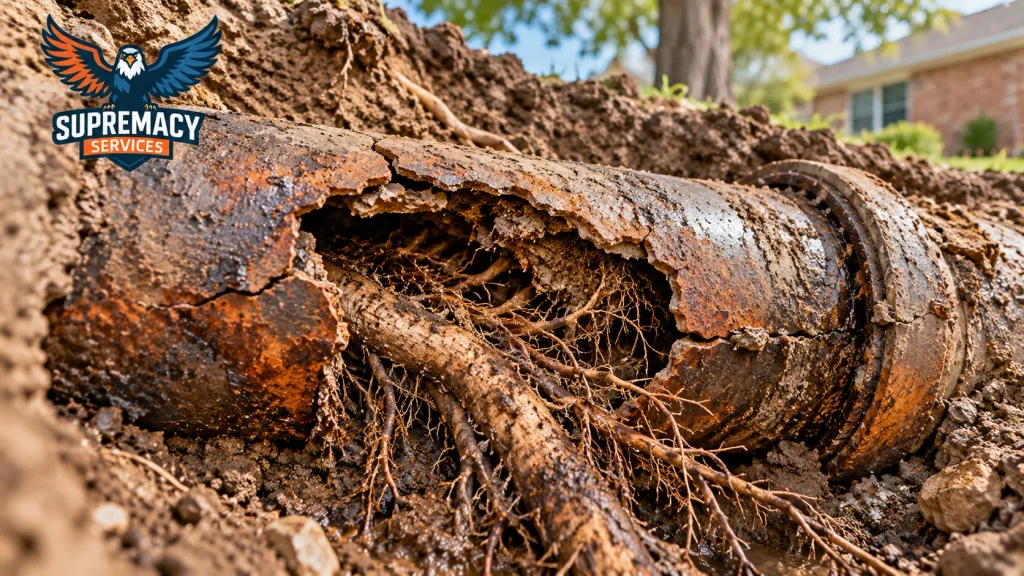
Tree roots can enter a sewer through an existing crack or defective joint where conditions allow.
Once inside, roots may grow and collect waste, increasing the likelihood of a blockage.
Roots are not proof that the entire cast iron line has failed, but their presence warrants evaluation of the entry point.
7. Pipe collapse or severe structural failure
In advanced cases, deteriorated pipe walls or unsupported sections can lose their ability to maintain an open passage.
A collapsed sewer section may cause major drainage restrictions or sewage backups.
A severely collapsed pipe usually requires structural repair or replacement rather than ordinary cleaning.
What Are the Warning Signs of Failing Cast Iron Sewer Pipes?
The most common warning signs are recurring drain clogs, multiple slow fixtures, sewer odors, wastewater backups, and unexplained moisture near drain piping.
| Warning sign | Possible explanation | Recommended action |
|---|---|---|
| Multiple drains running slowly | Main drain restriction or pipe scaling | Inspect the main drainage system |
| Repeated sewer backups | Persistent obstruction or damaged line | Arrange prompt professional diagnosis |
| Gurgling toilets | Drainage or venting problem | Check for a system-wide issue |
| Sewer odors | Drain trap, vent, joint, or sewer defect | Identify the odor source |
| Damp areas near drain piping | Possible wastewater leak | Investigate promptly |
| Frequent clogs after cleaning | Recurring buildup or structural defect | Consider a sewer camera inspection |
| Visible corrosion on exposed pipe | Surface or more advanced deterioration | Evaluate the affected section |
These symptoms are not exclusive to cast iron corrosion.
For example, a gurgling toilet can also result from a venting issue, and a slow sink may have an ordinary localized clog.
The most useful clue is often the pattern of symptoms across the home, rather than a single fixture behaving unusually.
When is the situation urgent?
Arrange prompt plumbing assistance if wastewater is backing up into the home, several fixtures stop draining, or sewage is escaping from a damaged pipe.
Avoid using affected plumbing fixtures until the cause is understood.
If sewage has entered living spaces, limit contact with contaminated water and arrange appropriate cleanup.
For homeowners experiencing repeated problems, Supremacy Services offers professional sewer line repair and replacement in Dallas to help identify and address damaged sewer piping.
How Long Do Cast Iron Sewer Pipes Last?
Cast iron sewer pipes can remain functional for many decades, but there is no single lifespan that accurately predicts when every pipe will fail.
Condition is more important than age alone.
Some older cast iron pipes continue functioning with limited deterioration. Others experience substantial corrosion or leakage earlier because of wastewater conditions, soil exposure, installation defects, or maintenance history.
What affects the lifespan of cast iron?
- Internal and external corrosion exposure.
- Installation quality and pipe support.
- Wastewater chemistry and flow conditions.
- Previous repairs and alterations.
- Ground movement or settlement.
- History of blockages, leaks, and root intrusion.
For a home built several decades ago, the most practical question is not simply how old the pipe is.
It is whether the existing drainage system remains structurally sound and performs reliably.
Should you replace cast iron pipes just because they are old?
Not necessarily. Age should prompt closer evaluation, especially when there are symptoms or a major renovation is planned, but replacement should be based on the pipe’s condition and the risks associated with keeping it in service.
How Do Plumbers Inspect Old Cast Iron Sewer Pipes?
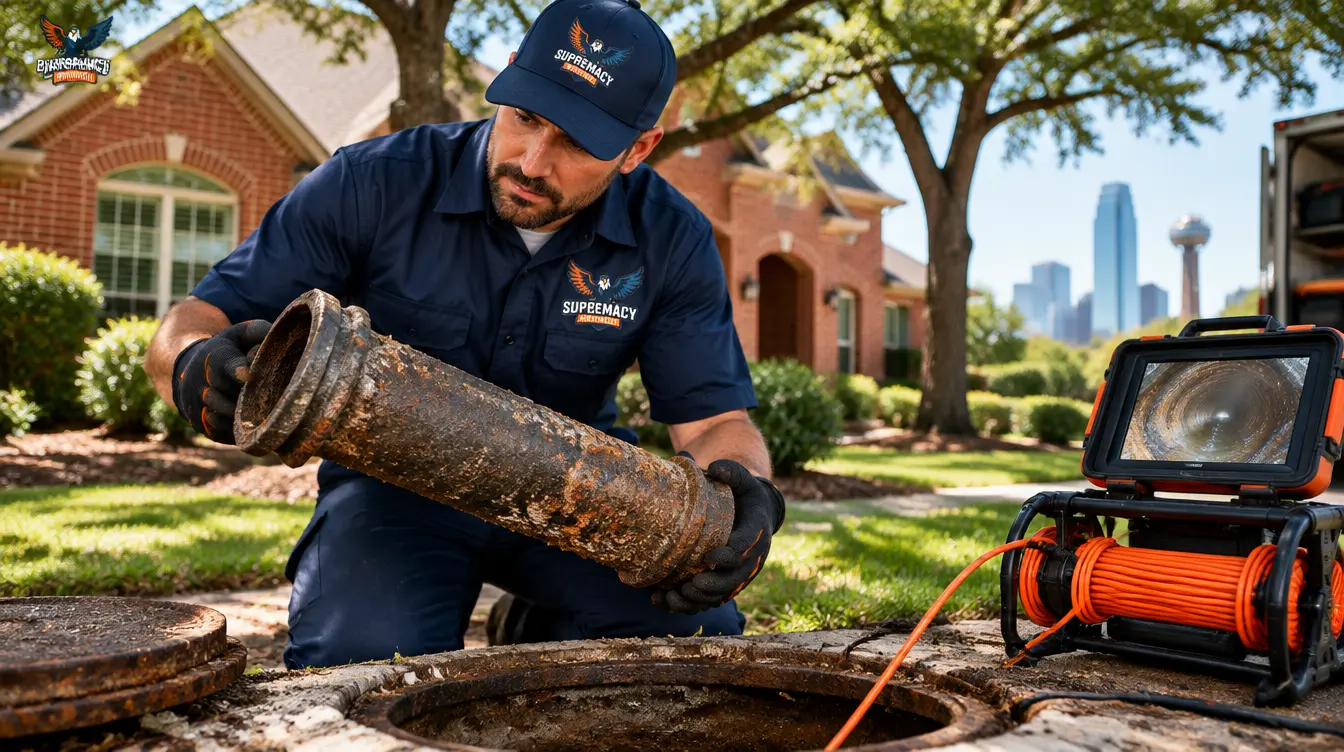
A sewer camera inspection allows a plumber to view accessible portions of the pipe interior and identify visible obstructions, cracks, joint defects, corrosion deposits, and other problems.
It is an important diagnostic tool, but it does not directly measure every aspect of structural strength.
Step 1: Review the symptoms
The plumber asks which fixtures are affected, when the problem began, and whether previous drain cleaning has been performed.
This helps determine whether the likely problem is local or associated with the main sewer line.
Step 2: Identify access points
The technician locates a suitable cleanout or another appropriate access point.
Some older homes may have limited or inconvenient access.
Step 3: Inspect the pipe interior
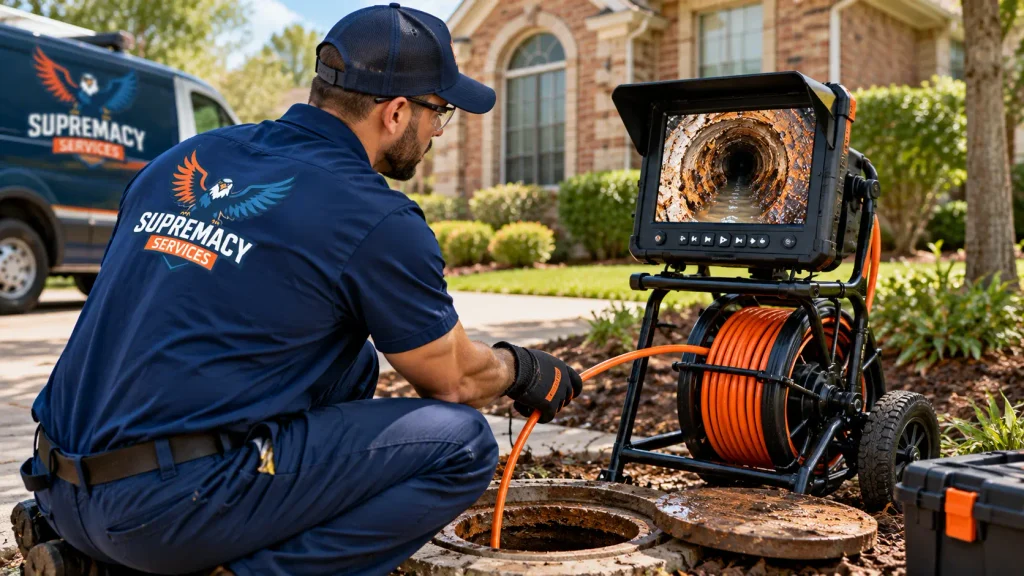
A specialized camera is advanced through accessible piping where conditions permit.
The inspection may reveal:
- Heavy scaling and corrosion deposits.
- Standing water or a pipe belly.
- Root intrusion.
- Visible cracks or openings.
- Misaligned joints.
- Obstructions and collapsed sections.
Heavy deposits or standing water can limit visibility and camera access. Cleaning or another diagnostic approach may be needed.
Step 4: Locate the defect
When appropriate, locating equipment can help identify the approximate position and depth of a camera-observed problem.
Step 5: Explain repair options
The plumber should explain what the inspection shows, what remains uncertain, and which repair approaches are technically suitable.
Homeowners can ask for recorded footage, defect locations, and a written explanation before approving major work.
Important: An interior camera cannot reliably determine external corrosion or remaining pipe wall thickness. Excavation or additional assessment may be necessary when structural integrity remains uncertain.
Can Cast Iron Sewer Pipes Be Repaired, or Do They Need Replacement?
Cast iron sewer pipes can sometimes be repaired, cleaned, or rehabilitated. Replacement becomes more appropriate when deterioration is extensive, the pipe has collapsed, or its condition makes a durable repair impractical.
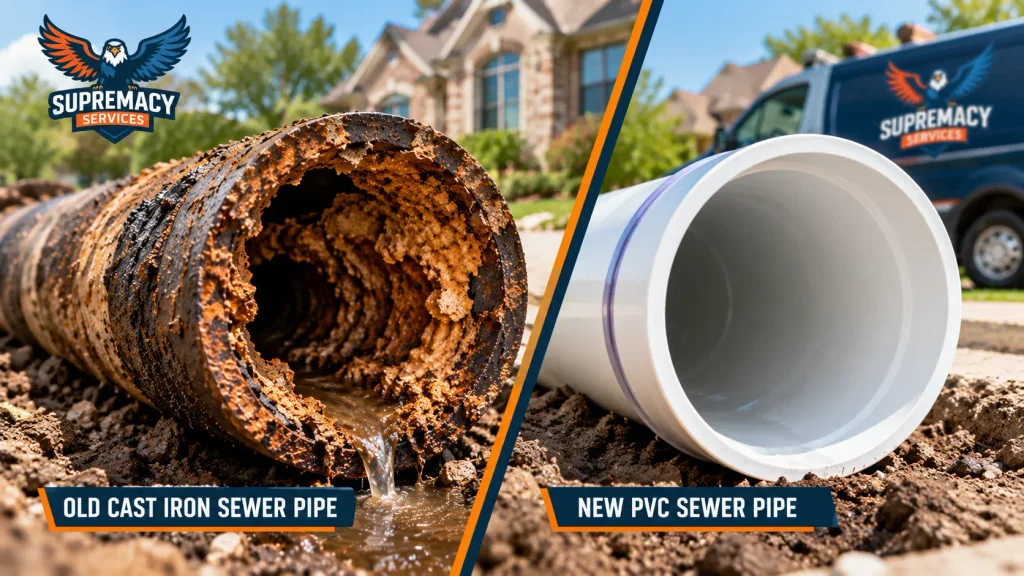
The best option depends on the location, extent, and severity of damage.
Comparing the main options
| Method | When it may be suitable | Main limitation |
|---|---|---|
| Professional drain cleaning | Deposits or removable obstructions | Does not restore lost pipe wall strength |
| Localized pipe repair | Isolated defect in otherwise serviceable piping | Does not address deterioration elsewhere |
| CIPP pipe lining | Suitable existing pipe with adequate geometry and access | Not appropriate for every collapsed or severely distorted pipe |
| Pipe bursting | Replacement where site conditions permit | Requires access and may be restricted by surrounding utilities or site conditions |
| Excavation and replacement | Extensive deterioration, collapse, or unsuitable existing pipe | Greater potential for excavation and restoration work |
The EPA’s wastewater rehabilitation research describes inspection and rehabilitation approaches, including trenchless methods, while emphasizing that suitability depends on actual pipe conditions.
Can hydro jetting damage old cast iron pipes?
Hydro jetting uses pressurized water to remove deposits and obstructions.
It can be useful in some drainage systems, but heavily deteriorated cast iron requires particular caution.
The plumber should assess the pipe’s condition and select a cleaning method appropriate to the risk. Aggressive cleaning is not automatically suitable for fragile or structurally compromised piping.
Is pipe lining always an alternative to replacement?
No. CIPP lining may be suitable for some deteriorated pipes, but not every pipe is a candidate.
Major collapse, significant deformation, access limitations, or other structural defects can prevent successful installation.
Lining also does not automatically correct improper slope or every alignment problem.
When replacement is the better choice
Replacement deserves serious consideration when inspection identifies widespread wall loss, multiple structural failures, substantial collapse, or repeated defects that make localized repairs uneconomical.
Homeowners should request an explanation of why the recommended method addresses the actual defects, rather than relying on pipe age alone.
If an inspection confirms structural deterioration, Supremacy Services’ sewer repair and replacement options can provide a starting point for discussing conventional and trenchless solutions.
What Affects Cast Iron Sewer Pipe Repair Costs?
Cast iron sewer repair costs depend primarily on how much piping is damaged, where it is located, how accessible it is, and which repair method is appropriate.
A minor accessible repair and a complete under-slab sewer replacement are fundamentally different projects.
Major cost factors
| Cost factor | Why it matters |
|---|---|
| Length of damaged pipe | More material and labor may be required |
| Location | Pipes beneath concrete or finished rooms may require additional access work |
| Pipe depth | Deep excavation may increase labor and safety requirements |
| Repair method | Cleaning, spot repair, lining, and replacement involve different equipment and work |
| Access limitations | Difficult cleanout access or confined work areas may increase complexity |
| Surface restoration | Concrete, flooring, landscaping, or other finishes may need restoration |
| Permits and inspections | Requirements vary by jurisdiction and scope |
| Additional defects | Multiple failures may expand the necessary work |
Is cast iron sewer replacement expensive?
It can be, especially when extensive pipe replacement or slab access is required.
However, publishing a single average price without knowing the pipe length, location, condition, and repair method can mislead homeowners.
An accurate estimate should follow diagnosis and a defined scope of work.
Ask for a written proposal identifying the affected sections, proposed materials, access method, exclusions, restoration responsibilities, and any applicable warranty terms.
Why Older Dallas Homes Need Special Attention
Older Dallas homes may contain original cast iron drains, mixed pipe materials, previous repairs, and sewer sections installed under slabs or landscaped areas.
These conditions can complicate diagnosis and repair planning.
Older plumbing layouts
Some homes have cast iron beneath the slab while portions of the above-ground plumbing have already been replaced with PVC or other materials.
A visible modern drain pipe does not prove that the entire underground system has been updated.
North Texas clay soils
Parts of North Texas contain expansive clay soils that can shrink and swell as moisture conditions change.
Soil movement may affect buried utilities and the support surrounding underground pipes. However, it should not automatically be blamed for every cast iron sewer defect.
Corrosion, installation conditions, and structural movement are separate issues that may occur together.
Slab foundations
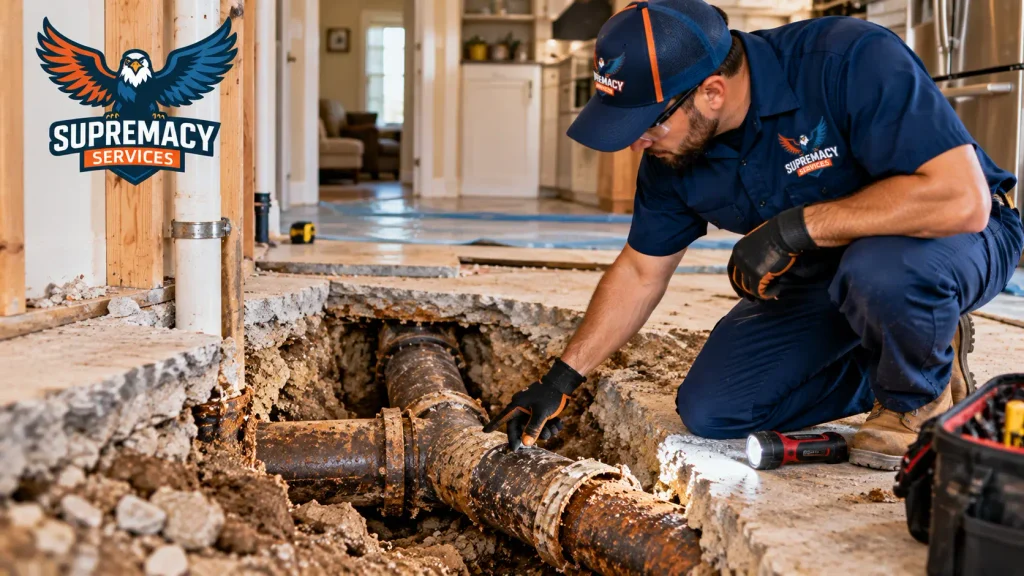
When a damaged drain runs beneath a concrete foundation, identifying its location is particularly important.
A professional may need to evaluate access, excavation, rerouting, or rehabilitation options.
A sewer leak beneath a slab is also different from a pressurized water supply leak. The symptoms and testing methods may differ.
Dallas-area sewer responsibilities
Homeowners should not assume the city will pay for repairs simply because the damaged sewer line is underground or near the street.
Responsibility depends on the applicable municipality, the location of the defect, and local rules.
For example, the City of Carrollton publishes specific policies distinguishing sewer lateral maintenance from certain structural repairs in the public right-of-way. Those rules should not be assumed to apply unchanged in Dallas, Plano, Frisco, or other DFW cities.
Before work near a property boundary or public utility connection, confirm responsibilities and permit requirements with the appropriate local authority.
How to Protect Aging Cast Iron Sewer Pipes
Homeowners cannot completely prevent the aging of cast iron, but they can reduce avoidable drainage problems and identify developing defects sooner.
Practical homeowner checklist
Cast Iron Pipe Care Checklist
0 of 7 reviewedKeep cooking grease and fats out of drains.Avoid flushing wipes, hygiene products, and other unsuitable materials.Investigate repeated blockages instead of relying on frequent temporary clearing.Avoid using aggressive chemical drain cleaners as routine maintenance.Have visible leaks and damaged drain connections evaluated.Keep records of past sewer inspections and repairs.Consider a condition assessment before major remodeling or purchasing an older home.
What should homeowners avoid doing themselves?
Avoid attempting to excavate a sewer line, cut heavily corroded cast iron, or use high-pressure cleaning equipment without appropriate training.
Older pipes can be fragile, and excavation introduces additional hazards from buried utilities, soil instability, and potentially contaminated wastewater.
Simple homeowner steps, such as limiting fixture use during a backup and documenting symptoms, are safer than attempting major structural repairs.
Frequently Asked Questions
1. Are cast iron sewer pipes common in older Dallas homes?
Yes. Cast iron was used extensively in older residential drainage systems. Some Dallas homes still have original cast iron pipes beneath slabs, in walls, or in underground drain sections, even if other plumbing has been updated.
2. How can I tell whether my sewer pipes are cast iron?
Exposed cast iron is typically dark, rigid, heavy metal piping with recognizable fittings or joints. Underground pipe material may be identified through records, accessible connections, or professional investigation.
3. Can cast iron sewer pipes rust from the inside?
Yes. Internal corrosion can roughen pipe walls, create deposits, and eventually contribute to wall deterioration. The extent depends on exposure conditions and the pipe’s overall history.
4. Do cast iron sewer pipes always need to be replaced after 50 years?
No. A pipe’s age alone does not determine whether replacement is necessary. Inspection findings, structural condition, leakage, and recurring problems are more useful in deciding what work is justified.
5. Can cast iron sewer pipes be repaired without digging?
Sometimes. Trenchless rehabilitation may be appropriate when pipe condition, access, alignment, and other site factors permit. A collapsed or severely distorted pipe may require another method.
6. Can tree roots grow into cast iron sewer pipes?
Yes. Roots may enter through defective joints, cracks, or other openings. Removing roots does not necessarily repair the opening that allowed them to enter.
7. Can a sewer camera detect cast iron corrosion?
A camera can reveal visible interior scaling, corrosion deposits, cracks, and other defects. It cannot directly measure every area of wall thinning or exterior corrosion.
8. Does homeowners insurance cover cast iron sewer pipe replacement?
Coverage depends on the policy, the cause of damage, and applicable exclusions or endorsements. Gradual deterioration and sudden covered damage may be treated differently. Review the policy and consult the insurer before assuming coverage.
9. Should I replace cast iron sewer pipes before remodeling?
A condition assessment is worth considering before a major renovation, especially if the project involves opening floors or replacing plumbing fixtures. Discovering failing under-slab piping after new finishes are installed can complicate repairs.
Professional Cast Iron Sewer Pipe Help in Dallas
Cast iron sewer pipes can remain functional for decades, but corrosion, repeated blockages, leaking joints, and structural damage should not be ignored.
The most useful first step is to determine whether the problem is a removable obstruction, a localized defect, or deterioration affecting a larger portion of the drainage system.
Supremacy Services provides sewer line inspection, repair, and replacement services for homeowners across Dallas and the DFW Metroplex.
If your older home has recurring sewer backups, persistent drain problems, or suspected cast iron deterioration, visit Supremacy Services’ Dallas sewer line repair and replacement service to request an evaluation and discuss appropriate repair options.
Identify the actual pipe problem before committing to a major replacement.