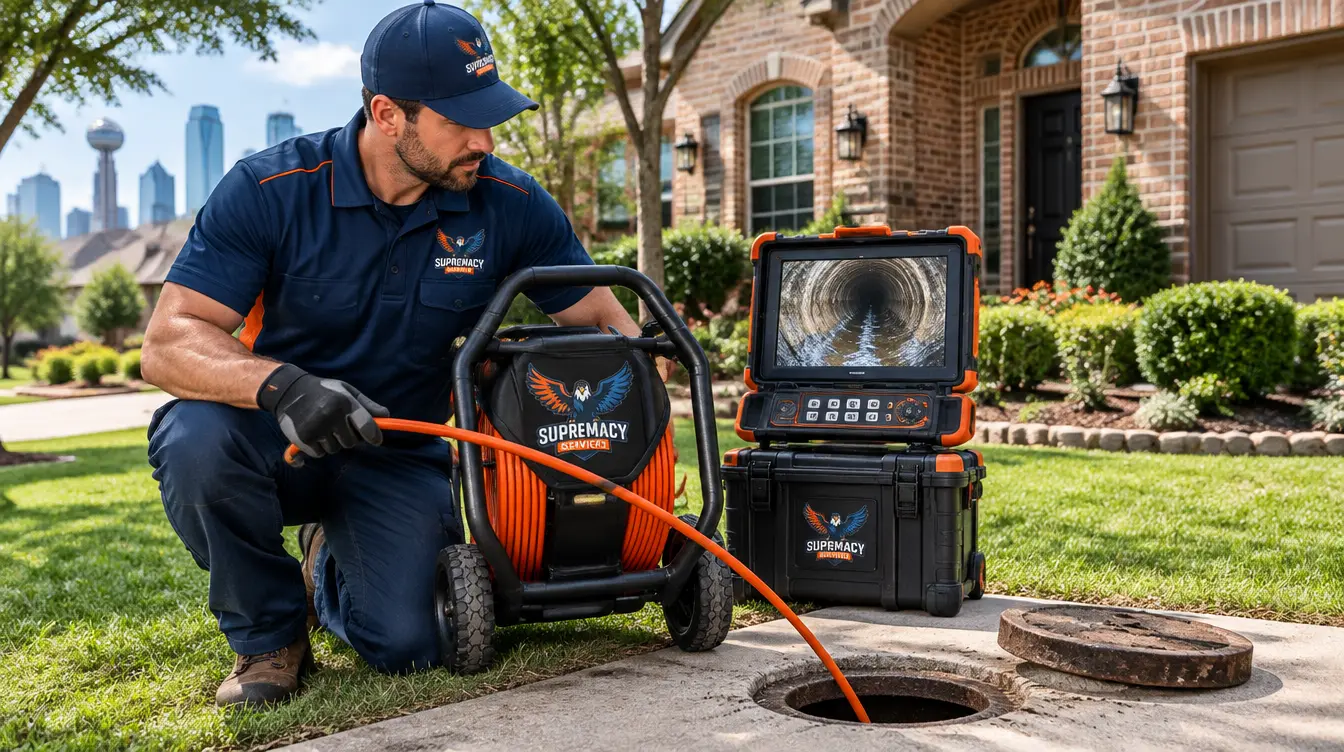
A sewer camera inspection allows a plumber to examine the inside of your sewer line using a small waterproof camera attached to a flexible cable. It can reveal tree roots, cracked pipes, separated joints, stubborn blockages, corrosion and other problems hidden beneath your Dallas home or yard.
For homeowners experiencing recurring drain clogs, sewage backups or unexplained plumbing problems, an inspection can help determine whether the sewer line needs cleaning, targeted repair or further investigation.
But a sewer camera has limitations. It cannot see through pipe walls, confirm every underground leak or automatically determine whether an entire line needs replacement.
Understanding what the camera actually shows can help you make better decisions before committing to expensive sewer work.
Table of Contents
- What Is a Sewer Camera Inspection?
- What Does a Sewer Camera Inspection Reveal?
- What Can’t a Sewer Camera Detect?
- When Do You Need a Sewer Camera Inspection?
- How Does the Inspection Process Work?
- How Much Does a Sewer Camera Inspection Cost?
- Camera Inspection vs. Drain Cleaning
- Why Sewer Inspections Matter in North Texas
- What Happens After the Inspection?
- How to Prevent Future Sewer Problems
- Frequently Asked Questions
- Professional Sewer Diagnostics in Dallas
What Is a Sewer Camera Inspection?
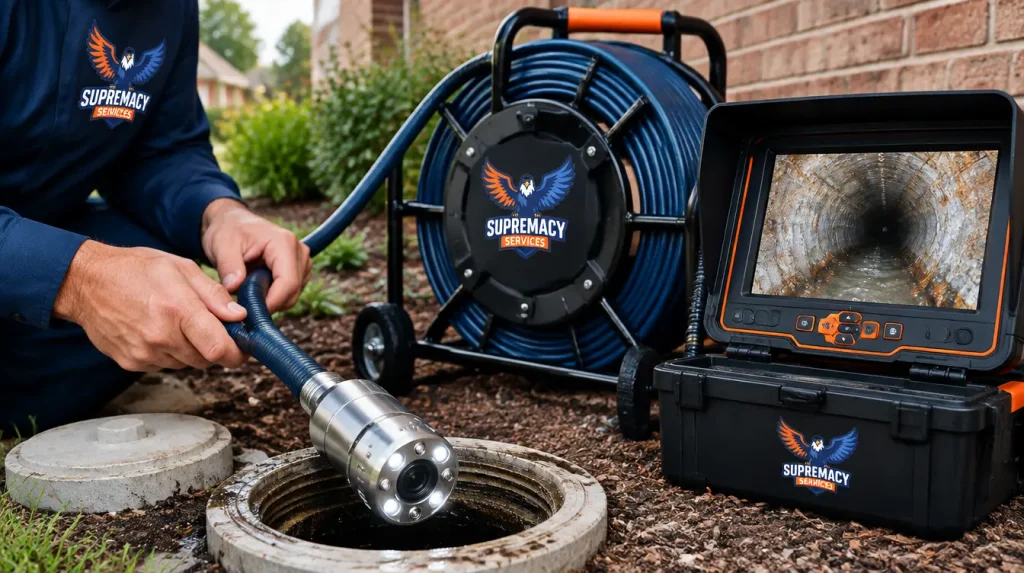
A sewer camera inspection, sometimes called a sewer scope or CCTV sewer inspection, is a non-excavation method of examining the inside of an accessible drain or sewer pipe.
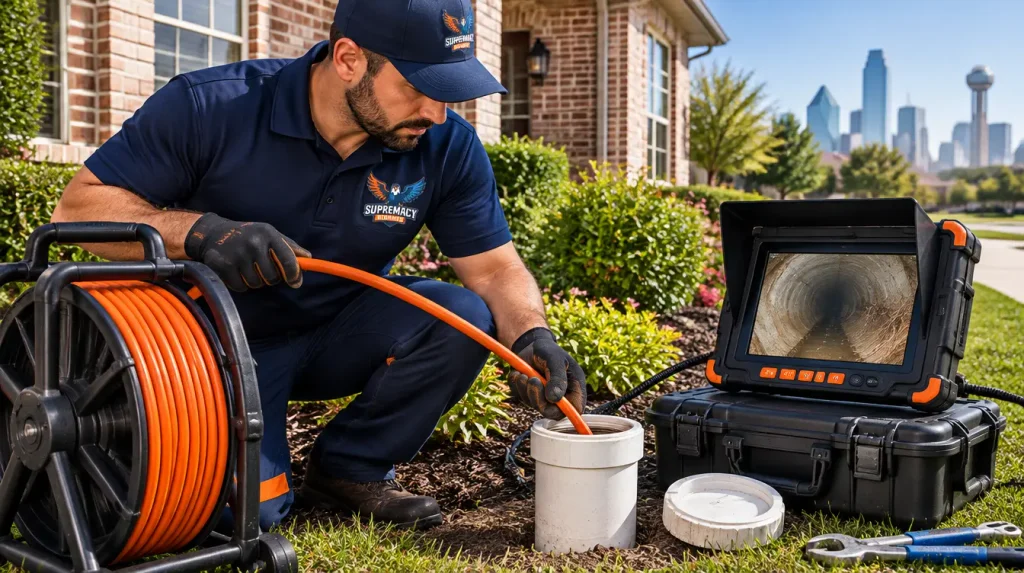
Instead of digging up the yard to investigate a suspected problem, a plumber inserts a specialized waterproof camera through an appropriate access point, often an existing sewer cleanout.
The camera sends live video to a monitor, allowing the technician to evaluate visible pipe conditions.
A typical inspection system includes a camera head, flexible push cable, lighting, video monitor and often a distance counter. Some systems can also be used with locating equipment to help identify a defect’s approximate position underground.
This technology is especially useful because sewer pipes are usually concealed beneath foundations, driveways, lawns and landscaping.
A sewer camera inspection is diagnostic. It does not, by itself, remove a blockage or repair damaged plumbing.
What Does a Sewer Camera Inspection Reveal?
A sewer camera can reveal visible internal defects and obstructions that help explain drainage problems. The most useful findings include root intrusion, cracked or displaced pipes, corrosion, buildup, standing water and partial collapse.
1. Tree Roots Growing Inside Sewer Pipes
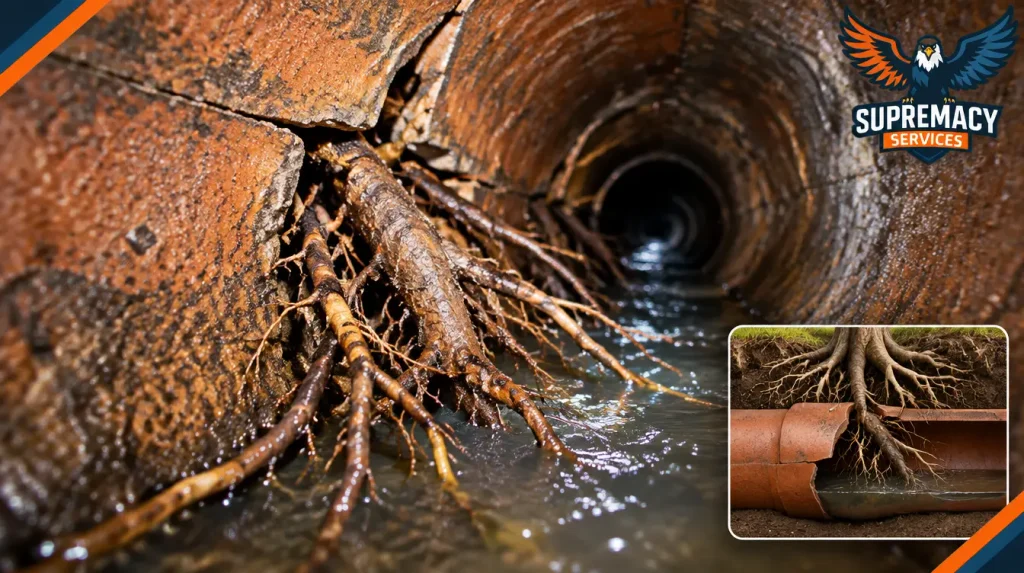
Tree roots can enter a sewer pipe through cracks, loose joints or other openings.
Once inside, roots may grow into larger masses that trap toilet paper and debris, gradually restricting wastewater flow.
A camera inspection helps determine whether roots are present, where they are concentrated and whether there is visible damage at the entry point.
Removing the roots may restore flow, but it does not necessarily repair the defective joint or opening.
2. Cracked or Broken Sewer Pipes
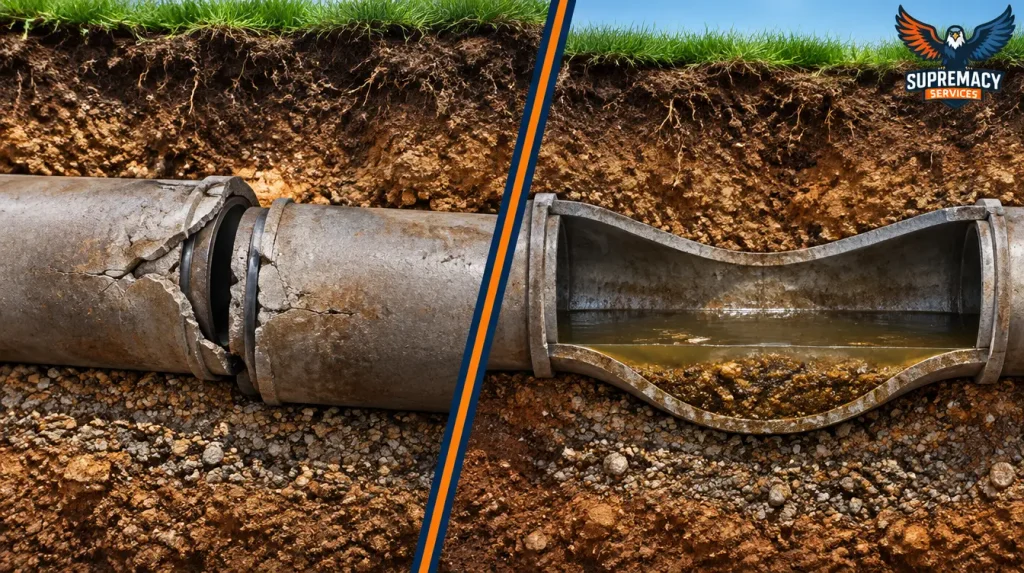
Underground sewer pipes can develop cracks due to deterioration, movement, external loading or other stresses.
A camera may reveal:
- Longitudinal cracks running along the pipe
- Circumferential cracks around its interior
- Broken or missing pipe sections
- Open joints where wastewater may escape
Not every crack requires complete sewer replacement.
The appropriate solution depends on the pipe material, defect severity, accessibility and condition of the surrounding sections.
3. Pipe Bellies and Standing Wastewater
A sewer belly is a section of pipe that has developed a low spot where water can collect.
Because most residential sewer laterals rely on gravity, an improperly sloped section may retain wastewater and solids.
A camera may show persistent standing water, sediment accumulation or repeated debris buildup.
However, standing water alone does not conclusively establish the precise pipe slope. A professional may need additional locating, elevation measurements or other assessment methods.
4. Separated or Offset Pipe Joints
Pipe joints can become displaced when connected sections move out of alignment.
The camera may show a visible gap, ledge or offset where two pipe sections meet.
These irregularities can catch debris, restrict the camera’s passage or create opportunities for root intrusion.
The severity of the displacement helps determine whether cleaning, monitoring or structural repair is appropriate.
5. Corrosion and Pipe Deterioration
Some older North Texas homes contain cast-iron drain or sewer piping.
Over time, cast iron may develop corrosion, rough internal surfaces, scaling and loss of wall material.
A camera can show visible deterioration and restrictions, although it cannot accurately measure the remaining wall thickness simply from video footage.
Where substantial corrosion is suspected, additional evaluation may be necessary before choosing a repair method.
6. Grease, Debris and Other Obstructions
A camera can reveal material restricting wastewater flow, including grease deposits, accumulated debris and objects lodged in the pipe.
Some obstructions can be removed through professional drain cleaning without replacing the pipe.
Others may be associated with damaged pipe surfaces or structural defects that cause recurring clogs.
7. Partial or Complete Pipe Collapse
A severely damaged pipe may become deformed or collapse.
Camera footage can show crushed sections, displaced fragments or areas where the camera cannot safely advance.
If the pipe is completely obstructed, the camera may not reveal the condition beyond the obstruction.
Further investigation may be required to determine the full extent of damage.
Common sewer camera findings and their implications
| Camera finding | What it may indicate | Possible next step |
|---|---|---|
| Tree roots | Open joint or pipe defect | Root removal and structural evaluation |
| Heavy grease buildup | Accumulated waste restricting flow | Appropriate drain cleaning |
| Cracked pipe wall | Structural deterioration or movement | Assess localized repair |
| Offset joint | Pipe displacement | Determine severity and repair options |
| Standing wastewater | Restriction or low pipe section | Evaluate slope and downstream conditions |
| Internal corrosion | Aging or deteriorating pipe | Assess remaining serviceability |
| Collapsed section | Significant structural failure | Locate damage and plan repair |
The important distinction is that a camera inspection provides evidence for a repair decision. It does not mean every visible defect requires excavation.
What Can’t a Sewer Camera Detect?
A sewer camera is an excellent visual diagnostic tool, but it does not provide a complete picture of everything happening underground.
Its main limitations include:
- Hidden leaks: A camera may show a crack or opening, but cannot always establish whether wastewater is actively escaping into the soil.
- Exterior pipe damage: The camera sees the interior, not the surrounding soil or exterior pipe wall.
- Exact pipe slope: Standing water can suggest a grading problem, but accurate slope evaluation may require additional measurements.
- Wall thickness: Video cannot reliably measure how much metal remains in a corroded cast-iron pipe.
- Damage beyond a blockage: Roots, debris, standing water or collapse may prevent the camera from reaching downstream sections.
- Structural conditions beneath the foundation: A camera cannot independently determine whether a sewer defect has caused foundation movement.
For some problems, a plumber may recommend complementary testing, such as a properly performed isolation or leak test, line locating, or additional evaluation.
The U.S. Environmental Protection Agency discusses the capabilities and limitations of sewer condition-assessment technologies in its wastewater collection system condition-assessment guidance.
Homeowner takeaway: A camera inspection is most useful when its findings are interpreted alongside your plumbing symptoms, pipe history and other diagnostic evidence.
When Do You Need a Sewer Camera Inspection?
A sewer camera inspection is worth considering when drainage problems keep returning, several fixtures are affected or there is reason to suspect hidden pipe damage.
1. Your Drains Keep Clogging
A drain that repeatedly clogs after professional cleaning may have an underlying problem.
Possible causes include root intrusion, pipe deformation, a damaged joint or persistent buildup.
A camera can help distinguish a recurring obstruction from structural damage.
2. Multiple Fixtures Drain Slowly
When a single bathroom sink drains slowly, the problem may be limited to that fixture.
When toilets, showers and sinks throughout the house begin draining slowly, a restriction in a shared drain or main sewer line becomes more concerning.
3. Sewage Backs Up Into Your Home
Wastewater appearing in a shower, bathtub, floor drain or toilet can indicate a serious drainage restriction.
Stop using affected plumbing fixtures and arrange prompt professional assistance.
If wastewater is entering the home, prioritize safe containment and avoiding exposure rather than attempting to push a camera through the blockage yourself.
4. You Are Buying an Older Home
A sewer scope may be a useful addition to a home inspection, particularly when the property has older underground plumbing, large nearby trees or a history of sewer repairs.
A general home inspection does not necessarily include a camera examination of the buried sewer lateral.
Ask what portion of the line will be inspected, whether the video will be saved and how any inaccessible sections will be documented.
5. You Suspect Tree-Root Intrusion
Properties with trees near buried sewer lines may benefit from an inspection when recurring drainage symptoms suggest root intrusion.
The presence of trees alone does not prove that roots have entered the sewer.
6. You Want to Verify a Sewer Repair
Camera footage can help document the visible condition of a repaired pipe section.
It may also help identify remaining defects that were not part of the original repair.
However, a post-repair camera inspection does not replace other testing required for a particular repair.
When to request an inspection
| Situation | Priority | Reason |
|---|---|---|
| Active sewage backup | Urgent | Restore safe drainage and identify the cause |
| Repeated main-line clogs | High | Investigate underlying defects |
| Several slow drains | High | Possible shared-line restriction |
| Older home purchase | Before closing, when practical | Assess concealed sewer condition |
| Single isolated sink clog | Usually lower | Local drain troubleshooting may be sufficient |
| Recent sewer repair | As part of verification | Document visible repair condition |
| No symptoms or known risk | Case-dependent | Routine scoping is not universally necessary |
If repeated clogs or backups suggest a problem beyond ordinary drain cleaning, explore Supremacy Services’ sewer line repair and replacement options in Dallas to understand how camera findings can guide the next step.
How Does the Sewer Camera Inspection Process Work?
A professional sewer inspection typically follows a straightforward sequence.
Step 1: Review the plumbing symptoms
The technician asks about backups, slow drains, previous repairs and whether multiple fixtures are affected.
Step 2: Locate a suitable access point
An existing cleanout may provide access to the sewer lateral. If none is available, the technician discusses other safe access options.
Step 3: Examine the pipe interior
The camera advances through accessible sections while the technician watches for obstructions, damage and unusual conditions.
Step 4: Document and locate defects
Where equipment and access allow, the technician records footage, estimates distance and locates significant defects.
Step 5: Explain the findings
The homeowner reviews the results, including limitations and whether cleaning, repair or further testing is recommended.
How Long Does a Sewer Camera Inspection Take?
The duration depends on the length and accessibility of the line, the number of problem areas, the amount of debris present and whether cleaning is necessary before the camera can advance.
A relatively accessible line may be inspected during a routine plumbing visit. Complicated blockages, multiple access points or additional testing can make the process longer.
Ask whether the appointment includes reviewing the footage and receiving a written summary.
Will the Plumber Need to Dig Up Your Yard?
Usually not for the initial camera inspection when a suitable cleanout is available.
Excavation may become necessary if the line is inaccessible, an access point must be installed or the findings indicate that physical repair is required.
How Much Does a Sewer Camera Inspection Cost?
The cost of a sewer camera inspection in Dallas depends on whether it is a standalone diagnostic visit, part of drain cleaning or included in a larger sewer repair assessment.
There is no single reliable citywide price that applies to every property.
Factors that may affect the quote include:
- Length and accessibility of the sewer line
- Whether a usable cleanout exists
- Severity of the blockage
- Whether drain cleaning must occur first
- Number of sections requiring inspection
- Need for underground locating
- Video recording and reporting requirements
- Additional testing or follow-up visits
Supremacy’s published drain-cleaning service page currently advertises a $299 drain-cleaning package that includes HD camera inspection. Its sewer repair page also describes camera inspection as included in its repair process. These are published service-package details, not verified standalone sewer-scope prices. Confirm current inclusions and pricing before booking.
Questions to Ask Before Paying for an Inspection
Ask the plumbing company whether the quoted price includes a complete accessible-line inspection, a copy of the video, defect location, a written explanation and any necessary drain clearing.
Also ask what happens if the camera cannot pass through a blockage.
A lower initial inspection price may not represent the total diagnostic cost if additional access or cleaning is required.
Sewer Camera Inspection vs. Drain Cleaning: What’s the Difference?
A sewer camera inspection identifies visible conditions inside the pipe. Drain cleaning removes obstructions to restore wastewater flow.
These services often complement each other, but they solve different problems.
| Feature | Camera inspection | Drain cleaning |
|---|---|---|
| Primary purpose | Diagnose visible pipe conditions | Remove restrictions |
| Detects roots | Can identify visible roots | May remove roots with suitable equipment |
| Identifies cracks | Often, if visible | Not its primary function |
| Removes grease | No | Yes, using appropriate methods |
| Confirms pipe condition | Provides visual evidence | Does not independently establish condition |
| Repairs structural damage | No | No |
| Useful for recurring clogs | Yes | Often, alongside diagnosis |
For example, a plumber may clear a root blockage to restore drainage and then inspect the pipe to determine whether a defective joint needs repair.
Alternatively, camera footage may reveal a straightforward obstruction in an otherwise serviceable pipe.
The right sequence depends on the actual condition of the system.
If your sewer line needs clearing before a complete camera evaluation, learn about Supremacy’s professional drain-cleaning service in Dallas and DFW.
Why Sewer Camera Inspections Matter for North Texas Homes
Dallas-area homes vary widely in age, sewer materials, foundation design and landscaping.
These differences can influence which problems a plumber investigates.
Older Sewer Materials
Some established Dallas neighborhoods contain older cast-iron or clay sewer piping.
The age and condition of the material may influence the likelihood of corrosion, joint deterioration or root intrusion.
However, pipe age alone is not enough to determine whether replacement is necessary.
Expansive Clay Soils
Parts of North Texas contain expansive clay soils that change volume with moisture conditions.
Soil movement is one potential contributor to stress on buried infrastructure, but a camera inspection cannot establish that soil movement caused a specific pipe defect.
Visible joint displacement or pipe deformation should be assessed alongside site conditions and plumbing history.
Trees and Landscaping
Mature trees can create root-intrusion concerns where sewer pipes have openings.
A camera can help distinguish actual roots inside the sewer from a blockage caused by grease or other material.
Who Is Responsible for the Sewer Line in Dallas?
Responsibility depends on the location of the defect and the applicable utility rules.
Dallas Water Utilities’ published design documentation distinguishes portions of wastewater service connections associated with utility and homeowner responsibilities. Other DFW cities may use different rules.
For a suspected public wastewater main blockage or overflow in Dallas, the city’s Water Utilities contact page directs residents to report emergencies through 311, or 214-670-3111 when calling from outside city limits.
Do not assume that a defect beneath a sidewalk or street automatically belongs to the city. Confirm the precise responsibility boundary with the relevant municipality.
What Happens After a Sewer Camera Inspection?
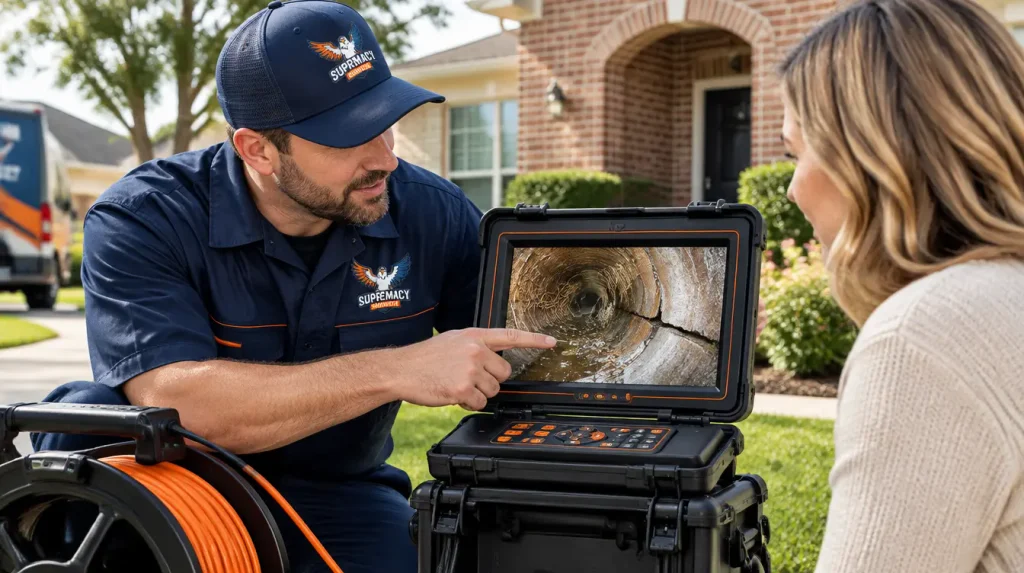
The next step depends on what the camera reveals, how severe the problem is and whether wastewater can flow properly.
Option 1: No Immediate Repair
If the line is accessible, draining correctly and shows no concerning defects, the plumber may recommend routine maintenance or monitoring.
Option 2: Professional Drain Cleaning
If the camera identifies grease, roots or debris without significant structural failure, appropriate cleaning may restore flow.
Some lines require follow-up inspection after cleaning to evaluate previously obscured sections.
Option 3: Localized Sewer Repair
An isolated crack, damaged joint or broken section may be suitable for targeted repair.
The plumber should explain the location of the defect, proposed repair method and why a limited repair is appropriate.
Option 4: Trenchless Sewer Rehabilitation
Some damaged lines may be candidates for cured-in-place pipe lining or pipe bursting.
Suitability depends on pipe condition, alignment, access, geometry and the selected method.
A severely deformed or collapsed line may not be suitable for every trenchless technique.
Option 5: Sewer Line Replacement
Replacement may be necessary where substantial portions of the pipe are structurally compromised or other repair methods are unsuitable.
A camera inspection can provide important evidence, but the recommendation should also consider the full condition and accessibility of the line.
What to Request From Your Plumber
Before approving major work, request an explanation of the visible defects, their approximate locations, any uninspected sections and the reasoning behind the proposed repair.
Where available, obtain the inspection footage and a written estimate describing the recommended work.
How to Prevent Future Sewer Problems
A sewer camera inspection can identify existing problems, but daily habits and appropriate maintenance also matter.
Practical steps include:
- Keep fats, oils and grease out of drains.
- Flush only human waste and toilet paper.
- Address recurring drainage problems rather than repeatedly treating symptoms.
- Avoid planting new trees directly over known sewer routes when alternatives are available.
- Keep sewer cleanouts accessible.
- Retain documentation of previous sewer repairs and inspections.
- Arrange professional assessment when multiple fixtures develop recurring problems.
The San Francisco Public Utilities Commission’s sewer lateral maintenance guidance similarly emphasizes avoiding grease and inappropriate materials in sewer lines.
There is no universal requirement for every Dallas homeowner to schedule an annual sewer camera inspection.
Inspection frequency should reflect the home’s history, known pipe condition and recurring symptoms.
Frequently Asked Questions
1. Is a sewer camera inspection worth it?
Yes, when recurring clogs, sewage backups, older piping or a property purchase justify investigating the buried sewer line. It can provide useful evidence before expensive repairs, although the camera may not reveal every defect.
2. Can a sewer camera detect a leak?
A camera can reveal cracks, openings and separated joints that may allow wastewater to escape. It cannot reliably confirm every active leak or measure leakage into surrounding soil. Additional testing may be required.
3. Can a sewer camera see tree roots?
Yes. A sewer camera can show visible roots growing through cracks or joints, as long as the camera can reach the affected section and the view is sufficiently clear.
4. Should I get a sewer camera inspection before buying a house?
It is worth considering, particularly for an older home or one with mature trees, previous sewer repairs or unexplained drainage symptoms. Ask for the video and documentation of any inaccessible pipe sections.
5. Can a sewer camera find a collapsed pipe?
It can identify visible deformation, broken pipe sections or a collapsed area that obstructs the camera. A complete collapse may prevent inspection of the pipe beyond that point.
6. Does a sewer camera inspection require digging?
Usually not when an appropriate cleanout is accessible. Additional access work may be needed if the line cannot be entered safely or a defect requires excavation.
7. Can I rent a sewer camera and inspect the pipe myself?
Rental equipment may be available, but interpreting pipe defects accurately can be difficult. Homeowners also risk damaging equipment or encountering sewage hazards. Professional evaluation is preferable when structural damage or recurring backups are suspected.
8. Will a sewer camera inspection tell me if I need a new sewer line?
It can provide important evidence, but replacement decisions should consider the pipe’s overall condition, repair feasibility and any necessary additional testing. One isolated defect does not automatically justify replacing the entire line.
9. How often should sewer lines be camera inspected?
There is no universal inspection interval for all homes. Consider an inspection when problems recur, before purchasing a property with relevant risk factors, or when a plumber recommends one based on documented pipe conditions.
Professional Sewer Diagnostics in Dallas and the DFW Metroplex
A recurring sewer problem should be investigated before major repair work is approved.
A properly performed camera inspection can help identify visible defects, distinguish obstructions from structural damage and support a more informed repair decision.
Supremacy Services offers sewer repair and replacement services throughout Dallas and the surrounding DFW Metroplex. Its published process includes HD camera inspection and assessment of both traditional and trenchless repair options.
If your home has repeated sewer backups, root intrusion or suspected underground pipe damage, start with a clear diagnosis.
Explore Supremacy Services’ sewer line repair and replacement services to discuss the next appropriate step for your Dallas-area home.