
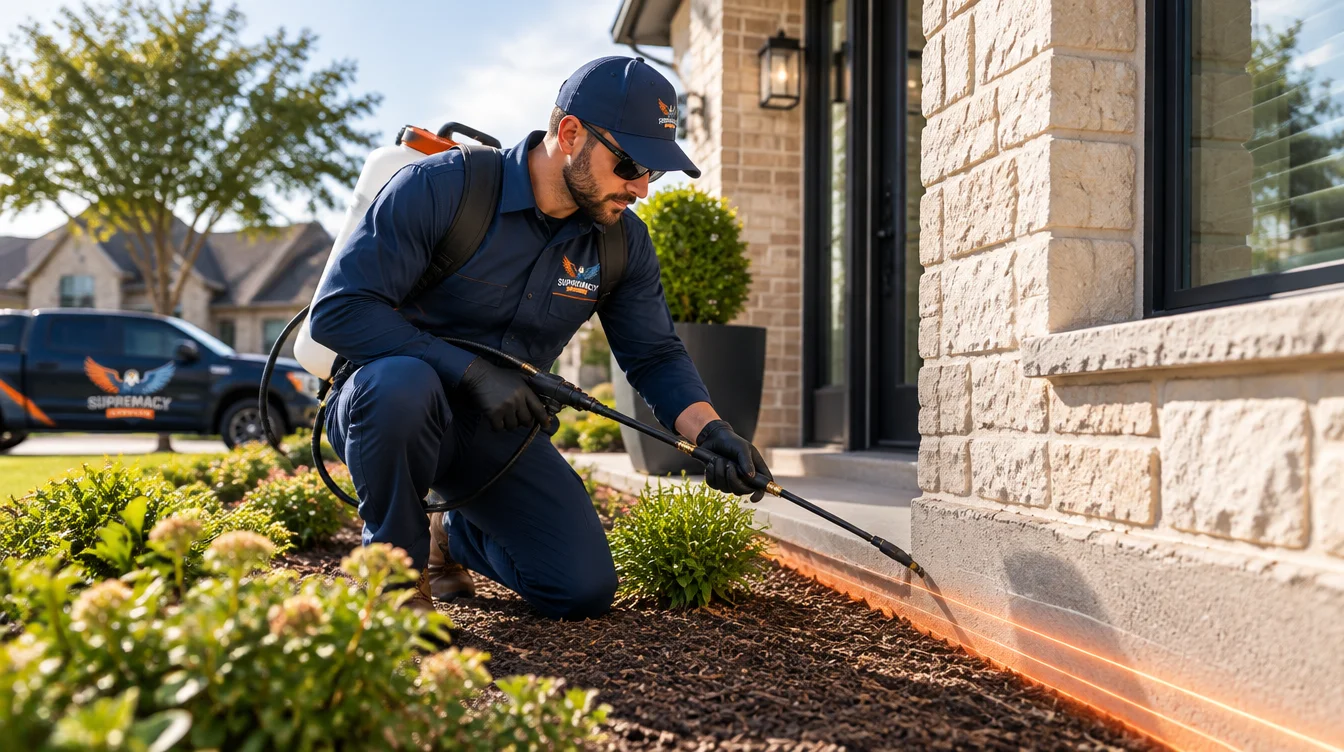
Professional pest control does not last for one universal number of days. How long pest control lasts depends on the product, pest, treatment location, weather exposure, property conditions and whether you are controlling an existing infestation or preventing new pests from entering.
For Dallas–Fort Worth homeowners, an exterior preventive treatment may be designed around a recurring service schedule, while cockroach, flea, termite, bed bug or other specialized treatments can follow completely different timelines.
The better question is therefore not simply, “Has it been three months?” It is:
Is the previous treatment still doing its job, or is there evidence that the pest problem needs to be reassessed?
This guide explains how pest-control longevity works, what can shorten it, why seeing an insect after treatment does not automatically mean the treatment failed, and when a North Texas home may need professional retreatment.
Table of Contents
- How Long Does Pest Control Usually Last?
- What Does “Pest Control Lasting” Actually Mean?
- Why Does Pest Control Wear Off?
- Does Rain Wash Away Pest Control?
- When Should Your Home Be Retreated?
- Does Seeing Bugs Mean the Treatment Failed?
- Why Do Pests Return Before the Next Treatment?
- Different Pests Need Different Retreatment Strategies
- DIY Reapplication vs. Professional Retreatment
- How to Make Pest Control More Effective
- What Happens During a Professional Retreatment?
- Frequently Asked Questions
How Long Does Pest Control Last?
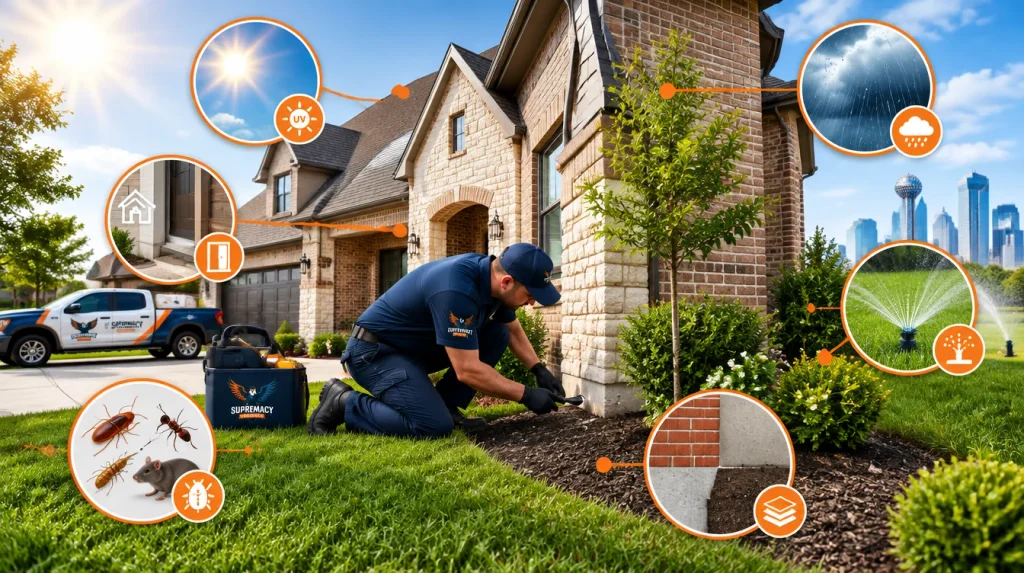
There is no universal pest-control lifespan. Some products leave residual activity on treated surfaces, while other treatments work through baits, growth regulators, dusts, traps, exclusion, heat or other pest-specific methods.
Even two pesticide applications should not automatically be assumed to provide the same period of control.
The EPA requires pesticide directions for use to address information such as where a product can be used, application methods, rates and how often it may be applied. The product label—not a generic internet timetable—ultimately controls pesticide reapplication.
That distinction matters for homeowners.
A professional may schedule preventive exterior visits at regular intervals, but that does not mean every pesticide, pest or infestation should automatically be retreated on exactly that schedule.
A practical way to think about treatment longevity
| Situation | Retreatment approach |
|---|---|
| Routine exterior prevention | Follow the service plan and product requirements |
| Occasional pest seen after treatment | Monitor before assuming failure |
| Pest activity clearly increasing | Reassessment may be appropriate |
| Established indoor infestation | Follow-up may be part of the original control program |
| New pest species appears | Identify it before treating |
| Rain/weather exposure | Depends on product, application and timing |
| Termite treatment | Follow termite-specific inspection, label and regulatory requirements |
| Flea/tick or mosquito program | Often follows pest- and product-specific outdoor schedules |
| Rodents entering a home | Focus may need to shift toward trapping and exclusion rather than pesticide reapplication |
The important point is that retreatment should be based on what was treated, why it was treated and what is happening now.
What Does “Pest Control Lasting” Actually Mean?
When homeowners ask how long pest control lasts, they can mean several different things.
Residual activity
Some pesticides remain active on or in a treated area for a period after application.
That is commonly what people mean when they ask how long a pest-control spray lasts.
But residual performance is affected by the formulation, treated material, environmental exposure and product label.
Population control
A treatment can continue affecting a pest population even when pests do not disappear immediately.
Baits are a useful example.
The objective may be to get pests to interact with or consume the treatment rather than kill every visible insect instantly.
Preventive protection
Exterior pest management is often intended to reduce pest pressure around entry points and the foundation before pests establish themselves indoors.
Supremacy’s current perimeter pest-control program is designed around exterior foundation and entry-point treatment.
Seeing recurring ants, roaches, spiders or other household pests? Explore Supremacy’s pest-control options for Dallas–Fort Worth homes and determine whether your property needs routine prevention or corrective treatment.
Why Does Pest Control Wear Off?
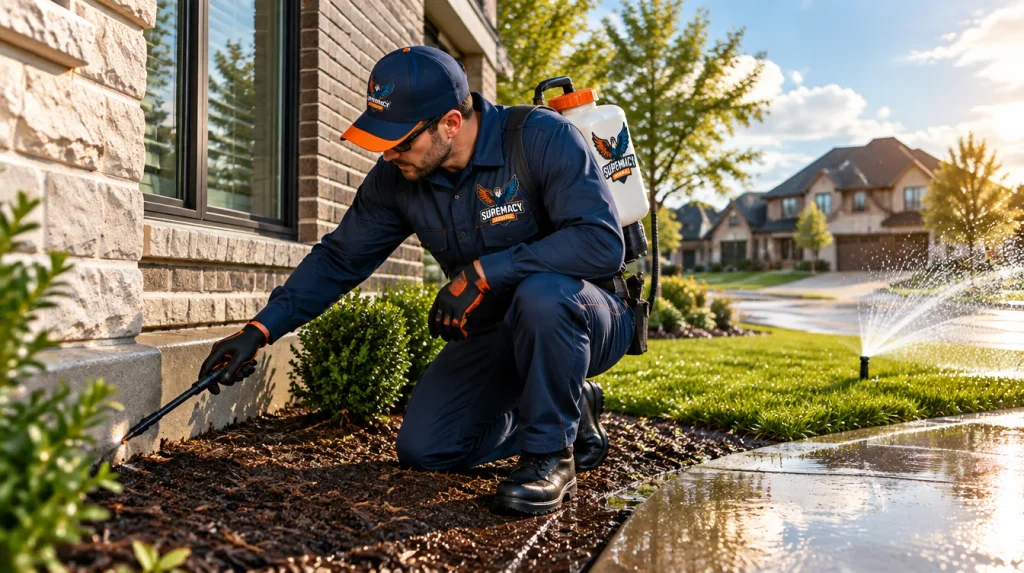
Pest-control performance can change over time because both the treatment and the property are exposed to changing conditions.
1. Sunlight and environmental exposure
Exterior applications are exposed to conditions that protected indoor crack-and-crevice applications may not experience.
Sunlight, temperature and environmental exposure can influence some pesticide residues.
This is one reason homeowners should avoid assuming that an outdoor application and a protected indoor treatment have identical longevity.
2. Rain and irrigation
Outdoor treatments may encounter rain, sprinklers and other moisture.
Whether that materially affects a treatment depends on factors including:
- the product;
- formulation;
- where it was applied;
- how long it had been in place before rainfall;
- the treated surface; and
- label requirements.
3. Surface conditions
Concrete, brick, soil, vegetation, painted surfaces and protected cracks are not identical treatment environments.
The location of an application can therefore affect how a pest-management program is designed.
4. New pest pressure
Sometimes the treatment has not simply “worn off.”
New insects may be continually arriving from:
- landscaping;
- neighboring properties;
- mulch;
- trees and shrubs;
- garages;
- drains;
- utility penetrations;
- shared walls;
- deliveries or stored items.
A property experiencing constant pest entry requires more than repeatedly killing whatever appears indoors.
5. Conditions around the home
Food, moisture and shelter can keep supporting pests even after treatment.
The EPA recommends reducing these resources as part of Integrated Pest Management.
That can include fixing leaks, storing food properly, removing garbage, reducing standing water and addressing pest access.
Does Rain Wash Away Pest Control?
Not necessarily. Rain after pest control does not automatically mean the entire treatment has been washed away.
The answer depends on the pesticide, formulation, application location, surface and how soon the rain occurred.
Some professionally applied exterior products are designed for outdoor conditions. Other applications may be more sensitive to environmental exposure.
Instead of automatically reapplying pesticide after a storm, ask:
- What product was applied?
- Where was it applied?
- Had it dried or settled before the rain?
- What does the product label say?
- Has pest activity actually changed?
For homeowners using consumer pesticides, follow the label’s reapplication instructions rather than adding another application simply because it rained.
When Should Your Home Be Retreated?
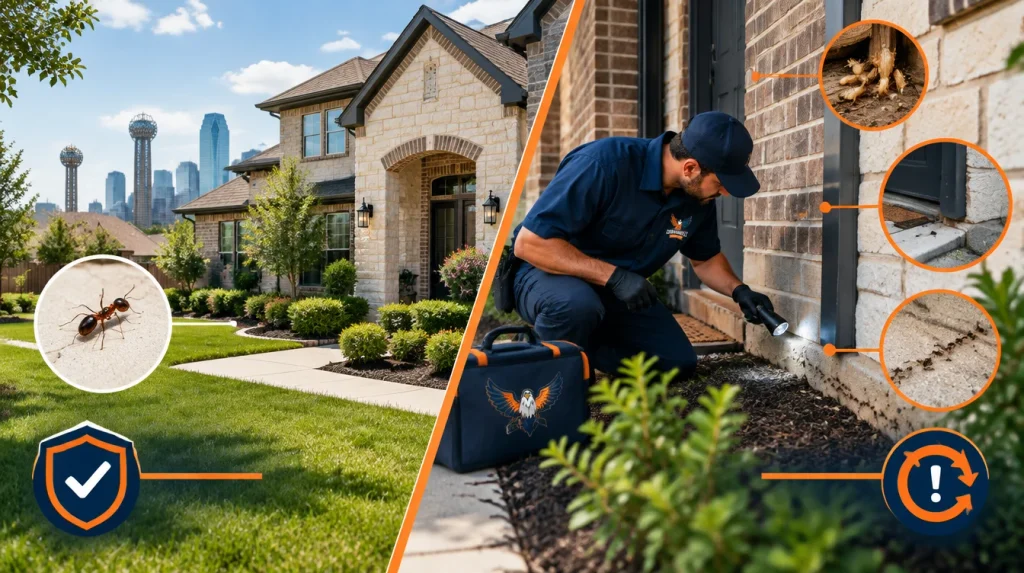
Your home may need retreatment when covered pest activity persists, returns significantly or increases after the expected treatment period—but retreatment should follow inspection rather than an automatic “more spray” response.
Consider contacting your pest-control provider when:
- pest numbers are not declining;
- activity initially declined but is clearly increasing again;
- pests are repeatedly appearing in the same location;
- you discover a previously unidentified pest;
- ants establish new trails indoors;
- cockroach activity remains persistent;
- you find a new active nest;
- pest activity moves into additional rooms;
- a new structural entry point has appeared;
- a service agreement specifically provides for callback treatment.
Don’t automatically retreat because:
- you saw one insect;
- only a few days have passed;
- pests are emerging from previously hidden areas;
- a bait has not produced instant results;
- you found a dead or dying insect;
- you assume rain removed every exterior treatment.
A professional should distinguish between normal post-treatment activity, reinfestation, incomplete control and a completely new pest problem.
Does Seeing Bugs Mean the Treatment Failed?
No. Seeing a pest after treatment does not by itself prove that pest control failed.
Some treatments are deliberately not instant. Supremacy service
Pests hidden behind appliances, inside wall voids, beneath cabinets, around plumbing or in exterior harborages can remain visible as a population declines.
For example, Supremacy’s existing guide about cockroaches returning after treatment explains that egg cases, hidden harborages, food, moisture and continuing entry can all contribute to post-treatment activity.
Watch the trend—not one sighting
Ask whether activity is:
Declining: generally encouraging.
Unchanged: may justify follow-up depending on the treatment and expected response.
Increasing: more reason to investigate.
Appearing somewhere new: may indicate movement, another source or a separate infestation.
Dead insects can actually indicate treatment activity
Finding dead or impaired pests around treated areas is different from repeatedly finding healthy, active insects in previously controlled areas.
Document where you are seeing them and how frequently.
That information can help a technician evaluate whether the original treatment is working.
Why Do Pests Return Before the Next Treatment?
Pests can return for reasons that have little to do with a treatment simply reaching an expiration date.
Untreated entry points
Small gaps around doors, windows, utility penetrations, rooflines and other structural transitions can allow new pests to enter.
Food and water remain available
Cockroaches, ants and rodents benefit from accessible food and moisture.
Even an effective treatment cannot permanently compensate for a plumbing leak, open food source or continuously available pet food.
Landscaping creates favorable habitat
Dense vegetation, leaf litter, stored materials and other sheltered areas can support insects close to the structure.
The original infestation was established
An established infestation may require monitoring or follow-up rather than a single application.
German cockroaches are a good example: activity inside cabinets, appliances and wall spaces is fundamentally different from an occasional outdoor cockroach wandering through a doorway.
You are dealing with a different pest
A homeowner may describe everything as “bugs coming back,” when the new activity involves a different species.
Correct identification should come before additional pesticide use.
Texas A&M’s home pest-management guidance specifically emphasizes identifying the pest, sanitation, exclusion and appropriate control rather than immediately reaching for another spray.
Different Pests Need Different Retreatment Strategies
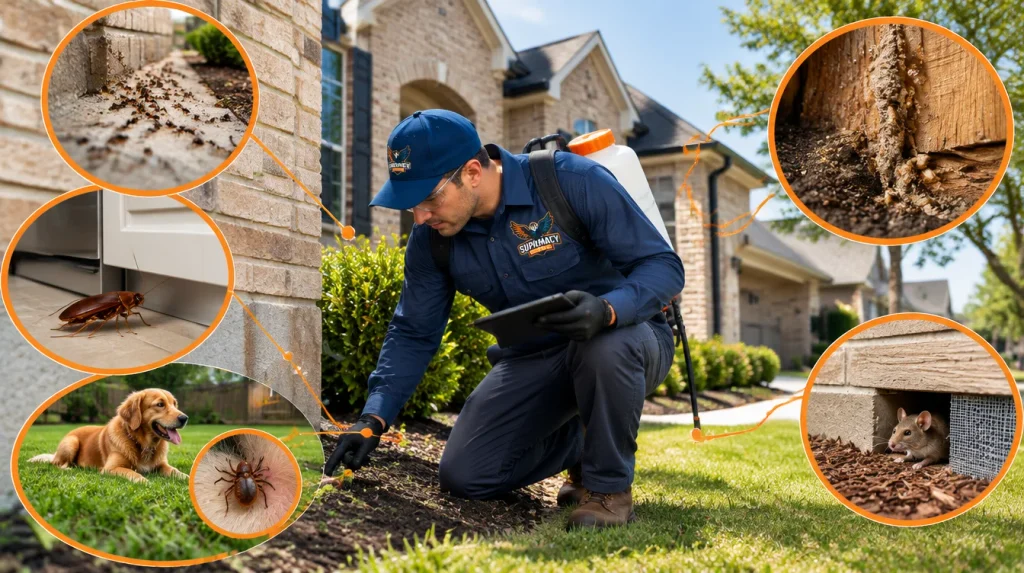
One of the biggest mistakes homeowners can make is treating every pest according to the same calendar.
| Pest/problem | Why follow-up differs |
|---|---|
| Ants | Species, nesting location and food sources matter |
| Cockroaches | Hidden harborages, egg cases, sanitation and species affect control |
| Spiders | Exterior pest pressure and prey insects matter |
| Scorpions | Entry points and surrounding insect populations matter |
| Fleas/ticks | Life cycles and outdoor conditions can require dedicated programs |
| Mosquitoes | Breeding habitat and outdoor conditions strongly influence pressure |
| Bed bugs | Specialized inspection and treatment are required |
| Termites | Specialized structural-pest rules and treatment systems apply |
| Rats/mice | Exclusion and trapping may matter more than residual pesticide |
| Wasps/hornets | Nest location and new colony activity determine response |
General pest control is not termite retreatment
Termites deserve particular caution.
Texas Department of Agriculture guidance states that subterranean termite retreatment depends on evidence such as reinfestation, disruption of the treated barrier or breakdown of the termiticide barrier. The agency specifically states that annual structural retreatment is prohibited without qualifying evidence.
That is a strong example of why “retreat every X months” cannot be applied indiscriminately to every pest-control category.
Flea and tick treatment follows another schedule
Supremacy’s current flea-and-tick service describes outdoor treatments as providing protection for up to 30 days, with monthly service recommended during warm-weather periods.
That is different from Supremacy’s current exterior perimeter program, which describes its barrier as lasting approximately 90 days and being reapplied quarterly.
Those examples illustrate the central point:
Treatment longevity depends on the specific pest-management program—not simply the words “pest control.”
How North Texas Conditions Affect Pest-Control Longevity
Dallas–Fort Worth homes experience substantial seasonal changes, but local climate should not be used as an excuse to invent a universal retreatment calendar.
Instead, homeowners should consider property-specific exposure.
Irrigation
Sprinkler systems can repeatedly wet foundation zones and landscaping.
That can influence both environmental conditions and pest habitat.
Landscaping
Mulch, shrubs, ground cover, leaf litter and vegetation close to the structure can provide sheltered pest habitat.
Moisture
Plumbing leaks, drainage issues and standing water can support pest populations.
Exterior entry points
Garage doors, thresholds, utility penetrations, vents, windows and other openings can provide routes indoors.
Shared-wall housing
Townhomes, apartments and condominiums can present a different challenge because pests may move through shared structural and utility pathways.
The result is simple:
Two Dallas-area homes on the same street may need different pest-management strategies.
DIY Reapplication vs. Professional Retreatment
Minor pest prevention can often begin with homeowner action.
But repeatedly spraying pesticides without identifying the cause of recurring activity is not a good long-term strategy.
Homeowners can:
- clean food spills;
- store food securely;
- repair accessible leaks;
- remove standing water;
- maintain door sweeps;
- repair screens;
- reduce clutter;
- inspect pest activity;
- seal appropriate entry points;
- remove obvious pest-supporting debris;
- follow pesticide labels exactly when using consumer products.
Do not:
- assume more pesticide means better control;
- apply a product more frequently than its label allows;
- mix pesticides unless the labeling specifically permits it;
- use products in locations not listed on the label;
- treat unidentified insects blindly;
- repeatedly spray over bait placements without understanding whether the products are compatible.
EPA pesticide-label guidance makes frequency part of the legally defined directions for use.
That makes the label—not an arbitrary online schedule—the appropriate starting point for DIY reapplication.
When professional help becomes useful
Consider professional assessment when:
- pests repeatedly return;
- the infestation is spreading;
- you cannot identify the pest;
- several rooms are affected;
- cockroaches are established indoors;
- rodents are entering the structure;
- termites are suspected;
- bed bugs are suspected;
- nests are difficult or unsafe to access;
- previous DIY treatments have repeatedly failed.
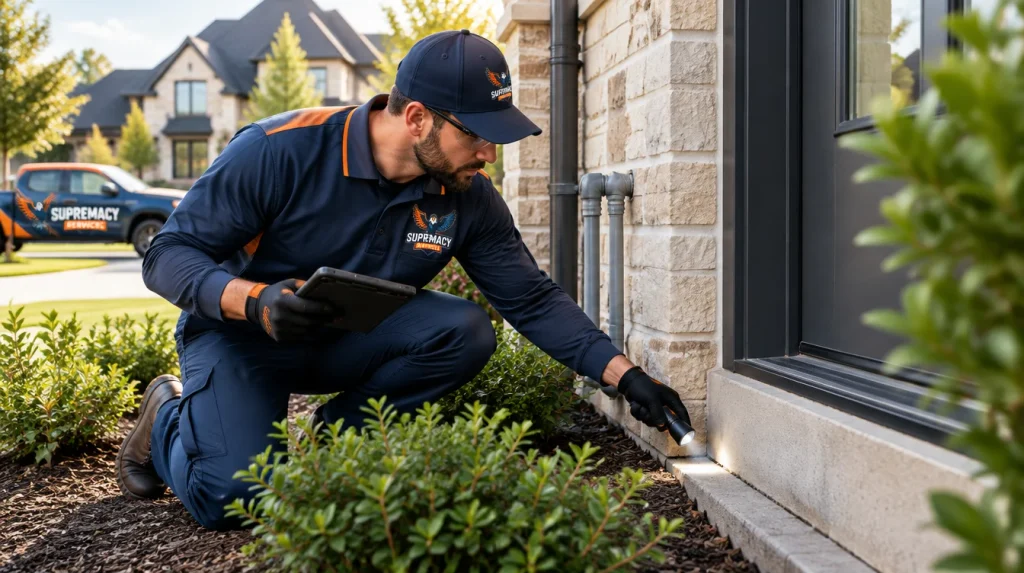
If activity keeps returning between treatments, request a property assessment rather than repeatedly applying another product. Supremacy Services can inspect recurring pest pressure and determine whether your Dallas–Fort Worth home needs retreatment, exclusion or a different control strategy.
How to Make Pest Control More Effective
Pest control generally works best when treatment is combined with prevention.
North Texas pest-prevention checklist
- Repair plumbing leaks.
- Eliminate unnecessary standing water.
- Keep food sealed.
- Remove crumbs and food residue.
- Don’t leave pet food accessible overnight.
- Keep garbage containers closed.
- Repair damaged window and door screens.
- Maintain door sweeps.
- Seal appropriate utility gaps and structural openings.
- Reduce unnecessary garage and storage clutter.
- Keep vegetation from creating direct pest pathways into the structure.
- Monitor recurring pest locations.
- Photograph unusual insects for identification.
- Address pest activity before it becomes widespread.
Texas A&M’s home IPM guidance emphasizes the same basic sequence: identify, sanitize, exclude and then use appropriate control methods when necessary.
Pesticide is therefore only one part of a durable pest-management strategy.
What Happens During a Professional Retreatment?
A good retreatment should not simply repeat the previous application without asking why pests returned.
A technician may need to reassess:
Pest identification
Is this actually the same pest?
Activity locations
Where are pests being seen now compared with the original service?
Entry routes
Have new gaps or pathways developed?
Harborages
Are pests nesting or hiding somewhere the previous treatment did not address?
Environmental conditions
Are moisture, food, vegetation or clutter contributing to the problem?
Treatment performance
Did activity decline before returning, or did it never meaningfully change?
Treatment strategy
Should the existing approach be repeated, adjusted or replaced with another control method?
That distinction separates pest management from simply spraying again.
What Should You Ask Your Pest-Control Company?
If pests return, ask:
- What pest am I dealing with?
- Is this normal activity after the original treatment?
- How long should this particular treatment remain effective?
- What does the product label allow regarding retreatment?
- Is the activity declining or increasing?
- Could pests be entering from somewhere new?
- Are sanitation or moisture conditions contributing?
- Does my service agreement include callbacks?
- Is exclusion needed?
- Does this pest require a specialized treatment program?
Those questions provide much more useful information than simply asking for another spray.
How Often Should Pest Control Be Scheduled?
Service frequency and treatment longevity are related, but they are not the same question.
A preventive program may operate on a recurring schedule so technicians can inspect the property, maintain exterior defenses and respond to seasonal pest pressure.
That does not mean the previous treatment suddenly stops working on the exact day of the next appointment.
Likewise, needing follow-up for an active infestation does not necessarily mean your long-term preventive schedule should become more frequent.
Think of these as two separate questions:
Service frequency: How often should the property normally be inspected or serviced?
Retreatment need: Has current pest activity reached the point where additional intervention is justified?
Keeping those intents separate is especially important when evaluating recurring pest problems.
Frequently Asked Questions
How long does pest control last after spraying?
There is no universal lifespan. Residual performance depends on the pesticide, formulation, treated surface, environment, pest and label instructions. Exterior and protected indoor applications can perform differently.
How long does exterior pest control last?
It depends on the product and program. Supremacy’s current perimeter service describes approximately 90-day exterior protection and quarterly reapplication. That should not be generalized to every pest-control product or company.
Should I retreat my house if I see one bug?
Usually, one sighting alone is not enough to establish treatment failure. Identify the pest and monitor whether activity is isolated, declining or increasing.
How soon can pest control be reapplied?
Follow the pesticide label and professional treatment plan. EPA pesticide labels specify application requirements, including how often products may be applied. Do not automatically reapply early.
Does rain mean my pest control needs to be redone?
Not automatically. Whether rain affects an application depends on the product, application location, treated surface, timing and label instructions.
Why am I seeing more bugs after pest control?
Treatment can sometimes disturb hidden pests or expose activity that was previously less visible. Monitor whether the overall number of pests declines. Persistent or increasing activity may warrant reassessment.
Why do bugs keep coming back even after professional treatment?
Possible causes include continuing entry, untreated harborages, food or moisture, reproduction, pest life cycles, neighboring infestations or an incorrectly identified source.
Is quarterly pest control necessary in North Texas?
There is no universal schedule appropriate for every home and every pest. Frequency should reflect pest pressure, property conditions, treatment type and the service program. Supremacy’s current exterior perimeter service uses a quarterly schedule.
Should I spray between professional pest-control visits?
Do not automatically add another pesticide. Doing so can interfere with some pest-management strategies and may result in unnecessary pesticide use. Contact your provider when activity persists and follow all product-label directions.
What should I do if pests return between appointments?
Document what you are seeing, where it occurs and how often. Correct accessible food, moisture or entry-point issues and contact your pest-control provider if activity persists or increases.
The Bottom Line: Retreatment Should Solve a Reason, Not Follow a Guess
So, how long does pest control last?
There is no single answer that applies to every Dallas–Fort Worth home.
Treatment longevity depends on the pest, product, application method, treatment area, environmental exposure and conditions around the property.
More importantly, a returning pest does not automatically mean the previous treatment “expired.”
It may indicate:
- continuing pest entry;
- an established infestation;
- untreated harborages;
- available food or moisture;
- a new pest problem;
- changing outdoor pressure; or
- a genuine need for retreatment.
That is why the best next step is usually to determine why activity returned before deciding how to treat it again.
If ants, cockroaches, spiders, scorpions or other household pests continue appearing around your Dallas–Fort Worth home, schedule a pest-control assessment with Supremacy Services. A technician can evaluate current activity, identify contributing conditions and determine whether your home needs retreatment, prevention, exclusion or another pest-specific solution.

