
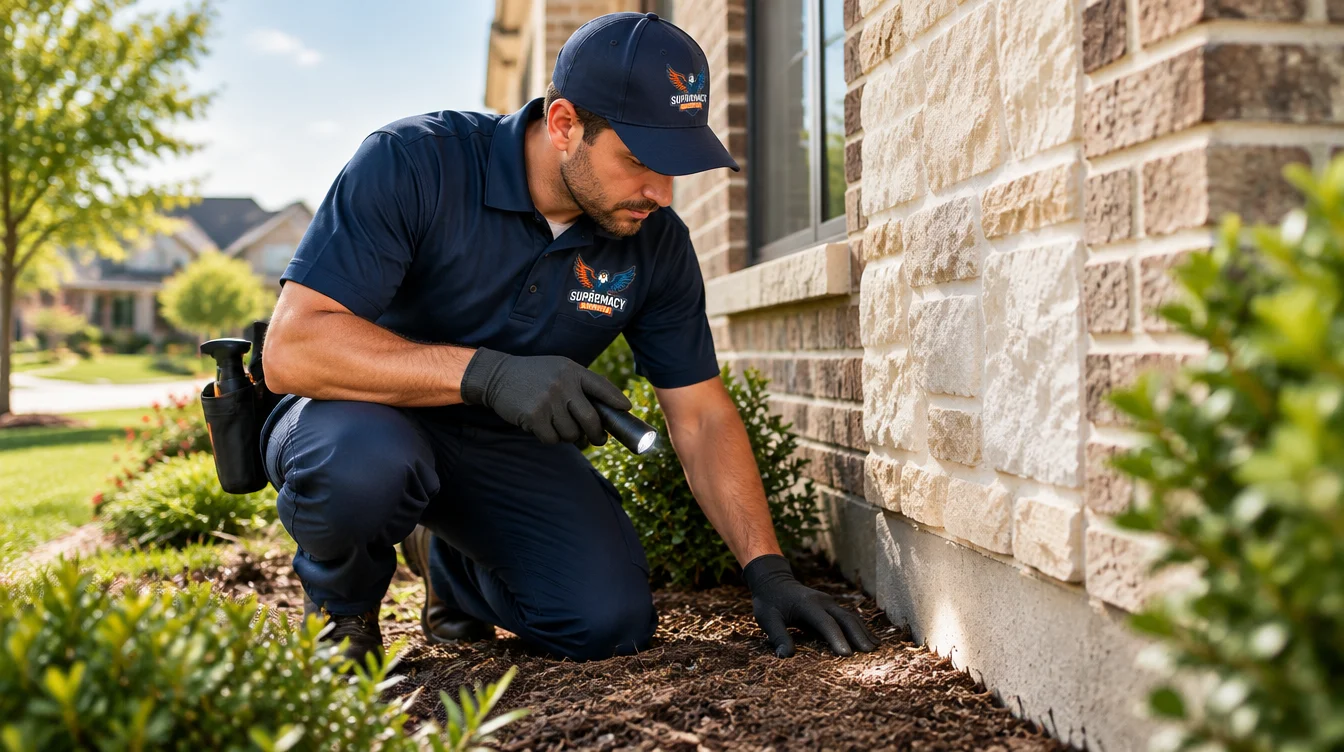
What Does Pest Control service Include?
A professional pest control service typically includes pest identification, inspection, evaluation of entry points and conducive conditions, targeted treatment, prevention recommendations, and follow-up or monitoring when necessary. What is actually included depends on the pest, the property and the service plan.
For North Texas homeowners, that distinction matters. A routine service for ants, cockroaches or spiders is very different from termite treatment, rodent exclusion, bed bug treatment or mosquito control.
A good pest-control visit should therefore involve more than simply spraying around a house. The goal is to determine what pest is present, why it is there, where it is entering or living, and which combination of control and prevention measures makes sense.
That approach aligns with integrated pest management, or IPM. The U.S. Environmental Protection Agency describes IPM as an approach that combines information about pests and their environment with appropriate control methods while seeking to minimize unnecessary risks to people, property and the environment.
Table of Contents
- What Does a Pest Control Service Include?
- What Happens During a Pest Control Visit?
- What Areas of the Home Are Usually Inspected?
- Does Pest Control Include Indoor Treatment?
- What Pests Are Usually Covered?
- What Is Usually Not Included in General Pest Control?
- How Should Homeowners Prepare?
- How Long Does Pest Control Take to Work?
- One-Time vs. Recurring Pest Control
- DIY vs. Professional Pest Control
- North Texas Pest-Control Considerations
- Questions to Ask Before Hiring a Pest-Control Company
- FAQs
What Does a Pest Control Service Include?

A professional residential pest-control service generally consists of six basic parts:
- Pest identification
- Property inspection
- Identification of entry points and conducive conditions
- A treatment or management plan
- Prevention recommendations
- Monitoring or follow-up when appropriate
The exact service should be based on what the technician finds rather than a universal treatment applied to every property.
Texas regulations reinforce the importance of inspection and identification. The Texas Department of Agriculture defines structural pest-control activities broadly enough to include identifying infestations, making inspection reports, providing recommendations and performing services intended to prevent, control or eliminate infestations.
Pest Identification
The first question should be:
What pest are we dealing with?
An ant problem should not automatically receive the same treatment as cockroaches, termites, fleas, mosquitoes or rodents.
Identification matters because different species can have very different:
- nesting locations;
- food sources;
- moisture requirements;
- entry points;
- life cycles;
- treatment methods;
- monitoring requirements.
Correct identification also helps homeowners avoid treating harmless or occasional insects as though they were established infestations.
Property Inspection
Next comes inspection.
Depending on the reported problem, a technician may examine areas such as:
- the exterior foundation;
- doors and windows;
- utility penetrations;
- garages;
- eaves and soffits;
- landscaping immediately around the structure;
- kitchens;
- bathrooms;
- plumbing areas;
- cracks and gaps;
- known pest activity areas.
Not every visit requires an intensive inspection of every room. The inspection should correspond to the pest and the evidence found.
Entry-Point and Conducive-Condition Assessment
Finding pests is only part of the job.
A useful pest inspection also asks:
Why are they here?
Conditions that can contribute to pest activity include accessible food, moisture, shelter, clutter, standing water and openings that allow pests to enter the structure.
EPA guidance notes that pests such as cockroaches, rodents and mosquitoes require resources such as food, water and shelter. Reducing those resources can therefore be an important part of prevention.
Examples around a North Texas home might include:
- gaps around utility lines;
- damaged door sweeps;
- openings around garage doors;
- vegetation touching the structure;
- accumulated leaves or debris;
- leaking plumbing;
- pet food left accessible;
- standing water;
- gaps around windows or exterior penetrations.
Finding these conditions helps address the reason pests keep returning instead of treating only the insects homeowners happen to see.
What Happens During a Pest Control Visit?
A typical professional visit follows a process rather than beginning immediately with pesticide application.
| Stage | What Happens | Why It Matters |
|---|---|---|
| 1. Homeowner discussion | Technician asks where and when pests have been seen | Helps narrow the inspection |
| 2. Identification | Pest or evidence is identified | Determines the correct strategy |
| 3. Inspection | Relevant interior/exterior areas are checked | Locates activity and possible sources |
| 4. Risk assessment | Entry points, moisture and harborage are evaluated | Helps explain recurring activity |
| 5. Treatment | Appropriate control methods are applied | Targets the actual problem |
| 6. Prevention | Homeowner receives practical recommendations | Reduces conditions favoring pests |
| 7. Follow-up | Activity may be monitored or reassessed | Determines whether additional action is necessary |
The process may be shorter for routine preventive service and more extensive when a homeowner has an active or difficult-to-identify infestation.
“Seeing recurring pest activity around your home? Learn how Supremacy Services approaches professional pest control across the DFW Metroplex.”
What Areas of the Home Are Usually Inspected?
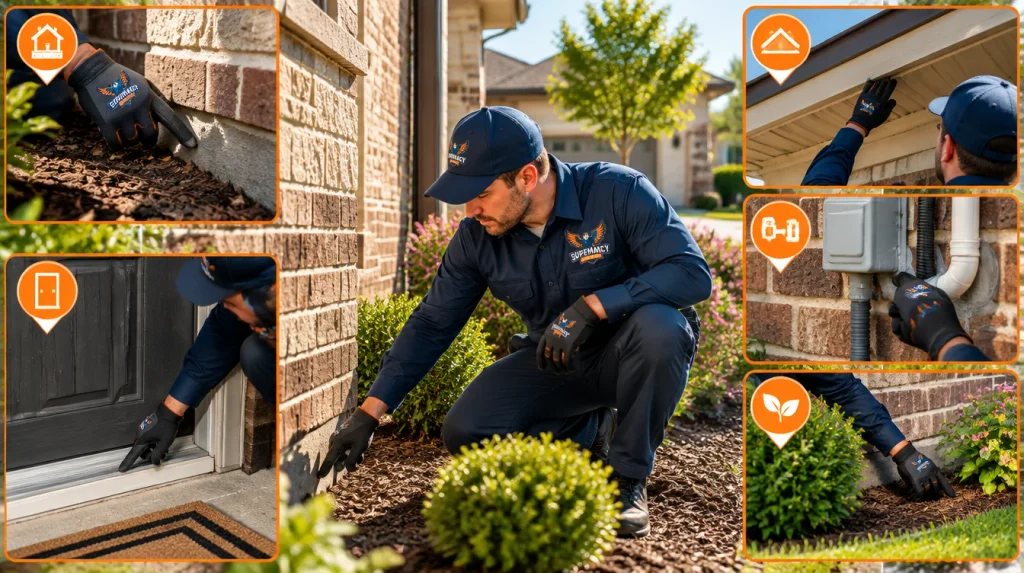
The inspection area depends on the pest.
Exterior Areas
Exterior inspection may include:
- foundation edges;
- exterior walls;
- windows and doors;
- garage openings;
- eaves;
- utility penetrations;
- landscaping near the structure;
- patios and porches;
- visible nests, webs or pest activity.
Exterior conditions are particularly important because many household pests originate outside before entering through structural openings.
Supremacy’s current perimeter pest-control service is specifically positioned around exterior foundation and entry-point protection, so homeowners interested primarily in preventing outdoor pests from entering the house should be directed to that service rather than treating this guide as a substitute for the service page.
Interior Areas
Interior inspection becomes more important when there is evidence of an established indoor problem.
Depending on the pest, technicians may examine:
- kitchens;
- bathrooms;
- laundry rooms;
- under sinks;
- cabinets;
- plumbing penetrations;
- baseboards;
- garages;
- storage areas;
- other locations where activity has been reported.
Treatment should still be targeted. Professional pest control does not automatically mean spraying every interior surface.
Does Pest Control Include Indoor Treatment?
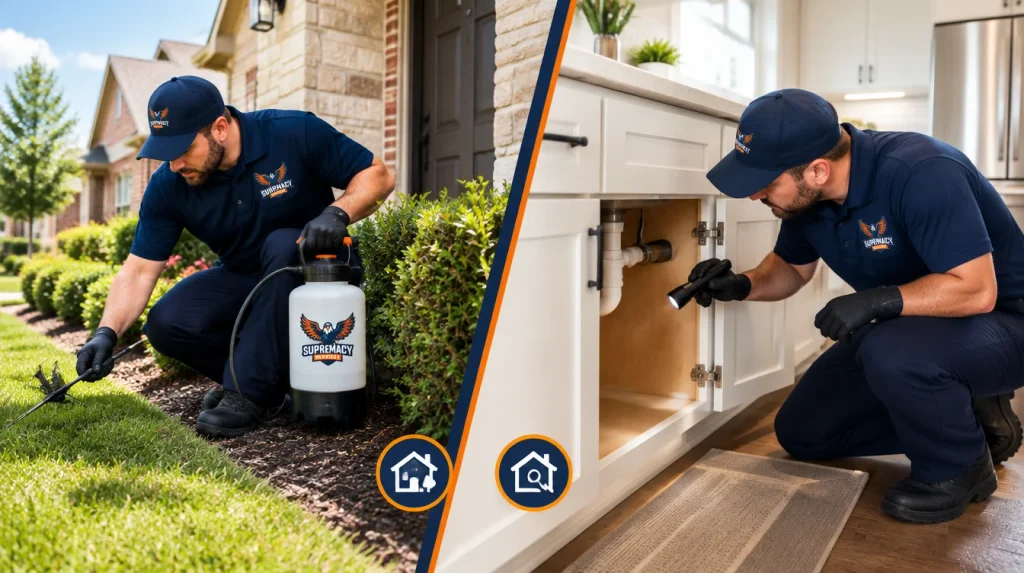
Sometimes—but not every home needs routine indoor treatment.
Whether interior treatment is appropriate depends on the pest, where activity is occurring, the extent of the problem and the treatment strategy being used.
For example, a homeowner dealing primarily with occasional insects entering from outside may benefit from an exterior-focused prevention strategy.
An established cockroach problem inside a kitchen, on the other hand, may require targeted indoor inspection and treatment.
The key principle is that treatment location should follow the pest problem, not the assumption that every pest-control visit must involve spraying inside the home.
What Pests Are Usually Covered by General Pest Control?
Coverage varies by company and plan, so homeowners should always verify the service agreement.
Supremacy’s current pest-control page states that its standard perimeter protection addresses common household invaders including ants, roaches, spiders, earwigs, silverfish, centipedes, scorpions and paper wasps, while specialized solutions are offered for other pest categories.
A general household program may therefore focus on pests such as:
| Pest | General household service? | May need specialized treatment? |
|---|---|---|
| Ants | Often | Certain persistent species may |
| Cockroaches | Often | Established infestations may |
| Spiders | Often | Usually part of broader pest management |
| Silverfish | Often | Sometimes |
| Earwigs | Often | Rarely |
| Centipedes | Often | Underlying moisture/pest activity may matter |
| Scorpions | Plan-dependent | Targeted control may be appropriate |
| Wasps | Plan-dependent | Established nests may require separate removal |
| Termites | Usually specialized | Yes |
| Bed bugs | Usually specialized | Yes |
| Rodents | Often separate | Trapping/exclusion may be needed |
| Mosquitoes | Usually specialized | Yes |
Always confirm actual coverage before purchasing a plan.
What Is Usually Not Included in General Pest Control?
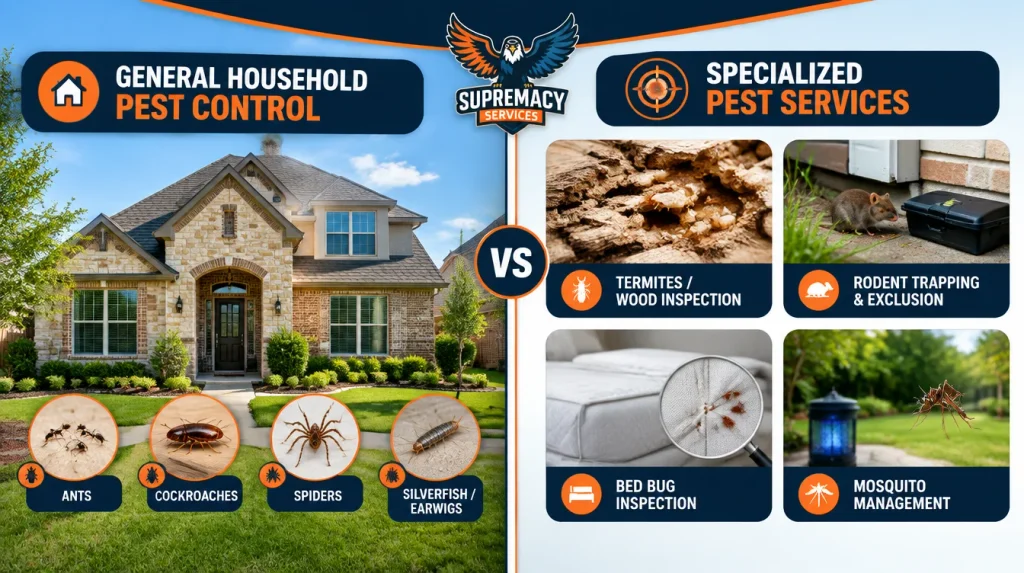
This is one of the most important questions homeowners should ask.
General pest control should not automatically be assumed to include termites, bed bugs, mosquitoes, rodents, wildlife or every type of nest removal.
These problems can require different inspection methods, treatment techniques, equipment, service schedules or licensing categories.
Termite Treatment
Termite work should be treated as its own category.
The Texas Department of Agriculture distinguishes general pest control from termite control within its structural pest-control licensing system. Termite control covers inspection or control of termites and other wood-destroying organisms.
TDA also requires specific disclosure information when a termite-treatment proposal is provided to a consumer, including information about the areas to be treated and proposed treatment.
Rodent Control and Exclusion
Rodent problems frequently involve more than pesticide treatment.
Depending on the property, control may involve:
- identifying entry points;
- trapping;
- monitoring;
- sanitation recommendations;
- exclusion or sealing appropriate openings.
Supremacy therefore maintains a separate rodent-control and exclusion service rather than treating substantial rodent problems as ordinary insect control.
Bed Bugs
Bed bugs generally require specialized inspection and treatment strategies.
They should not be assumed to be covered under routine perimeter or household insect service.
Mosquitoes
Mosquito management focuses heavily on outdoor environments and breeding conditions.
EPA recommends eliminating standing water in locations such as gutters, buckets, bird baths and plant trays as part of mosquito prevention.
Supremacy also maintains a dedicated mosquito service rather than grouping mosquito management into its basic perimeter page.
How Should Homeowners Prepare for Pest Control?
Preparation depends on the pest and treatment.
Do not assume that every pest-control appointment requires emptying cabinets, moving furniture or leaving the house.
Ask the company for pest-specific instructions before the appointment.
Generally useful steps include:
- write down where pests have been observed;
- note when activity occurs;
- save a photo or specimen when safe to do so;
- mention children and pets when discussing treatment preparation;
- tell the technician about inaccessible areas;
- report leaks or moisture problems;
- follow any product-specific preparation instructions supplied by the company.
Avoid applying several DIY pesticides immediately before an inspection unless necessary. Doing so can sometimes make it more difficult to evaluate where pest activity is originating.
How Long Does Pest Control Take to Work?
There is no universal timeline.
Results depend on:
- pest species;
- infestation size;
- treatment method;
- pest life cycle;
- environmental conditions;
- access to food and water;
- hidden nesting areas;
- whether structural entry points remain open.
Seeing a pest shortly after treatment does not automatically mean the service failed.
Likewise, homeowners should be cautious of claims suggesting every infestation disappears immediately.
Ask what results should reasonably be expected for the specific pest and when follow-up becomes appropriate.
One-Time vs. Recurring Pest Control
Neither option is automatically better.
One-Time Pest Control
A one-time service may make sense when:
- the problem is isolated;
- the pest source can be corrected;
- activity is limited;
- there is no history of recurring infestation.
Recurring Pest Control
Recurring service may make more sense when:
- pests repeatedly return;
- the property experiences continuous exterior pressure;
- prevention is the primary goal;
- monitoring is useful;
- seasonal activity repeatedly affects the home.
The right frequency should therefore be determined by pest pressure and property conditions—not simply by choosing the most frequent schedule available.
“Not sure whether your home needs a one-time treatment or ongoing exterior protection? Explore Supremacy’s DFW pest-control options and choose a plan based on the pests and conditions around your property.”
What Affects the Cost of Pest Control?
Pest-control pricing can vary because the scope of work varies.
Common factors include:
- pest species;
- severity of activity;
- property size and layout;
- treatment method;
- indoor versus exterior work;
- number of visits;
- specialized equipment;
- exclusion or repair work;
- recurring versus corrective service.
Check our dedicated Pest Control Cost in North Texas: 2026 Pricing Guide
DIY vs. Professional Pest Control
Minor pest problems do not always require professional treatment.
DIY Can Make Sense When
A homeowner can confidently identify the pest and address obvious contributing conditions such as:
- accessible food;
- small entry gaps;
- standing water;
- clutter;
- minor sanitation issues;
- occasional outdoor invaders.
When using pesticides, homeowners should follow the product label carefully.
Professional Evaluation Makes More Sense When
Consider professional service when:
- you cannot identify the pest;
- pests repeatedly return;
- cockroaches appear established indoors;
- termites or wood damage are suspected;
- rodents are entering the structure;
- bed bugs may be present;
- a wasp nest presents a sting risk;
- pest activity is widespread;
- the source is inaccessible;
- previous DIY efforts have not solved the problem.
Texas A&M AgriLife’s homeowner-oriented IPM resources similarly emphasize prevention and multiple control tactics and identify circumstances such as rodents or termites where professional assistance may be appropriate.
North Texas Pest-Control Considerations
North Texas homeowners deal with a wide range of pests because homes, landscaping and outdoor environments provide many potential pest habitats.
Rather than assuming every Dallas-area property needs the same treatment schedule, homeowners should consider the conditions around their individual property.
Seasonal Changes
Pest activity can shift throughout the year.
Outdoor insects may become more noticeable during warmer periods, while other pests may seek sheltered areas when exterior conditions become less favorable.
Landscaping
Dense vegetation against a structure can provide shelter and make inspection more difficult.
Homeowners can reduce favorable conditions by keeping the immediate perimeter reasonably maintained and addressing debris or moisture accumulation.
Moisture
Leaking pipes, drainage problems and persistent damp areas can support certain pest problems.
Pest control may therefore involve identifying a plumbing or moisture issue that needs to be corrected separately.
Entry Points
Gaps around:
- utility penetrations;
- doors;
- garage doors;
- windows;
- exterior wall openings
can allow pests to move indoors.
Pesticide treatment alone does not physically repair those openings.
What Should You Ask a Pest-Control Company Before Hiring?
Before agreeing to service, ask:
- What pest do you believe I have?
- What evidence supports that identification?
- Which areas will you inspect?
- What exactly is included in the quoted service?
- Are indoor treatments necessary?
- Which pests are excluded?
- Are termites included or separate?
- Are rodents included?
- Does exclusion work cost extra?
- Is follow-up included?
- What preparation is required?
- What should I expect after treatment?
- Is this a one-time or recurring agreement?
- Who performs the service?
- Is the business properly licensed?
Texas requires businesses and individuals performing structural pest control for hire to meet applicable licensing requirements administered by the Texas Department of Agriculture.
That makes licensing verification a reasonable part of choosing a provider.

Pest Control Service Checklist for Homeowners
Before the technician leaves, you should understand:
- What pest was identified
- Where activity was found
- What conditions may be contributing to it
- What areas were treated
- What type of strategy was used
- What you should do after service
- Whether follow-up is needed
- Which pests or services are excluded
- Whether structural repairs or exclusion are recommended
- When to contact the company again
A homeowner should leave the appointment understanding the problem—not simply knowing that something was sprayed.
Frequently Asked Questions
What does a normal pest-control service include?
A typical professional service includes pest identification, inspection, evaluation of entry points or conducive conditions, targeted treatment, prevention recommendations and follow-up when needed. Exact coverage depends on the pest and service agreement.
Does pest control include spraying inside the house?
Not necessarily. Indoor treatment should depend on where the pest is active and the strategy being used. Many preventive programs emphasize exterior areas, while established indoor infestations may require targeted interior treatment.
Does regular pest control include termites?
Usually not. Termite control is a specialized service, and Texas recognizes termite control as a separate structural pest-control licensing category from general pest control.
Does pest control include rats and mice?
It depends on the plan. Significant rodent problems may require inspection, trapping, monitoring and structural exclusion beyond routine household insect control.
Does pest control include mosquitoes?
Mosquito control is commonly offered as a separate outdoor service because treatment areas, breeding sources and service frequency differ from routine household pest control.
Do I need to leave my house during pest control?
Not for every service. Requirements depend on the products and treatment methods being used. Follow the technician’s and pesticide label’s instructions for your specific treatment.
Should a pest-control technician inspect before spraying?
The technician should understand the pest problem before choosing a treatment. Identification and inspection help determine where pests are active, why they are present and which control method is appropriate.
How often should pest control be done in North Texas?
There is no universal schedule. Service frequency should depend on pest species, property conditions, previous activity, treatment objectives and whether the goal is correcting an infestation or maintaining prevention.
Is professional pest control better than DIY?
Neither is automatically necessary for every situation. Minor, identifiable pest problems may respond to sanitation, exclusion and properly used consumer products. Recurring, widespread, difficult-to-identify or specialized infestations are stronger candidates for professional evaluation.
What Should North Texas Homeowners Expect From Professional Pest Control?
The most useful pest-control service is not simply the one that applies the most product.
It is the service that answers four questions:
What pest is present?
Why is it here?
What needs to be done now?
What can reduce the chance of it returning?
That may involve treatment, exclusion, sanitation, moisture correction, monitoring—or a combination of those approaches.
If you’re seeing recurring ants, cockroaches, spiders, scorpions or other pest activity around your Dallas–Fort Worth home, Supremacy Services can inspect the property and recommend a pest-control approach based on the conditions actually found.
“Schedule a pest-control inspection with Supremacy Services to identify the problem and determine the appropriate treatment and prevention plan for your DFW home.”

