
Bed bug treatment in North Texas can range from a few hundred dollars for a limited professional treatment to several thousand dollars for a larger or widespread infestation. Published 2026 consumer-cost data places professional bed bug extermination broadly around $1,000–$4,000 per home, while individual projects can fall outside that range depending on property size, infestation severity, treatment method and number of visits required.
For Dallas-Fort Worth homeowners, the most useful question is therefore not simply, “What does a bed bug exterminator charge?”
It is:
What treatment does my property actually need, and what is included in the quoted price?
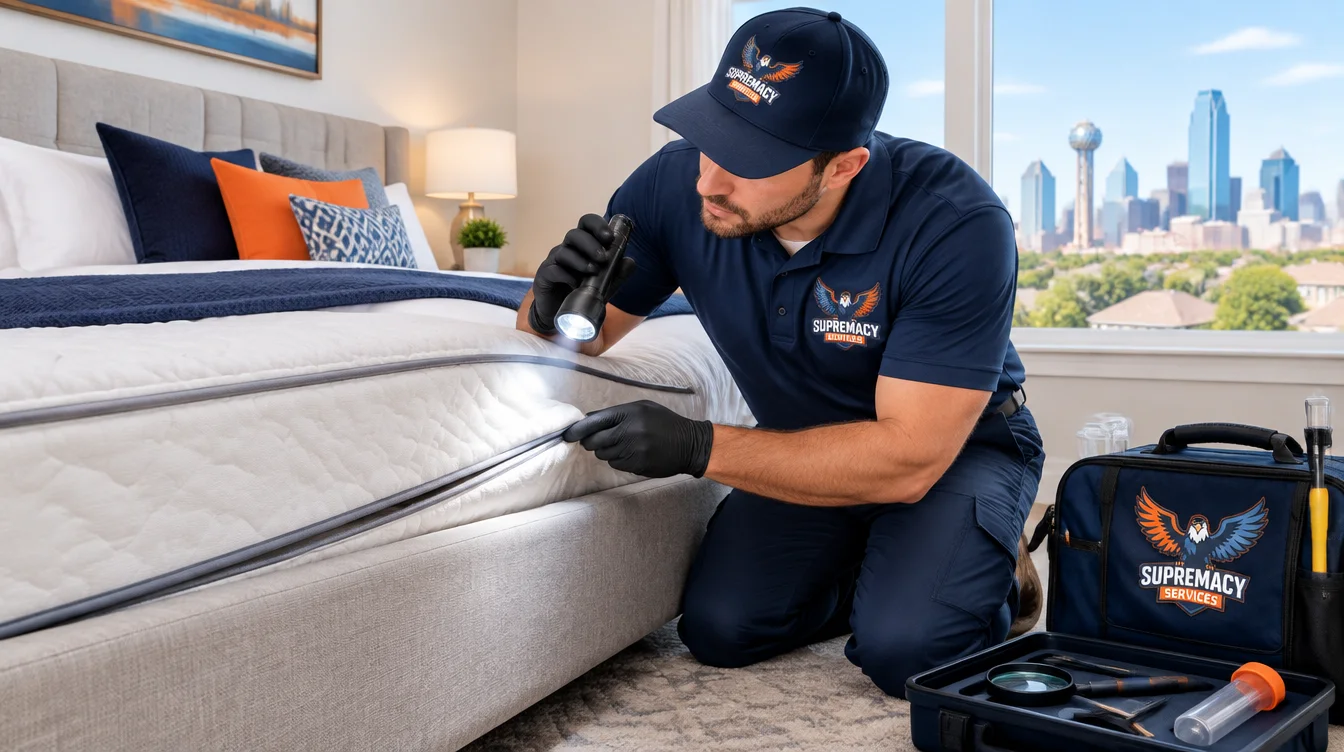
An inspection can help determine whether the problem is limited to one sleeping area or has spread into additional rooms, furniture or adjoining spaces. That distinction can dramatically change the treatment plan—and the final cost.
Important: Prices in this guide are published market estimates for planning and comparison. They are not Supremacy Services quotes or guaranteed North Texas prices. A property-specific assessment is necessary for actual pricing.
Table of Contents
- How Much Does Bed Bug Treatment Cost in North Texas?
- Bed Bug Treatment Cost by Method
- What Affects Bed Bug Treatment Cost?
- Heat vs. Chemical Treatment Cost
- What Should a Bed Bug Treatment Quote Include?
- DIY vs. Professional Bed Bug Treatment
- How Do You Know You Actually Have Bed Bugs?
- Can You Lower the Cost of Treatment?
- What Should North Texas Homeowners Expect?
- Frequently Asked Questions
How Much Does Bed Bug Treatment Cost in North Texas?
There is no reliable flat rate for every North Texas bed bug infestation.
As a national 2026 planning benchmark, Angi reports that professional bed bug treatment averages around $2,500, with typical home-treatment pricing around $1,000–$4,000 and a broader reported range of approximately $350–$6,200 depending on factors such as treatment method, infestation severity and property size.
HomeGuide publishes another useful benchmark: approximately $300–$500 for a single room and $2,500–$5,000 for whole-home treatment.
These numbers should be treated as market reference points—not as a price list for Supremacy Services or a guarantee of what a Dallas-area treatment will cost.
| Treatment scope | Published planning benchmark | Important consideration |
|---|---|---|
| Limited/single-room treatment | About $300–$650+ | Method and severity matter |
| Multiple affected rooms | Often $700–$1,700+ | Spread increases labor and treatment area |
| Professional home treatment | Roughly $1,000–$4,000 | 2026 national benchmark |
| Larger/complex whole-home treatment | Can exceed $4,000 | Size, severity and method drive cost |
| Professional heat treatment | Often around $1–$3/sq. ft. | Property layout and treatment scope matter |
| Inspection | Often separately priced | Some companies may include or credit it |
Published sources differ because companies price and scope bed bug work differently. That is precisely why homeowners should compare what a proposal includes, not just its headline price.
Found signs of bed bugs? Start with professional bed bug control in DFW to determine where activity is occurring and what treatment approach fits the property.
Bed Bug Treatment Cost by Method
The treatment method can substantially affect both upfront cost and the number of visits involved.
Professional heat treatment
Published consumer estimates commonly put professional bed bug heat treatment around $1–$3 per square foot. HomeGuide, for example, estimates approximately $2,000–$6,000 for heat treatment of a 2,000-square-foot home.
Professional thermal remediation uses specialized heating and air-moving equipment to bring treatment areas to lethal temperatures while temperatures are monitored throughout the space.
Heat has an important advantage: properly delivered lethal temperatures can affect bed bugs at multiple life stages.
But it also has limitations.
Heat treatment:
- requires specialized equipment and careful preparation;
- may require attention to heat-sensitive belongings;
- must reach insects hidden in cooler or insulated locations;
- provides no residual protection against bed bugs introduced after treatment.
Supremacy already has a separate guide covering bed bug heat treatment cost in Dallas, so homeowners primarily comparing thermal remediation should use that guide for a deeper analysis.
Chemical/pesticide treatment
Published market guides commonly place pesticide-based bed bug treatment around $2–$5 per square foot, although actual pricing structures vary considerably between providers.
Professional pesticide programs may use more than one product or treatment technique because bed bug control is rarely as simple as spraying every visible insect.
The EPA notes that treatment effectiveness can depend on infestation extent, preparation, application coverage, treatment of different life stages and pesticide resistance.
Follow-up and monitoring can therefore be important components of a pesticide-based program.
Steam treatment
Steam can provide targeted high-temperature treatment of appropriate surfaces, fabrics, seams and crevices.
EPA DIY guidance notes that steam used against bed bugs should reach at least 130°F and should not use excessively forceful airflow that could scatter insects.
Published professional steam-treatment prices vary widely because the process can be labor intensive.
Integrated treatment
The most appropriate program may combine several tools rather than relying on a single technique.
The EPA recommends an integrated pest management (IPM) approach to bed bug control, which can combine non-chemical and chemical techniques along with preparation, inspection and monitoring.
That means the cheapest treatment method on a comparison chart is not automatically the least expensive solution overall.
What Affects Bed Bug Treatment Cost?
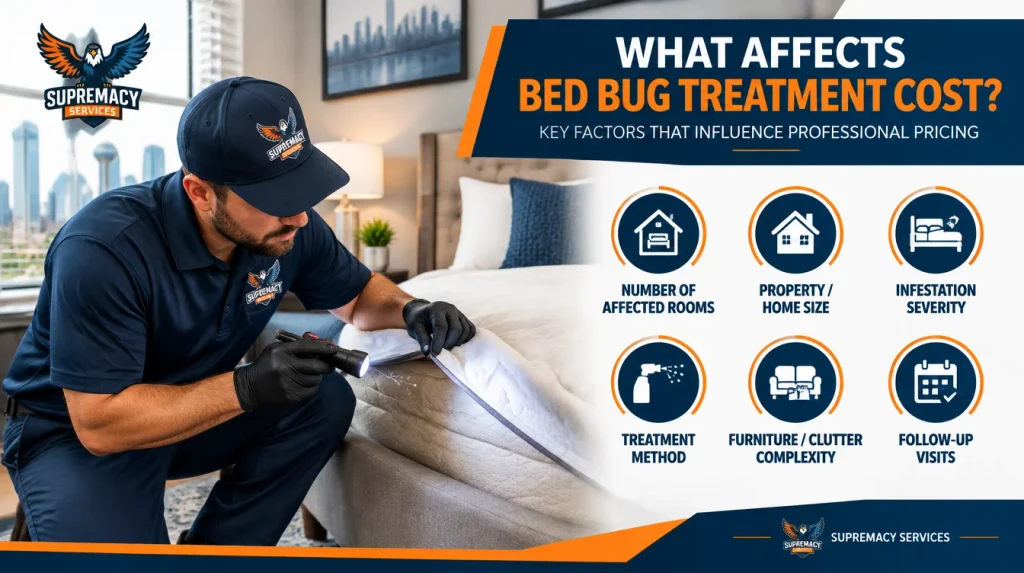
The biggest cost drivers are usually how much space needs treatment, how widespread the infestation is, the treatment method and what follow-up work is required.
1. Number of affected rooms
An infestation confined primarily to one sleeping area is a different project from activity found in several bedrooms, living-room furniture and adjoining areas.
More affected rooms generally mean:
- more inspection time;
- more equipment or product;
- more labor;
- more furniture and hiding places;
- potentially more monitoring and follow-up.
2. Size and layout of the property
Square footage matters, particularly when thermal remediation is being considered.
Layout matters too.
A small, lightly furnished apartment and a larger North Texas home with multiple bedrooms, closets and upholstered furnishings do not present the same treatment conditions.
3. Infestation severity
A recently discovered, localized infestation can require a different scope from bed bugs that have had time to establish themselves in multiple harborages.
EPA guidance specifically identifies the extent of infestation as a factor affecting treatment effectiveness.
4. Treatment method
Heat, steam, pesticides and integrated programs require different equipment, labor and follow-up procedures.
Do not compare two estimates until you know whether they are actually quoting the same type of service.
5. Furniture and belongings
Bed bugs can hide in:
- mattress seams;
- box springs;
- bed frames;
- headboards;
- nightstands;
- upholstered furniture;
- baseboards;
- narrow cracks and crevices.
A heavily furnished or cluttered environment can make inspection and treatment more complex.
6. Preparation requirements
Depending on the treatment plan, homeowners may need to manage clothing and linens, provide access around furniture, follow laundering instructions or handle heat-sensitive belongings in a particular way.
Follow the treatment company’s preparation instructions rather than randomly moving possessions between rooms.
Moving potentially infested belongings can spread the problem into previously unaffected areas.
7. Follow-up service
Ask whether monitoring, reinspection or additional treatments are included in the original proposal.
EPA guidance advises homeowners hiring a professional to expect that some infestations may require multiple visits and to choose a professional who includes monitoring as part of an IPM approach.
Heat vs. Chemical Treatment Cost
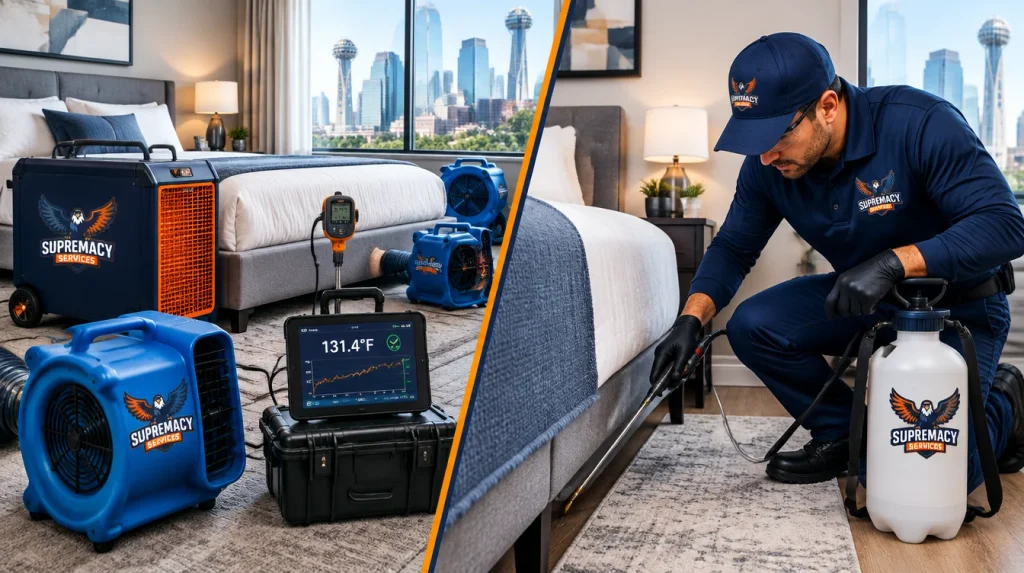
Neither treatment should be selected solely because it has the lowest advertised price.
| Factor | Professional heat | Pesticide-based program |
|---|---|---|
| Pricing model | Often based partly on square footage/scope | May be room-, visit- or scope-based |
| Published benchmark | Roughly $1–$3/sq. ft. | Roughly $2–$5/sq. ft. |
| Eggs | Lethal heat can target eggs when correct temperatures reach them | Product effectiveness depends on label, product and application |
| Residual effect | No | Some approved products can provide residual activity |
| Follow-up | Monitoring remains important | Repeat service may be required |
| Preparation | Often significant | Varies by treatment program |
| Best choice | Depends on property and infestation | Depends on property and infestation |
These price figures are general published market estimates rather than Supremacy pricing.
The correct question is not:
“Which method is cheapest?”
It is:
“Which treatment plan is appropriate for the infestation, and what will the total program cost?”
If bed bugs have been confirmed and thermal remediation is being considered, see how Supremacy’s bed bug thermal treatment works across Dallas-Fort Worth.
What Should a Bed Bug Treatment Quote Include?

Before comparing prices, ask each provider what the proposal actually covers.
A useful quote should make it reasonably clear:
- what areas will be treated;
- what treatment method is proposed;
- what preparation the homeowner must complete;
- whether inspection is included;
- whether follow-up inspection is included;
- whether additional treatments may be required;
- whether those additional treatments cost extra;
- how furniture and mattresses will be handled;
- what occupants and pets need to do before and after treatment;
- what warranty or service terms apply, if any.
A $700 estimate and a $1,200 estimate cannot be meaningfully compared if one covers a single application while the other includes inspection, multiple treatment steps and follow-up.
Questions to ask before hiring a bed bug professional
- Have you confirmed that the insects are actually bed bugs?
- Which rooms or areas need treatment?
- Which treatment method do you recommend, and why?
- Is the price per room, per square foot, per visit or for the complete program?
- How many visits are included?
- Is follow-up inspection included?
- What preparation is required?
- What happens if activity is still found afterward?
- Are the people performing structural pest-control work appropriately licensed?
- Will I receive the scope and price in writing?
Texas regulates structural pest-control work performed for compensation. The Texas Department of Agriculture’s Structural Pest Control Service licenses and regulates pest-management professionals who perform regulated work in and around structures.
DIY vs. Professional Bed Bug Treatment
DIY treatment may cost less upfront, but bed bugs are unusually difficult to control because they hide in narrow spaces, can occur in furniture and belongings, and may survive incomplete treatment.
DIY measures can support control
Homeowners can play an important role through:
- careful inspection;
- appropriate laundering and drying;
- reducing clutter;
- vacuuming;
- monitoring;
- mattress/box-spring encasements where appropriate;
- using only pesticides registered and labeled for the intended bed bug use.
But random pesticide application is not a substitute for a treatment plan.
The EPA specifically warns homeowners to follow pesticide labels, never use outdoor-only pesticides indoors, and avoid relying on foggers or bug bombs as the sole bed bug treatment method.
Don’t attempt DIY whole-room heating
Trying to reproduce professional thermal remediation using household space heaters, fireplaces or other improvised heat sources can create serious safety hazards.
EPA guidance specifically warns against DIY heating approaches using devices such as space heaters or fireplaces.
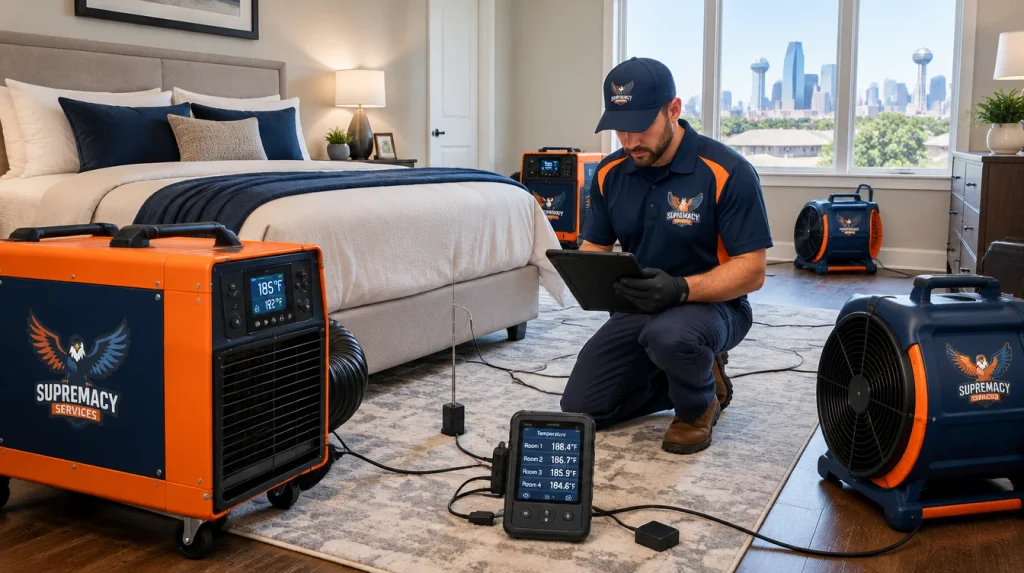
Professional thermal treatment uses equipment, airflow management and temperature monitoring designed for pest remediation.
When professional treatment makes sense
Consider professional help when:
- you have confirmed bed bug activity;
- evidence occurs in multiple rooms;
- bed bugs are present in furniture;
- DIY attempts have not resolved activity;
- you cannot determine the extent of the infestation;
- the problem involves an apartment or multifamily property;
- you need professional heat treatment;
- you are unsure whether the insects are actually bed bugs.
How Do You Know You Actually Have Bed Bugs?
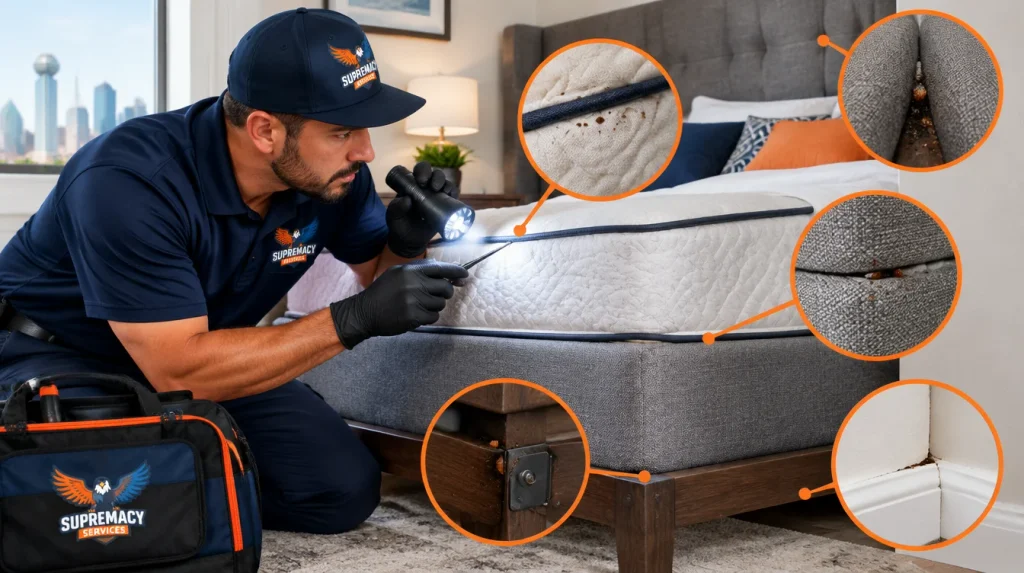
Before paying for treatment, confirm the problem.
Bites alone are not reliable evidence of bed bugs.
Look instead for:
- live bed bugs;
- dark fecal spotting;
- rusty or reddish stains;
- shed skins;
- eggs or eggshells;
- clusters of evidence around mattresses, box springs, bed frames and headboards.
Supremacy’s existing guide to signs of bed bugs besides bites explains these indicators in greater detail.
Correct identification matters because other insects and skin conditions can be mistaken for bed bug activity.
Don’t immediately throw away your mattress
Finding bed bugs on a mattress does not necessarily mean the mattress needs to be discarded.
Bed bugs can also occupy the box spring, bed frame, headboard, furniture and surrounding cracks. Replacing the mattress without treating the rest of the infestation can therefore leave the underlying problem unresolved.
Supremacy’s guide Should I Throw Away My Mattress If I Have Bed Bugs? explains when treatment may be preferable to disposal.
Can You Lower the Cost of Bed Bug Treatment?
The safest way to control costs is not to choose the cheapest treatment blindly. It is to avoid unnecessary work and prevent a manageable infestation from becoming a larger one.
Confirm the pest first
Do not spend hundreds or thousands of dollars treating an infestation that has not been properly identified.
Investigate suspicious activity early
Smaller, more localized infestations may require less treatment area than activity that has spread throughout the property.
Follow preparation instructions carefully
Poor preparation can interfere with treatment.
Conversely, overreacting and moving potentially infested belongings throughout the house can spread insects into additional rooms.
Don’t automatically replace furniture
A mattress or couch may sometimes be incorporated into the treatment plan.
Replacing salvageable furniture can add hundreds or thousands of dollars to the overall financial impact without eliminating bed bugs elsewhere in the property.
Compare total programs, not introductory prices
Ask:
What will I have paid when inspection, treatment and required follow-up are complete?
That number is far more useful than an advertised starting price.
What Should North Texas Homeowners Expect From Professional Service?
A professional bed bug service should begin by determining whether bed bugs are actually present and where activity is concentrated.
Depending on the treatment program, the process may include:
1. Inspection
Likely hiding locations are examined for live insects, eggs, shed skins and fecal evidence.
2. Treatment planning
The technician determines which areas need treatment and what approach is appropriate.
3. Homeowner preparation
You receive instructions for clothing, linens, furniture, pets, occupants and belongings as applicable.
4. Treatment
Heat, appropriately labeled pesticides, steam or a combination of techniques may be used depending on the plan.
5. Monitoring and follow-up
The property should be monitored for remaining activity.
The EPA emphasizes that effective bed bug control is methodical and that continued monitoring is important for determining whether the population has been eliminated.
What Can Be Mistaken for a Bed Bug Problem?
Not every itchy bite or tiny insect near a bed is a bed bug.
Potential sources of confusion include:
| What you notice | Bed bugs possible? | Other possibilities |
|---|---|---|
| Unexplained bites | Yes | Mosquitoes, fleas, other arthropods or skin conditions |
| Tiny insect near mattress | Yes | Carpet beetles and other household insects |
| Dark marks | Yes | Dirt, mold or unrelated stains |
| Red bedding stains | Yes | Other sources of blood/staining |
| Pale particles | Eggs/skins possible | Lint, dust or fibers |
Treating the wrong pest wastes money and delays appropriate control.
Frequently Asked Questions
How much does bed bug treatment cost in North Texas?
Published 2026 market data puts professional home treatment broadly around $1,000–$4,000, although projects may cost less or substantially more. Property size, number of affected rooms, infestation severity, treatment method and follow-up requirements determine the actual price.
How much does it cost to treat one room for bed bugs?
Published consumer estimates commonly put a single-room professional treatment in roughly the $300–$650 range, although the actual price depends heavily on method, severity and what services are included.
How much does bed bug heat treatment cost?
Published 2026 market estimates commonly place professional heat treatment around $1–$3 per square foot. A property-specific inspection is still necessary because layout, furnishings and infestation scope can affect the treatment required.
Is heat treatment more expensive than chemical bed bug treatment?
Not necessarily over the entire treatment program. Upfront pricing and the number of required visits can differ. Compare the total proposed treatment, preparation requirements and follow-up rather than price per visit alone.
Does homeowners insurance cover bed bug treatment?
Coverage depends on the individual policy and circumstances. Homeowners should check directly with their insurer rather than assuming pest-control treatment is covered.
Can I get rid of bed bugs myself?
Some DIY measures can help, but bed bugs can be difficult to eliminate completely. The EPA recommends an integrated approach and warns against unsafe pesticide use, reliance on foggers alone and improvised DIY heat treatments.
Do I need to throw away my mattress?
Usually not automatically. Bed bugs may also occupy the frame, box spring, headboard and nearby furniture. Determine whether the mattress can be incorporated into the treatment plan before replacing it.
Does one bed bug mean I need whole-house treatment?
Not necessarily. One confirmed bed bug warrants a careful inspection, but the appropriate treatment scope depends on where additional activity is found.
Why do bed bug treatment prices vary so much?
Prices vary because companies may be quoting completely different scopes: one room versus an entire home, heat versus pesticide treatment, one visit versus a multi-visit program, and treatment alone versus treatment plus inspection and follow-up.
Get a Bed Bug Treatment Plan for Your DFW Property
Online price ranges are useful for budgeting, but they cannot tell you how far an infestation has spread or what treatment your property actually needs.
Start by confirming the pest and determining the scope.
Supremacy Services provides professional bed bug control and thermal-treatment options across Dallas and the DFW Metroplex. A property-specific assessment can determine where activity is occurring, what preparation is necessary and what treatment approach fits the infestation.
Think you have bed bugs? Request a bed bug inspection from Supremacy Services and get a treatment recommendation based on your property—not a generic online price range.

