
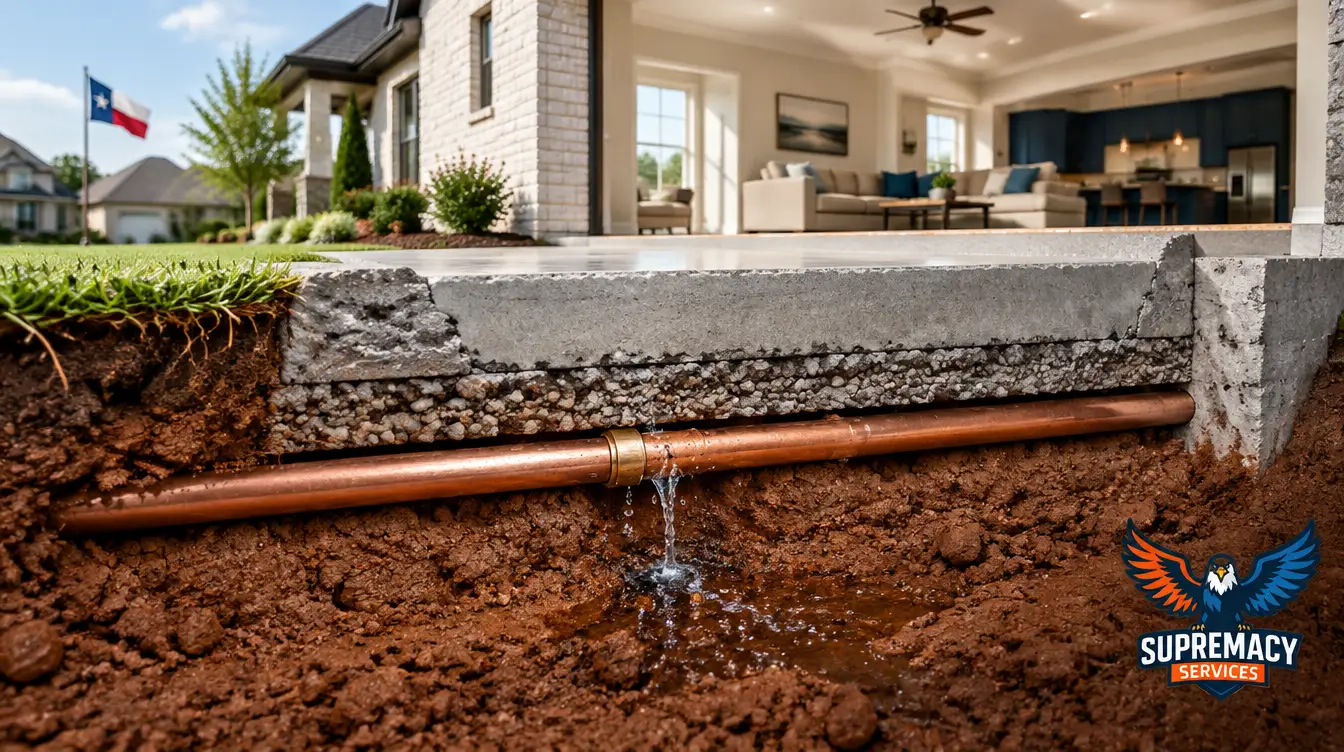
Ever wonder how long can a slab leak go undetected! A slab leak can go undetected for weeks, months, or sometimes longer, depending on the size of the leak, where the damaged pipe is located, and how quickly warning signs become visible.
For Dallas homeowners, the challenge is that water leaking beneath a concrete foundation does not always appear on the floor. It may seep into the surrounding soil, travel along hidden pathways, or gradually affect flooring and building materials before anyone notices.
A small leak can remain hidden while continuously wasting water. A larger leak may reveal itself much sooner through unexpected water bills, warm flooring, damp spots, or a sudden loss of water pressure.
There is no guaranteed safe period for leaving a slab leak untreated. If you suspect a leak beneath your foundation, early investigation is the best way to limit unnecessary water loss and potential property damage.
Table of Contents
- How long can a slab leak remain hidden?
- Why do some slab leaks go unnoticed?
- What are the earliest warning signs?
- What happens when a slab leak is ignored?
- How much water can a hidden slab leak waste?
- How can you check for a possible slab leak?
- How do plumbers find hidden slab leaks?
- What causes slab leaks in Dallas homes?
- Can other plumbing problems look like slab leaks?
- What should you do if you suspect a leak?
- How can homeowners reduce their risk?
- Frequently asked questions
How Long Can a Slab Leak Remain Hidden?
A slab leak may remain unnoticed for a considerable period because the damaged pipe is concealed beneath the home’s concrete foundation.
The length of time depends on the leak’s flow rate, soil conditions, plumbing layout, and whether the homeowner regularly monitors water consumption.
There is no reliable universal detection timeline. The following examples describe possible patterns, not established averages.
| Possible period | What a homeowner might notice |
|---|---|
| First hours or days | A major leak may cause a rapid pressure drop, audible running water, or visible moisture |
| Days to weeks | An ongoing leak may begin affecting water consumption or nearby materials |
| Weeks to months | A smaller hidden leak may be discovered through recurring moisture, warm flooring, or unexplained utility bills |
| Several months or longer | Some concealed leaks may remain unnoticed where water escapes into surrounding soil without obvious interior symptoms |
A leak’s age cannot be accurately determined from symptoms alone. Even professional testing may establish where a leak is located without revealing exactly when it began.
Can a slab leak go undetected for months?
Yes. A slow leak beneath a foundation can remain unnoticed for months, particularly when the water escapes into the soil instead of reaching visible flooring.
However, the absence of visible water does not mean the leak is harmless.
The U.S. Environmental Protection Agency explains that undetected household leaks can waste substantial amounts of water and may damage homes.
Can a slab leak remain hidden for years?
It is possible for a small concealed leak to persist for a very long time, but there is no dependable timeframe that applies to every home.
Pipe deterioration, changes in water pressure, or additional movement around the pipe can also cause an existing leak to worsen.
Homeowners should not assume a leak is minor simply because they have not noticed significant damage.
Why Do Some Slab Leaks Go Unnoticed?
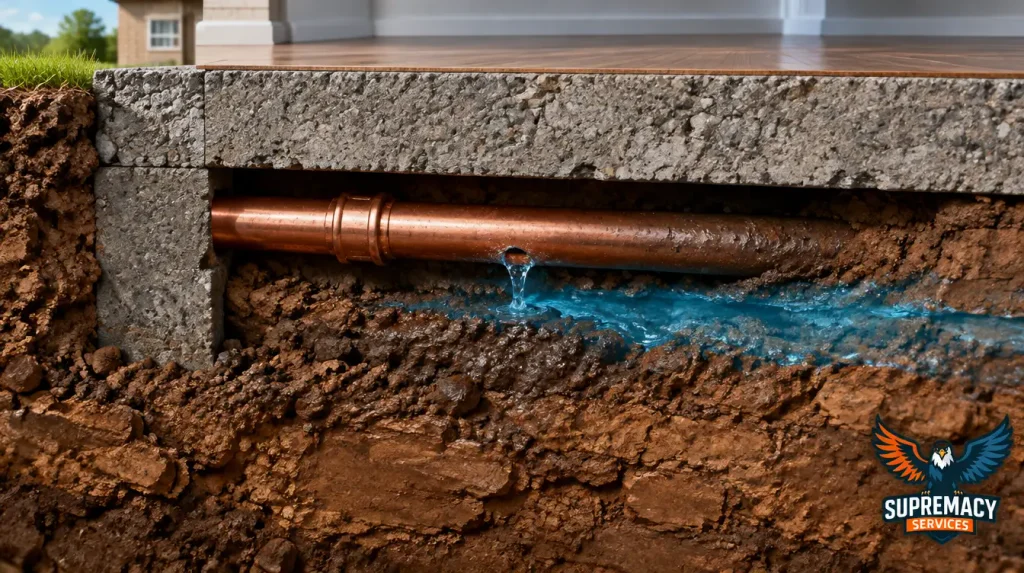
A slab leak occurs when a water supply pipe running beneath or within a concrete foundation develops a leak.
Unlike an exposed pipe beneath a sink, a leaking underground line may have no obvious visible outlet.
1. Water escapes into the soil
Water can spread into soil beneath or beside the foundation instead of immediately appearing indoors.
The soil’s composition, moisture content, drainage conditions, and the leak’s location influence where the water travels.
2. Small leaks may not noticeably reduce water pressure
A minor opening in a pressurized pipe may release water continuously without creating a pressure change that the homeowner can easily detect.
A normal-feeling shower does not rule out a hidden plumbing leak.
3. Flooring can conceal moisture
Tile, vinyl, carpet, and other flooring materials may conceal early moisture problems.
Some flooring materials may show discoloration, separation, or damage only after prolonged exposure.
4. Homeowners may overlook gradual changes in water bills
A slow increase in water consumption can be mistaken for seasonal usage, irrigation, guests, or ordinary household changes.
Comparing bills with the same period in previous years can help reveal unusual patterns.
5. Symptoms may resemble other household problems
Musty odors, flooring changes, and interior cracks can have several causes.
A homeowner may initially suspect condensation, roof leakage, drainage problems, or ordinary foundation movement.
When to seek help: If you notice unexplained water use together with persistent flooring moisture or warm spots, consider scheduling a professional plumbing inspection through Supremacy Services rather than waiting for visible flooding.
What Are the Earliest Warning Signs of an Undetected Slab Leak?
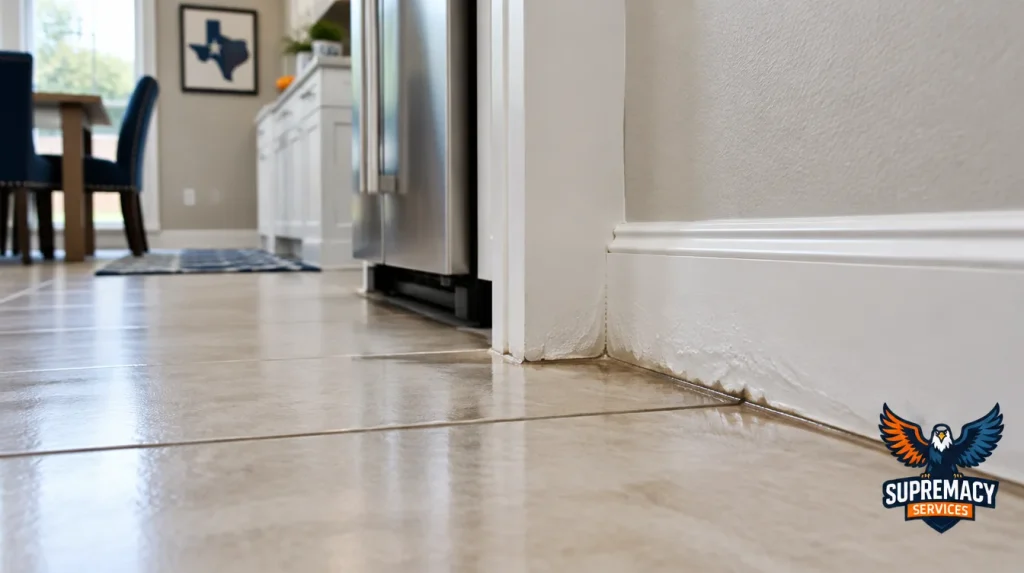
The earliest signs of a slab leak often involve changes in water consumption, floor temperature, moisture, or plumbing performance.
One symptom alone does not confirm a slab leak, but several symptoms appearing together warrant investigation.
1. An unexplained increase in your water bill
A rising water bill without a corresponding change in household water use is an important warning sign.
Compare current usage with earlier billing periods, especially when irrigation and occupancy have remained consistent.
2. Warm spots on the floor
A leak in a hot-water line beneath a slab may produce a localized warm area.
Warm flooring can also result from sunlight, heating systems, or nearby appliances, so temperature alone is not conclusive.
3. Damp flooring or unexplained moisture
Moisture may appear beneath carpet, along flooring seams, or near baseboards.
Persistent dampness should be investigated even when the source is not obvious.
4. The sound of running water when fixtures are off
A hissing or rushing sound may indicate water movement inside a pressurized pipe.
First rule out toilets, water-using appliances, and other fixtures.
5. Reduced water pressure
A substantial supply-line leak may reduce water pressure.
However, pressure changes can also result from fixture restrictions, valves, utility work, or other plumbing problems.
6. Musty odors or recurring mold
Persistent moisture can create conditions favorable to microbial growth.
A musty smell does not prove a slab leak, but it indicates a moisture problem worth investigating.
7. Flooring changes or cracks
Loose tiles, buckling flooring, and new cracks can accompany moisture-related movement or damage.
They are not specific to slab leaks and should not be treated as proof of foundation failure.
Quick homeowner warning-sign checklist
Signs observed at home
0 of 6Unexpected increase in water consumptionWarm spot on tile or another floor surfacePersistent dampness or musty odorWater movement audible when fixtures are offUnexplained reduction in water pressureNew or worsening flooring damage
Use this checklist to identify symptoms worth monitoring.Clear checklist
What Happens If a Slab Leak Goes Undetected?
An untreated slab leak can lead to water waste, damage to building materials, and changes in soil moisture around the foundation.
The severity depends on how much water escapes, where it travels, and how long the condition continues.
Persistent water loss
A hidden leak may release water continuously, including overnight and when no fixtures are being used.
Moisture damage to flooring and interior finishes
Water reaching the interior can damage flooring adhesives, carpet, baseboards, and other moisture-sensitive materials.
Mold and indoor moisture concerns
Prolonged dampness can contribute to mold growth when conditions are favorable.
Changes in soil conditions beneath the foundation
Some North Texas soils contain clay that changes volume with moisture.
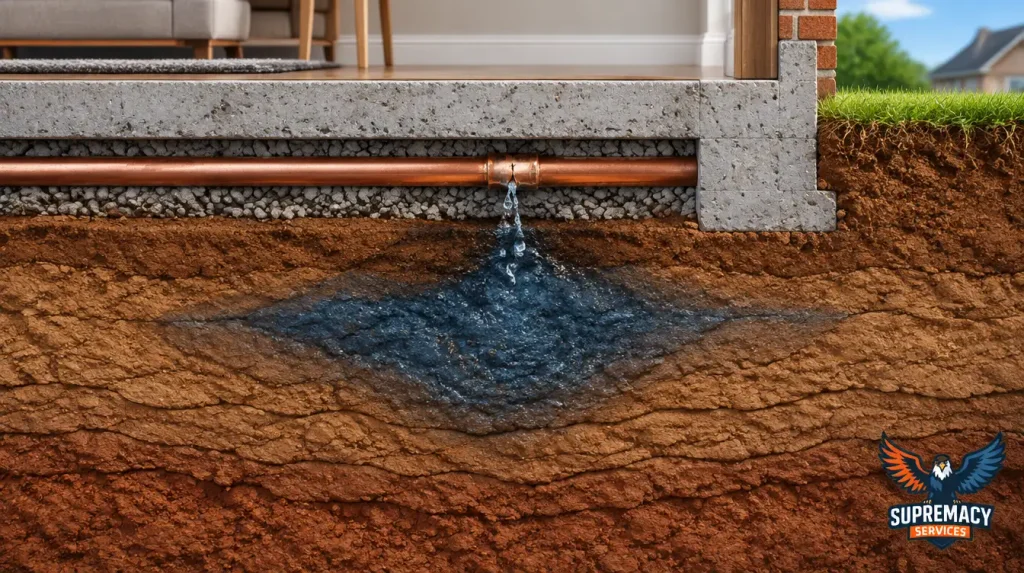
Water escaping near a foundation can contribute to uneven soil moisture, potentially affecting support conditions. However, foundation damage cannot be attributed to a slab leak without an appropriate assessment.
Higher repair costs
A leak discovered early may require a more limited intervention than one accompanied by extensive flooring or moisture damage.
That does not mean every delayed repair becomes expensive. The actual work depends on the pipe’s condition, leak location, accessibility, and the damage present.
How Much Water Can a Hidden Slab Leak Waste?
Even a relatively small continuous leak can waste substantial amounts of water over time.
The following calculator illustrates water loss at a hypothetical constant flow rate. It is not a measurement of a particular home’s leak.
Illustrative hidden-leak water lossLeak rate
0.10 gal/min
Duration
30 days
Hypothetical flow rateTime undetected
7 days30 days90 days
Estimated water lost
4,320 gallons
Assumes continuous, unchanged flow 24 hours per day
For example, a continuous leak releasing 0.1 gallon per minute would waste approximately 4,320 gallons in 30 days.
This is a mathematical illustration, not a typical slab leak flow rate. Actual leakage may vary with pressure, pipe condition, and water use.
The EPA recommends checking water meters and comparing utility bills to identify potential household leaks.
How Can You Check for a Possible Slab Leak Before Calling a Plumber?

Homeowners can perform several noninvasive checks before scheduling professional leak detection.
These steps can establish whether there may be unwanted water use, but they cannot reliably pinpoint a leak beneath concrete.
Step 1: Turn off water-using fixtures and appliances
Make sure faucets, showers, dishwashers, washing machines, and irrigation systems are not operating.
Step 2: Check the water meter
Locate the home’s water meter and record the reading.
Do not tamper with utility-owned equipment or enter an unsafe meter box.
Step 3: Repeat the reading after two hours
Avoid using water during the test.
If the meter reading changes, there may be a leak or another source of unintended water consumption.
The EPA describes this two-hour water meter test in its household leak-detection guidance.
Step 4: Rule out common fixture leaks
Check toilets, faucets, outdoor hose connections, and irrigation systems.
A leaking toilet can waste water without making an obvious sound.
Step 5: Document unusual conditions
Record any warm spots, damp areas, unusual sounds, or changes in water pressure.
Photographs, utility bills, and notes about when symptoms began may help the plumber investigate.
Step 6: Arrange professional testing when necessary
If the meter suggests unwanted water use and no ordinary fixture leak is found, arrange an assessment.
Do not break flooring or cut into concrete based only on a suspected leak location.
How Do Professional Plumbers Detect Slab Leaks Without Breaking Concrete?

Professional plumbers generally begin with non-destructive diagnostic methods to narrow down the source of a suspected leak.
The appropriate methods depend on the plumbing system and the symptoms observed.
Pressure testing
A plumber may isolate sections of the plumbing system and test whether they maintain pressure.
A pressure loss can indicate leakage within the tested section, although further investigation may be needed.
Acoustic leak detection
Specialized listening equipment may help identify sounds produced by pressurized water escaping from a pipe.
The effectiveness depends on the pipe material, leak characteristics, background noise, and site conditions.
Thermal imaging
Infrared imaging may help identify temperature differences associated with some hot-water leaks.
It does not directly see through concrete or prove the presence of a leak.
Plumbing system isolation
Separating individual branches or systems can help determine whether the problem involves hot-water piping, cold-water piping, or another source.
Targeted confirmation and repair planning
After narrowing the likely location, the plumber can discuss repair options.
Depending on the situation, these may include accessing the damaged pipe, rerouting a water line, or replacing deteriorated piping.
Need help identifying a concealed leak? Supremacy Services can be contacted for an assessment of suspected plumbing leaks in the Dallas area. Ask which diagnostic methods are appropriate for your home’s plumbing configuration before authorizing invasive work.
What Causes Slab Leaks in Dallas and North Texas Homes?
Several conditions can contribute to water line deterioration or failure beneath a slab foundation.
Pipe aging and corrosion
Older pipes may deteriorate because of material condition, water chemistry, installation characteristics, and long-term exposure.
Pipe movement and mechanical stress
Movement in surrounding materials can place stress on pipe joints and connections.
Soil moisture changes
North Texas includes areas with clay-rich soils that can expand or contract as moisture conditions change.
This makes proper moisture management around foundations important, although not every Dallas property has identical soil conditions.
Installation-related problems
Improper pipe support, damaged materials, stressed connections, or other installation defects can contribute to future leakage.
Water pressure and operating conditions
Excessive or fluctuating pressure can place additional stress on plumbing components.
A plumber can assess pressure and determine whether corrective measures are warranted.
Can Other Plumbing Problems Be Mistaken for a Slab Leak?
Yes. Several problems can produce symptoms similar to a leak beneath a foundation.
| Problem | Similar symptoms | Helpful distinction |
|---|---|---|
| Leaking toilet | Higher water bill | Toilet leak testing may identify the source |
| Irrigation leak | Unexplained water use, wet soil | Often associated with irrigation operation or piping |
| Main water service line leak | Meter movement, wet ground | May occur between the meter and house rather than beneath the slab |
| Drain or sewer leak | Odors, moisture, drainage issues | Requires different diagnostic methods |
| Roof or exterior water intrusion | Damp walls or flooring | Often related to rainfall or drainage |
| HVAC condensate problem | Damp flooring, musty odor | May be associated with cooling equipment |
| Slab supply-line leak | Continuous water use, warm spots, hidden moisture | Requires plumbing isolation and leak-location testing |
A changing water meter reading can indicate water loss, but it cannot by itself distinguish a slab leak from a leaking toilet, irrigation pipe, or another supply-line problem.
What Should You Do If You Suspect an Undetected Slab Leak?
The best response is to investigate promptly while avoiding unnecessary demolition or unsafe repairs.
- Check for active water damage. If water is spreading rapidly, consider shutting off the home’s water supply at an accessible homeowner-operated valve.
- Avoid electrical hazards. Keep away from wet electrical equipment or outlets and contact an appropriate professional if there is a safety concern.
- Document the symptoms. Save water bills and photograph visible damage.
- Arrange professional diagnosis. Ask the plumber to identify the likely source before proposing repairs.
- Request a written repair scope. Confirm what testing, access, repairs, and restoration are included.
- Keep repair records. They may be useful for insurance questions or utility billing adjustments.
Can Dallas homeowners request a water bill adjustment after repairing a leak?
Dallas Water Utilities has a leak adjustment request process for qualifying customers.
Its published form states that a qualifying adjustment may be limited to three months, that requests should be submitted within 90 days of repair, and that supporting repair documentation is required. Approval is not guaranteed.
Homeowners should review the current requirements directly with Dallas Water Utilities.
What affects the cost of repairing a hidden slab leak?
The cost depends on the circumstances of the repair, including:
- The location and accessibility of the damaged pipe
- Whether the problem involves one section or multiple deteriorated sections
- The pipe material and plumbing configuration
- The chosen repair method
- Required flooring, concrete, or finish restoration
- Any separate moisture remediation or foundation evaluation
A repair estimate should distinguish diagnostic charges, plumbing work, and restoration costs.
There is no responsible way to assign a fixed repair price without knowing the leak location and repair scope.
How Can Dallas Homeowners Reduce the Risk of Undetected Slab Leaks?
Not every pipe failure is preventable, but regular monitoring can help homeowners discover leaks earlier.
Monitor water consumption
Compare water bills regularly and investigate unexplained increases.
Learn where the main shutoff valve is located
Knowing how to stop water flow can help limit damage during an active plumbing emergency.
Address recurring plumbing problems
Repeated leaks, corrosion, or pressure irregularities may indicate a broader plumbing issue.
Consider a water monitoring device
Leak-detection and flow-monitoring systems can identify unusual water use or moisture patterns and alert homeowners.
The EPA provides guidance on choosing these systems and understanding their limitations.
Maintain appropriate drainage around the home
Keep gutters and drainage pathways functioning properly to reduce unnecessary moisture accumulation near the foundation.
Drainage maintenance is useful for general foundation care, but it does not guarantee prevention of plumbing leaks.
Investigate unusual symptoms promptly
A persistent warm floor, unexplained water usage, or recurring moisture should not be ignored simply because the home appears otherwise normal.
Frequently Asked Questions About Hidden Slab Leaks
1. Can you have a slab leak without seeing water?
Yes. Water may escape into soil beneath the foundation without reaching the visible floor. Unusual water consumption, warm spots, or professional pressure testing may reveal a hidden problem.
2. How long does it take for a slab leak to cause damage?
There is no fixed timeline. Damage depends on the leak rate, water movement, soil conditions, and materials exposed. Some leaks cause noticeable problems quickly, while others remain concealed.
3. Will a slab leak always increase my water bill?
Not necessarily. A small leak may be difficult to distinguish from normal usage changes. Some leaks may also occur in systems or locations that are not reflected in the household’s usual metered water consumption.
4. Can a slab leak stop on its own?
A damaged pressurized pipe should not be expected to repair itself. Flow may change or temporarily diminish, but the underlying defect generally requires evaluation and repair.
5. Can a slab leak damage a home’s foundation?
Yes, in some circumstances. Escaping water may change soil moisture and support conditions beneath or near the slab. However, not every slab leak causes structural damage.
6. Can a plumber find a slab leak without digging?
Often, a plumber can narrow down a suspected leak using pressure testing, acoustic equipment, thermal imaging, or system isolation before invasive work. Some situations still require physical access for confirmation or repair.
7. Does homeowners insurance cover an undetected slab leak?
Coverage depends on the policy, the cause of the loss, exclusions, and whether damage occurred suddenly or gradually. Homeowners should review their policy and ask their insurer about the specific circumstances.
8. Should I turn off my water if I suspect a slab leak?
If there is substantial active leakage or spreading water, shutting off the water at a safe, accessible valve may help limit damage. For uncertain symptoms without active flooding, contact a plumber for guidance.
9. How can I tell whether my slab leak is getting worse?
Increasing water use, spreading moisture, new flooring damage, or changes in water pressure may indicate a worsening problem. These symptoms are not precise measurements of leak severity, so professional testing is important.
Final Thoughts: Don’t Wait for Visible Water Damage
A slab leak can remain undetected for weeks or months, and sometimes longer. Unfortunately, visible flooding is not required for a hidden leak to waste water or affect a home.
For Dallas and DFW homeowners, the most useful early clues are unexplained water consumption, persistent warm or damp flooring, unusual plumbing sounds, and moisture problems without a clear source.
If you suspect a leak beneath your foundation, contact Supremacy Services to discuss professional plumbing diagnosis and the appropriate next steps. Identifying the source early can help you make a more informed repair decision and avoid unnecessary work.

