Heater not working in Dallas?, start by checking the thermostat, furnace power switch, circuit breaker, air filter and accessible vents. Those simple issues can sometimes stop a heating system from starting or prevent it from delivering enough warm air. If the heater still does not work—or you notice a gas odor, repeated shutdowns, electrical problems, unusual ignition behavior or other safety concerns—stop troubleshooting and have the system professionally diagnosed.
Dallas winters may be milder than those farther north, but reliable heating still matters. North Texas experiences regular freezes, and sudden cold fronts can place heating systems under considerably more demand than they see during much of the year.
This guide walks you through what you can safely check yourself, what different symptoms may mean, and when a heating problem belongs in the hands of an HVAC professional.
Heater Not Working? Start With These 7 Checks
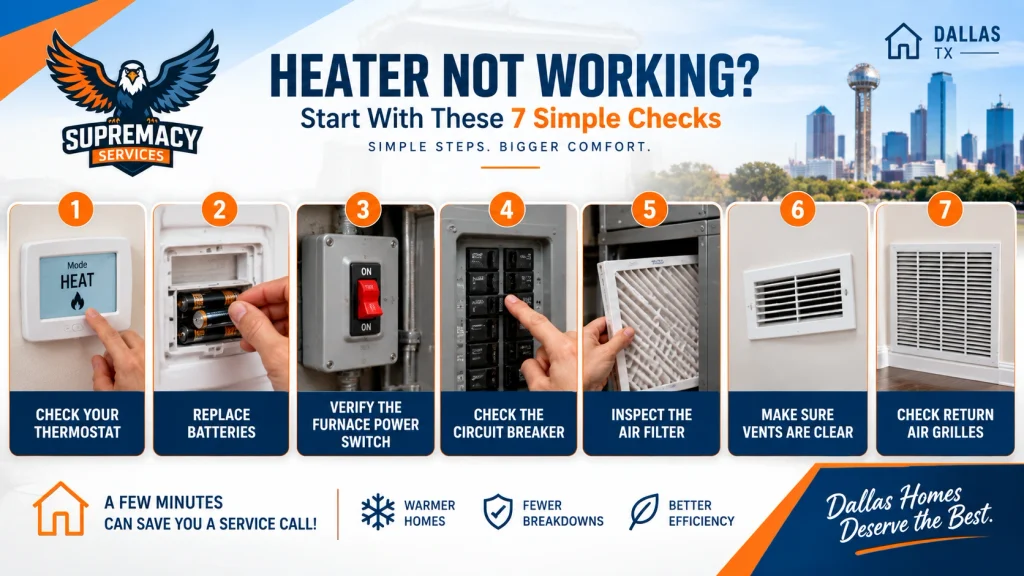
Before assuming your furnace or heating system has suffered a major failure, work through these basic checks:
- Make sure the thermostat is set to HEAT.
- Raise the temperature setting above the current room temperature.
- Check the thermostat batteries if your model uses them.
- Make sure the furnace or air-handler power switch is on.
- Check the HVAC/furnace circuit breaker.
- Inspect the air filter and replace it if it is heavily clogged.
- Make sure supply registers and return-air grilles are not obstructed.
If the heater still will not start after these checks, further troubleshooting may involve electrical components, ignition controls, safety switches, gas components, blower equipment or other parts that should be professionally diagnosed.
Need help after completing the basic checks? Schedule professional [heater repair in Dallas] with Supremacy Services for diagnosis of a heating system that will not start or heat properly.
Why Is My Heater Not Working?
A heater can stop working because of something as simple as an incorrect thermostat setting or as technical as an ignition, motor, electrical or control-system failure.
Here is a quick troubleshooting overview:
| Symptom | Possible causes | Safe homeowner check | Professional service? |
|---|---|---|---|
| Heater does nothing | Thermostat, power or breaker issue | Thermostat, batteries, switch, breaker | If problem remains |
| Furnace starts but no heat | Ignition or fuel-related issue | Thermostat/filter only | Usually |
| Weak airflow | Dirty filter or blocked vents | Filter and accessible vents | If airflow stays weak |
| Heater blows cool air | Fan setting, ignition or heat-production problem | Thermostat and filter | Often |
| Starts and stops repeatedly | Airflow, thermostat, controls or overheating | Filter and vents | Recommended if persistent |
| Unusual banging/screeching | Mechanical or ignition problem | Shut system down if severe | Yes |
| Breaker repeatedly trips | Electrical/system fault | Do not repeatedly reset | Yes |
| Gas odor | Possible fuel-gas hazard | Leave the area | Immediate safety response |
1. Check Your Thermostat First
The thermostat is the best starting point because the heating equipment will not operate normally if it is not receiving the correct call for heat.
Confirm that:
- the mode is set to HEAT, not COOL;
- the desired temperature is higher than the room temperature;
- the display is operating normally;
- replaceable batteries are not dead;
- the fan setting is generally AUTO rather than continuously ON.
If the thermostat says the heat is running but the furnace never starts, the problem may be farther downstream. Possibilities include loss of power, restricted airflow, an ignition problem or an equipment/control failure.
2. Check the Furnace Power Switch
Many furnaces have a dedicated service switch located on or close to the equipment. Because it can resemble an ordinary light switch, it can occasionally be turned off unintentionally.
Make sure the switch is in its normal ON position.
Do not remove equipment panels or reach into the furnace to inspect energized components.
3. Check the Circuit Breaker
Your furnace or air handler requires electricity even when the system heats with natural gas.
Check the electrical panel for a breaker labeled furnace, heater, HVAC, air handler or similar.
A tripped breaker can prevent the system from operating. If a breaker trips again after being reset, however, do not continue resetting it. Repeated tripping can indicate an electrical or equipment problem that requires diagnosis.
Can a Dirty Air Filter Stop a Heater From Working?
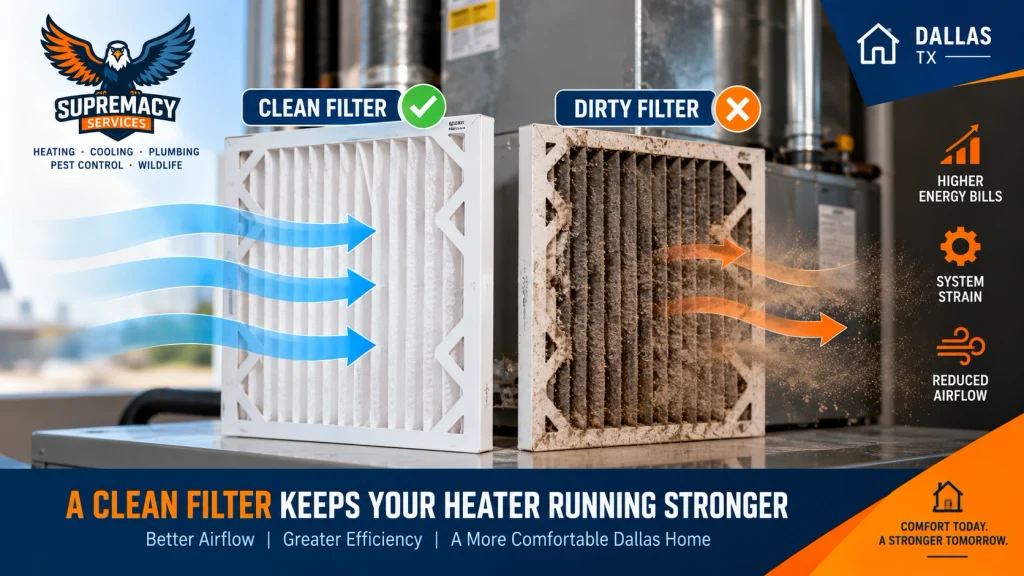
Yes. A heavily restricted filter can reduce airflow through a forced-air heating system and contribute to overheating and safety shutdowns.
Inspect the filter if it is safely accessible. If it is visibly loaded with dirt, replace it with the correct size and type specified for the system.
Also check that:
- return-air grilles are unobstructed;
- supply registers have not been accidentally covered;
- furniture or rugs are not blocking airflow;
- accessible vents are open.
The U.S. Department of Energy recommends cleaning or replacing furnace filters regularly, while ENERGY STAR recommends checking, cleaning or changing filters routinely because dirty filters can raise operating costs and contribute to equipment problems.
Do not compensate for poor airflow by operating the system without a filter.
Why Is My Heater Running but Not Heating the House?
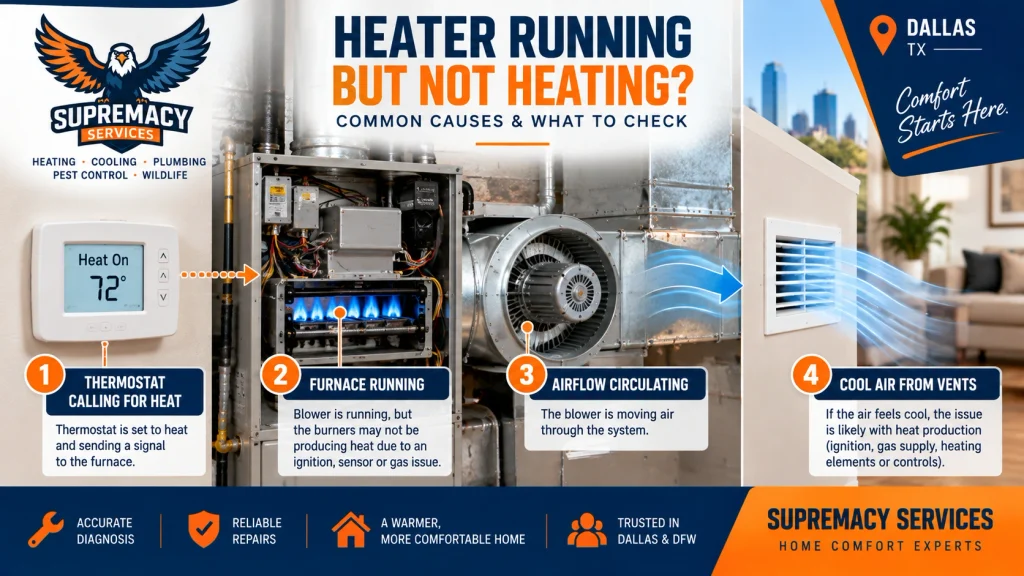
If the heater runs but the home remains cold, determine whether the problem is heat production, airflow, distribution, or simply the fan operating between heating cycles.
Thermostat Fan Set to ON
When the thermostat fan is set to ON, the blower can continue circulating room-temperature air when the furnace is not actively heating.
Switching the fan setting to AUTO may resolve what appears to be cold air from the vents.
Restricted Airflow
A dirty filter, obstructed return, closed registers or a duct problem can reduce the amount of heated air reaching the living space.
Furnace Ignition Problem
A gas furnace must successfully complete its ignition sequence before the burners can produce heat.
Depending on the furnace, an ignition-related failure can involve an igniter, flame-sensing/control component, fuel supply or another safety/control issue.
These are not good DIY repair candidates. Diagnosis may require electrical testing and evaluation of combustion-related equipment.
Electric Heating Problem
Electric furnaces and air handlers use electric heating components rather than gas burners. A system may therefore move air while failing to produce adequate heat if a heating component, electrical control or associated circuit has failed.
Professional testing is appropriate when basic thermostat, filter and breaker checks do not solve the problem.
Why Does My Heater Turn On and Off Repeatedly?
Repeated short operating cycles can occur when the system cannot complete or maintain a normal heating cycle.
Possible causes include:
- restricted airflow;
- a heavily clogged filter;
- thermostat problems;
- overheating and safety shutdowns;
- control problems;
- ignition problems;
- equipment sizing or system-design issues.
Start by checking the filter and making sure accessible registers and return grilles are clear.
If the furnace continues turning on and off rapidly, schedule a diagnostic visit instead of repeatedly resetting the equipment. The cycling is a symptom; identifying its actual cause is more important than forcing the heater to keep running.
Why Does My Thermostat Say “Heat On” but Nothing Happens?
When the thermostat displays Heat On but the furnace does not respond, the thermostat may be calling for heat correctly while another part of the system fails to start.
Check:
- thermostat settings and batteries;
- furnace/HVAC power switch;
- circuit breaker;
- air filter;
- whether the equipment is showing an accessible diagnostic indicator described in your owner’s manual.
Potential professional-level causes include control-board problems, wiring faults, ignition failure, blower problems and other safety-control faults.
If the thermostat is functioning but the equipment does not respond after the basic checks, the next step should be system diagnosis rather than replacing parts based on guesswork.
Furnace Blowing Cold Air vs. Heater Not Working
These searches sound similar, but they represent different symptoms.
| Heater not working | Furnace blowing cold air |
|---|---|
| System may not start at all | Blower is usually operating |
| Power/control problem possible | Heat-production problem possible |
| Thermostat may not activate equipment | Fan setting may be involved |
| Breaker or switch may be involved | Ignition or heating component may be involved |
| Troubleshooting begins with system startup | Troubleshooting focuses on why air is not being heated |
If your blower is operating but the vents are delivering cold or lukewarm air, see Supremacy’s dedicated guide to why a furnace blows cold air for a deeper diagnosis of that specific symptom.
Gas Furnace Not Working: What Should You Check?
For a gas furnace, homeowners should limit troubleshooting to safe, external checks such as the thermostat, filter, power supply and accessible controls described by the manufacturer.
Do not disassemble burners, bypass safety switches, modify gas components or attempt electrical testing unless you are qualified to perform that work.
If You Smell Gas
Treat a suspected gas leak differently from an ordinary heating breakdown.
Do not attempt to troubleshoot the furnace. Leave the affected area and follow the emergency guidance of your gas utility or emergency authorities.
A heating failure is inconvenient; a potential fuel-gas problem is a safety issue.
What About Carbon Monoxide?
Fuel-burning heating equipment must vent combustion gases correctly.
Carbon monoxide is especially dangerous because people cannot reliably detect it through normal senses. Homes with fuel-burning equipment should have properly installed and maintained carbon-monoxide alarms according to applicable manufacturer and safety guidance.
If a carbon-monoxide alarm activates, treat it as a safety event rather than a furnace troubleshooting problem. Move to safety and follow emergency instructions.
Professional furnace maintenance should also include inspection of combustion-related components. ENERGY STAR’s maintenance checklist specifically includes checking gas connections, burner combustion and the heat exchanger for fuel-burning heating equipment.
Heat Pump Not Heating? The Troubleshooting Is Different
Not every Dallas home uses a conventional furnace.
A heat pump provides both cooling and heating by transferring heat rather than producing heat through the same combustion process as a gas furnace. That means some heat-pump symptoms have different causes.
Homeowners can still check:
- thermostat mode and settings;
- breaker status;
- filter condition;
- supply and return airflow;
- whether the outdoor equipment appears to have power.
Heat-pump-specific problems can involve controls, defrost operation, electrical components, refrigerant-system problems or auxiliary heating equipment.
If basic checks do not restore operation, professional HVAC diagnosis is appropriate.
DIY Heater Troubleshooting vs. Calling an HVAC Professional
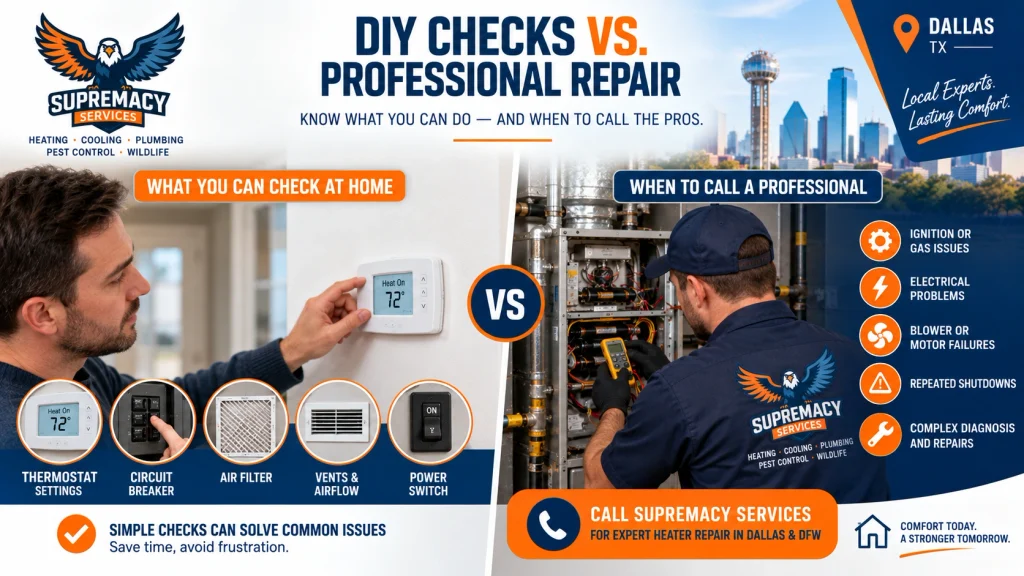
A useful rule is to distinguish basic operating checks from equipment repair.
Reasonable homeowner checks
You can generally inspect:
- thermostat settings;
- thermostat batteries;
- furnace power switch;
- breaker status;
- replaceable air filter;
- accessible supply registers;
- return-air grilles.
Leave these problems to a professional
Professional diagnosis is appropriate for:
- gas valves and fuel-system components;
- ignition components;
- electrical testing and internal wiring;
- control boards;
- blower motors;
- repeated breaker trips;
- repeated safety shutdowns;
- heat exchanger concerns;
- combustion or venting problems;
- refrigerant circuits;
- persistent error or lockout conditions.
Texas regulates air-conditioning and refrigeration contractors. TDLR states that contractors who install, repair or maintain heating, air-conditioning or refrigeration systems must hold the applicable state license, subject to the law’s requirements and exemptions.
CTA: If you have completed the safe checks above and your heating system still will not operate correctly, request a Dallas heater diagnostic and repair service from Supremacy Services.
Why Heater Problems Matter in Dallas and DFW
Dallas homeowners should not assume heating is unimportant simply because North Texas is known for hot summers.
National Weather Service climate data shows that Dallas/Fort Worth averages roughly 29 freezes per season under the 1991–2020 climate normals. The average first freeze is around November 22, and the average last freeze is around March 12.
North Texas winters are also characterized by substantial temperature variability. A relatively mild stretch can be followed by a strong cold front, which means a heating system may sit lightly used and then suddenly be asked to operate for extended periods.
That makes fall maintenance particularly useful: problems can be identified before the first period of sustained heating demand.
What Does Professional Heater Repair Include?
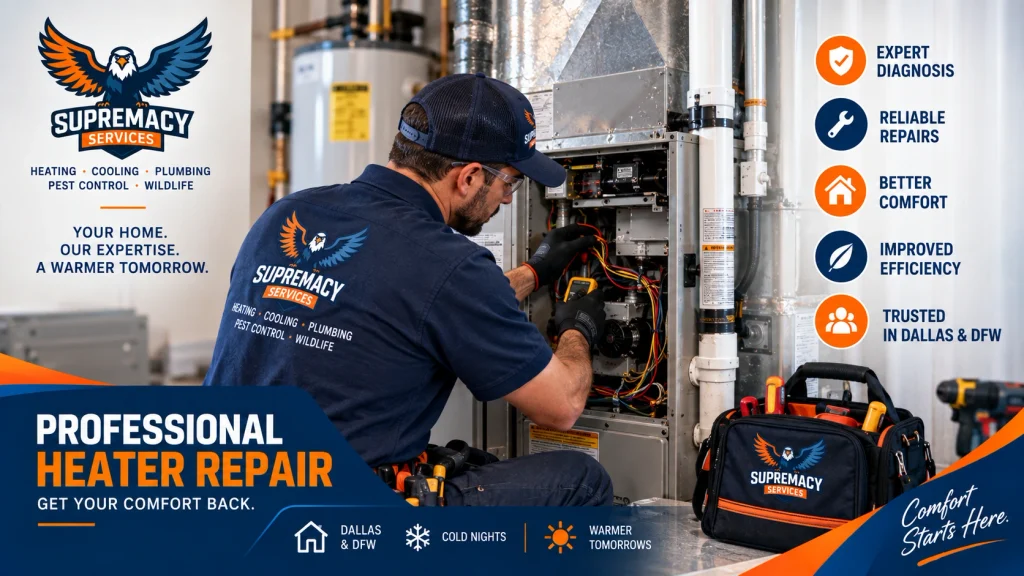
The exact diagnostic process depends on the equipment and symptom, but a professional visit may include checking:
- thermostat operation and control signals;
- electrical power and connections;
- system startup sequence;
- safety controls;
- filter and airflow conditions;
- blower operation;
- ignition and combustion components on applicable furnaces;
- accessible duct or airflow problems;
- equipment fault codes;
- overall heating performance after repair.
A good diagnosis should identify the underlying failure before parts are replaced.
For homeowners, that means the useful question is not simply, “What part can be changed?” but “Why did the system stop heating, and what evidence identifies the failed component?”
How Much Does Heater Repair Cost in Dallas?
There is no single responsible price for “heater repair” because the underlying repairs can be dramatically different.
A thermostat setting problem, failed igniter, blower-motor problem, electrical fault, control-board failure and major furnace defect do not require the same labor or components.
Factors that can affect the final repair price include:
- type of heating system;
- failed component;
- equipment make and model;
- accessibility;
- diagnostic time;
- required replacement parts;
- whether additional safety problems are discovered;
- after-hours or emergency-service policies.
For that reason, homeowners should look for a diagnosis and written repair estimate rather than relying on an online price that does not identify the actual fault.
Heater Repair or Replacement: Which Makes More Sense?
A single breakdown does not automatically mean you need a new furnace.
Repair is often worth considering when the underlying problem is identifiable and the rest of the system remains in serviceable condition.
Replacement becomes a more relevant discussion when there are recurring failures, major component problems, persistent comfort issues or when the cost and condition of the existing system make further repairs increasingly difficult to justify.
If replacement becomes a realistic option, compare the cost of the proposed repair, overall equipment condition, expected future repairs, comfort performance and efficiency rather than choosing based only on age.
Supremacy also provides furnace installation in Dallas when diagnosis indicates replacement deserves consideration.
How Can You Reduce the Risk of Another Heater Breakdown?
Replace or Clean Filters as Required
Check the filter regularly and follow the equipment/filter manufacturer’s replacement instructions.
Keep Supply and Return Airflow Clear
Avoid blocking registers and return grilles with furniture, rugs or stored belongings.
Schedule Heating Maintenance Before Winter
ENERGY STAR recommends an annual pre-season heating checkup, ideally before contractors become busiest during winter.
A professional maintenance visit can include checking thermostat operation, electrical connections, system controls, blower components and—where applicable—gas connections, combustion and the heat exchanger.
Pay Attention to Changes
Do not ignore new:
- startup problems;
- repeated cycling;
- unusual noises;
- weak airflow;
- abnormal odors;
- inconsistent room temperatures;
- recurring breaker trips.
Changes in system behavior can provide useful diagnostic clues before the heater stops completely.
Dallas Heater Troubleshooting Checklist
If your heater stops working, follow this sequence:
Step 1: Set the thermostat to HEAT.
Step 2: Set the temperature above the current room temperature.
Step 3: Check thermostat batteries if applicable.
Step 4: Confirm the furnace/HVAC switch is on.
Step 5: Check the circuit breaker once.
Step 6: Inspect the air filter.
Step 7: Make sure accessible vents and return grilles are unobstructed.
Step 8: Wait for the normal startup sequence and see whether heat returns.
Step 9: Stop DIY troubleshooting if the breaker trips again, the system repeatedly shuts down, you suspect a gas/electrical/combustion problem, or normal operation does not return.
Step 10: Arrange professional diagnosis.
Frequently Asked Questions
Why did my heater suddenly stop working?
Common possibilities include a thermostat or power problem, a tripped breaker, restricted airflow, an ignition/control problem or a failed component. Start with the thermostat, power and filter before arranging diagnosis.
Why won’t my heater turn on even though the thermostat is working?
If the thermostat is calling for heat, the problem may involve equipment power, controls, ignition, airflow or another internal component. Check the switch, breaker and filter; if those are normal, have the system diagnosed.
Can a dirty furnace filter cause no heat?
A severely restricted filter can reduce airflow and contribute to overheating and safety shutdowns. Replace a dirty filter with the correct type, but seek service if normal operation does not return.
Why is my heater blowing cold air?
Check whether the thermostat fan is set to ON instead of AUTO. If the furnace is actively calling for heat but still produces cool air, an ignition, heating-component or control problem may need diagnosis.
Should I reset my furnace?
Follow the reset procedure in the equipment manufacturer’s instructions rather than repeatedly cycling power or resetting safety devices. If a fault immediately returns, professional diagnosis is the safer next step.
Why does my furnace keep turning off?
Restricted airflow, thermostat problems, safety shutdowns, ignition problems and other equipment faults can produce short cycles. Check the filter and vents first, then arrange service if cycling continues.
When should I call for heater repair?
Call when basic thermostat, filter, breaker and power checks do not solve the problem, or sooner if you encounter repeated electrical trips, abnormal ignition, severe mechanical noises, suspected gas problems or other safety concerns.
Does Dallas get cold enough that furnace maintenance matters?
Yes. DFW experiences freezes every winter on average, even though the overall climate is relatively warm. A fall heating inspection can identify problems before the system is needed heavily during a cold front.
Heater Still Not Working in Dallas?
If your thermostat is correctly set, the system has power, the filter is clean and the vents are clear but your home still has no reliable heat, the problem has moved beyond basic homeowner troubleshooting.
Instead of replacing parts by trial and error, have the complete heating system diagnosed so the underlying cause can be identified.
Schedule heater repair with Supremacy Services in Dallas and the DFW Metroplex to have a malfunctioning furnace or heating system professionally evaluated.