
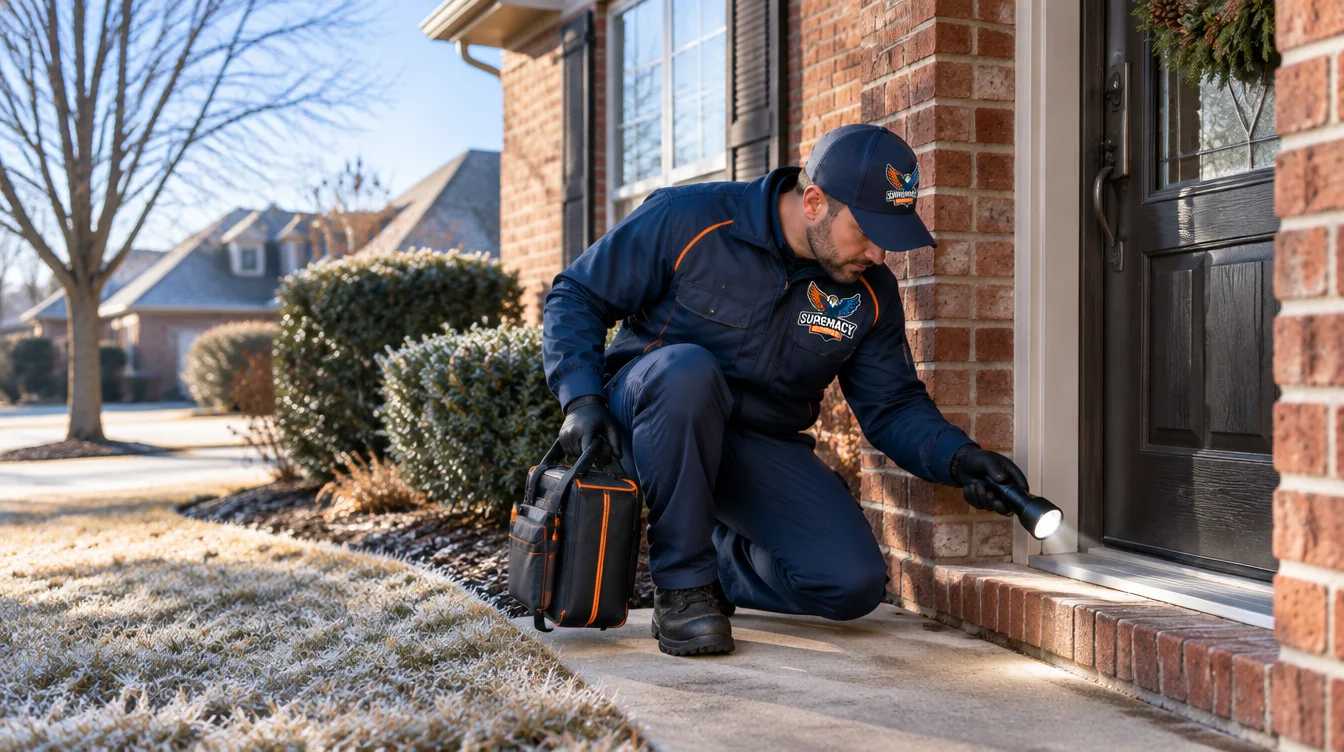
Does Perimeter Pest Control Work in Winter? Yes, including during the colder months in Dallas and North Texas. Exterior treatments can help reduce certain insects around a home’s foundation and entry points, even when outdoor pest activity slows down. However, effectiveness depends on the pest species, product label, weather conditions, and whether pests are already living inside the house.
Winter treatment is not simply about spraying for bugs that are visible outside. It is about identifying pest activity, maintaining appropriate preventive measures, and reducing the opportunities pests have to enter a warm, sheltered home.
For Dallas homeowners, the important question is not whether winter pest control works at all, but when exterior treatment is useful and when other prevention methods are more effective.
Table of contents
- Does perimeter pest control still work in cold weather?
- Why winter pest control matters in North Texas
- Which pests can perimeter treatment help control?
- Does freezing weather affect exterior treatments?
- Should you continue perimeter pest control during winter?
- What does professional winter pest control include?
- Winter perimeter treatment vs. indoor pest control
- How to protect your home from winter pests
- When should you call a pest control professional?
- Frequently asked questions
Does Perimeter Pest Control Still Work in Cold Weather?
Perimeter pest control can remain useful in cold weather because properly selected exterior treatments may continue controlling susceptible insects that contact treated areas. Cold temperatures do not automatically make an existing treatment ineffective.
However, many insects become less active as temperatures fall, so they may contact treated surfaces less frequently.
How perimeter pest control works
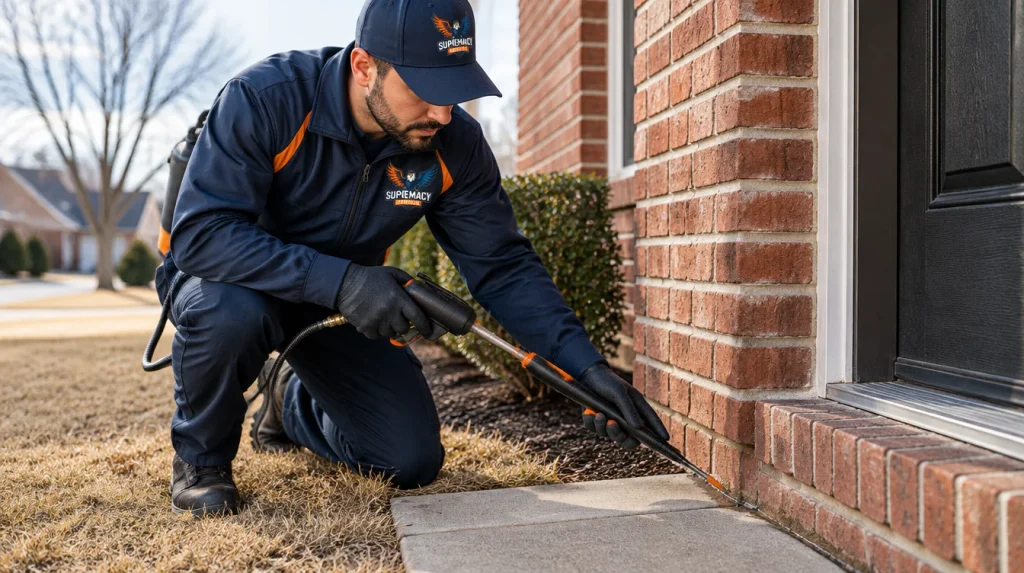
Perimeter pest control involves inspecting and, where appropriate, treating selected exterior areas around a building to reduce pest movement toward the structure.
Depending on the pest, treatment may involve:
- Targeted applications around foundation entry points.
- Treatment of labeled exterior cracks and crevices.
- Managing pest activity near doors, windows, and utility penetrations.
- Removing conditions that encourage insects to shelter near the home.
- Monitoring pest activity and recommending exclusion repairs.
A residual insecticide is a product designed to remain effective on treated surfaces for a period specified by its formulation, label, and environmental conditions.
When a susceptible insect contacts an appropriately treated area, exposure may help control it. But an exterior treatment does not create an impenetrable barrier.
Why treatment results can look different in winter
During warmer months, insects may move frequently across foundations, landscaping, and exterior walls.
In winter, many species reduce their movement or shelter in protected areas. Consequently, homeowners may notice fewer insects even without treatment.
That does not necessarily mean every pest population has disappeared.
The goal of winter perimeter pest control is to manage relevant pest risks, not to guarantee that no insect will enter the house.
Why Winter Pest Control Matters in North Texas
North Texas winters can include mild afternoons, wet periods, and occasional hard freezes. These changing conditions influence where insects shelter and when they become active.
1. Some pests remain active during mild winter weather
Insects do not all respond to cold temperatures in the same way.
Some remain active during warmer periods, while others retreat into protected spaces, soil, landscaping, or structures.
In Dallas, Plano, Frisco, and surrounding communities, homeowners may notice insects during a warm spell after several colder days.
This activity does not automatically mean an earlier treatment has failed.
2. Homes provide shelter from outdoor conditions
Exterior walls, garages, crawl spaces, utility openings, and attic spaces can provide protected environments.
Pests may enter through:
- Gaps beneath exterior doors.
- Openings around plumbing or electrical lines.
- Damaged weatherstripping.
- Cracks around siding or foundation transitions.
- Unscreened ventilation openings.
- Gaps around garage doors.
Once pests are established indoors, treating the exterior alone may not resolve the problem.
3. Moisture and landscaping can create protected habitats
Wet mulch, leaf accumulation, clogged drainage areas, and objects stored against exterior walls can provide shelter for insects and other pests.
Homes with dense landscaping immediately against the foundation may have more protected hiding places that require inspection.
The best winter prevention plan therefore combines exterior pest management with moisture control and maintenance.
Which Pests Can Perimeter Treatment Help Control?
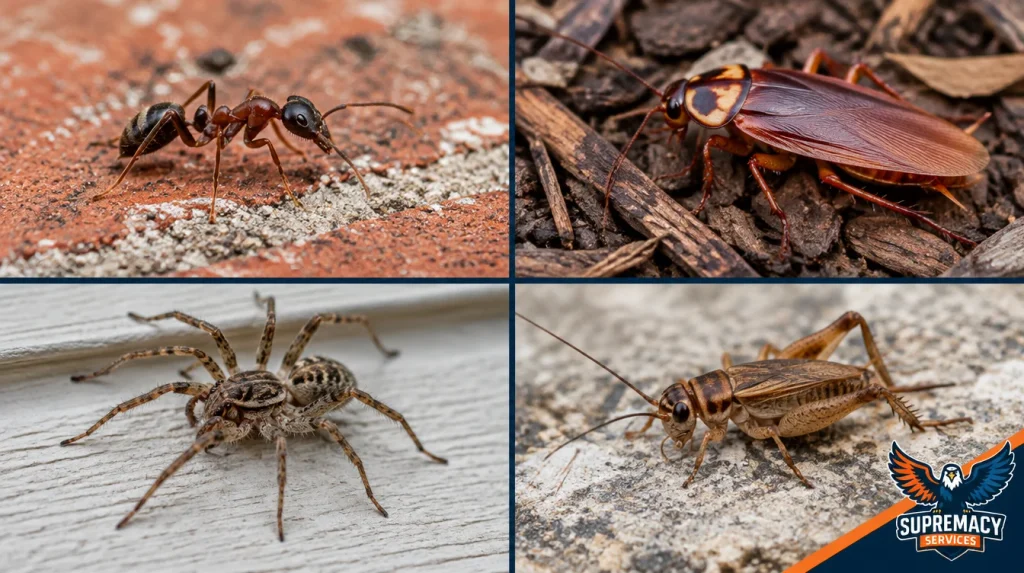
Winter perimeter treatment is most relevant to insects that move across exterior surfaces or use areas around the foundation.
It is less useful as a stand-alone solution for pests already nesting inside a building.
| Pest | Winter behavior | Role of perimeter treatment |
|---|---|---|
| Ants | Activity may slow outdoors, but colonies can remain sheltered | May help with selected exterior entry routes; baiting or colony-focused control may be needed |
| American cockroaches | May shelter in drains, moist areas, and protected spaces | Can help around suitable exterior harborage and entry points |
| Spiders | Some remain in protected corners and sheltered areas | Targeted treatment may help, alongside web removal and insect-prey management |
| Crickets | Seasonal activity varies; some shelter around structures | May help when outdoor movement continues |
| Occasional invading insects | Some shelter in wall voids or protected building spaces | Prevention and exclusion are often more useful than spraying alone |
| Rats and mice | May use buildings for food, shelter, and nesting | Conventional insect perimeter sprays do not control rodents; exclusion and rodent-specific management are required |
Ants during winter
Ant colonies may remain protected in soil, landscaping, or structural spaces during cold weather.
On warmer days, foraging activity may resume.
If ants are entering the home, the most effective approach depends on identifying the species, locating the source, and selecting an appropriate treatment.
Repeatedly spraying visible ants may fail to address the colony. Supremacy services
Cockroaches and moisture-related pests
Cockroaches may use damp, protected areas around homes, garages, utility spaces, and drainage systems.
Exterior management may help reduce entry from surrounding habitats, but an established indoor infestation usually requires a more targeted approach.
For example, German cockroaches typically require indoor inspection and control measures rather than reliance on an outdoor perimeter spray. Supremacy services
Spiders and other occasional invaders
Spiders may shelter in garages, around exterior lighting, beneath eaves, or inside storage areas.
Reducing insect prey, removing webs, controlling clutter, and sealing openings can be important components of prevention.
A perimeter application alone may not eliminate spiders already inside the house.
What about rodents?
Rodents require a different strategy.
Texas A&M AgriLife Extension identifies rodent-proofing as an important long-term control measure, including closing accessible openings with resistant materials.
Conventional insecticide perimeter treatments should not be presented as rodent control.
For further guidance, see the Texas A&M AgriLife guide to managing rats and mice.
Need help identifying winter pest activity? A professional inspection can determine whether the problem involves outdoor insects, indoor nesting, or structural entry points. Contact Supremacy Services to discuss pest control options for your Dallas-area home.
Does Freezing Weather Affect Exterior Treatments?
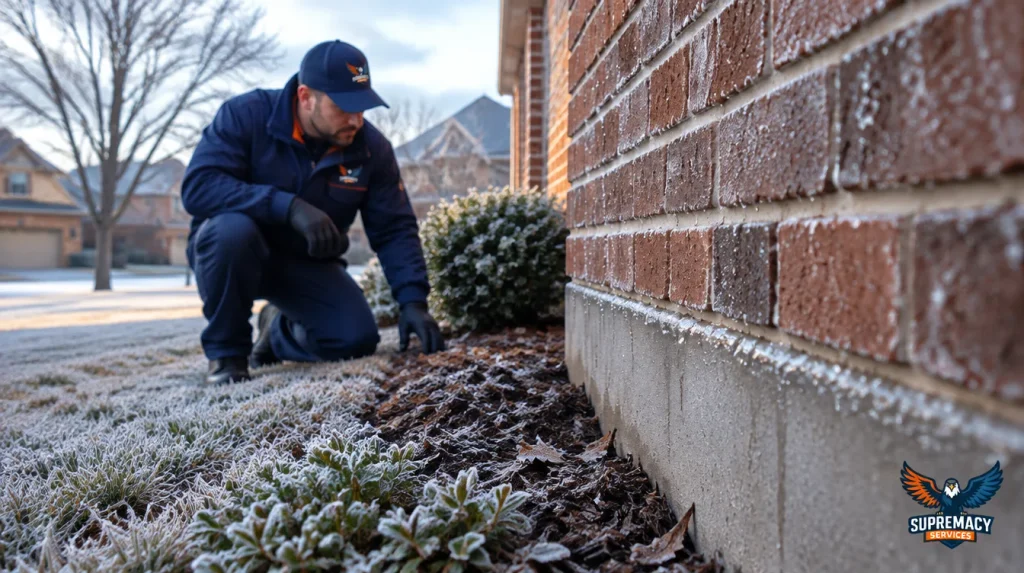
Yes. Freezing temperatures, rainfall, surface conditions, and product-specific application requirements can affect when and how an exterior pest treatment should be applied.
Not every product is suitable for every winter condition.
Cold temperatures and insect activity
Most insects are cold-blooded, so their activity and development are influenced by environmental temperatures.
When temperatures fall, many insects move less frequently.
A residual treatment may still be present, but fewer insects may contact the treated surfaces.
This distinction matters: reduced insect activity is not the same thing as reduced pesticide potency.
Rain and moisture
Rainfall can influence exterior treatment performance depending on the formulation, treated surface, and whether the product has dried or bonded as required.
Homeowners should not assume that every rain event removes an existing treatment.
Likewise, they should not assume that every application remains effective indefinitely.
Frozen, wet, or unsuitable surfaces
A pest control professional should evaluate the weather and product label before applying pesticides outdoors.
Some application conditions may be unsuitable because of label restrictions, runoff concerns, or reduced treatment performance.
The appropriate response may be to delay treatment, use another approved method, or focus on inspection and exclusion.
Should pest control be applied right before a freeze?
Not automatically.
The correct decision depends on the product, expected weather, pest activity, and treatment location.
Applying more pesticide before a cold front is not necessarily better than choosing a suitable treatment window.
Homeowners should follow the product label rather than relying on a universal temperature rule.
Should You Continue Perimeter Pest Control During Winter?
For some North Texas homes, continuing a winter pest management plan makes sense. For others, a seasonal inspection and preventive maintenance may be more appropriate than repeating a broad exterior spray.
The decision should be based on actual pest pressure and the property’s risk factors.
When continued winter service makes sense
Winter service may be useful when:
- The home has a history of recurring insect activity.
- Ants or cockroaches are still appearing during mild weather.
- The property has landscaping or moisture conditions that encourage pests.
- Pest entry points remain unresolved.
- The existing treatment plan includes scheduled winter inspections.
- The homeowner wants year-round monitoring of recurring problems.
When treatment may need to change
A winter service visit does not always need to involve the same pesticide application used in summer.
A technician may recommend a targeted treatment, monitoring, sealing entry points, correcting moisture conditions, or scheduling an application when conditions are more suitable.
This is an important distinction between year-round pest management and year-round spraying.
Winter vs. summer perimeter pest control
| Consideration | Winter | Summer |
|---|---|---|
| Outdoor insect activity | Often lower, but varies by species and weather | Often higher for many species |
| Primary focus | Shelter sites, entry points, monitoring, targeted control | Active foraging, breeding sites, exterior activity |
| Weather considerations | Cold snaps, freezes, rain, variable temperatures | Heat, rainfall, sunlight, irrigation |
| Treatment frequency | Based on risk, monitoring, and product requirements | Based on risk, monitoring, and product requirements |
| Nonchemical prevention | Especially important | Equally important |
There is no universal rule requiring every Dallas home to receive the same treatment every three months.
The appropriate interval depends on the pest, site conditions, product label, and service plan.
What Does Professional Winter Pest Control Include?
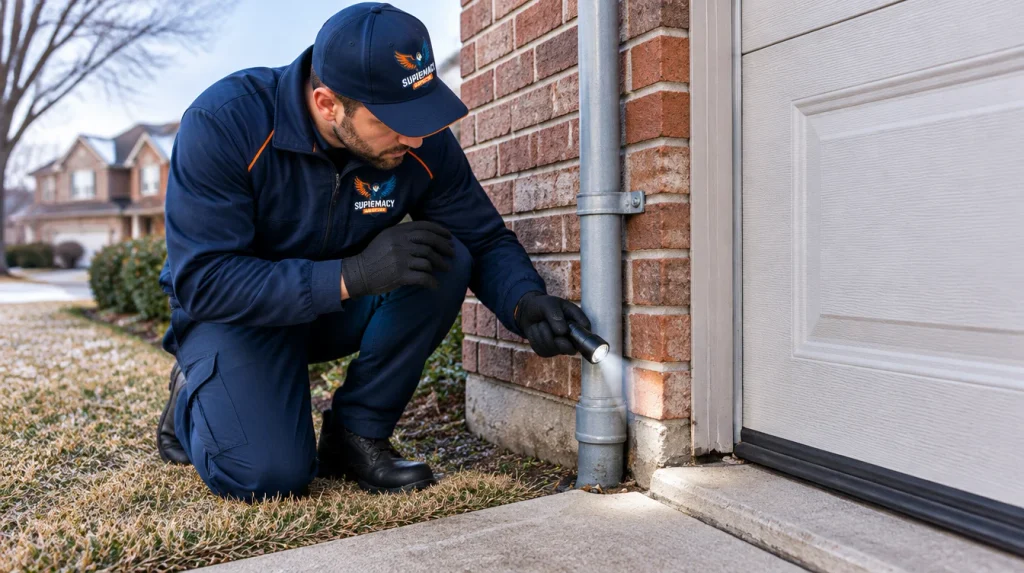
A professional winter pest control visit should begin with identifying the pests and conditions that actually need attention.
Depending on the property and service agreement, the process may include the following steps.
Step 1: Exterior property inspection
The technician checks accessible areas such as the foundation, garage perimeter, door thresholds, landscaping, and exterior utility penetrations.
The objective is to identify pest activity, potential shelter sites, and access points.
Step 2: Pest identification and risk assessment
Different pests require different control methods.
Ants, cockroaches, spiders, and rodents should not automatically receive the same treatment.
Accurate identification helps avoid unnecessary applications.
Step 3: Targeted exterior treatment when appropriate
If treatment is warranted, the technician selects a product and application method suitable for the target pest, property, and current conditions.
All pesticide applications must follow applicable label directions.
Step 4: Exclusion and prevention recommendations
The technician may identify gaps that should be sealed, damaged weatherstripping, moisture problems, or landscaping conditions that need attention.
Some repairs may be separate from the pest control service.
Step 5: Monitoring and follow-up planning
The homeowner should understand what was treated, what improvements to expect, what precautions apply, and when follow-up is necessary.
For homes experiencing recurring winter pest activity, Supremacy Services can help homeowners evaluate whether a targeted treatment or a broader preventive plan is appropriate.
Winter Perimeter Treatment vs. Indoor Pest Control
Exterior and interior pest control serve different purposes.
Perimeter treatment primarily addresses selected pest activity outside the home and around entry points. Indoor treatment targets pests already present within the building.
Neither approach should automatically replace the other.
| Situation | More appropriate starting point |
|---|---|
| Occasional insects entering from outside | Exterior inspection, exclusion, targeted perimeter control |
| Ant trails inside the kitchen | Species identification, source investigation, appropriate targeted treatment |
| German cockroaches inside cabinets | Indoor inspection and species-specific control |
| Rodent droppings in the attic | Rodent inspection, exclusion, trapping or other approved control |
| Spiders around exterior doors | Entry-point sealing, web removal, prey reduction, targeted control if needed |
| No current pest activity | Inspection and preventive maintenance may be sufficient |
A homeowner seeing insects indoors during winter should not automatically assume that an exterior pesticide application is the solution.
The source of the infestation matters more than the season.
How to Protect Your Home From Winter Pests
A few practical maintenance steps can reduce pest access and shelter around a North Texas home.
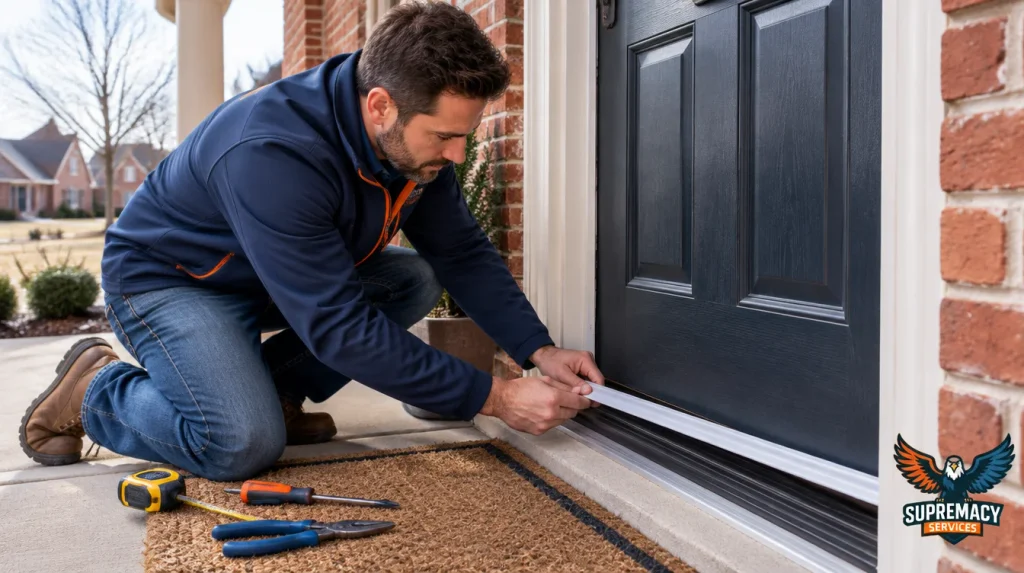
Winter pest prevention checklist
- Inspect weatherstripping around exterior doors.
- Check garage door seals for gaps.
- Seal appropriate openings around plumbing and utility penetrations.
- Repair damaged window screens and vent covers.
- Remove accumulated leaves and debris near the foundation.
- Avoid storing firewood or unnecessary clutter directly against exterior walls.
- Correct leaking outdoor faucets and drainage problems.
- Store pet food and other attractants in secure containers.
- Inspect garages, storage spaces, and accessible attics for pest evidence.
- Review recurring pest activity before scheduling additional treatment.
Homeowners can complete many of these tasks without pesticides.
For pest-specific treatment, particularly when the species is uncertain or an infestation persists, professional assessment is often more effective than repeated trial-and-error spraying.
When Should You Call a Pest Control Professional?
Professional pest control is worth considering when pest activity persists, the source cannot be identified, or the problem involves areas that are difficult to inspect safely.
Warning signs include:
- Repeated ant trails indoors during winter.
- Cockroaches appearing in kitchens, bathrooms, or garages.
- Recurring insect activity around foundation gaps.
- Rodent droppings, gnaw marks, or scratching sounds.
- Pest activity that continues after reasonable prevention measures.
- Uncertainty about whether an insect is a harmless occasional invader or a more serious pest.
A professional can help distinguish a seasonal nuisance from an infestation requiring targeted treatment.
Is winter pest control worth the cost?
Winter pest control may be worth the cost when it addresses an identified problem, prevents recurring entry, or forms part of a useful year-round management plan.
However, the cost should reflect the actual service needed.
A routine exterior inspection, targeted insect treatment, rodent exclusion work, and a significant indoor infestation are different scopes of work.
Pricing may depend on property size, pest species, infestation severity, access, treatment method, and follow-up requirements.
Rather than relying on a generic winter treatment price, homeowners should request a quote that explains what is included.
Frequently Asked Questions
1. Does perimeter pest control work when it is freezing outside?
It can remain effective against susceptible insects, but freezing weather may reduce insect movement and limit when certain products can be applied. Existing treatment performance and new application suitability depend on the product label and conditions.
2. Is it worth spraying for bugs in winter?
Sometimes. Targeted spraying can help when there is relevant insect activity, but inspection, sealing gaps, and reducing shelter sites may provide greater value when outdoor pest pressure is low.
3. Do pests die during winter in Dallas?
Some insects die, while others survive in protected habitats, different life stages, or sheltered building spaces. Winter temperatures do not eliminate every pest population.
4. Can rain wash away winter perimeter pest control?
Rain can affect some exterior applications, but the impact depends on the product, surface, timing, and label directions. Not every rainfall requires immediate retreatment.
5. Should I cancel pest control service during winter?
Not necessarily. If your property has recurring pest problems, an inspection or targeted winter service may still be useful. Discuss seasonal adjustments with your provider before canceling an existing plan.
6. How often should perimeter pest control be applied in winter?
There is no universal winter interval. Application frequency depends on the target pest, product label, property conditions, monitoring results, and the service agreement.
7. Will exterior pest control stop mice from entering my house?
No. Conventional exterior insecticide treatments do not provide rodent exclusion. Mice require rodent-specific management, including identifying and sealing accessible entry points.
8. Can I do my own winter perimeter pest control?
Homeowners can reduce pest risks by sealing gaps, removing debris, managing moisture, and storing food properly. If using pesticides, choose products labeled for the pest and application site and follow every label instruction.
9. Is interior pest control necessary during winter?
Not always. Indoor treatment may be appropriate when pests are already established inside the home. An exterior-only plan may be sufficient for some occasional invaders, but it will not resolve every indoor infestation.
Keep Your North Texas Home Protected Through Winter
Perimeter pest control can remain effective during winter, but the most successful approach is based on the pests present, the condition of the property, and suitable treatment methods.
For Dallas and DFW homeowners, winter is an opportunity to inspect exterior entry points, correct moisture problems, identify sheltered pest activity, and prepare for seasonal changes.
Supremacy Services helps homeowners address pest concerns with solutions suited to their property and the problem at hand.
If you are noticing winter pest activity or want to review your home’s preventive pest control needs, visit Supremacy Services to explore available services and request assistance.

