

Does Insurance Cover Slab Leaks in Texas? Yes, homeowners insurance may cover certain slab leak-related expenses in Texas, but it does not automatically pay to repair the leaking pipe. Coverage usually depends on whether the water damage was sudden and accidental, whether the policy includes foundation or slab protection, and which repairs are specifically covered.
For Dallas and DFW homeowners, the important question is not simply whether a slab leak exists. It is what caused the leak, what property was damaged, and what the insurance policy promises to pay.
According to the Texas Department of Insurance, most homeowners policies cover sudden and accidental water damage, while damage caused by gradual leaks is usually excluded.
This guide explains what may be covered, what homeowners often have to pay themselves, how to document a leak, and when to arrange professional plumbing detection.
Table of Contents
- Does homeowners insurance cover slab leaks?
- What slab leak expenses might insurance cover?
- When will insurance not cover a slab leak?
- Does insurance cover the pipe or foundation?
- How do you know whether you have a slab leak?
- How to file a slab leak insurance claim
- How much could you pay out of pocket?
- Why Dallas homeowners need to consider soil and foundations
- How plumbers detect and repair slab leaks
- How to reduce the risk of future leaks
- Frequently asked questions
Does Homeowners Insurance Cover Slab Leaks in Texas?
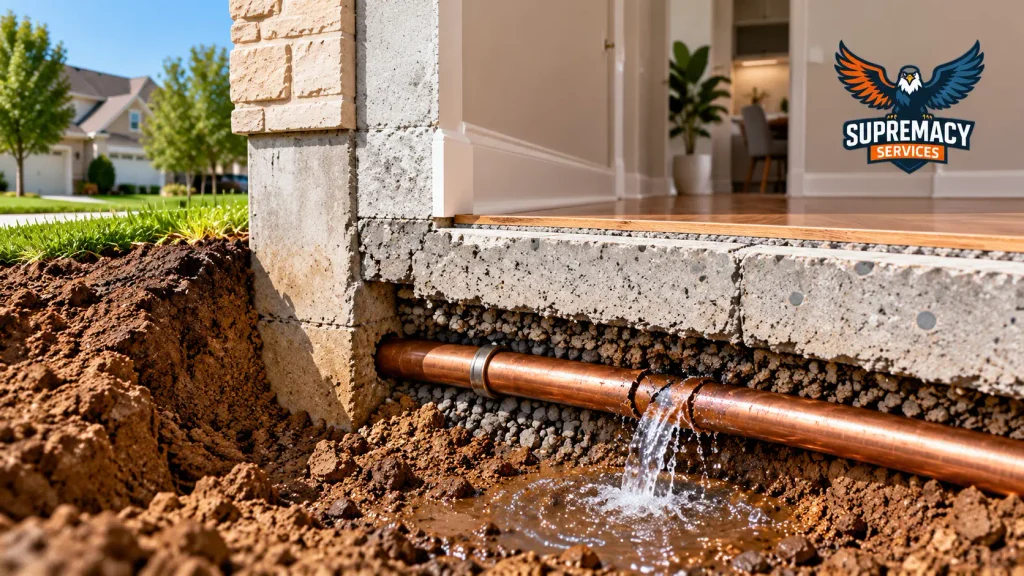
Homeowners insurance in Texas may cover damage resulting from a slab leak if the loss meets the policy’s coverage requirements. However, coverage for damaged flooring, walls, or personal belongings does not necessarily mean the policy will pay to replace the failed pipe.
A slab leak occurs when a water supply pipe beneath or within a home’s concrete foundation develops a leak. Because the pipe is concealed, water may escape before the homeowner notices visible damage.
Insurance companies generally evaluate several questions:
- Was the damage caused by a sudden, accidental event or by a long-term condition?
- Does the policy cover the resulting water damage?
- Is access to the damaged plumbing covered?
- Does the homeowner have a foundation or slab endorsement?
- Are exclusions, deductibles, or coverage limits applicable?
For example, a sudden pipe rupture that damages flooring may qualify for coverage of some resulting damage. A pipe that has been deteriorating and leaking gradually may produce a different insurance outcome.
The Texas Department of Insurance explains that sudden and accidental water damage is commonly covered, while gradual seepage generally is not. The exact policy language remains decisive.
What Slab Leak Expenses Might Homeowners Insurance Cover?
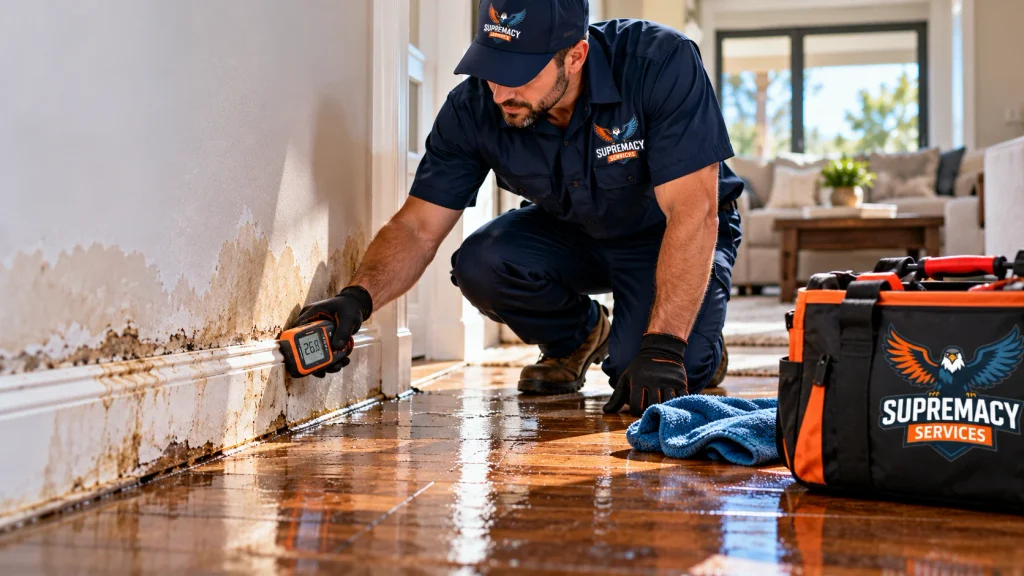
Insurance may cover some costs associated with a qualifying slab leak, including water-damaged building materials and certain restoration work. Other expenses, such as replacing the deteriorated pipe, may be excluded.
| Expense | Possible coverage | Important consideration |
|---|---|---|
| Water-damaged flooring | Often possible | Depends on whether the cause is covered |
| Damaged drywall or baseboards | Often possible | Subject to policy terms |
| Water extraction and drying | Possible | Usually tied to a covered loss |
| Leak detection | Policy-dependent | May depend on investigation or access provisions |
| Opening concrete to reach a pipe | Policy-dependent | Access or tear-out language matters |
| Repairing the failed pipe | Often excluded | Ordinary deterioration is commonly excluded |
| Restoring opened concrete | Policy-dependent | May depend on covered access and restoration provisions |
| Foundation damage | Policy-dependent | A foundation/slab endorsement may be relevant |
| Mold remediation | Limited or excluded | Separate coverage or endorsements may apply |
These are general coverage possibilities, not guarantees. The declarations, policy form, endorsements, exclusions, and insurer’s written claim decision control.
Does homeowners insurance pay for slab leak detection?
It might. Some policies may provide for reasonable investigation or access expenses associated with covered damage. Others may not reimburse standalone leak-detection services.
Before arranging extensive testing, ask your insurer whether the investigation requires approval and whether a plumber’s diagnostic report can be considered as part of the claim.
Need to confirm whether the water is coming from beneath your slab? Supremacy Services offers professional water leak detection in Dallas and the DFW Metroplex to help locate concealed plumbing leaks and determine the next repair step.
When Will Homeowners Insurance Not Cover a Slab Leak?
Texas homeowners insurance generally does not cover every type of plumbing failure. Common coverage obstacles include gradual leakage, corrosion, wear and tear, and losses that fall within specific policy exclusions.
1. Gradual or continuous leaks
A slow leak that damages materials over an extended period may fall under a seepage or repeated-leak exclusion.
However, the fact that a leak was hidden does not, by itself, establish whether coverage applies. The actual policy wording and evidence of the loss must be reviewed.
2. Corroded or deteriorated pipes
Insurance is generally intended to protect against covered losses rather than pay for routine maintenance or replacement of aging plumbing systems.
A deteriorated pipe may need replacement even when the policy covers some resulting damage.
3. Poor maintenance or preventable deterioration
Insurers may investigate whether maintenance-related exclusions apply. A homeowner should not assume that an insurer can deny a claim solely because the plumbing system is old.
The decision must be supported by the policy and the facts of the loss.
4. Flooding and groundwater
A slab leak from an internal plumbing system is different from floodwater entering a property.
Standard homeowners insurance generally excludes flood damage. Separate flood insurance may be needed for qualifying external flooding events.
5. Foundation damage without appropriate coverage
Some Texas homeowners policies offer optional endorsements for damage to foundations or slabs.
TDI identifies foundation or slab damage as a coverage category that may be added through an endorsement. Homeowners should check whether such protection exists before assuming foundation repairs are included.
Does Homeowners Insurance Cover the Broken Pipe, Concrete Slab, or Foundation?
These are three different expenses, and the insurance company may treat them separately.
Repairing the broken pipe
The cost of repairing a pipe that failed because of deterioration, corrosion, or wear is often the homeowner’s responsibility.
A policy may cover resulting water damage without covering the defective pipe.
Breaking and restoring concrete
Some policies include access or tear-out provisions that may help pay to reach a damaged plumbing system when a covered loss occurs.
Coverage for opening concrete should not be assumed to include all plumbing work or foundation restoration. Ask the insurer to identify the relevant policy provision.
Repairing foundation damage
Foundation damage can be a separate coverage issue. A foundation endorsement may affect eligibility, but it is not an automatic guarantee of payment for settlement, cracking, or structural repair.
A plumber can identify a plumbing leak, while a qualified foundation or structural professional may be needed to assess structural movement.
What Are the Warning Signs of a Slab Leak?
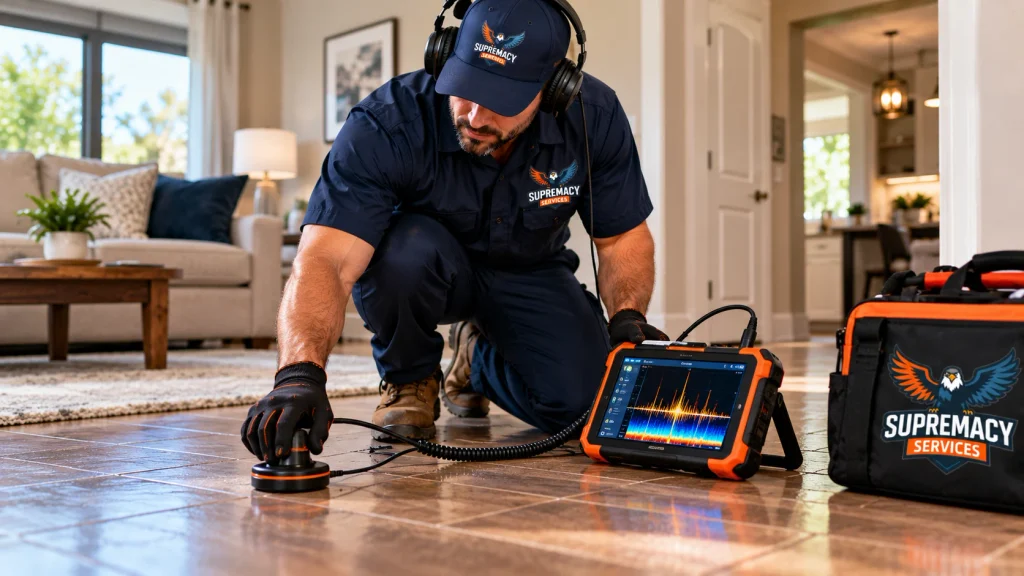
A slab leak may cause unexplained water use, warm flooring, damp areas, or changes in water pressure. None of these symptoms alone confirms an under-slab pipe failure.
Common warning signs include:
- A water bill that rises without an obvious change in usage.
- A water meter that indicates flow when all water fixtures are off.
- Warm or damp patches on floors.
- Unexplained moisture near baseboards.
- Reduced water pressure.
- Sounds of running water when fixtures are closed.
- Musty odors or recurring moisture problems.
- New cracks or movement that may warrant a separate structural assessment.
Is it a slab leak or an underground water line leak?
A slab leak generally involves plumbing beneath or within the foundation. An underground service-line leak may occur outside the home between the meter and the building.
Both can increase water usage, but they may require different detection and repair approaches.
A professional plumber can test the plumbing system and help distinguish these conditions.
How Do You File a Slab Leak Insurance Claim in Texas?

Start by limiting further damage, documenting what happened, and contacting your insurer. Professional leak detection can help establish the location and condition of the plumbing, but the insurance company determines coverage.
Step 1: Stop the water if it is safe
Shut off the appropriate water supply when an active leak is suspected. Avoid electrical hazards and arrange urgent help when necessary.
Step 2: Photograph and document the damage
Record visible moisture, damaged flooring, water meter readings, dates, and unusual water bills before cleanup or repair changes the scene.
Step 3: Contact your insurance company promptly
Ask how to report the loss, whether emergency mitigation is authorized, and whether the insurer wants to inspect the property before permanent repairs.
Step 4: Arrange professional leak detection
Request a written assessment documenting the leak location, relevant test findings, and recommended repair options. Avoid asking the plumber to speculate about insurance coverage.
Step 5: Obtain an itemized repair estimate
Separate diagnostic charges, pipe repair, concrete access, restoration, and any additional work so the insurer can evaluate the expenses individually.
Step 6: Review the claim decision
Compare the insurer’s explanation with your policy, endorsements, deductible, and estimate. Request written clarification of any denied or limited items.
Do not delay necessary emergency measures simply to preserve evidence. Take reasonable steps to prevent additional damage, keep receipts, and retain replaced materials where practical and safe until the insurer advises otherwise.
TDI emphasizes the importance of protecting the property after sudden water damage.
What documents should homeowners keep?
Slab leak claim documentation checklist
0 of 7Photos and videos of visible damageWater bills and relevant meter readingsPlumber’s written diagnostic findingsItemized repair estimates and invoicesReceipts for emergency mitigationInsurance policy and endorsementsClaim number and adjuster correspondence
Copy checklist
Concerned about the location or extent of a hidden leak? Schedule a Supremacy Services leak-detection assessment before choosing between a localized repair and a larger plumbing project.
How Much Does a Slab Leak Cost If Insurance Does Not Cover It?
Out-of-pocket costs depend on the pipe location, extent of damage, repair method, accessibility, and restoration requirements.
Without an on-site diagnosis, a precise Dallas slab leak repair price would be unreliable.
The main expenses may include:
| Cost component | What affects the expense |
|---|---|
| Leak detection | Testing requirements and difficulty locating the leak |
| Localized pipe repair | Pipe material, access, and extent of failure |
| Concrete access | Slab thickness, location, and required opening |
| Pipe rerouting | Length, routing complexity, and wall or ceiling access |
| Water mitigation | Amount of water, affected materials, and drying needs |
| Floor restoration | Flooring type and area requiring replacement |
| Structural assessment | Evidence of settlement or foundation movement |
Example: How an insurance deductible affects payment
This illustration is not a Dallas repair-price estimate. It shows how an approved claim might work.
Illustrative claim calculator
Example onlyApproved covered damage
$8,000Policy deductible
$2,500Excluded repair expenses
$1,500
Illustrative insurer payment
$5,500
Illustrative homeowner share
$4,000
This simplified example excludes depreciation, limits, coinsurance, other policy adjustments, and additional expenses. Actual claim settlement may differ.
Before accepting a repair estimate, request a breakdown of covered damage, potentially excluded plumbing work, and restoration costs.
Why Do Dallas and North Texas Homeowners Need to Pay Attention to Slab Leaks?
Dallas-area homes may experience plumbing and foundation concerns influenced by soil conditions, construction characteristics, seasonal moisture changes, and the age or condition of the piping.
Expansive clay soils
Parts of North Texas contain clay-rich soils that expand or contract as moisture conditions change. Soil movement can affect foundations and buried infrastructure, although a particular slab leak cannot be attributed to soil movement without an appropriate investigation.
Concrete slab construction
When water pipes run beneath a concrete foundation, locating and accessing a failure may be more complicated than repairing an exposed pipe.
Hot-water supply lines
A warm floor can sometimes indicate leakage from a hot-water line beneath the slab. However, other conditions can produce warm flooring, so professional testing is necessary.
Dallas, Plano, Frisco, and surrounding communities
The appropriate repair method depends on the individual home and plumbing configuration, not simply its city or ZIP code.
Homeowners should also verify any applicable permit or inspection requirements with their local jurisdiction before significant plumbing alterations.
How Do Professional Plumbers Detect and Repair Slab Leaks?
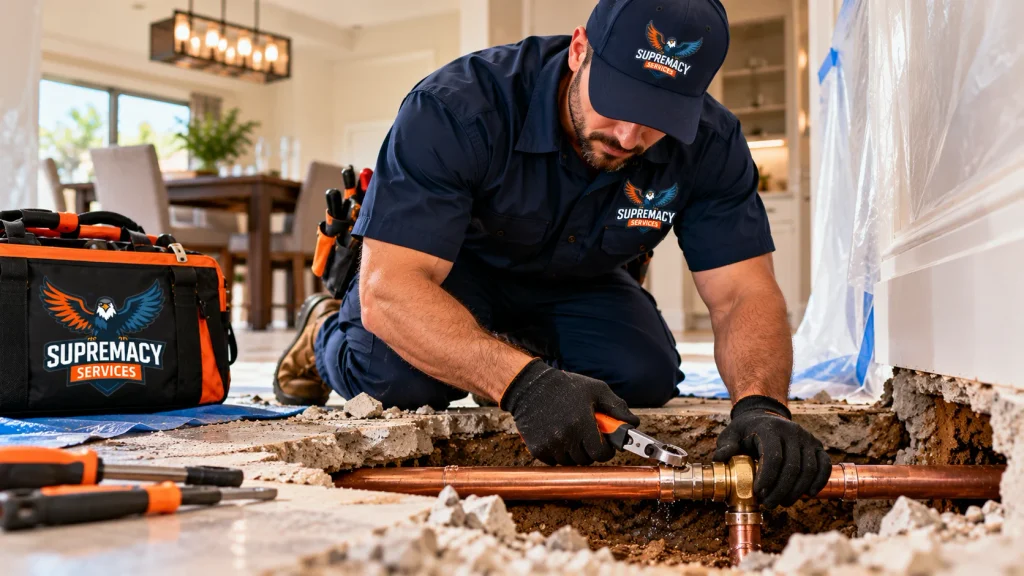
Professional slab leak detection generally combines plumbing-system testing with methods intended to narrow down the leak location before opening walls or concrete.
Depending on the situation, a plumber may use pressure testing, acoustic equipment, thermal imaging, or other diagnostic techniques.
Supremacy Services describes acoustic detection and infrared thermography among its leak-location methods.
Common repair options
| Repair method | When it may be considered |
|---|---|
| Localized pipe repair | A single accessible failure in otherwise serviceable piping |
| Pipe rerouting | When bypassing a damaged under-slab section is practical |
| Partial repiping | When several sections have deteriorated |
| Larger system replacement | When the existing plumbing has widespread defects |
The least invasive repair is not automatically the best long-term solution. Pipe condition, access, material compatibility, and the likelihood of additional failures all matter.
Can you repair a slab leak yourself?
Homeowners can safely document visible conditions, check their water meter, and shut off the water supply when appropriate.
Opening a foundation, diagnosing concealed plumbing, or repairing pressurized pipes should be handled by qualified professionals. Incorrect work can create additional leaks, damage the property, or complicate insurance documentation.
How Can Homeowners Reduce the Risk of Future Slab Leaks?
Not every slab leak can be prevented, but regular plumbing attention can reduce the likelihood that hidden problems go unnoticed.
Check water bills for unexplained increases, investigate recurring damp areas, address abnormal water pressure, and avoid ignoring sounds of running water when fixtures are closed.
If a plumber identifies widespread pipe deterioration, ask whether repairing one leak or replacing a larger section offers better long-term value.
For homes with a previous under-slab leak, keeping diagnostic reports and repair records can also make future troubleshooting easier.
Frequently Asked Questions
1. Does State Farm or another Texas insurer cover slab leaks?
Coverage depends on the particular policy and endorsements, not just the insurance company’s name. Ask the insurer whether resulting water damage, pipe access, foundation damage, and pipe replacement are covered separately.
2. Does homeowners insurance cover a slab leak caused by old pipes?
The cost of replacing an old, deteriorated pipe is commonly excluded. Coverage for resulting water damage must be evaluated separately under the policy.
3. Will insurance pay to break concrete to repair a slab leak?
Possibly. Some policies contain access or tear-out provisions, but their scope varies. Ask the insurer whether opening and restoring the concrete qualifies under your policy.
4. Does insurance cover slab leak detection in Texas?
Sometimes. Diagnostic expenses may be considered in connection with a covered loss, but reimbursement is not automatic. Check with the insurer before extensive testing when practical.
5. Can a hidden slab leak be covered if it went unnoticed for months?
A hidden leak is not automatically covered or excluded based solely on when it was discovered. The insurer will consider the policy’s provisions concerning sudden damage, repeated seepage, and reporting requirements.
6. Does homeowners insurance cover foundation cracks caused by plumbing leaks?
It may, depending on the cause and the policy. Foundation or slab endorsements can be important, and structural damage may require a separate professional assessment.
7. Should I call a plumber or my insurance company first?
If water is actively escaping, take safe steps to stop the leak and prevent additional damage. Contact the insurer promptly and arrange professional plumbing help as needed. Do not postpone emergency mitigation while waiting for an adjuster.
8. Will filing a slab leak claim increase my insurance premium?
A claim may affect future premiums or renewal decisions, but the effect depends on the insurer, claims history, and other rating factors. Ask your insurance agent about potential implications.
9. What if my slab leak insurance claim is denied?
Request the insurer’s written explanation and the policy provisions supporting its decision. Provide any missing documentation and ask about reconsideration or available complaint and dispute procedures.
Final Thoughts: Confirm the Leak Before Choosing a Repair
Homeowners insurance may help with certain slab leak expenses in Texas, especially when a covered sudden and accidental event causes water damage. But coverage for the failed pipe, concrete access, foundation damage, and restoration can differ significantly.
For Dallas homeowners, the best next step is to identify the leak accurately, limit further damage, preserve documentation, and review the actual policy before assuming insurance will pay.
Suspect a slab leak beneath your Dallas-area home? Contact Supremacy Services for professional water leak detection or call 945-777-3345 to discuss diagnostic options and the next appropriate plumbing repair.
Supremacy Services can assess plumbing conditions and provide repair information; insurance coverage decisions remain with the insurer.

