
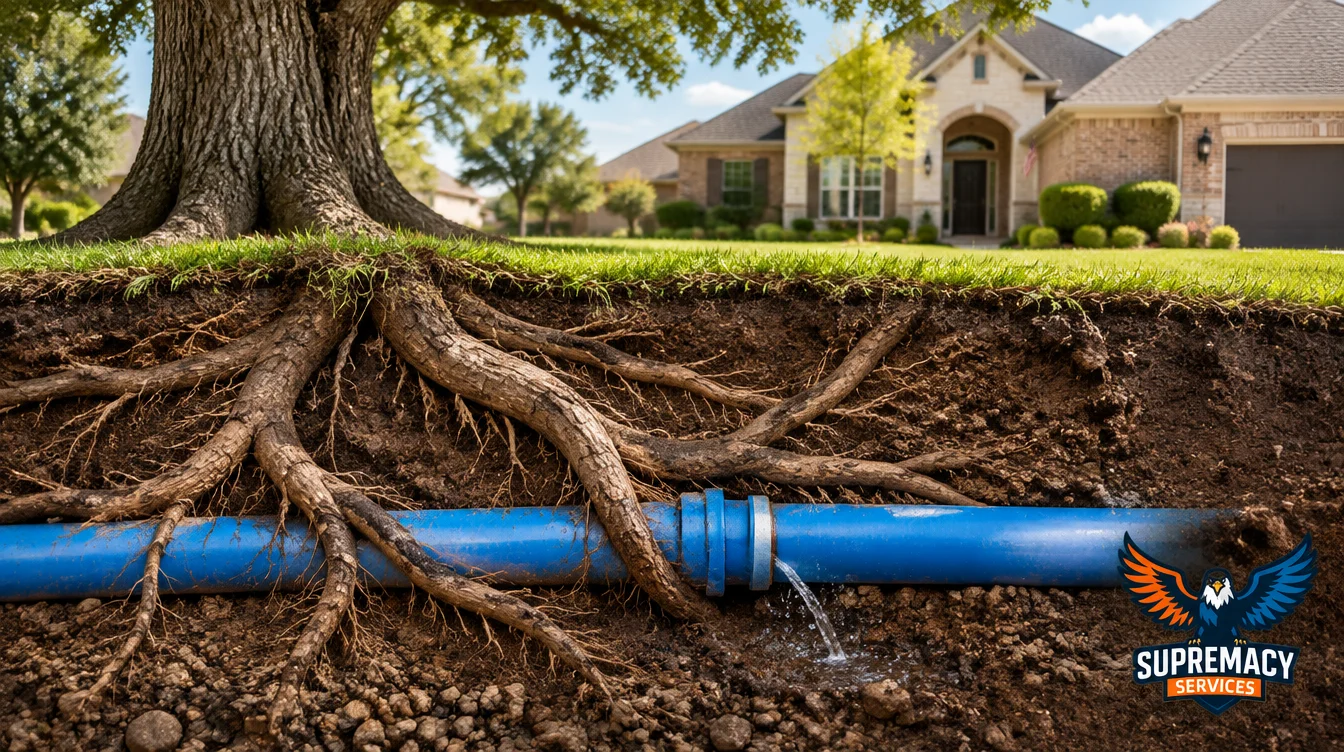
Yes, tree roots can damage underground water lines. In Dallas and across North Texas, growing roots can place pressure on buried water pipes, contribute to joint movement, or worsen cracks in already weakened plumbing. Over time, that damage may lead to underground leaks, reduced water pressure, and costly repairs.
However, finding tree roots near a leaking pipe does not automatically mean the roots caused the leak. Pipe deterioration, shifting soil, improper installation, and existing cracks may also be responsible.
For Dallas homeowners, understanding how tree roots interact with underground water pipes can help identify warning signs early and avoid unnecessary excavation or tree removal.
Table of Contents
- How Do Tree Roots Damage Underground Water Lines?
- Signs Tree Roots May Be Damaging Your Water Line
- Can Tree Roots Break PVC, Copper, or Other Water Pipes?
- Why Tree Roots and Underground Pipes Are a Concern in Dallas
- How to Tell Whether Tree Roots or Another Problem Caused a Leak
- What Should You Do if Tree Roots Damage Your Water Line?
- How Professionals Repair Root-Damaged Water Lines
- How Much Does Tree Root Water Line Repair Cost?
- Who Is Responsible for Underground Water Line Repairs in Dallas?
- How to Prevent Tree Root Damage
- Frequently Asked Questions
How Can Tree Roots Damage Underground Water Lines?
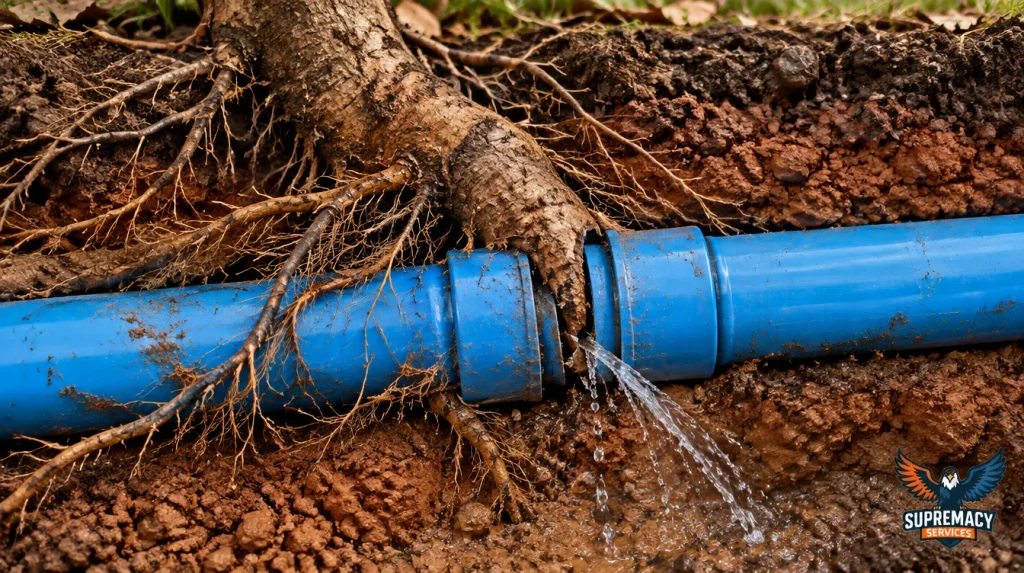
Tree roots damage underground water lines primarily through physical pressure, soil displacement, and the enlargement of existing pipe defects.
Roots do not ordinarily drill through a sound, properly installed water pipe. Instead, they may grow around it, exploit an existing weakness, or gradually shift the surrounding soil as they increase in diameter.
1. Growing Roots Put Pressure on Buried Pipes
As trees mature, their roots increase in thickness.
A root growing directly against an underground pipe may gradually exert pressure on the pipe or its connections.
Depending on the pipe material, installation, surrounding soil, and root size, this pressure can contribute to:
- Pipe displacement
- Stressed fittings or connections
- Cracking or deformation
- Joint separation
- Damage to already weakened sections
This process generally develops over time rather than causing an immediate pipe failure.
2. Roots Can Worsen Existing Cracks and Leaks
An underground water pipe may already have a small leak because of corrosion, ground movement, aging fittings, or installation defects.
Moist soil surrounding that leak can support root growth.
As roots grow around the damaged area, they may enlarge existing openings or place additional stress on the pipe.
Important: A root found near a leak may be a contributing factor rather than the original cause. A professional inspection is needed to distinguish the two.
3. Tree Roots Can Shift Soil Around Water Lines
Underground pipes rely on proper bedding and stable surrounding soil.
Growing roots can displace soil, while changing moisture conditions can contribute to movement in susceptible soils.
If a water line is already poorly supported, this movement may place additional stress on the pipe.
4. Roots Can Affect Pipe Joints
Pipe connections may be more vulnerable than uninterrupted sections of pipe, particularly when joints are deteriorated, poorly supported, or already misaligned.
Root growth and soil movement can contribute to stress at these locations.
Once a pressurized water line begins leaking, water may escape continuously until the supply is isolated or the defect is repaired.
Signs Tree Roots May Be Damaging Your Water Line
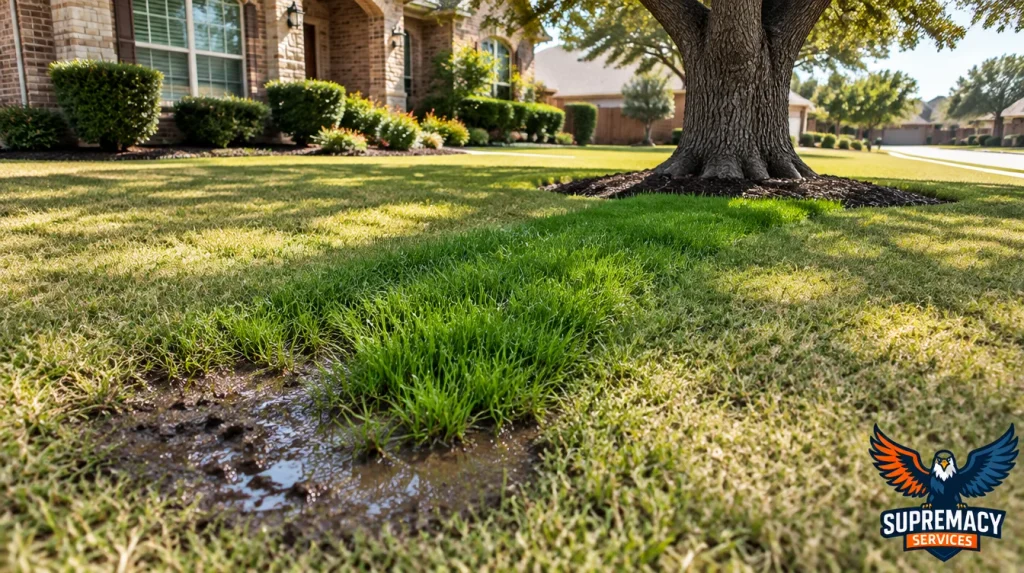
Common warning signs include unexplained wet patches in the yard, unusually high water bills, reduced water pressure, and water meter activity when household water use has stopped.
These symptoms can indicate an underground leak, but they do not prove tree roots are responsible.
1. Persistent Wet Spots Near Trees
A section of lawn that remains damp when nearby soil is dry may indicate water escaping underground.
Pay particular attention to wet ground located between the water meter and the house, especially if it follows the suspected route of the water service line.
Possible clues include:
- Muddy soil during otherwise dry conditions
- A patch of unusually vigorous grass growth
- Water collecting in a low area
- Soil that remains soft without recent irrigation
An irrigation leak or drainage problem can produce similar conditions.
2. An Unexpected Increase in Your Water Bill
A hidden water line leak can cause water consumption to increase without any noticeable change in household habits.
Compare several recent bills rather than relying on a single month.
If usage rises unexpectedly, check for running toilets, irrigation problems, and other common sources of water loss before assuming the main supply line is damaged.
3. Reduced Water Pressure Throughout the House
A substantial underground leak can reduce available water pressure or flow.
If several fixtures experience weaker water flow at the same time, the problem may involve the main supply system.
However, pressure changes can also result from municipal supply conditions, pressure-regulating valves, internal plumbing restrictions, or other faults.
4. Water Meter Movement When No Water Is Being Used
A water meter may reveal continuous water consumption.
To perform a basic check:
- Turn off faucets, showers, and water-using appliances.
- Confirm that irrigation is not running.
- Check that toilets are not refilling.
- Observe the meter’s leak indicator or usage display.
- If the meter indicates continued use, investigate further.
Meter movement alone does not identify where the leak is located. A plumber may need to isolate individual systems to determine whether the problem is underground.
5. Unexplained Soil Settlement
A persistent underground leak can saturate or wash away surrounding soil.
In some cases, homeowners may notice localized depressions or changes in the ground surface.
Avoid walking on unstable areas or attempting to excavate a suspected leak without professional guidance.
Concerned about a possible underground leak? Supremacy Services provides water line repair and replacement in Dallas and Fort Worth, including diagnostic evaluation of buried residential supply lines.
Can Tree Roots Break PVC, Copper, or Other Water Pipes?
Yes. Tree root pressure can contribute to damage involving several pipe materials, although the risk depends on the pipe’s condition, installation, joint design, and surrounding soil.
| Pipe material | Possible vulnerability | Important consideration |
|---|---|---|
| PVC | Cracking, joint stress, displacement | Proper bedding and installation matter |
| Copper | Deformation, corrosion-related weakness, stressed connections | Root pressure may worsen an existing defect |
| Galvanized steel | Corrosion, deterioration, joint problems | Older deteriorated piping may be especially vulnerable |
| PEX | Movement or damage at connections | Flexibility does not eliminate every installation-related risk |
| HDPE | Damage under excessive external stress or at defective connections | Suitable installation and joining remain important |
No pipe material should be considered completely immune to underground movement or external damage.
Can Roots Grow Inside a Water Supply Pipe?
Root growth inside a pressurized drinking-water supply pipe is considerably less typical than root intrusion into a sewer line.
A functioning water service line is designed to remain sealed and under pressure. If it develops a defect, water normally escapes outward.
By comparison, a sewer pipe carries wastewater by gravity. Roots can enter through cracks or defective joints and grow inside the pipe, restricting drainage.
This distinction is important because the appropriate diagnostic tools and repairs differ.
Why Tree Roots and Underground Pipes Are a Concern in Dallas
Dallas homeowners should consider tree growth alongside local soil conditions, landscape irrigation, and the age of their underground plumbing.
Expansive Clay Soils
Parts of North Texas contain expansive clay soils that change volume as moisture conditions change.
Soil movement can place stress on underground infrastructure, particularly where pipes are poorly supported or cross areas experiencing different moisture conditions.
Tree roots may influence local soil moisture, but they are only one possible contributor to underground pipe movement.
Mature Trees Near Residential Plumbing
Established residential neighborhoods may contain mature trees with extensive root systems.
A large tree does not automatically threaten a water line. Risk depends on where roots are growing relative to the pipe, the condition of the plumbing, and how the line was installed.
The most useful question is not simply whether a tree is close to the house, but whether the underground water line crosses an area where root growth and pipe vulnerabilities overlap.
Irrigation and Changing Moisture Conditions
Landscape irrigation, rainfall, and underground leaks can create differences in soil moisture across a property.
Roots often proliferate where growing conditions are favorable.
A leaking pipe may therefore attract additional root growth to the surrounding moist soil, even when roots did not cause the original leak.
Older Underground Plumbing
Older water service lines may have experienced decades of soil movement, material deterioration, or previous repairs.
Where an older pipe is already weakened, nearby root growth may contribute to further damage.
The actual pipe condition matters more than its age alone.
How to Tell Whether Tree Roots or Another Problem Caused a Leak
The presence of a tree near a leaking water line is not enough to establish root damage. A plumber should determine where water is escaping and inspect the damaged pipe before assigning a cause.
Several underground plumbing problems produce similar symptoms.
| Possible cause | Common clues | How to investigate |
|---|---|---|
| Root-related pipe stress | Leak near substantial roots or stressed joints | Locate and expose the defect where appropriate |
| Corrosion | Deteriorated metal piping, multiple weak sections | Inspect pipe material and damaged area |
| Soil movement | Displaced or stressed piping | Evaluate pipe alignment and support |
| Irrigation leak | Wet yard, possibly linked to sprinkler operation | Isolate and test irrigation system |
| Sewer line damage | Slow drains, backups, sewage odors | Drainage inspection and sewer camera |
| Underground supply leak | Meter activity, wet ground, possible pressure loss | Water-line isolation and leak detection |
Water Line Damage vs. Sewer Root Intrusion
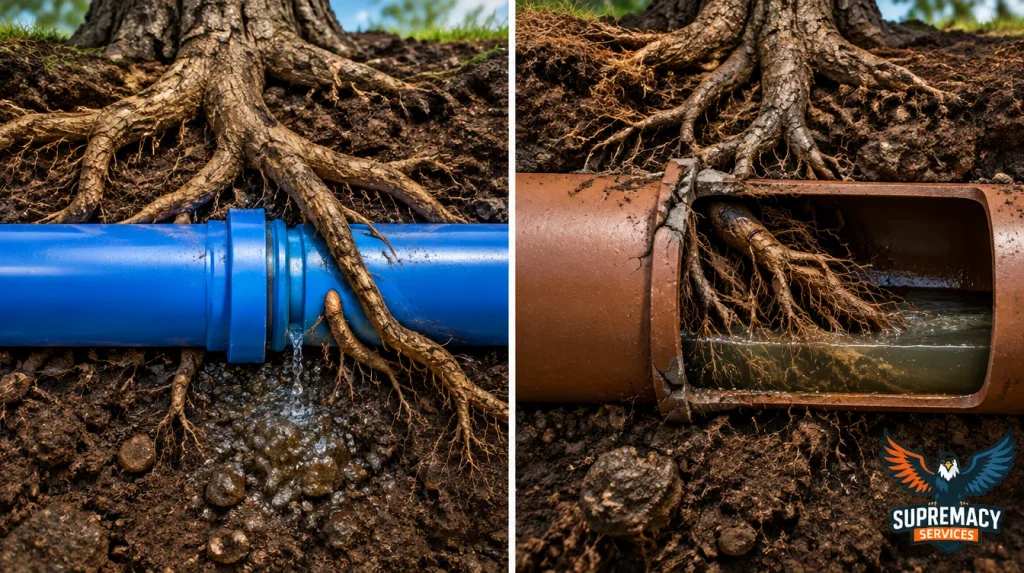
A water supply line delivers potable water into the house under pressure.
A sewer line carries wastewater away from the property.
If roots enter a sewer pipe, homeowners may experience recurring drain blockages or wastewater backups.
If roots contribute to water supply line damage, the more relevant symptoms are usually leakage, water loss, and possibly pressure problems.
A sewer camera inspection is useful for examining accessible drainage pipes. It should not be assumed that the same camera can simply be inserted into a pressurized drinking-water service line.
For underground water lines, plumbers may use pressure testing, acoustic detection, isolation testing, and targeted excavation.
What Should You Do if Tree Roots Damage Your Water Line?
If you suspect root-related damage, first determine whether an active leak exists. Avoid cutting roots or digging around underground utilities before the pipe has been located.
Step 1: Check for Signs of Water Loss
Look for wet ground, unusual meter activity, changes in pressure, and unexplained consumption.
Record what you observe, including the location and when symptoms began.
Step 2: Rule Out Common Household Leaks
Running toilets and irrigation faults can waste substantial amounts of water.
Checking these systems first may help avoid unnecessary excavation.
Step 3: Shut Off the Water if the Leak Is Serious
If water is escaping rapidly or threatening the property, use an accessible homeowner shutoff valve if it is safe to do so.
Do not force a stuck valve or operate utility-owned equipment without authorization.
Step 4: Arrange Professional Leak Detection
A plumber can assess whether the leak is on the private service line, within the home, or elsewhere.
Finding the actual defect is essential before deciding whether tree roots need to be addressed.
Step 5: Avoid Cutting Large Roots Yourself
Removing major structural roots can destabilize or damage a tree.
Where significant roots must be disturbed, coordinate with a qualified arborist and plumbing professional.
Step 6: Compare Repair Options
Once the damaged section has been identified, determine whether localized repair, partial replacement, or rerouting is the most appropriate solution.
How Professionals Repair Root-Damaged Water Lines
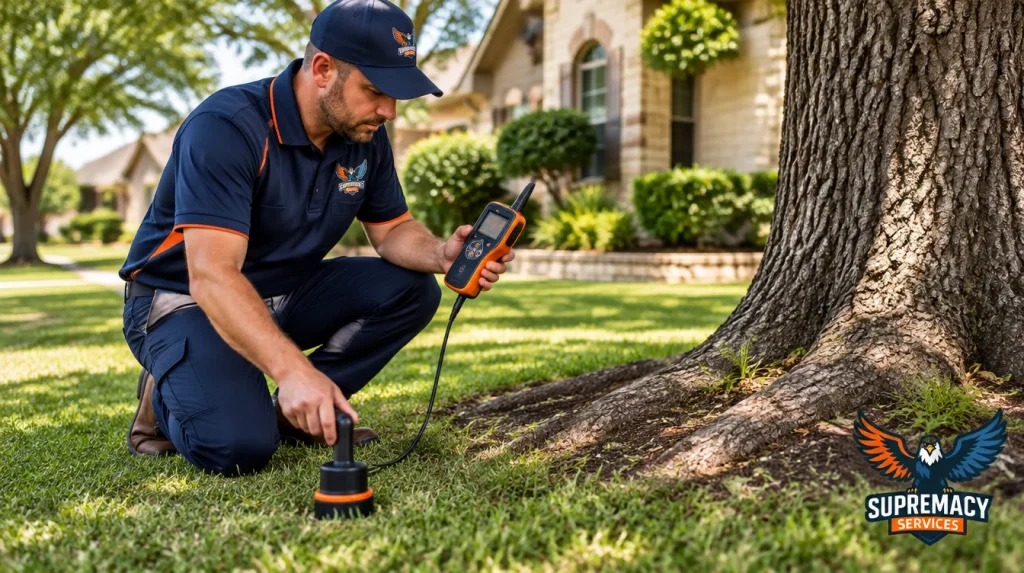
Repair depends on whether the pipe has a localized defect, multiple damaged sections, or an installation route that remains exposed to future problems.
A professional repair typically begins with diagnosis rather than immediate excavation.
1. Underground Leak Detection
The plumber evaluates water loss and attempts to locate the damaged section.
Depending on the circumstances, this may involve:
- Water meter observations
- Isolation testing
- Pressure testing
- Acoustic leak detection
- Pipe locating equipment
- Limited exploratory excavation
The diagnostic method depends on pipe material, accessibility, and site conditions.
2. Localized Pipe Repair
If the defect is limited to a short section and the surrounding pipe is sound, the plumber may be able to replace the damaged portion.
This can be appropriate where the remaining water line is in good condition.
3. Partial or Complete Water Line Replacement
Replacement becomes more reasonable when multiple sections are deteriorated, previous repairs have failed, or the existing pipe is unsuitable for another localized repair.
The replacement route should be evaluated for future access, underground utilities, landscaping, and tree roots.
4. Trenchless Water Line Replacement
Some properties may qualify for trenchless replacement techniques, including pipe bursting.
However, trenchless methods are not suitable for every pipe, soil condition, or site layout.
Access pits may still be required, and the contractor must evaluate existing utilities and root systems.
5. Rerouting the Water Line
Where an existing pipe runs through a heavily rooted area, a different alignment may reduce future conflicts.
Rerouting requires careful consideration of underground utilities, the property’s layout, tree protection, installation requirements, and overall cost.
Repair vs. Replacement: Which Is Better?
| Condition | Repair may be suitable | Replacement may be preferable |
|---|---|---|
| One isolated defect | Yes | Not always necessary |
| Multiple leaks | Less attractive | Often worth evaluating |
| Pipe in otherwise good condition | Often | Depends on circumstances |
| Extensive deterioration | Usually less suitable | Often |
| Repeated failures near roots | May be temporary | Consider replacement or rerouting |
| Significant landscape obstacles | Depends on access | Compare trenchless and alternative routes |
Need to decide between repairing and replacing a buried pipe? Request a diagnostic assessment from Supremacy Services’ water line repair team before committing to major excavation or replacement.
How Much Does Tree Root Water Line Repair Cost?
The cost of repairing root-related underground water line damage depends on the location of the leak, pipe material, excavation requirements, and whether a short repair or larger replacement is necessary.
There is no reliable universal price for this specific situation.
What Affects the Final Cost?
Location and depth: A pipe buried deep underground or beneath hardscaping can be more difficult to access.
Extent of damage: A single failed connection generally requires a different scope of work from a long section of deteriorated pipe.
Pipe material: Replacement materials, joining methods, and compatibility with existing plumbing affect labor and material costs.
Tree root removal: Working around large roots may require additional care or arborist involvement.
Excavation and restoration: Repairing a pipe beneath a driveway, walkway, patio, or established landscape can increase project complexity.
Repair method: Traditional excavation, trenchless replacement, and rerouting involve different equipment and site requirements.
Permits and inspections: Applicable local requirements may affect scheduling and the final project scope.
What Should a Written Estimate Include?
Ask the plumbing contractor to explain:
- How the leak was located
- Which section of pipe is damaged
- Whether roots are confirmed as a contributing factor
- The proposed repair or replacement method
- Pipe materials and fittings
- Excavation and restoration responsibilities
- Applicable permits and inspections
- Warranty terms and exclusions
- The total quoted price
A properly scoped estimate is more useful than an unsupported average price because underground conditions vary substantially from one property to another.
Who Is Responsible for Underground Water Line Repairs in Dallas?
For properties served by Dallas Water Utilities, the private water service line between the meter and the house is generally the property owner’s responsibility.
Dallas Water Utilities distinguishes between the public portion of the service connection, the meter, and the privately maintained portion.
If a root-related leak occurs on the homeowner’s side of the meter, the owner will generally be responsible for arranging repairs.
If the problem involves the utility-maintained portion, contact Dallas Water Utilities.
Responsibility may differ in other DFW municipalities or special utility districts, so homeowners outside Dallas should verify the applicable local rules.
Could You Qualify for a Water Bill Adjustment?
Dallas municipal rules provide a process for certain hidden-leak water bill adjustments after qualifying repairs.
Eligibility is subject to the city’s requirements and is not automatic.
Keep documentation showing the leak location, the repair performed, and the date the problem was corrected.
How to Prevent Tree Root Damage
Preventing damage begins with thoughtful tree placement, properly installed plumbing, and early investigation of underground leaks.
1. Plan Tree Placement Around Buried Utilities
Before planting large trees, determine where underground water and sewer lines are located.
Consider the tree’s expected mature size and root characteristics rather than only its current size.
2. Choose Suitable Trees for the Property
A qualified arborist or local horticultural professional can help evaluate species, mature growth, and planting locations.
No tree should be described as completely root-proof or universally safe near buried pipes.
3. Repair Small Underground Leaks Promptly
Moist soil around a leaking pipe can encourage root growth.
Addressing leaks promptly helps prevent continued water loss and further deterioration.
4. Maintain Appropriate Landscape Irrigation
Avoid excessive irrigation and investigate persistently saturated areas.
The objective is balanced soil moisture, not depriving established trees of water.
5. Protect Trees During Plumbing Repairs
Excavation can damage important tree roots.
Where work must occur near a mature tree, ask whether alternative routes, careful excavation, or arborist supervision are appropriate.
6. Contact Texas811 Before Digging
Texas811 advises contacting its service at least two working days before excavation, excluding holidays.
Be aware that privately owned lines between the meter and house may not be marked by participating utilities. Additional private locating may be necessary.
Never assume that an unmarked area is free of buried pipes or cables.
When Should You Call a Dallas Water Line Repair Professional?
Arrange professional evaluation when you notice unexplained meter activity, persistent wet ground, a significant increase in water consumption, or suspected damage to a buried water supply pipe.
Seek prompt assistance if water is escaping rapidly, undermining soil, or threatening the house or nearby structures.
Professional diagnosis is especially valuable when a suspected leak occurs near mature trees, because the repair may need to protect both the plumbing and the tree.
Frequently Asked Questions
1. Can tree roots break underground water pipes?
Yes. Large roots can place pressure on buried pipes or contribute to movement around joints. Roots can also worsen existing defects. However, nearby roots do not automatically establish the cause of a leak.
2. Can tree roots grow through PVC water pipes?
Roots generally do not penetrate intact PVC pipe walls simply by seeking water. They may exploit existing defects or contribute to damage through pressure, displacement, or joint stress.
3. How do I know if roots are damaging my water line?
Look for unexplained water loss, persistent wet areas, or reduced pressure. A plumber must locate and inspect the damaged section to determine whether roots are involved.
4. Can tree roots cause low water pressure?
Indirectly, yes. If root-related damage causes a substantial leak, available pressure or flow may decrease. Roots do not normally form an internal blockage inside a sealed pressurized water line.
5. Do I need to remove a tree to repair a water line?
Not necessarily. Localized repair, rerouting, or another installation method may avoid removing the tree. A qualified arborist can assess risks associated with disturbing major roots.
6. Can a plumber repair a water line without digging up the whole yard?
Sometimes. Localized excavation or suitable trenchless replacement methods may limit disturbance. The appropriate approach depends on the pipe’s condition, location, and surrounding utilities.
7. Are tree roots more likely to damage sewer lines or water supply lines?
Root intrusion into sewer lines is more commonly associated with internal blockages. Water supply lines are pressurized, so root-related problems more often involve external stress, damaged joints, or leaks.
8. Who pays for a tree-damaged water line in Dallas?
The property owner generally maintains the private service line from the meter to the home. The utility maintains its designated public infrastructure. Confirm the exact boundary with the water provider when uncertain.
9. Can tree roots damage a newly installed water line?
It is possible, particularly where the pipe is improperly supported, poorly joined, or subjected to significant external movement. Correct material selection and installation reduce avoidable risks.
10. Will cutting the roots permanently fix a leaking pipe?
No. Removing nearby roots does not repair a cracked or leaking pipe. The plumbing defect must be addressed, and cutting major roots may damage the tree.
Protect Your Underground Water Line Before a Small Leak Becomes a Larger Problem
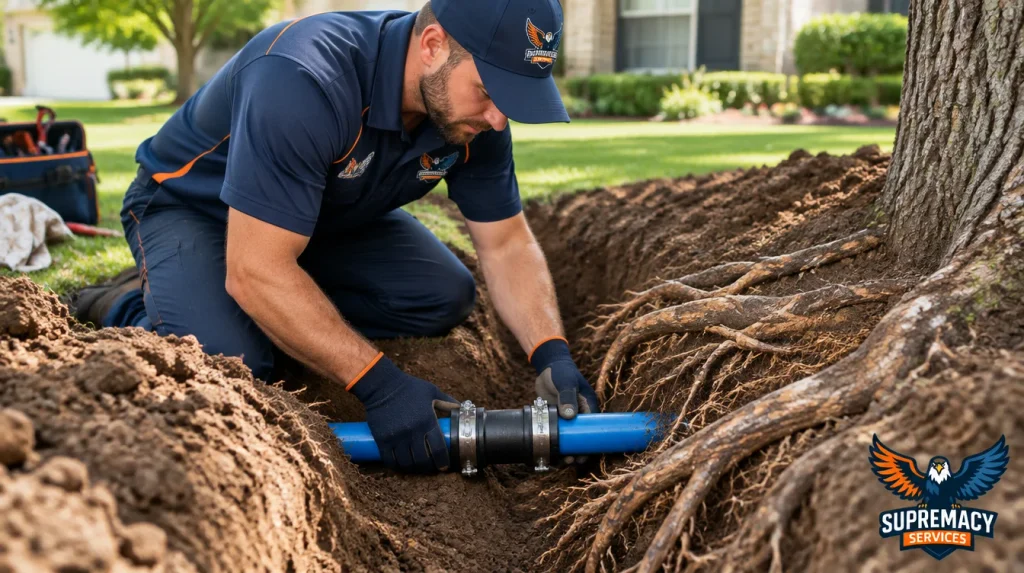
Tree roots can contribute to underground water line damage, but they are not responsible for every leak near a tree.
The most effective approach is to identify the leak, determine the actual cause, evaluate the condition of the pipe, and choose a repair that addresses the underlying problem.
For Dallas homeowners, that may mean a localized pipe repair, replacement of a deteriorated section, or a new route that avoids future conflicts with established trees.
Suspect tree roots are damaging your underground water line?
Supremacy Services provides professional water line repair and replacement throughout Dallas and the DFW Metroplex.
Schedule an inspection to identify the source of the problem and review the most appropriate repair options for your property. Supremacy services

