
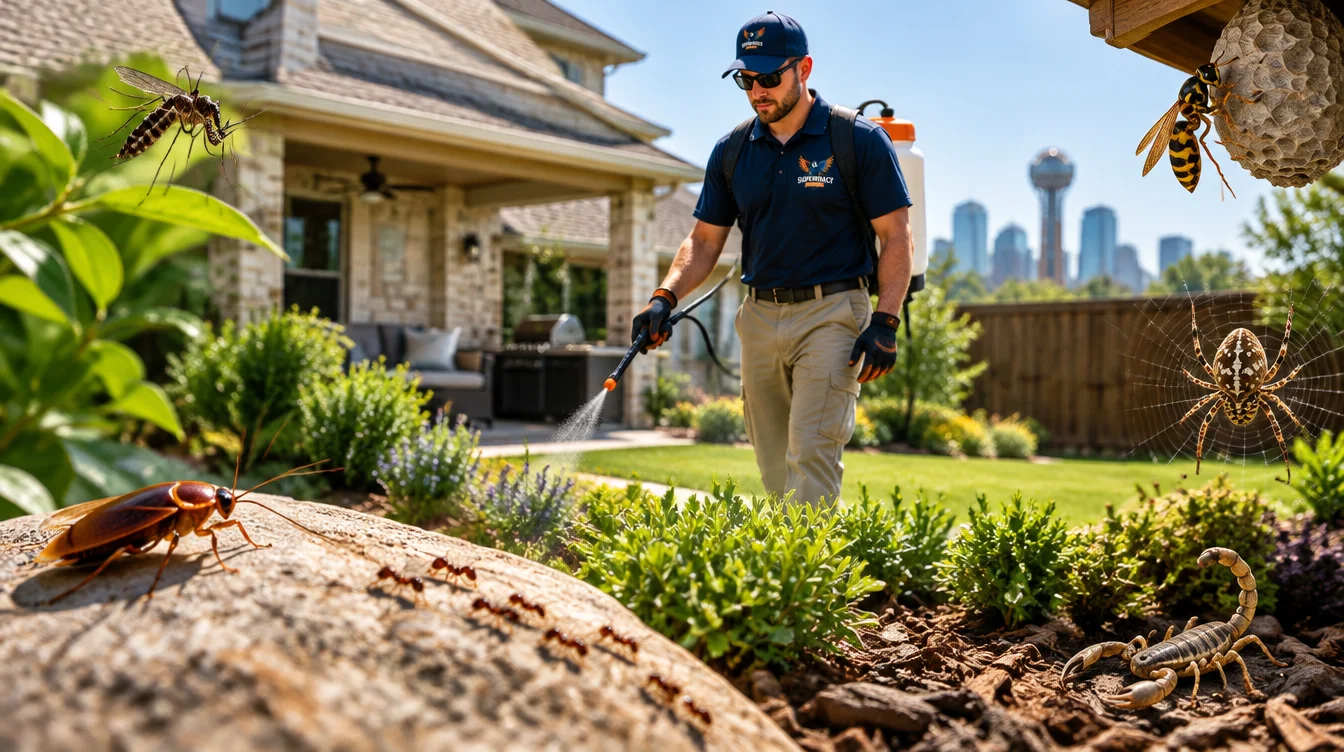
Summer in North Texas can bring noticeable increases in activity from mosquitoes, ants, cockroaches, wasps, spiders, fleas, ticks and scorpions around homes and yards. Exactly which pest becomes a problem depends on moisture, food, shelter, landscaping, structural entry points and conditions around the property.
For Dallas-Fort Worth homeowners, the important question is not simply, “What bug is this?” It is also why the pest is there and what is allowing it to stay.
This guide explains the most common summer pests in North Texas, where homeowners tend to encounter them, warning signs worth investigating and practical steps for reducing pest pressure.
Table of Contents
- What are the most common summer pests in North Texas?
- Why are pests so noticeable during North Texas summers?
- Mosquitoes
- Ants and fire ants
- Cockroaches
- Wasps and other stinging insects
- Spiders
- Scorpions
- Fleas and ticks
- How to prevent summer pest problems
- DIY vs. professional pest control
- FAQs
What Are the Most Common Summer Pests in North Texas?
The summer pests North Texas homeowners are most likely to notice include mosquitoes, ants, cockroaches, wasps, spiders, scorpions, fleas and ticks.
Different pests require different responses.
| Pest | Common places to check | Signs homeowners may notice | Primary concern |
|---|---|---|---|
| Mosquitoes | Shaded yards, gutters, containers | Frequent biting outdoors | Bites and potential disease transmission |
| Ants | Lawns, foundations, kitchens | Trails or mounds | Food contamination or stings, depending on species |
| Cockroaches | Kitchens, bathrooms, garages | Live roaches, droppings, egg cases | Established indoor populations or outdoor entry |
| Wasps | Eaves, patios, trees, sheds | Nest building and repeated flight | Defensive stings |
| Spiders | Eaves, garages, storage | Webs and recurring sightings | Nuisance; some species require caution |
| Scorpions | Garages, landscaping, stored items | Individual or repeated sightings | Stings and exterior pest pressure |
| Fleas | Pet areas, carpeting, shaded yards | Bites or fleas on pets | Persistent biting activity |
| Ticks | Vegetation and outdoor areas | Ticks on people or pets | Bites and potential disease transmission |
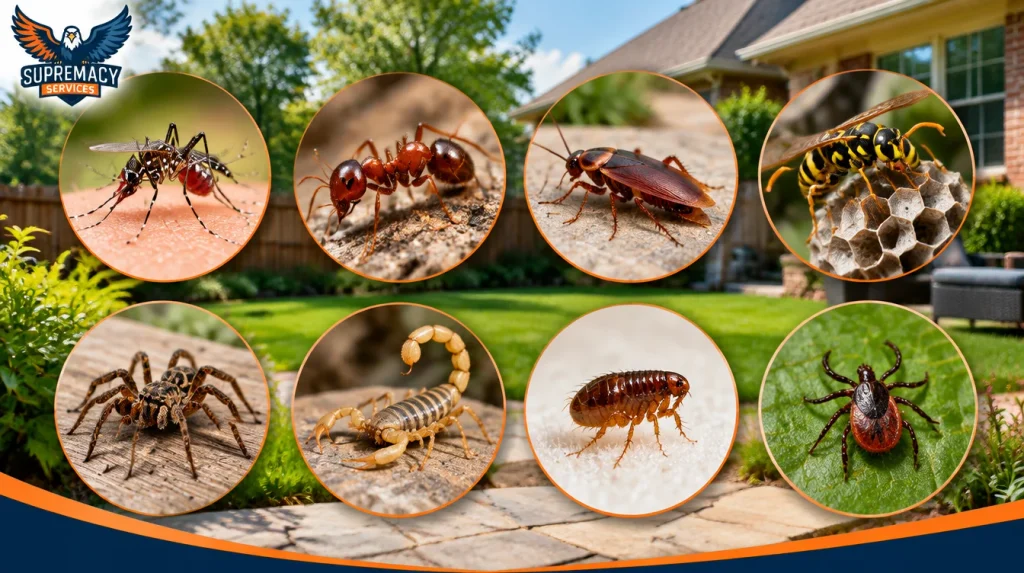
Correct identification comes first. Treating every summer insect with the same spray can miss the source of the problem.
Why Are Pests So Noticeable During North Texas Summers?
Summer pest pressure is influenced by temperature, water, food, shelter and pest life cycles, but the pattern varies considerably by species.
Around a DFW property, homeowners should pay particular attention to:
- standing or trapped water;
- irrigation and drainage problems;
- food and trash;
- pet food;
- dense vegetation touching the structure;
- cracks and utility penetrations;
- gaps under exterior doors;
- clutter in garages and storage areas;
- exterior lighting that attracts insects;
- sheltered areas around patios, eaves and landscaping.
An effective prevention strategy therefore involves more than applying pesticide. The EPA recommends an integrated pest management approach that combines pest identification, sanitation, removal of food/water/shelter, exclusion and appropriate treatment when necessary.
1. Mosquitoes
Mosquitoes are one of the most important summer pests to address because their control involves both comfort and public-health considerations.
Mosquitoes develop in or around water. CDC guidance recommends homeowners routinely empty, scrub, turn over, cover or discard objects capable of holding water.
Where should Dallas homeowners look for mosquito breeding habitat?
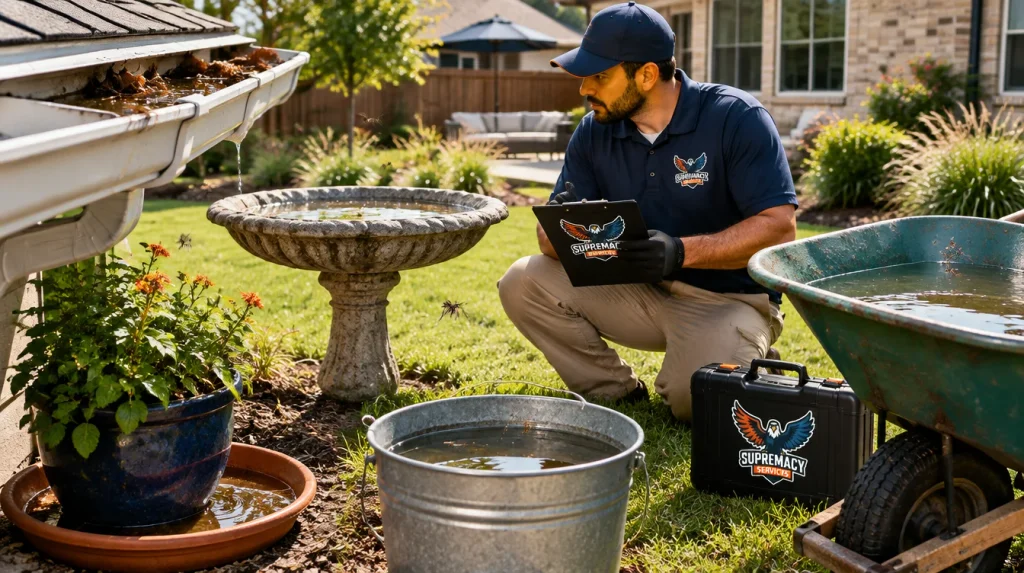
Inspect:
- clogged rain gutters;
- buckets;
- plant saucers;
- children’s toys;
- birdbaths;
- pool covers;
- unused containers;
- rain barrels;
- poorly draining areas;
- wheelbarrows;
- fountains and other water features.
A maintained swimming pool is different from stagnant water in a neglected container. Texas A&M AgriLife notes that birdbaths, old tires and clogged gutters can provide suitable mosquito breeding habitat.
What can homeowners do?
Start with source reduction.
Walk the property at least weekly during mosquito season and remove unnecessary water. CDC recommends weekly inspection and cleaning of water-holding containers.
For standing water that cannot practically be removed or covered, appropriately labeled larvicides may sometimes be an option. Always follow the product label.
Still dealing with heavy mosquito activity after removing obvious water sources? Explore Supremacy Services’ professional pest-control options for Dallas-Fort Worth properties.
2. Ants and Fire Ants
Ant activity around kitchens, foundations, patios and lawns can become particularly noticeable during the warmer part of the year.
Homeowners may find:
- trails along counters or baseboards;
- ants around sinks;
- activity near windows;
- colonies around foundations;
- mounds in lawns;
- ants near patios or driveways.
The first step is identifying the type of ant.
Fire ants, for example, should not automatically be managed the same way as small household ants entering a kitchen.
Texas A&M AgriLife recommends exclusion as an important first defense against household ants and notes that control may involve locating the nest or using an appropriate bait. Fire-ant management requires methods specifically intended for fire ants.
Why do ants keep coming back?
Recurring ants usually indicate that killing the visible workers did not resolve the colony or the conditions attracting them.
Check for:
- accessible food;
- pet food;
- sugary residues;
- moisture;
- gaps around windows and doors;
- vegetation touching the structure;
- exterior colony activity.

3. Cockroaches
A cockroach sighting does not tell you everything you need to know—the species and location matter.
A large cockroach entering from outdoors is a different problem from repeated sightings of small cockroaches and multiple life stages around a kitchen.
Check:
- underneath sinks;
- behind refrigerators;
- behind ovens;
- around dishwashers;
- cabinets;
- bathrooms;
- garages;
- utility penetrations;
- plumbing areas.
Warning signs of a larger cockroach problem
Investigate further if you notice:
- repeated sightings;
- small roaches in kitchens;
- nymphs and adults;
- egg cases;
- droppings;
- activity behind appliances;
- daytime sightings combined with other evidence.
Food, water and protected hiding places can sustain cockroach populations. EPA pest-management guidance specifically emphasizes removing food, water and shelter as part of managing pests such as cockroaches.
Repeated indoor activity is a good reason to move beyond indiscriminate surface spraying and determine the species and source.
4. Wasps and Other Stinging Insects
Wasps become a greater concern when nests are built close to doors, patios, play areas or other frequently used parts of a property.
Look around:
- roof eaves;
- porch ceilings;
- sheds;
- trees;
- fences;
- exterior fixtures;
- patio structures;
- wall openings.
Repeated flight to and from one location can indicate an active nesting area even when the nest itself is difficult to see.
Should you remove a wasp nest yourself?
A small, accessible early-stage nest is different from an established active nest above a doorway or high on a roofline.
Avoid disturbing nests when doing so could expose people to multiple stings, particularly when the nest is difficult to reach or occupants have known sting allergies.
5. Spiders
Recurring spiders often indicate that the property is providing both shelter and insect prey.
Common places to inspect include:
- garages;
- eaves;
- patios;
- sheds;
- closets;
- storage spaces;
- exterior lighting;
- undisturbed corners.
Seeing spiders does not automatically mean a property requires pesticide treatment. Many spiders prey on other insects.
But repeated webs, egg sacs or recurring activity indoors can justify looking at the broader pest conditions around the home.
Reducing insect prey, clearing unnecessary clutter and sealing entry points may help make the structure less favorable.
6. Scorpions
Scorpions may move around structures where shelter, prey and accessible entry points are available.
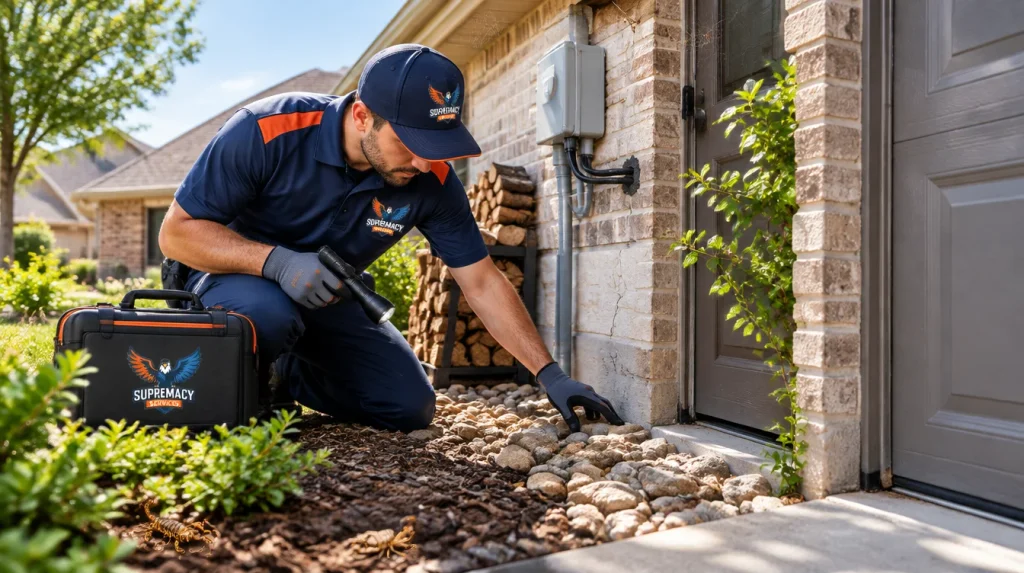
Around North Texas homes, inspect:
- garages;
- rock landscaping;
- wood piles;
- stored materials;
- foundation areas;
- door gaps;
- utility penetrations;
- exterior clutter.
Supremacy’s existing scorpion-control guidance notes that recurring sightings can be connected to shelter, moisture, prey and structural openings.
Does seeing one scorpion mean an infestation?
Not necessarily.
A single scorpion may be an incidental invader. Repeated indoor sightings are more useful evidence that homeowners should inspect exterior conditions and possible entry routes.
Controlling the insects that scorpions feed on can also be part of a broader management strategy.
7. Fleas and Ticks
Fleas and ticks deserve particular attention in households with pets or frequent outdoor activity.
Flea problems can involve both animals and the environments where animals rest.
Ticks can be picked up outdoors and carried onto people or pets. CDC recommends checking for ticks after outdoor activity and removing attached ticks promptly.
For homeowners, prevention can include:
- maintaining outdoor areas;
- checking pets;
- discussing appropriate pet parasite prevention with a veterinarian;
- inspecting pet bedding;
- checking yourself after time outdoors;
- addressing an established indoor flea population rather than treating only the pet.
CDC also recommends showering after outdoor exposure as one measure that can help people check themselves for ticks.
Which Summer Pests Are Mostly Outdoors—and Which May Infest the House?
| Pest | Primarily outdoor pressure | Can establish indoors? |
|---|---|---|
| Mosquitoes | ✓ | Usually incidental entry |
| Fire ants | ✓ | Usually exterior colonies |
| Wasps | ✓ | Nests may occur in structural voids |
| Ticks | ✓ | Usually brought in rather than structural infestation |
| Scorpions | ✓ | May repeatedly enter structures |
| Spiders | ✓ | Some species live indoors |
| Cockroaches | ✓ | Some species can establish serious indoor populations |
| Fleas | ✓ | Yes, indoor populations can develop |
This distinction matters because the place where you see a pest is not necessarily where the problem started.
A spider in a bathroom may have entered from outside.
A cockroach infestation may be concentrated behind kitchen appliances.
Mosquitoes biting on a patio may be associated with small water sources elsewhere on the property.
Good pest control starts by finding that source.
How Can You Reduce Summer Pest Problems?
A practical summer pest-prevention routine should focus on water, food, shelter and entry points.
Weekly exterior checklist
- Empty unnecessary standing water.
- Check gutters and drainage.
- Inspect containers and plant saucers.
- Keep trash properly contained.
- Remove unnecessary exterior clutter.
- Look for developing wasp nests.
- Inspect exterior doors and screens.
- Check landscaping against the structure.
- Watch for ant mounds and trails.
- Look for recurring spider webs around eaves.
Interior checklist
- Store food securely.
- Clean food residues.
- Avoid leaving pet food accessible overnight.
- Fix plumbing leaks.
- Reduce cardboard and clutter.
- Check under sinks.
- Inspect behind kitchen appliances if pest evidence appears.
- Repair damaged screens.
- Seal appropriate structural openings.
These measures reflect the basic principles of integrated pest management: identify the pest, reduce the conditions supporting it, prevent access and use targeted control when necessary.
When Is DIY Pest Control Enough?
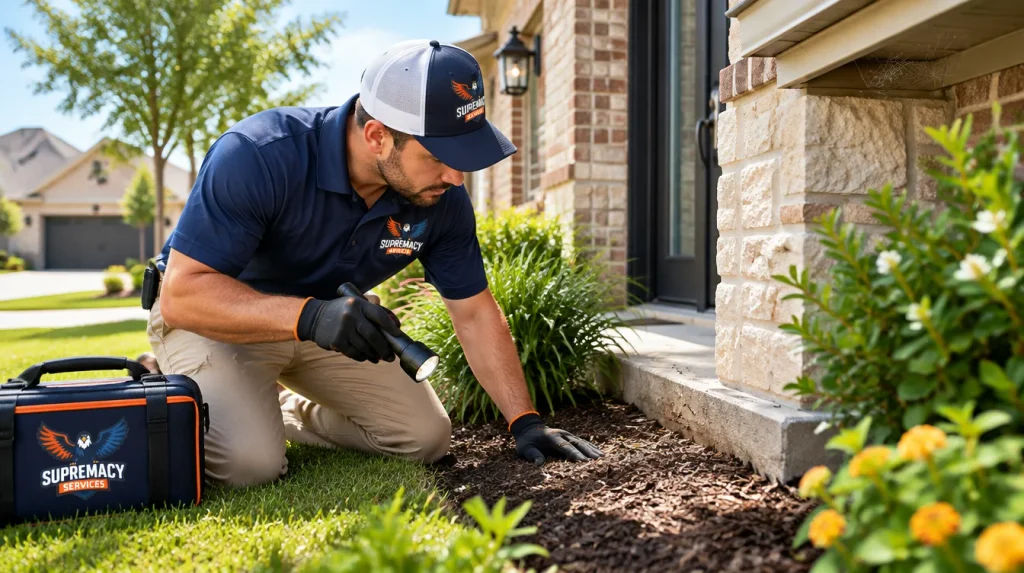
Minor or occasional pest activity can often be reduced with sanitation, water management, exclusion and habitat modification. Persistent or hazardous problems deserve professional assessment.
| Situation | Reasonable first response | Consider professional help when… |
|---|---|---|
| Occasional ants | Remove food, trace trails, seal entry points | Activity continually returns |
| Mosquitoes | Eliminate water sources | Heavy activity continues |
| One large outdoor roach indoors | Inspect exterior openings | Small roaches or multiple life stages appear |
| Occasional spider | Remove it and clean webbing | Webs and spiders continually return |
| Wasp nest | Avoid disturbing it | Nest is active, high or near people |
| Scorpion sighting | Check gaps and exterior shelter | Indoor sightings continue |
| Fleas | Address pet and environmental sources | Biting/activity persists |
| Ticks | Personal/pet checks and habitat management | Exposure remains frequent |
DIY control should never mean applying more pesticide than the label permits.
If a pesticide is used, follow its label directions exactly.
What Does Professional Summer Pest Control Include?
The exact treatment should depend on the pest and property rather than using the same treatment everywhere.
A professional inspection may evaluate:
- pest species;
- locations of active pest pressure;
- food and water sources;
- exterior harborage;
- structural entry points;
- landscaping conditions;
- signs of established indoor activity;
- whether targeted treatment, exclusion or monitoring is appropriate.
Texas regulates structural pest-control businesses and applicators through the Texas Department of Agriculture. Businesses providing structural pest-control services for compensation must meet applicable licensing requirements.
If summer pest activity keeps returning despite sanitation, water management and exclusion, see Supremacy Services’ Dallas-Fort Worth pest-control options and request a property-specific assessment.
Do All Summer Bugs Need to Be Eliminated?
No.
Not every insect or spider outdoors represents a pest problem.
A useful pest-management strategy distinguishes between:
- incidental insects;
- beneficial organisms;
- nuisance activity;
- established infestations;
- stinging or biting pests;
- pests capable of damaging property;
- pests with potential public-health implications.
That is another reason identification should come before treatment.
The goal should not be indiscriminate spraying. It should be managing pests at an appropriate level while addressing the conditions that allowed the problem to develop.
What Should Dallas-Fort Worth Homeowners Watch for During Summer?
Pay particular attention to changes in activity.
One insect is often less informative than a pattern.
Warning signs worth investigating include:
- ant trails returning after cleanup;
- several cockroach life stages in the kitchen;
- frequent mosquito bites in one part of the yard;
- repeated scorpion sightings indoors;
- new wasp traffic around an entrance;
- recurring spider webs immediately after removal;
- unexplained flea bites;
- ticks repeatedly appearing on people or pets.
Those patterns can help determine whether you are dealing with an occasional visitor or a pest population that requires a broader response.
A Better Summer Pest Strategy for North Texas Homes
Summer pest management is most effective when homeowners stop treating each visible bug as an isolated event.
Instead, ask:
What pest is it?
Correct identification determines what control methods make sense.
Where is it coming from?
Inspect the property rather than focusing only on where the pest was first seen.
What is allowing it to stay?
Look for water, food, shelter, prey and entry points.
Can those conditions be corrected?
Sanitation, exclusion, moisture management and habitat modification can reduce many pest problems before more intensive control is needed.
Is the problem continuing?
Persistent activity may require professional inspection and targeted treatment.
That approach is far more useful than simply reaching for a general-purpose spray every time an insect appears.
Frequently Asked Questions
What are the most common summer pests in North Texas?
Mosquitoes, ants, cockroaches, wasps, spiders, scorpions, fleas and ticks are among the pests homeowners may notice during North Texas summers. The exact mix varies according to the property, weather, moisture, landscaping and available food and shelter.
Why do I get more bugs around my house during summer?
Warm-season pest activity can be influenced by temperature, moisture, food, shelter and pest life cycles. Your property’s irrigation, landscaping, drainage, lighting and structural openings can also affect what you see.
What attracts mosquitoes to a North Texas yard?
Water-holding containers are especially important. Check gutters, buckets, toys, birdbaths, plant saucers, pool covers and other places that collect water.
Why do cockroaches come inside during summer?
The answer depends partly on the species. Some roaches live primarily outdoors and occasionally enter buildings, while species such as German cockroaches can establish indoor infestations. Repeated sightings should be identified rather than assumed to have the same source.
Are scorpions common around North Texas homes?
Scorpions can occur around North Texas properties. Shelter, insect prey and structural openings can contribute to sightings. One scorpion does not automatically establish an infestation, but recurring indoor activity deserves investigation.
Do spiders mean my house has another pest problem?
Sometimes. Spiders feed on insects, so recurring spider activity can indicate plentiful prey. Reducing other insect activity may therefore form part of spider management.
How often should I check my yard for mosquito breeding sites?
CDC recommends checking water-holding containers weekly and emptying, scrubbing, turning over, covering or discarding them where practical.
Can I prevent summer pests without pesticides?
Many prevention measures do not require pesticides. Removing standing water, securing food and trash, fixing leaks, reducing clutter, repairing screens and sealing appropriate entry points can all help.
When should I call a pest-control professional?
Consider professional help when activity repeatedly returns, the source cannot be located, an indoor infestation appears established, a stinging-insect nest creates a safety concern, or pest-specific treatment requires expertise.
Protect Your DFW Home From Recurring Summer Pest Problems
Summer pests around a North Texas property are not all the same—and neither are their solutions.
Mosquitoes require attention to water and outdoor habitat. Ants may originate from exterior colonies. Cockroach treatment depends heavily on species and infestation location. Spiders and scorpions can reflect broader exterior insect pressure, while fleas, ticks and wasps introduce different concerns entirely.
Start by identifying the pest and removing the conditions helping it thrive.
When activity continues despite those measures, a professional inspection can help determine where the problem originates and what type of treatment is actually appropriate.
Dealing with recurring ants, cockroaches, spiders, scorpions, mosquitoes or other summer pests? Explore Supremacy Services’ pest-control solutions for Dallas-Fort Worth and request an inspection tailored to your property.

