
Homeowners in Allen, Texas commonly encounter ants, cockroaches, spiders, mosquitoes, termites, rodents, wasps, fleas and ticks, along with occasional invaders such as scorpions. Which pest becomes a problem depends on the property, season, moisture, food sources, landscaping and available entry points.
Some pests are mainly a nuisance. Others can sting, contaminate food, damage wood or establish populations in places homeowners rarely inspect.
The key is identifying what you are dealing with before deciding how to control it.
Table of Contents
- What Are the Most Common Pests in Allen, TX?
- Ants and Fire Ants
- Cockroaches
- Spiders
- Mosquitoes
- Termites
- Rodents
- Wasps and Other Stinging Insects
- Fleas and Ticks
- Bed Bugs
- Scorpions
- Why Pests Enter Allen Homes
- How to Prevent Pest Problems
- DIY vs. Professional Pest Control
- Frequently Asked Questions
What Are the Most Common Pests in Allen, TX?
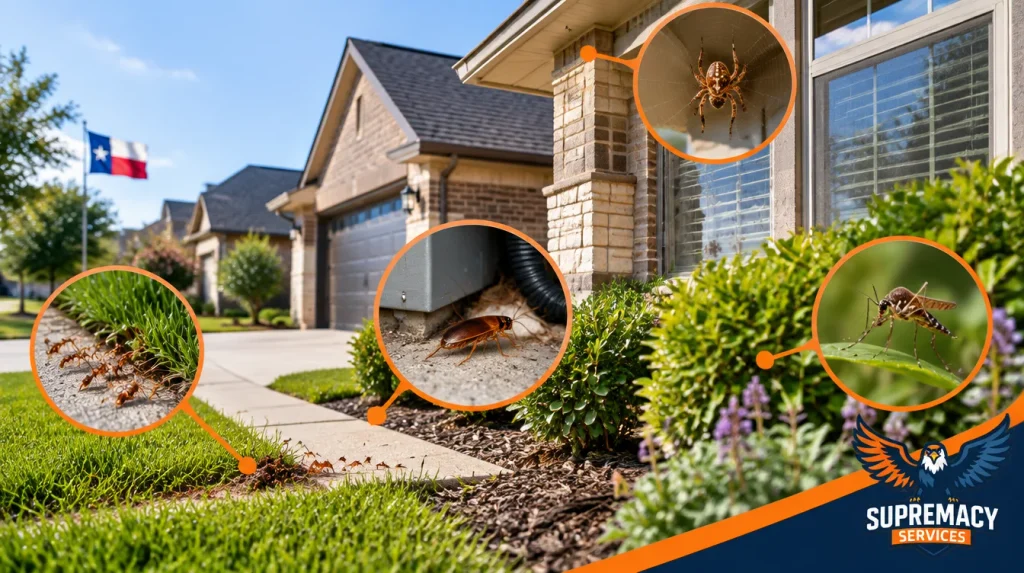
The pests Allen homeowners are most likely to encounter include ants, cockroaches, spiders, mosquitoes, termites, rodents, wasps, fleas, ticks and bed bugs. Scorpions and other occasional invaders can also appear around North Texas properties.
Texas A&M AgriLife identifies ants, cockroaches, termites, spiders and numerous other arthropods among the pests commonly encountered in and around Texas structures. Correct identification matters because pests that look similar can require very different control strategies.
| Pest | Common warning signs | Typical problem areas | Main concern |
|---|---|---|---|
| Ants | Trails, mounds, workers around food | Kitchens, foundations, lawns | Recurring colonies/stings depending on species |
| Cockroaches | Live roaches, droppings, egg cases | Kitchens, bathrooms, garages | Indoor infestation and sanitation |
| Spiders | Webs, recurring sightings | Garages, eaves, storage | Nuisance and occasional medically significant species |
| Mosquitoes | Frequent biting outdoors | Shaded yards, standing water | Outdoor comfort and mosquito-borne disease |
| Termites | Swarmers, discarded wings, damaged wood | Foundation and structural wood | Structural damage |
| Rodents | Droppings, gnawing, noises | Attics, garages, wall voids | Contamination and property damage |
| Wasps | Nest construction, repeated flight activity | Eaves, patios, trees | Stings |
| Fleas/ticks | Bites, pests on pets or clothing | Lawns, pet areas, indoors | Bites and potential disease transmission |
| Bed bugs | Live insects, spotting, shed skins | Beds and upholstered furniture | Persistent indoor infestation |
| Scorpions | Individual sightings | Garages, landscaping, sheltered areas | Stings and recurring entry |
1. Ants and Fire Ants
Ants are among the most common household pests in Texas. Many species that enter homes actually nest outdoors, while some can establish colonies inside walls and other protected spaces. Texas A&M emphasizes that identifying the species is an important first step because different ants behave differently.
Around an Allen home, you may notice:
- trails along foundations or countertops;
- ants around sinks, pet food or pantry items;
- mounds in lawns;
- activity around patios and driveways;
- ants entering through cracks around doors, windows or utilities.
Fire ants deserve particular attention outdoors. Colonies near homes can forage inside for food and moisture, especially during hot, dry conditions, and fire ants can sting people and pets.
Ant or termite?
Winged ants are sometimes confused with termite swarmers.
Winged ants typically have elbowed antennae, a narrow waist and unequal-sized wings, while termite swarmers have a different body and wing profile. If insects are emerging from the structure and identification is uncertain, avoid assuming they are harmless ants.
If ants repeatedly return despite sanitation and entry-point corrections, explore Supremacy Services’ professional pest-control options rather than repeatedly treating only the ants you can see.
2. Cockroaches
Cockroaches are another major Texas household pest, but identifying the species can tell you a great deal about where the problem originates.
Texas A&M lists the German, American, oriental and smokybrown cockroaches among common Texas species. German cockroaches are primarily indoor pests, while several larger species usually live outdoors but may enter buildings looking for food, water or shelter.
Signs of cockroach activity
Watch for:
- live roaches, especially at night;
- small droppings;
- egg cases;
- activity under sinks and appliances;
- repeated sightings around kitchens or bathrooms;
- roaches around garages, drains or utility areas.
A single large outdoor cockroach that wandered inside can represent a very different problem from recurring German cockroaches around a kitchen.
That distinction is one reason identification should come before treatment.
Why do cockroaches keep coming back?
Food, water, protected hiding spaces and untreated harborages can sustain activity. Simply spraying visible insects may leave the underlying source untouched.
Integrated management typically combines inspection, sanitation, exclusion, monitoring and appropriate treatment rather than relying exclusively on surface sprays.
3. Spiders
Spiders often become noticeable around garages, eaves, windows, patios, storage areas and other locations where insects are available as prey.
The important question is not simply, “How do I kill this spider?”
It is:
Why does this part of the property support recurring spider activity?
Exterior lighting, insect populations, sheltered storage areas, landscaping and gaps around the structure can all contribute.
Supremacy’s dedicated spider-control guidance also notes that recurring spider activity can be connected to the surrounding insect population. Reducing prey and addressing harborages and entry points may therefore be more useful than repeatedly removing individual spiders.
Homeowners should also avoid identifying potentially significant spiders from color alone. When identification matters, capture a clear photograph from a safe distance or have the specimen evaluated.
4. Mosquitoes
Mosquito problems usually begin outdoors rather than inside the home.
Potential breeding sources include water collecting in:
- buckets;
- plant saucers;
- clogged gutters;
- toys;
- tarps;
- birdbaths;
- containers;
- other objects that retain water.

EPA recommends eliminating standing water as part of mosquito prevention.
This is particularly relevant in Allen because Collin County actively conducts surveillance for West Nile virus and other mosquito-borne diseases in collaboration with local cities. County public-health guidance emphasizes preventing mosquito bites and using EPA-approved repellents.
A useful homeowner routine is to walk the property after irrigation or rain and identify anything capable of holding water.
If mosquito pressure remains high despite source reduction, a professional inspection can identify resting and breeding conditions that are easy to overlook.
5. Termites
Termites deserve separate attention because the concern is not simply having insects around the property—it is the possibility of wood damage.
Potential warning signs include:
- winged swarmers;
- discarded wings;
- mud tubes;
- damaged or hollow-sounding wood;
- activity around structural wood or the foundation.
Do not confuse termite swarmers with flying ants. Correct identification is essential before treatment.
Homeowners should also be cautious about disturbing suspected termite activity before an inspection. Knowing where activity is occurring can help with evaluation.
Because termite control is its own structural-pest-control category in Texas, suspected termite activity is a strong reason to involve a properly licensed professional.
6. Rodents
Rodent activity can be easy to miss because mice and rats frequently travel through concealed areas.
Warning signs may include:
- droppings;
- gnaw marks;
- scratching or movement at night;
- nesting material;
- damaged food packaging;
- activity in garages or attics;
- openings around exterior penetrations.
Removing a rodent does not necessarily solve the problem if the opening it used remains accessible.
Effective rodent management therefore needs to consider both population control and exclusion.
Inspect areas where pipes, cables and utilities enter the structure, as well as doors, garage areas, rooflines and other potential openings.
7. Wasps and Other Stinging Insects
Wasps commonly become noticeable when nests develop around areas people regularly use.
Look around:
- eaves;
- patio covers;
- porch ceilings;
- exterior fixtures;
- trees and shrubs;
- sheds and detached structures.
A small early-season nest in an isolated location presents a different situation from an active nest beside a front door or children’s play area.
Avoid disturbing active nests when doing so could expose people or pets to multiple stings.
Professional removal becomes particularly appropriate when a nest is high above the ground, concealed inside the structure, unusually active or positioned beside a frequently used area.
8. Wasps-and Ticks
Fleas and ticks can affect both people and animals and may involve indoor and outdoor environments.
Flea activity can become associated with pets, wildlife and resting areas, while ticks are often connected with outdoor vegetation and animal hosts.
When fleas persist indoors, treating only the visible adults may not address every life stage in the environment.
Prevention can include:
- veterinarian-recommended pet protection;
- washing pet bedding;
- vacuuming appropriate indoor areas;
- maintaining the yard;
- addressing wildlife or rodent activity;
- evaluating persistent infestations professionally.
9. Bed Bugs
Bed bugs are different from many pests in this guide because they are not primarily attracted by a dirty home or an unmaintained yard.
They are often introduced with belongings and can hide close to places where people sleep or rest.
Possible evidence includes:
- live bed bugs;
- dark spotting;
- shed skins;
- eggs or eggshells;
- activity around mattress seams and bed frames.
Bites alone cannot reliably confirm a bed bug infestation.
EPA recommends an integrated approach to bed bug control because their biology and hiding behavior can make elimination difficult.
Avoid moving potentially infested furniture through the house before you understand the extent of the problem, since that can spread activity into previously unaffected areas.
10. Scorpions
Scorpions are not the first pest most Allen homeowners think about, but they can occur around North Texas properties.
They may shelter around:
- rocks;
- landscaping;
- wood piles;
- garages;
- exterior gaps;
- stored materials.
Scorpions feed on insects and other arthropods, which means recurring activity can sometimes indicate that the surrounding property provides both shelter and prey.
Reducing clutter, correcting entry points and managing the insects they feed on can form part of a broader prevention strategy.
Why Do Pests Enter Allen Homes?
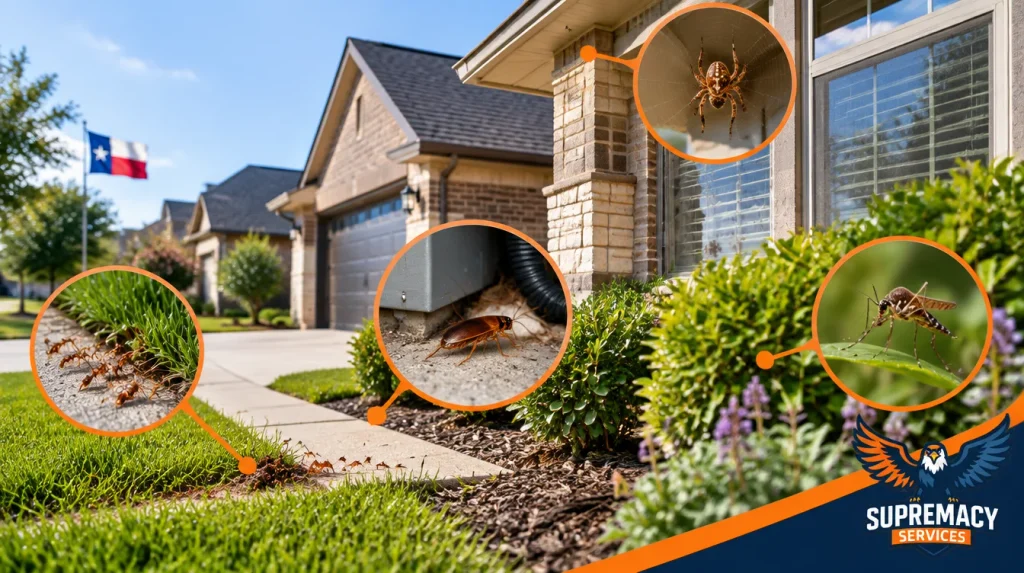
Most household pest problems can be traced to some combination of four basic conditions:
Food
Crumbs, garbage, pet food, pantry products and other accessible food sources can sustain insects and rodents.
Water
Leaking plumbing, condensation, standing outdoor water and overwatered areas can create favorable conditions.
Shelter
Wall voids, clutter, mulch, dense vegetation, stored materials, attics and garages provide protected areas.
Access
Gaps around doors, windows, utilities, vents and other penetrations allow pests to move from outside to inside.
EPA’s residential pest guidance recommends reducing access to food, water and shelter and sealing entryways as fundamental pest-prevention measures.
Which Pests Are Most Likely Indoors vs. Outdoors?
| More commonly associated with indoor infestations | Often originate outdoors |
|---|---|
| German cockroaches | Fire ants |
| Bed bugs | Mosquitoes |
| Some household ants | Wasps |
| Rodents once established | Spiders |
| Pantry pests | Scorpions |
| Fleas after establishment | Ticks |
| Larger outdoor cockroaches |
This distinction matters because an indoor infestation and an occasional outdoor invader should not automatically receive the same treatment.
How Can Allen Homeowners Prevent Pest Problems?

The best pest-control strategy often begins before an infestation becomes established.
Monthly homeowner pest checklist
Outside the house
- Check door sweeps and weather seals.
- Look for gaps around utility penetrations.
- Remove unnecessary standing water.
- Inspect eaves for early wasp nests.
- Look for ant mounds.
- Keep stored materials organized.
- Check for rodent-access points.
- Watch for recurring webs around entrances and windows.
Inside the house
- Store food in appropriate sealed containers.
- Clean crumbs and spills.
- Avoid leaving pet food out unnecessarily.
- Repair plumbing leaks.
- Inspect under sinks.
- Monitor areas behind appliances.
- Reduce clutter in storage areas.
- Investigate unexplained droppings, shed skins or insects instead of simply spraying them.
EPA’s integrated pest management principles emphasize monitoring and correct identification before deciding which control method is appropriate.
DIY vs. Professional Pest Control
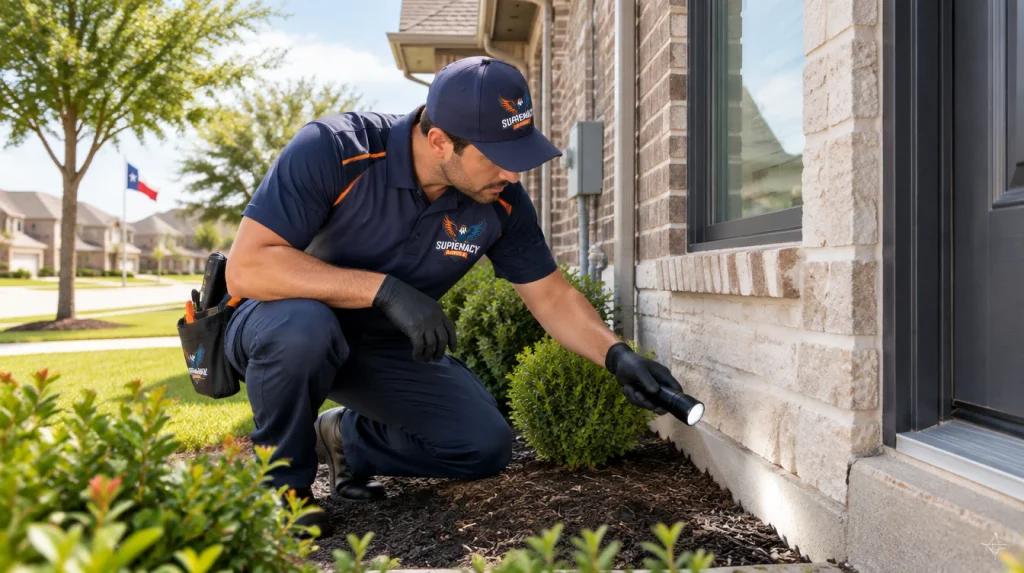
Minor, isolated pest activity can sometimes be managed by a homeowner through sanitation, exclusion, moisture correction, traps or properly labeled consumer products.
Professional service becomes more appropriate when:
- the pest cannot be confidently identified;
- activity repeatedly returns;
- cockroaches are established indoors;
- termites are suspected;
- rodents are entering the structure;
- a wasp nest creates a sting hazard;
- bed bugs are suspected;
- pests appear to be coming from inaccessible areas;
- DIY treatments have not addressed the source.
In Texas, businesses and individuals providing structural pest control for compensation are subject to Texas Department of Agriculture licensing requirements.
What should professional pest control include?
The exact process depends on the pest, but a systematic service should generally focus on more than simply treating whatever insect happens to be visible.
Depending on the problem, the process may include:
- identifying the pest;
- inspecting where activity is concentrated;
- finding conducive conditions;
- identifying entry or harborage areas;
- selecting an appropriate control strategy;
- providing treatment or exclusion where needed;
- explaining prevention steps;
- monitoring or following up when the pest requires it.
This is consistent with integrated pest management: identify the organism, understand why it is present and select controls appropriate to the actual problem.
Seeing recurring ants, roaches, spiders or other pests around your Allen home? Learn how Supremacy Services approaches DFW pest control and perimeter protection before the problem becomes established indoors.
Should Every Bug Around Your Allen Home Be Treated?
No.
Seeing an insect does not automatically mean you have an infestation.
Some insects simply wander indoors, and many arthropods found outside are harmless or beneficial. EPA’s IPM guidance specifically emphasizes correct identification and monitoring so controls are not applied unnecessarily.
Instead, consider:
- what species it is;
- how many you are seeing;
- where they appear;
- whether activity is recurring;
- whether there are signs of nesting or reproduction;
- whether the pest can damage the structure or create a health or sting risk.
Frequently Asked Questions
What are the most common pests in Allen, Texas?
Allen homeowners may encounter ants, cockroaches, spiders, mosquitoes, termites, rodents, wasps, fleas, ticks and bed bugs. Scorpions and other occasional invaders can also appear around North Texas properties.
Why do I suddenly have bugs inside my house?
Changes in moisture, weather, available food, pest populations or access points can cause outdoor pests to move inside. Indoor infestations can also begin when pests such as German cockroaches or bed bugs are introduced with belongings or materials.
What pests should Allen homeowners worry about most?
The answer depends on the property. Termites warrant attention because of potential wood damage; rodents and cockroaches can create sanitation problems; mosquitoes and ticks can transmit disease; and wasps or fire ants can create sting hazards.
Are cockroaches common in North Texas?
Yes. Texas A&M identifies German, American, oriental and smokybrown cockroaches among common Texas cockroach species. Some primarily live indoors, while others usually originate outside.
Are fire ants common around Texas homes?
Fire ants are a significant pest in Texas landscapes and can forage indoors from outdoor colonies. Texas A&M maintains a dedicated statewide research and management program for imported fire ants.
Why do spiders keep appearing around my house?
Recurring spider activity can be associated with available insect prey, shelter and access. Exterior lights, garages, landscaping and protected storage areas can all contribute.
How can I reduce mosquitoes around my Allen backyard?
Remove standing water, inspect containers after rain or irrigation, maintain gutters and use appropriate personal protection. Collin County also recommends mosquito-bite prevention as protection against mosquito-borne illness.
When should I call a pest-control professional?
Consider professional help when the pest cannot be identified, activity keeps returning, termites or bed bugs are suspected, rodents are entering the structure, stinging insects create a hazard or DIY measures are not controlling the underlying problem.
Does a clean house prevent every pest problem?
No. Sanitation helps reduce food and shelter for many pests, but pests can also enter through structural gaps, arrive with belongings or establish themselves outdoors around the property.
Protecting Your Allen Home From Recurring Pest Problems
The most effective pest prevention starts with understanding what pest you have and why it is there.
Instead of reacting to every insect with the same spray, inspect the property for food, water, shelter and entry points. Correct those conditions where practical, monitor recurring activity and use treatment appropriate to the pest.
When activity persists, involves a potentially damaging pest such as termites, or extends into areas you cannot safely inspect or treat, professional evaluation can help determine what is actually happening.
If pests keep returning around your Allen home, schedule a professional pest inspection with Supremacy Services to identify the source and determine the appropriate control and prevention strategy for your property.

