
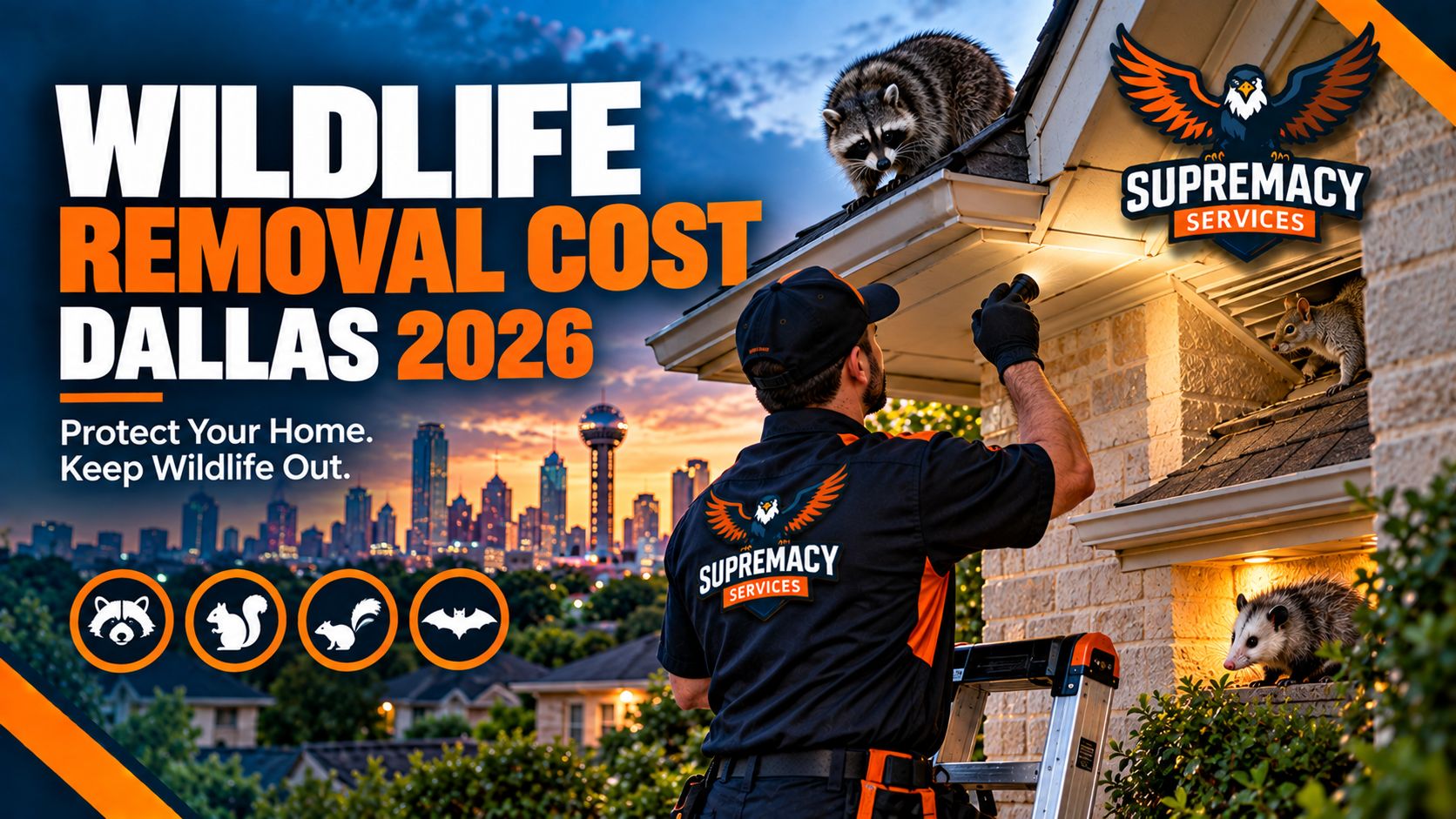
How much does wildlife removal cost in Texas? For homeowners in Dallas, Plano, Frisco, McKinney, Allen, Richardson, and surrounding North Texas communities, professional wildlife removal can range from a few hundred dollars for a straightforward animal removal to several thousand dollars when exclusion, attic cleanup, insulation replacement, or extensive repairs are involved.
In the Dallas–Fort Worth area, a typical wildlife removal project may fall somewhere around $300 to $1,500, while complicated situations involving raccoon families, bat colonies, extensive entry-point repairs, or contaminated attic spaces can cost considerably more.
The important question, however, is not simply “How much does wildlife removal cost?”
It is:
What is included in the wildlife removal price?
A low-cost trap may remove an animal temporarily. A professional wildlife-control solution should identify how the animal entered, address the active infestation, secure the structure against re-entry, and determine whether cleanup or repairs are necessary.
This guide explains the factors that influence wildlife removal costs in Texas and what Dallas-area homeowners should expect before hiring a wildlife-control company.
Wildlife Removal Cost in Dallas: Quick Answer
For a general 2026 planning estimate, Dallas-area homeowners can expect approximately:
| Wildlife problem | Typical Texas/DFW range* |
|---|---|
| Opossum removal | $250–$600 |
| Squirrel removal | $300–$700 |
| Raccoon removal | $400–$1,200+ |
| Skunk removal | $300–$900+ |
| Snake removal | $100–$500+ |
| Armadillo removal | $150–$700+ |
| Rat or mouse wildlife exclusion | $300–$800+ |
| Bat exclusion | $500–$2,000+ |
| Extensive bat colony work | $2,000–$6,000+ |
| Attic sanitation | $500–$2,000+ |
| Structural repairs/exclusion | $300–$3,000+ |
*These are general market-planning ranges, not a fixed Supremacy Services price list. Actual pricing depends on the animal, number of animals, access points, location, structural damage, exclusion requirements, cleanup, and local regulations.
Current Dallas pricing data published by Angi places many common wildlife-removal jobs in the several-hundred-dollar range, including approximately $260–$520 for possums, $415–$620 for raccoons, and $210–$620 for squirrels. Other Texas-focused cost references show substantially wider ranges once exclusion, babies, structural repairs, and attic restoration are included.
What Determines the Cost of Wildlife Removal?
There is no single price for wildlife removal because the animal itself is only one part of the problem.
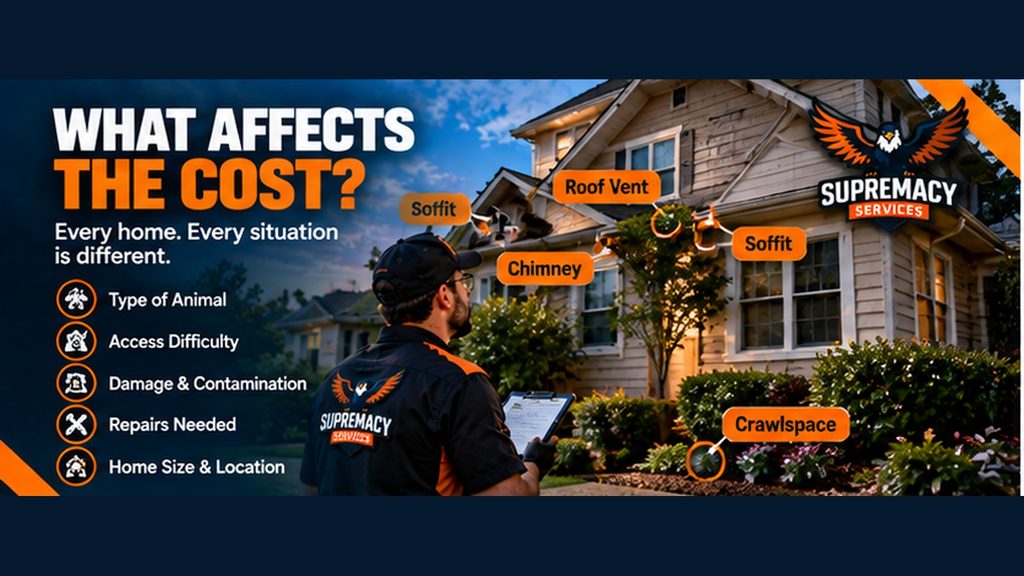
A professional estimate normally considers several factors.
1. What Animal Is Involved?
A squirrel in an attic is a different job from a raccoon family living behind a soffit.
Raccoons are larger, stronger animals capable of damaging roofing materials, soffits, vents, insulation, and other parts of a home. Squirrels can chew electrical wiring and structural materials, while opossums commonly shelter beneath decks, porches, crawlspaces, and other protected areas.
The species determines the appropriate capture or exclusion strategy, equipment, safety precautions, and amount of work required.
2. How Many Animals Are Present?
Removing one adult animal is generally much simpler than dealing with a mother and several young.
This is particularly important during nesting periods. A technician may need to locate hidden young before sealing an opening because permanently closing an occupied entry point can create a larger animal-welfare and property problem.
A proper wildlife inspection therefore looks beyond the animal homeowners can see.
3. Where Is the Animal Getting Inside?
Entry-point accessibility is one of the biggest cost variables.
Common access points include:
- Damaged soffits
- Roof vents
- Fascia gaps
- Chimney areas
- Roof intersections
- Attic vents
- Plumbing penetrations
- Crawlspace openings
- Foundation gaps
- Damaged siding
- Garage openings
- Gaps beneath decks or porches
A single accessible opening may require relatively little exclusion work.
A two-story home with several rooflines, multiple damaged vents, deteriorated soffits, and several animal entry points can require significantly more labor and materials.
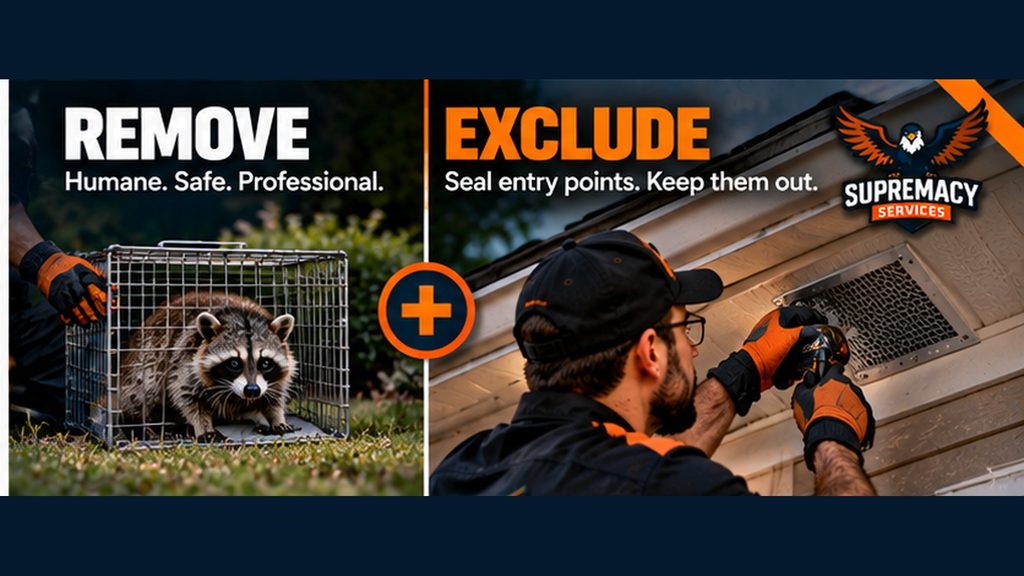
Wildlife Removal vs. Wildlife Exclusion
This is one of the most important differences homeowners should understand before comparing quotes.
Wildlife Removal
Removal focuses on getting the animal out of the immediate problem area.
That may involve:
- Inspection
- Humane trapping
- Capture
- Safe handling
- Removal from the structure
- Follow-up monitoring
Wildlife Exclusion
Exclusion goes one step further.
It focuses on preventing the animal from getting back inside.
That can involve:
- Identifying entry points
- Installing one-way exclusion devices where appropriate
- Reinforcing weak areas
- Installing chew-resistant materials
- Repairing vents and soffits
- Sealing roofline openings
- Closing crawlspace access points
This distinction explains why two companies can quote very different prices for what initially sounds like the same service.
A $300 trapping job and a $1,200 removal-plus-exclusion project may both involve the same species, but they are not necessarily solving the same problem.
For homeowners looking for a longer-term solution, see Supremacy Services’ wildlife trapping and removal service.
Wildlife Removal Cost by Animal

Raccoon Removal Cost
Raccoon removal in the Dallas area commonly falls around $400–$1,200 or more, depending on the number of animals, location, exclusion requirements, and whether young are present.
Raccoons frequently exploit rooflines, attic openings, soffits, chimneys, and other protected parts of residential structures.
A basic removal can be relatively straightforward.
A raccoon family living inside an attic can be substantially more complicated because the technician may need to locate the young, remove the animals safely, secure the entry point, and address contaminated nesting material.
Current Texas-focused pricing references place basic raccoon removal with exclusion around several hundred dollars, while more involved family and attic cases can reach $1,000–$2,000 or more.
For more information, read our detailed guide to Raccoon Removal in Dallas.
Opossum Removal Cost
Opossum removal typically costs around $250–$600 for straightforward situations, although difficult access, multiple animals, exclusion, or cleanup can increase the final price.
Opossums often shelter under decks, porches, sheds, crawlspaces, garages, and other low-protection areas.
Because they may use an opening repeatedly, removing the animal without addressing the access point can leave the property vulnerable to another wildlife intrusion.
For more information, read our detailed guide to Opossum removal in Dallas.
Squirrel Removal Cost
Squirrel removal commonly falls around $300–$700, although larger infestations and extensive exclusion can increase the cost.
Squirrels can become particularly destructive when they establish themselves inside an attic.
They may:
- Chew electrical wiring
- Damage insulation
- Gnaw wood
- Destroy vents
- Build nests
- Contaminate insulation with urine and feces
A wildlife inspection should therefore look at both the animal and the damage it may have caused.
Skunk Removal Cost
Skunk removal can range from roughly $300 to $900 or more, depending on location and whether odor treatment or exclusion is required.
Skunks frequently use sheltered spaces beneath decks, sheds, porches, and structures.
The removal itself may not be the most expensive part of the job.
If the animal has sprayed near an occupied area, homeowners may also need odor treatment and sanitation.
Bat Removal and Exclusion Cost
Bat situations require particular care because Texas regulations apply to bats and because bat exposure can create a public-health concern.
A smaller bat exclusion project may cost approximately $500–$2,000, while larger colonies involving extensive exclusion and attic contamination can reach several thousand dollars.
Texas Parks and Wildlife states that bats generally may not be hunted, killed, possessed, purchased, or sold, although bats inside or on a building occupied by people may be handled under specific exceptions. TPWD also discourages exclusion from buildings from May 1 through August 15 when young bats may be unable to fly and could become trapped.
That means homeowners should not assume that a bat problem can simply be sealed immediately.
For questions involving possible human exposure, the CDC recommends prompt medical assessment following potentially significant contact with bats or other high-risk wildlife.
Why Wildlife Removal Can Cost More Than Expected
Attic Contamination
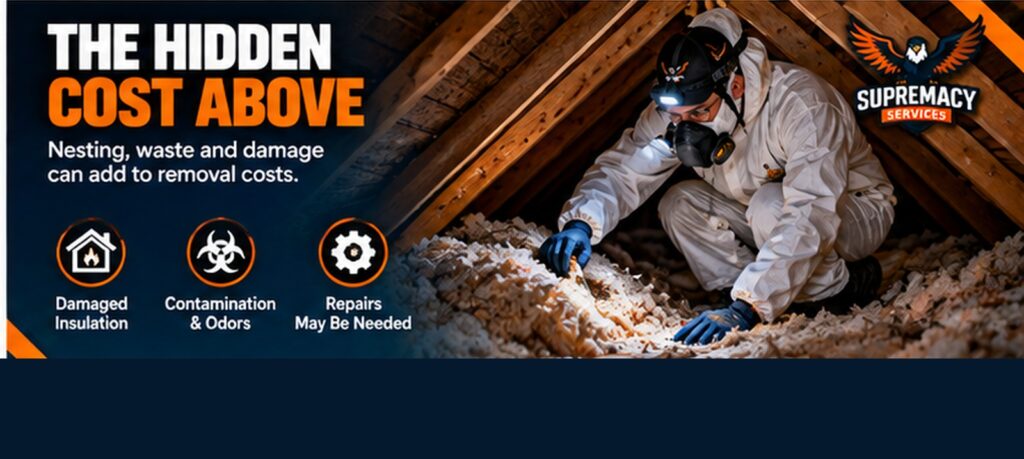
Wild animals do more than make noise.
Animals living in an attic can leave behind:
- Feces
- Urine
- Nesting materials
- Food remains
- Odors
- Parasites
- Damaged insulation
Removing the animal does not automatically make the attic clean.
If contamination is significant, professional sanitation may become a separate part of the project.
Damaged Insulation
Insulation can absorb urine, collect feces, and become heavily contaminated by nesting activity.
In severe situations, simply removing the animal may not restore the attic to a suitable condition.
Insulation removal and replacement can therefore add substantially to the final project cost.
Structural Damage
Wildlife can damage the very structure that allowed it inside.
Common examples include:
- Torn soffits
- Broken roof vents
- Damaged fascia
- Chewed siding
- Openings around pipes
- Damaged attic screens
- Broken chimney caps
- Roofline gaps
A professional exclusion job should address the pathway that allowed the animal to enter.
Why Cheap Wildlife Removal Quotes Can Become Expensive
A very low quote deserves careful examination.
Ask exactly what the price includes.
For example:
Does it include trapping?
Does it include follow-up visits?
Does it include entry-point sealing?
Does it include removal of nesting material?
Does it include attic sanitation?
Does it include repairs to damaged soffits or vents?
What happens if babies are discovered?
What happens if the animal returns?
A $250 quote may sound attractive until the homeowner discovers that exclusion and follow-up work cost several hundred dollars more.
The better comparison is not simply:
“Who is cheapest?”
It is:
“Which company is solving the entire wildlife problem?”
Is Wildlife Removal Covered by Homeowners Insurance?
Homeowners should not assume wildlife damage is automatically covered.
Insurance coverage can depend on:
- The type of animal
- The cause of the damage
- The policy language
- Whether the damage was sudden or gradual
- Whether maintenance or structural deterioration contributed to the problem
Some policies may treat certain animal damage differently from sudden covered events.
Before filing a claim, homeowners should review their policy or speak directly with their insurance provider.
Wildlife removal itself is also not necessarily the same thing as repairing damage caused by wildlife.
Can You Remove Wildlife Yourself?
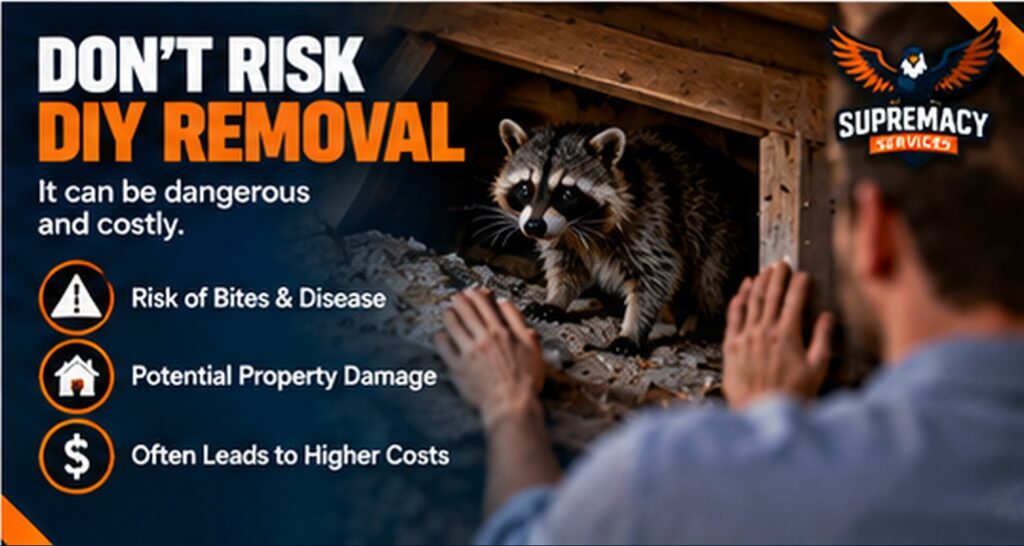
Sometimes homeowners discover an animal before the situation becomes serious.
However, DIY wildlife removal can become dangerous when the animal is inside an attic, wall, chimney, crawlspace, or roof structure.
There is also the possibility of encountering an animal that is sick, injured, defensive, or protecting young.
The CDC identifies bats, raccoons, skunks, and foxes among wildlife associated with rabies exposure in the United States and recommends appropriate medical assessment following potential exposure.
Texas also has specific wildlife rules governing different species. Texas Parks and Wildlife regulations should therefore be considered before trapping, transporting, or relocating wildlife.
For homeowners, the safest approach is usually to avoid direct contact and have the animal professionally identified and removed when the situation involves a structure, potentially hazardous species, or uncertain circumstances.
Texas Wildlife Laws Matter
Wildlife removal is not simply a matter of catching an animal and taking it somewhere else.
Texas Parks and Wildlife regulates wildlife differently depending on the species.
For example, TPWD identifies raccoons, opossums, skunks, and other animals as fur-bearing animals and provides specific rules concerning nuisance animals and relocation.
Bats have additional protections and restrictions, including seasonal considerations surrounding exclusion.
That is one reason homeowners should be cautious about companies that promise to “trap and relocate anything anywhere” without discussing species identification or applicable regulations.
For the current Texas rules, homeowners can review the Texas Parks and Wildlife Department wildlife regulations.
How to Get an Accurate Wildlife Removal Estimate
The fastest way to get a realistic price is to provide the wildlife professional with as much information as possible.
Tell them:
- What animal you have seen
- Where you saw it
- When you noticed activity
- Whether you hear scratching or movement
- Whether there are droppings or odors
- Whether you have seen babies
- Whether there is visible roof or soffit damage
- Whether the animal appears to be entering an attic, crawlspace, wall, or other area
Photos of suspected entry points can also help technicians prepare for the inspection.
However, a professional inspection is still important because animals can use openings that are difficult for homeowners to see from ground level.
Dallas Wildlife Removal: What Homeowners Should Really Pay For
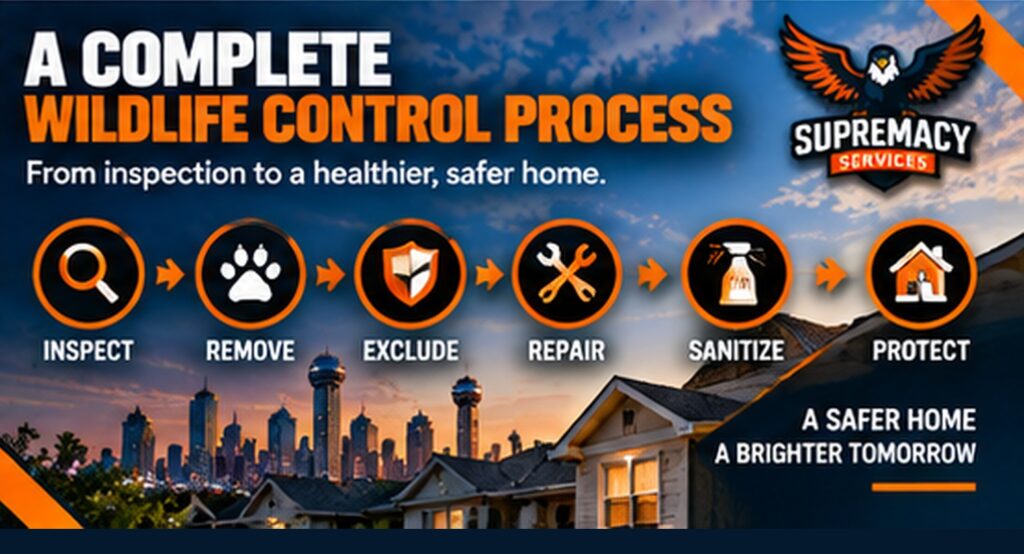
The cheapest wildlife-removal service is not always the least expensive solution.
A proper wildlife-control project should protect the home from repeat intrusion.
That means the goal should be:
Identify → Remove → Exclude → Repair → Sanitize → Prevent
This approach is especially important in North Texas, where homes can have multiple rooflines, open attic ventilation systems, mature landscaping, aging soffits, and numerous potential wildlife access points.
Supremacy Services provides wildlife trapping and removal for Dallas and surrounding DFW communities, including Plano, Frisco, McKinney, Allen, Richardson, Southlake, Grapevine, Colleyville, Coppell, Flower Mound, Rockwall, and University Park.
For related pest and rodent problems, homeowners can also see Supremacy Services’ DFW rodent control and exclusion service.
Wildlife Removal Cost FAQ
How much does wildlife removal cost in Dallas?
Most straightforward wildlife removal jobs fall within several hundred dollars, while complex exclusion, attic sanitation, structural repairs, and larger animal colonies can push the total into the thousands.
How much does raccoon removal cost in Texas?
A basic raccoon removal and exclusion project may cost roughly $400–$1,200 or more. Family groups, difficult attic access, contamination, and structural repairs can increase the total substantially.
How much does squirrel removal cost?
Squirrel removal commonly falls around $300–$700, with larger infestations and extensive exclusion potentially costing more.
How much does opossum removal cost?
Straightforward opossum removal commonly falls around $250–$600, although difficult access, exclusion, and cleanup can increase the final price.
How much does bat removal cost?
Bat exclusion can range from several hundred dollars to several thousand dollars depending on colony size, building design, exclusion requirements, and cleanup. Texas regulations also affect when exclusion should be performed.
Why is wildlife exclusion more expensive than trapping?
Trapping addresses the animal. Exclusion addresses the reason the animal was able to enter.
Sealing roofline gaps, repairing vents, reinforcing soffits, and installing appropriate barriers requires additional labor and materials.
Does wildlife removal include attic cleanup?
Not necessarily. Homeowners should ask whether sanitation, contaminated insulation removal, odor treatment, and repairs are included or quoted separately.
Can wildlife come back after removal?
Yes, if the entry point remains open.
That is why identifying and securing access points is one of the most important parts of long-term wildlife control.
Should I remove an animal from my attic myself?
DIY removal can expose homeowners to bites, scratches, contaminated materials, and potentially dangerous wildlife. If the species is unknown or the animal is inside a structure, professional assessment is the safer option.
Final Takeaway: What Does Wildlife Removal Really Cost?
For Dallas-area homeowners, a reasonable starting expectation is a few hundred dollars for a straightforward wildlife problem and $1,000 or more for complicated removal and exclusion projects.
However, the animal itself is only part of the equation.
The final price depends on:
Species + number of animals + location + entry points + exclusion + damage + sanitation + repairs.
A trustworthy wildlife-control company should explain those factors rather than simply giving a low number over the phone.
If wildlife has entered your Dallas-area home, the most valuable first step is to determine what animal is present, where it is entering, and whether there are additional animals or structural damage that cannot be seen from the outside.
That information turns a vague “wildlife removal cost” question into an accurate property-specific solution.

