
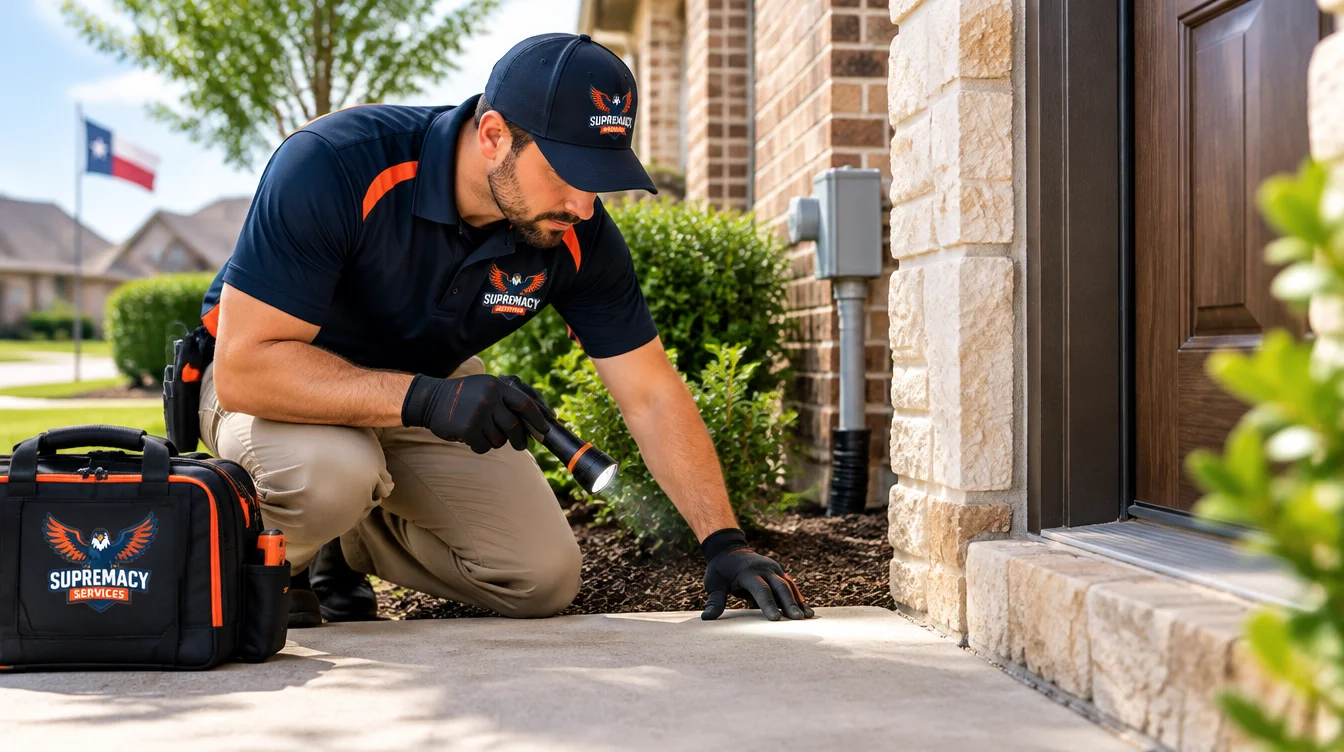
Preventive pest control is a proactive approach to keeping pests from becoming established in or around your home. Instead of waiting until ants cover a countertop, cockroaches appear in the kitchen or rodents reach the attic, prevention focuses on identifying pest pressure, reducing food, water and shelter, blocking entry points, monitoring activity and using targeted treatments when appropriate.
For many North Texas homes, preventive pest control can be worthwhile when pest activity repeatedly develops around the property. But it does not mean every home needs constant indoor spraying or that every pest should be treated the same way.
The better approach is property-specific prevention: understand which pests are present, determine why they are there and intervene appropriately before a small problem becomes harder to manage.
That principle closely follows Integrated Pest Management, or IPM. The EPA describes IPM as an approach that combines information about pests with appropriate management methods while considering effectiveness, cost and risks to people, property and the environment.
Table of Contents
- What Is Preventive Pest Control?
- How Does Preventive Pest Control Work?
- Preventive vs. Reactive Pest Control
- Is Preventive Pest Control Worth It in North Texas?
- Which Pests Can Prevention Help With?
- What Does Professional Preventive Pest Control Include?
- How Often Is Preventive Pest Control Needed?
- DIY vs. Professional Prevention
- How Much Does Preventive Pest Control Cost?
- When Prevention Is Not Enough
- North Texas Pest-Prevention Checklist
- Frequently Asked Questions
What Is Preventive Pest Control?
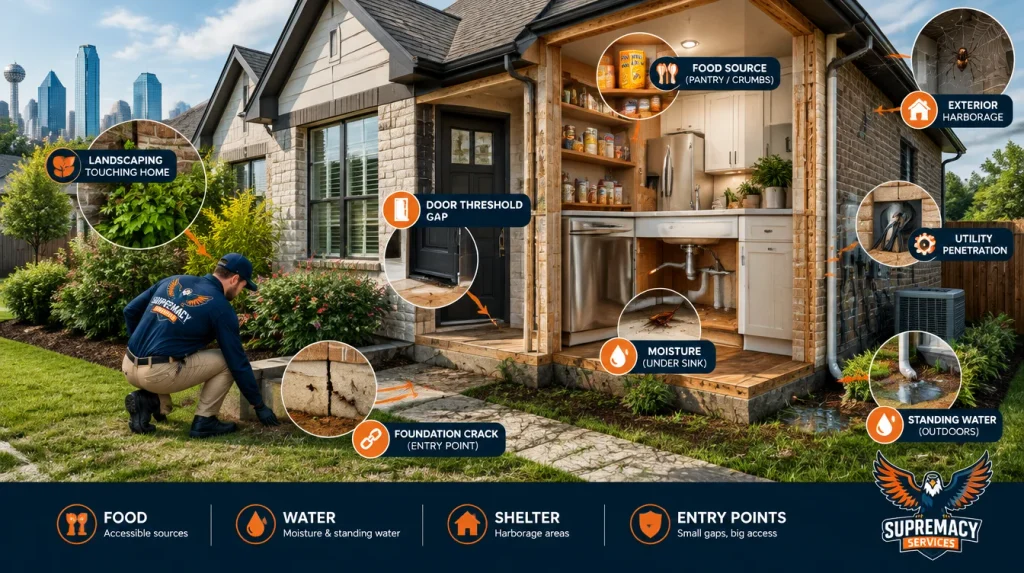
Preventive pest control means reducing the conditions that allow pests to enter, survive and reproduce around a property before a significant infestation develops.
It is broader than simply applying pesticide around a house.
A sound preventive strategy can combine:
- inspection and pest identification;
- monitoring;
- sealing appropriate entry points;
- correcting moisture problems;
- reducing food and shelter;
- managing exterior conditions;
- removing webs or nests where appropriate;
- targeted exterior or interior treatment when justified; and
- follow-up to determine whether pest activity is changing.
The EPA specifically recommends denying pests the food, water and shelter they need and closing entryways they can use to enter a building.
That distinction matters.
A homeowner who repeatedly sprays every visible insect is practicing reactive control. A homeowner who discovers why pests are entering, removes favorable conditions and addresses the entry route is working preventively.
Preventive pest control is not necessarily “spray everywhere”
Effective prevention should be based on the pest and property.
For example, prevention might involve repairing a leak beneath a sink, sealing an appropriate gap around a plumbing penetration, changing how food is stored, removing harborage near the foundation or treating a specific exterior area where pest activity has been identified.
The objective is not to maximize pesticide use. It is to minimize the conditions that allow a pest problem to develop.
How Does Preventive Pest Control Work?
Preventive pest management generally follows five principles:
1. Identify the pest
Treatment begins with knowing what you are dealing with.
An ant problem is not automatically managed the same way as cockroaches, spiders, termites, rodents or mosquitoes.
Correct identification helps determine where the pest lives, what attracts it and which control methods are appropriate.
2. Find what is supporting the activity
Pests generally need some combination of food, moisture, shelter and access.
A preventive inspection may therefore look beyond the insects themselves.
Possible contributing conditions include:
- plumbing leaks;
- food residue;
- improperly stored food;
- pet food left accessible;
- standing water;
- clutter;
- vegetation contacting the structure;
- debris around exterior walls;
- damaged door seals;
- openings around utilities; and
- protected hiding or nesting locations.
EPA guidance similarly recommends eliminating food and water sources, reducing shelter and closing pest entry points.
3. Reduce access
A pest cannot establish itself indoors if it cannot reach suitable indoor conditions.
Depending on the pest and construction, prevention can include inspecting:
- doors;
- windows;
- garages;
- utility penetrations;
- plumbing openings;
- vents;
- foundation areas;
- rooflines; and
- other structural gaps.
Exclusion is especially important because repeatedly killing pests after they enter does not necessarily address how new pests are getting inside.
4. Target active or high-risk areas
Where treatment is justified, the application should match the pest, location and product label.
For many crawling pests originating outdoors, exterior management around likely entry areas can form part of the strategy.
This is also why preventive pest control and perimeter pest control overlap without meaning exactly the same thing.
Perimeter treatment is one tool.
Preventive pest management is the broader strategy.
5. Monitor what happens afterward
Good pest management asks another question after treatment:
Did the problem actually improve?
Monitoring helps determine whether pest activity is declining, moving or returning.
That information can reveal whether additional treatment, exclusion, sanitation changes or a different strategy is needed.
Preventive vs. Reactive Pest Control
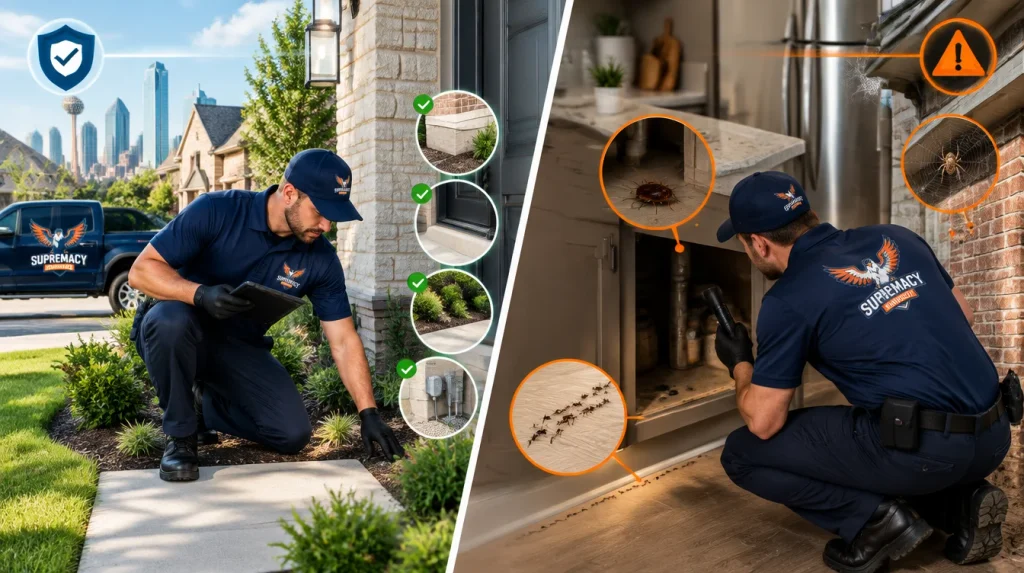
The biggest difference is when and why action occurs.
| Preventive pest control | Reactive pest control |
|---|---|
| Begins before a major infestation develops | Begins after noticeable pest activity |
| Focuses on risk conditions and entry points | Focuses primarily on an existing problem |
| Includes monitoring | Usually begins with visible evidence |
| May use exclusion and sanitation | May require corrective treatment |
| Can include targeted exterior treatment | May require interior and exterior treatment |
| Designed to reduce recurring problems | Designed to eliminate/control current activity |
| Often ongoing | May be one-time or multi-visit |
Neither approach is automatically better in every situation.
If you already have an established German cockroach infestation, termite activity, rodents in an attic or bed bugs, prevention alone is no longer the primary job. The existing infestation must first be properly assessed and controlled.
Prevention becomes particularly valuable after control because it helps reduce the conditions that contributed to the problem.
Is Preventive Pest Control Worth It in North Texas?
Preventive pest control can be worth it for North Texas homes with recurring pest pressure, multiple exterior entry opportunities or conditions that repeatedly attract pests. It is less compelling when a pest problem is genuinely isolated and its cause can be corrected easily.
The decision should therefore be based on risk rather than fear.
North Texas also has environmental conditions that make year-round monitoring reasonable. National Weather Service 1991–2020 normals for Dallas/Fort Worth show an annual mean temperature of 66.6°F, about 37 inches of annual precipitation and an average of 20 days reaching 100°F each year.
Those conditions do not mean every Dallas house will have the same pests. They do mean homeowners experience substantial seasonal changes in temperature and moisture that can change where insects and other pests find food, water and shelter.
Preventive service may make sense when:
- ants repeatedly appear indoors;
- cockroaches regularly enter from exterior areas;
- spiders repeatedly build webs around the structure;
- scorpions are repeatedly encountered;
- your property has substantial landscaping near the home;
- pest activity returns seasonally;
- you have previously dealt with an infestation;
- exterior pest pressure is consistently high; or
- you would rather monitor and address problems before they become established indoors.
A recurring program may be less necessary when:
- the problem was a single accidental invader;
- the source has been identified and permanently corrected;
- there is little recurring activity;
- reasonable exclusion has solved the problem; or
- monitoring shows no continuing pest pressure.
The right question is therefore not:
“Does everybody need preventive pest control?”
It is:
“Does this property experience enough recurring pest pressure to justify ongoing prevention?”
Which Pests Can Prevention Help With?
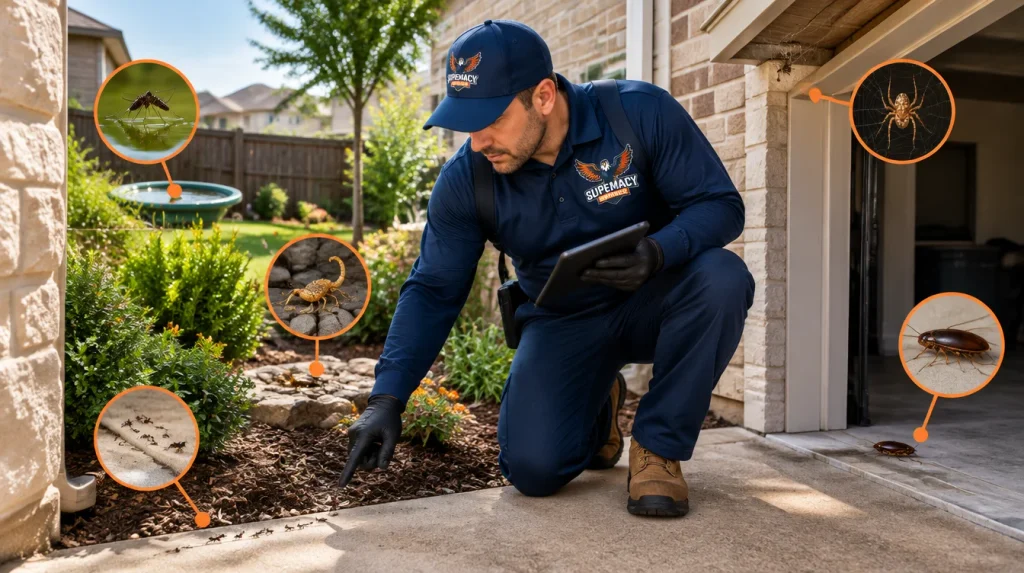
Prevention is useful for many common household pests, but the strategy changes by species.
| Pest | Preventive focus |
|---|---|
| Ants | Food control, moisture reduction, exclusion, nest/activity identification |
| Cockroaches | Sanitation, moisture control, monitoring, exclusion and targeted treatment |
| Spiders | Reducing prey insects, webs and favorable exterior conditions |
| Scorpions | Entry-point management and reducing prey/harborage |
| Wasps | Monitoring eaves and potential nesting areas |
| Rodents | Exclusion, sanitation and eliminating access to food |
| Mosquitoes | Eliminating standing water and managing breeding/resting areas |
| Termites | Inspection and termite-specific prevention/control strategy |
Texas A&M AgriLife, for example, recommends measures for household ants that include keeping vegetation away from foundations, sealing cracks, repairing dripping plumbing and storing food properly.
Not every pest belongs in a standard general-pest program
This is important when comparing pest-control plans.
Termites, bed bugs, rodents, mosquitoes and certain other problems may require specialized inspection, treatment, monitoring or exclusion.
Do not assume that signing up for “preventive pest control” automatically covers every pest that could occur on your property.
Ask specifically what is included.
What Does Professional Preventive Pest Control Include?
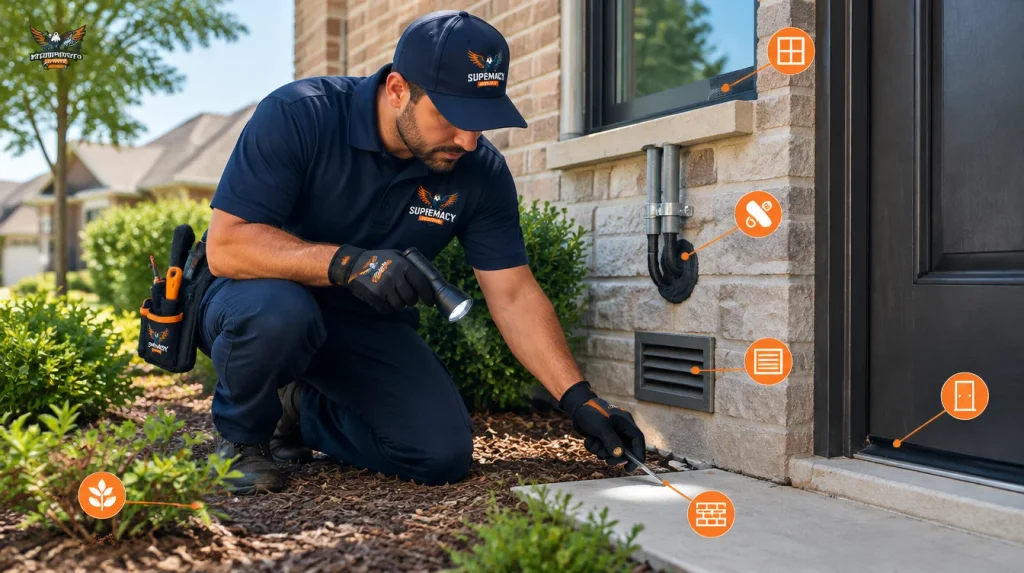
A professional preventive visit should involve more than arriving and spraying a predetermined route.
Depending on the property and service plan, a useful program may include:
- inspecting for current pest activity;
- identifying pest species or likely pest groups;
- checking common exterior entry areas;
- looking for conducive moisture or harborage conditions;
- evaluating exterior pest pressure;
- removing accessible webs or nests when part of the service;
- applying targeted treatment where appropriate;
- recommending sanitation or exclusion corrections;
- documenting activity; and
- monitoring changes during future visits.
Supremacy’s current DFW pest-control structure already follows this general direction: its pest-control page describes inspection and identification, web/nest removal, targeted applications, entry-point measures and perimeter treatment.
Seeing recurring ants, roaches, spiders or other household pests? Explore Supremacy Services’ DFW pest-control options to determine whether your home needs corrective treatment, preventive exterior protection or both.
Should a technician automatically spray inside every visit?
Not necessarily.
Interior treatment should be based on the pest, evidence and treatment plan rather than performed simply because a scheduled visit occurred.
For a home without indoor activity, exterior prevention, inspection and correction of conducive conditions may sometimes be more relevant.
Conversely, an established indoor infestation can require targeted interior treatment.
How Often Is Preventive Pest Control Needed?
There is no universal pest-control schedule appropriate for every North Texas home or every pest.
Frequency depends on:
- the target pest;
- previous infestation history;
- property conditions;
- product and treatment method;
- season;
- environmental exposure;
- landscaping;
- surrounding pest pressure; and
- what monitoring reveals.
Some homes may benefit from scheduled recurring service. Others may require more intensive short-term treatment followed by less frequent monitoring.
This is why “quarterly” should not be treated as a biological rule.
It is a service schedule that may fit certain general-pest prevention programs.
Supremacy’s dedicated perimeter service, for example, is structured around recurring exterior protection. Homeowners considering that approach should compare what each visit includes rather than choosing a program based solely on visit frequency.
If pests repeatedly move from your yard or landscaping toward the house, review Supremacy’s perimeter pest-control service to see how exterior prevention differs from treating pests after they are already indoors.
DIY vs. Professional Prevention
Homeowners can do a significant amount of pest prevention themselves.
DIY prevention that makes sense
Start with nonchemical measures:
- clean food spills and crumbs;
- store food securely;
- avoid leaving pet food accessible unnecessarily;
- repair leaking plumbing;
- remove standing water;
- reduce clutter;
- inspect packages before bringing them indoors;
- maintain door and window seals;
- seal appropriate structural openings;
- keep unnecessary debris away from the house; and
- monitor areas where pests repeatedly appear.
EPA guidance specifically recommends many of these measures before relying on pesticides.
If you use a pesticide yourself
Always use a product labeled for the intended pest and application site and follow its label directions.
Do not assume that applying more product makes treatment more effective.
EPA specifically advises consumers to read pesticide labels and follow all directions and precautions.
When professional help makes more sense
Consider professional assessment when:
- you cannot identify the pest;
- activity repeatedly returns;
- pests are appearing in multiple areas;
- DIY efforts are not solving the source;
- rodents are entering the structure;
- you suspect termites or other wood-destroying insects;
- bed bugs may be present;
- a nest is inaccessible or presents a stinging hazard;
- treatment requires specialized equipment; or
- you need a structured monitoring and prevention program.
Texas A&M’s household IPM education specifically teaches homeowners both preventive tactics and when professional assistance is appropriate for issues such as rodents or possible termite damage.
How Much Does Preventive Pest Control Cost?
There is no single reliable price for preventive pest control because the scope can differ substantially between properties and providers.
Factors that may affect price include:
- home size and layout;
- pest species;
- current infestation severity;
- initial treatment requirements;
- treatment frequency;
- interior versus exterior work;
- exclusion needs;
- specialized pests; and
- what follow-up or callbacks are included.
Supremacy already has a dedicated Pest Control Cost in North Texas: 2026 Pricing Guide, so this article should not attempt to compete with that page by becoming another pricing guide.
Instead, homeowners evaluating preventive service should compare annual scope, not merely the cost of one visit.
Ask:
- What pests are included?
- What happens during the initial visit?
- What happens during recurring visits?
- Are interior treatments performed only when needed?
- Is exterior treatment included?
- Is exclusion included or quoted separately?
- Are termites included?
- Are rodents included?
- What happens if pests appear between scheduled visits?
- What is the total annual cost?
That produces a much more meaningful comparison.
When Prevention Is Not Enough
Preventive pest control is designed to reduce risk and catch problems early.
It is not a substitute for appropriate corrective treatment when an infestation is already established.
Warning signs that may justify a pest inspection
Watch for:
- cockroaches repeatedly appearing indoors;
- ant trails that continually return;
- droppings;
- gnawing;
- scratching inside ceilings or walls;
- termite mud tubes;
- suspected wood damage;
- bed-bug evidence around sleeping areas;
- repeated scorpion sightings;
- multiple wasp nests;
- unexplained pest activity in several rooms; or
- persistent activity despite sanitation and exclusion efforts.
At that stage, the objective changes from preventing a potential infestation to identifying and controlling an existing one.
Why Professional Licensing Matters in Texas
Structural pest-control services performed commercially in Texas are regulated.
The Texas Department of Agriculture’s Structural Pest Control Service licenses and regulates pest-management professionals applying pesticides in and around structures. Texas law also requires applicable businesses and individuals performing structural pest-control work for compensation to meet licensing requirements.
Before hiring a provider, homeowners can therefore verify that they are dealing with an appropriately licensed pest-control business.
Professional service also does not remove the homeowner’s role.
Ask what is being applied, where it will be applied, what pests it targets and what you should do before or after treatment.
North Texas Pest-Prevention Checklist
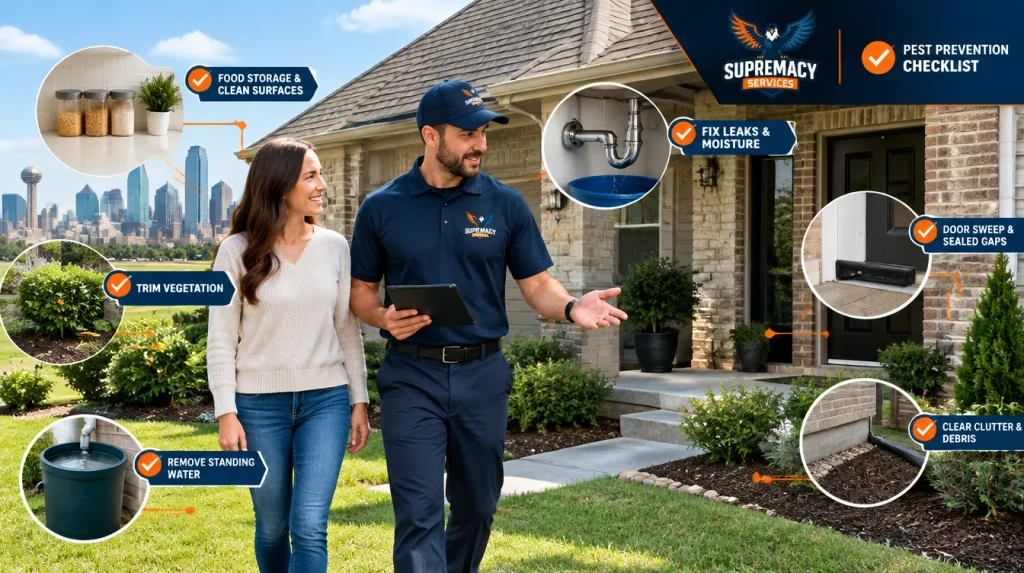
Use this simple checklist around your property.
Inside the home
- Store food in sealed containers.
- Clean crumbs and grease promptly.
- Do not leave unnecessary pet food accessible overnight.
- Repair dripping faucets and plumbing leaks.
- Reduce cardboard and unnecessary clutter.
- Check beneath sinks and appliances for moisture.
- Inspect recurring pest locations rather than spraying blindly.
- Monitor garages, utility areas and other transition spaces.
Around the exterior
- Check door sweeps and weather stripping.
- Inspect gaps around utility penetrations.
- Look for pest trails around the foundation.
- Reduce unnecessary debris next to exterior walls.
- Check landscaping touching the structure.
- Monitor eaves for webs and nests.
- Correct avoidable standing-water problems.
- Inspect areas where pests repeatedly appear.
During professional service
- Ask which pests are covered.
- Ask what activity the technician found.
- Ask where treatment will occur.
- Ask whether exclusion is recommended.
- Ask what you can change around the property.
- Keep records of recurring pest activity.
- Reassess whether the program is reducing the problem.
Is Preventive Pest Control Really Worth the Money?
For a home with recurring pest pressure, preventive pest control can be worthwhile because it shifts the focus from repeatedly reacting to pests indoors to identifying and managing the conditions that allow them to reach the home.
But value depends on the service.
Paying for recurring visits that do not include inspection, monitoring or a clear treatment strategy is different from paying for a preventive program built around the actual property.
A good program should help answer:
What pests are we trying to prevent?
Where are they coming from?
What conditions are supporting them?
What can the homeowner correct?
What requires professional treatment?
Is pest activity actually decreasing?
Those questions are more important than simply asking how many times a technician visits each year.
Frequently Asked Questions
What is preventive pest control?
Preventive pest control is a proactive strategy that reduces the conditions allowing pests to enter, survive or reproduce around a property. It can combine inspection, monitoring, sanitation, exclusion and targeted treatments.
Is preventive pest control worth it?
It can be worthwhile for homes that experience recurring or predictable pest pressure. A property with little activity and easily corrected entry conditions may require less ongoing professional intervention.
Is preventive pest control the same as perimeter pest control?
No. Perimeter pest control is an exterior treatment strategy. Preventive pest management is broader and can include perimeter treatment, inspection, exclusion, sanitation, moisture management and monitoring.
Do I need pest control if I don’t see bugs?
Not automatically. The absence of visible pests does not prove there is no activity, but professional recurring treatment should be based on property conditions and risk rather than the assumption that every house needs the same program.
Does preventive pest control require indoor spraying?
Not necessarily. If there is no evidence of indoor activity, prevention may focus primarily on exterior conditions, entry points and monitoring. Existing indoor infestations may require targeted interior treatment.
Can I prevent pests myself?
Homeowners can perform many important preventive tasks themselves, including sanitation, moisture control, reducing clutter, eliminating standing water and sealing appropriate entry points. Persistent or difficult-to-identify activity may justify professional inspection.
How often should preventive pest control be done?
There is no universal schedule. Frequency depends on the pest, property, treatment method, infestation history, environmental conditions and monitoring results.
Are termites covered by preventive pest control?
Do not assume so. Termite inspection and treatment are specialized structural pest-control services and may be separate from a general household pest program.
What should I ask before signing up for recurring pest control?
Ask which pests are covered, what the initial and recurring visits include, whether interior treatment is performed only when necessary, whether exclusion is included, what happens between visits and what the total annual cost will be.
The Bottom Line for Dallas-Fort Worth Homeowners
Preventive pest control works best as a strategy, not simply a scheduled spray.
Start by reducing food, water, shelter and entry opportunities. Identify pests correctly. Monitor recurring activity. Use appropriately targeted control when necessary.
For North Texas properties that repeatedly experience ants, cockroaches, spiders, scorpions or other pest pressure around the structure, professional preventive service may add another layer of monitoring and protection.
For isolated problems, correcting the underlying cause may be enough.
If pests keep returning around your Dallas-Fort Worth home, schedule a pest-control assessment with Supremacy Services to determine whether you need preventive perimeter protection, targeted treatment for an existing infestation or a pest-specific solution.

