
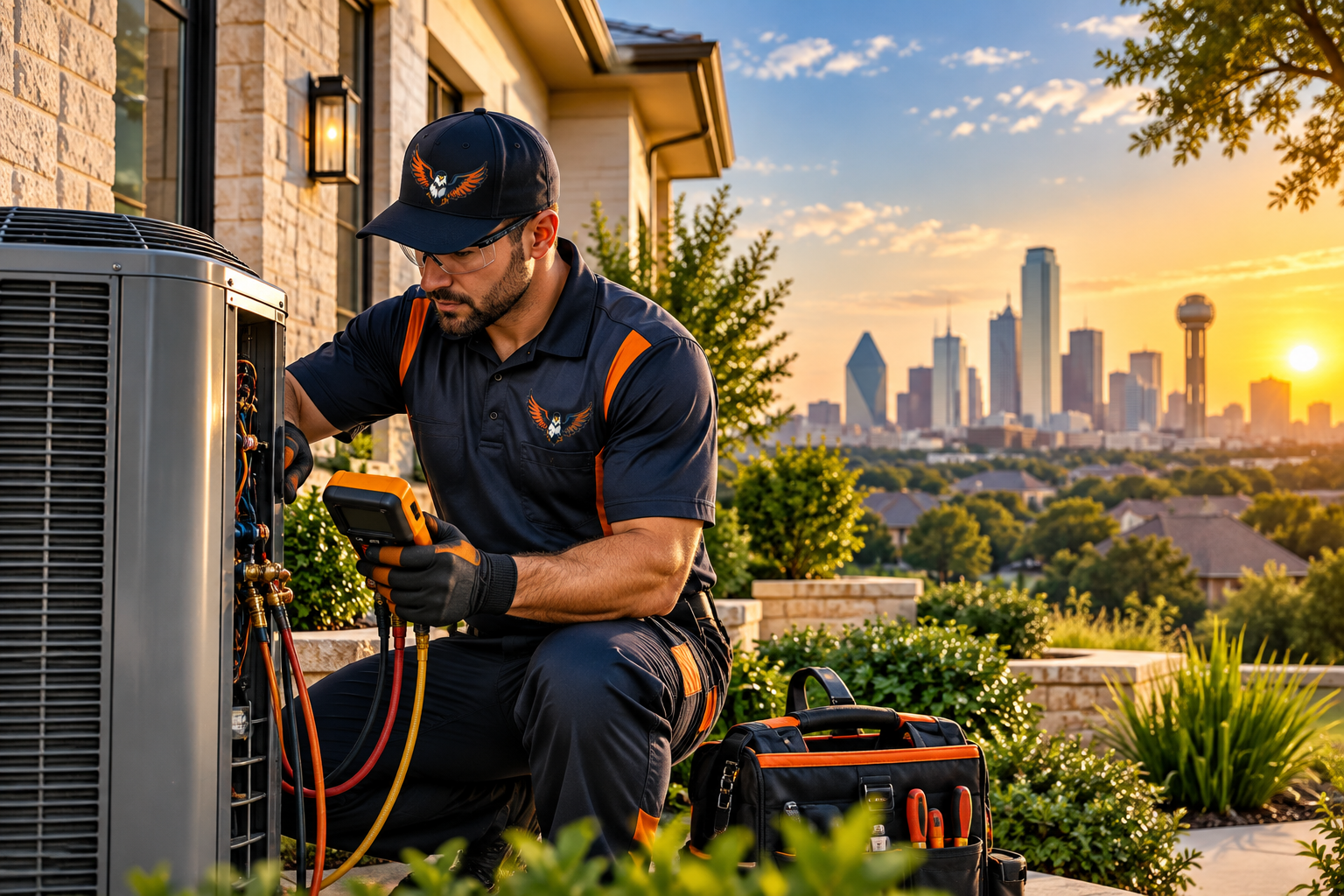
“How often should you have your HVAC inspected in Dallas?” is a common question especially because, your HVAC system works harder than almost any other system in your Dallas home. Through long stretches of intense Texas heat and the sudden temperature swings that arrive during the cooler months, your heating and cooling equipment has to deliver reliable comfort when you need it most.
So, how often should you have your HVAC system inspected in Dallas?
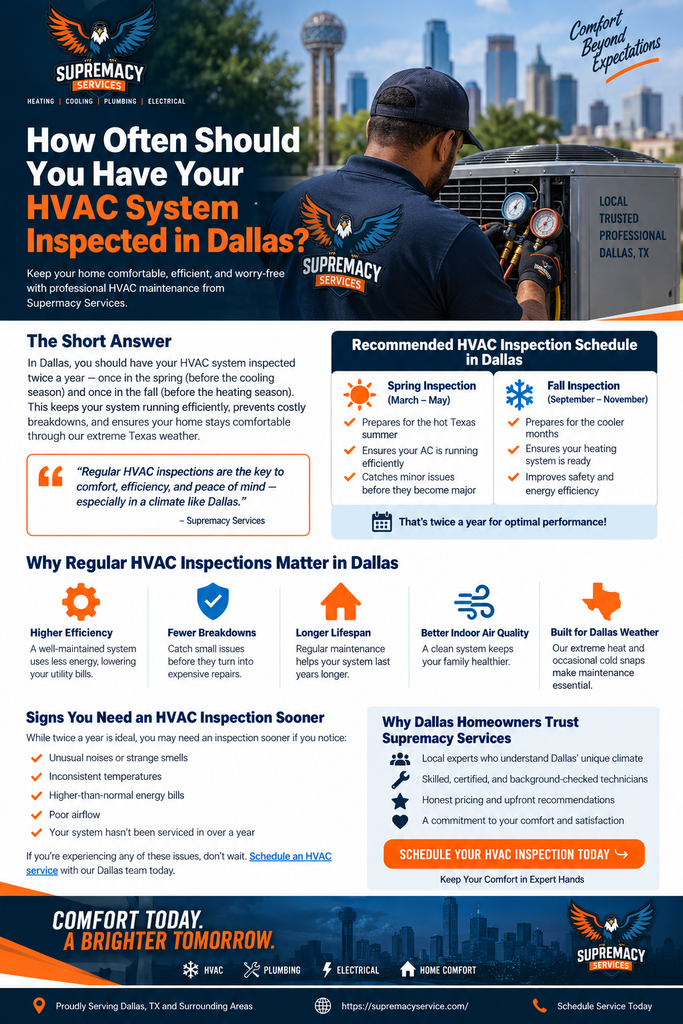
For most Dallas homeowners, the best schedule is twice a year:
- Spring: Inspect and tune the air-conditioning system before peak cooling season.
- Fall: Inspect the heating system before colder weather arrives.
ENERGY STAR recommends professional pre-season HVAC checkups, with cooling equipment serviced in spring and heating equipment checked in fall.
In Dallas, where dependable cooling is particularly important, this preventive schedule can help identify developing problems before they become an uncomfortable—and potentially expensive—emergency.
Supremacy Tip: Don’t wait until your AC stops cooling on a scorching Dallas afternoon to find out something was wrong. Preventive HVAC maintenance is designed to find those problems before peak demand exposes them.
Why Twice-a-Year HVAC Inspections Make Sense in Dallas
A generic national maintenance schedule doesn’t tell the whole story for North Texas.
Dallas HVAC systems face significant seasonal demands. During cooling season, your air conditioner may operate for extended periods, placing sustained loads on compressors, capacitors, motors, coils, electrical connections, and other components.
That makes spring HVAC maintenance in Dallas particularly valuable.
Then, before heating season, a second inspection allows a technician to evaluate your heating equipment and verify that the system is ready to operate reliably and safely.
Supremacy Services already recommends professional cooling service at least annually, ideally in early spring before intense Texas heat arrives.
For homeowners who want comprehensive year-round protection, however, the ideal schedule is:
| Season | Recommended Service | Primary Purpose |
|---|---|---|
| Spring | AC/cooling inspection and tune-up | Prepare for Dallas summer |
| Fall | Furnace/heat-pump/heating inspection | Prepare for heating season |
What Does a Professional HVAC Inspection Include?
A quality HVAC inspection should be much more than a quick visual check.
ENERGY STAR’s maintenance guidance includes checking thermostat settings, electrical connections, motor voltage/current, moving components, and condensate drainage, among other system-specific maintenance tasks.
Depending on your equipment and its condition, a professional Dallas HVAC inspection may include checking:
Thermostat operation and controls. The technician verifies that your thermostat communicates properly with the heating and cooling equipment and maintains the intended temperature.
Electrical components and connections. Loose or deteriorating electrical connections can affect reliability and potentially shorten component life.
Airflow and filtration. Restricted airflow forces HVAC equipment to work harder. Filters, blower operation, return airflow, and related components should therefore be evaluated.
Indoor and outdoor coils. Dirty coils can interfere with heat transfer and overall cooling performance.
Condensate drainage. Drainage problems can contribute to water leakage and unwanted moisture around the HVAC equipment.
Refrigerant and cooling performance. Where applicable, technicians evaluate cooling performance and look for indications that further refrigerant-system diagnostics may be necessary.
Blower and motor operation. Motors and moving components are inspected for proper performance and signs of deterioration.
Ductwork and airflow problems. Uneven temperatures can sometimes originate outside the HVAC unit itself. Damaged, leaking, restricted, or poorly balanced ductwork may reduce comfort and system performance.
Supremacy’s Dallas HVAC approach focuses on root-cause diagnostics, including airflow, electrical performance, refrigerant-related issues, and duct integrity rather than simply replacing parts without determining why a failure occurred.
7 Reasons Regular HVAC Inspections Matter in Dallas
1. Reduce the Risk of Mid-Summer Breakdowns

There are few worse times for an air conditioner to fail than during a Dallas heat wave.
HVAC components don’t always fail without warning. Electrical deterioration, restricted airflow, dirty components, drainage problems, and mechanical wear can develop progressively.
A pre-season inspection gives your technician an opportunity to identify those warning signs before the system enters its most demanding period.
If your AC has already stopped working, Supremacy offers dedicated air conditioner repair in Dallas.
2. Help Your HVAC System Operate Efficiently
Even when an HVAC system still heats or cools, it isn’t necessarily operating efficiently.
Restricted airflow, dirty heat-transfer surfaces, control problems, or deteriorating components can make the equipment work harder to achieve the same indoor temperature.
Routine maintenance helps keep heating and cooling equipment performing as intended. ENERGY STAR identifies proper maintenance as an important step in preventing problems and keeping systems operating at peak performance.
3. Catch Small Problems Before They Become Expensive Repairs

Preventive HVAC maintenance isn’t about guaranteeing that your equipment will never fail.
It’s about improving the chances of discovering problems while they are still manageable.
A technician might identify an abnormal electrical reading, airflow restriction, deteriorating component, drainage issue, or unusual system behavior before it causes a more serious failure.
That’s especially valuable before Dallas’ peak cooling season.
4. Support a Longer HVAC Service Life

An HVAC system represents a substantial investment in your home.
Preventive maintenance helps reduce unnecessary stress on critical components. When airflow is correct, electrical connections are sound, coils can transfer heat effectively, and the system is operating within appropriate parameters, the equipment is better positioned for reliable long-term operation.
Maintenance can’t stop normal aging, but neglect can accelerate it.
5. Improve Home Comfort

Are some rooms noticeably warmer than others?
Does your HVAC system seem to run constantly?
Does the house feel humid even while the AC is operating?
Those symptoms can point to airflow, equipment, controls, ductwork, sizing, or other performance issues.
An inspection gives a qualified technician the opportunity to determine whether your HVAC equipment itself—or another part of the comfort system—is responsible.
For homes with suspected air-distribution problems, Supremacy also provides professional HVAC ductwork services in Dallas.
6. Prepare Your Heating System Before Dallas Gets Cold
Dallas may be famous for heat, but that doesn’t make heating maintenance optional.
The first cold night of the season shouldn’t also be the first time you discover your furnace or heat pump isn’t working correctly.
A fall inspection allows heating components, controls, airflow, and system performance to be evaluated before you rely heavily on the equipment.
7. Know When Maintenance Is No Longer Enough

Maintenance can improve the reliability of serviceable equipment, but it cannot make severely deteriorated equipment new again.
If your HVAC system experiences repeated failures, struggles to maintain temperature, has significant efficiency problems, or requires increasingly expensive repairs, an inspection can provide valuable information for a repair-versus-replacement decision.
When replacement makes more financial sense, proper equipment selection and installation are crucial. Supremacy’s Dallas installation process considers property characteristics, thermal loads, ductwork, efficiency, and system sizing rather than treating HVAC replacement as a simple equipment swap.
Signs You Should Schedule an HVAC Inspection Sooner
Twice-yearly preventive service is a strong baseline, but you shouldn’t wait for your next scheduled tune-up when your HVAC system is already showing signs of trouble.
Call a professional HVAC technician if you notice unusual noises, burning or musty odors, weak airflow, uneven room temperatures, unusually long operating cycles, frequent cycling, unexplained increases in energy consumption, water around HVAC equipment, inadequate cooling or heating, or repeated thermostat problems.
Supremacy’s Dallas repair guidance identifies issues such as electrical faults, refrigerant problems, frozen coils, airflow restrictions, zoning failures, and ductwork problems among the conditions professional diagnostics can uncover.
Ignoring symptoms can allow a manageable problem to become a larger repair.
When Is the Best Time to Schedule HVAC Maintenance in Dallas?
For most Dallas homes, aim for:
Spring HVAC Inspection: March–May
Have your cooling equipment inspected before sustained summer temperatures arrive.
Scheduling before peak season also means you’re not waiting until the system is already under maximum demand to discover a problem.
Fall HVAC Inspection: September–November
Have your heating equipment inspected before you begin relying on it regularly.
The exact month matters less than the principle: service the equipment before its primary operating season.
That approach aligns with ENERGY STAR’s recommendation to schedule cooling checkups in spring and heating checkups in fall.
Is Once-a-Year HVAC Maintenance Enough?
It depends on what you mean by “HVAC maintenance.”
If you’re talking specifically about an air conditioner, professional service at least once annually before cooling season is a sensible minimum and matches Supremacy’s existing guidance.
But if your home has both heating and cooling equipment—or a heat pump serving both functions—two seasonal appointments provide a more complete year-round maintenance strategy.
Think of it this way:
Spring = cooling readiness.
Fall = heating readiness.
Dallas homeowners with older equipment, heavy system usage, pets, significant indoor dust, previous HVAC problems, or specialized equipment may benefit from additional attention based on a technician’s recommendations.
What Can Dallas Homeowners Do Between Professional Inspections?
Professional maintenance doesn’t replace homeowner upkeep.
Between visits, periodically check your air filter and replace or clean it according to the filter and equipment manufacturer’s instructions. Keep supply and return vents unobstructed, watch for unusual noises or odors, keep the outdoor unit reasonably clear of leaves and debris, and pay attention to sudden changes in comfort or energy consumption.
EPA/ENERGY STAR guidance emphasizes both regular filter care and professional pre-season maintenance as important parts of HVAC upkeep.
Why Choose Supremacy for HVAC Service in Dallas?
Dallas HVAC maintenance shouldn’t be a checkbox exercise.
You want to know how your system is actually performing—and whether a developing issue could leave your home without cooling when temperatures climb.
Supremacy Services positions its Dallas HVAC work around detailed diagnostics, upfront pricing, trained and insured technicians, system-performance verification, and 24/7 support. The company serves Dallas and communities across the DFW Metroplex.
Whether you need routine maintenance, an urgent HVAC repair, ductwork diagnostics, or a complete high-efficiency replacement, the goal is the same:
Find the root cause. Engineer the right solution. Keep your home comfortable.
FAQ Section — Optimized for Rank Math FAQ Schema
How often should HVAC be inspected in Dallas?
For comprehensive year-round maintenance, Dallas homeowners should generally schedule two seasonal HVAC inspections per year: cooling equipment in spring and heating equipment in fall. ENERGY STAR recommends pre-season professional checkups for heating and cooling equipment.
What month is best for AC maintenance in Dallas?
March through May is an ideal window because it allows you to prepare your air conditioner before peak summer demand. The key is scheduling the inspection before your cooling system begins running heavily.
How often should I have my air conditioner serviced in Texas?
At minimum, have your AC professionally serviced once per year, preferably before cooling season. Supremacy’s existing Dallas AC guidance likewise recommends annual professional cooling maintenance, ideally in early spring.
Is HVAC maintenance really necessary?
Preventive maintenance helps identify developing problems, supports efficient system operation, and reduces the risk of unexpected equipment problems. ENERGY STAR recommends routine professional pre-season maintenance as part of keeping heating and cooling equipment operating effectively.
How do I know if my HVAC needs an inspection?
Schedule an inspection if you experience unusual noises, strange odors, weak airflow, inconsistent temperatures, abnormal cycling, poor cooling or heating, unexplained energy-use increases, or visible moisture around your HVAC equipment.
Should a heat pump be inspected twice a year?
Because a heat pump can provide both heating and cooling, spring and fall professional maintenance is particularly useful for checking its operation before each major seasonal workload.
Can HVAC maintenance prevent every breakdown?
No. No maintenance program can guarantee that mechanical or electrical equipment will never fail. However, routine inspection can reveal some developing problems before they lead to larger failures.

