
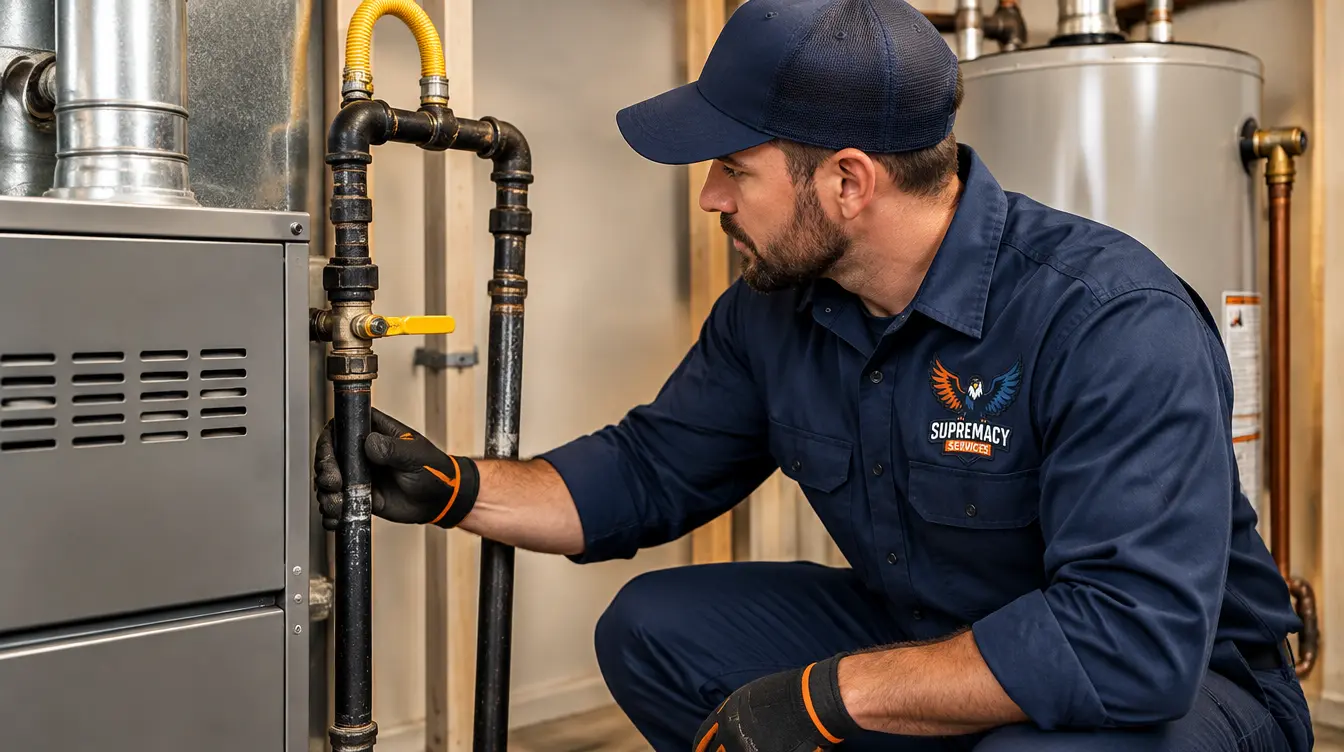
How long do residential gas lines last?
Residential gas lines can remain in service for several decades, but there is no universal expiration date for household gas piping. How long residential gas lines last depends on the pipe material, installation quality, exposure to moisture and corrosion, soil conditions, and maintenance history.
For Dallas homeowners, a gas line that is 30, 40, or even 50 years old is not automatically unsafe. However, an older pipe should not be assumed safe simply because the stove, furnace, or water heater still operates.
The most reliable way to determine whether aging gas lines need repair or replacement is through an appropriate professional inspection.
This guide explains how different gas pipe materials age, the warning signs to watch for, and when North Texas homeowners should consider replacing existing piping.
Table of Contents
- How many years do residential gas lines last?
- How long do different gas pipe materials last?
- What causes residential gas lines to deteriorate?
- Signs your gas lines may be deteriorating
- Do old gas lines need to be replaced?
- How are residential gas lines inspected?
- What does gas line replacement cost?
- How can homeowners extend gas line life?
- Dallas-specific considerations
- Frequently asked questions
How Many Years Do Residential Gas Lines Last?
Residential natural gas piping can last for decades when properly installed and protected. However, its useful service life cannot be determined accurately from age alone.
Unlike equipment such as a water heater, which has a manufacturer-defined expected service life, a residential gas piping system contains materials and components that can age differently.
For example, a protected indoor steel pipe may remain in satisfactory condition while an underground steel section installed around the same time develops corrosion.
The important question is not simply how old the pipe is. It is whether the piping remains structurally sound, leak-free, appropriately supported, and compliant with applicable safety requirements.
Does a 30-year-old gas line need replacement?
Not necessarily. A 30-year-old gas line may still be serviceable if it is in good condition and passes the appropriate professional evaluation.
However, age becomes more important when combined with:
- Visible corrosion or physical deterioration
- A history of leaks or repeated repairs
- Unknown installation methods or pipe materials
- Underground piping with uncertain corrosion protection
- Structural movement or damage near the piping
- Planned renovations that will affect the gas system
An inspection is generally more useful than replacing an entire gas line solely because it has reached a particular age.
How Long Do Different Gas Pipe Materials Last?
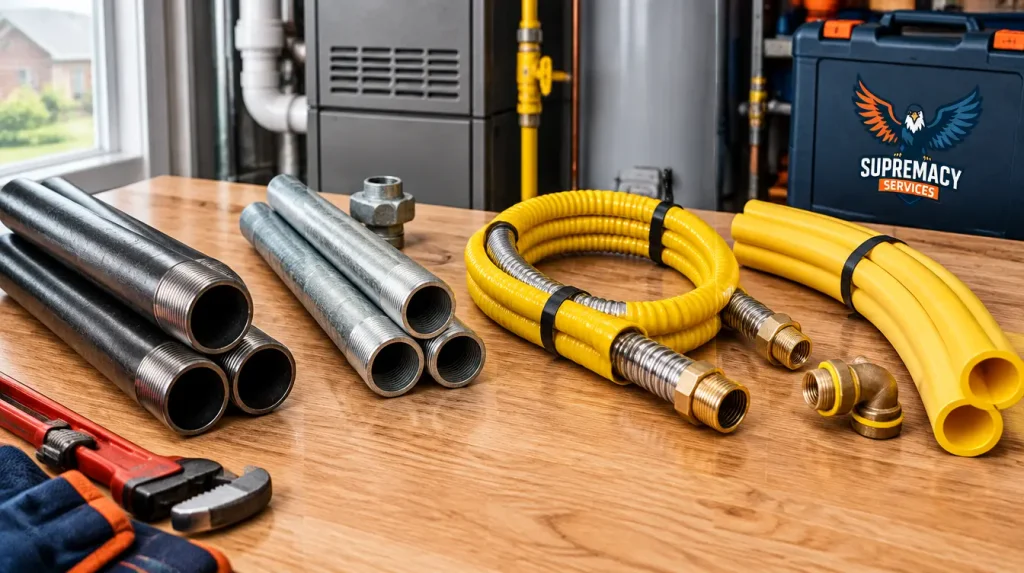
Gas pipe lifespan varies by material and installation environment. Steel, stainless steel tubing, and polyethylene piping have different vulnerabilities and installation requirements.
| Gas pipe material | Common residential application | Main factors affecting service life |
|---|---|---|
| Black steel or black iron | Interior gas distribution and appliance branches | Corrosion, moisture, joint condition, mechanical damage |
| Galvanized steel | Some older installations, where permitted | Corrosion, coating deterioration, installation history |
| Corrugated stainless steel tubing (CSST) | Approved interior gas piping systems | Physical damage, proper bonding, installation compliance |
| Polyethylene (PE) | Approved underground gas piping | Installation damage, external loading, UV exposure where prohibited |
| Copper tubing | Certain approved applications | Local code requirements, gas composition, joint compatibility, physical damage |
These materials do not have one universally applicable replacement age. Suitability and installation requirements depend on the specific product and applicable codes.
1. Black iron and steel gas pipes
Black steel piping is common in residential natural gas systems, particularly in older homes.
Properly installed steel piping can provide many years of service. However, corrosion becomes a concern when the metal is exposed to moisture or deteriorating environmental conditions.
A homeowner may notice rust on an exposed section of piping, but visible rust alone does not establish the condition of the entire system.
Surface discoloration and serious metal loss are different conditions. A qualified plumber should evaluate corrosion before determining whether a section requires replacement.
2. Galvanized steel gas pipes
Galvanized steel has a protective zinc coating intended to reduce corrosion.
Some older residential systems may contain galvanized piping. Its acceptability for new work depends on applicable codes and installation requirements.
The presence of galvanized piping does not automatically mean a gas line has failed. However, aging coatings, corroded connections, and uncertain installation history justify professional evaluation.
3. Corrugated stainless steel tubing (CSST)
CSST is a flexible metallic gas piping system used in approved residential installations.
Its flexibility can make installation easier in certain building layouts, but CSST must be installed according to the manufacturer’s instructions and applicable codes.
Particular attention should be paid to bonding requirements, physical protection, compatible fittings, and possible damage from electrical events.
CSST should not be treated as a maintenance-free or universally permanent product.
4. Underground polyethylene gas pipes
Polyethylene gas piping is used in approved underground applications because it resists the electrochemical corrosion that affects buried steel.
However, polyethylene piping can still be damaged by excavation equipment, excessive loading, improper installation, or environmental exposure outside its approved application.
The Pipeline and Hazardous Materials Safety Administration (PHMSA) identifies plastic materials as commonly used in natural gas distribution systems because of their resistance to corrosion.
Polyethylene’s corrosion resistance does not mean it can be used anywhere in a residential gas system. Underground transitions and connections require approved methods.
What Causes Residential Gas Lines to Deteriorate?
Several conditions can shorten the useful life of gas piping, even when the material itself is designed for long-term service.
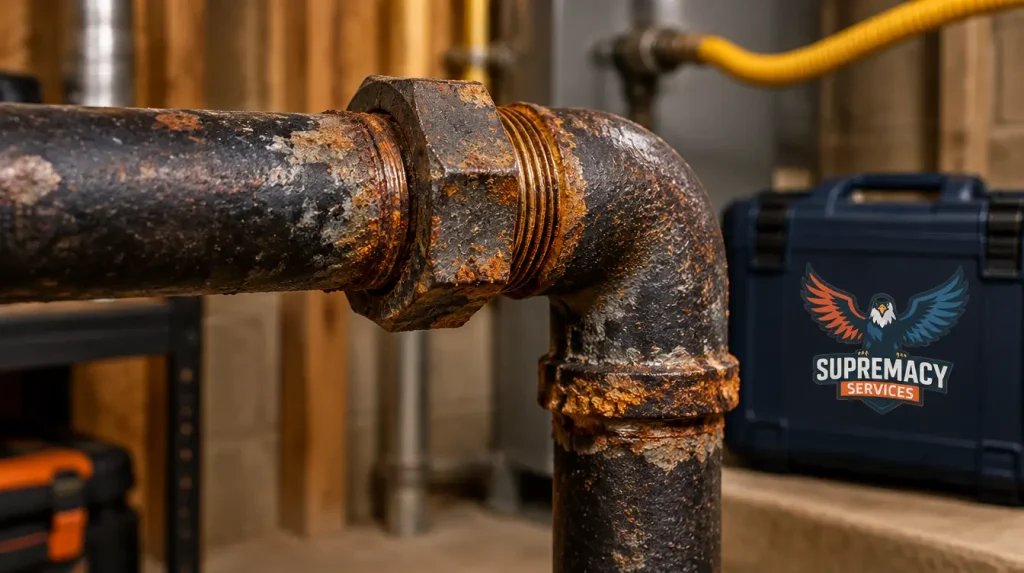
1. Corrosion and moisture exposure
Corrosion is an important concern for metallic gas pipes.
It can occur when metal is exposed to conditions that promote deterioration, particularly where protective coatings have failed or where moisture remains against the pipe.
PHMSA recognizes corrosion as a pipeline integrity hazard and describes protective coatings and cathodic protection as methods used to control corrosion in applicable pipeline systems.
These industrial and utility practices should not be interpreted as proof that every residential gas line requires the same protection system.
2. Soil movement and shifting foundations
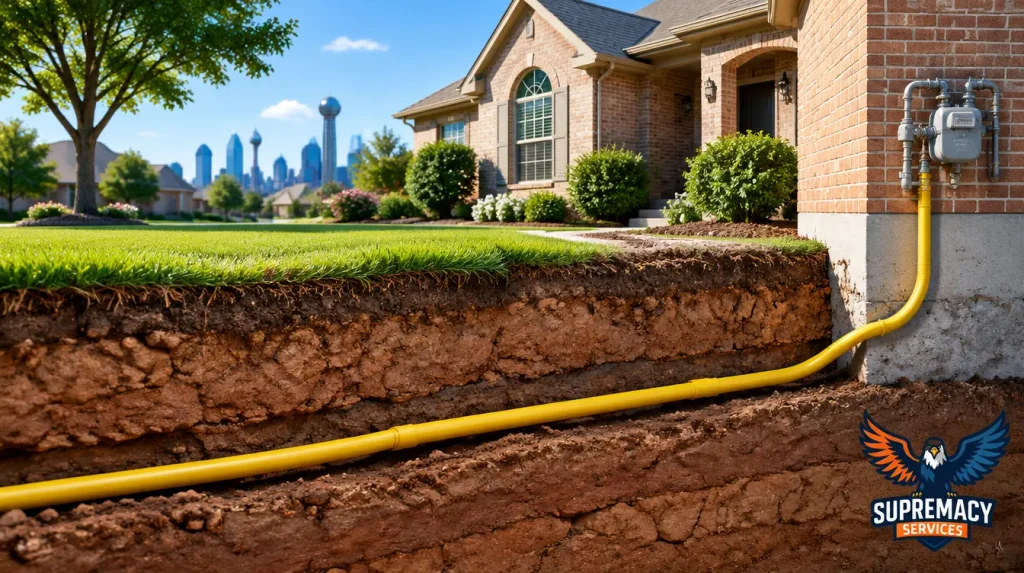
North Texas is known for areas with expansive clay soils.
When moisture conditions change, expansive soils can swell or shrink. This can contribute to movement around foundations and buried utilities.
A buried gas line may experience stress if the surrounding soil or connected structures move.
This does not mean every Dallas gas line is damaged by clay soil. Installation design, pipe material, flexibility, burial conditions, and site drainage all influence the actual risk.
3. Poor installation or unsupported piping
Gas lines can experience problems when piping is improperly supported, connections are incorrectly assembled, or materials are used outside their approved applications.
An installation defect may cause a problem long before the pipe material reaches the end of its potential service life.
4. Excavation and accidental damage
Fence installations, landscaping, driveway work, and other excavation activities can damage buried gas lines.
Even relatively shallow digging can create a serious hazard when the location of underground utilities is unknown.
Homeowners should contact 811 before digging and follow Texas notification requirements. Utility markings may not identify every privately owned line.
5. Repeated alterations and appliance upgrades
A home may undergo several renovations during the life of its gas piping system.
New gas ranges, tankless water heaters, fireplaces, and heating equipment may require different gas loads or piping configurations.
Existing piping may be structurally sound but improperly sized for the home’s updated equipment.
A qualified plumber can determine whether the current system remains suitable.
What Are the Warning Signs of Aging Gas Lines?
An aging gas line may show visible deterioration, but some dangerous conditions cannot be detected through appearance alone.
Important gas leak safety warning
If you smell gas, hear unexplained hissing near gas equipment, or otherwise suspect a gas leak, leave the area immediately. Do not operate electrical switches, use flames, investigate the source, or attempt a repair. From a safe location, call 911 and your gas utility’s emergency number. For Atmos Energy customers, the emergency number is 866-322-8667.
Signs that warrant attention
| Warning sign | What it may indicate | Recommended response |
|---|---|---|
| Rotten-egg or sulfur-like odor | Possible natural gas leak | Evacuate and contact emergency services and the gas utility |
| Hissing near gas piping | Possible escaping gas | Leave immediately and report it |
| Significant rust or flaking metal | Potential corrosion | Arrange professional evaluation when safe |
| Damaged or unsupported piping | Mechanical stress or installation defect | Have a qualified professional assess it |
| Repeated gas leaks | Potential wider piping deterioration | Request a comprehensive system evaluation |
| Damaged gas meter or exposed underground piping | Possible impact or utility damage | Stay clear and contact the utility |
| Unexplained appliance performance problems | Possible appliance, regulator, supply, or piping issue | Request professional diagnosis |
Not every appliance problem is caused by aging gas pipes.
For example, a furnace that fails to heat may have an ignition, electrical, control, or ventilation problem rather than a damaged gas supply line.
A professional assessment helps avoid unnecessary pipe replacement.
If you are concerned about corrosion or the condition of older gas piping, Supremacy Services provides gas line repair and diagnostic services in Dallas. An evaluation can help determine whether a specific section needs repair or a broader replacement is appropriate.
Do Old Gas Lines Need to Be Replaced?
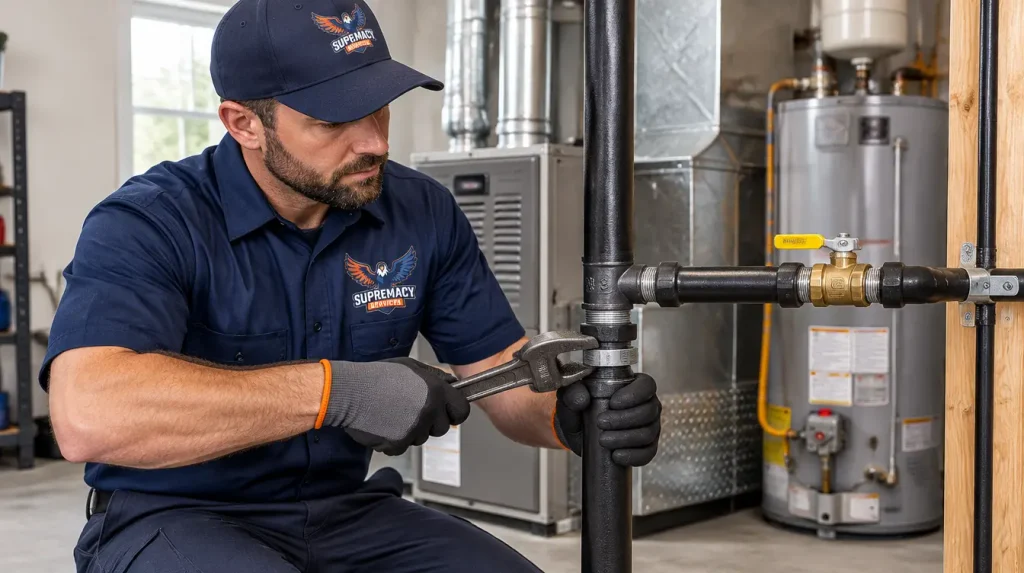
Not every aging gas line needs replacement. The decision depends on its condition, the extent of any damage, the piping material, and the results of a professional assessment.
When repair may be appropriate
A localized repair may be considered when a qualified professional determines that:
- The problem is limited to an identifiable section or component.
- The remaining piping is in satisfactory condition.
- The repair method is permitted for the piping system.
- The repaired system can meet applicable testing and inspection requirements.
When replacement may be more appropriate
Replacement may be recommended when:
- Corrosion is widespread or severe.
- Multiple sections have developed leaks.
- The piping is physically damaged or improperly installed.
- Existing materials or connections cannot be safely retained.
- A renovation requires extensive piping changes.
- The system cannot meet applicable requirements without substantial reconstruction.
Repair vs. replacement comparison
| Consideration | Repair | Replacement |
|---|---|---|
| Localized damaged section | Often worth evaluating | May be unnecessary |
| Widespread corrosion | May not resolve underlying condition | More likely to be considered |
| Multiple recurring leaks | Requires careful assessment | May provide a more comprehensive solution |
| Major remodeling | Possible for limited modifications | May be appropriate for substantial redesign |
| Upfront cost | Often lower for a limited repair | Typically higher for extensive work |
| Long-term suitability | Depends on remaining piping condition | Depends on design, materials, and installation |
The lowest initial quote is not always the best long-term decision. The appropriate solution should address the underlying problem rather than simply the most visible symptom.
For a more detailed comparison, see our related guide on Gas Line Repair vs. Replacement: When Is Each Necessary?
How Are Residential Gas Lines Inspected?
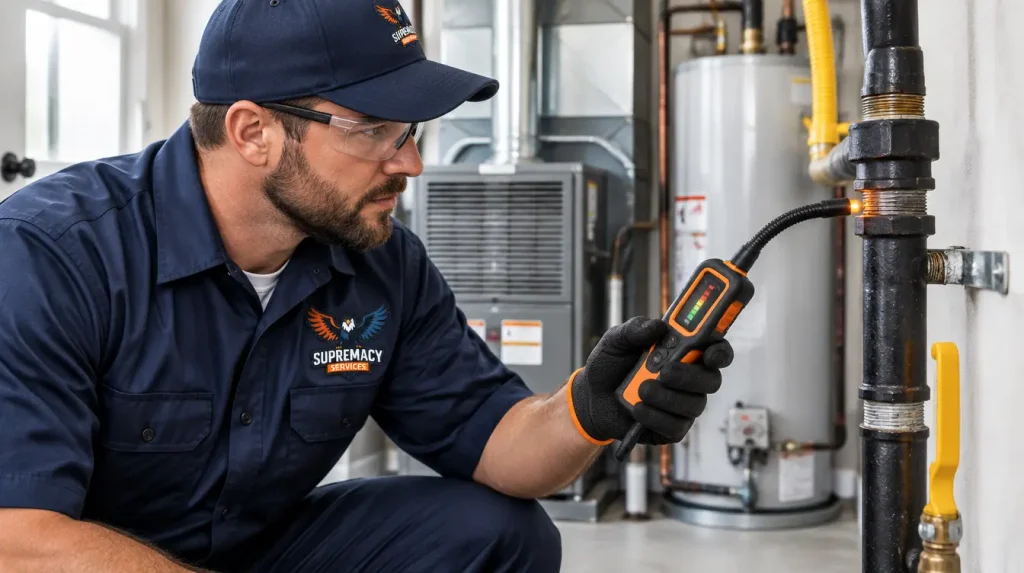
A residential gas line inspection evaluates the condition and safety of the piping system using methods appropriate to the installation and the suspected problem.
Step 1: Review the system history
The professional may ask about the home’s age, past gas repairs, appliance upgrades, and previous utility shutoffs.
This helps identify areas that may need closer evaluation.
Step 2: Examine accessible piping
Accessible piping may be checked for corrosion, mechanical damage, inadequate support, inappropriate connections, or visible installation concerns.
Buried or concealed sections generally require a different assessment approach.
Step 3: Conduct appropriate leak detection and testing
A qualified professional may use approved gas detection equipment and pressure testing where appropriate.
Testing must follow applicable procedures, including safe isolation of equipment when required.
Homeowners should not attempt to pressure-test gas piping themselves.
Step 4: Determine repair or replacement options
The professional should explain the findings and recommend whether the system requires localized repair, replacement, additional investigation, or no immediate corrective work.
Step 5: Complete required verification
Where work is performed, applicable permits, inspections, testing, and utility coordination may be required before the system is returned to service.
Texas regulates plumbing work through the Texas State Board of Plumbing Examiners, which identifies the licensing framework and scope of permitted work.
Concerned about the age of your home’s gas piping? Request a professional gas line evaluation from Supremacy Services to understand the condition of your system and the available repair or replacement options.
How Much Does Residential Gas Line Replacement Cost?
Residential gas line replacement costs vary considerably depending on the length and location of the piping, accessibility, materials, excavation needs, and applicable inspection requirements.
A short, accessible interior pipe replacement is a different project from replacing an underground gas line beneath a driveway.
Main cost factors
| Cost factor | Why it matters |
|---|---|
| Pipe length and diameter | Affect material quantities, sizing, and labor |
| Interior vs. underground location | Buried lines may require excavation and restoration |
| Accessibility | Concealed piping may require opening finished surfaces |
| Pipe material | Approved materials and fittings have different installation requirements |
| System complexity | Multiple appliance branches and connections increase work |
| Permits and inspections | Requirements vary by jurisdiction and scope |
| Surface restoration | Landscaping, concrete, drywall, or flooring may need repair |
| Utility coordination | Certain work requires scheduling with the gas provider |
Rather than relying on a broad national price range, Dallas homeowners should request an itemized quote based on the actual piping configuration.
Ask whether the quote includes required testing, permits, inspection coordination, and restoration work.
Can homeowners replace gas lines themselves?
Gas line replacement is not an appropriate DIY project.
Improper connections, inadequate sizing, unapproved materials, or unsafe testing can create fire and explosion hazards.
Gas piping work should be performed by appropriately licensed professionals operating within their authorized scope and following applicable local requirements.
How Can Homeowners Help Extend the Life of Gas Lines?
Homeowners cannot prevent every type of gas pipe deterioration, but several practical measures can reduce avoidable damage.
- Arrange periodic professional inspections. Pay particular attention to older metallic piping and previously repaired sections.
- Address water intrusion. Repair leaks or drainage problems that expose accessible metallic piping to persistent moisture.
- Protect exposed piping. Avoid using gas pipes as supports for stored items or equipment.
- Call 811 before digging. Confirm the location of buried utilities and arrange private-line locating when needed.
- Document renovations. Keep records of gas line modifications, permits, and inspections.
- Have appliance changes evaluated. New gas equipment may require different piping capacity.
- Respond promptly to damage. Do not ignore corrosion, displaced supports, or damaged connections.
Atmos Energy specifically recommends periodic leak inspections of customer-owned piping and corrosion inspections for metallic piping.
These measures support safer long-term operation, but they do not establish or guarantee a specific pipe lifespan.
What Should Dallas and DFW Homeowners Know About Aging Gas Lines?
Dallas-area homeowners should consider the age of their property, underground conditions, previous renovations, and local permitting requirements when evaluating gas piping.
Older Dallas homes
Homes that have undergone decades of additions or remodeling may contain piping installed at different times.
For example, the original furnace connection may be much older than a recently installed gas range line.
Each part of the system may need to be evaluated according to its material, condition, and installation history.
North Texas soil movement
Expansive clay soils in parts of North Texas can contribute to ground movement as moisture conditions change.
Gas lines affected by foundation repairs, substantial ground movement, or excavation may deserve closer attention.
However, soil type alone does not establish that a particular gas line is damaged.
Storms and utility damage
Severe storms, fallen trees, and shifting ground can affect gas meters and underground utilities.
Atmos Energy has specifically warned that uprooted trees and shifted foundations can damage underground natural gas lines.
After storm damage, homeowners should avoid exposed or damaged gas infrastructure and contact the utility when appropriate.
Utility-owned vs. customer-owned piping
The responsibility for a gas line depends on the utility’s service boundary and the location of the piping.
Atmos Energy explains that customers are responsible for certain gas piping and appliances, which should receive periodic professional inspections.
Homeowners should confirm the precise responsibility boundary with their gas utility rather than assuming that every buried line belongs to the utility.
For more information, see the related article Who Is Responsible for Gas Line Repairs in Texas? once its published URL is available.
Frequently Asked Questions About Residential Gas Line Lifespan
1. Can residential gas lines last 50 years?
Yes, some gas piping can remain serviceable after 50 years. However, age alone cannot establish safety. Pipe material, corrosion, installation quality, and testing results determine whether an older line can remain in use.
2. How long does black iron gas pipe last?
Black iron or black steel gas pipe can provide decades of service when properly installed and protected. Moisture exposure, corrosion, damaged joints, and installation conditions can shorten its useful life.
3. Do underground gas lines wear out faster?
Not necessarily. Underground performance depends on the pipe material, corrosion protection where applicable, soil conditions, and installation quality. Approved polyethylene piping resists corrosion, while unprotected buried metallic piping can be vulnerable.
4. Should I replace the gas lines in a 40-year-old house?
Not automatically. A 40-year-old house may have gas piping in satisfactory condition, but unknown installation history, corrosion, previous leaks, or major renovations can justify professional evaluation.
5. Can gas pipes leak without a noticeable smell?
Yes. Homeowners should not rely solely on odor to identify a leak. Natural gas odor may be difficult to detect in certain circumstances, and other warning signs can include hissing, blowing dust, or damaged vegetation near a buried line.
6. Does homeowners insurance cover old gas line replacement?
Coverage depends on the policy, the cause of damage, exclusions, and whether the work is considered maintenance or a covered loss. Routine replacement of deteriorating pipes is often treated differently from damage caused by a covered event. Ask your insurer to review the specific circumstances.
7. How often should residential gas lines be inspected?
There is no single inspection interval appropriate for every residential gas piping system. Homeowners should follow applicable utility, manufacturer, and professional guidance, particularly for older metallic piping or systems with a history of problems.
8. Is CSST better than black iron gas pipe?
Neither material is universally better. CSST offers installation flexibility in approved applications, while rigid steel has different durability and protection characteristics. The correct choice depends on system design, installation conditions, manufacturer requirements, and applicable codes.
9. Can I inspect my own gas lines?
Homeowners can observe accessible piping for obvious damage without touching or disturbing it. However, leak testing, repairs, and safety determinations should be handled by qualified professionals. If a leak is suspected, leave immediately rather than investigating.
10. How do I know whether I need gas line repair or replacement?
Final Thoughts: Age Matters, but Condition Matters More
Residential gas lines do not come with a universal replacement deadline. Some remain serviceable for decades, while others develop problems much earlier because of corrosion, physical damage, installation defects, or changing site conditions.
For Dallas homeowners, the most useful approach is to understand the materials in the home, watch for signs of deterioration, and arrange appropriate professional evaluation when concerns arise.
Replacing a gas line unnecessarily can be expensive. Ignoring a deteriorating line can create serious safety risks.
Need Help Evaluating Older Gas Lines in Dallas?
If your home has aging gas piping, visible corrosion, or a history of gas line problems, Supremacy Services can help assess the system and explain the appropriate next steps.
Schedule gas line inspection, repair, or replacement service with Supremacy Services, serving Dallas and surrounding DFW communities.
For a suspected active gas leak, evacuate and contact emergency services and your gas utility first. Do not use a routine service booking as an emergency response.

