

Yes. A new residential gas line in Dallas requires a plumbing permit and the applicable inspections before it is approved for use. Plan for permitting when adding, extending, rerouting, or replacing gas piping—not just when installing an entirely new gas system. Dallas’s permitting rules and gas-release guidance establish these requirements.
The important questions are who will obtain the permit, which inspections your project needs, and whether the gas utility must coordinate service or meter work.
Safety first: A suspected gas leak is not a permit-planning problem. Leave the area immediately. From a safe distance, call 911 and, for Atmos Energy service, 866-322-8667. Do not operate switches, use a phone near the suspected leak, or try to shut off a gas valve yourself. Follow Atmos Energy’s gas-leak safety instructions. atmosenergy.com
Table of contents
- Projects that need permits
- Who can apply
- The permit process
- Inspections and gas releases
- Costs
- Unpermitted work
- DFW planning considerations
- FAQs
Which gas line projects need a permit?
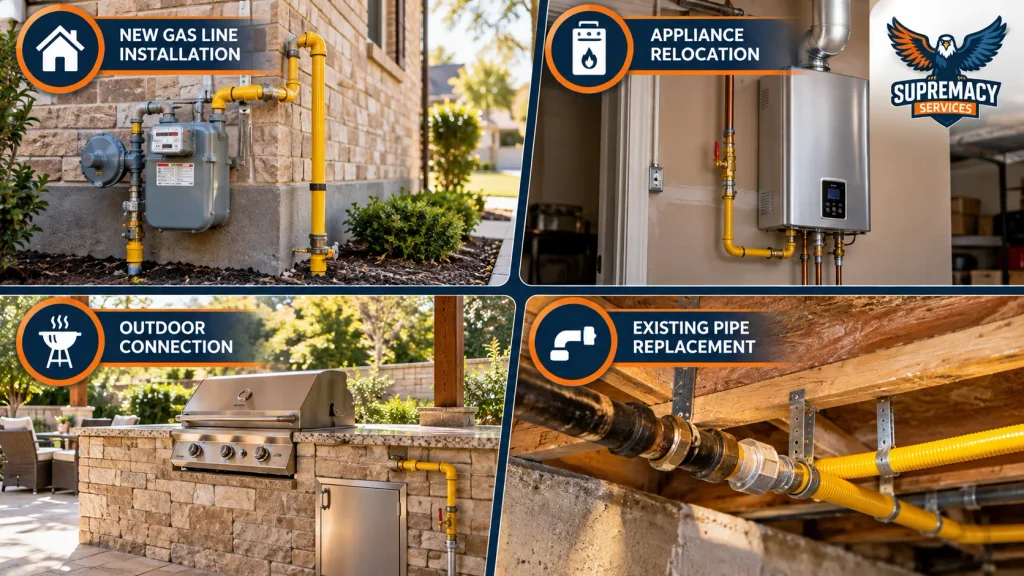
New piping and changes to an existing fuel-gas system belong in the permit-and-inspection process. Dallas’s gas test and release requirements cover new systems, piping replacement, and additions or alterations. Dallas City Hall
| Proposed project | What to plan for |
|---|---|
| Installing a new residential fuel-gas system | Plumbing permit, inspections, and applicable utility coordination |
| Extending piping to a different appliance location | Permitted gas-piping alteration |
| Running a permanent line to an outdoor kitchen | Permitted piping installation; confirm the rest of the outdoor project’s requirements |
| Replacing or rerouting existing gas piping | Permit and inspection requirements for the affected work |
| Repairing only an approved appliance connector downstream of its shutoff | A narrower situation; confirm the exact scope rather than assuming all gas work is exempt |
These distinctions follow Dallas’s gas-release guidance, including its specific treatment of approved appliance connectors. Dallas City Hall
Does a small or inexpensive job qualify for an exemption?
Do not assume that low cost makes gas piping permit-exempt. Dallas Chapter 52 includes a plumbing exemption for certain repairs or repiping costing no more than $1,000, but it expressly excludes gas piping. The small-job plumbing exemption does not include gas piping. Dallas City Hall
Before approving a short extension or replacement, ask the contractor to identify the required permit—not simply whether the work seems minor.
Planning a change to your home’s gas piping? Discuss your project with Supremacy’s gas-line service team and ask who will handle the permit, inspections, and any utility coordination.
Who can pull the permit?
Dallas allows a qualifying homeowner or an appropriately licensed, city-registered plumbing contractor to obtain the plumbing permit. The homeowner option does not waive code or inspection requirements. Dallas City Hall
Hiring a plumbing contractor
Ask for the company’s responsible master plumber’s name and license number. Use the Texas State Board of Plumbing Examiners’ consumer guidance to verify licensing, insurance information, and the company’s eligibility to work in your city. tsbpe.texas.gov
Your proposal should identify who is responsible for submitting the permit application and arranging inspections. Avoid relying on an undocumented assurance that someone else will handle it.
Applying as a homeowner
Dallas’s published homeowner conditions include owning and occupying the property and having a homestead exemption filed with the county tax office. The homeowner must meet the same applicable plumbing-code requirements as a contractor.
Texas law also provides a licensing exemption for an owner performing plumbing in their own homestead. A licensing exemption and a permit exemption are different things.
For most homeowners, using a qualified plumbing contractor is the more practical choice. Gas-system work involves more than assembling pipe: the project must be planned, tested, inspected, and coordinated with other affected equipment.
How does the Dallas permit process work?
Start with a defined scope of work, confirm the correct permit, and establish the inspection sequence before installation begins.
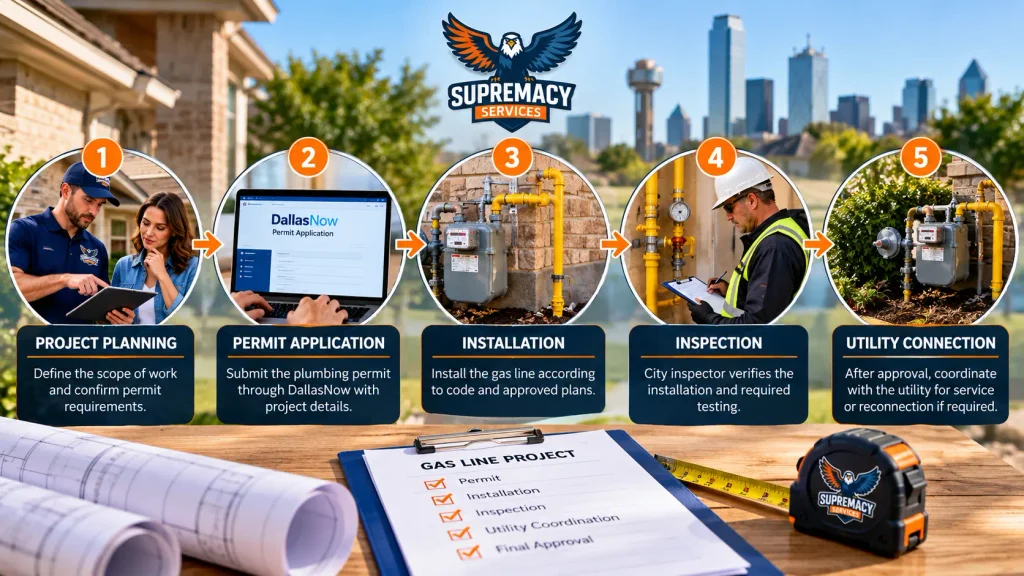
1. Confirm the property and proposed work
Give the contractor the project address and explain what is changing: a new appliance, relocated connection, outdoor branch line, or replacement piping.
Prepare the appliance model information and a description of the proposed route. Dallas’s plumbing permit application checklist identifies piping layout, size, material, and equipment information as relevant plan-review details, depending on scope.
2. Check supply requirements before buying equipment
Ask whether the new equipment changes the gas demand enough to require utility review. Atmos requests information such as equipment type, quantity, gas pressure, and approximate BTU load for service and meter installations. Its service-line and meter requirements explain that coordination.
A larger appliance should not be treated as a simple connection change without checking the supply requirements.
3. Submit through DallasNow
Dallas uses DallasNow for permit applications, status tracking, and inspection management. Ask for the permit or record number so you can follow the project.
Keep the project description consistent across the estimate, permit application, and planned installation.
4. Agree on inspection and closeout responsibilities
Before work starts, ask when the inspector needs access and when finishes or landscaping can be restored.
For projects involving both plumbing and mechanical work, note Dallas’s inspection-scheduling update effective June 1, 2026: the city directs those rough inspections to be scheduled together, and likewise the corresponding finals. Confirm how that instruction applies to your remodel.
Request the final inspection results and any applicable gas-release confirmation as part of project closeout.
What inspections and gas releases are required?
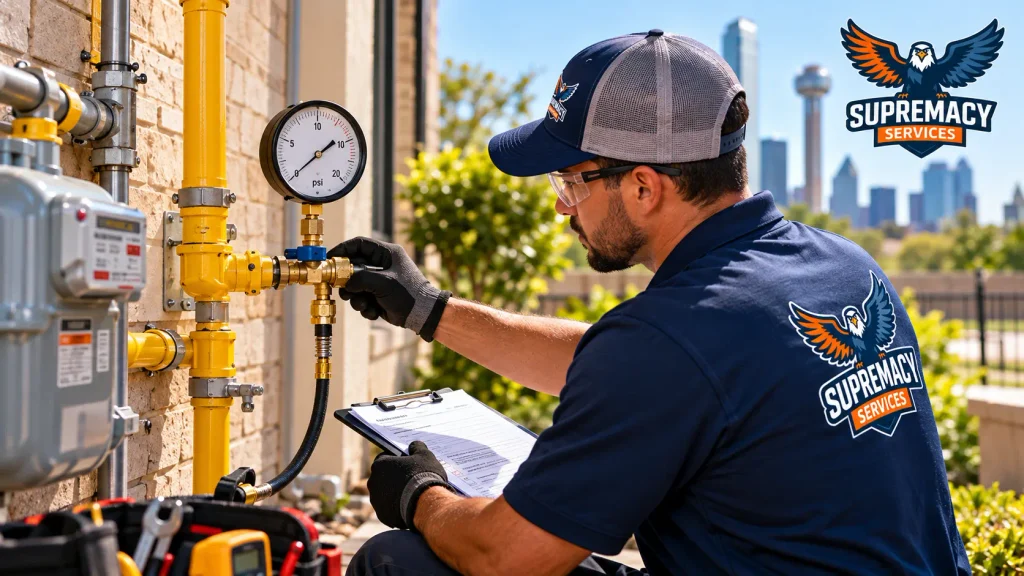
A permit authorizes the work; inspection checks it; a gas release communicates city approval for utility service where required. These are related steps, not interchangeable documents.
Dallas’s published gas-test guidance describes an inspector-witnessed test at 3 psig for at least 15 minutes, with the specified system and appliance access requirements. Those figures are a description of the city’s guidance—not instructions for performing a homeowner pressure test. Have the contractor confirm the required test arrangement for your project.
A city inspector witnesses and evaluates the work; the inspector does not perform the contractor’s installation or repairs.
Where a city release is required, passing inspection is followed by the applicable utility connection or reconnection arrangements. Do not assume that an approved inspection automatically schedules a utility visit. Dallas’s guidance separates the release from the customer’s reconnect scheduling.
For questions about a specific permit or inspection, Dallas Planning and Development lists 214-948-4480 as its assistance number.
How much does a Dallas gas line permit cost?
The permit charge depends on the submitted project and applicable city fees. It is not the same as the total installed cost of the gas line.
Check the current Dallas permit fee guidance, rather than relying on an undated online estimate. The city’s published schedule states that final fees are calculated at submittal based on project specifics.
The linked fee guide currently lists a $75 reinspection fee and a $200-per-trade unauthorized-concealment fee. These are conditional charges—not a base price for every gas permit. Confirm the applicable charges before proceeding.
For an itemized proposal, ask the contractor to separate:
| Estimate component | Question to ask |
|---|---|
| Permit and administrative work | Are city fees included, and who submits the application? |
| Piping installation | What route, materials, and connections are included? |
| Access and excavation | Does the quote include opening walls, trenching, or difficult access? |
| Testing and inspections | Who schedules them, and how are corrections or return visits handled? |
| Restoration and utility work | What is included, excluded, or handled by another party? |
The Texas plumbing board recommends detailed written estimates that explain the work and payment terms.
For a separate discussion of repair pricing, see Supremacy’s gas-line repair cost guide.
Comparing proposals? Ask Supremacy Services for an itemized gas-line project assessment that identifies permitting, testing, access, and restoration responsibilities.
What happens if the work was not permitted?
Do not assume a permit can simply be purchased afterward with no additional review. Dallas’s administrative code provides for investigation of work begun without a required permit and allows stop-work orders. Additional fees can apply.
If you discover undocumented piping, collect the information you have: installation dates, contractor invoices, appliance changes, and photographs taken during the work. Ask Dallas and a qualified plumbing contractor how the installation should be evaluated.
A line that appears to work is not proof that its permit and inspection requirements were satisfied.
What should DFW homeowners check before starting?
Confirm the correct jurisdiction and code
Use Dallas requirements for property under City of Dallas permitting authority. For work in Plano, Frisco, Allen, Fort Worth, or another municipality, confirm that city’s requirements rather than carrying over Dallas fees or inspection instructions.
Dallas lists the 2021 plumbing, residential, and fuel-gas codes with local amendments among its adopted construction codes. A generic national-code summary is not a substitute for the locally adopted rules.
Plan underground work before digging
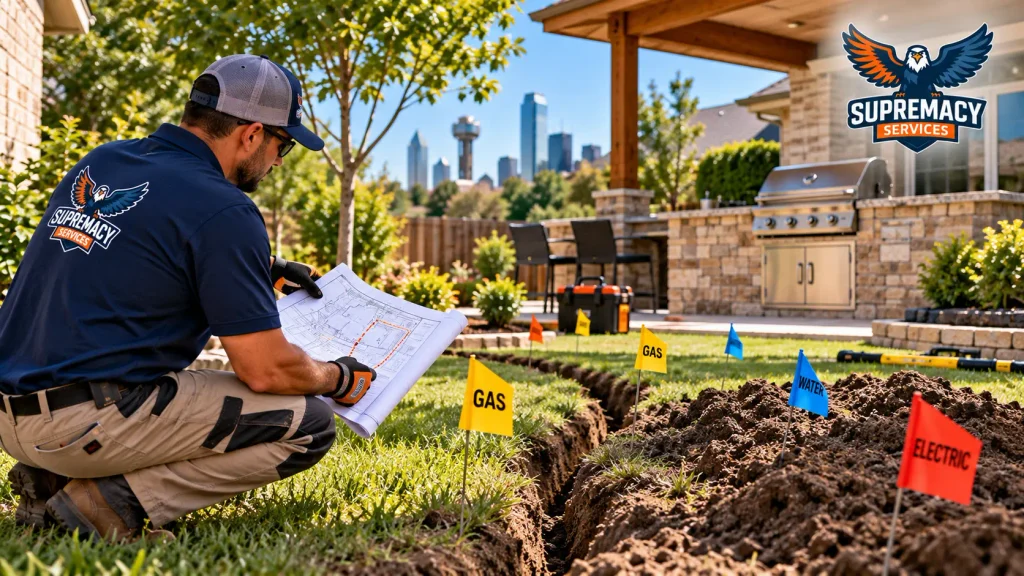
Texas811 instructs excavators to contact it at least two working days before digging, excluding weekends and holidays, and to confirm utility responses before proceeding.
Utility markings also do not necessarily identify privately owned lines beyond the meter. Review Texas811’s digging and private-line guidance before planning an outdoor branch line.
Check exterior-work restrictions
For an outdoor kitchen or visible exterior piping, ask whether historic-district, conservation-district, or other site-specific review applies. Dallas identifies additional requirements for designated districts, including approval requirements for exterior work in historic districts.
Keep emergency symptoms separate from project planning
Odor or other suspected leak indications require the emergency response described above—not a wait for a routine appointment. After any immediate hazard has been addressed, Supremacy’s gas-leak warning signs and repair-process guide can support further planning.
Frequently asked questions
Does a gas line to an outdoor grill need a permit in Dallas?
A permanent new gas branch is an addition to the fuel-gas system, so plan for permitting and inspection. The outdoor location does not make new piping exempt.
Is replacing an appliance connector the same as installing a gas line?
No. Dallas’s guidance distinguishes repair or replacement of an approved connector on the appliance side of the shutoff from replacement of gas piping. Confirm the precise work scope before relying on that distinction.
Can I use the homeowner exemption for a rental property?
Do not assume so. Dallas’s stated homeowner conditions include owning and occupying the property and having the applicable homestead exemption. Confirm eligibility with the city.
Does my homeowner exemption allow me to hire anyone to do the work?
The Texas exemption concerns an owner performing plumbing in their own homestead. It is not a general exemption from licensing requirements for a contractor you hire.
Does opening a new gas account always require a city gas release?
Not necessarily. Dallas’s updated guidance describes certain service-establishment or restoration situations where Atmos may proceed without a city release, subject to system condition and utility discretion. That does not exempt new piping installation.
Does calling 811 replace the plumbing permit?
Ask for separate estimates for application review, installation, inspection, corrections, and utility scheduling. Track the actual permit record in DallasNow rather than treating a contractor’s installation time as the entire approval timeline. Dallas City Hall
What paperwork should I keep?
Request the written scope, permit number, inspection results, applicable gas-release record, final invoice, and any written warranty. Keep those documents together so future contractors can understand what was installed and approved.
Plan your gas line project with Supremacy Services

Before approving new piping, establish who is responsible for the permit, inspections, utility coordination, and final documentation.
Contact Supremacy Services about your Dallas gas-line project or call 945-777-3345 to discuss the proposed work and request an assessment. Supremacy’s plumbing page lists this contact number and service throughout the Dallas–Fort Worth area. Supremacy Service
For a suspected gas leak, leave first and contact emergency services and the gas utility from a safe location.

