
“What Is Perimeter Pest Control and Does It Work in Dallas, TX?” This is a common question in many households, however seeing a few ants near the foundation or a spider around the patio may not seem like a serious pest problem. But many household pest problems begin outside long before homeowners notice insects crawling through kitchens, bathrooms, garages, or living spaces.
That is where perimeter pest control comes in.
Rather than waiting for pests to establish themselves indoors, perimeter pest control focuses on creating a strategically treated zone around the exterior of your property. The objective is simple: control common pests where they travel, hide, nest, and attempt to enter your home.
For homeowners in Dallas and across the DFW Metroplex, an exterior-focused pest management strategy can be particularly valuable because ants, cockroaches, spiders, wasps, silverfish and other pests can remain a concern during substantial portions of the year.
But how does perimeter pest control actually work? What does a professional treatment include? And is an exterior barrier enough to keep a Dallas home pest-free?
Here is what homeowners should know.
What Is Perimeter Pest Control?
Perimeter pest control is a preventive exterior pest-management strategy designed to reduce the number of pests living around a structure and intercept pests attempting to enter it.
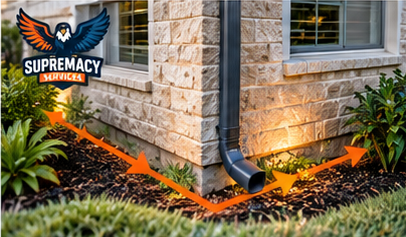
A professional technician evaluates areas where pests are likely to travel, shelter or gain access to the home. Depending on the property, pest species and treatment plan, attention may be given to areas such as:
- The home’s foundation
- Exterior doors and thresholds
- Window frames
- Weep holes
- Utility and plumbing penetrations
- Cracks and gaps
- Eaves and overhangs
- Garage entry points
- Patios and porches
- Areas where pest activity has been identified
The purpose isn’t simply to spray a continuous line around a house. Effective pest management involves identifying what pest is present, why it is there and how it is entering the structure, then choosing appropriate control measures.
Texas A&M AgriLife’s pest-management resources emphasize the importance of pest identification and integrated approaches rather than assuming every pest problem can be solved with the same treatment.
How Does Perimeter Pest Control Work?
A professional perimeter treatment generally works through several layers of protection.
1. Inspecting the Property
Good pest control starts with inspection.
A technician should look for pest activity, conducive conditions and possible entry points around the property.
That may include checking for:
- Ant trails
- Spider webs
- Cockroach harborages
- Wasp activity
- Moisture problems
- Foundation gaps
- Openings around utility lines
- Damaged seals
- Vegetation touching the structure
- Pest-friendly debris or hiding places
This inspection helps determine where treatment will provide the greatest value.
2. Targeting Pest Entry Points
Ants, cockroaches, spiders and other pests often enter through surprisingly small openings. Technicians pay particular attention to doors, windows, foundation gaps, weep holes, utility penetrations, vents and garage areas. Treating these high-traffic entry zones—and recommending sealing where appropriate—helps create a stronger line of defense between outdoor pest activity and your living space.
3. Treating High-Risk Exterior Areas
Once problem areas have been identified, appropriate exterior treatments can be applied to foundations and other pest activity or travel zones, according to product-label directions. Instead of simply spraying everywhere, professional pest control targets locations where pests are most likely to hide, travel or attempt to enter the home. This makes perimeter protection a more strategic approach to preventing common Dallas household pests.
4. Addressing Harborage Conditions
Effective perimeter pest control goes beyond applying products. Standing water, excessive moisture, leaf buildup, clutter, dense vegetation and other sheltered areas can make a property more attractive to pests. Identifying and correcting these conditions helps remove the food, water and shelter pests need, supporting better long-term control around the home.
5. Monitoring and Maintaining the Defense
Perimeter pest control works best as an ongoing prevention strategy rather than a one-time treatment. Weather, irrigation, landscaping and seasonal pest activity can change conditions around a Dallas property over time. Regular monitoring allows technicians to identify new activity, reassess vulnerable areas and provide appropriate follow-up treatment before minor pest pressure develops into a larger indoor problem.
Does Perimeter Pest Control Really Work in Dallas?
Yes—perimeter pest control can be an effective component of a Dallas pest-management program when the treatment is correctly selected, professionally applied and combined with inspection, sanitation and exclusion.
The key phrase is component of a pest-management program.
A perimeter treatment should not be viewed as an invisible force field that guarantees no pest will ever cross the property.
Instead, it helps reduce pest populations and intercept common invaders before they establish themselves inside.
Dallas also has access to Texas A&M AgriLife’s research and Extension resources, including Integrated Pest Management programs. Integrated Pest Management, or IPM, emphasizes using multiple appropriate control strategies instead of relying exclusively on pesticide applications.
For homeowners, that can mean combining:
inspection + identification + exterior treatment + exclusion + sanitation + monitoring.
That approach generally provides a stronger long-term strategy than repeatedly treating visible insects without addressing the reason they are present.
What Pests Can Perimeter Pest Control Help Prevent in Dallas?
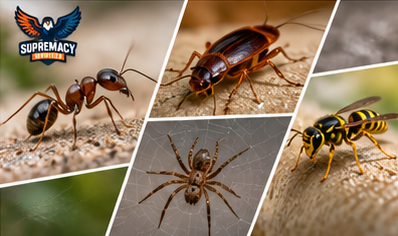
The appropriate treatment depends on the pest species, but exterior pest-management programs are commonly designed to help control everyday household invaders.
Supremacy’s standard perimeter protection specifically identifies common Texas pests including ants, roaches, spiders, earwigs, silverfish, centipedes, scorpions and paper wasps.
Ants
Ants are among the most common reasons homeowners seek exterior pest protection.
They may nest outdoors and enter homes while searching for food, moisture or shelter.
Importantly, simply killing the worker ants you can see may not eliminate the colony. Texas A&M AgriLife notes that successful ant management depends on identifying the species and locating or controlling the colony.
Cockroaches
Some cockroach species can originate outdoors or around moist exterior environments and eventually move inside.
Managing conducive conditions, reducing entry points and using targeted treatments can help reduce this pressure.
A serious established indoor cockroach infestation, however, may require a more intensive interior treatment strategy.
Spiders
Reducing insects around a home’s exterior can also make the area less attractive to spiders because insects are their food source.
Web removal and targeted treatment of appropriate exterior areas can form part of a broader spider-management program.
Earwigs, Silverfish and Centipedes
These pests often favor damp environments.
If they repeatedly appear around a house, pest control should be paired with investigation of excessive moisture, drainage, irrigation or other conditions that may be supporting them.
Wasps
Exterior inspections can identify wasp activity around eaves, overhangs and other sheltered areas.
Established nests may require direct, pest-specific treatment rather than relying solely on a general perimeter application.
What Perimeter Pest Control Does NOT Solve by Itself
This is one of the most important distinctions for Dallas homeowners.
Not every pest should be treated using the same perimeter program.
Termites
Termites can cause structural damage and require dedicated inspection and termite-control methods.
A routine general-pest perimeter treatment should not be considered a substitute for professional termite protection.
Rodents
Mice and rats require a different approach involving inspection, trapping or other control methods and, critically, exclusion of structural entry points.
If you’re dealing with scratching noises, droppings or other signs of rodents, see Supremacy’s Rodent Control & Exclusion service rather than relying on general perimeter treatment.
Mosquitoes
Mosquito management focuses heavily on breeding areas, standing water and outdoor resting sites. A dedicated mosquito-management program is therefore different from a standard foundation-focused pest treatment.
Bed Bugs
Bed bugs are primarily an indoor pest problem and require specialized inspection and treatment.
Bottom line: Correct pest identification should come before selecting the treatment.
Perimeter Pest Control vs. Indoor Pest Control

One of the major advantages of a prevention-focused program is that much of the routine pest-management work can occur outside.
| Perimeter Pest Control | Indoor Pest Control |
|---|---|
| Primarily preventive | Often corrective or targeted |
| Focuses on exterior pest pressure | Focuses on pests already indoors |
| Targets entry and activity zones | Targets indoor harborages/activity |
| Can reduce reliance on routine indoor applications | May be necessary for established infestations |
| Works well with exclusion and sanitation | Often complements exterior protection |
This doesn’t mean indoor treatments should never be used.
When pests have already established themselves inside a home, targeted interior treatment may be appropriate. The goal should be to use the right treatment in the right place based on inspection findings.
How Often Should a Dallas Home Receive Perimeter Pest Control?
There is no responsible one-size-fits-all interval for every property.
Treatment frequency can depend on:
- Pest species
- Pest pressure
- Product label requirements
- Weather exposure
- Landscaping
- Irrigation
- Property construction
- Previous infestations
- Seasonal activity
Supremacy currently structures its standard exterior protection around scheduled quarterly service, with exterior servicing designed to reduce disruption to homeowners.
However, a technician should adjust recommendations according to the actual conditions found at the property.
Can Rain Wash Away Perimeter Pest Control?

Dallas homeowners often assume that any rainfall immediately makes an exterior pest treatment useless.
The reality is more nuanced.
Treatment performance depends on the specific product, application surface, drying period, rainfall timing and label instructions. Some professionally applied products are designed for exterior residual use once properly applied and dried.
Heavy rain or unusual weather conditions can still influence pest activity and may affect some treatments.
That is another reason pest control should be treated as an ongoing management program rather than a single application.
Is Perimeter Pest Control Safe for Children and Pets?
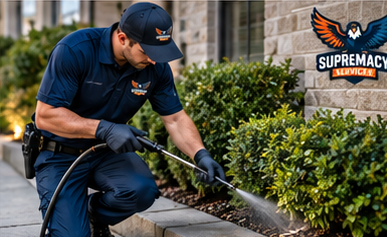
Pesticide safety depends on what product is being used and whether it is applied according to its label.
Homeowners should tell their pest-control provider about children, pets, sensitive areas and any other concerns before treatment.
Professional technicians should follow product-label directions concerning application locations, rates, drying times, re-entry instructions and other safety requirements.
Never assume that because a product is sold for household pest control it can be applied anywhere or at any concentration.
7 Ways Dallas Homeowners Can Make Perimeter Pest Control More Effective
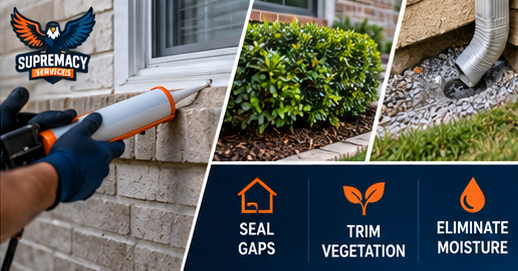
Professional treatment performs best when homeowners also remove the conditions pests need to thrive.
1. Seal Exterior Gaps
Even small cracks can provide easy access for ants, cockroaches, spiders and other pests. Inspect the foundation, siding, utility penetrations and areas around pipes or cables, and seal unnecessary openings to strengthen your home’s exterior pest defense.
2. Repair Damaged Screens and Door Sweeps
Torn window screens, worn weather stripping and gaps beneath exterior doors can become direct pest entry points. Repair damaged screens and replace ineffective door sweeps to help keep crawling and flying pests outside.
3. Manage Moisture
Many pests are attracted to damp environments because they need water to survive. Repair leaks, improve drainage and avoid excessive moisture around the foundation, especially near faucets, gutters, irrigation systems and air-conditioning equipment.
4. Keep Vegetation Away From the Structure
Shrubs, tree branches and dense landscaping touching the house can provide pests with shelter and convenient pathways toward the structure. Regular trimming creates separation between vegetation and your home while making exterior areas easier to inspect and treat.
5. Remove Pest Harborage
Leaves, wood piles, cardboard, yard debris and clutter can create protected places where insects and other pests hide or reproduce. Keep the area around your foundation clean and organized to reduce potential pest harborage close to the home.
6. Manage Outdoor Food Sources
Garbage, pet food, fallen fruit, outdoor cooking residue and poorly sealed trash containers can attract pests to your property. Keep outdoor food areas clean and garbage containers securely closed so pests have fewer reasons to remain near your home.
7. Respond Early
Don’t wait for occasional pest sightings to develop into a larger infestation. Watch for recurring ants, cockroaches, spider webs, nests, droppings or other signs of activity and address the problem early. Prompt action can make pest problems easier to identify, control and prevent from spreading indoors.
Identifying the pest early is usually preferable to waiting until activity becomes widespread.
DIY vs. Professional Perimeter Pest Control
DIY products can sometimes help with minor pest activity, but professional service provides several advantages.
The biggest is diagnosis.
A trained pest professional can determine whether you’re dealing with an ant colony, outdoor cockroach activity, a moisture-related pest problem, termites, rodents or something else entirely.
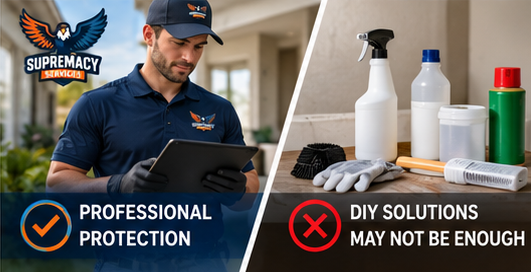
Professional service can also provide:
- Property-specific inspection
- Correct pest identification
- Appropriate product selection
- Targeted application
- Entry-point recommendations
- Ongoing monitoring
- Pest-specific escalation when perimeter treatment isn’t enough
Treating the wrong pest—or applying the wrong product in the wrong location—can waste time while the underlying problem continues.
Why Choose Supremacy for Perimeter Pest Control in Dallas?
Supremacy Pest Defense provides pest-control services for homeowners throughout Dallas and surrounding DFW communities.
Our pest-control program is built around exterior protection, targeted eradication and pest-specific solutions rather than treating every infestation the same way.
Depending on the pest problem, Supremacy offers services including:
- Perimeter pest control
- WallShield™ in-wall systems
- Termite protection
- Mosquito management
- Flea and tick defense
- Fire ant treatment
- Wasp and hornet removal
- Rodent control and exclusion
- Bed bug treatments
- Wildlife removal
- Commercial pest solutions
Frequently Asked Questions About Perimeter Pest Control in Dallas
Is perimeter pest control worth it in Dallas?
For homes that experience recurring ants, roaches, spiders and other exterior-origin pests, professional perimeter pest management can be a valuable preventive strategy. Results depend on correct pest identification, treatment, property conditions and ongoing maintenance.
Does perimeter pest control keep bugs out of the house?
It can substantially reduce pest pressure and help intercept pests around likely entry areas, but no responsible pest-control provider should suggest that a single exterior application makes a property permanently pest-proof.
How long does perimeter pest treatment last?
There is no universal duration. Residual performance depends on the product, application site, weather, pest pressure and other environmental factors. Follow the service interval recommended for your specific treatment program.
Should pest control be sprayed inside the house too?
Not automatically. Preventive exterior management can reduce the need for routine indoor treatment. When an established infestation exists indoors, targeted interior treatment may be appropriate after inspection.
What pests require more than perimeter treatment?
Termites, rodents, mosquitoes, bed bugs and some established indoor infestations generally require specialized management strategies.
Can I do perimeter pest control myself?
Homeowners can improve pest prevention considerably through sanitation, moisture management and exclusion. Pesticides should only be used according to their labels. Persistent or unidentified pest problems are good reasons to involve a professional.

