
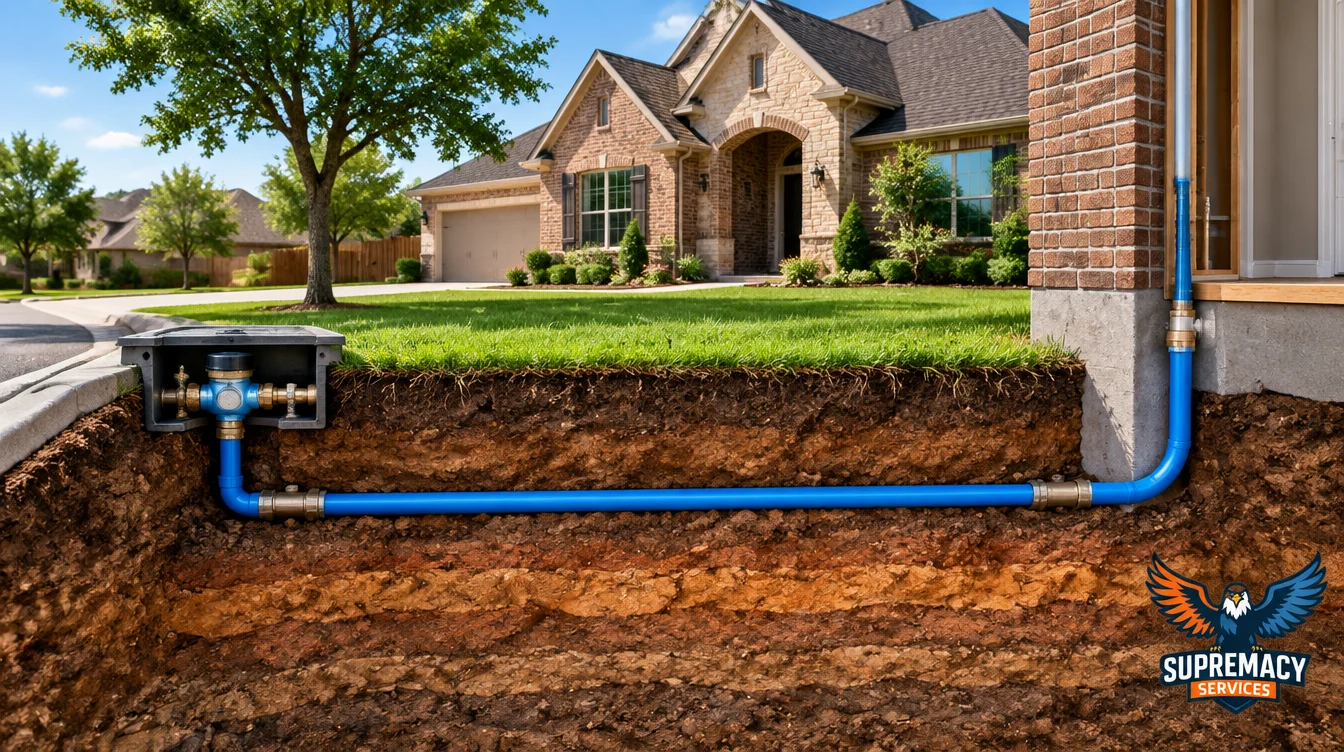
How Long Do Underground Water Lines Last?
Underground water lines in Texas can last several decades, but their actual lifespan depends on the pipe material, installation quality, soil conditions, water chemistry, and exposure to physical damage. Some properly installed copper and modern plastic water lines can remain serviceable for 50 years or longer, while older galvanized steel pipes may deteriorate much sooner.
For homeowners in Dallas and the DFW Metroplex, knowing the age and condition of an underground water line can help prevent unexpected leaks, property damage, and costly emergency repairs.
A pipe that has been underground for 40 years is not automatically defective. Likewise, a relatively new pipe can fail prematurely because of poor installation, shifting soil, or damaged connections.
The important question is not simply how old your water line is, but whether it is still structurally sound and delivering water reliably.
Table of Contents
- How Long Do Different Underground Water Pipes Last?
- What Affects Underground Water Line Lifespan in Texas?
- How Can You Tell If an Underground Water Line Is Aging?
- Do Underground Water Lines Last Longer Than Indoor Plumbing?
- Should You Repair or Replace an Aging Water Line?
- How Much Does Underground Water Line Replacement Cost?
- How Do Plumbers Evaluate an Aging Underground Water Line?
- How Can You Extend the Life of Your Underground Water Line?
- When Should Dallas Homeowners Consider Replacement?
- Frequently Asked Questions
How Long Do Different Underground Water Pipes Last?
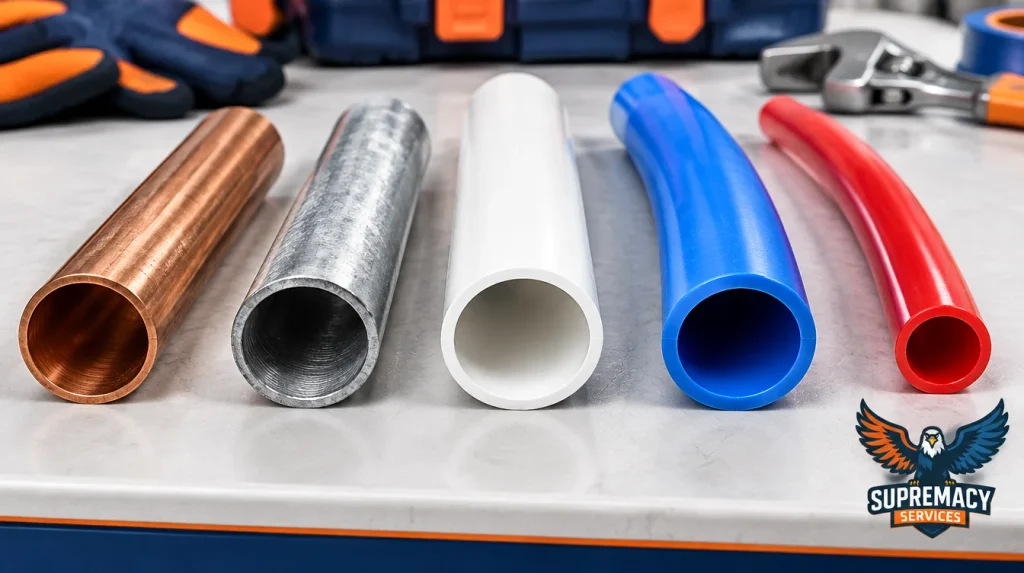
The lifespan of an underground water line varies considerably by material. Copper, galvanized steel, PVC, polyethylene, and PEX each have different strengths, limitations, and installation requirements.
The following comparison provides general planning guidance rather than a prediction for any individual home.
| Pipe material | General longevity guidance | Main concern |
|---|---|---|
| Copper | Often 50–75+ years | Corrosion, pinhole leaks, soil and water chemistry |
| Galvanized steel | Approximately 40 years in historical EPA guidance | Internal rust, restricted flow, external corrosion |
| PVC | Commonly designed for multi-decade service; 50+ years is a planning benchmark for suitable products | Joint failures, impact, installation damage |
| HDPE / PE | Designed for long-term buried service; often planned around 50+ years | Improper connections, installation damage, unsuitable operating conditions |
| PEX | Commonly associated with decades of service, but underground suitability depends on the specific product and installation | Damaged fittings, improper burial, installation conditions |
| Polybutylene | Variable; failure history warrants additional scrutiny | Material and connection reliability |
These are broad reference ranges, not universal manufacturer warranties. The EPA has documented copper service-line longevity commonly exceeding 75 years and historical galvanized service-line life around 40 years. Actual performance can differ substantially.
Copper underground water lines
Copper is a durable plumbing material used in residential water systems for many decades.
Its advantages include resistance to many forms of deterioration, mechanical strength, and a long history of use in potable water systems.
However, copper is not immune to failure.
Corrosion can develop because of aggressive water chemistry, certain soil conditions, electrical influences, or installation problems. Over time, localized deterioration may produce pinhole leaks.
For Dallas homeowners with older copper service lines, the presence of repeated leaks matters more than age alone.
A copper pipe installed several decades ago may still perform well if its condition is sound.
Galvanized steel underground water lines
Galvanized steel pipes have a protective zinc coating intended to reduce corrosion.
As the coating deteriorates, the underlying steel becomes vulnerable to rust.
Corrosion may develop both inside and outside the pipe, eventually reducing the available flow area or weakening the pipe wall.
Common symptoms include declining water pressure, discolored water, and recurring leaks.
Older galvanized underground water lines deserve particular attention because internal corrosion may be extensive even when the exposed sections appear acceptable.
PVC underground water lines
PVC is a corrosion-resistant plastic pipe material used in suitable underground water applications.
Unlike steel, PVC does not rust. However, it can still fail because of impact damage, unsuitable pressure conditions, poor bedding, improper joints, or ground movement.
Not every PVC product is approved for pressurized potable water service.
The correct pipe specification, pressure rating, joining method, and local code requirements matter.
HDPE and polyethylene water lines
High-density polyethylene, commonly called HDPE, is used in many buried water applications.
Its flexibility and resistance to corrosion can be useful where underground conditions create movement or installation challenges.
The reliability of an HDPE water line depends on proper material selection, compatible fittings, and installation techniques.
A flexible pipe can tolerate some movement, but it is not immune to damage from excavation, poor installation, or excessive stress.
PEX underground water lines
PEX is widely used in residential plumbing, but not every PEX product or installation method is appropriate for direct burial.
Homeowners should not assume that any PEX pipe purchased for indoor plumbing can be buried outdoors.
The product’s listing, manufacturer instructions, protection requirements, fittings, and applicable plumbing code must be checked.
For a more detailed comparison of material choices, homeowners can also explore copper versus PEX piping and how each performs in different applications.
What Affects Underground Water Line Lifespan in Texas?
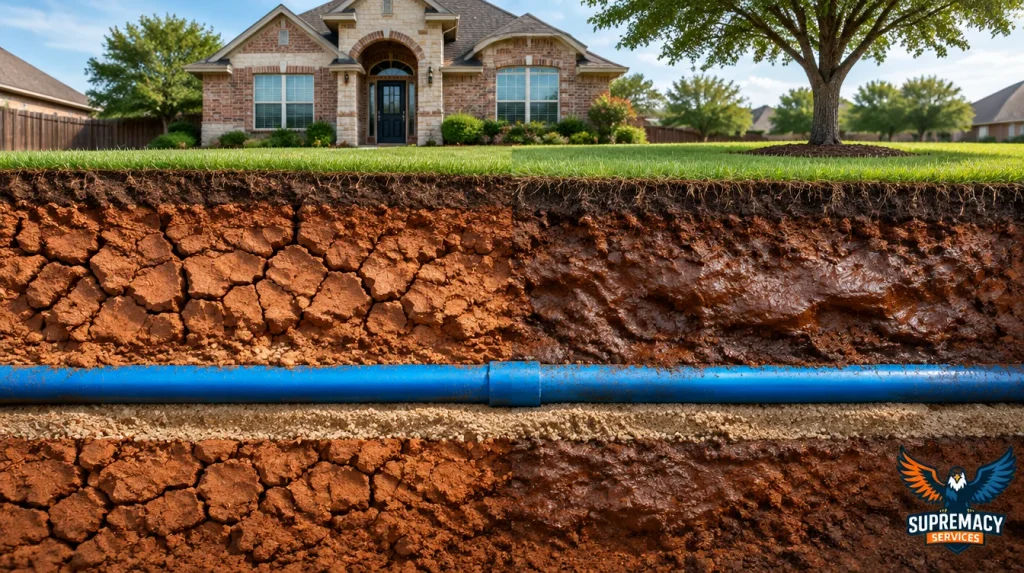
The most important factors are pipe material, soil conditions, water chemistry, installation quality, operating pressure, and exposure to external damage.
Dallas-area properties can have different underground conditions even within the same neighborhood.
1. Expansive clay soil and ground movement
Parts of North Texas have expansive clay soils that change volume as moisture conditions change.
During wet periods, clay may swell. During prolonged dry periods, it can shrink.
This movement can place stress on underground structures, including water pipes and their connections.
The actual risk depends on the property’s soil characteristics, pipe depth, bedding, material, and installation.
A properly installed water line may accommodate ordinary ground movement without problems, while a poorly supported connection may be more vulnerable.
2. Corrosion and water chemistry
Metal pipes can deteriorate because of reactions involving water chemistry or the surrounding environment.
Corrosion does not affect every property equally.
Factors can include water composition, pipe material, temperature, soil moisture, and electrical conditions.
This is one reason two homes with similarly aged copper lines may experience very different results.
3. Installation quality
Even a high-quality pipe can fail prematurely when installed incorrectly.
Potential installation problems include:
- Inadequate pipe bedding or support
- Improper fittings or connections
- Sharp rocks pressing against the pipe
- Incorrect burial depth
- Excessive bending or mechanical stress
- Failure to follow manufacturer requirements
The quality of the original installation can be as important as the pipe material itself.
4. Water pressure and pressure changes
Excessive water pressure can increase stress on pipes, valves, and fittings.
Pressure fluctuations may also contribute to plumbing problems, particularly where components are already weakened.
A plumber can measure the home’s operating pressure and determine whether pressure regulation or further testing is appropriate.
5. Tree roots and nearby vegetation
Tree roots generally do not penetrate sound, intact pressure pipes simply because water is flowing inside them.
However, roots can exploit existing openings or damaged connections, and growing roots can contribute to movement or mechanical stress around underground infrastructure.
A water line near mature trees should be evaluated based on its condition, location, and surrounding environment.
6. Accidental excavation damage
Underground water lines can be damaged during landscaping, fence installation, driveway work, or other excavation.
In Texas, homeowners and contractors are required to contact 811 before digging. Texas811 states that notice generally must be given at least two business days in advance, excluding weekends and holidays.
Private lines may require separate locating arrangements.
How Can You Tell If an Underground Water Line Is Aging?
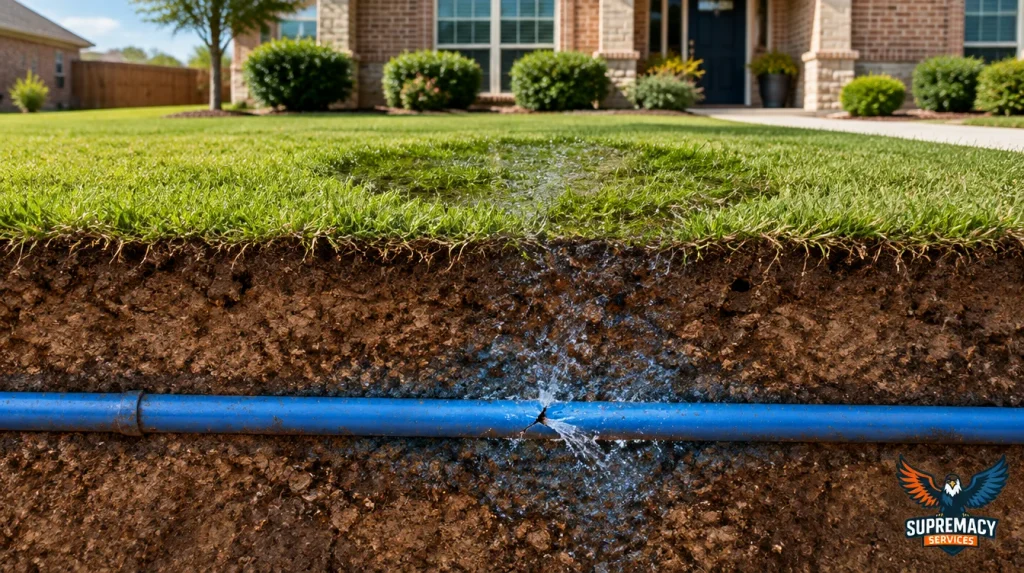
An aging underground water line may show signs of deterioration before a major break occurs. However, age alone cannot confirm that a pipe is failing.
Warning signs worth investigating
- Unexplained increases in water bills
- Water pressure that has gradually declined
- Wet or unusually soft areas of the yard
- Repeated underground water leaks
- Discolored water from plumbing fixtures
- Water meter movement when all water uses are off
- Unusual sounds of running water
- Previous repairs along the same underground line
Unexplained increases in water bills
A water bill that rises without an obvious increase in usage can indicate a hidden leak.
However, billing changes, irrigation usage, running toilets, and other plumbing problems should be ruled out before assuming the underground service line is responsible.
Low water pressure
An aging galvanized pipe may develop internal corrosion that restricts flow.
Alternatively, low pressure may be caused by a failing pressure regulator, partially closed valve, utility supply issue, or a leak.
The cause should be diagnosed before replacing a pipe.
Wet spots in the yard
A persistent wet patch between the water meter and the house may indicate an underground leak.
Other possible causes include irrigation failures, drainage problems, and rainfall accumulation.
If the area remains wet during dry weather, professional leak detection may be appropriate.
Repeated leaks
One isolated leak does not necessarily mean the entire line needs replacing.
However, multiple leaks along an older pipe can suggest broader deterioration.
In those circumstances, repeated spot repairs may become less economical than replacing the affected line.
Concerned about an aging underground water line? Supremacy Services provides water line repair and replacement services in Dallas to help homeowners evaluate leaks, damaged pipes, and replacement options.
Do Underground Water Lines Last Longer Than Indoor Plumbing?
Not necessarily. Underground pipes and indoor plumbing operate under different environmental conditions.
Buried water lines are protected from sunlight and some forms of accidental contact, but they can be exposed to soil movement, moisture, external corrosion, and excavation damage.
Indoor plumbing is generally easier to inspect and repair, although it can still deteriorate because of water chemistry, pressure, temperature, or installation defects.
| Factor | Underground water lines | Indoor water pipes |
|---|---|---|
| Visibility | Usually concealed by soil | Often partially accessible |
| Ground movement | Potential concern | Usually less direct exposure |
| Corrosion | Internal and potentially external | Primarily dependent on material and surrounding conditions |
| Leak detection | May require specialized equipment | Often easier to identify |
| Repair access | Excavation or specialized access may be needed | Walls, floors or ceilings may need opening |
| Replacement planning | Route, utilities and landscaping matter | Building access and interior restoration matter |
Neither location automatically guarantees a longer lifespan.
Should You Repair or Replace an Aging Underground Water Line?
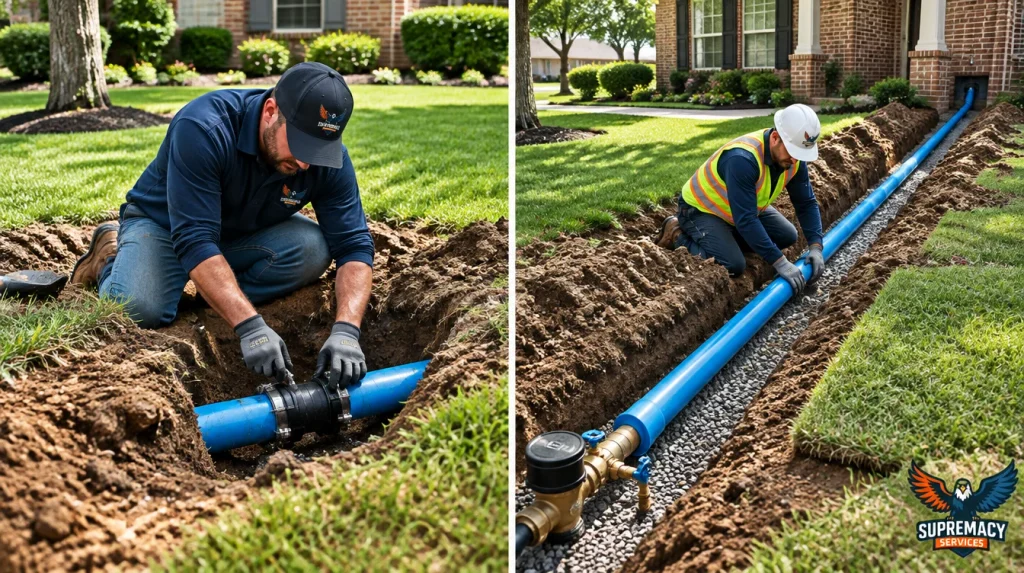
A localized repair may be appropriate when the rest of the pipe is in good condition. Replacement becomes more attractive when the line has widespread corrosion, recurring failures, unsuitable materials, or extensive damage.
When a repair may make sense
A repair may be reasonable when:
- The pipe has one clearly identified damaged section.
- The surrounding material remains structurally sound.
- The line has not experienced repeated failures.
- A compatible, code-compliant repair can be completed safely.
- The repair cost is reasonable relative to the line’s expected remaining service life.
When replacement may be the better investment
Replacement deserves consideration when:
- Multiple leaks have occurred along the same line.
- Galvanized piping has significant corrosion.
- The pipe has deteriorated across a substantial length.
- The existing material or connections have a known reliability problem.
- Excavation and repeated repairs have become disruptive or expensive.
- A qualified plumber determines that another isolated repair is unlikely to provide a durable solution.
Repair versus replacement comparison
| Consideration | Spot repair | Full replacement |
|---|---|---|
| Initial scope | Localized damaged section | Entire affected service line |
| Upfront expense | Often lower | Often higher |
| Best application | Isolated defect | Widespread deterioration |
| Remaining old pipe | Yes | Generally removed or abandoned appropriately |
| Future leak risk | Depends on remaining pipe condition | Reduces risks associated with the replaced material |
| Property disruption | Often localized | Depends on route and installation method |
Replacing a line does not eliminate every possible future plumbing problem, but it can address deterioration that a localized repair would leave behind.
For older properties, a professional assessment should compare both options before work begins.
How Much Does Underground Water Line Replacement Cost in Dallas?
The cost of replacing an underground water line depends on its length, depth, pipe material, access conditions, installation method, and the amount of property restoration required.
There is no single reliable price for every Dallas home.
Factors that influence replacement cost
Length of the service line: A longer distance between the meter and the home generally requires more material and installation work.
Burial depth: Deeper lines can require additional excavation, equipment, and safety precautions.
Pipe material: Copper, HDPE, and other approved materials have different material and installation costs.
Driveways and landscaping: Work beneath pavement, patios, mature landscaping, or retaining walls may require additional planning.
Installation method: Conventional trenching and suitable trenchless methods have different equipment and access requirements.
Permits and inspections: Applicable requirements vary by municipality and project scope.
Emergency conditions: An urgent water service failure may affect scheduling and project logistics.
Homeowners should request a written estimate that identifies the proposed material, scope of work, access method, restoration responsibilities, and any exclusions.
If an older line has already developed multiple leaks, consider having Supremacy Services evaluate whether repairing or replacing the underground water line offers better long-term value.
How Do Plumbers Evaluate an Aging Underground Water Line?
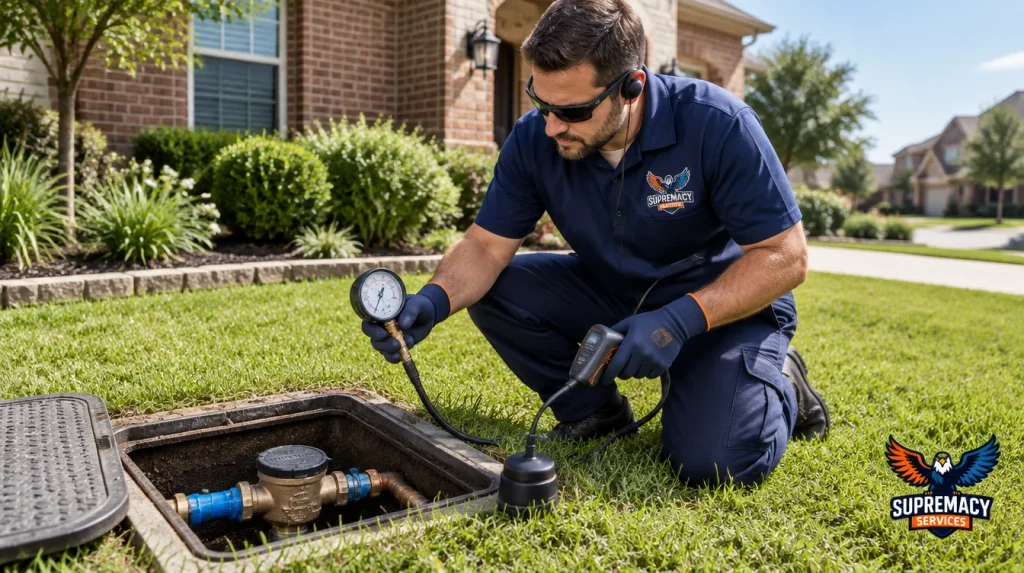
A professional assessment typically begins with the home’s symptoms, service-line history, and available information about the existing pipe.
The exact testing process depends on the property and suspected problem.
Step 1: Review the plumbing history
The plumber may ask about previous leaks, repairs, water pressure changes, pipe materials, and the approximate installation date.
Step 2: Check the water meter and pressure
Meter observations and pressure testing can help determine whether water is being lost and whether abnormal pressure conditions may be involved.
Step 3: Locate the suspected leak
Depending on conditions, professionals may use acoustic equipment, specialized leak detection methods, or controlled testing to narrow down the problem.
Step 4: Evaluate the pipe material
Visible sections, records, and appropriately accessed portions of the line can help identify the material.
Not every underground pipe can be identified accurately without additional investigation.
Step 5: Compare repair and replacement options
The plumber should explain whether the problem appears isolated or suggests more extensive deterioration.
A useful evaluation should address the condition of the line, not simply recommend replacement based on the home’s age.
Step 6: Explain installation and restoration
If replacement is appropriate, the contractor should discuss the route, excavation requirements, pipe material, connections, inspections, and property restoration.
For certain projects, trenchless techniques may reduce surface disturbance, although feasibility depends on the existing pipe and site conditions.
How Can You Extend the Life of Your Underground Water Line?
You cannot prevent every underground pipe failure, but several practical steps can reduce avoidable damage and help detect problems earlier.
Monitor your water usage
Review monthly water bills and investigate unexplained increases.
A consistent rise in usage may reveal a developing leak before major property damage occurs.
Address pressure problems
If your home experiences unusually high or fluctuating water pressure, have the system evaluated.
Proper pressure control helps protect plumbing components throughout the home.
Protect underground utilities during landscaping
Avoid assuming you know exactly where buried utilities are located.
Contact Texas811 before excavation and arrange appropriate private-line locating where necessary.
Investigate recurring wet spots
A persistent wet area should not be ignored, especially if it appears when irrigation is off and rainfall has been absent.
Keep plumbing records
Save invoices, repair records, installation details, and information about pipe materials.
These records can help future plumbers assess the line and may be useful when selling the property.
Consider inspections when symptoms appear
An underground line does not necessarily need annual excavation or intrusive testing.
However, a home with recurring leaks, unexplained pressure loss, or an aging galvanized service line may benefit from a targeted professional assessment.
When Should Dallas Homeowners Consider Replacing an Underground Water Line?
Homeowners should consider replacement when the pipe’s condition, failure history, or material-related risks indicate that continued repairs may no longer be practical.
The age of the home can help establish the likely age of the water line, but it is not definitive. A service line may have been replaced independently of the rest of the plumbing.
Older Dallas homes
Homes with original galvanized water service lines may require closer attention because corrosion can reduce both pipe integrity and water flow.
Older properties may also have incomplete plumbing records, making material identification important.
Homes in expanding DFW communities
Properties in Frisco, Plano, Allen, and other growing North Texas communities can also experience underground leaks.
Newer construction does not eliminate risks from poor connections, excavation damage, or ground movement.
Homes with repeated underground leaks
When several repairs have been performed on the same service line, homeowners should ask whether the failures indicate a broader material problem.
Homes with potentially lead-containing service lines
Lead presents a separate drinking-water concern that should not be evaluated using ordinary pipe-lifespan estimates.
The EPA recommends identifying service-line materials and replacing lead service lines to reduce lead exposure.
If the material is unknown, homeowners can consult their water utility’s service-line inventory or a qualified plumber.
What Should You Do If Your Underground Water Line Is Leaking?
If you suspect a buried water supply line is leaking, act promptly to limit potential damage.
- Check whether irrigation, fixtures, or other normal water uses explain the symptoms.
- Observe the water meter with all known water uses turned off, if it is safe and accessible.
- Avoid digging into the suspected leak area.
- If there is an active major leak, shut off the appropriate accessible water valve when safe to do so.
- Contact your water utility if the leak may involve utility-owned infrastructure.
- Arrange professional leak detection and repair if the problem appears to involve the property’s service line.
Do not excavate near underground utilities without appropriate locating and safety precautions. Supremacy services
Frequently Asked Questions
1. Can an underground water line last 100 years?
Some water lines may remain in service for exceptionally long periods, but 100 years should not be treated as a standard expectation. Material, corrosion, installation quality, operating conditions, and maintenance history all affect service life.
2. How long do copper water lines last underground?
Copper service lines can last more than 50 years, and EPA technical research has documented average expectations exceeding 75 years in some applications. Local corrosion conditions can shorten that lifespan considerably.
3. Do PVC underground water pipes deteriorate?
Yes. PVC does not rust like steel, but it can experience damage from poor installation, excessive stress, unsuitable operating conditions, or failed joints.
4. Should I replace a 40-year-old underground water line?
Not automatically. A 40-year-old line that is performing reliably may not require immediate replacement. Its material, condition, repair history, and any signs of deterioration should guide the decision.
5. Can tree roots break underground water lines?
Roots can contribute to mechanical stress or exploit existing defects, but an intact pressure pipe is not automatically vulnerable simply because roots grow nearby. The risk depends on the pipe and surrounding conditions.
6. How do I know what material my underground water line is made from?
Plumbing records, utility inventories, and accessible pipe sections may provide clues. A qualified plumber can help identify the material when records are incomplete.
7. Does homeowners insurance cover an aging underground water line?
Coverage depends on the policy, the cause of damage, and any applicable service-line endorsements. Ordinary deterioration may be excluded. Homeowners should review their policy and contact their insurer for a coverage determination.
8. Is trenchless replacement better for older water lines?
Trenchless replacement can reduce excavation in suitable circumstances, but it is not appropriate for every pipe, route, or property. The existing line’s condition and the installation method must be evaluated.
9. How often should underground water lines be inspected?
There is no universal inspection interval for every residential service line. Targeted evaluation is appropriate when leaks, pressure changes, recurring repairs, or material-related concerns arise.
10. Is an underground water line the same as a sewer line?
No. A water service line delivers pressurized potable water to the property. A sewer line carries wastewater away. Both may be buried, but their materials, failure symptoms, inspection methods, and repair approaches differ.
Final Thoughts: Know the Condition of Your Water Line, Not Just Its Age
Underground water lines in Texas can provide decades of reliable service, but no material lasts indefinitely.
Copper, PVC, HDPE, PEX, and galvanized steel have different performance characteristics. Soil movement, corrosion, installation quality, and accidental damage can all influence when a line begins to fail.
For Dallas homeowners, the most useful approach is to monitor changes in water usage, pressure, and property conditions while keeping records of previous repairs.
Aging pipes do not always require replacement. Repeated leaks, widespread corrosion, and persistent water service problems deserve professional attention.
Need help evaluating an aging underground water line in Dallas or the DFW Metroplex?
Contact Supremacy Services for water line inspection, repair, and replacement options. A professional assessment can help determine whether a targeted repair or full replacement makes the most sense for your property.

