
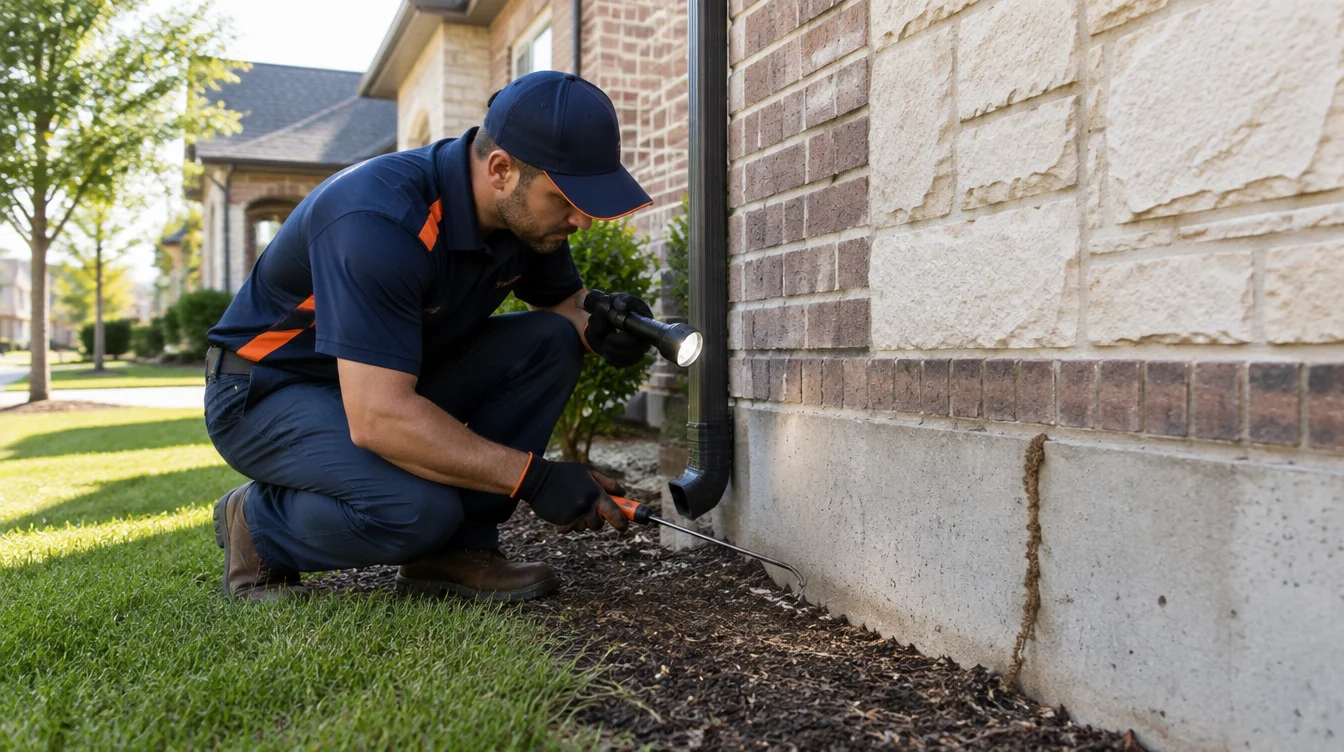
Termite treatment in North Texas can cost anywhere from a few hundred dollars for a limited treatment to several thousand dollars for a larger or more complicated infestation. As a Dallas-specific budgeting reference, Angi’s 2026 cost guide reports an average termite-treatment cost of about $615, with most Dallas projects in its dataset falling between approximately $281 and $949. Its reported one-time treatment range extends from about $85 to $1,300. These figures are third-party market estimates—not Supremacy Services pricing or guaranteed quotes.
The actual price for your Dallas-Fort Worth property depends on much more than square footage. The termite species, location and extent of activity, foundation construction, treatment method, amount of perimeter requiring treatment, accessibility, monitoring requirements and warranty terms can all change the scope of work.
For that reason, homeowners should use online averages for budgeting, not as substitutes for an inspection and property-specific treatment proposal.
Table of Contents
- How much does termite treatment cost in North Texas?
- Termite treatment costs by method
- What determines your actual termite treatment cost?
- Signs you may need a termite inspection
- Termites vs. ants and other look-alikes
- DIY vs. professional termite treatment
- What professional termite treatment includes
- What should be included in a Texas termite quote?
- How to reduce the risk of future termite problems
- Frequently asked questions
How Much Does Termite Treatment Cost in North Texas?
A reasonable 2026 budgeting range for termite treatment is several hundred dollars to several thousand dollars, depending primarily on the treatment method and scope of the infestation.
For Dallas specifically, Angi reports an average of approximately $615, with a typical range of $281–$949. Its Dallas data places one-time termite treatments at approximately $85–$1,300, while larger infestations can move beyond that range.
Another 2026 pricing source, HomeGuide, gives a much broader national range of approximately $225–$2,500 for chemical or bait-station treatments and approximately $2,000–$8,000 for whole-home tenting.
Those numbers should not be interpreted as a Supremacy Services price list.
They demonstrate something more useful: there is no meaningful universal price for termite treatment without first knowing what is being treated.
2026 Termite Treatment Cost at a Glance
| Treatment situation | Published market guidance | Important consideration |
|---|---|---|
| Dallas termite treatment overall | $281–$949 typical range | Angi Dallas estimate |
| Dallas average | About $615 | Third-party market estimate |
| Dallas one-time treatment | $85–$1,300 | Depends heavily on scope |
| Chemical/bait treatment nationally | $225–$2,500 | HomeGuide 2026 range |
| Whole-home tenting nationally | $2,000–$8,000 | Usually a substantially different treatment scope |
| Professional termite inspection | Varies by provider/property | Confirm before scheduling |

These ranges come from third-party pricing publications and are intended only to help homeowners establish a preliminary budget. Your actual North Texas quote may be lower or higher.
Termite Treatment Costs by Method
Treatment method is one of the biggest factors affecting the final price. A small localized treatment, a complete liquid soil treatment and a monitored bait-station system are fundamentally different services.
The EPA identifies liquid soil-applied termiticides and termite baits among the recognized approaches used to protect structures against termites.
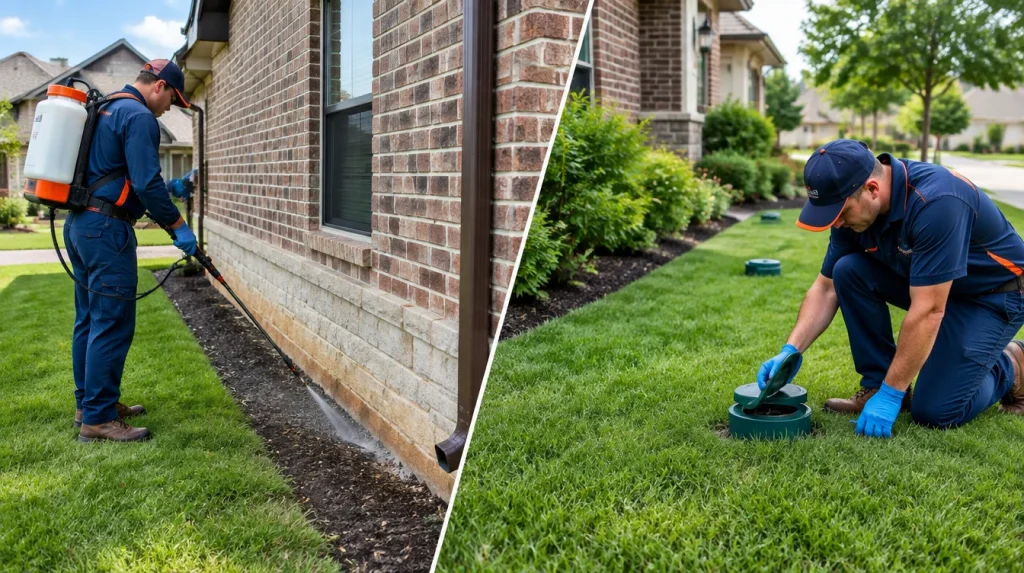
Liquid Soil Treatment
Liquid termite treatments typically involve applying an appropriately labeled termiticide to soil around relevant portions of the structure.
Depending on the building, treatment can require trenching, carefully treating soil and working around concrete slabs or other construction features.
Because the amount of material and labor can increase with the length and complexity of the foundation perimeter, two homes with similar interior square footage can still receive different quotes.
Termite Bait Stations
Termite bait systems use stations installed at appropriate locations around a property and require ongoing inspection or monitoring.
The Texas Department of Agriculture explains that bait stations contain material termites feed on. When termites are detected, a treated bait can be used so the active material is transferred through feeding behavior.
The initial installation is therefore only part of the program. Homeowners comparing quotes should also ask about:
- station monitoring;
- service frequency;
- bait replacement;
- annual renewal;
- retreatment provisions;
- warranty coverage;
- what happens if activity is detected.
Localized or Spot Treatment
A localized treatment may be appropriate in certain circumstances, but finding termites in one visible area does not necessarily establish that activity exists only there.
This is one reason proper inspection and species identification matter before choosing the least expensive treatment option.
Whole-Structure Fumigation
Fumigation is a substantially different service from treating subterranean termite activity around a foundation.
The Texas Department of Agriculture identifies spot treatment, fumigation and physical removal of infested wood as options for drywood termites and notes that treatment recommendations depend on the termite involved.
For North Texas homeowners, the important lesson is not to assume that seeing the word “termite” automatically means the house needs tenting.
The species and extent of the problem should be established first.
Why Can Two North Texas Homes Receive Very Different Termite Quotes?
Termite treatment is priced around the treatment scope, not simply the number of bedrooms or the home’s Zillow square footage.
Several factors can substantially change the amount of work required.
1. Termite Species
Subterranean and drywood termites live differently and can require different management strategies.
Texas A&M AgriLife provides specific guidance on subterranean termites and identifies Texas as a state with significant termite risk.
Subterranean termites typically maintain a relationship with soil and may reach a structure through concealed pathways. Drywood termites live within wood and do not require the same soil contact.
Correct identification comes before sensible pricing.
2. Size and Perimeter of the Home
A larger structure can require more material, more stations and more technician time.
But total square footage alone is not enough.
A house with multiple patios, attached garages, additions or complicated foundation lines may have a much longer or more difficult treatment perimeter than a simpler home of similar living area.
3. Foundation Type
Slab-on-grade, pier-and-beam and crawlspace construction can present different inspection and treatment conditions.
Access matters.
The technician needs to determine where termite activity is occurring and how the treatment can be applied according to the product label and treatment plan.
4. Extent of Termite Activity
Limited evidence near one accessible exterior location is a different situation from activity discovered in several parts of a structure.
More extensive activity may require a broader treatment strategy and additional follow-up.
5. Concrete and Other Access Barriers
Patios, driveways, porches and other construction adjoining a foundation can affect how accessible the treatment area is.
That can change both labor and application requirements.
6. Treatment Method
Liquid treatment, bait stations and other termite-management strategies have different material, installation and monitoring requirements.
The lowest initial quote is therefore not necessarily the lowest long-term cost.
Compare scope with scope, not simply price with price.
7. Monitoring and Warranty Coverage
Ask whether the quoted price covers only initial treatment or also includes inspections, monitoring, retreatment or other warranty provisions.
A low first-year price can look very different once annual monitoring or renewal costs are considered.
Do You Need Termite Treatment—or Just an Inspection?
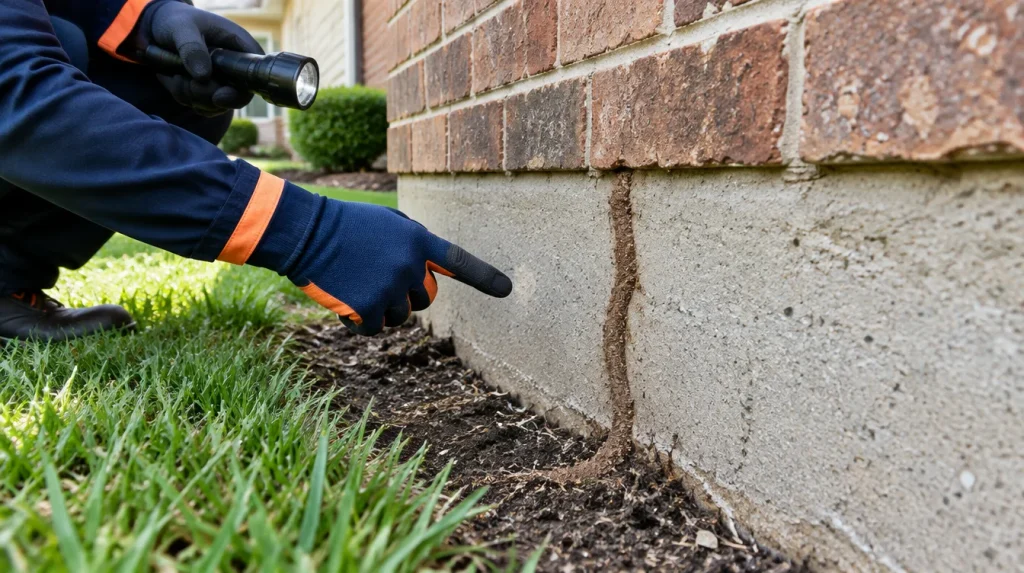
If you have not confirmed termites, inspection should generally come before choosing a treatment.
Termites can remain concealed in soil, wood and structural areas. EPA guidance notes that homeowners may not become aware of termites until they encounter a swarm or discover damage.
Signs worth investigating include:
- mud-like shelter tubes along a foundation or wall;
- discarded wings near doors or windows;
- swarming insects indoors;
- damaged or hollowed wood;
- suspicious wood deterioration;
- previous evidence of termite treatment;
- visible activity around wood-to-soil contact.
Seeing one of these signs does not tell you how large the infestation is or what treatment it requires.
If you have found mud tubes, swarmers or suspicious wood damage around a Dallas-Fort Worth home, schedule a termite inspection before choosing a treatment based solely on an online price.
Termites vs. Flying Ants: Don’t Pay to Treat the Wrong Pest
Termite swarmers are frequently confused with winged ants.
The EPA specifically highlights the importance of distinguishing termite swarms from ant swarms.
A professional inspection can help determine:
- whether the insect is actually a termite;
- whether the evidence represents current or previous activity;
- where activity is located;
- whether conditions around the property are favorable to termites;
- which treatment strategy fits the structure.
If you’re buying, selling or refinancing a home, the purpose may instead be a formal wood-destroying insect inspection, which is different from simply requesting an estimate for treatment.
DIY vs. Professional Termite Treatment
DIY prevention is useful. DIY treatment of an established structural termite infestation is a different matter.
Homeowners can take practical steps to reduce conducive conditions around a property, but effective structural termite treatment can require specialized inspection, application methods, equipment and knowledge of pesticide labels.
EPA guidance states that, in most cases, termiticide applications can only be properly performed by a trained pest-management professional.
Texas also regulates structural pest-control work. The Texas Department of Agriculture’s Structural Pest Control Service licenses and regulates professionals performing structural pest-control services.
Homeowners can help by:
- repairing plumbing leaks;
- correcting persistent moisture problems;
- keeping unnecessary wood debris away from the structure;
- avoiding conditions that conceal the foundation where practical;
- correcting obvious wood-to-soil contact where appropriate;
- monitoring for mud tubes and swarmers;
- keeping gutters and drainage functioning properly;
- arranging an inspection when suspicious activity appears.
Professional help becomes particularly important when:
- live termites are confirmed;
- mud tubes are entering the structure;
- swarmers appear indoors;
- structural wood appears damaged;
- termite activity occurs in multiple areas;
- previous treatment has apparently failed;
- a real-estate inspection identifies wood-destroying insect activity;
- pesticide application to the structure or soil is required.
What Does Professional Termite Service Include?
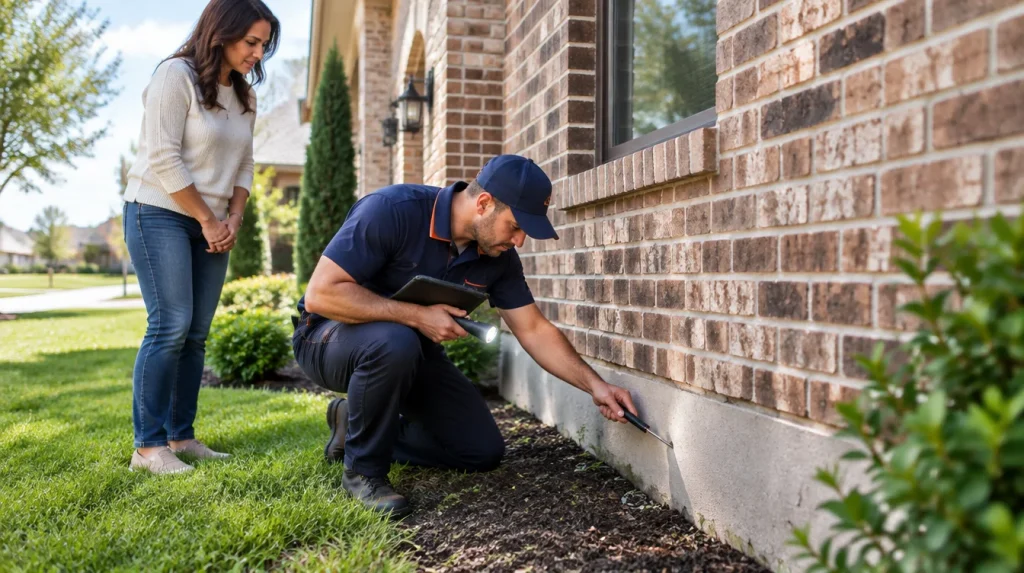
The exact process depends on the property and proposed treatment, but a professional termite evaluation should establish the problem before treatment begins.
A typical process may involve:
1. Property Inspection
The technician looks for termite evidence, potential access routes, previous treatment and conditions that could contribute to activity.
2. Pest Identification
Treatment should be based on what is actually present rather than assuming all wood damage is caused by the same organism.
3. Treatment-Scope Development
The technician determines where treatment is required and which method fits the structure and infestation.
4. Proposal and Disclosure
Texas has specific consumer-disclosure requirements for termite treatment proposals.
5. Treatment
Treatment is performed according to the selected method and applicable pesticide label.
6. Monitoring or Follow-Up
Depending on the system and contract, additional monitoring, inspections or retreatment provisions may apply.
Homeowners who want ongoing termite protection rather than simply comparing treatment prices can explore Supremacy Services’ Termite Vault Security in Dallas, which combines termite-focused perimeter protection with ongoing monitoring.
What Should Be Included in a Texas Termite Treatment Quote?
This is one of the most important questions to ask when comparing termite companies.
The Texas Department of Agriculture states that when a termite treatment estimate or proposal is submitted to a consumer, the pest-control company must provide written disclosure information that includes:
- a detailed diagram showing treatment areas;
- approximate perimeter measurement;
- areas of active or previous termite activity;
- warranty or guarantee terms;
- the chemical label;
- the concentration of liquid termiticide being proposed or the minimum number of baiting systems being installed.
That information makes it possible to compare proposals more intelligently.
Don’t compare only the final dollar amount.
Instead, ask:
| Question | Why it matters |
|---|---|
| What termite species was identified? | Different termites can require different strategies |
| Where was activity found? | Establishes treatment scope |
| Is this spot or whole-perimeter treatment? | Prevents misleading price comparisons |
| What treatment method is proposed? | Liquid and bait programs work differently |
| How many bait stations are included? | Helps compare bait-system proposals |
| What areas will receive liquid treatment? | Clarifies actual coverage |
| Is monitoring included? | Can affect long-term cost |
| Are follow-up visits included? | Clarifies total service scope |
| What does the warranty cover? | Coverage varies |
| Is annual renewal required? | Important for long-term budgeting |
| Are repairs included? | Treatment and structural repair are different expenses |
A $500 proposal and a $1,500 proposal may not actually be competing versions of the same service.
Termite Treatment Cost vs. Termite Damage Repair
Termite treatment and termite damage repair are separate expenses unless the contract specifically says otherwise.
Treatment addresses the termite problem.
Repair addresses damaged framing, trim, drywall, flooring or other building components after the extent of damage has been determined.
Do not assume the termite company’s treatment price automatically includes construction work.
Likewise, visible wood damage alone does not establish how much structural repair is necessary. Significant structural concerns should be evaluated by the appropriate qualified professional.
This distinction is especially important when comparing quotes after discovering termites during a home sale.
What About a WDI Inspection During a Home Purchase?
A wood-destroying insect (WDI) inspection is not the same product as routine termite treatment.
The purpose of the inspection is to identify evidence associated with termites and other relevant wood-destroying organisms and document the findings.
Supremacy Services maintains a separate Real Estate WDI Inspections DFW service for homeowners, buyers, sellers and real-estate transactions.
Keeping these services separate is important:
Suspect termites at your existing home? Start with termite evaluation.
Buying or selling a property? You may need the appropriate WDI inspection/report.
Are Termites a Serious Concern in North Texas?
Yes. Texas A&M AgriLife identifies Texas as one of the states at significant risk for termite infestation and provides dedicated guidance for subterranean termites.
But local SEO should not turn that fact into the claim that every North Texas home has the same termite risk.
Risk varies with the individual property.
Conditions technicians may consider include:
- moisture around the foundation;
- drainage problems;
- wood-to-soil contact;
- previous termite activity;
- construction details;
- inaccessible foundation areas;
- dead wood or cellulose materials around the property.
The correct treatment decision should therefore be based on the home itself rather than the ZIP code alone.
How Can North Texas Homeowners Reduce Termite Risk?
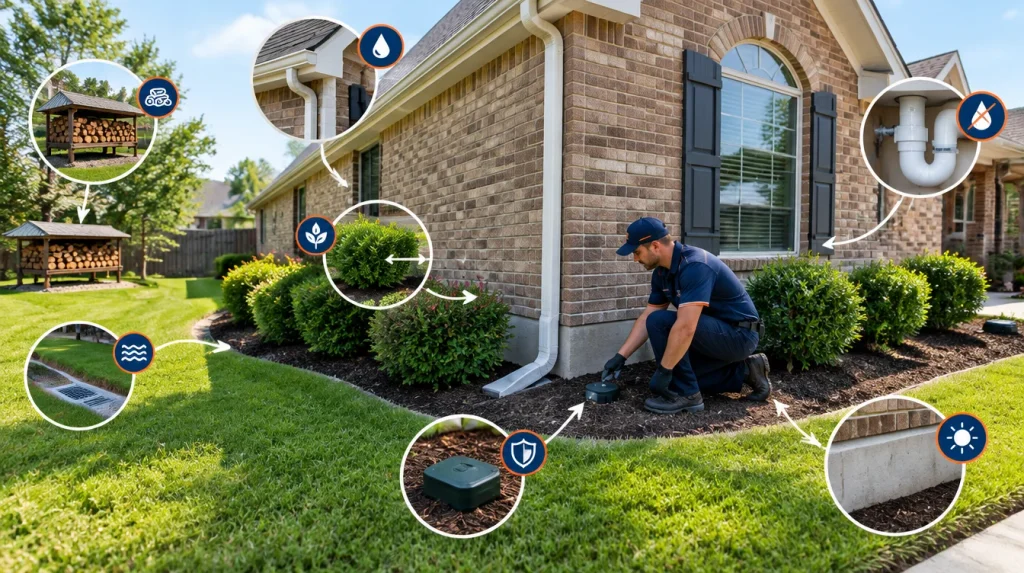
Termite prevention focuses on making the structure less accessible or attractive to termite activity while maintaining appropriate professional protection where necessary.
Termite Prevention Checklist
- Repair leaking plumbing.
- Correct persistent moisture around the structure.
- Keep drainage systems functioning.
- Remove unnecessary wood debris near the foundation.
- Avoid storing firewood directly against the home.
- Investigate unexplained mud tubes.
- Watch for discarded wings after swarming activity.
- Address damaged or deteriorated wood.
- Avoid disturbing known termite evidence before an inspection.
- Keep records of previous termite treatments.
- Review warranty and monitoring requirements after treatment.
EPA also describes physical barriers, building materials treated with termiticides, wood treatments, soil-applied termiticides and termite baits among termite-management approaches.
How to Compare Termite Treatment Companies in Dallas-Fort Worth
The cheapest number on a proposal tells you very little unless you know what it buys.
Compare these five things first:
1. Inspection findings
The company should be able to explain what evidence it found and where.
2. Proposed treatment
Understand whether the proposal involves liquid treatment, bait stations, localized treatment or another approach.
3. Coverage
Determine exactly which areas of the property are being treated.
4. Follow-up
Find out whether monitoring and return visits are included.
5. Warranty
Read the actual warranty conditions rather than relying on a verbal description.
Texas specifically advises consumers to review termite disclosure information, pesticide labels and warranty information when comparing proposals.
Is the Cheapest Termite Treatment a Good Deal?
Not necessarily.
A lower price may be entirely appropriate if the required scope is smaller. But it may also represent a different treatment method, less coverage or different monitoring and warranty provisions.
Instead of asking:
“Which company is cheapest?”
ask:
“What exactly is each company proposing to treat, how will it be treated, what follow-up is included and what protection remains afterward?”
That creates a meaningful comparison.
How Much Should You Budget for Termite Treatment in DFW?
For early budgeting, think in ranges rather than one number.
Current third-party Dallas data places many treatments in the hundreds of dollars, while larger or more complicated termite projects can reach into the thousands.
The most reliable way to turn that broad range into an actual number is:
Inspection → termite identification → treatment scope → written proposal.
Anything before that is an estimate.
Frequently Asked Questions
How much does termite treatment cost in Dallas?
Angi’s Dallas 2026 pricing guide reports an average of approximately $615 and a typical range of about $281–$949, with one-time treatments ranging more broadly depending on the project. These are third-party market estimates rather than Supremacy Services prices.
Why is termite treatment so expensive?
Termite treatment may require extensive inspection, specialized materials, treatment around the foundation, drilling or trenching where appropriate, bait-station installation and subsequent monitoring. Larger or harder-to-access structures can require more labor and materials.
Is termite treatment priced by square foot?
Sometimes square footage contributes to the estimate, but it is not the only measurement. Foundation perimeter, treatment method, accessibility, infestation location and required monitoring can be equally important.
Are termite bait stations cheaper than liquid treatment?
Not universally. Bait systems and liquid treatments have different installation, material and monitoring requirements. Compare the complete initial and ongoing costs rather than the first invoice alone.
Can I treat termites myself?
Homeowners can perform valuable prevention and maintenance, but treating an established structural infestation is different. EPA notes that most termiticide applications are best handled by trained pest-management professionals, and Texas regulates structural pest-control services.
How do I know if I have termites?
Possible signs include mud tubes, discarded wings, swarmers and damaged or hollow wood. Because termites can remain concealed, suspicious evidence should be professionally evaluated before selecting treatment.
Do I need to tent my house for termites?
Not automatically. Treatment depends on the termite species and circumstances. Subterranean termite management commonly uses approaches such as soil treatments or bait systems, while fumigation may be considered for certain drywood termite situations.
What should a Texas termite proposal include?
Texas requires specified disclosure information, including a treatment diagram, approximate perimeter measurement, identified activity areas, warranty terms, chemical label and information about the proposed liquid concentration or minimum number of bait stations.
Should I get multiple termite estimates?
Comparing proposals can be useful, particularly for substantial treatment. Compare the inspection findings, treatment areas, method, monitoring and warranty—not simply the bottom-line price.
Get a Termite Assessment in Dallas-Fort Worth
Online termite-treatment prices are useful for setting expectations, but they cannot show how termites are entering your particular home, how much of the structure requires treatment or which treatment strategy fits the property.
If you’ve discovered mud tubes, swarmers, suspicious wood damage or previous termite activity, Supremacy Services can evaluate the property and recommend an appropriate termite-control strategy.
Explore Termite Vault Security in Dallas or request a termite assessment from Supremacy Services to get a property-specific treatment plan and quote.
For Dallas-Fort Worth homeowners, that inspection-based number is far more useful than relying on a national average.

