
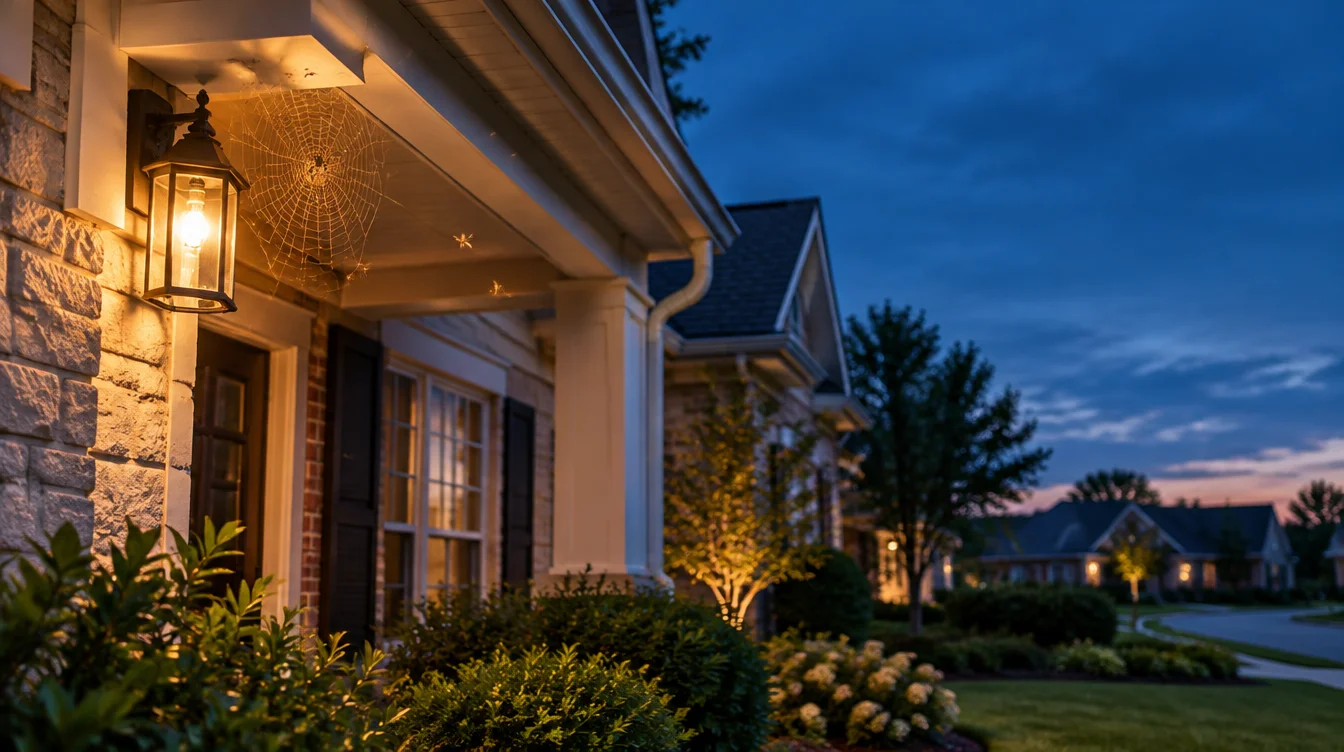
If you are suddenly seeing spiders around your porch, windows, eaves, garage or exterior walls, your house probably offers them three things: food, shelter and good places to build webs or hunt.
Spiders are predators. A property with plenty of moths, flies, mosquitoes and other small insects gives them a dependable food supply. Exterior lights can concentrate those insects near doors and windows, while landscaping, clutter, gaps and protected corners provide shelter.
For Dallas and DFW homeowners, seeing a few outdoor spiders does not automatically mean there is an infestation inside the house. Most spiders are beneficial predators. But repeated webs, numerous spiders around entry points, spiders appearing indoors or the presence of potentially medically significant species deserve a closer look.
Table of Contents
- Why are there so many spiders around my house?
- What attracts spiders to a house?
- Why are spiders gathering around porch lights?
- Does having spiders mean you have another pest problem?
- Where do spiders hide around Dallas homes?
- Are spiders around your house dangerous?
- How to reduce spiders around your house
- DIY spider control vs. professional pest control
- What professional spider control should address
- When should you call pest control?
- Frequently asked questions
Why Are There So Many Spiders Around My House?
A large number of spiders usually means the property provides enough prey insects, shelter and suitable hunting or web-building locations to support them.
Spiders do not typically gather around a home because they are interested in the building itself. They are predators. If insects repeatedly collect around a porch, landscape bed, garage or exterior wall, spiders have a reason to stay.
Texas A&M AgriLife Extension describes spiders as beneficial predators that help control flies, plant-feeding insects and other arthropods. Most spiders encountered around Texas homes are not considered dangerous to people.
That distinction matters.
The goal should not necessarily be to eliminate every spider from an entire property. Instead, homeowners can reduce excessive spider activity where it becomes a nuisance or increases the chance of spiders entering living spaces.
The six most common reasons spiders gather around homes
| Cause | Why It Encourages Spiders | Common Areas |
|---|---|---|
| Lots of insects | Provides prey | Porch, patio, landscaping |
| Exterior lighting | Concentrates flying insects after dark | Doors, windows, garage |
| Protected spaces | Gives spiders places to hide or build webs | Eaves, soffits, corners |
| Dense vegetation | Supports insects and provides cover | Shrubs, foundation beds |
| Clutter and debris | Creates undisturbed shelter | Garage, shed, woodpile |
| Building gaps | Allows wandering spiders and insects inside | Doors, windows, utility penetrations |
The important point is that a spider problem can sometimes be a symptom of broader pest pressure.
If dozens of insects are gathering around the structure every night, simply removing individual spiders may not solve the underlying problem.
Seeing spiders repeatedly around doors, windows or the foundation? Learn how Supremacy’s perimeter pest control in Dallas targets the broader pest activity that can support spiders around the home.
What Attracts Spiders to Your House?
1. A dependable supply of insects
Food is one of the biggest factors.
Spiders prey on insects and other arthropods. A porch or landscape full of potential prey gives spiders a reason to establish themselves nearby.
This is also why homeowners sometimes keep removing webs only to see new ones appear.
Removing the web addresses what you can see. It does not necessarily change the conditions that made that location productive for the spider.
2. Porch and exterior lights
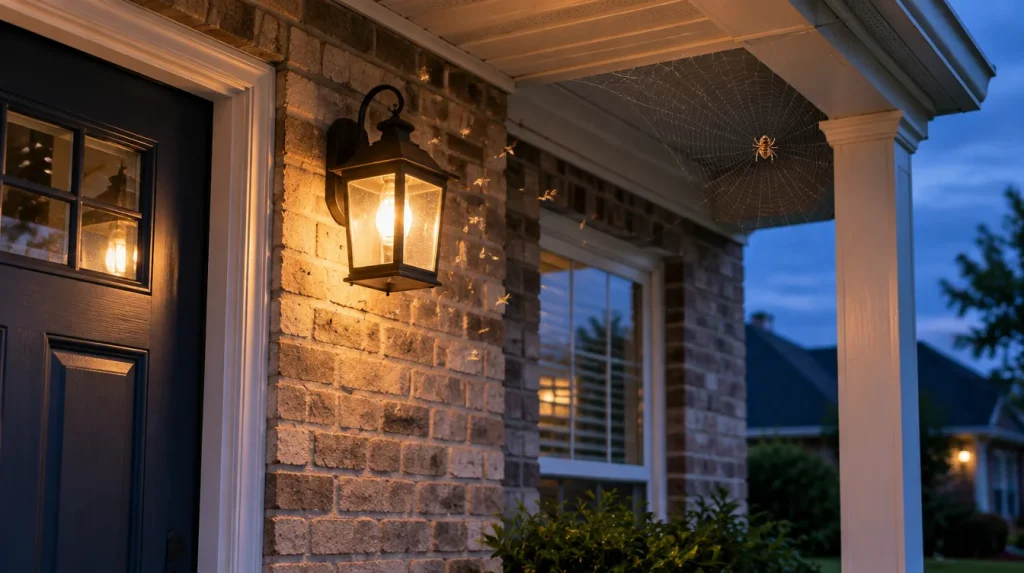
Outdoor lighting can indirectly create excellent spider-hunting locations.
The light itself is not necessarily attracting the spider in the same way it attracts many flying insects. Instead, insects gather near the light, and spiders take advantage of the concentrated food supply.
That is why webs frequently appear around:
- porch lights;
- garage lights;
- illuminated doorways;
- window frames;
- security lights;
- patio fixtures.
Extension guidance recommends reducing unnecessary exterior lighting or modifying lighting practices as part of outdoor spider management because doing so can reduce the insects that encourage spiders.
Why Do Spiders Keep Building Webs Around My Porch Lights?
Porch lights can create reliable feeding areas because insects gather around illuminated surfaces at night. Spiders then build webs or hunt nearby where prey is concentrated.
If the same doorway develops new webs every few days, look beyond the web itself.
Ask:
- Is the exterior light running all night?
- Are moths and other flying insects gathering around it?
- Are webs protected from rain and wind by the porch roof?
- Are there gaps around the door or nearby window?
- Are shrubs or vines touching the structure?
Correcting those conditions can make the location less attractive over time.
3. Eaves, soffits and covered corners
Spiders benefit from locations protected from weather and disturbance.
Exterior corners, soffits, eaves, covered patios and window recesses can provide attachment points for webs while shielding spiders from rain and wind.
These locations are especially noticeable because abandoned webs can accumulate even after the original spider is gone.
4. Landscaping close to the house
Shrubs, flowers and other landscaping naturally support insects and spiders.
That is not necessarily a problem.
The concern is when dense vegetation directly touches siding, covers windows or creates a sheltered transition from the landscape to the structure.
Keeping vegetation appropriately maintained and away from the building can reduce these pathways while improving access for inspection.
5. Woodpiles, boxes and outdoor clutter
Undisturbed objects provide excellent hiding locations.
Potential spider harborage includes:
- firewood;
- unused planters;
- stacked lumber;
- cardboard boxes;
- patio furniture that rarely moves;
- storage sheds;
- piles of landscape material;
- cluttered garages.
Texas A&M specifically notes that medically significant spiders such as black widows and brown recluses favor protected or relatively undisturbed locations.
6. Cracks and gaps around the structure
Outdoor spiders occasionally wander indoors.
Gaps around doors, windows, foundations, screens and utility penetrations can provide access for both spiders and the insects they hunt.
If spider sightings are occurring primarily inside rather than outside, exclusion deserves particular attention.
Does Having Lots of Spiders Mean You Have Another Pest Problem?
Sometimes. Persistent spider activity can indicate that enough insects or other arthropods are present to provide a reliable food supply.
One spider on a patio does not prove that your home has an insect infestation.
However, consistently high spider activity—especially around doors, windows, lights or a garage—should prompt homeowners to look for the insects supporting them.
Common prey may include flies, moths and other small insects.
This is one reason integrated pest management is more useful than treating spiders in isolation. EPA describes Integrated Pest Management, or IPM, as an approach that combines knowledge of pests with appropriate management techniques rather than relying solely on pesticide applications.
Signs that broader pest pressure may be involved
Check for:
- numerous flying insects around exterior lights;
- ants or cockroaches near the foundation;
- insects entering around doors and windows;
- persistent moisture;
- overflowing or poorly managed waste areas;
- dense vegetation touching the structure;
- repeated spider webs shortly after removal.
If you reduce the available prey, the property becomes less productive for many spiders.
Where Do Spiders Commonly Hide Around a House?
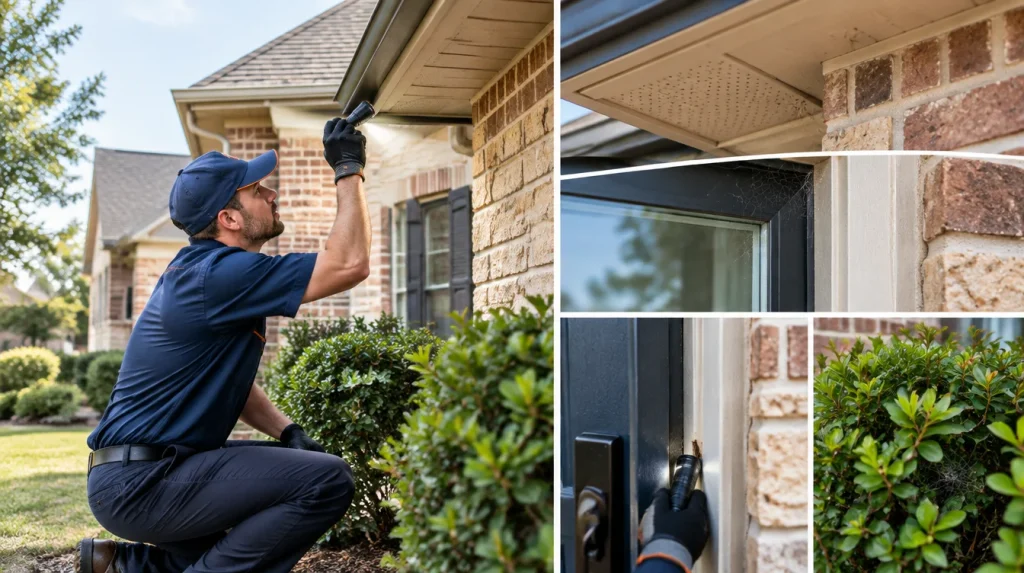
Outdoor spider activity is commonly concentrated in quiet, protected areas.
Around the exterior
Look around:
- eaves and soffits;
- window frames;
- door frames;
- porch ceilings;
- patio furniture;
- garages;
- sheds;
- utility boxes;
- foundation edges;
- landscaping;
- woodpiles.
Inside the home
Wandering or established spiders may be encountered in:
- garages;
- closets;
- storage areas;
- attics;
- crawl spaces;
- behind stored objects;
- utility areas;
- other quiet corners.
Frequent indoor sightings deserve more attention than an occasional outdoor orb-weaver or garden spider because they can indicate accessible entry points, prey insects or suitable indoor harborage.
Are Spiders Around Dallas Homes Dangerous?
Most spiders around Texas homes are not considered medically significant. Texas A&M identifies widow spiders and recluse spiders as the two medically significant spider groups in Texas.
That does not mean homeowners should try to identify a questionable spider by handling it.
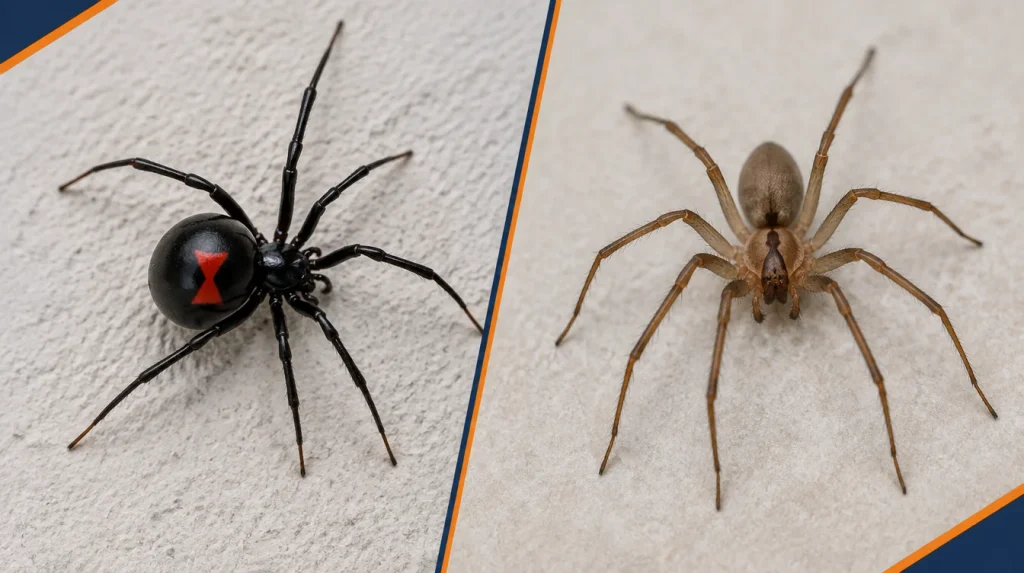
Black widow spiders
Widow spiders often use protected, relatively undisturbed locations. Texas A&M notes that they may occur around homes, gardens and sheltered outdoor spaces.
Avoid reaching blindly into areas such as:
- woodpiles;
- storage boxes;
- unused outdoor furniture;
- meter or utility areas;
- debris piles.
Brown recluse spiders
Brown recluses tend to favor quiet, undisturbed locations and are nocturnal hunters rather than conspicuous web builders.
Texas A&M lists locations such as cluttered closets, garages, crawl spaces, attics and storage areas among places where they may occur.
Don’t identify a brown recluse by color alone
Many harmless brown spiders are mistakenly called brown recluses.
A suspected medically significant spider should be identified using reliable characteristics or by a knowledgeable professional rather than by body color alone.
If you believe someone has suffered a medically significant spider bite or is experiencing serious symptoms, seek appropriate medical advice rather than relying on pest-control guidance for diagnosis.
How to Reduce Spiders Around Your House
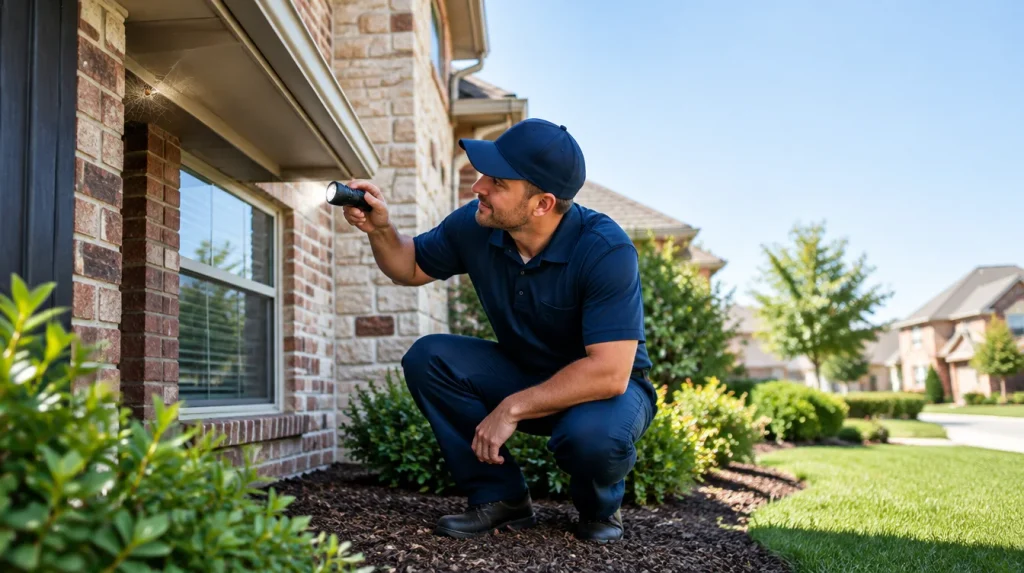
The most effective prevention strategy addresses spiders, their prey and the conditions supporting both.
Step 1: Remove accessible webs
Use a broom, vacuum or other appropriate method to remove webs from reachable areas.
Pay attention to:
- porch ceilings;
- eaves;
- window corners;
- garage corners;
- door frames.
Removing webs also makes it easier to see how quickly activity returns.
Step 2: Reduce unnecessary nighttime lighting
Turn off exterior lights when they are not needed.
Where lighting is required for safety, consider placement and fixture choices that reduce the concentration of insects immediately beside entrances.
Step 3: Reduce insect activity
Look for the reason insects are gathering around the house.
Depending on the pest, that could involve:
- improving sanitation;
- managing trash;
- repairing moisture problems;
- maintaining screens;
- addressing pest-specific infestations;
- reducing conditions that attract insects.
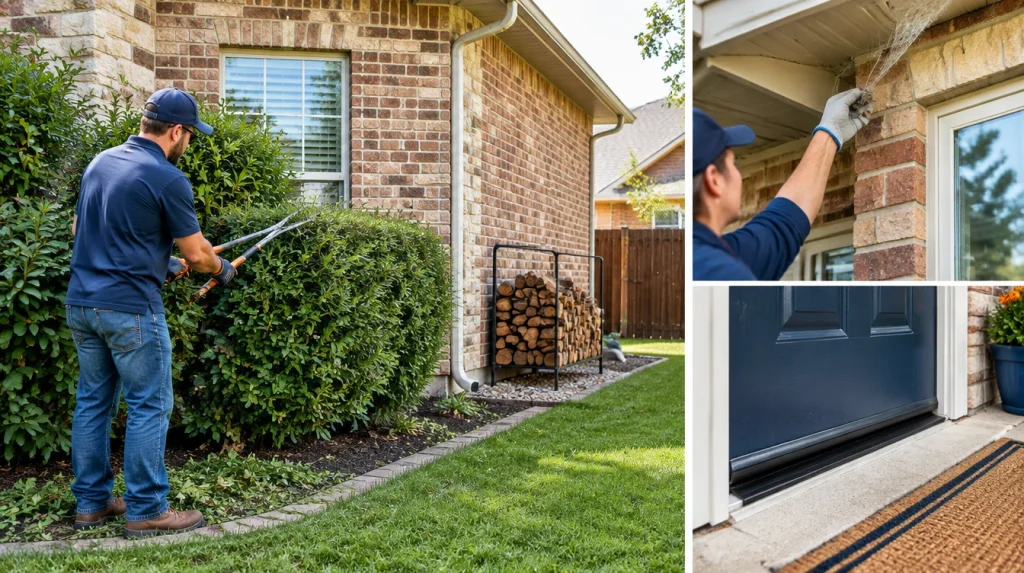
Step 4: Trim vegetation away from the structure
Avoid letting shrubs and other plants create dense, protected contact with the building.
The goal is not to remove landscaping. It is to prevent vegetation from creating unnecessary bridges and sheltered pest habitat directly against the structure.
Step 5: Reduce clutter and harborage
Move firewood and unnecessary debris away from the house where practical.
Keep garages and storage spaces organized so spiders have fewer undisturbed hiding locations.
Step 6: Seal entry points
Inspect:
- door sweeps;
- weatherstripping;
- window screens;
- utility penetrations;
- foundation gaps;
- openings around pipes and cables.
Physical exclusion helps reduce both wandering spiders and the insects they follow.
Step 7: Monitor what comes back
After cleaning and exclusion, watch where webs or spiders return.
Repeated activity in the same location is useful information.
It often points toward an unresolved food source, entry point or harborage area.
DIY Spider Control vs. Professional Pest Control
| Situation | DIY/Prevention May Be Reasonable | Professional Inspection Becomes More Useful |
|---|---|---|
| Occasional outdoor spider | ✓ | |
| A few porch webs | ✓ | |
| Vegetation touching house | ✓ | |
| Damaged screen or door sweep | ✓ | |
| Repeated webs immediately after removal | ✓ | |
| Numerous spiders appearing indoors | ✓ | |
| Persistent insect activity around structure | ✓ | |
| Suspected widow or recluse activity | ✓ | |
| Spider activity in difficult-to-access areas | ✓ | |
| Prevention efforts are not reducing activity | ✓ |
For occasional nuisance spiders, sanitation, exclusion and web removal may be enough.
Repeated activity is different.
If spiders continually return because the house supports a larger insect population, treating one visible spider at a time does little to change the underlying conditions.
If spiders keep returning around your Dallas home, Supremacy Services can inspect the exterior pest pressure, likely entry areas and conditions supporting activity. Explore Dallas perimeter pest control for an exterior-focused approach.
What Should Professional Spider Control Include?
Professional spider management should begin with inspection rather than simply spraying every visible surface.
A useful assessment considers:
Spider activity
Where are spiders or webs concentrated?
Prey insects
Are ants, roaches, moths, flies or other pests creating a food source?
Harborage
Are clutter, vegetation, woodpiles or protected structural areas supporting spider activity?
Entry points
Are damaged screens, door gaps or structural openings allowing spiders and prey indoors?
Web removal
Removing accessible webs and egg sacs can complement other control measures.
Targeted treatment when appropriate
When pesticides are warranted, they should be selected and applied according to their labels and the pest and location being treated.
The EPA’s IPM guidance supports combining prevention, monitoring and appropriate control measures instead of automatically relying on pesticides alone.
In Texas, businesses providing structural pest-control services are regulated by the Texas Department of Agriculture’s Structural Pest Control Service.
When Should You Call Pest Control for Spiders?
Consider a professional inspection when:
- spiders repeatedly appear inside living areas;
- webs return quickly after removal;
- activity is concentrated around several entrances;
- you are also seeing substantial insect activity;
- suspected widow or recluse spiders are present;
- spiders are appearing in difficult-to-access areas;
- exclusion and sanitation have not reduced the problem;
- you want to identify what is supporting persistent activity.
Professional service is especially useful when the objective is not merely killing visible spiders but reducing the conditions that keep attracting them.
Dallas/DFW Spider Prevention Checklist
Before scheduling treatment, walk around the property and check:
☐ Porch and garage lights for heavy insect activity
☐ Webs around windows and door frames
☐ Eaves and soffits for repeated web building
☐ Torn or poorly fitted screens
☐ Gaps underneath exterior doors
☐ Shrubs touching siding or windows
☐ Firewood stored immediately against the house
☐ Clutter in garages and sheds
☐ Moist areas supporting other insects
☐ Recurring ants, roaches, flies or other prey insects
☐ Indoor spider sightings
☐ Suspected widow or recluse spiders
This inspection can help distinguish an occasional outdoor spider from persistent pest pressure around the structure.
Frequently Asked Questions
Why do I suddenly have so many spiders outside my house?
Spiders may become more noticeable when insect prey is abundant or when favorable web-building and shelter locations exist around the home. Increased visibility does not necessarily mean spiders suddenly established a major infestation.
Do spiders around my house mean I have bugs?
Not automatically, but spiders require prey. Persistent spider activity can be a clue that insects or other arthropods are plentiful enough to support them.
Why are there so many spiders around my porch?
Porches combine several spider-friendly features: protected corners, attachment points for webs and often exterior lighting that concentrates flying insects.
Why do spiders keep coming back after I remove their webs?
The location may still offer food and shelter. Removing a web eliminates the visible evidence but does not remove insects, lighting conditions, harborage or structural features that made the site attractive.
Should I kill spiders outside my house?
Not every outdoor spider requires control. Many spiders are beneficial predators. Management is more appropriate when activity becomes excessive near entrances, spiders repeatedly enter the home or potentially medically significant species are present.
What attracts spiders to windows?
Windows can offer protected corners for webs, while interior or exterior lighting can result in insects gathering near the glass. Gaps around frames can also provide entry points.
Does leaving porch lights on attract spiders?
Exterior lighting primarily attracts or concentrates insects. Spiders can then take advantage of those insects, which is why webs often develop near illuminated areas.
How do I keep spiders from entering my house?
Reduce prey insects, repair screens, improve door seals, seal appropriate gaps, remove unnecessary clutter, maintain vegetation and routinely remove webs from problem areas.
What spiders should Dallas homeowners be cautious around?
Texas A&M identifies widow spiders and recluse spiders as the medically significant spider groups in Texas. Avoid handling spiders you cannot confidently identify.
When is professional spider control worth it?
Professional inspection is useful when spiders repeatedly appear indoors, webs return rapidly, suspected medically significant spiders are present or DIY prevention has failed to address persistent activity.
The Bottom Line
Having spiders around your Dallas home usually tells you something about the environment around the property.
There may be plenty of prey insects. Porch lights may be concentrating them. Landscaping or clutter may provide shelter. Protected eaves and window frames may provide ideal web locations. Gaps may also be allowing spiders and other pests indoors.
Instead of focusing only on the spider you can see, focus on why that location keeps supporting spiders.
Reducing insects, removing webs, managing exterior lighting, trimming vegetation, eliminating unnecessary harborage and sealing entry points can substantially improve prevention.
When spiders continue returning despite those changes—or when you are concerned about widow or recluse activity—a professional inspection can help identify the broader pest conditions involved.
Spiders keep returning around your Dallas or DFW home? Explore Supremacy Services’ perimeter pest control to address spiders, the pests they hunt and the exterior conditions contributing to recurring activity.

