

Termite season in North Texas is most noticeable during spring, when mature subterranean termite colonies release winged reproductives called swarmers. March and April are particularly important months to watch, although weather and termite species can shift the exact timing. Termites themselves, however, can remain active and feed inside or around a home outside the spring swarming period.
Texas A&M AgriLife reports that subterranean termite swarmers are generally active in early spring and that colonies release swarmers during spring and early summer. Another Texas A&M resource notes that subterranean termite workers can be present year-round, while swarmers are commonly encountered around March and April in Texas.
For Dallas–Fort Worth homeowners, that distinction matters: termite season is better understood as the period when termites become easier to detect—not the only time they can damage a home.
Table of Contents
- When Is Termite Season in North Texas?
- Why Do Termites Swarm in Spring?
- Are Termites Active All Year in Texas?
- What Does a Termite Swarm Look Like?
- Termites vs. Flying Ants
- What Should You Do If You See a Termite Swarm?
- Where Should Dallas Homeowners Check for Termites?
- How Can You Reduce Termite Risk?
- DIY vs. Professional Termite Control
- When Should You Schedule a Termite Inspection?
- FAQs
When Is Termite Season in North Texas?
For most homeowners, spring is the main termite swarm season in North Texas.
Texas A&M AgriLife describes termite swarmers as usually active in early spring and says subterranean termite swarmers leave established colonies in large numbers during spring and early summer. Timing varies across Texas because temperature, moisture, daylight and termite species affect when a colony swarms.
Texas A&M’s Insects in the City resource gives homeowners an even narrower reference point: subterranean termite workers can occur year-round, while swarmers are commonly encountered during March and April in Texas.
That makes late winter through spring a sensible time for Dallas-area homeowners to become especially observant, without treating any specific date as the beginning or end of termite activity.
A practical North Texas termite calendar

| Time of year | What homeowners should know |
|---|---|
| January–February | Colonies may still be active out of sight. Begin checking moisture problems and foundation conditions before spring. |
| March–April | Important swarming period for common subterranean termites in Texas. Watch for winged termites and discarded wings. |
| May–early summer | Swarming can continue depending on species and environmental conditions. |
| Summer | Lack of visible swarmers does not prove termites are gone. Hidden workers can remain active. |
| Fall | Continue watching for mud tubes, damaged wood and moisture conditions. |
| Winter | Reduced visible activity does not equal a termite-free structure. Prevention and inspection remain relevant. |
This is a general homeowner calendar rather than a prediction for a particular property. Weather and termite species affect actual swarm timing.
Why Do Termites Swarm in Spring?
A termite swarm is a reproductive event.
A mature subterranean termite colony eventually produces winged adults called swarmers or alates. Male and female swarmers leave an established colony, pair up and attempt to establish new colonies.
Texas A&M identifies heat, moisture and other environmental factors as triggers for swarmer emergence.
That is why homeowners may suddenly notice flying insects during favorable spring weather even though they saw nothing unusual around the property a few days earlier.
Why rain matters
Subterranean termites depend heavily on moisture. Appropriate moisture and temperature conditions can help trigger swarming behavior.
The important takeaway is not that every rainstorm produces termites. Instead, rainfall and favorable temperatures can contribute to the environmental conditions associated with swarm activity.
If winged termites suddenly appear around your home during spring weather, photograph them before cleaning them up and note exactly where they appeared.
Are Termites Active All Year in Texas?
Yes. Termite colonies can remain active even when homeowners do not see swarmers.
The swarm is only one visible stage of the colony’s life cycle. Worker termites—the caste responsible for feeding on cellulose-containing material—remain largely concealed in soil, wood, walls and protected passageways.
Texas A&M specifically notes that subterranean termite workers can be found year-round.
This distinction prevents one of the most common homeowner mistakes:
No swarm does not mean no termites.
A Dallas homeowner who sees nothing unusual in July, October or January should not assume that a colony detected during spring has simply disappeared.
Termite season vs. termite activity
| Term | What it means |
|---|---|
| Termite swarm season | Period when winged reproductive termites become especially visible |
| Termite activity | Colony feeding, movement and survival that may continue without visible swarms |
| Termite infestation | Termites are established in or affecting the structure/property |
| Termite inspection | Examination for termites, evidence of activity, damage and conducive conditions |
This is why professional termite protection focuses on the colony and structure, not simply on killing the insects visible during a swarm.
If you have seen swarmers, mud tubes or other suspicious activity around your Dallas-area home, learn how Supremacy Services approaches [termite protection in Dallas] rather than waiting for another swarm.
What Does a Termite Swarm Look Like?
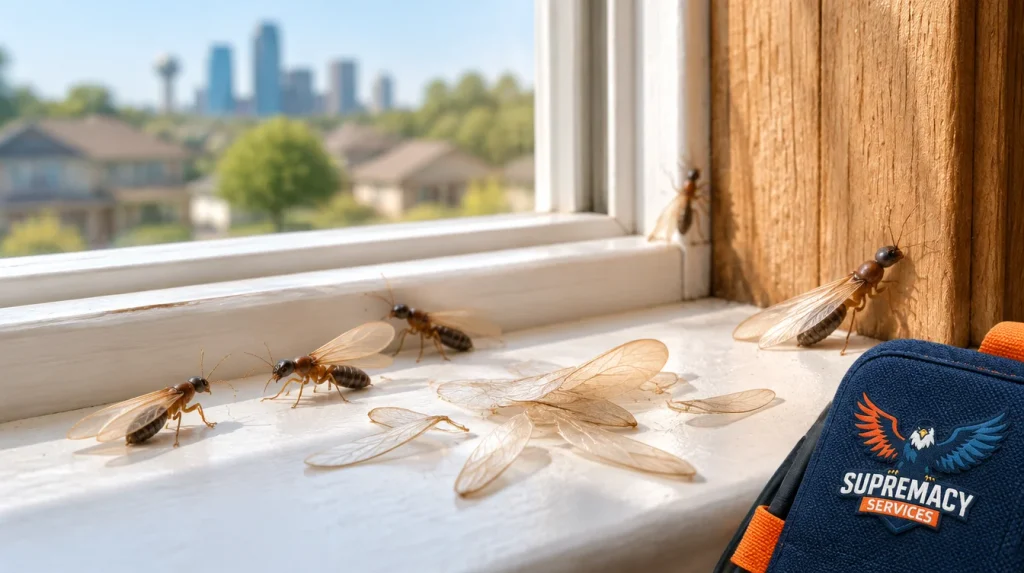
A termite swarm may look like a sudden cloud or concentration of small, winged insects.
You may find them:
- near windows or glass doors;
- around exterior walls;
- near the foundation;
- around doors;
- near other sources of light;
- or emerging from a specific crack, wall area or structural opening.
After landing, reproductive termites shed their wings. A collection of similar-looking discarded wings can therefore be an important clue even if the insects themselves have disappeared.
Texas A&M describes termite swarmers as dark brown to blackish and notes that their wings may be shed shortly after emergence.
Is a termite swarm automatically proof that my house is infested?
Location matters.
A swarm outdoors can originate from a colony somewhere in the surrounding environment. Swarmers emerging inside a house are more concerning.
Texas A&M states that finding termite swarmers indoors is a reliable indication of infestation.
The Texas Department of Agriculture likewise notes that subterranean termites are often detected during spring swarming but can otherwise be difficult to detect.
Termites vs. Flying Ants
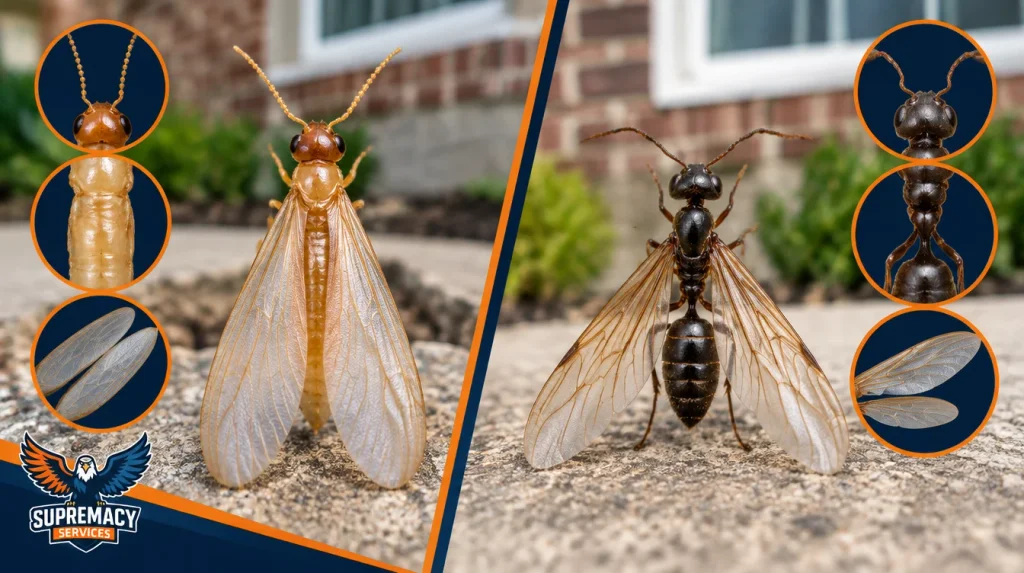
Termite swarmers are frequently mistaken for winged ants.
| Feature | Termite swarmer | Winged ant |
|---|---|---|
| Waist | Broad, relatively uniform body | Noticeably pinched waist |
| Antennae | Relatively straight | Elbowed/bent |
| Wings | Front and rear wings approximately equal in size | Front wings noticeably larger |
| Why it matters | May indicate a wood-destroying termite colony | Identification and treatment strategy differs |
The EPA specifically recommends distinguishing termite swarms from ant swarms when checking for termite activity.
Do not rely solely on an online photograph when the insects were found inside the structure. Save a few specimens if practical or take close, well-lit photographs for identification.
What Should You Do If You See a Termite Swarm?
Document where the insects appeared, save a specimen if possible and arrange an inspection rather than simply spraying the visible swarmers.
The swarmers themselves are only the reproductive members leaving an established colony. Killing visible flying insects does not establish whether workers remain active in the structure or soil.
Step 1: Photograph the insects
Take close photographs before vacuuming or cleaning them away.
Include the location where they appeared.
Step 2: Save several specimens if practical
The Texas Department of Agriculture specifically suggests preserving several swarmers for inspection when termites are swarming inside a home.
Step 3: Look for discarded wings
Check nearby windowsills, floors, doors and other surfaces.
Step 4: Check for additional evidence
Look for:
- mud shelter tubes;
- suspiciously damaged or hollowed wood;
- blistered-looking wood surfaces;
- soil in cracks or structural joints;
- recurring discarded wings.
Do not aggressively break open walls or structural wood simply to search for termites.
Step 5: Arrange professional identification
A qualified inspection can determine whether the insects are termites, look for evidence of active infestation and identify conditions that may be helping termites reach the structure.
Found winged termites inside your home? Schedule a Dallas-area termite inspection before choosing a treatment. A professional inspection can determine whether the swarm is connected to activity in or around the structure.
Where Should Dallas Homeowners Check for Termites?
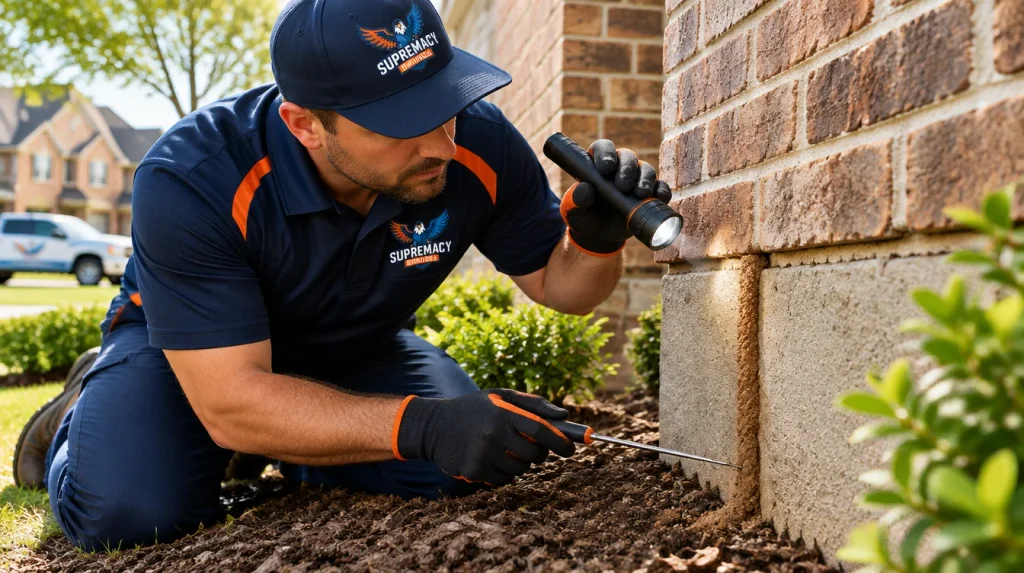
Subterranean termites usually remain protected from open air, so inspections focus on places where soil, moisture and structural materials interact.
Pay particular attention to:
Foundation edges
Look for mud tubes extending from soil toward the structure.
Plumbing penetrations and moisture-prone areas
Persistent leaks and damp conditions deserve attention because moisture management is an important part of termite prevention.
Wood close to soil
Fence components, landscaping timbers, wood debris and structural wood close to or touching soil can create favorable termite conditions.
Crawlspaces
Where present, crawlspaces can contain wood, moisture and hidden access routes that homeowners rarely inspect.
Garages and slab penetrations
Expansion joints, cracks and utility penetrations deserve inspection because termite activity can remain concealed.
Exterior landscaping
Mulch itself should not automatically be treated as proof of an infestation. Instead, focus on excessive moisture, buried wood, stumps, firewood and other cellulose sources near the structure.
How Can You Reduce Termite Risk Around a North Texas Home?
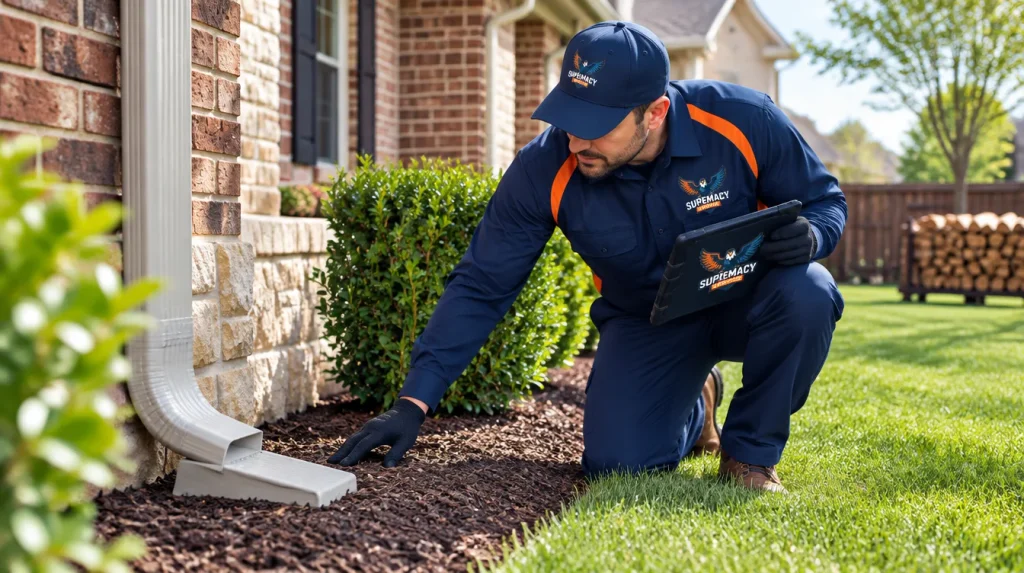
Termite prevention focuses heavily on moisture management, reducing wood-to-soil contact and maintaining the building envelope.
The EPA recommends keeping soil around foundations properly drained, repairing leaks, reducing openings around foundations and utilities, avoiding firewood or wood debris directly beside the house and periodically inspecting the property.
Homeowner termite-prevention checklist
- Repair plumbing and exterior water leaks.
- Maintain gutters and downspouts.
- Direct drainage away from the foundation where appropriate.
- Avoid unnecessary wood-to-soil contact.
- Keep firewood away from the structure.
- Remove buried wood and construction debris where practical.
- Monitor foundation areas for mud tubes.
- Check windowsills for discarded wings during spring.
- Seal appropriate foundation and utility openings.
- Have suspicious termite evidence professionally identified.
These measures can reduce conducive conditions, but they cannot prove that an existing colony has been eliminated.
DIY vs. Professional Termite Control
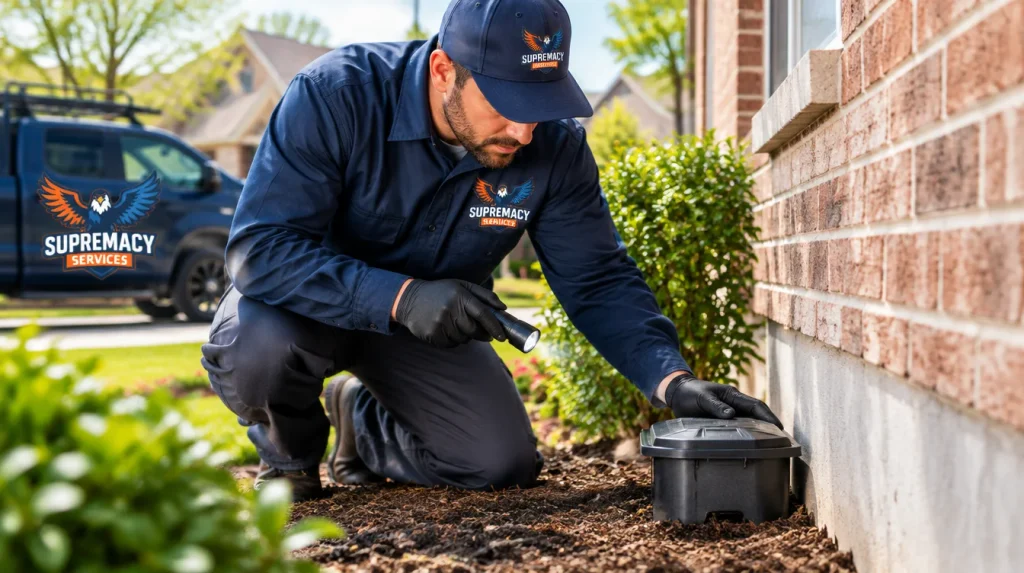
Basic prevention is appropriate for homeowners. Treating an established structural termite infestation is different.
Reasonable DIY prevention
Homeowners can:
- repair leaks;
- improve drainage;
- remove wood debris;
- reduce wood-to-soil contact;
- monitor for wings and mud tubes;
- photograph suspicious insects;
- maintain gutters and landscaping.
Where professional service becomes appropriate
Consider professional inspection when:
- swarmers appear indoors;
- mud tubes are present on the foundation;
- termite damage is suspected;
- termites are found in structural wood;
- unexplained wings repeatedly appear indoors;
- you are unsure whether insects are termites or ants;
- the property has a previous termite history.
EPA lists several structural termite treatment approaches, including liquid soil-applied termiticides, termite baits and certain wood treatments. EPA also notes that termiticide applications often require trained pest-management professionals.
Texas also regulates structural pest-control work. The Texas Department of Agriculture requires licensing for businesses and individuals performing structural pest control for hire, and termite/wood-destroying-insect control is a specific licensing category.
What Should Professional Termite Service Include?
The exact recommendation should depend on the inspection and the property—not simply on the calendar.
A professional evaluation may involve:
- identifying the insect;
- checking the foundation and accessible structural areas;
- looking for mud tubes and other activity;
- identifying moisture or wood-to-soil conditions;
- determining where activity appears to be concentrated;
- discussing suitable treatment or monitoring options;
- explaining follow-up requirements.
When a Texas pest-control company provides an estimate or proposal for termite treatment, TDA requires specified disclosure information, including a treatment diagram, warranty or guarantee terms, the chemical label and information about the proposed liquid termiticide concentration or minimum number of bait systems, depending on the treatment.
That gives homeowners useful information to review before authorizing treatment.
When Should You Schedule a Termite Inspection in Dallas?
You do not need to wait for termite season to schedule an inspection.
Spring is useful because swarm activity may make previously hidden colonies easier to discover. But suspected mud tubes, damaged wood or indoor swarmers warrant attention whenever they appear.
A practical approach is:
Before spring: Correct drainage, leaks and obvious wood-to-soil issues.
During spring: Watch closely for swarmers and discarded wings.
After a swarm: Document the evidence and arrange identification/inspection.
Any time suspicious evidence appears: Do not wait for the next termite season.
For home buyers and sellers, a separate wood-destroying-insect inspection may also be appropriate. Supremacy maintains a dedicated Real Estate WDI Inspections DFW service for that purpose.
What Problems Can Be Confused With Termites?
Not every damaged piece of wood or flying insect means termites.
Common look-alikes or alternative explanations include:
Flying ants
Probably the most frequent swarm-season identification problem. Body shape, antennae and wing proportions help separate ants from termites.
Carpenter ants
Carpenter ants can be associated with damaged or moisture-affected wood, but unlike termites, they do not consume wood as food.
Wood-boring insects
Other insects can leave holes or damage in wooden components.
Moisture damage
Rot, plumbing leaks and prolonged moisture can weaken or discolor wood without termites being responsible.
This is why identifying the cause before selecting treatment is important.
Frequently Asked Questions
What month is termite season in Texas?
Spring is the principal period for visible subterranean termite swarms. Texas A&M resources commonly identify early spring and roughly March–April as important periods, although actual timing varies by location, species and weather.
When do termites swarm in North Texas?
Expect the greatest attention around spring. Warmth, moisture and other environmental cues affect the exact date, so there is no fixed annual “termite day.”
Do termites come out after rain?
Moisture is one of the environmental factors associated with subterranean termite swarming. Warm, favorable conditions combined with soil moisture can contribute to swarm emergence.
Are termites active in winter in Texas?
A lack of winter swarmers does not prove a property is termite-free. Subterranean workers can be found year-round, and most colony activity remains hidden.
Does seeing flying termites mean I have an infestation?
Finding swarmers inside a home is especially significant. Texas A&M describes indoor swarmers as a reliable indication of infestation. Outdoor swarmers can originate from colonies elsewhere nearby.
Should I spray termite swarmers?
Removing visible swarmers does not address the underlying colony. Photograph or preserve specimens first and investigate where they came from.
How can I tell flying ants from termites?
Termite swarmers generally have a broad waist, relatively straight antennae and two pairs of approximately equal-sized wings. Winged ants have a pinched waist, elbowed antennae and larger front wings.
When is the best time for a termite inspection?
Any time you discover suspicious activity is appropriate. A preventive inspection before or during spring can also be useful because this is when swarms can make hidden colonies easier to detect.
Can I prevent termites myself?
You can reduce conducive conditions by correcting leaks, improving drainage, reducing wood-to-soil contact and removing wood debris. Existing structural infestations generally warrant professional evaluation.
Do termites disappear after spring?
No. The end of visible swarming does not mean the colony has disappeared. Workers can remain concealed and active after swarm season.
Final Takeaway: Termite Season Is a Warning Window, Not an Activity Deadline
For Dallas–Fort Worth homeowners, spring is the most important time to watch for visible termite swarms, with March and April particularly relevant for common subterranean termites in Texas.
But the calendar should never be used as proof that a home is safe.
Termites spend most of their lives concealed. A spring swarm may simply be the moment an established colony finally becomes visible.
Watch for swarmers, discarded wings, mud tubes and suspicious wood damage. Reduce moisture and wood-to-soil conditions throughout the year. And when evidence appears—especially swarmers inside the home—have the source properly identified rather than waiting to see whether the insects return.
If you have found swarmers, mud tubes or suspicious termite activity around your Dallas–Fort Worth home, explore Supremacy Services’ [Termite Vault Security in Dallas] to learn about professional inspection, monitoring and termite-protection options.

