
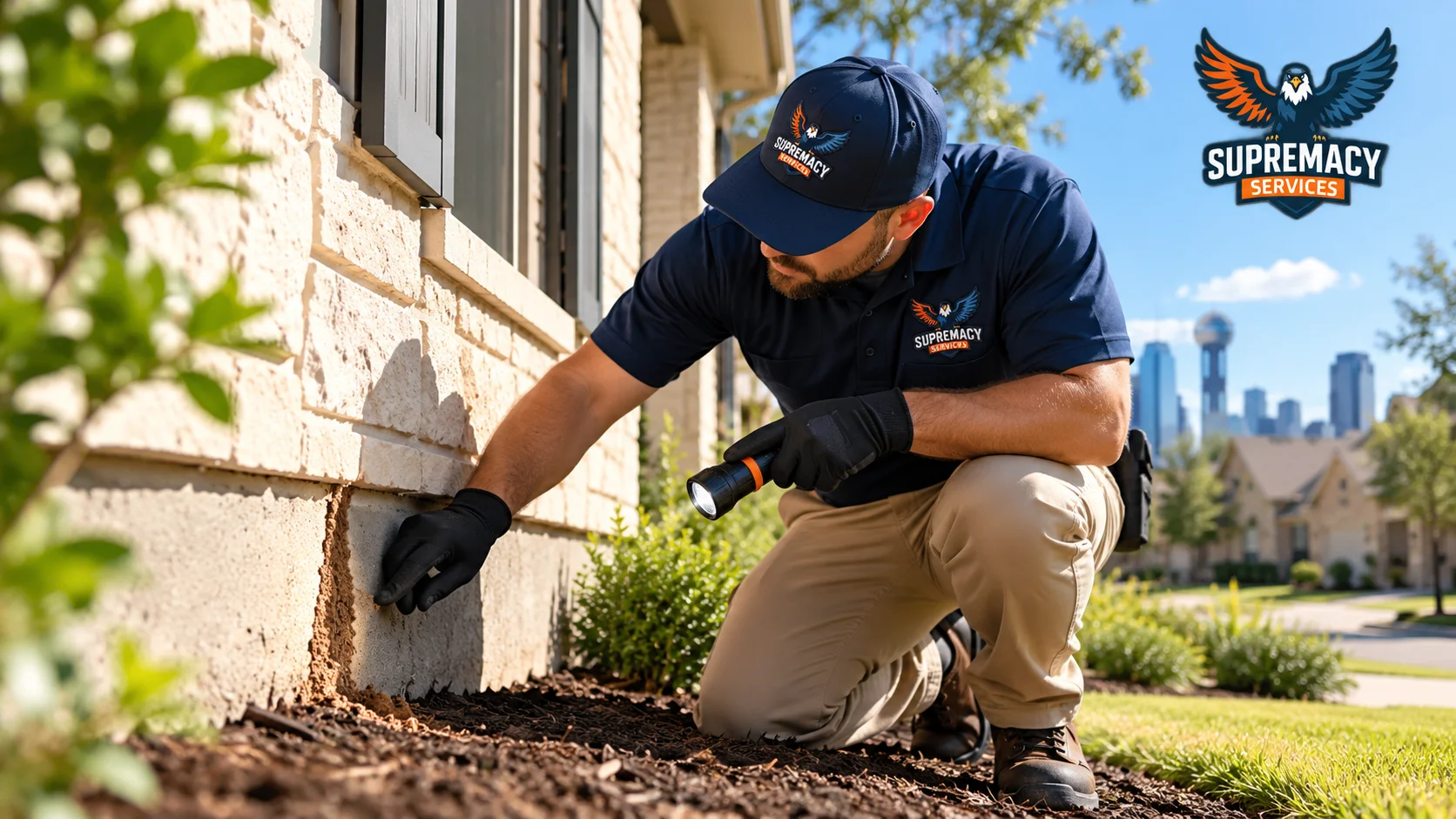
Subterranean termites live primarily in the soil and can enter North Texas homes through hidden routes in or around the foundation while searching for cellulose-based food such as wood. Common warning signs include mud tubes, termite swarmers or discarded wings, damaged wood and activity around areas where structural materials meet or approach the soil.
The difficult part is that subterranean termites usually remain concealed. The EPA notes that homeowners often do not discover termites until they encounter a swarm or find damage. That means a Dallas–Fort Worth home can have termite activity without termites crawling openly across the floor.
If you find a suspected termite sign, the goal is not simply to kill the insects you can see. You first need to determine whether termites are present, where they are gaining access and what treatment—if any—is appropriate for the structure.
Table of Contents
- What Are Subterranean Termites?
- What Do Subterranean Termites Look Like?
- Signs of Subterranean Termites
- What Does Termite Damage Look Like?
- Where Should You Check Around Your Home?
- Termites vs. Other Wood Problems
- How Are Subterranean Termites Treated?
- DIY vs. Professional Termite Treatment
- How Much Does Treatment Cost?
- How to Reduce Termite Risk
- What to Expect From Professional Service
- FAQs
What Are Subterranean Termites?
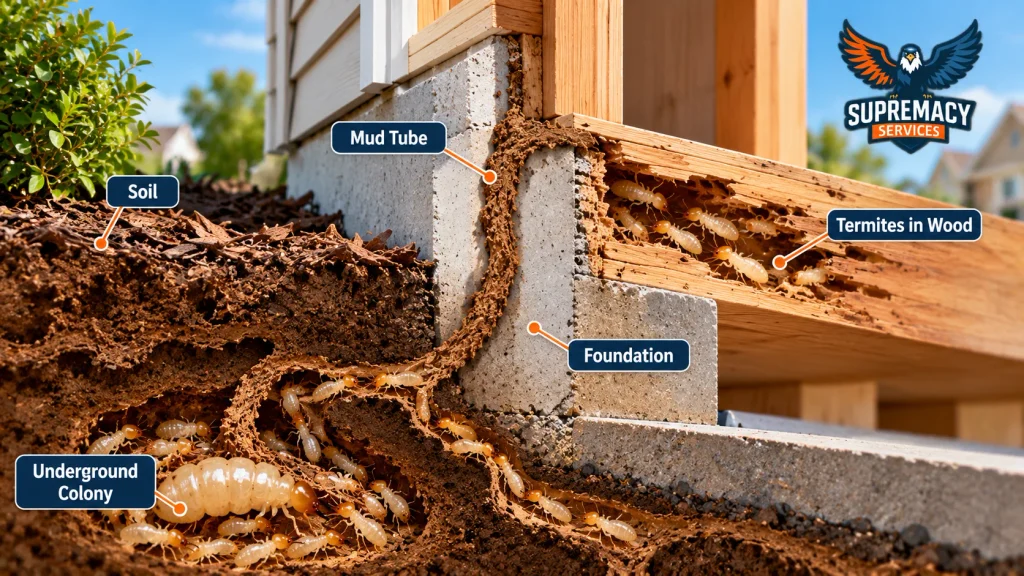
Subterranean termites are termites that typically maintain colonies associated with the soil and travel between the ground and cellulose-containing materials that provide food.
The Texas Department of Agriculture explains that subterranean termites usually live outside a house in underground nests and rely on moisture from the earth. They can tunnel into nearby structures in search of cellulose.
Wood is an obvious cellulose source, but termites do not need a large piece of exposed lumber sitting beside the foundation to become a concern.
Their ability to remain concealed in soil, shelter tubes and structural materials is one reason infestations can be difficult for homeowners to detect.
Texas A&M AgriLife provides specific research-based guidance for identifying, preventing and controlling subterranean termites and identifies Texas as a state with substantial termite risk.
Subterranean termites vs. drywood termites
The distinction matters because termite biology affects how an infestation is investigated and treated.
| Feature | Subterranean termites | Drywood termites |
|---|---|---|
| Typical colony environment | Associated with soil/ground moisture | Colonies can live within wood |
| Soil contact | Normally important | Not required |
| Common evidence | Mud/shelter tubes, swarmers, damaged wood | Swarmers, damaged wood, fecal pellets |
| Treatment approach | Often soil treatment, baiting or other labeled methods | May require localized treatment, wood removal or fumigation depending on circumstances |
| Diagnosis | Professional identification recommended | Professional identification recommended |
Texas regulators specifically distinguish subterranean termites from drywood termites because drywood termites do not require the same connection with the earth.
What Do Subterranean Termites Look Like?
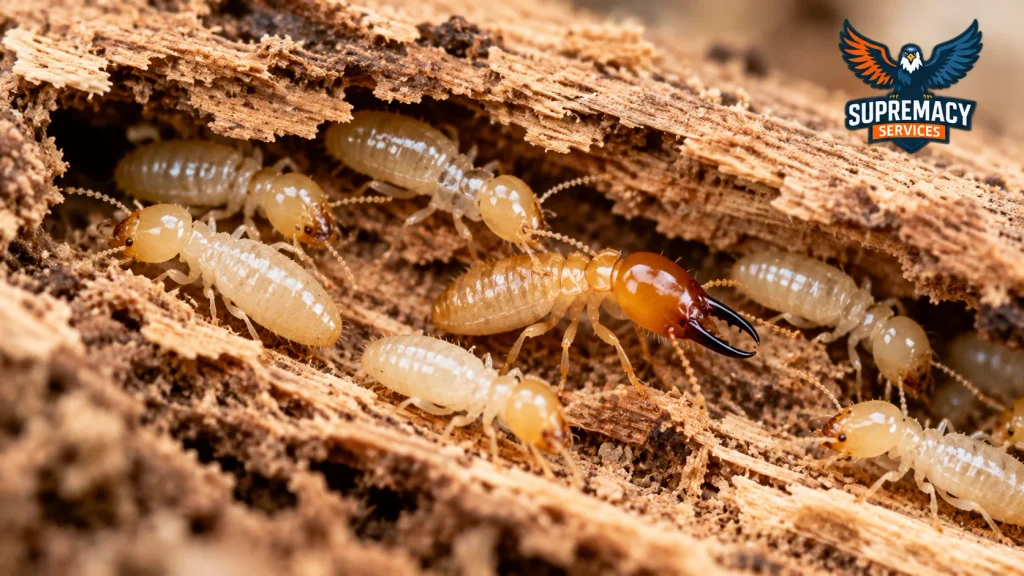
A termite colony contains different castes, so not every termite looks identical.
Workers
Workers are generally small, pale-bodied insects and are the termites most likely to be encountered when infested wood or an active shelter tube is disturbed.
Soldiers
Soldiers have more developed heads and jaws and help defend the colony.
Swarmers
Winged reproductive termites—often called swarmers or alates—leave established colonies during suitable conditions to reproduce and establish new colonies.
Swarmers are frequently confused with flying ants.
One useful distinction is wing proportion: EPA identification guidance notes that termite swarmers have wings of approximately equal length, whereas the front wings of winged ants are longer than their hind wings.
Finding swarmers indoors deserves particular attention because it can indicate termite activity associated with the structure.
What Are the Signs of Subterranean Termites?
The most useful warning signs are shelter tubes, swarmers or discarded wings, suspicious wood damage and evidence of activity near foundations or other structural entry routes.
No single homeowner observation tells you the full extent of an infestation. Look for patterns of evidence.
1. Mud tubes on the foundation
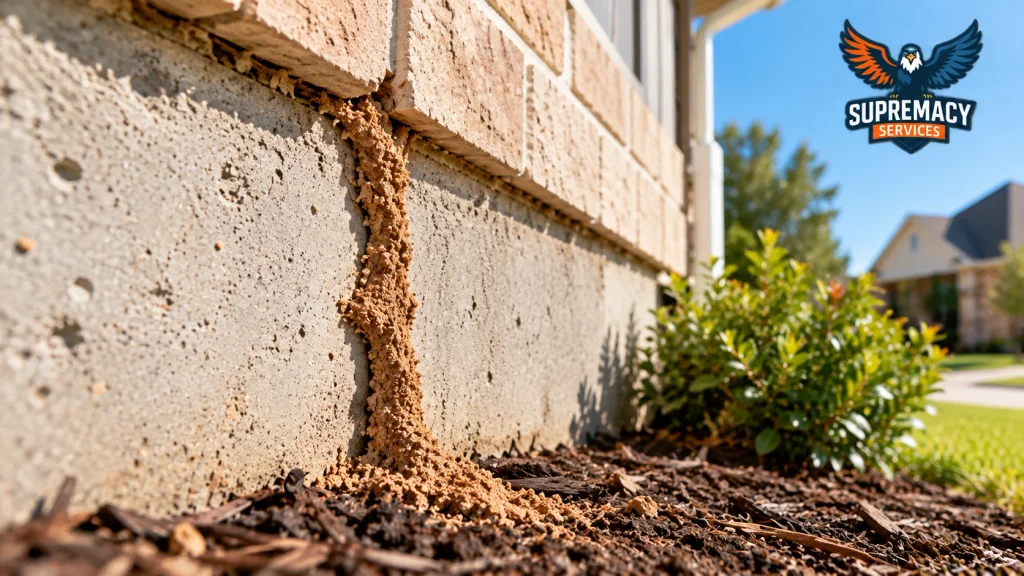
Mud tubes—also called shelter tubes—are narrow, soil-like passageways subterranean termites construct across exposed surfaces.
They commonly appear along:
- slab edges;
- concrete foundation walls;
- piers;
- crawlspaces;
- masonry;
- plumbing or utility penetrations;
- cracks and construction joints.
Termites can build a tube across concrete or masonry even though those materials are not food.
The passage allows them to travel toward accessible cellulose while remaining protected.
If you want detailed photographs and identification guidance, see Termite Mud Tubes: What They Look Like & What They Mean.
2. Termite swarmers inside or around the home
Winged termites are among the most noticeable termite signs.
You may find:
- live winged insects around windows;
- insects near doors or lights;
- discarded wings on windowsills;
- wings near baseboards;
- concentrations of swarmers emerging from a wall or structural opening.
A swarm does not tell you how much damage exists, but it is a reason to investigate.
3. Damaged or hollowed wood
Subterranean termites feed within wood, so the surface can sometimes conceal damage underneath.
Possible signs include:
- wood that sounds unusually hollow when tapped;
- weakened trim or framing;
- wood that breaks more easily than expected;
- internal galleries revealed when damaged material opens;
- soil-like material associated with concealed feeding areas.
Do not deliberately tear apart structural components to investigate suspected termites.
4. Discarded wings
After swarming, reproductive termites shed their wings.
Small piles of similar-sized wings around windows, doors or other openings can therefore be useful evidence even when the insects themselves are gone.
5. Termites discovered during remodeling
Removing flooring, drywall, trim or other building materials can expose previously concealed activity.
If renovation reveals live termites, shelter material or damaged structural wood, avoid simply closing the area back up before the problem is evaluated.
6. Previous termite evidence
Old tubes, previous treatment marks or known termite history do not prove that a current infestation exists.
They do, however, provide useful information during an inspection.
Does a Mud Tube Always Mean Termites Are Active?
A genuine subterranean termite shelter tube is evidence of termite activity, but the tube alone does not establish whether termites are currently using that route or how extensive an infestation is.
An old tube can remain after activity changes.
That is why scraping away a tube and checking whether it reappears should not be treated as a complete termite inspection.
A professional assessment looks beyond the one visible tube for other evidence and potential entry routes.
What Does Subterranean Termite Damage Look Like?
Termite damage is often more difficult to recognize than dramatic photographs online suggest.
Because termites can feed inside wood while leaving portions of the exterior surface intact, damage may remain concealed until wood is probed, opened during construction or has become significantly weakened.
Potential signs include:
| Observation | Possible explanation | What to do |
|---|---|---|
| Hollow-sounding wood | Internal termite feeding or another wood problem | Inspect further |
| Wood breaks easily | Termites, decay or other deterioration | Identify cause before repair |
| Soil-like material within damaged wood | Possible subterranean termite activity | Request inspection |
| Blistered-looking surface | Multiple possible causes | Do not diagnose by appearance alone |
| Mud tube connecting soil and structure | Strong termite warning sign | Investigate surrounding area |
| Damaged wood plus swarmers | Multiple termite indicators | Professional inspection appropriate |
The EPA recommends examining exposed wood for hollow areas as one component of termite awareness, but identification should consider multiple signs rather than relying on one symptom.
How serious is termite damage?
The seriousness depends on where termites have been feeding, how much material has been affected and whether load-bearing components are involved.
Visible damage does not reliably tell a homeowner when an infestation began or how far it extends.
Pest control and structural repair are also different tasks. If structural components have been significantly damaged, termite control may need to be followed by evaluation and repair by the appropriate building professional.
Where Should North Texas Homeowners Check for Termites?
Start with accessible areas where the building meets the soil or where termites could move from the soil toward structural materials.
Foundation perimeter
Walk the accessible exterior foundation and look for raised soil-like tubes crossing concrete, masonry or other surfaces.
Pay particular attention to locations where the foundation is obscured.
Plumbing and utility penetrations
Pipes, conduits and other penetrations create transitions through construction materials.
Inspect accessible areas around these locations for suspicious shelter material or moisture problems.
Garages
Check accessible slab edges, wall transitions, stored-item areas and penetrations.
Crawlspaces and piers
Where a home has an accessible crawlspace, termite evidence can occur around piers, foundation walls and structural wood.
Do not enter a confined, unstable or otherwise unsafe crawlspace simply to perform a DIY inspection.
Areas with wood close to soil
Wood-to-soil contact can create favorable access conditions and can make termite evidence harder to see.
Check deck components, steps, siding, posts and other accessible wood around the structure.
Moisture-prone areas
Termites require moisture, so persistent plumbing leaks, drainage problems and chronically damp areas deserve attention.
Correcting the moisture problem is worthwhile, but drying an area does not prove that an established termite infestation has been eliminated.
Subterranean Termites vs. Other Wood Problems
Not all damaged wood means termites.
Termites vs. carpenter ants
Carpenter ants excavate wood to create nesting areas rather than consuming it as termites do.
Texas A&M notes that carpenter ants are commonly associated with moisture-damaged wood and may occur around leaks, poor drainage, wood-to-soil contact and other damp structural areas.
Termites vs. wood decay
Moisture can cause fungal decay that weakens wood without termites being present.
Unfortunately, moisture problems and wood-destroying insects can also occur in the same general area.
Termite swarmers vs. flying ants
Do not identify them solely because the insect has wings.
Look at body shape, antennae and wing proportions, and save a specimen when practical for professional identification.
How Are Subterranean Termites Treated?
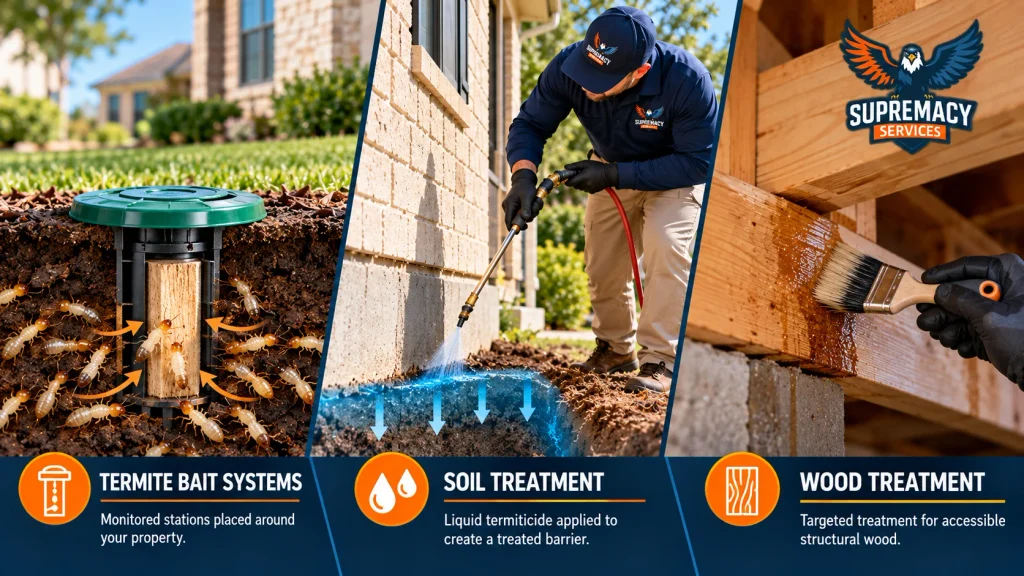
Common professional approaches include soil-applied termiticides, termite bait systems and certain wood treatments. The appropriate method depends on the infestation, structure, product label and treatment objective.
EPA identifies liquid soil-applied termiticides, termite baits, treated building materials and wood treatments among recognized termite-management approaches.
Liquid soil treatments
A labeled liquid termiticide may be applied to appropriate soil areas to establish a treated zone according to the product’s directions.
Application requirements vary with:
- foundation construction;
- soil access;
- slabs and adjoining concrete;
- utility locations;
- treatment perimeter;
- product label;
- areas of known activity.
This is not simply a matter of spraying insecticide around the exterior.
Termite bait systems
Bait stations are installed in appropriate locations and monitored according to the particular system and treatment program.
Termites that encounter an active bait feed on it, and the treatment is designed to affect termite activity beyond the individual insects found in the station.
Monitoring and maintenance matter because a bait program is a system rather than a one-time spray.
Wood treatments
Certain labeled products can be applied to wood in appropriate circumstances.
Whether wood treatment makes sense depends on accessibility, construction and the overall treatment plan.
Can different methods be combined?
Yes. A treatment plan may incorporate more than one approach when appropriate for the property and permitted by product labels.
Supremacy’s Termite Vault Security service, for example, describes a program using perimeter baiting together with targeted soil treatment. Homeowners should review the actual property-specific proposal, treatment diagram, product labels and warranty terms before authorizing work.
Found mud tubes, swarmers or suspicious wood damage? Request a termite inspection from Supremacy Services to identify the problem before selecting a treatment.
DIY vs. Professional Subterranean Termite Treatment
Homeowners can reduce termite-conducive conditions and document visible evidence, but treatment of an established structural infestation is generally a job for trained, properly licensed pest-management professionals.
EPA specifically warns that soil termiticide treatments can fail or create contamination risks if improperly performed and states that, in most cases, termiticide application can only be properly performed by a trained pest-management professional.
Useful DIY steps
You can:
- photograph suspected tubes before disturbing them;
- save several swarmers for identification;
- check accessible foundation areas;
- repair plumbing leaks;
- improve obvious drainage problems;
- remove unnecessary wood debris near the structure;
- reduce inappropriate wood-to-soil contact where practical;
- keep inspection areas accessible.
What not to rely on
Avoid assuming that the problem has been solved because you:
- killed visible swarmers;
- sprayed one shelter tube;
- scraped tubes from the foundation;
- replaced one damaged board;
- sealed one visible crack;
- no longer see termites.
Those actions do not establish what is occurring in the soil, hidden structural areas or elsewhere around the building.
How Much Does Subterranean Termite Treatment Cost in North Texas?
There is no reliable universal termite-treatment price without knowing the property and treatment scope.
Important pricing factors can include:
- size and configuration of the structure;
- treatment perimeter;
- foundation design;
- areas of termite activity;
- treatment method;
- accessibility;
- amount of drilling or specialized access required;
- bait-station quantity and monitoring;
- follow-up service;
- warranty terms.
Rather than duplicating changing market-price information here, see Termite Treatment Cost in North Texas: 2026 Guide for Supremacy’s dedicated cost breakdown.
The more useful process is:
Inspection → identification → treatment scope → written proposal → price
Texas requires termite-treatment proposals to provide consumers with important disclosure information, including a diagram of areas to be treated, approximate perimeter measurement, known active or previous termite areas, warranty or guarantee terms, the chemical label and information about liquid-treatment concentration or minimum bait-station quantities, as applicable.
That makes the scope of the proposal just as important as the headline price.
How Can You Reduce the Risk of Subterranean Termites?
No maintenance checklist can guarantee that termites will never reach a home, but homeowners can make the property easier to inspect and reduce avoidable conditions that favor concealed termite access.
Termite-prevention checklist
- Correct persistent plumbing leaks.
- Maintain appropriate drainage around the structure.
- Avoid unnecessary wood-to-soil contact.
- Keep accessible foundation areas visible where practical.
- Do not stack firewood directly against the house.
- Remove unnecessary cellulose debris near the foundation.
- Maintain gutters and drainage systems.
- Investigate unexplained moisture.
- Check the foundation periodically for shelter tubes.
- Do not ignore indoor termite swarmers.
EPA also recommends reducing openings around foundations and utility penetrations and keeping vents free from blockage as part of termite prevention.
Remember: prevention measures are not substitutes for treatment when an active infestation has already been identified.
What Should You Expect From a Professional Termite Inspection and Treatment Proposal?
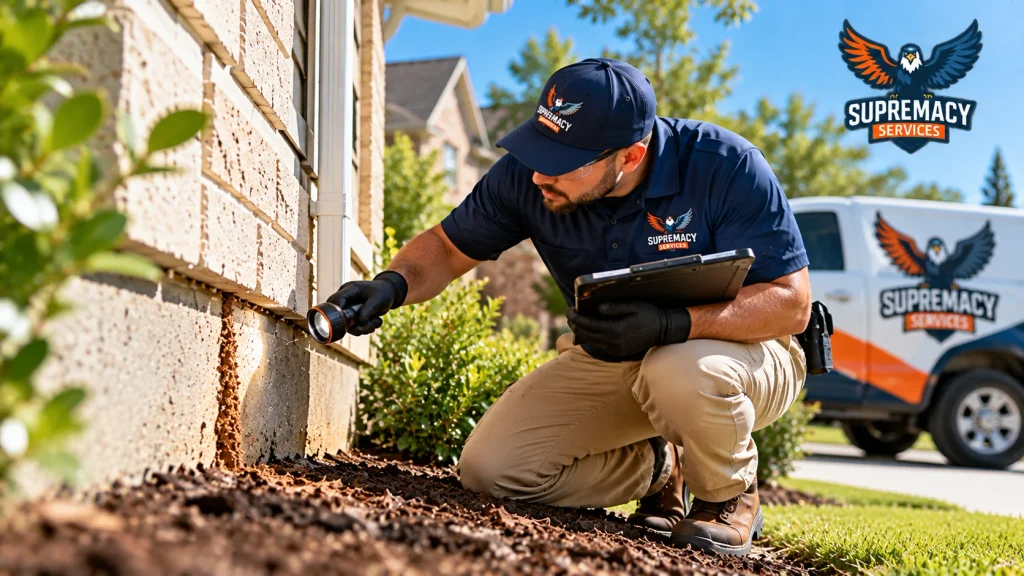
A professional inspection should do more than confirm the insect in a photograph.
The inspector may evaluate:
- visible evidence of current or previous termite activity;
- accessible foundation and structural areas;
- shelter tubes and potential entry routes;
- moisture and construction conditions relevant to termite activity;
- previous treatment evidence;
- other wood-destroying organisms or damage;
- treatment options appropriate to the findings.
Texas regulates structural pest-control businesses and individuals performing structural pest control for compensation.
For termite-treatment estimates specifically, homeowners should receive written disclosure information describing the proposed treatment.
Before signing, ask:
- What evidence of termites did you find?
- Where was the activity found?
- What areas will be treated?
- Which treatment method are you recommending?
- Why is that method appropriate for this structure?
- Which product will be used?
- What does the product label require?
- What monitoring or follow-up is included?
- What exactly does the warranty cover?
- Are there homeowner responsibilities that affect coverage?
If you have confirmed or suspected subterranean termite activity, explore Supremacy’s termite treatment and monitoring options for Dallas–Fort Worth homes.
When Should You Call a Termite Professional?
Consider arranging an inspection when you find:
- suspected mud tubes;
- indoor termite swarmers;
- piles of discarded termite wings;
- live termites;
- suspicious structural wood damage;
- termite evidence uncovered during remodeling;
- unexplained wood deterioration accompanied by soil-like material;
- signs of previous termite activity when the treatment history is unknown.
You do not need to choose a treatment before the inspection.
The inspection exists to determine what problem you actually have.
Frequently Asked Questions
Are subterranean termites common in Texas?
Texas A&M AgriLife identifies Texas as a state with substantial termite infestation risk and publishes dedicated guidance for identifying and controlling subterranean termites. Local risk to an individual house still depends on property conditions and termite activity.
Where do subterranean termites live?
They typically maintain colonies associated with the soil. Texas regulators explain that they usually live in underground nests and depend on moisture from the earth while tunneling toward cellulose food sources.
What is the clearest sign of subterranean termites?
Mud or shelter tubes are one of the most characteristic signs, particularly when they connect soil with a structure. Swarmers, discarded wings and damaged wood are other important evidence.
Do subterranean termites eat concrete?
No. Termites do not use concrete as food. They can, however, construct shelter tubes across concrete or exploit suitable gaps and construction routes to reach cellulose-containing materials.
Does one termite mud tube mean my house is infested?
A genuine shelter tube indicates termite activity, but one tube alone cannot tell you whether that particular route is currently active, how extensive the infestation is or how much damage exists. The surrounding structure should be evaluated.
Can I spray subterranean termites myself?
Killing visible termites does not necessarily address the hidden infestation. EPA notes that effective structural termite treatments require appropriate products and application methods and that professional training is important, particularly for soil treatments.
Are termite baits better than liquid treatments?
Neither method is automatically best for every property. Foundation construction, activity location, accessibility, treatment objectives, product requirements and ongoing monitoring can affect the choice. In some situations, a professional treatment program may use multiple methods.
How quickly do subterranean termites destroy a house?
There is no responsible universal timeline. The extent and rate of damage vary with colony activity, infestation conditions, affected materials and other factors. Finding termites warrants investigation, but a visible termite sign does not by itself tell you how long the colony has been present.
Should damaged wood be replaced before termite treatment?
First determine whether active termites are present and coordinate the pest-control and repair plans. Replacing visible damaged material without addressing active termite access can leave the underlying pest problem unresolved.
Found Signs of Subterranean Termites Around Your DFW Home?
Mud tubes, swarmers or suspicious wood damage deserve investigation, but they do not tell you everything about the infestation.
Start by documenting what you found and avoid relying on surface sprays or destroying all visible evidence before it can be inspected.
For homeowners in Dallas and surrounding DFW communities, Supremacy Services’ Termite Vault Security provides a path from professional inspection to a property-specific termite-management plan.
Schedule a termite assessment with Supremacy Services to identify the activity, understand your treatment options and determine the appropriate next step for your home.

