
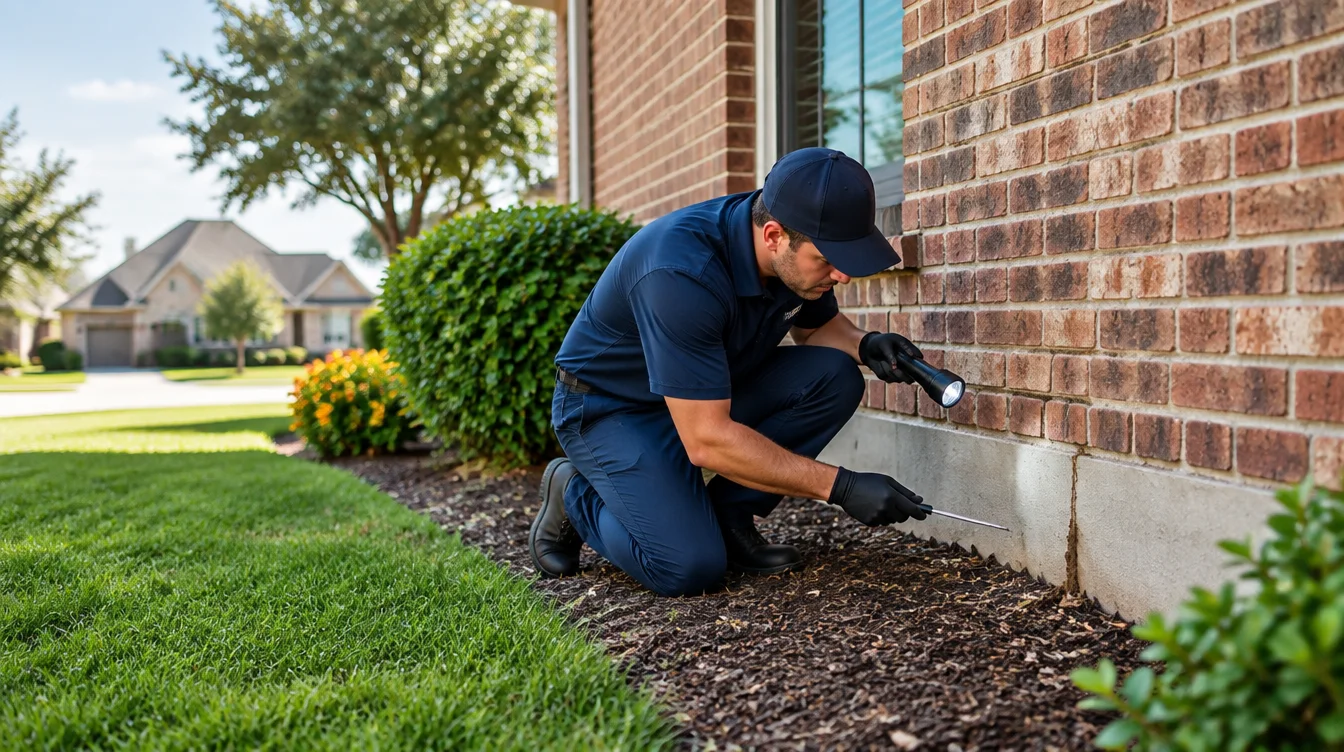
A termite inspection in North Texas commonly costs roughly $75–$150 for a standalone WDI inspection based on currently published DFW pricing, although prices vary by provider, property size, construction, accessibility and whether a formal report is required. Some pest-control companies also offer a no-cost termite evaluation when the purpose is to determine whether treatment is needed.
The important distinction is that a free treatment evaluation and a formal Wood Destroying Insect (WDI) inspection/report are not necessarily the same service.
For Dallas–Fort Worth homeowners, buyers and sellers, understanding that difference can help you compare quotes accurately and make sure you are ordering the inspection you actually need.
Table of Contents
- How Much Does a Termite Inspection Cost in North Texas?
- Free Termite Inspection vs. Paid WDI Inspection
- What Affects Termite Inspection Cost?
- What Does a Professional Termite Inspection Include?
- What Are Inspectors Looking For?
- When Should You Get a Termite Inspection?
- DIY vs. Professional Termite Inspection
- What Happens If Termites Are Found?
- How to Reduce Termite Risk Around Your Home
- Frequently Asked Questions
How Much Does a Termite Inspection Cost in North Texas?
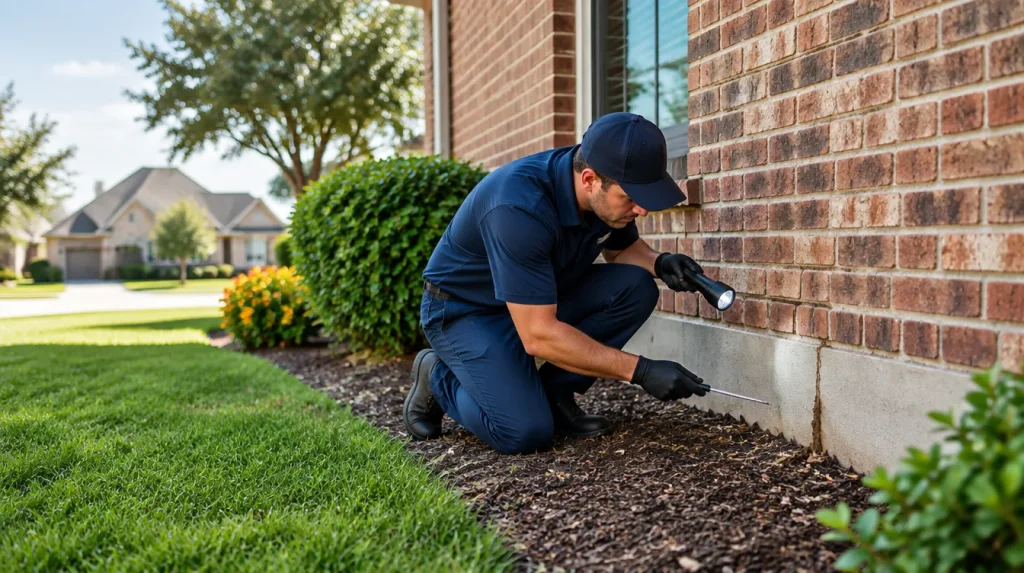
For budgeting purposes, about $75–$150 is a reasonable current planning range for many standalone WDI inspections advertised by DFW-area inspection providers. The exact fee can vary, and some properties or providers may fall outside that range.
Published North Texas examples include WDI inspections around $125–$135 and up, while another DFW inspection company publishes a $75–$150 range.
These numbers should be treated as market examples, not a Supremacy Services price quote.
| Inspection type | What to expect | Cost considerations |
|---|---|---|
| Treatment evaluation | Checks for termite evidence and whether treatment may be needed | Some pest companies offer these at no charge |
| Standalone professional inspection | Inspection for visible evidence of termite activity | Fee depends on company and property |
| Formal WDI inspection/report | Regulated inspection/documentation, particularly relevant to real-estate transactions | Often a separate paid service |
| General home inspection | Broader evaluation of a home’s systems and condition | Do not assume it replaces a WDI inspection |
| Follow-up after termite findings | Determines treatment scope or evaluates a previously identified problem | May be included or separately priced |
Always ask what is actually included before comparing two prices.
A $0 inspection designed to produce a termite-treatment proposal should not automatically be compared with a paid inspection that includes formal WDI documentation.
Free Termite Inspection vs. Paid WDI Inspection
A free termite inspection is typically an evaluation intended to determine whether termite activity is present and whether treatment should be recommended. A formal WDI inspection is a regulated inspection that documents visible evidence of wood-destroying insects and relevant conducive conditions.
That distinction matters especially during a Texas real-estate transaction.
The Texas Department of Agriculture states that inspections performed in conjunction with a real-estate transaction must use the official SPCS/T-5 Texas Wood Destroying Insect Report.
The inspection documents visible evidence found in readily accessible areas. It should not be interpreted as a guarantee that termites are absent everywhere in the structure.
Ask This Before Scheduling
When calling an inspector, ask:
“Do I need a termite evaluation for my own information, or an official WDI inspection/report for a real-estate transaction?”
That one question can prevent confusion about both price and documentation.
What Affects Termite Inspection Cost?
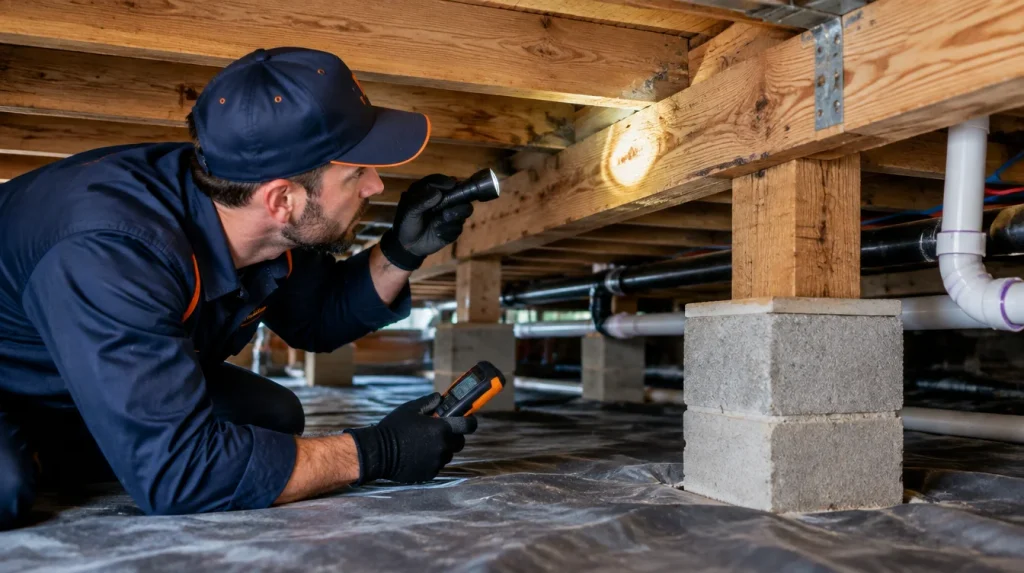
The price of a termite or WDI inspection can vary because not every North Texas property requires the same amount of inspection work.
Property Size
A larger home generally means more foundation perimeter, interior space, attic areas and other accessible locations for the inspector to evaluate.
Foundation and Construction Type
A straightforward slab-on-grade house may present a different inspection process from a pier-and-beam property with an accessible crawl space.
Texas A&M AgriLife specifically recommends inspecting areas such as foundation walls, slabs, plumbing penetrations, attics and crawl spaces when applicable.
Accessibility
Inspectors can only evaluate areas they can reasonably access.
Dense vegetation, stored belongings, limited crawl-space access, finished walls and other obstructions may restrict visibility.
A Texas WDI inspection is not a destructive investigation. Inspectors are not expected to tear apart walls or remove building components simply to search for hidden termites.
Detached Structures
Garages, sheds or other structures may affect the scope of an inspection depending on what you request and what the provider includes.
Type of Report Required
A homeowner simply wondering whether suspicious mud tubes are termites has a different need from a home buyer who requires an official WDI report for a transaction.
Always confirm the required documentation before booking.
Inspection Bundles
Some home-inspection companies allow buyers to add a WDI inspection to a broader home inspection.
Compare the scope of each service rather than choosing solely by price.
What Does a Professional Termite Inspection Include?
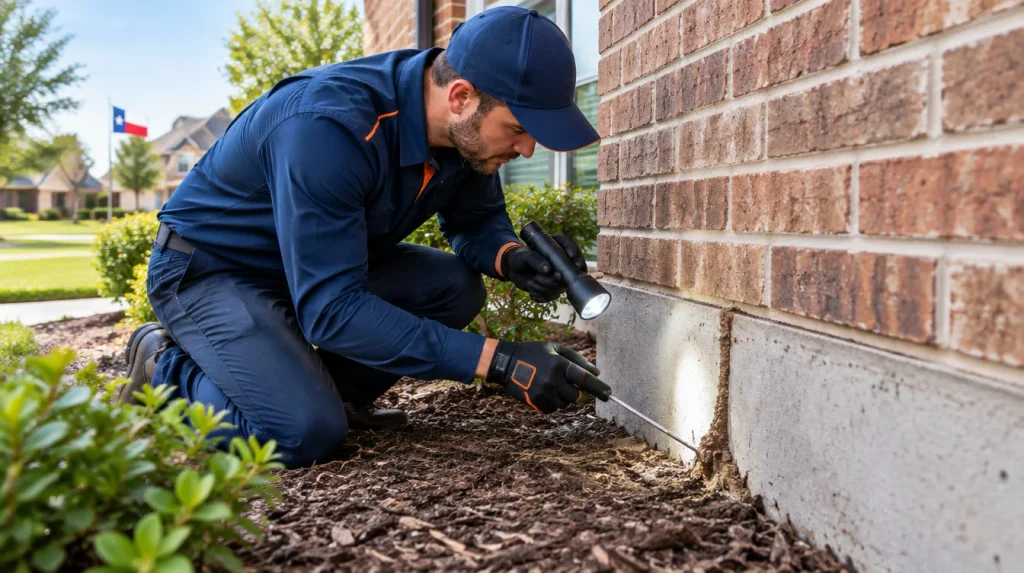
A professional termite inspection is a systematic visual examination of accessible termite-prone areas for evidence of infestation, previous activity, damage and conditions that may encourage wood-destroying insects.
Texas A&M AgriLife recommends that professional inspectors understand termite biology, building construction and conditions conducive to infestation.
Depending on the property, an inspection may include examination of the foundation perimeter, accessible interior areas, plumbing penetrations, window and door areas, attic spaces, crawl spaces, exposed wood and moisture-prone locations.
Exterior Inspection
The inspector may examine the visible foundation and surrounding areas for mud tubes, cracks, excessive soil height, wood-to-soil contact, drainage issues and moisture conditions.
Areas around plumbing, HVAC lines and utility penetrations deserve attention because they can create concealed pathways or moisture conditions.
Interior Inspection
Inside the home, the inspector may examine accessible baseboards, trim, flooring, plumbing areas and other locations where termite activity or moisture-related conditions may be visible.
Attic and Crawl-Space Inspection
Where accessible, these areas can reveal damaged wood, moisture problems, shelter tubes or other evidence that might not be visible in living areas.
Pier-and-beam houses deserve particularly careful examination of accessible crawl-space components.
Documentation
For a formal Texas WDI inspection associated with a real-estate transaction, findings are documented using the state’s required reporting process.
The report identifies visible evidence rather than guaranteeing that concealed areas are termite-free.
What Are Termite Inspectors Looking For?
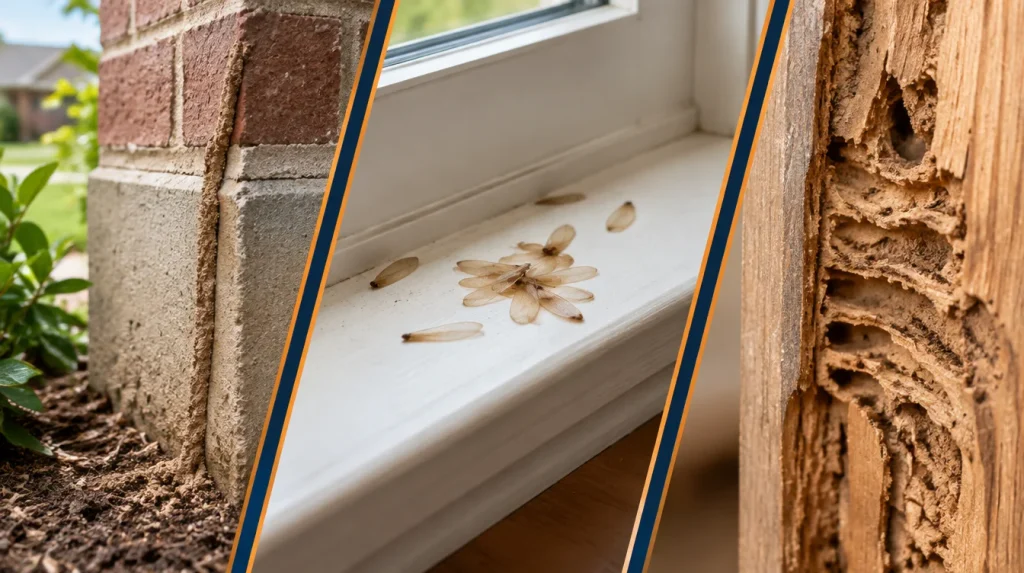
Professional inspectors are looking for both evidence of wood-destroying insects and conditions that make infestation more likely.
Common findings can include:
- Mud or shelter tubes along foundations, slabs or piers
- Live termites or termite swarmers
- Discarded wings near windows or indoor light sources
- Wood with termite galleries or characteristic internal damage
- Previous evidence of termite activity
- Wood touching soil
- Excessive moisture
- Plumbing or roof leaks
- Poor drainage near the foundation
- Wood debris or cellulose materials near the structure
- Areas that could not be inspected because access was restricted
Texas A&M notes that indoor termite swarmers are a strong indication of an active infestation, while shelter tubes on foundation walls, slabs or crawl-space components are another important warning sign.
Why Termite Inspections Matter in North Texas
Subterranean termites occur throughout Texas and depend heavily on moisture and soil conditions.
Texas A&M explains that subterranean termites can reach structures through soil contact and shelter tubes and may take advantage of moisture from plumbing leaks, roof leaks, air-conditioning condensate or poorly maintained gutters.
That makes foundation edges, plumbing penetrations, drainage conditions and wood-to-soil contact particularly relevant during an inspection.
North Texas homeowners should therefore think beyond simply looking for visible insects.
A termite inspection is also an evaluation of the pathways and environmental conditions that could allow termites to reach structural wood.
Termites or Something Else?
Not every damaged piece of wood means termites.
Moisture-related wood decay can sometimes resemble termite damage. Carpenter ants and certain wood-boring beetles can also affect wood.
Texas A&M notes that deterioration caused by wood-destroying fungi can be confused with termite damage.
That is one reason identification matters before choosing a treatment.
When Should You Get a Termite Inspection?
A professional inspection makes sense whenever there is evidence suggesting termite activity, when buying or selling a home, or when you want a trained assessment of termite risk.
Consider scheduling an inspection when you discover mud tubes, unexplained wood damage, discarded wings, indoor swarmers or persistent moisture near wooden components.
An inspection can also be valuable before purchasing a property, especially when previous termite treatment or damage appears in the home’s history.
Older homes are not the only properties that can experience termite activity. Any structure containing cellulose-based materials can potentially provide a food source.
Is a Termite Inspection Included With a Home Inspection?
Do not assume that it is.
A general home inspection and a formal WDI inspection serve different purposes and operate under different requirements.
If you are buying a home in Dallas, Frisco, Plano, McKinney, Allen, Richardson, Carrollton, Southlake or elsewhere in DFW, ask your inspector, agent or lender exactly which inspection and report are required.
Can You Inspect Your Home for Termites Yourself?
Homeowners can perform basic monitoring, but a DIY check is not equivalent to a professional WDI inspection.
You can periodically look around the foundation for mud tubes, examine accessible wood for unusual damage, watch for discarded wings and address obvious moisture problems.
However, termites frequently operate in concealed areas.
A homeowner inspection can therefore be useful for spotting warning signs but should not be relied upon to rule out an infestation.
A formal real-estate WDI report also requires the appropriate licensed professional.
What Happens If Termites Are Found?
Finding evidence of termites does not automatically tell you how extensive the infestation or structural damage is.
The next step is to determine the type and location of activity and develop an appropriate treatment recommendation.
Common professional termite-control approaches include soil-applied liquid termiticides and termite bait systems. The EPA notes that termiticides used for structural protection are regulated pesticide products and that these treatments generally require trained pest-management professionals.
Inspection and treatment should therefore remain separate concepts when comparing costs.
An inexpensive inspection can uncover a problem that requires a much more detailed treatment proposal.
If an inspection confirms termite activity around your Dallas–Fort Worth property, review the findings and obtain a written treatment recommendation before deciding how to proceed.
Termite Inspection vs. Termite Treatment
| Termite inspection | Termite treatment |
|---|---|
| Determines whether visible evidence is present | Addresses an identified infestation or protection need |
| Examines accessible areas | May involve liquid treatment, baiting or other approved methods |
| May produce a WDI report | Produces a treatment/service agreement |
| Usually relatively low cost | Usually significantly more expensive |
| Does not eliminate termites | Intended to control or prevent termite activity |
This distinction is important when searching online.
If you already know you have termites and are trying to estimate the cost of eliminating them, a termite treatment cost guide is more relevant than an inspection-cost article.
How to Reduce Termite Risk Around Your Home
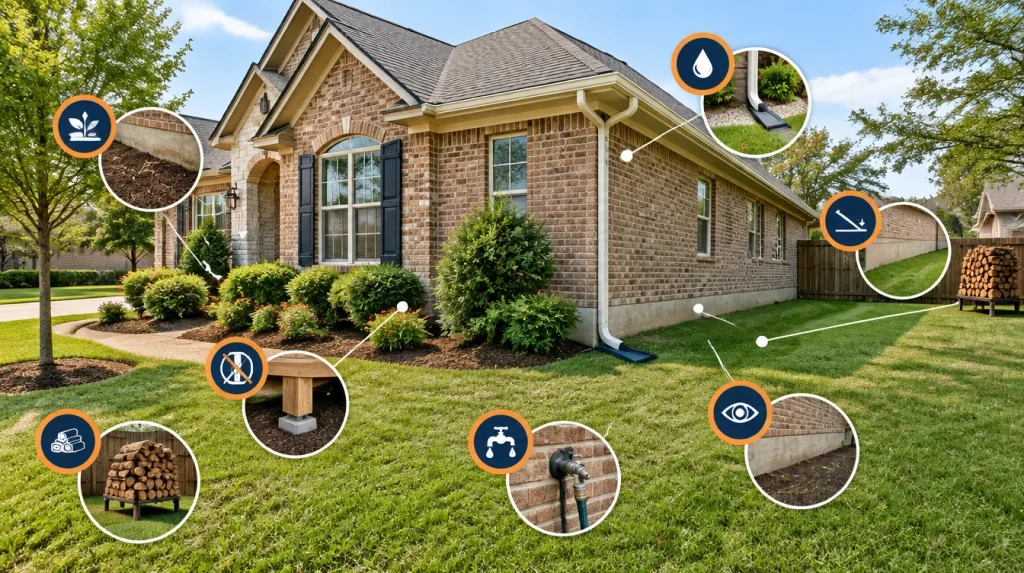
Prevention starts by reducing the food, moisture and hidden access conditions termites can exploit.
Texas A&M recommends maintaining visible foundation clearance, eliminating unnecessary wood-to-soil contact, addressing drainage and moisture problems, keeping gutters functioning correctly and removing unnecessary cellulose debris near foundations.
Homeowners should also investigate leaking plumbing, roof leaks and persistent moisture rather than treating them as unrelated maintenance issues.
These steps do not guarantee that termites will never reach a property, but they can reduce conducive conditions and make future inspections easier.
Choosing a Termite Inspector in North Texas
Price should not be the only consideration.
Confirm that the company or individual has the appropriate Texas licensing for the work being performed and ask exactly what the quoted inspection includes.
For a real-estate transaction, verify that you will receive the required WDI documentation.
You should also understand whether treatment estimates are included, which structures are being inspected, whether inaccessible areas will be documented, and whether the quoted fee changes based on property size or construction.
Schedule a Termite Inspection in Dallas–Fort Worth
If you have found mud tubes, termite swarmers, discarded wings or suspicious wood damage, waiting for more visible evidence can make it harder to understand what is happening inside the structure.
A professional inspection can help determine whether the evidence is consistent with termite activity and what the appropriate next step should be.
Frequently Asked Questions
How much does a termite inspection cost in Dallas?
Currently published DFW inspection pricing suggests many standalone WDI inspections fall around $75–$150, although actual prices vary by company, property size, access, construction and report requirements. Always request the provider’s current price for your property.
Are termite inspections free?
Sometimes. Pest-control companies may provide a complimentary inspection when evaluating a property for possible treatment. A formal WDI inspection and report may have a separate fee.
What is a WDI inspection?
A Wood Destroying Insect inspection evaluates accessible areas for visible evidence of wood-destroying insects and conducive conditions. Texas uses an official WDI report for qualifying real-estate transaction inspections.
Is a WDI inspection the same as a general home inspection?
No. A WDI inspection specifically addresses wood-destroying insects and related conditions. Do not assume a standard home inspection automatically includes the required WDI inspection or documentation.
How long does a termite inspection take?
There is no single universal inspection time. Property size, construction, crawl-space or attic access, detached structures and the number of areas requiring examination can all affect the appointment.
What are the biggest signs I need an inspection?
Indoor termite swarmers, discarded wings, mud tubes and suspicious wood damage are important warning signs. Persistent moisture and wood-to-soil contact can also create conditions conducive to termite activity.
Can I do a termite inspection myself?
You can monitor your property for warning signs, but DIY monitoring cannot replace the expertise or documentation of a licensed professional when a formal WDI inspection is needed.
What happens if an inspector finds termites?
The inspector documents the visible evidence and may recommend further evaluation or treatment. Treatment options depend on factors such as the termite involved, location of activity, construction and extent of accessible evidence.
Does a termite inspection include treatment?
Not necessarily. Inspection determines what evidence is present. Treatment is a separate service intended to control an existing infestation or protect the structure.
How often should North Texas homeowners check for termites?
Homeowners can routinely watch for mud tubes, swarmers, moisture and damaged wood, but the appropriate schedule for professional inspections depends on the property, previous termite history, protection agreement and other risk factors. Follow the inspection or monitoring terms recommended for your specific property.

